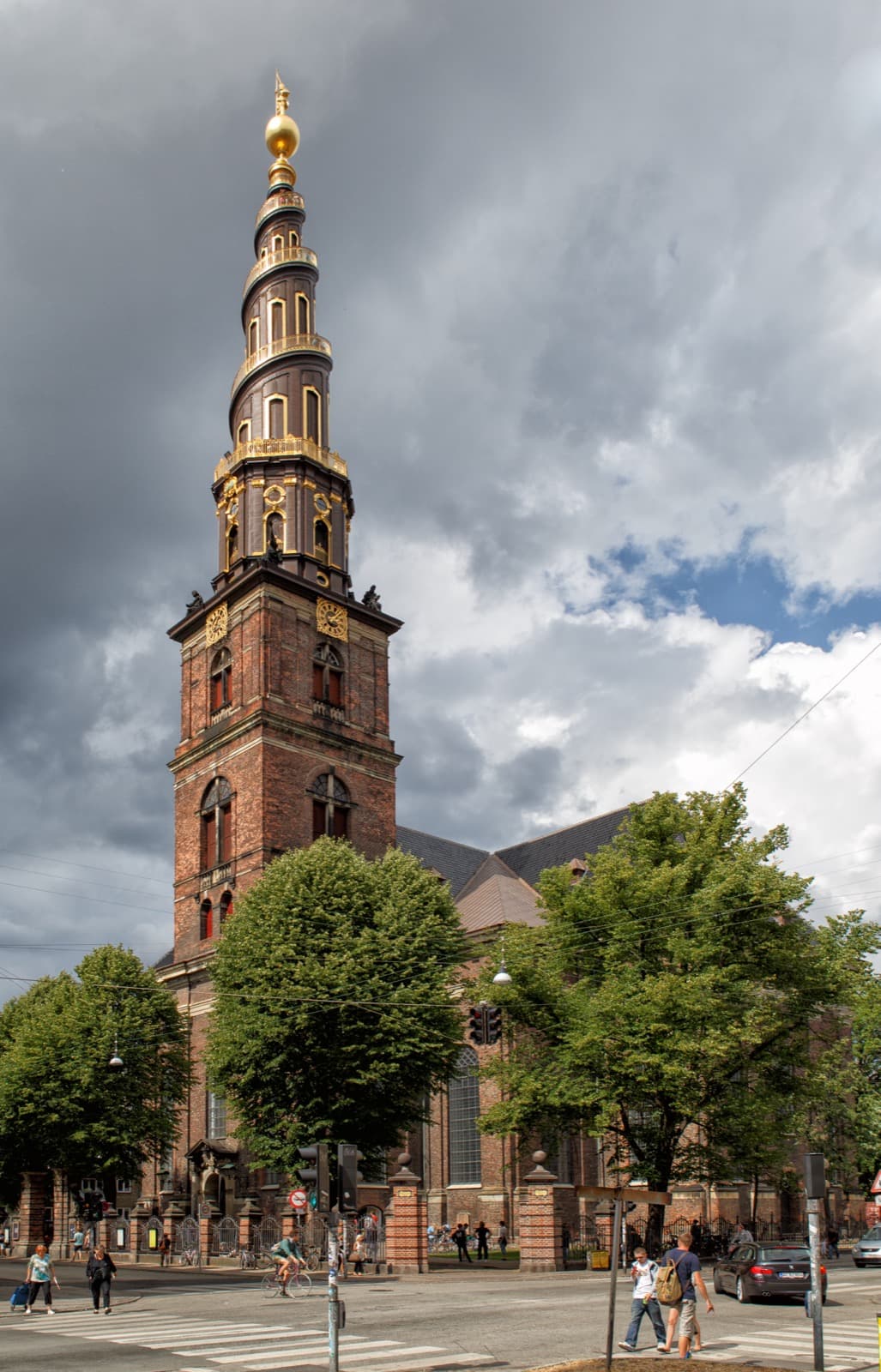
Walk the little island where Copenhagen was born, from the palace of parliament and the dragon-spired stock exchange to the harbour crossing, the canal quarter, and the golden spiral you climb on the outside.
Start · Christiansborg Palace: The Island Where the City Began
DirectionsStops
- 1
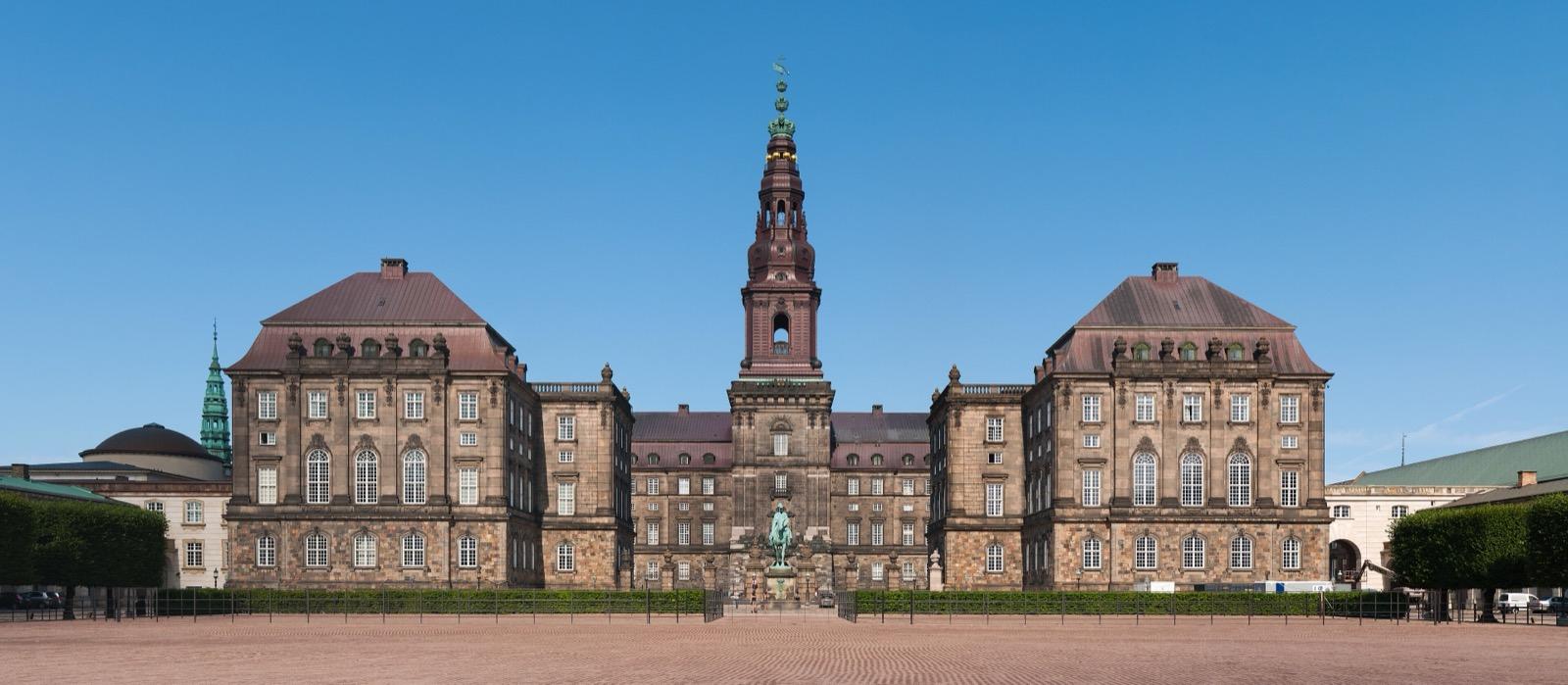
Christiansborg Palace: The Island Where the City Began
The neo-baroque palace that gathers Parliament, the Prime Minister's Office, the Supreme Court, and the royal reception rooms on the very ground where Copenhagen was founded.
- 2
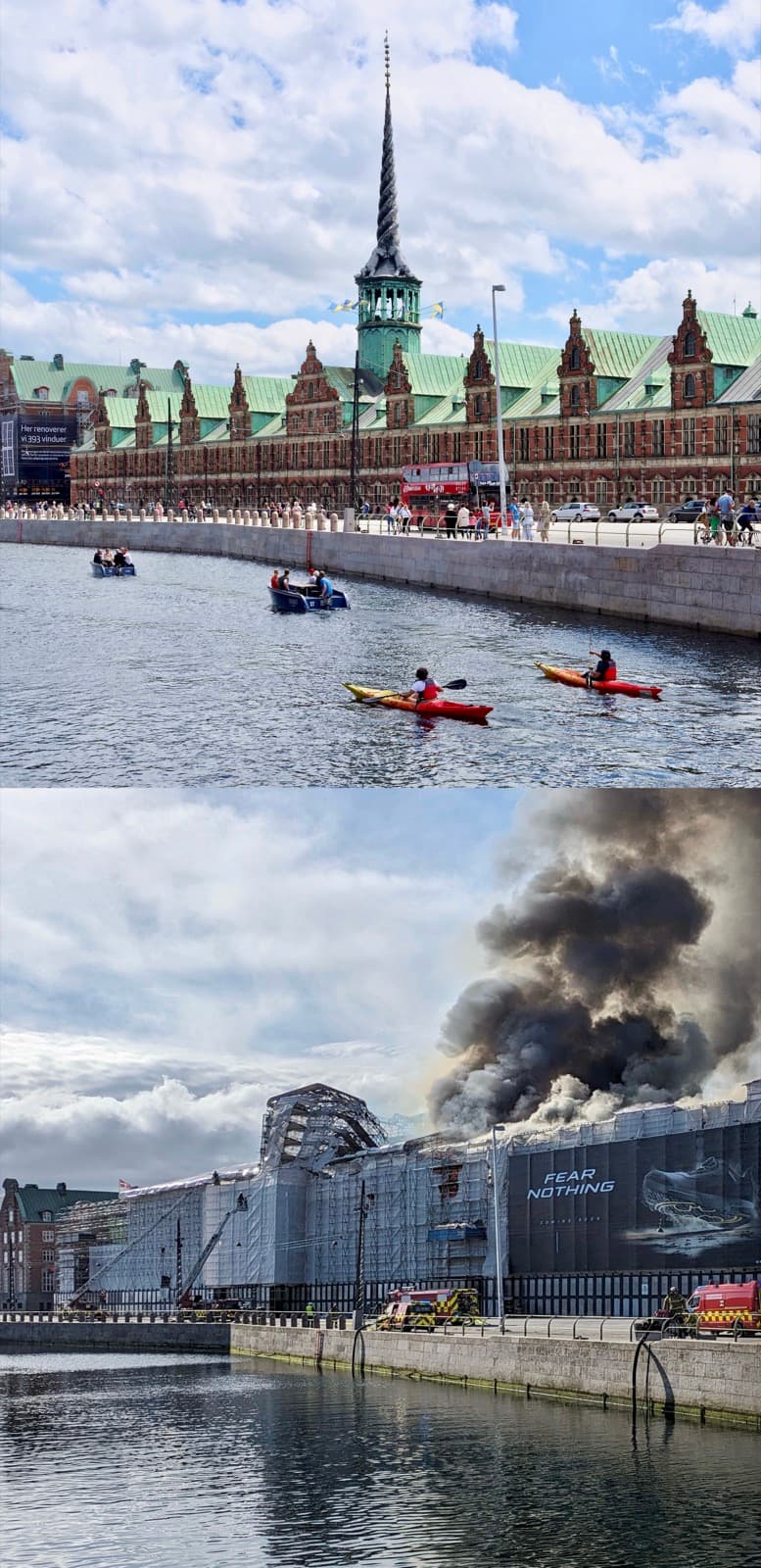
Boersen, the Old Stock Exchange: The Dragon Spire
King Christian the Fourth's Dutch-Renaissance exchange, famous for a spire of four intertwined dragon tails, now under restoration after a twenty twenty-four fire.
- 3
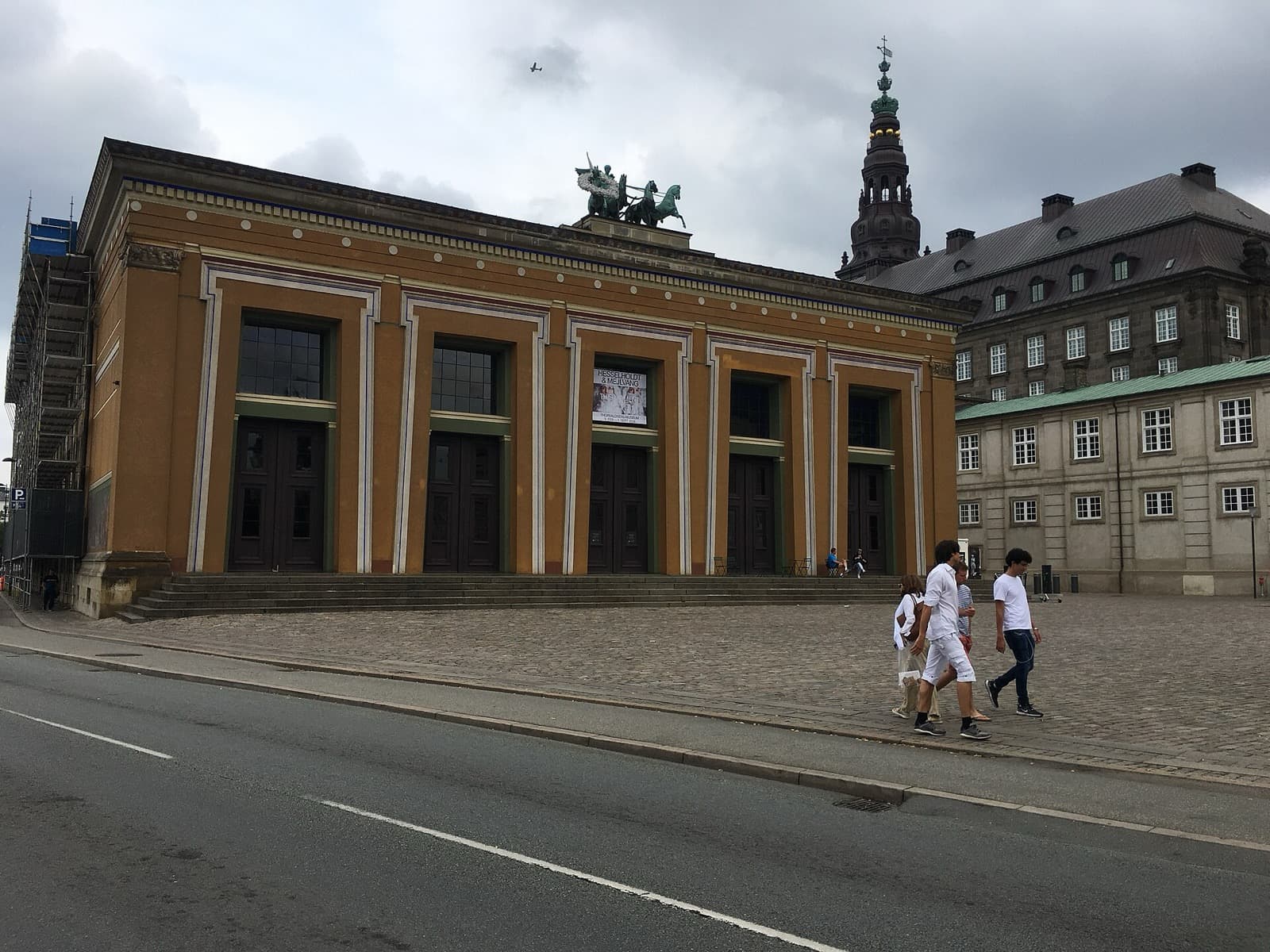
Thorvaldsens Museum and the Black Diamond
A boldly coloured museum built for a single sculptor, who is buried in its courtyard, and the black granite library extension leaning over the harbour.
- 4
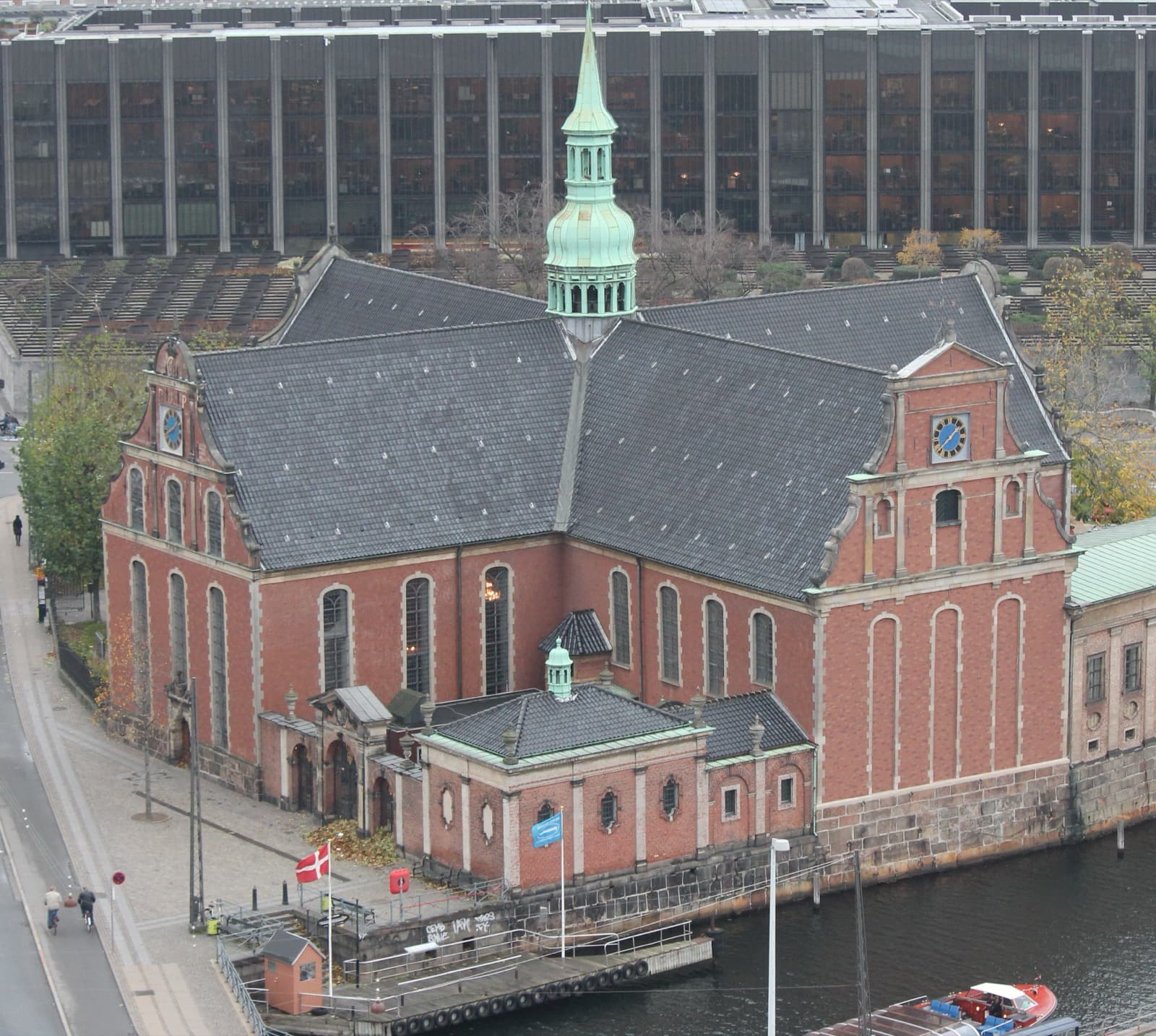
Holmens Kirke: The Fleet's Own Church and the Crossing
A church that began as an anchor forge, became the navy's own place of worship, and holds the tombs of Denmark's great naval heroes, at the point where the walk crosses to Christianshavn.
- 5
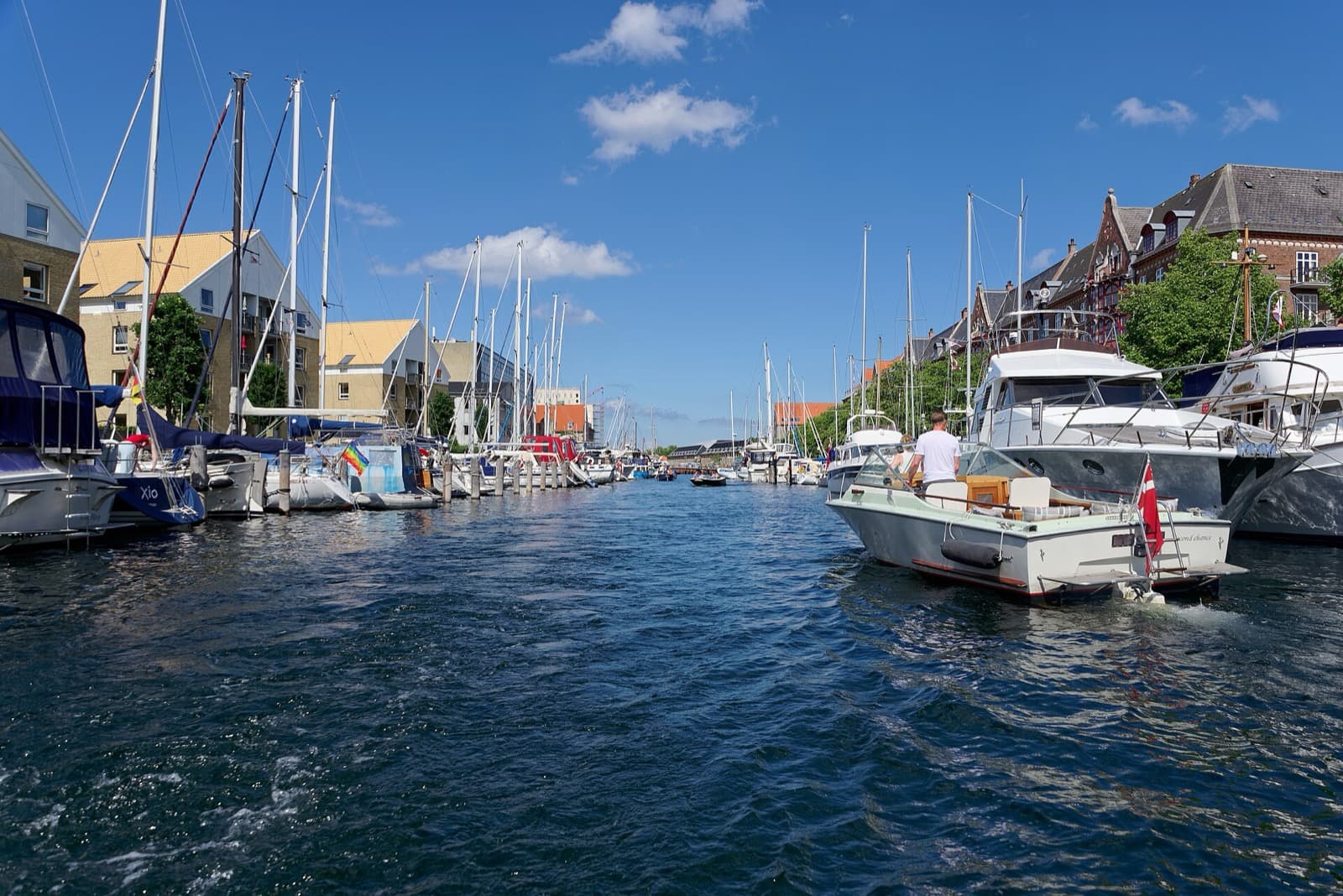
Christianshavn and Its Canals: A Little Amsterdam
The Dutch-planned canal quarter King Christian the Fourth reclaimed from the water for his merchants and sailors, still lined with old warehouses and houseboats.
- 6
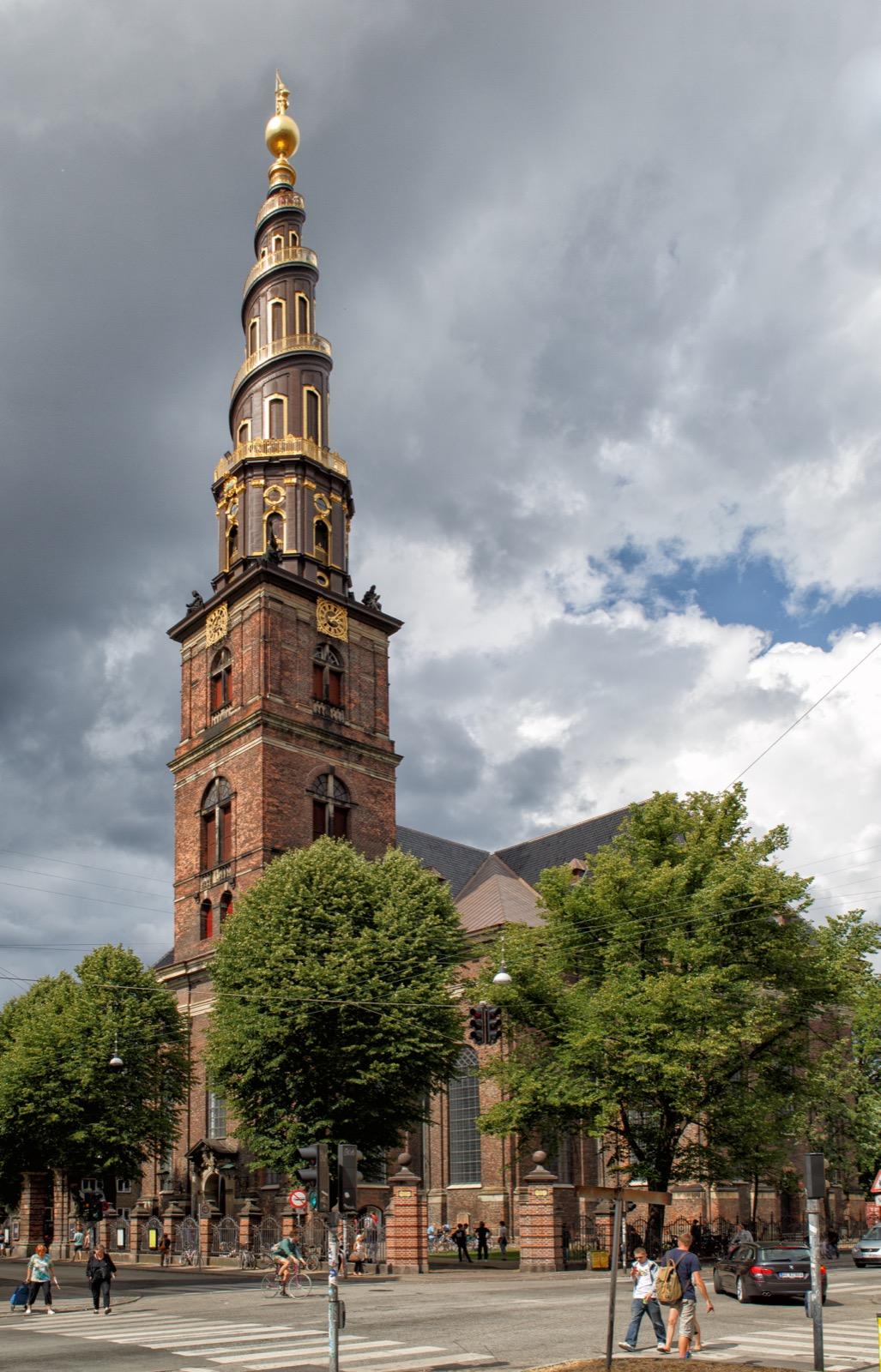
Vor Frelsers Kirke, the Church of Our Saviour: The Spiral in the Sky
A baroque church whose golden spire carries an external spiral staircase you climb on the outside, winding counterclockwise to a gilded figure of Christ.
- 7
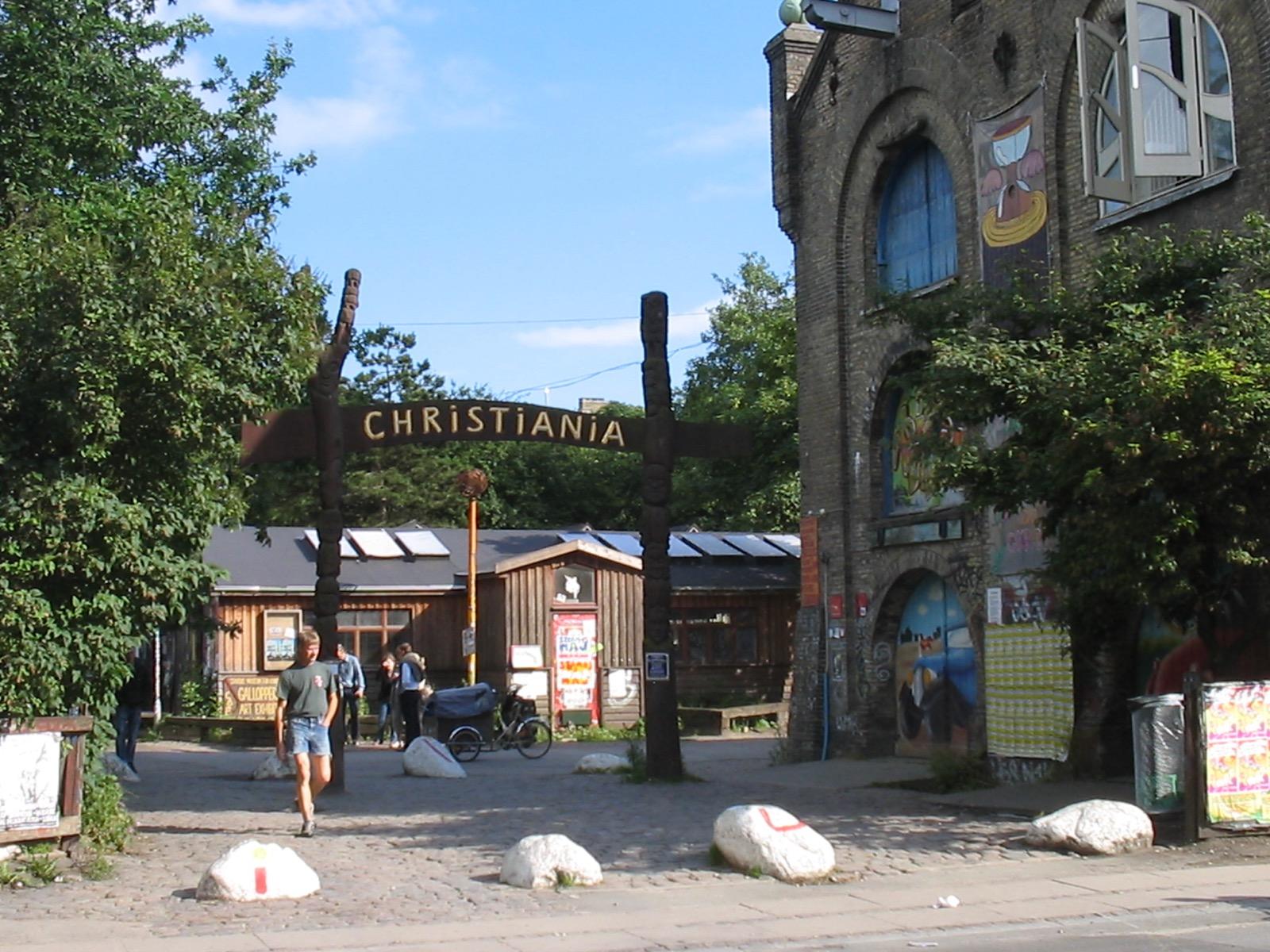
Freetown Christiania: The Green Free Town on the Ramparts
A self-governing, car-free community declared open in nineteen seventy-one on abandoned barracks and the old city ramparts, a living counterweight to the island of power.
Details
Best Time to Visit
Late spring through early autumn gives the mildest weather and the best chance to climb the spiral of the Church of Our Saviour, which is seasonal and closes in high wind. Start in the morning to reach the exterior staircase before the queue builds and to catch the light on the harbour. Weekdays are quieter around Christiansborg, and the reception rooms and ruins keep museum hours if you want to go beneath the surface.
Pro Tips
- •The grounds of Christiansborg and the walk across Slotsholmen are free; only the royal reception rooms, the ruins beneath, the tower, and the stables charge a museum ticket in Danish kroner, so you can read the whole island without paying a thing.
- •Climbing the spire of the Church of Our Saviour is a separate ticket and is seasonal and weather-dependent, so check that it is open before you build your day around the view.
- •Cross the harbour by the Knippelsbro bridge into Christianshavn on foot; the canal quarter is small and rewards slow wandering along Christianshavns Kanal at your own pace.
- •Copenhagen runs on bicycles, so treat the painted cycle lanes as traffic lanes and look both ways before stepping off any curb, especially near the bridge.
- •Boersen, the Old Stock Exchange, is under restoration after the twenty twenty-four fire, so expect scaffolding; read it from the outside and let the story carry the missing dragon spire.
- •Carry a light waterproof and something for the sun, since Danish weather turns quickly and the harbour and the top of the spire are exposed to wind.
Safety & Precautions
- •Copenhagen has heavy bicycle traffic and dedicated cycle lanes; always check for cyclists before crossing, as they move fast and have right of way in the painted lanes.
- •Holmens Kirke and the Church of Our Saviour are working churches; dress modestly, keep your voice low, and step aside during services.
- •The external spiral of the Church of Our Saviour is a real climb of about four hundred steps with the last stretch outdoors; it can queue, and it closes in high wind, so it is not for everyone.
- •Freetown Christiania is a living community that asks visitors to respect its rules, including long-standing photography restrictions on Pusher Street; follow the posted requests, keep valuables discreet, and remember that many sites here charge entry in Danish kroner, not euros.
Travel advisory: Exercise Increased Caution (Level 2).
Gallery
Related Reading
Go deeper on what you'll see, hear, and walk through.
Overview
Best Self-Guided Walking Tours in Copenhagen (2026)
4 min
Overview
Copenhagen Travel Guide: Days, Transport, Season, Safety, and Budget
7 min
Overview
One Day in Copenhagen: A Walkable Itinerary From Morning to Evening
6 min
Thematic
Best History Walking Tours in Copenhagen (2026)
2 min
Thematic
The Rebuilt Capital: How Copenhagen Kept Raising Itself from Fire
7 min
Companion
Christiansborg Palace and the Island Where Copenhagen Began
7 min
Deep dive
Freetown Christiania: Copenhagen's Free Town on the Old Ramparts
6 min
Read
What to Eat in Copenhagen: Dishes, Origins, and How to Order Like a Local
6 min
Read the walk
The full story of Slotsholmen: The Island of Power and the Spiral Spire, in words. Prefer to listen? Play it narrated, from home or on location.
Introduction
This walk moves across Slotsholmen, the Castle Islet, the ground where Copenhagen began, and then over the harbour into the canal quarter of Christianshavn on the far side. It runs about three kilometres over seven stops, and at your own pace, with time to linger, it takes around two and a half to three hours. This is Copenhagen, in Denmark, and the story here is really two stories facing each other across a strip of water. On one side sits the ordered island of state: the palace that holds parliament, the old stock exchange with its dragon spire, the black granite library on the water, a sculptor's tomb-museum, and the navy's own church. On the other side lies the improvised world the same crown created and then could never fully control, a grid of Dutch-style canals crowned by a golden spiral you climb on the outside, and the green free town on the old ramparts. The Royal Danish Collection notes that Bishop Absalon raised the first fortress on this islet in eleven sixty-seven, and everything grew outward from there. Solo travel suits this route: no group, no schedule, no one hurrying you past the dragon tails or the counterclockwise stair. Move at your own clock, skip a stop if it does not call to you, and let the water do the work of joining the island of kings to the spiral in the sky. When you arrive at the main forecourt of Christiansborg Palace on Slotsholmen, begin with stop one.
1. Christiansborg Palace: The Island Where the City Began
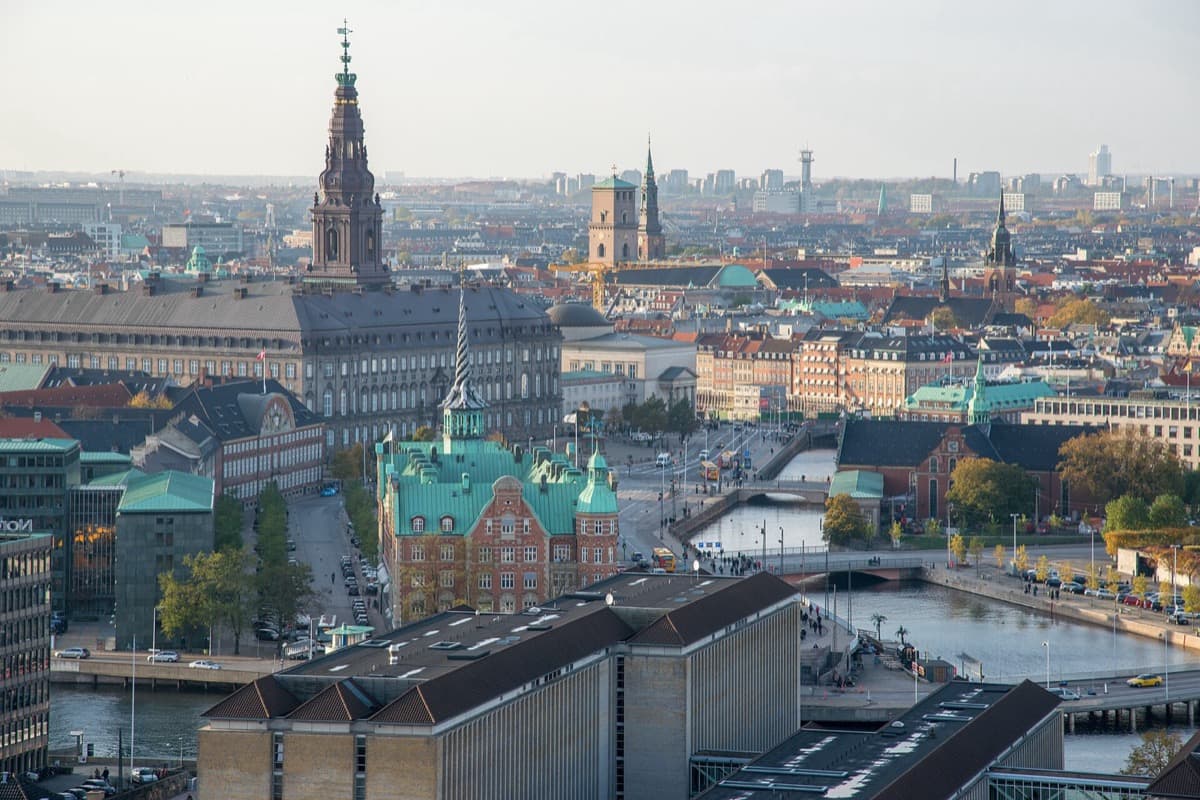
You are standing on Slotsholmen, the Castle Islet, and this is where the city began. The Royal Danish Collection records that Bishop Absalon raised his fortress on this exact ground in eleven sixty-seven, and the ruins of that fortress and of the later medieval castle survive in the excavations open beneath the present palace. The palace above you is the third to carry the name Christiansborg. The first, finished in the seventeen forties, burned in seventeen ninety-four. The second, finished in the eighteen twenties, burned in eighteen eighty-four. The one you see now was built between nineteen oh seven and nineteen twenty-eight to the design of the architect Thorvald Jorgensen, a neo-baroque block of reinforced concrete faced in granite, completed in nineteen twenty-eight. What makes it unusual anywhere in the world is what it holds. Under this single roof sit all three branches of Danish government: the Folketing, which is the Danish Parliament, the Prime Minister's Office, and the Supreme Court, together with the royal reception rooms the monarch still uses. Fire is written into the whole story, and so is rebuilding, which is the quiet theme of this island: burned and raised again, burned and raised again. The tower above you, at about one hundred six metres, is the tallest in Copenhagen. Take your time in the forecourt before you move on. Notice that the neat baroque symmetry sits directly on top of a ruined medieval fort, order raised over the rough beginning, because that layering is exactly the tension the rest of this walk will keep peeling back, stop by stop.
2. Boersen, the Old Stock Exchange: The Dragon Spire
Just across the way stands Boersen, the Old Stock Exchange, and even wounded it is one of the most distinctive buildings in the city. King Christian the Fourth had it built between about sixteen nineteen and sixteen forty by the Steenwinckel builders, a long, low Dutch-Renaissance hall raised to strengthen Copenhagen as a place of trade, a merchant king's answer to the palace of state you just left. What everyone came to see was the spire. The tails of four dragons twist together and rise about fifty-six metres into the air, and the whole thing is topped by three crowns for the three kingdoms of Denmark, Norway, and Sweden. Tradition held that the dragons guarded the building. Now the sober part, and it is recent. On the sixteenth of April, twenty twenty-four, a fire broke out during a renovation and destroyed about half of the building. The dragon spire collapsed. No one was killed, though a heavy bronze bust of Christian the Fourth was lost in the flames. Reconstruction began later that same year, and the exchange, owned today by the Danish Chamber of Commerce, is being raised again, which is why you will see scaffolding rather than the twisting spire. There is a hard rhyme here with the palace behind you. This island keeps burning and keeps being rebuilt, from the fires of the seventeen and eighteen hundreds to this one in living memory. Stand a moment and picture the four dragon tails climbing where the scaffolding now stands, and know that the intent is to put them back.
3. Thorvaldsens Museum and the Black Diamond
Two buildings share this stop, one bright and one black, and together they show the cultural crown of the island. First, Thorvaldsens Museum, a boldly coloured neoclassical building put up between eighteen thirty-nine and eighteen forty-eight to the design of the architect Michael Gottlieb Bindesboll. It is the first purpose-built art museum in Denmark, and it was the first museum anywhere in the world devoted to a single artist. That artist was the sculptor Bertel Thorvaldsen, who lived from seventeen seventy to eighteen forty-four and left his works, casts, drawings, and collections to the Danish nation. He is buried at the very centre of the building, in its inner courtyard, so the museum is quite literally his tomb wrapped in colour. Then walk your eye down to the water, where the Royal Danish Library's granite extension leans over the harbour. People call it the Black Diamond. It opened in nineteen ninety-nine to the design of the architects Schmidt Hammer Lassen, a mass of black granite and glass cut by a tall glazed front that faces the harbour, with a bright toplit atrium inside. It was the first of a run of cultural buildings that would line Copenhagen's waterfront in the years after. Set the two side by side. The sculptor's coloured tomb-museum holds the art of one man's whole life, and the black diamond of books holds the writing of a nation, both of them keepers of memory on the edge of the island of power. You do not have to go in to feel it, though the library's public atrium and terrace are free if you want a look at the harbour from inside.
4. Holmens Kirke: The Fleet's Own Church and the Crossing
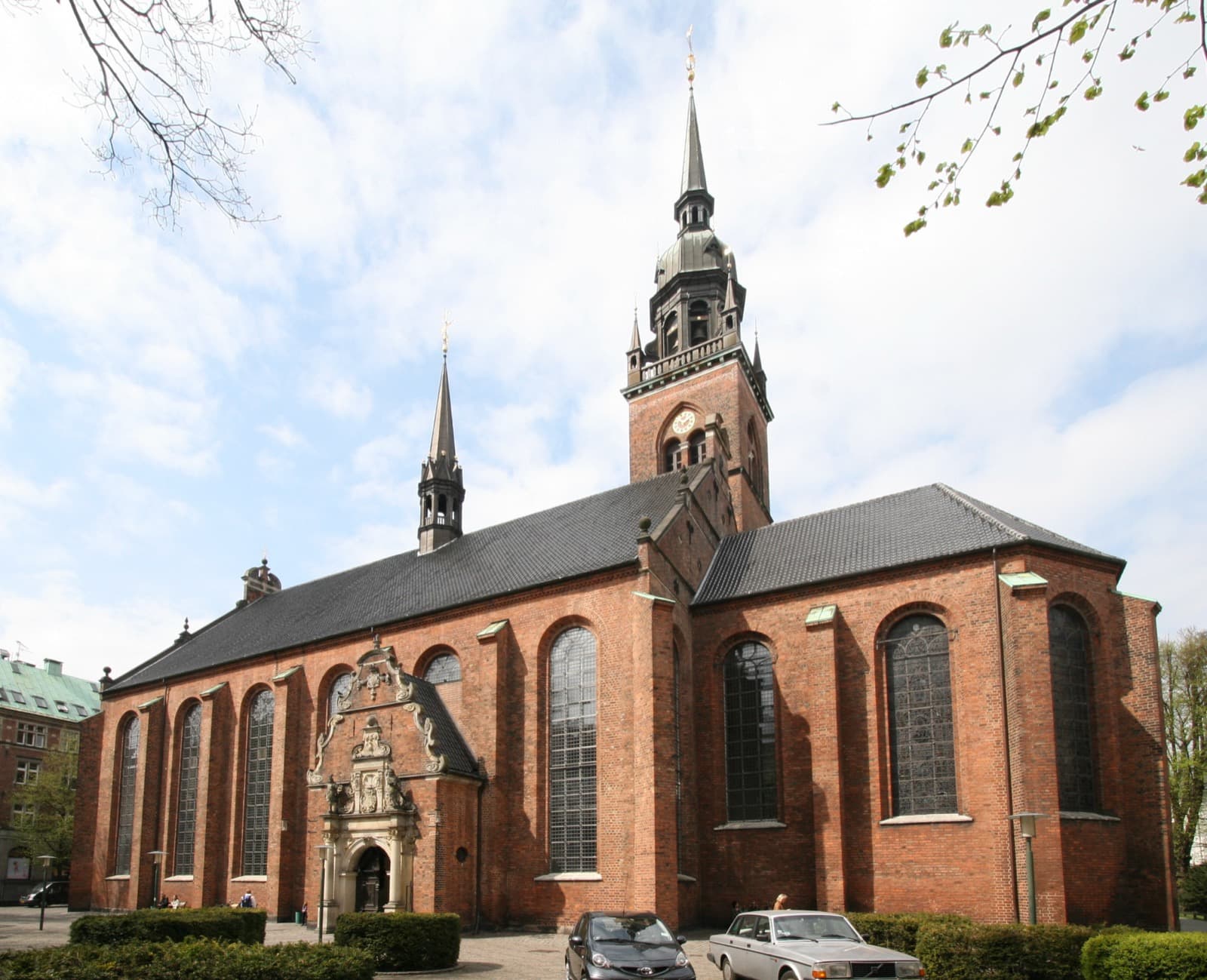
This is Holmens Kirke, the Church of Holmen, and its first life had nothing to do with worship. It was built as an anchor forge between fifteen sixty-two and fifteen sixty-three under King Frederik the Second, a workshop where the fleet's iron was hammered. Under King Christian…
Full narration for this stop unlocks with the tour.
5. Christianshavn and Its Canals: A Little Amsterdam
You have crossed the water, and the city has changed its character. This is Christianshavn, and havn means harbour. King Christian the Fourth founded it from about sixteen eighteen on ground reclaimed from marshy shallows across the harbour, built up over the following years as…
Full narration for this stop unlocks with the tour.
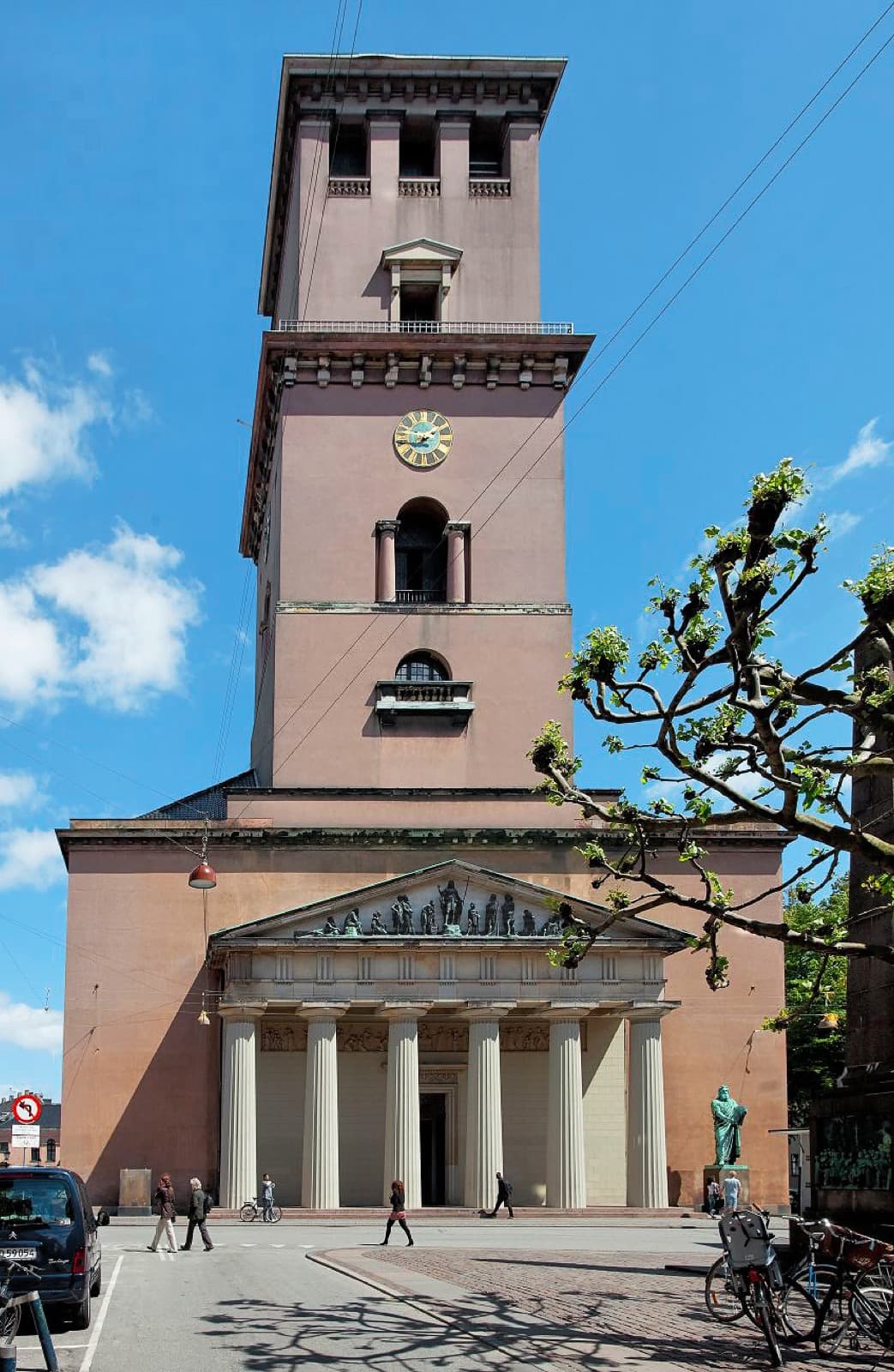
6. Vor Frelsers Kirke, the Church of Our Saviour: The Spiral in the Sky
Here it is, the golden spiral you have been walking toward. This is Vor Frelsers Kirke, the Church of Our Saviour, and frelser means saviour while kirke means church. The main body of the church was designed by the architect Lambert van Haven and consecrated in sixteen…
Full narration for this stop unlocks with the tour.
7. Freetown Christiania: The Green Free Town on the Ramparts
The walk ends on the old ramparts, at Freetown Christiania, and this is a living community, so I ask you to treat it as one. It was declared open on the twenty-sixth of September, nineteen seventy-one, by Jacob Ludvigsen, an activist and journalist who helped write its founding…
Full narration for this stop unlocks with the tour.