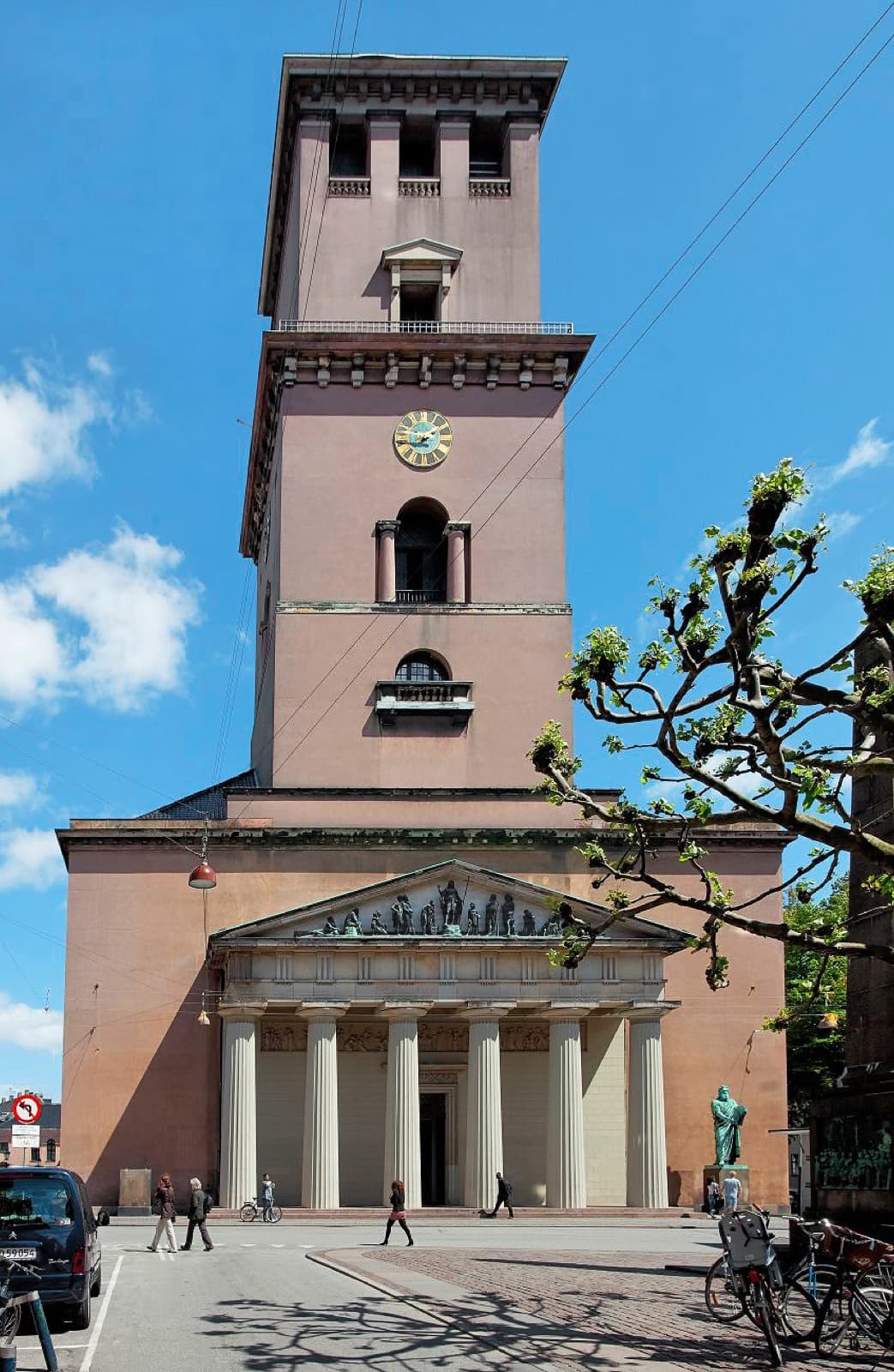
Copenhagen's old town looks medieval, but its grandest church is a nineteenth-century building raised from a bombardment. Vor Frue Kirke, the Church of Our Lady, is the cathedral of the city, and its story is the whole tour's argument in one stop: the cobbled core you walk through is largely a Neoclassical city rebuilt after fire and war, laid over an ancient street plan. Understand what happened to this cathedral in eighteen oh seven, and you understand why so little of what looks old actually is.
The night the cathedral burned
A church has stood on this ground since the Middle Ages. Its origins trace to eleven eighty-seven, under Archbishop Absalon, as the Collegiate Church of Saint Mary. It was damaged in the great fire of seventeen twenty-eight, which took so much of the medieval town. But the church's destruction came during the Napoleonic Wars. In eighteen oh seven a British fleet bombarded Copenhagen to seize the neutral Danish navy before Napoleon could. British gunners are recorded to have used the cathedral's tall tower as a marker to fix their range. The tower caught fire, and the cathedral burned to the ground.
That is a sober fact, and the people of the city carried its weight. What rose from the ruin is the building you can enter today: a severe Neoclassical cathedral by the architect Christian Frederik Hansen, its cornerstone laid in eighteen seventeen, completed and reconsecrated in eighteen twenty-nine. There is no medieval vaulting overhead, no Gothic glass. There is a calm, columned Roman order, the taste of a nation rebuilding with restraint after catastrophe.
The white Christ inside
Hear a stop from this walk
The Round Tower: Christian the Fourth's Spiral to the Stars
Inside stand the statues that make this stop the marquee of the walk. Along the nave, in Carrara marble, are Christ and the Twelve Apostles, carved by the Danish sculptor Bertel Thorvaldsen. The Christus above the altar stands with arms lowered and open, a gentle, human figure rather than a triumphant one. Thorvaldsen also gave the church a kneeling-angel baptismal font as a personal gift. These works became among the most reproduced religious sculptures in the world, copied in churches far beyond Denmark. In nineteen twenty-four the Church of Our Lady became Denmark's national cathedral, a designation that followed the splitting of Zealand into two dioceses two years earlier.
So the sequence is worth holding onto: a medieval church, burned in a bombardment, rebuilt in stern Neoclassical stone, filled with white marble, and only in the twentieth century named the nation's cathedral. Nothing here is quite as old as it feels, and that gap between appearance and history is exactly what the rest of the route reads.
Why the whole town is a rebuilt town
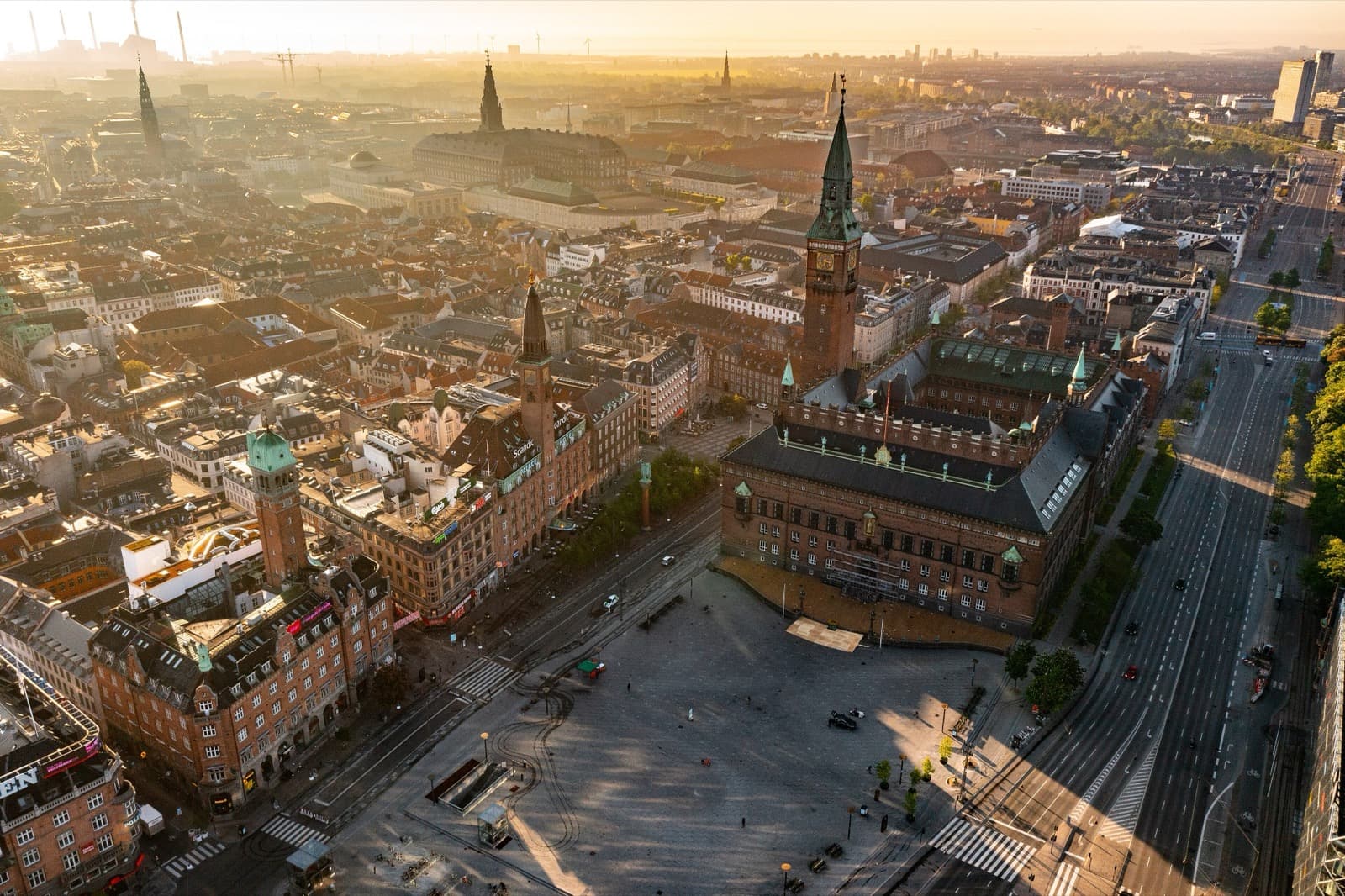
Once you see the cathedral this way, the walk that leads to it and away from it starts to make sense. It begins at City Hall Square, Raadhuspladsen, along the line of the old ramparts that once separated the crowded medieval city from the world outside. The red-brick City Hall there was designed by Martin Nyrop and inaugurated on the twelfth of September, nineteen oh five, its clock tower rising about one hundred and five metres. Above the entrance a gilded Bishop Absalon watches the square, tying the young building to the man who, by tradition, founded Copenhagen's first castle on the island of Slotsholmen in eleven sixty-seven. The modern square, in other words, points straight back to the twelfth century.
From there the pedestrian spine of Stroeget runs about a kilometre east into the medieval heart. Pedestrianised in nineteen sixty-two and made permanent in nineteen sixty-four, it threads the twin market squares of Gammeltorv and Nytorv, the oldest part of the city. Gammeltorv is regarded as Copenhagen's oldest square, a marketplace that predates Absalon's castle, with the Caritas Well raised at its centre by King Christian the Fourth in sixteen oh eight. Nytorv, laid out in sixteen ten by the same king, once held the city's scaffold and pillory, with public executions there into the seventeen fifties. The severe courthouse facing it, by the same C.F. Hansen who rebuilt the cathedral, was finished in eighteen fifteen. The pattern repeats: old ground, later stone.
The Church of the Holy Ghost, Helligaandskirken, on Stroeget makes the theme physical. It began as a Franciscan house in twelve thirty-eight, only twelve years after the death of Francis of Assisi, and its surviving west wing is among the oldest buildings in the whole city. Much of the church itself was destroyed in the fire of seventeen twenty-eight and rebuilt. A genuine medieval fragment, standing beside a rebuilt church, on a street rebuilt again and again. You can walk this argument foot by foot, or read the fuller version among the Copenhagen walking tours that map the historic core.
The two towers fire never took
If almost everything here was remade, what survived? Two things, both from King Christian the Fourth, and the route saves them for the end. Just past the cathedral lies the Latin Quarter around the University of Copenhagen, founded on the first of June, fourteen seventy-nine, the oldest university in Denmark and the second-oldest in Scandinavia after Uppsala. Most of its buildings were damaged in the same eighteen oh seven bombardment that took the cathedral, and the main building you see was inaugurated in eighteen thirty-six. Even learning here was rebuilt.
Then comes the first true survivor: the Round Tower, Rundetaarn, a cylindrical brick tower built between sixteen thirty-seven and sixteen forty-two, about thirty-five metres tall. Inside, an equestrian spiral ramp of seven and a half turns replaces stairs, built so horse-drawn carts could haul books and instruments to the top. It served as an observatory and is described by its own authorities as Europe's oldest functioning observatory building. A beloved legend says a Russian tsar rode a horse up the ramp, though that is tradition, not documented fact.
The walk closes at the second survivor, Rosenborg, King Christian the Fourth's Dutch Renaissance castle beyond the old ramparts. It began in sixteen oh six as a small summer house and reached its final form around sixteen twenty-four. Open as a museum since eighteen thirty-eight, its treasury holds the Danish crown jewels, including the Sword of State from fifteen fifty-one, the oldest piece of regalia. It sits in Kongens Have, the King's Garden, the country's oldest royal garden, laid out by the king himself. Fire never took either tower, which is why they end the story: the two things that are genuinely as old as they look, in a city that mostly is not.
The full route runs about three kilometres over roughly two hours, though it is entirely yours to stretch or shorten. There is no group and no schedule. Start at Raadhuspladsen and end in the King's Garden whenever the day allows, in Copenhagen.
Sources
- Church of Our Lady, Copenhagen, Wikipedia: history of the medieval church, the eighteen oh seven bombardment, and the Neoclassical rebuild by C.F. Hansen.
- Copenhagen Cathedral official site (domkirken.dk): the cathedral's national designation in nineteen twenty-four and the Thorvaldsen sculptures of Christ and the Apostles.
- Rundetaarn official site: the Round Tower's dates, spiral ramp, and observatory history.
- University of Copenhagen, Profile and History: the fourteen seventy-nine founding and the bombardment damage of eighteen oh seven.
- Rosenborg Castle, The Royal Danish Collection: the castle's construction, museum history, and the crown regalia in its treasury.
Ready to experience it?
Historic Center: The Old Town Rebuilt from Fire
75 min · 2.8 km · moderate
More from Copenhagen
Explore more at your own pace.
The Rebuilt Capital: How Copenhagen Kept Raising Itself from Fire
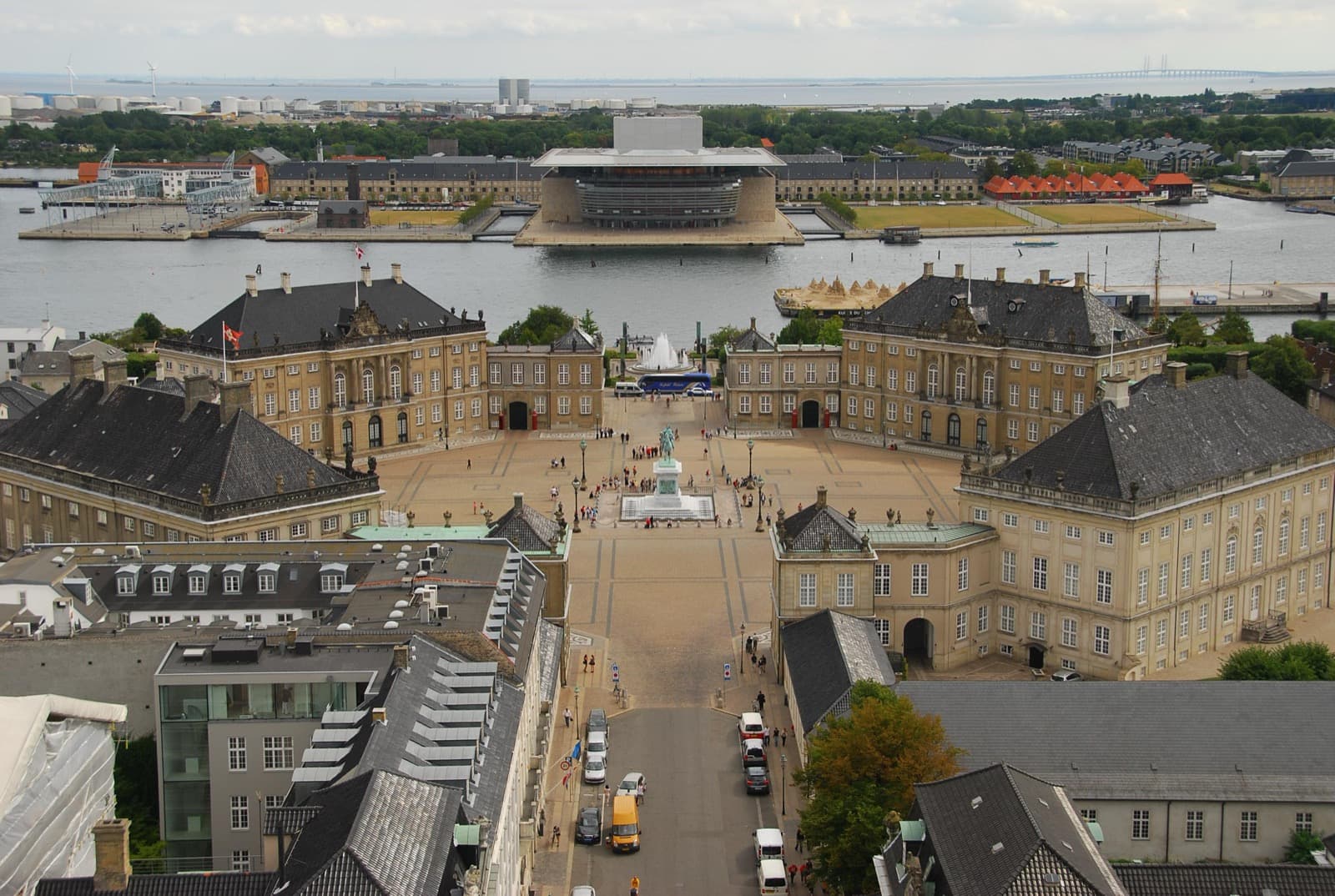
Amalienborg and the Copenhagen a King Drew on Purpose
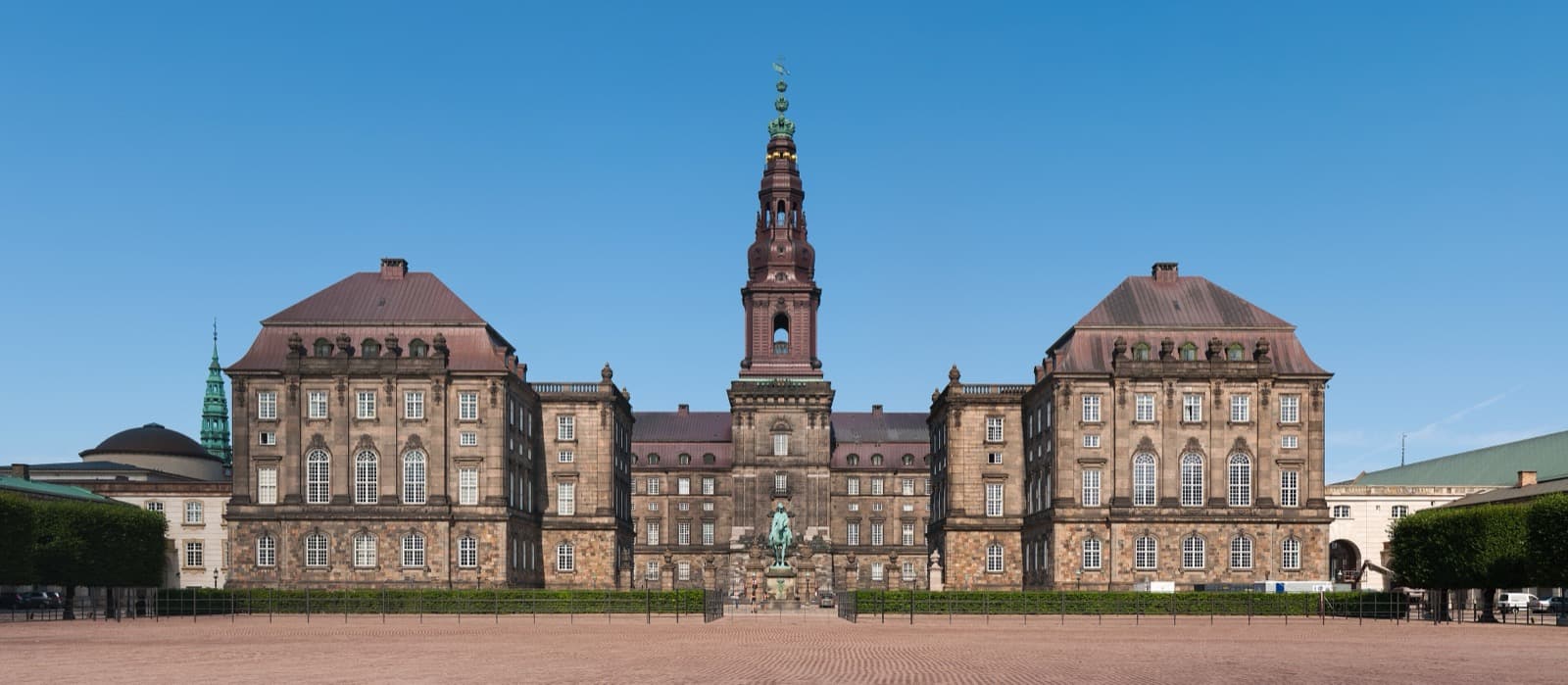
Christiansborg Palace and the Island Where Copenhagen Began
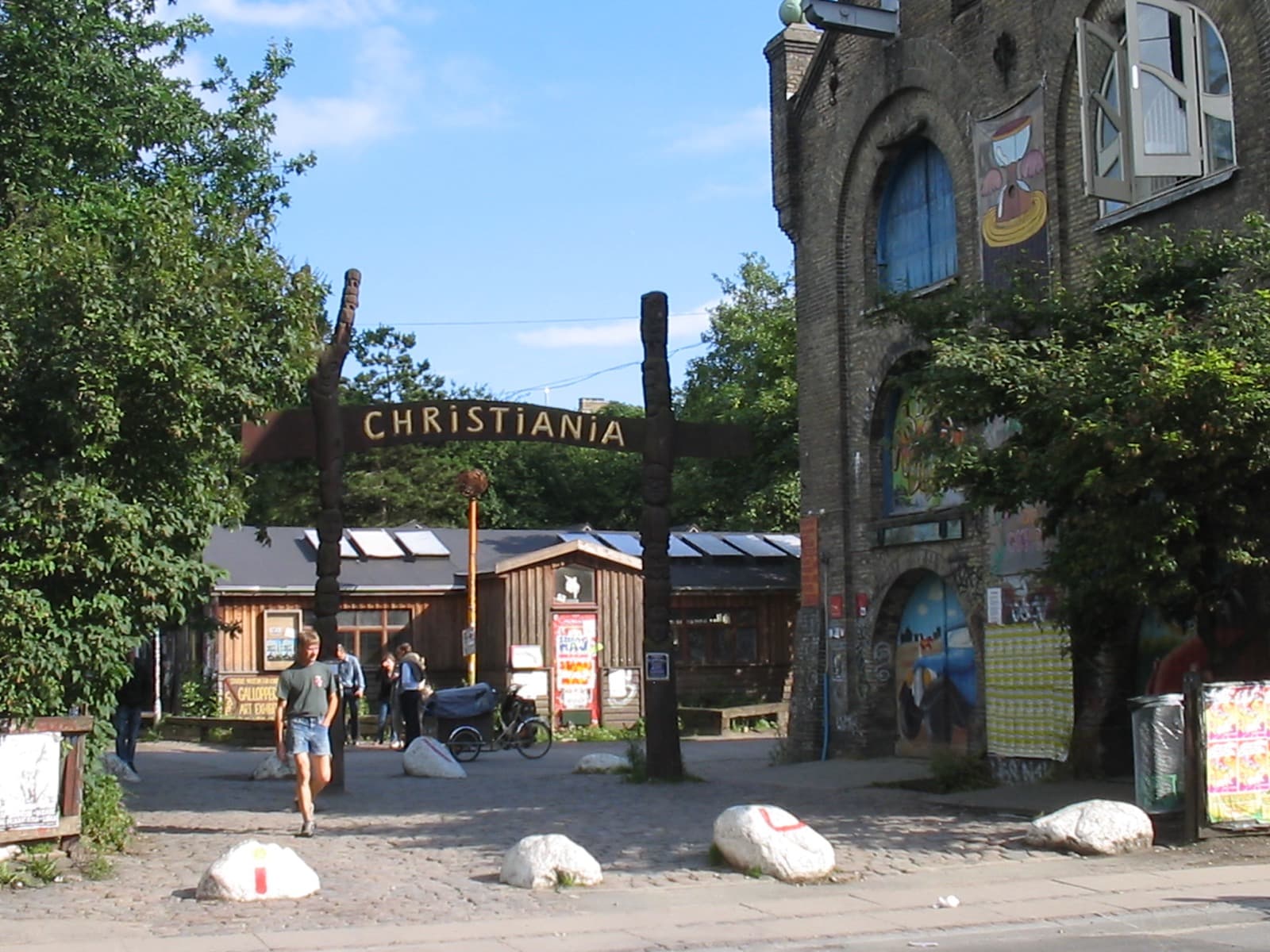
Freetown Christiania: Copenhagen's Free Town on the Old Ramparts
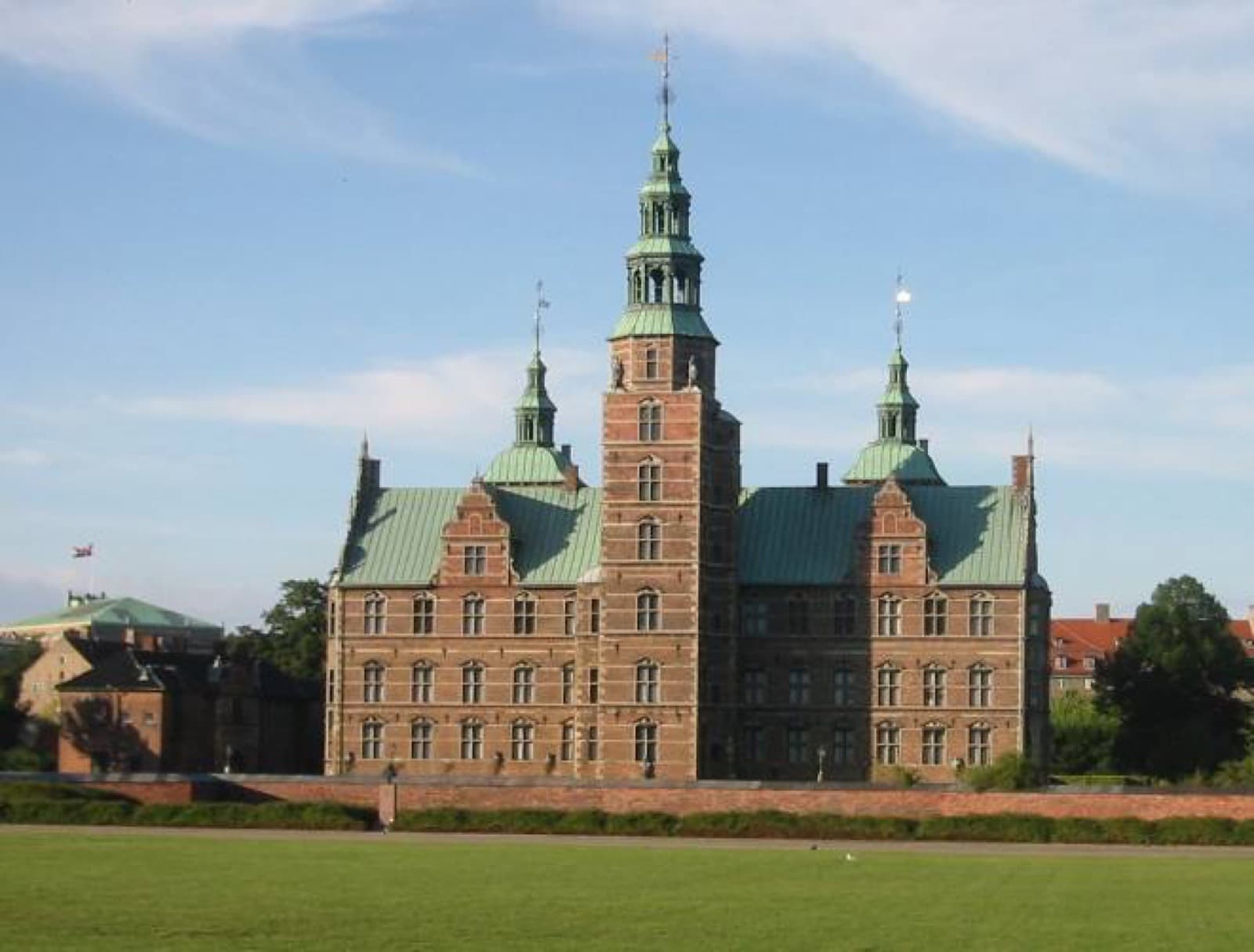
Rosenborg Castle: The Fairytale Fortress That Kept Denmark's Crown Jewels