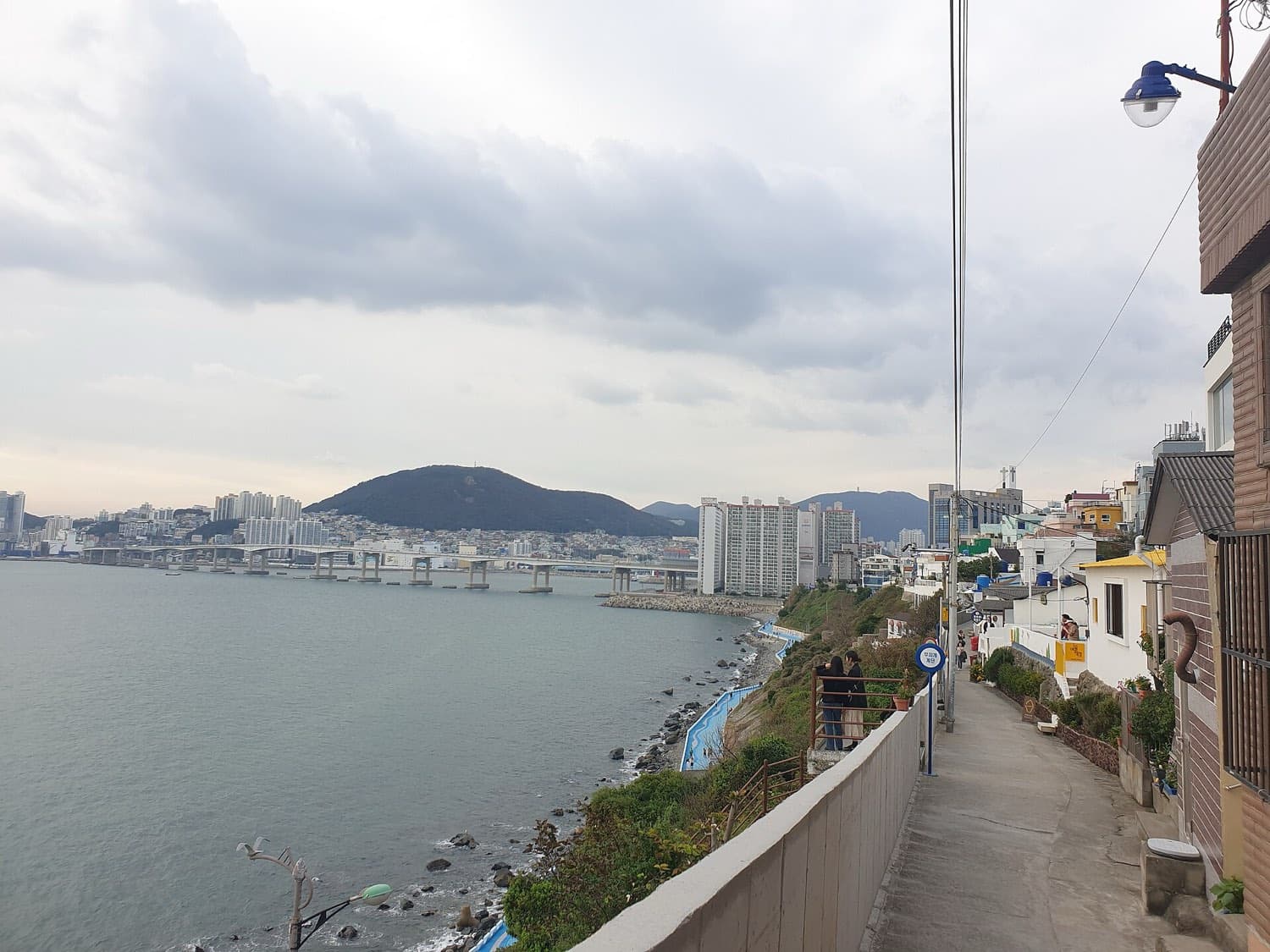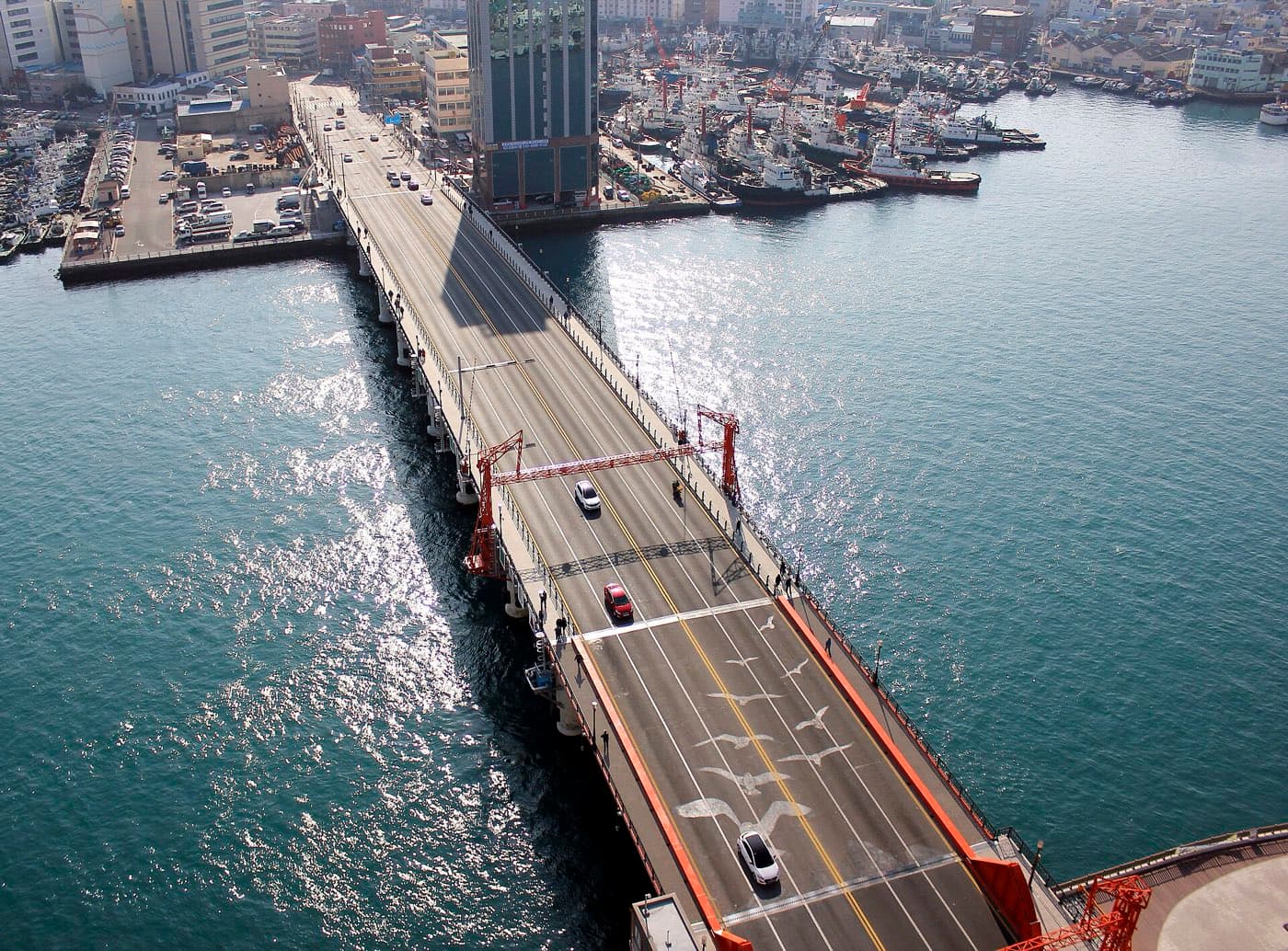
Yeongdo Bridge is Korea's first drawbridge, and standing in front of it you are looking at a span that carries two stories at once: the ambition of a rising deck and the memory of families who once waited at its railings. From the waterfront it reads as ordinary, a road crossing the south port of Busan to Yeongdo island. The word do means island, and the bridge was built to link Yeongdo's shipyards and warehouses to the mainland port. But this deck does something almost no road does. It lifts. And the reason it matters is not only mechanical. It is human.
A deck built to rise
When the bridge opened in 1934, it was the first drawbridge with a single moveable section built in Korea. Engineers call this type a bascule bridge, from the French word for a seesaw. One end of the deck pivots upward on a counterweight so that the road tilts toward the sky and tall ships can pass beneath. It was built under Japanese colonial rule, during a period when Busan's port was being wired into a wider imperial trade network, and in its early years the deck rose several times a day.
That rhythm is worth picturing. A working port with a road that interrupted itself on schedule, traffic pausing while the span climbed and ships slid through the gap. For a city whose whole grammar is set by the sea, a bridge that yielded to passing ships was a fitting piece of infrastructure. The port came first. The road bent to it.
The railing where a war gathered
Hear a stop from this walk
Jagalchi Market: The Sea Laid Out on Ice
Then comes the part of the bridge's story that asks you to slow down. During the Korean War, Busan became the temporary capital of the Republic of Korea and swelled with refugees fleeing the fighting elsewhere on the peninsula. In that crowded, uncertain city, Yeongdo Bridge became a known meeting point, a place where separated families and friends came to search for one another.
According to the city's records, people wrote their desperate hope of finding lost relatives on faded paper and torn cloth and left those notes along the handrails. The alley beneath the bridge held the same mixture of hope and despair. Imagine the bridge you are looking at lined with those pleas, each one a person hoping that a father, a sister, a child had passed this way and might read the message and come back. The span that had been engineered for ships became, for a few terrible years, a message board for the missing.
This is why the bridge belongs on a walk through Busan's port. The abundance you meet elsewhere on this route, the fish tubs of Jagalchi Market and the crowded aisles that refugees built, all grew out of the same hard beginning. The bridge holds that history in a single, quiet object. You can stand at the railing and understand, without a museum around you, what this water once meant to people who had lost everything.
Forty-seven years of stillness
As Busan grew and traffic thickened, the lifting became impractical. The mechanism stopped in 1966, and for the next forty-seven years the deck stayed put. A generation of Busan residents knew Yeongdo Bridge only as a fixed span, a road like any other, its rising days a story their grandparents told.
That could have been the end of it. Plenty of old bridges are quietly replaced or left to freeze in place. Instead, the bridge was restored, and it reopened on 27 November 2013. The counterweight and the machinery were brought back to life, and the deck learned to rise again after nearly half a century of silence. Restoring a moving bridge is harder than building a static one, because every joint and every pivot has to hold the strain of motion, not just the load of standing still. The city chose to do it anyway, which tells you how much the bridge means to Busan's sense of itself.
What to do standing in front of it
Today the deck rises for a short ceremony, around fifteen minutes, on Saturday afternoons, and it is free to watch from the waterfront. If you can time your walk for a Saturday, arrive a little before two in the afternoon to find a spot along the railing. The ceremony is genuinely a pleasure. There is something satisfying in watching a road tilt toward the sky, the counterweight doing its patient work, the span opening a gap over the water.
But hold the two feelings together, because that is the honest way to see this place. The engineering is a delight. The history underneath is sober. When the deck rises, it is worth remembering that this same railing once held written pleas from people searching for the people they loved. The bridge does not ask you to be sad. It asks you to be aware. That mix, joy and memory in the same span, is exactly what makes Yeongdo Bridge more than a photograph.
The one thing to carry away, standing in front of it, is this: you are looking at the first bridge in Korea built to move, and the movement was never only about ships. It was about a port city that let its own roads yield to the sea, and about a moment when that yielding turned the bridge into a place of waiting.
Walk the port that made it
Yeongdo Bridge is the second stop on a self-paced walk through the sensory table of Busan's port, a route of about three and a half kilometres that runs from the fish market at the water's edge up to a tower with the whole harbour spread below. You reach the bridge from Jagalchi Market, the largest fish market in South Korea, and from here the walk continues into Nampo-dong's markets, its film-lined square, and finally the climb to Yongdusan Park. For the full route and other Busan itineraries, see our guide to Busan walking tours, or browse everything the city offers on the Busan page. Walk it at your own pace, follow your nose, and let the sea set the rhythm the way it set the grammar of this bridge.
Sources
- Yeongdo Bridge, Wikipedia. Background on the bridge as Korea's first single-leaf bascule drawbridge, its 1934 opening, and 2013 restoration.
- "Drawbridge restored in Busan after 47 years," The Korea Herald. Reporting on the 1966 halt, the 47-year stillness, and the 27 November 2013 reopening.
- Yeongdodaegyo Bridge, Visit Busan official tourism record. The Korean War handrail history and the free 14:00 Saturday lifting ceremony running about fifteen minutes.
- Sites of the Busan Wartime Capital, UNESCO tentative list and Korea.net. Busan as the temporary capital of the Republic of Korea during the Korean War.
Ready to experience it?
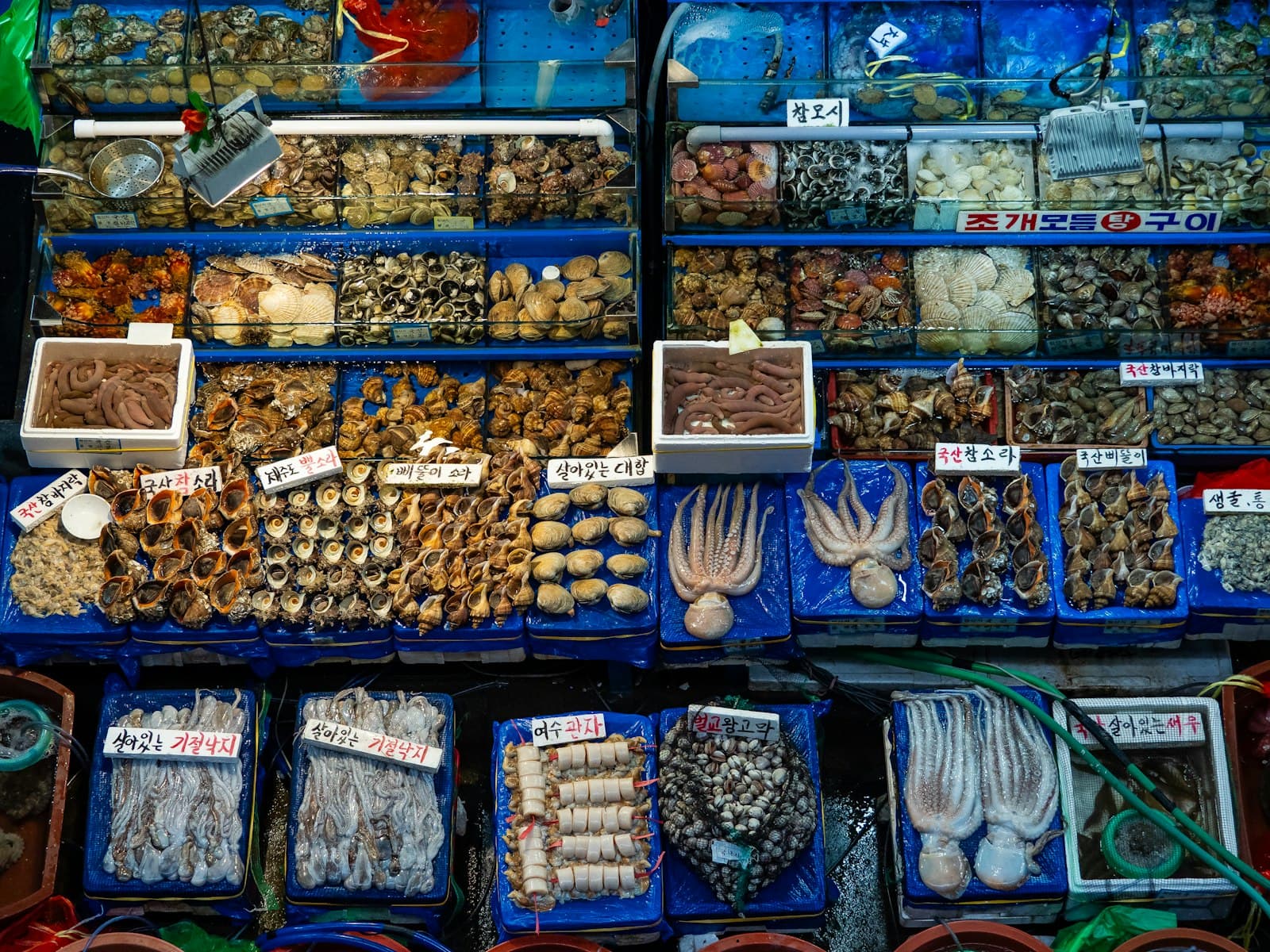
Jagalchi Market: The Port City's Table
110 min · 3.5 km · easy
More from Busan
Explore more at your own pace.
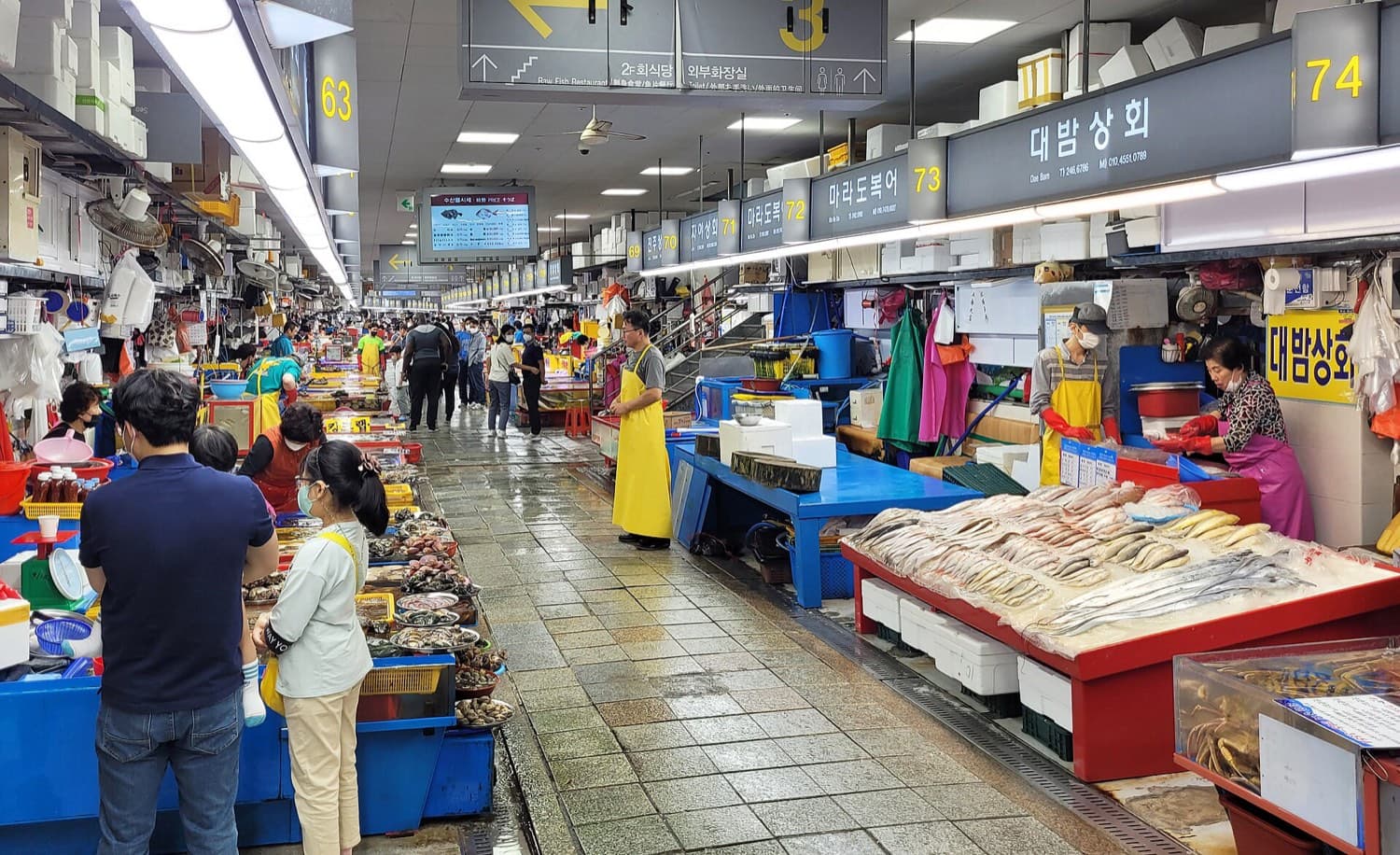
Busan's War-Made City: How a Port Refuge Became a Painted Coast
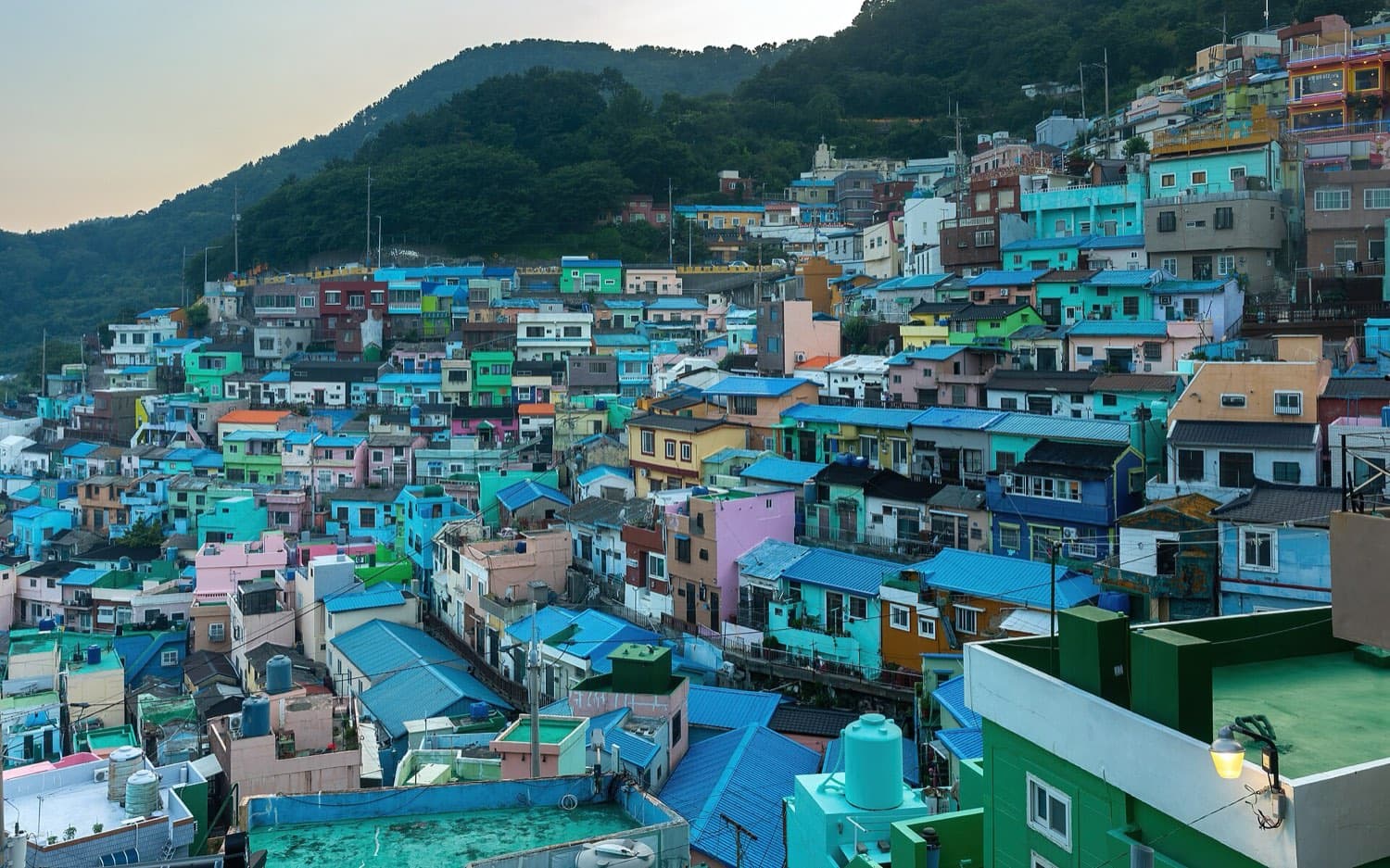
Gamcheon's Refugee Origins: Reading Busan's Painted Hillside
Jagalchi Market: How Busan's Fish Market Explains the Whole Port City
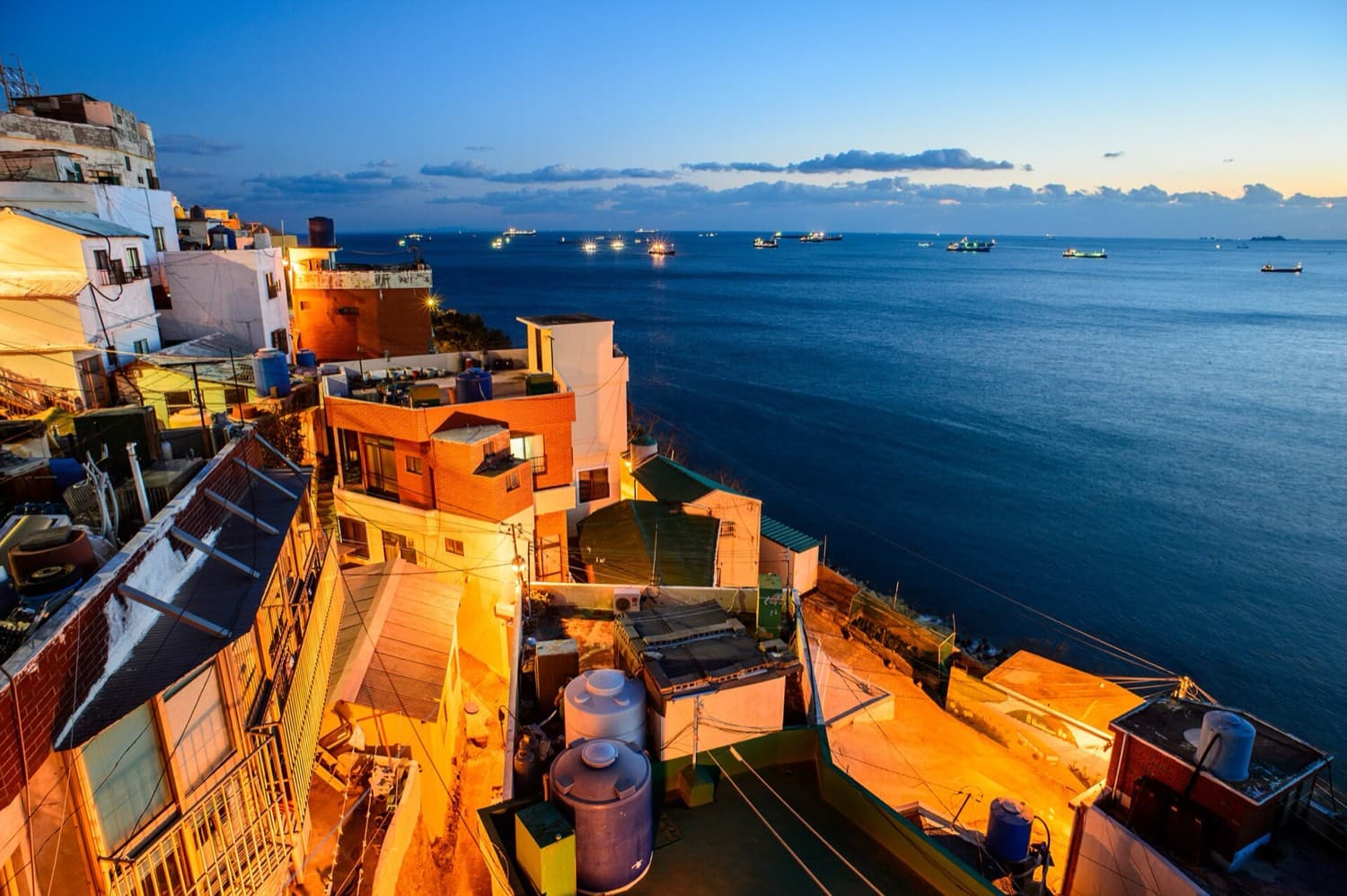
The Stacked White Houses of Huinnyeoul: Busan's Cliff Village Beneath the Postcard
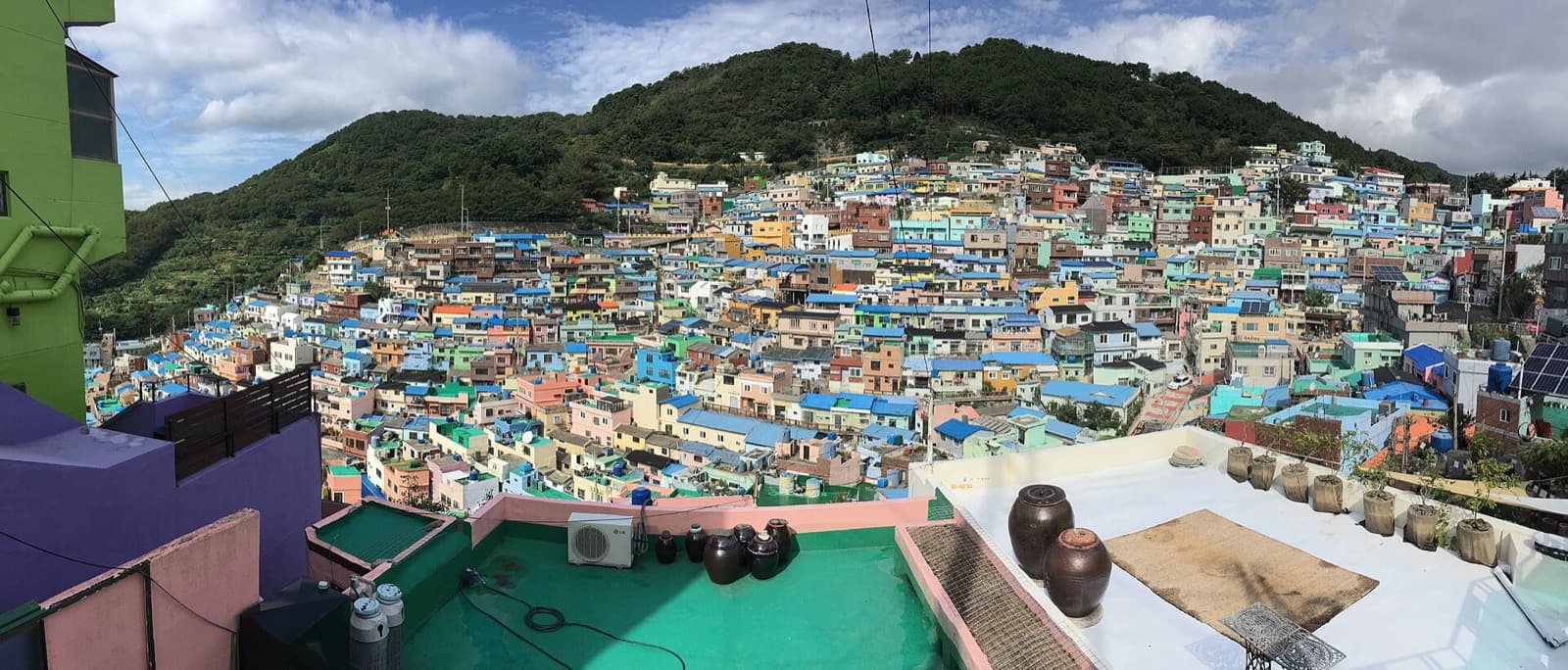
The Gamcheon Panorama Viewpoint: Reading a Refugee Slope Two Ways at Once