Nike Adjusting Her Sandal, known as the Sandalbinder, is a marble relief of about 410 BC from the parapet around the temple of Athena Nike on the Acropolis, made in the workshop of the sculptor Agorakritos. A winged Nike, or Victory, bends to fasten or loosen her sandal, perhaps to walk barefoot on sacred ground. The slab is 1.06 metres high and is on the first floor of the Acropolis Museum in Athens.
Nike Adjusting Her Sandal, usually called the Sandalbinder, is the right-hand part of a marble slab carved about 410 BC in the workshop of the sculptor Agorakritos. It is 1.06 metres high, in marble from Mount Penteli, and it is on the first floor of the Acropolis Museum in Athens, in the part of the gallery given to the little temple of Athena Nike. A winged goddess of Victory has stopped to deal with her sandal, and that is all that happens. It is enough.
What you can see
Nike bends forward with one foot raised, loosening or fastening the strap. The museum suggests she is taking her sandal off to walk barefoot in the sacred area of Athena's temple, and the gesture gave her the conventional name Sandalbinder. Her face is gone, but her wings still frame the place where it was.
Then look at the clothes, which is where the sculptor put his effort. Her chiton, a thin dress, clings to her body as if it were wet, and it slips down to leave her right shoulder bare. Below, the heavier himation, her mantle, falls in large folds round her legs. Stone is made to behave like fabric, and fabric like water. Archaeologists call this manner the Rich Style, and the museum calls the parapet's figures highly representative of it, at the end of the fifth century BC.
A wall for people climbing the rock
Hear a stop from this walk
Areopagus and the Acropolis Museum: The Court and the Keeper
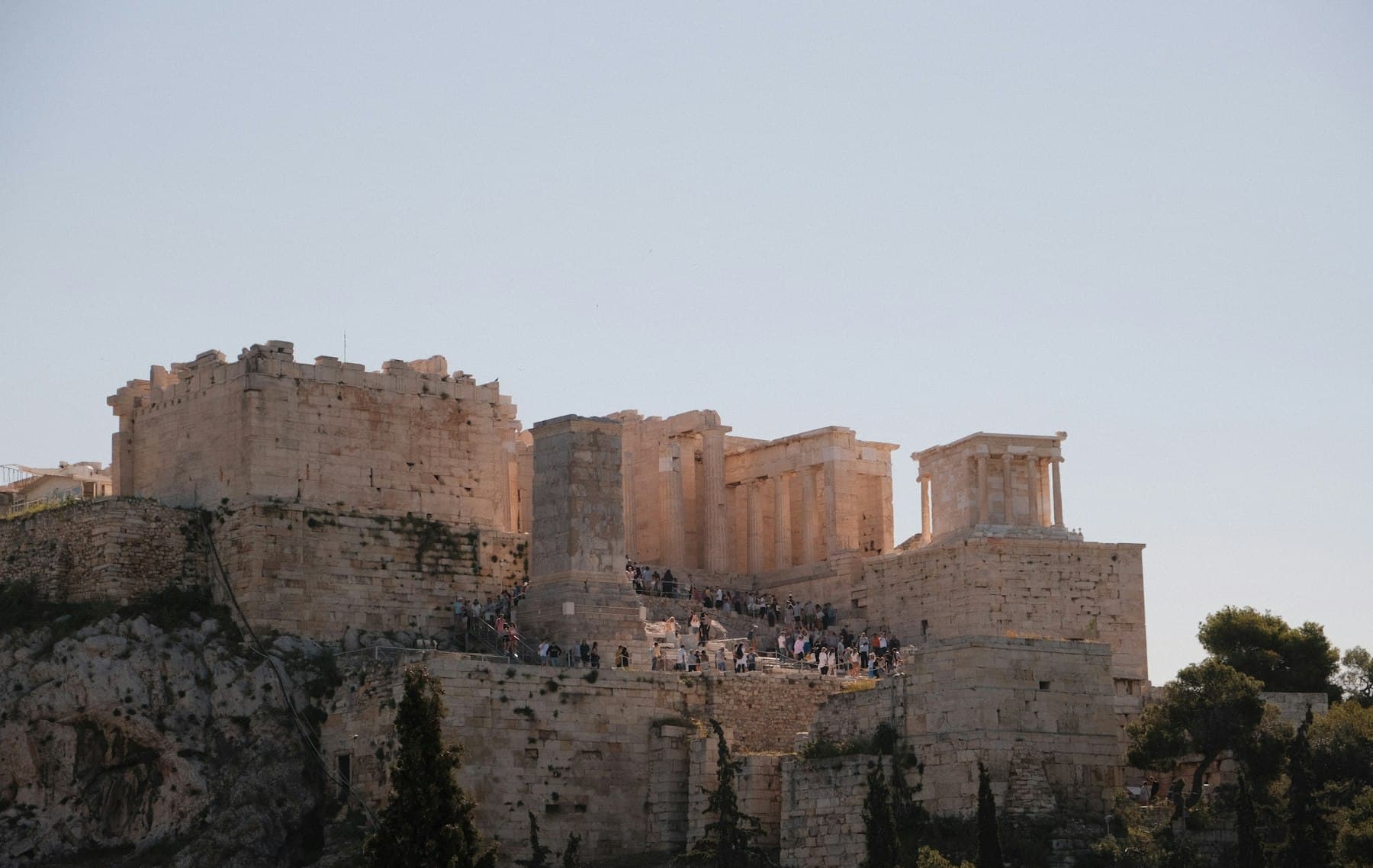
The temple of Athena Nike, Athena as goddess of victory, is the small temple on a bastion beside the Propylaia, the gateway to the Acropolis. Around the edge of that bastion, on three sides, ran a parapet of slabs about a metre high, and Wikipedia notes it kept people from falling from the steep bastion. Holes on the top of the slabs show that a metal railing raised it higher still.
The carving was on the outside, facing the path. So the Sandalbinder was made to be seen from below, by people climbing toward the gods. The parapet celebrated the victories of the Athenians over their enemies, Persians or other Greeks. It did not tell one continuous story. The same kinds of scene came round again on each side, with small changes: Nikai leading bulls to sacrifice, Nikai holding weapons and dressing victory trophies with captured armour, and Athena herself, seated and resting after battle. Many artists carved them under Agorakritos.
The Sandalbinder is thought to belong to the south side. Some researchers see a likeness between her and images of Aphrodite, and read her as a nod to the sanctuary of Aphrodite Pandemos, which lay just below the temple on that side.
Taken apart for a gun platform
The parapet had a hard life. In 1687 the Ottomans dismantled the temple and the parapet and used the stone to strengthen a gun emplacement and fortify the west side of the Acropolis against the Venetians, who were attacking under Francesco Morosini. The Sandalbinder was found in 1835 near the temple. Between 1835 and 1836 the gun emplacement was demolished and the temple was rebuilt for the first time, under Ludwig Ross, then responsible for antiquities. It was rebuilt again in 1940, and a third reconstruction was completed in 2010.
Look next door
Beside her in the museum are other slabs from the same parapet. On one, two Nikai lead a bull to sacrifice, one bracing a foot on a rock and pulling on a rope that was painted, never carved. Specialists see two different hands in that slab. Another shows a Nike hanging captured Persian gear on a trophy, and another shows Athena sitting on a rock with her helmet on her knees. Seen together, they show what the Sandalbinder was part of.
Your visit
The Sandalbinder is on the first floor, after the Karyatids, among the sculptures of Athena Nike and the Propylaia. Stand back a little, as the climbers did, and look up at her. If she is not in her place, the museum lends and moves pieces, so ask for her by name.
She is a stop on "The Acropolis Museum in an Hour" and the two-hour route in Roamer's independent Acropolis Museum guide. For the whole museum floor by floor, read what to see at the Acropolis Museum. To stand below the bastion where she once was, take Roamer's Acropolis walk, which stops at the temple of Athena Nike. Roamer is not affiliated with or endorsed by the Acropolis Museum.
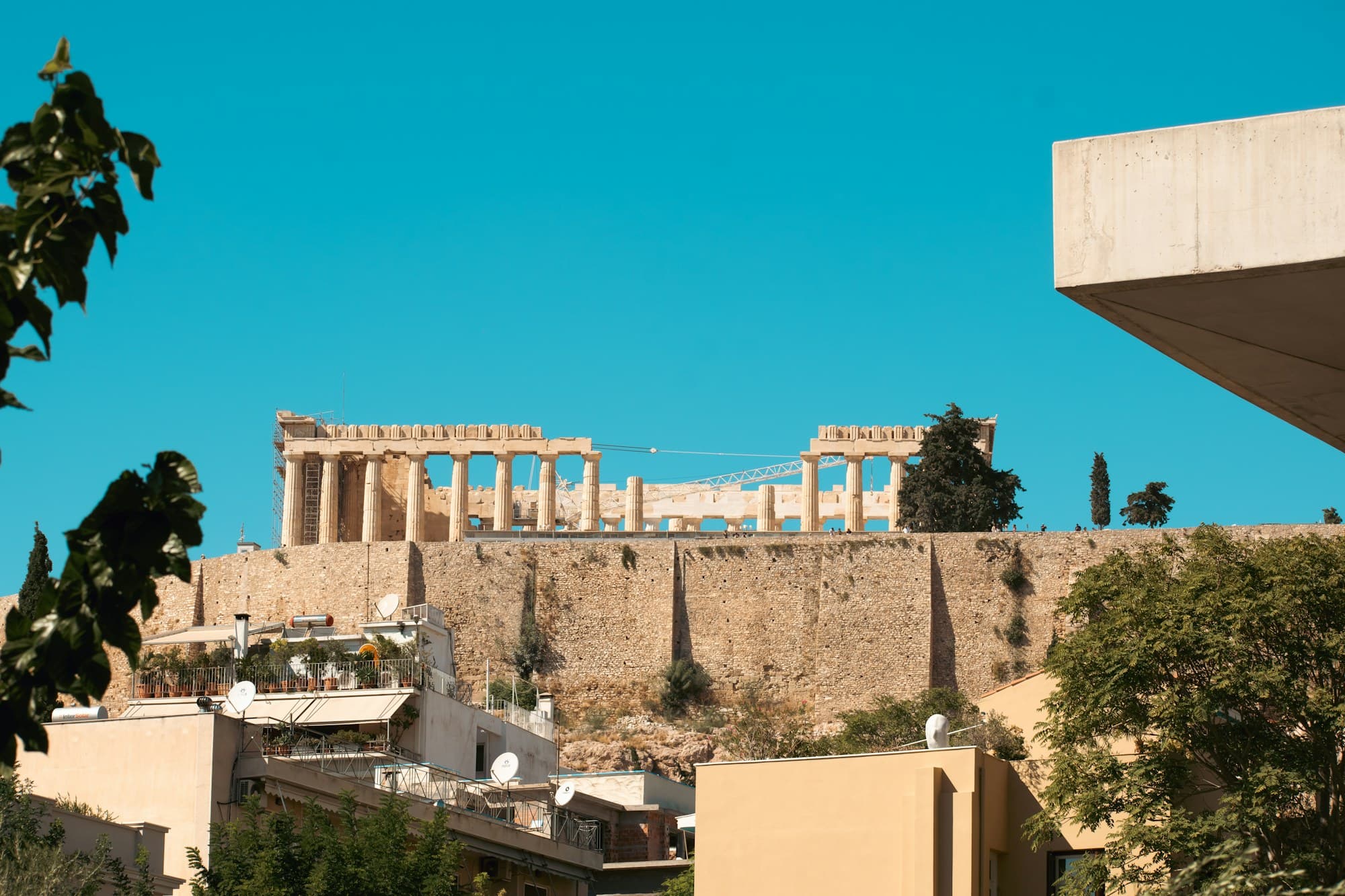
Cover: the west end of the Acropolis at dusk, with the Propylaia and the temple of Athena Nike. Photo: Sam on Unsplash.
Ready to experience it?
The Acropolis: The Rock That Invented the West
120 min · 1.6 km · moderate
More from Athens
Explore more at your own pace.
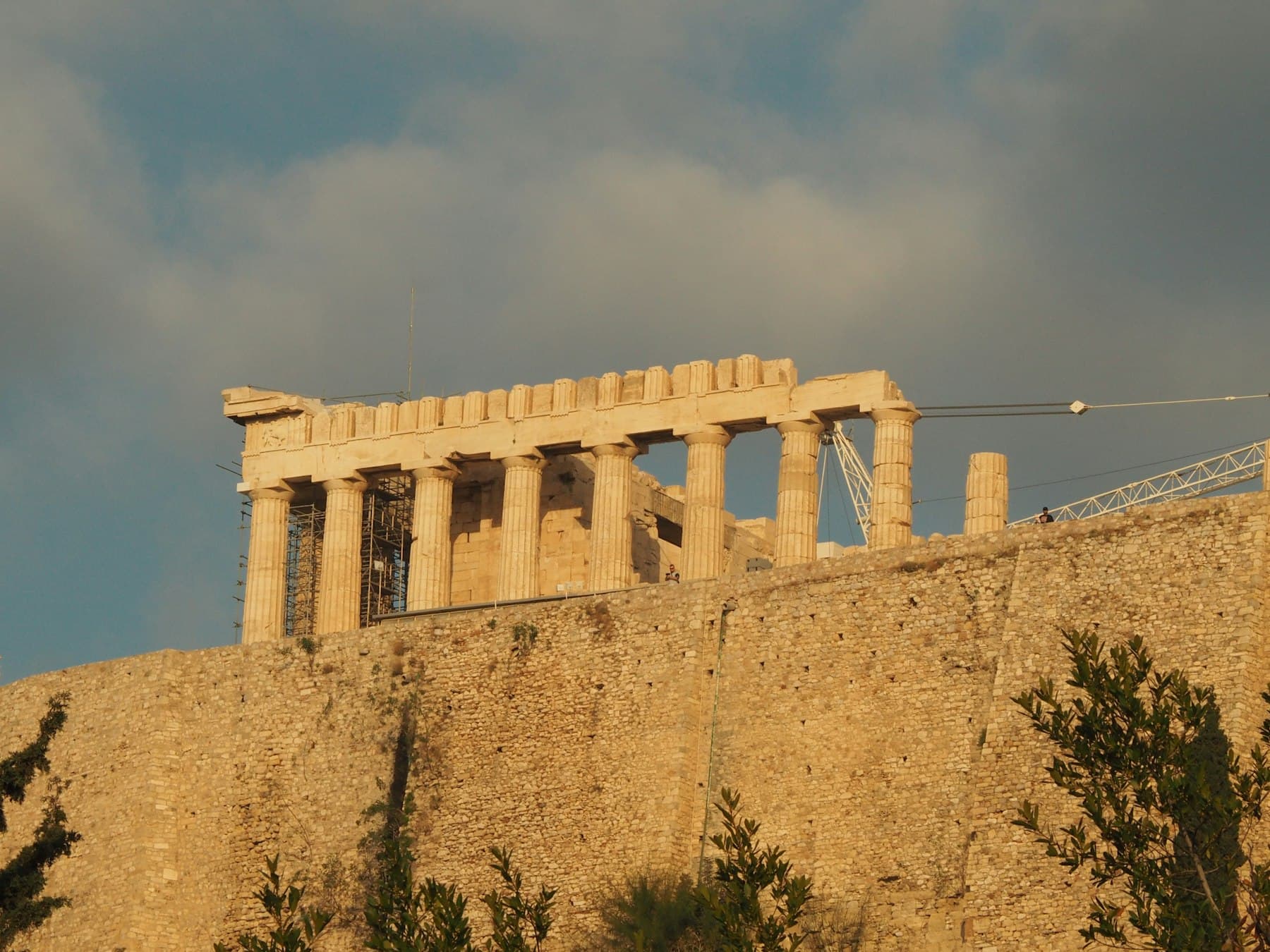
Acropolis Museum: What to See, Floor by Floor, From the Excavation to the Parthenon Gallery
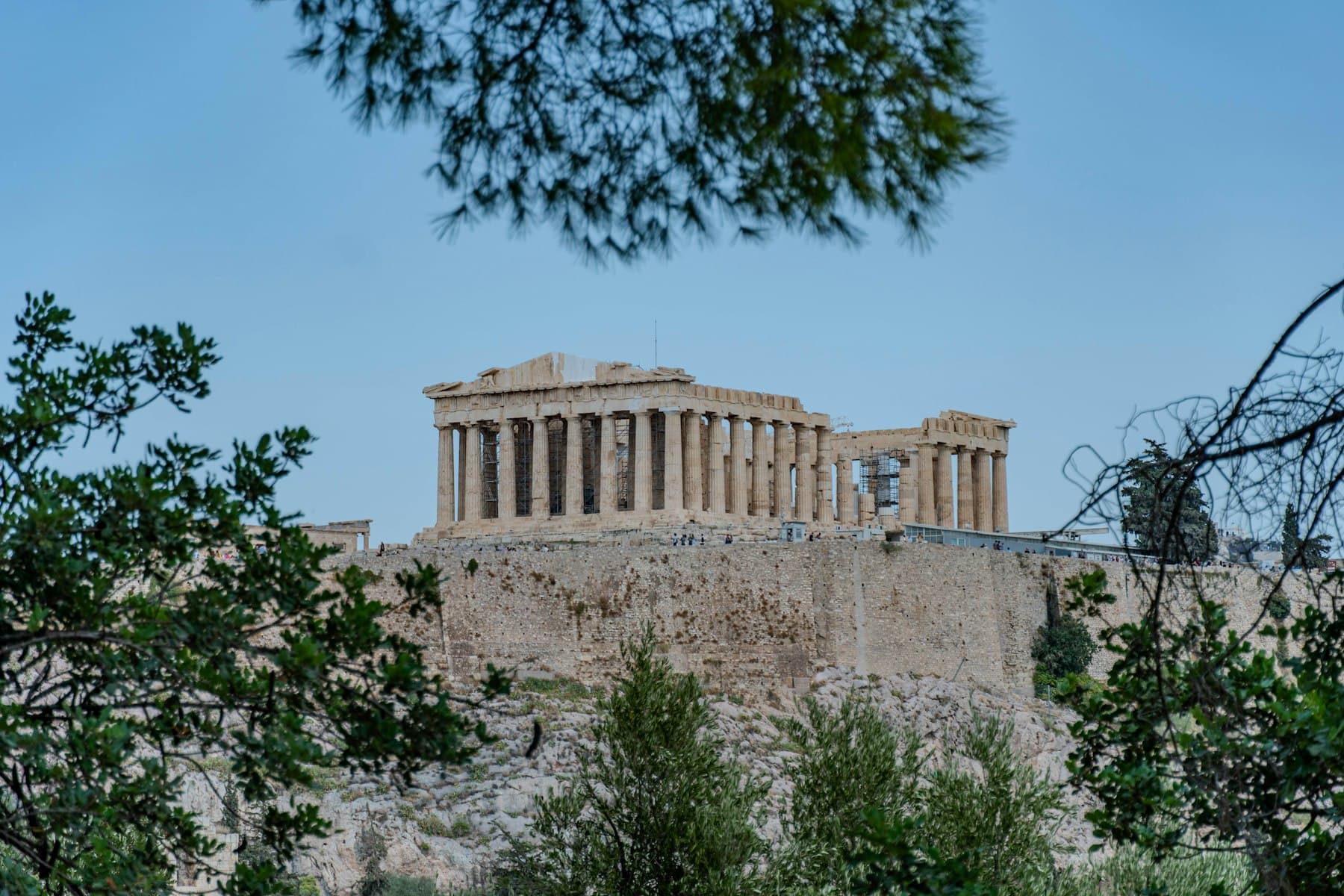
The Calf-Bearer (Moschophoros): A Man, His Calf and His Name in Stone
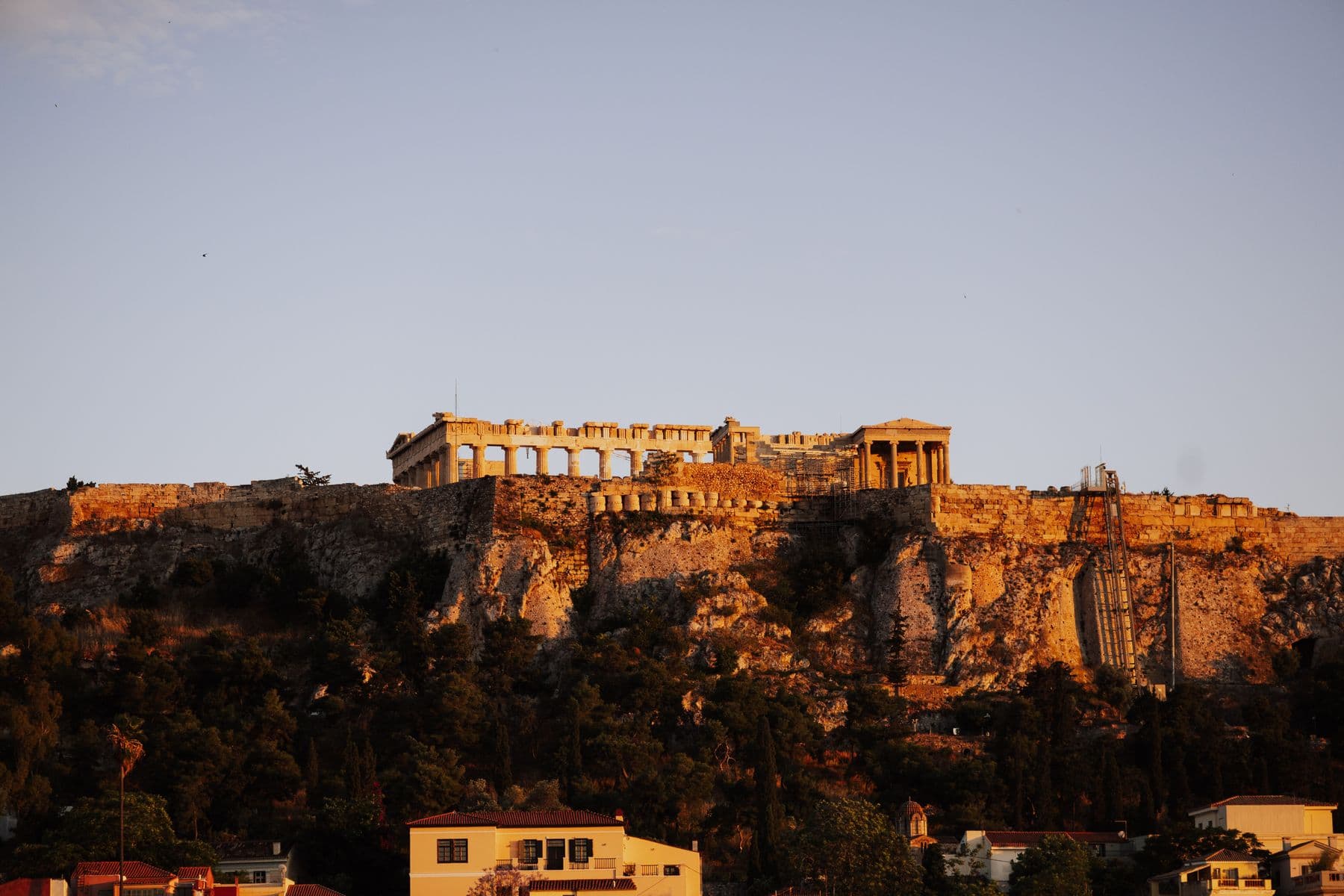
The Kritios Boy: The Moment Greek Statues Learned to Stand at Ease
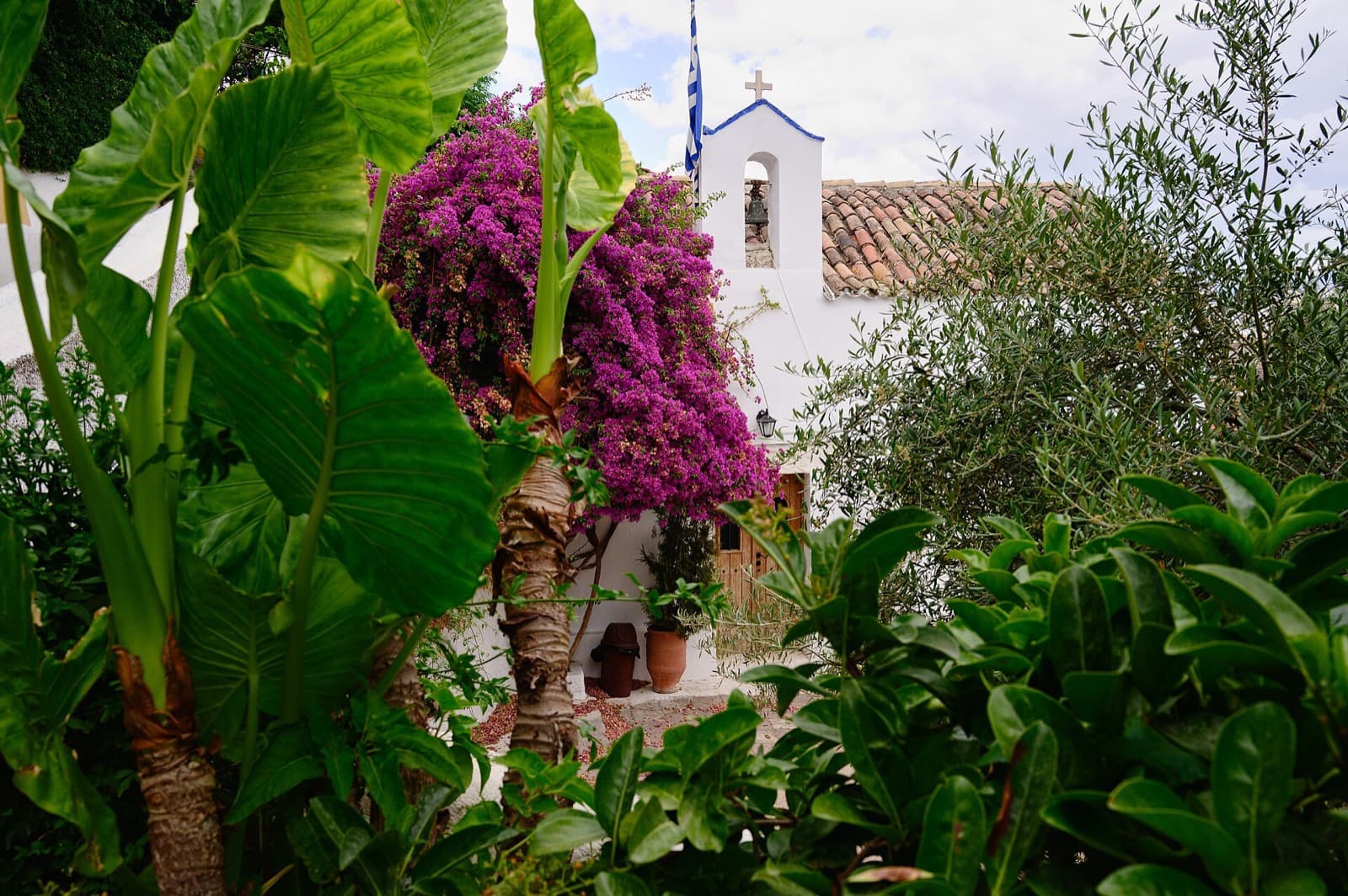
Anafiotika: The Cycladic Island Village Hiding on the Acropolis Slope
The Caryatids: The Maidens of the Erechtheion