The Moschophoros, or Calf-Bearer, is a marble statue of a bearded man carrying a calf across his shoulders, made about 570 BC and 1.65 metres tall. He stands in the Archaic Gallery on the first floor of the Acropolis Museum in Athens. The inscription on his base, written from right to left, says a man called Rhombos, son of Palos, dedicated him, and the museum believes the statue shows Rhombos himself, bringing his offering to the goddess.
The Calf-Bearer is a bearded man carrying a young calf across his shoulders, carved in marble from Mount Hymettos about 570 BC. He is 1.65 metres tall and stands in the Archaic Gallery on the first floor of the Acropolis Museum in Athens. His Greek name, Moschophoros, simply means "calf-bearer". His base still carries the name of the man who gave him.
What you can see
Start with the cross the arms make. The man's arms come up, the calf's legs come down, and where they meet his hands hold its four legs together in front of his chest. Wikipedia calls it a bold X-shaped composition, and it is what makes the statue read from across the room. The calf's head leans against his own, and its tail rests along his arm.
He is bearded, and a band holds his long hair. He wears a himation, a thin cloak, over his shoulders, leaving the front of his body bare. It is carved so thinly that it hardly shows against his skin, and the museum thinks it was painted to stand apart from it. The irises of his eyes were made of another material and are lost, but his lips still hold the Archaic smile, a reserved, almost amused expression.
Not all of him survived. His legs are broken off below the knees, and the feet that remain stand on the base, so look down as well as up.
The name on the base
Hear a stop from this walk
Areopagus and the Acropolis Museum: The Court and the Keeper
The base is limestone, carved separately from the marble body and about a metre across. On it runs a line of text written from right to left. It says that Rhombos, son of Palos, dedicated the statue. Wikipedia adds that the beginning of the name is missing, so it could also be read as Kombos or Bombos.
The museum believes the statue shows the dedicator himself: a wealthy Athenian who had the money to give something as expensive as a marble statue on the Acropolis. So this is not a god and not a hero. It is a donor, about 570 BC, showing himself bringing his calf for sacrifice, and paying to have that moment carved in stone for good.
A gift for whom?
The museum describes the calf as his offering to the goddess Athena. Not everyone agrees. Wikipedia notes that because the calf is male, a male god such as Zeus Polieus or Erechtheus has been suggested instead. Either way, the statue belongs to a world in which Athenians climbed the rock to give the gods something, and those who could afford it gave marble.
Something new
Small bronze figurines of a man carrying an animal were common. According to the museum, this is the first time, as far as we know, that the motif was used for a large marble statue. In the next part of the gallery, the pediments of the first temples on the rock, from about the same years, are carved in painted limestone. Rhombos paid for marble.
Found in two halves
The body was found in 1864, during building work for the old Acropolis Museum on the rock. The base, with the feet still on it, turned up in the same area in 1887, more than twenty years later. Like much of the Archaic Gallery, he survived because the Athenians buried the damaged offerings after the Persians burned the Acropolis in 480 BC.
Your visit
The Calf-Bearer stands in the Archaic Gallery on the first floor, among the korai, the riders and, a little further on, the Kritios Boy. Look at him from the front for the cross of arms and legs, then from the side to see how the calf's head turns in toward his. If he is not in his place, the museum lends and moves pieces, so ask for him by name.
He is the second stop on "The Acropolis Museum in an Hour" in Roamer's independent Acropolis Museum guide, and he appears on the two-hour route too. For the whole museum floor by floor, read what to see at the Acropolis Museum. To see how statues learned to relax a century later, read the Kritios Boy. Roamer is not affiliated with or endorsed by the Acropolis Museum.
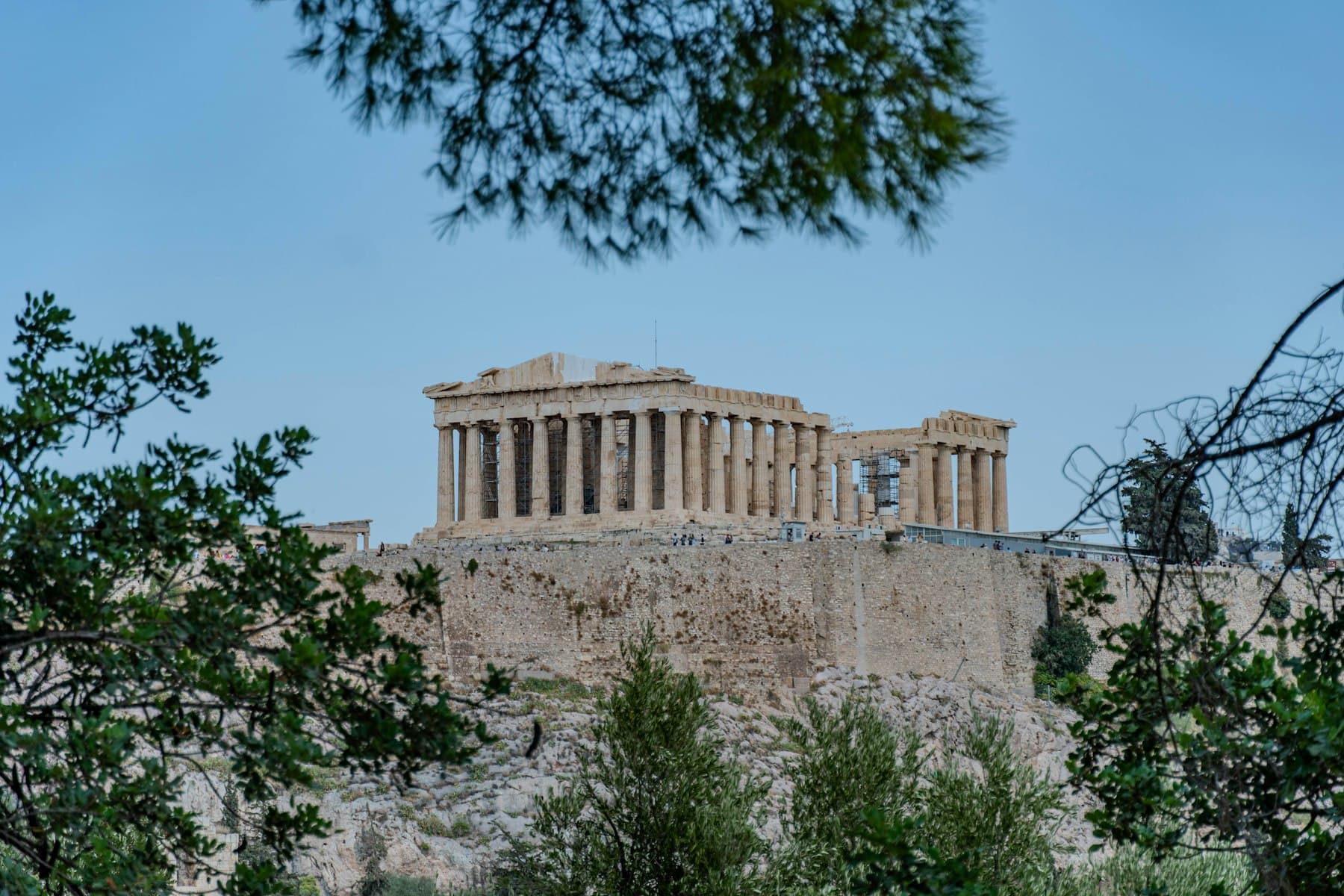
Cover: the Parthenon framed by tree branches. Photo: Reza Madani on Unsplash.
Ready to experience it?
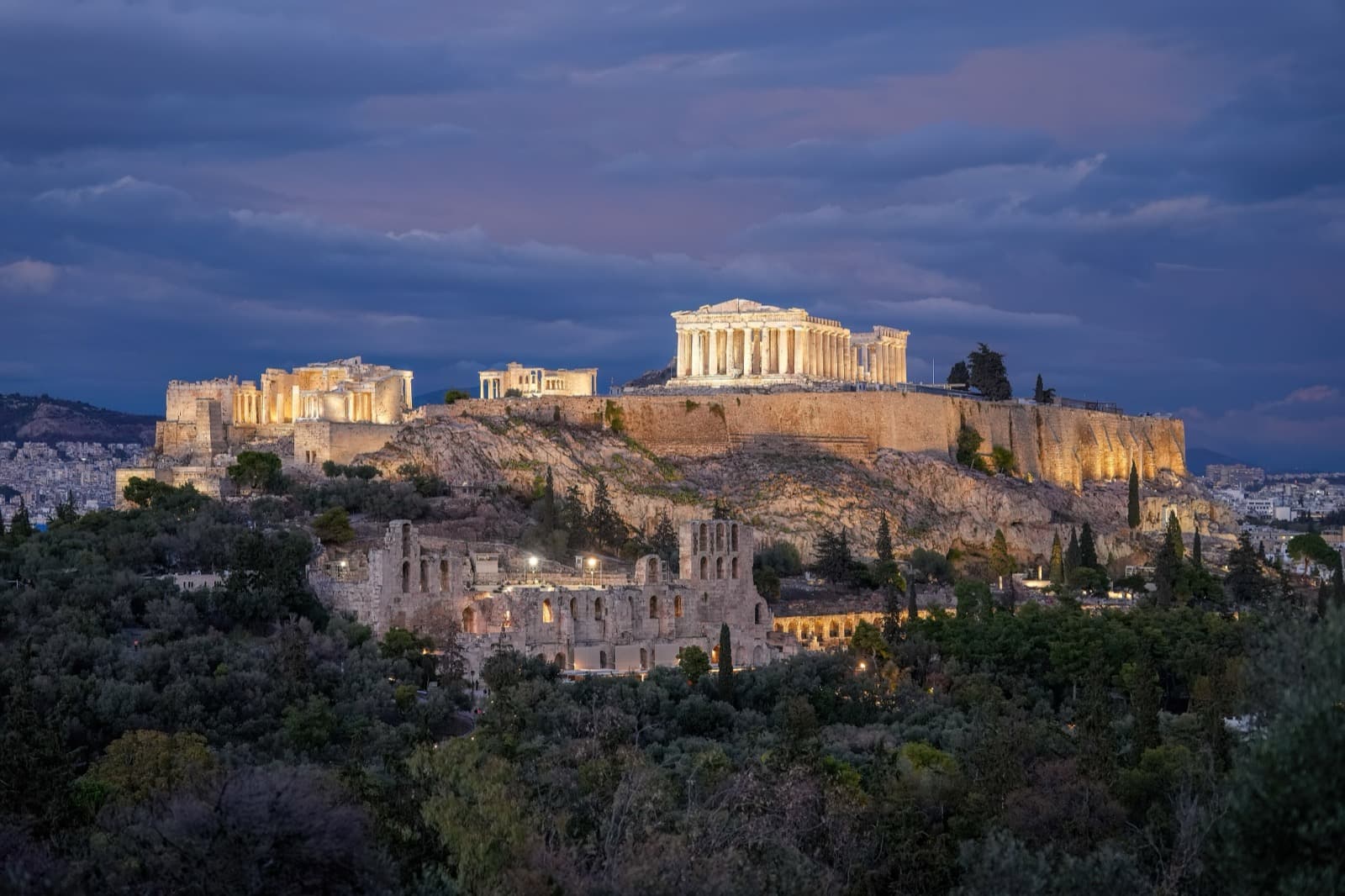
The Acropolis: The Rock That Invented the West
120 min · 1.6 km · moderate
More from Athens
Explore more at your own pace.
Acropolis Museum: What to See, Floor by Floor, From the Excavation to the Parthenon Gallery
Nike Adjusting Her Sandal: The Sandalbinder of the Acropolis Museum
The Kritios Boy: The Moment Greek Statues Learned to Stand at Ease
Anafiotika: The Cycladic Island Village Hiding on the Acropolis Slope
The Caryatids: The Maidens of the Erechtheion