The Kritios Boy is a marble statue of a naked youth, 1.22 metres tall, carved after 480 BC and now in the Archaic Gallery on the first floor of the Acropolis Museum in Athens. It matters because of how he stands: his weight rests on his left leg while the right knee bends and relaxes, the stance later called contrapposto. The museum calls him the most characteristic work of the Severe Style. He is named after the sculptor Kritios, to whom he is attributed by resemblance, and nobody knows whom he shows.
The Kritios Boy is a naked young man in marble from the island of Paros, 1.22 metres tall, carved after 480 BC. He stands in the Archaic Gallery on the first floor of the Acropolis Museum in Athens, among statues that are older than he is, and the difference shows the moment you look at his hips.
What you can see
His weight rests on his left leg. The right leg is loose, bent at the knee, and the rest of the body answers: one hip sits a little higher than the other. Statues of young men before him stood stiff and square, both legs taking the weight, as if at attention. This one stands the way a real person stands when nobody is watching. Art historians call the stance contrapposto, and Wikipedia describes him as the first statue known to use it.
Now look at the face. The smile that the earlier statues in this hall wear, the Archaic smile, has gone. His expression is solemn, the look the museum calls the Severe Style, and it calls the statue the most characteristic work of that style. His eyes were made of another material and are lost. His hair follows the shape of his skull and is gathered tightly round a ring, with a few strands loose at the temples and the back of the neck. Traces of red still show in it.
A body and a head, two decades apart
Hear a stop from this walk
Areopagus and the Acropolis Museum: The Court and the Keeper
The museum's record says the torso was found in 1865 or 1866 southeast of the Parthenon. Wikipedia adds that it came up while the foundations of the old museum on the Acropolis were being dug. The head turned up in 1888, near the south walls of the Acropolis. Only then could the two be put together.
Where he was found matters. In 480 BC the Persians took Athens and burned the Acropolis. When the Athenians came back, they buried much of the wreckage in large pits, and the Kritios Boy was found among that debris. Wikipedia notes that the head lay in the latest layer of that rubble, and that this, with his style, is key to dating him. The archaeologist Jeffrey Hurwit gave him a long article in the American Journal of Archaeology in 1989, on his discovery, his reconstruction and his date. The museum's label settles for "after 480 BC".
How the head came off is also unknown. The museum gives two views. One is that it happened after 450 BC, during the building programme of Perikles, when broken statues were used as fill to level the surface of the rock. The other is that the head was removed earlier so the torso could be reused, and the head was buried with ceremony, as a sign of respect.
Why "Kritios"?
No signature names the sculptor. Archaeologists called him the Kritios Boy because he looks like the Harmodios of the Tyrannicides, the bronze group of Harmodios and Aristogeiton that Kritios made with Nesiotes. It stood in the Athenian Agora. The bronzes are lost and are known today only from Roman marble copies, so the comparison runs through copies. The attribution is a resemblance, not a record.
Who is he?
Nobody knows. The museum gives both main readings. Some scholars think he is a young athlete, a winner at the Greater Panathenaia, the city's great festival for Athena. Others think he is a hero, most likely Theseus. They link the statue to 476 or 475 BC, when Kimon brought what were said to be the bones of Theseus to Athens from the island of Skyros.
Your visit
The Kritios Boy stands in the double-height Archaic Gallery on the first floor, a hall of 28 columns lit from above. Walk round him slowly: the shift in the hips reads best from the front and the side. Then look back at the Calf-Bearer and the korai of the century before him, and the change in a single lifetime is plain. If he has moved, the museum lends and moves pieces, so ask for him by name.
He is a stop on three of the five routes in Roamer's independent Acropolis Museum guide, which tells his story in the room. For the whole museum floor by floor, read what to see at the Acropolis Museum, and for the man who stood a few metres away a century earlier, the Calf-Bearer. Roamer is not affiliated with or endorsed by the Acropolis Museum.
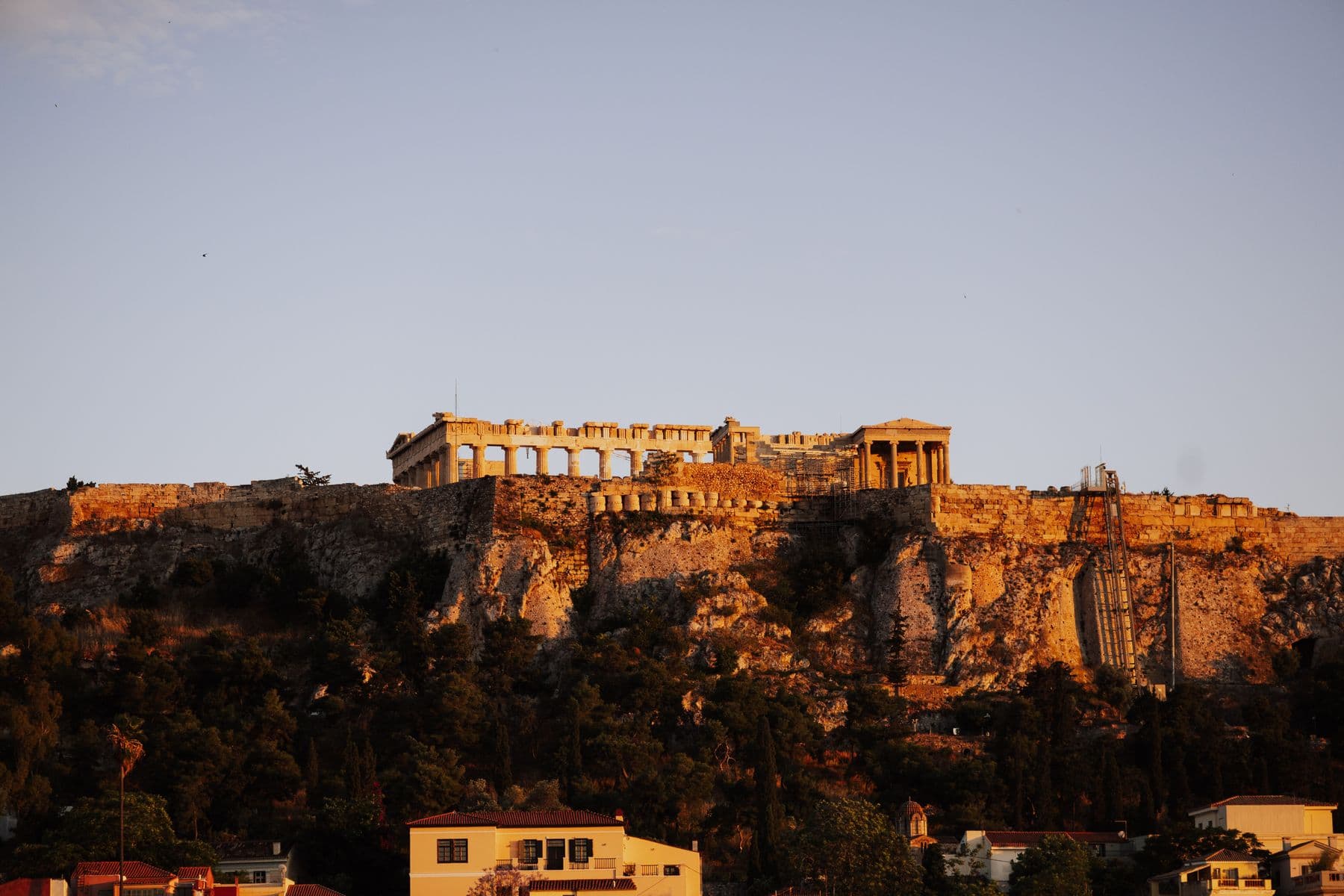
Cover: the Acropolis and the Parthenon from the south at golden hour. Photo: K on Pexels.
Ready to experience it?
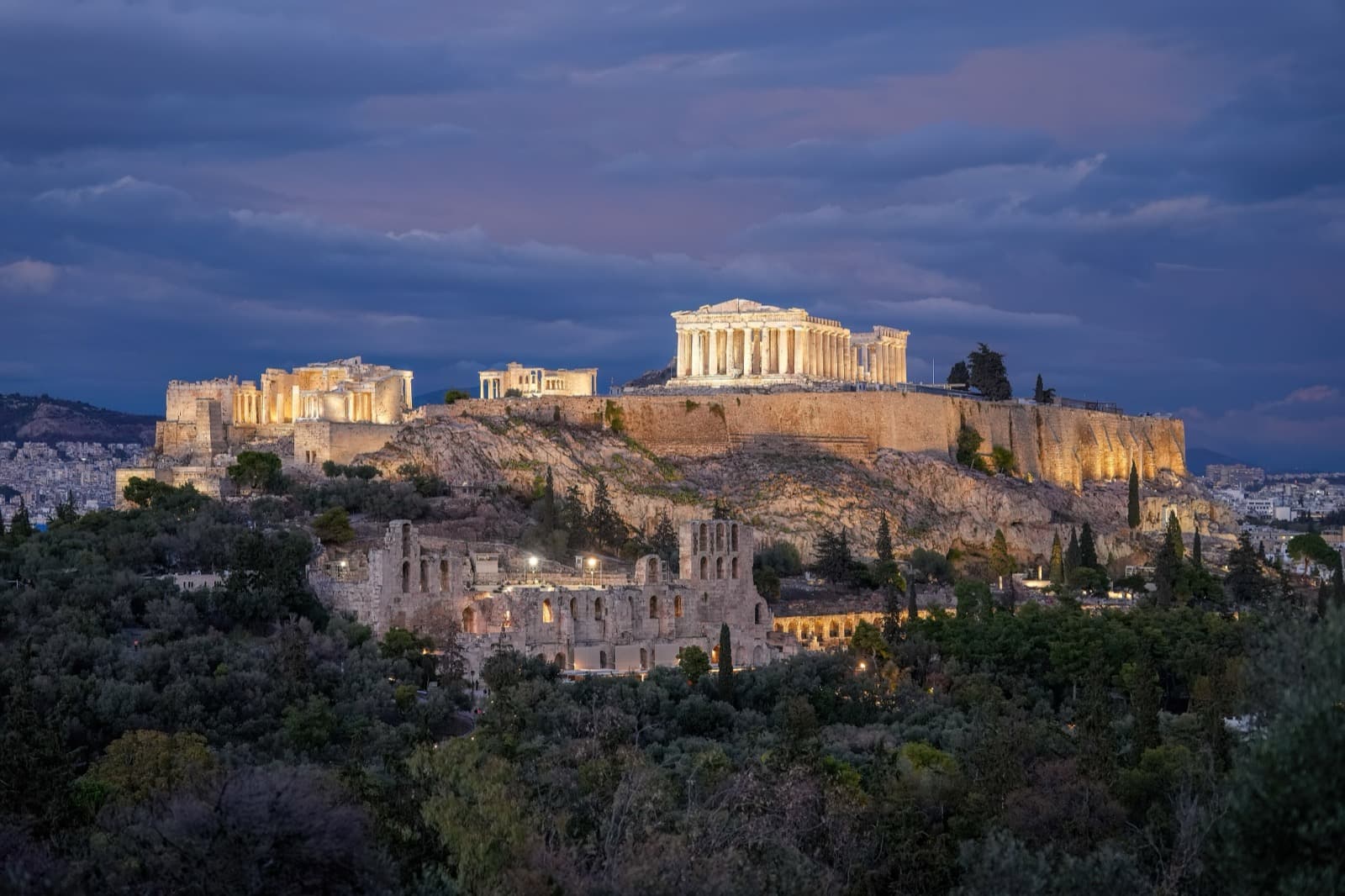
The Acropolis: The Rock That Invented the West
120 min · 1.6 km · moderate
More from Athens
Explore more at your own pace.
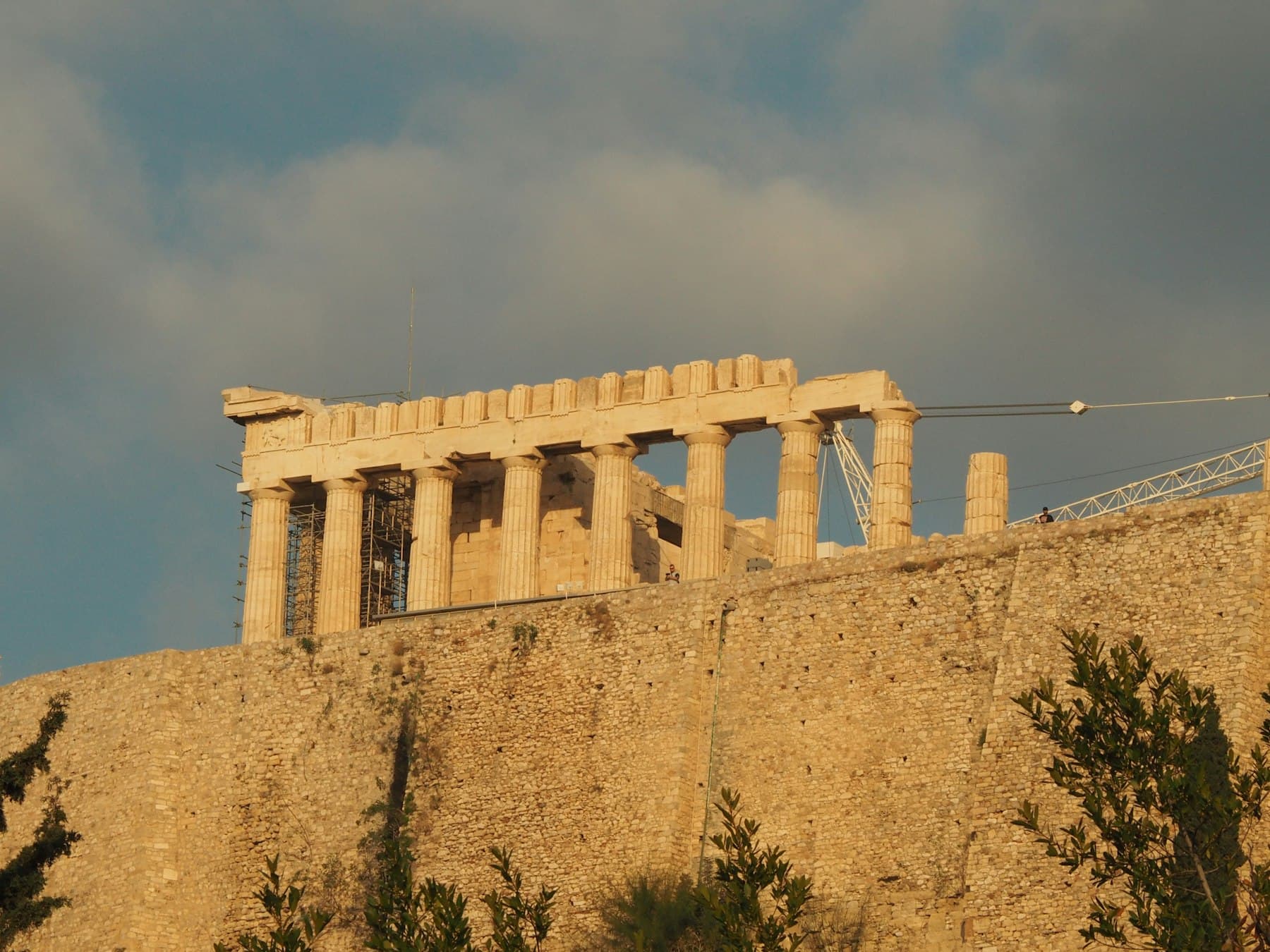
Acropolis Museum: What to See, Floor by Floor, From the Excavation to the Parthenon Gallery
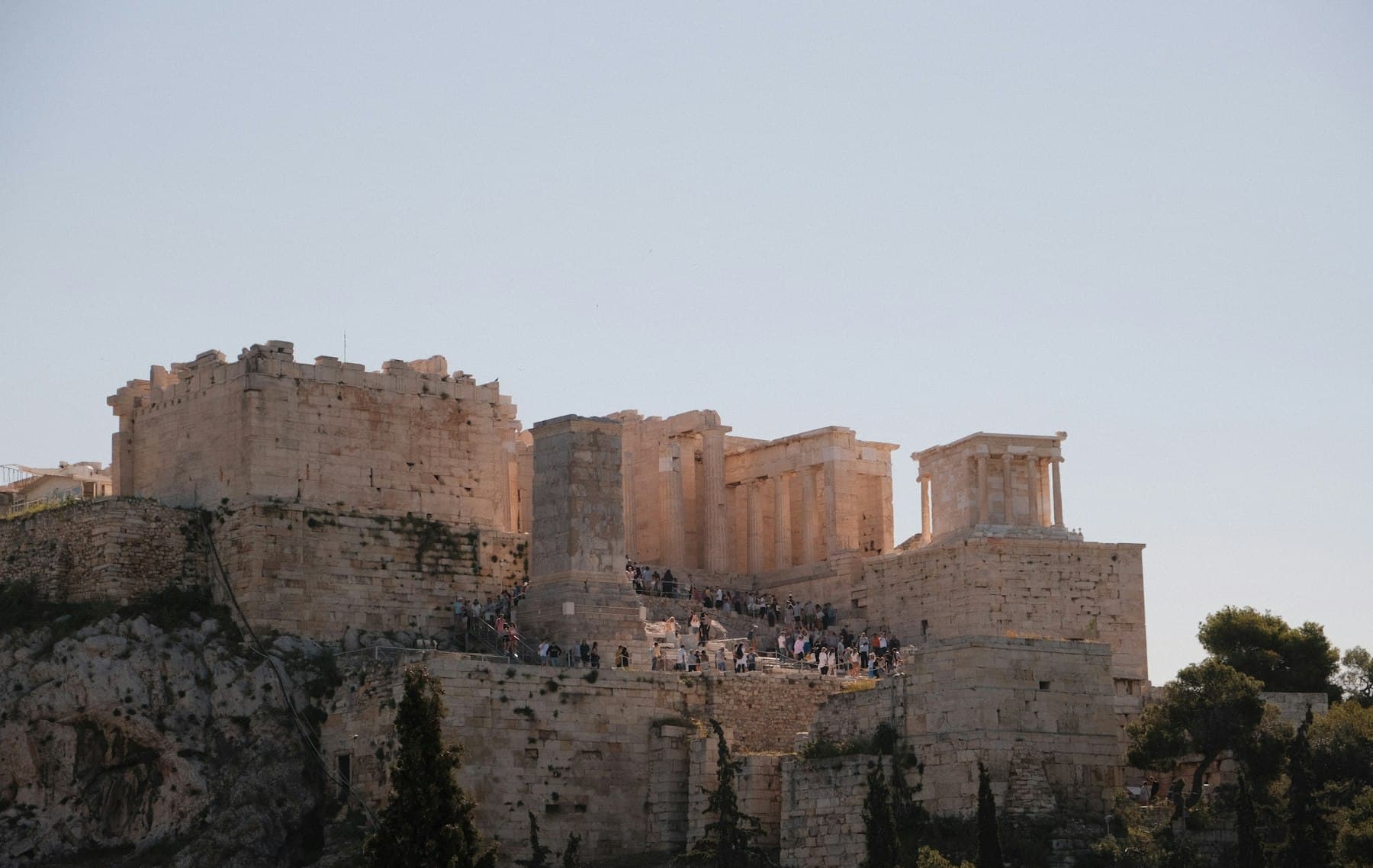
Nike Adjusting Her Sandal: The Sandalbinder of the Acropolis Museum
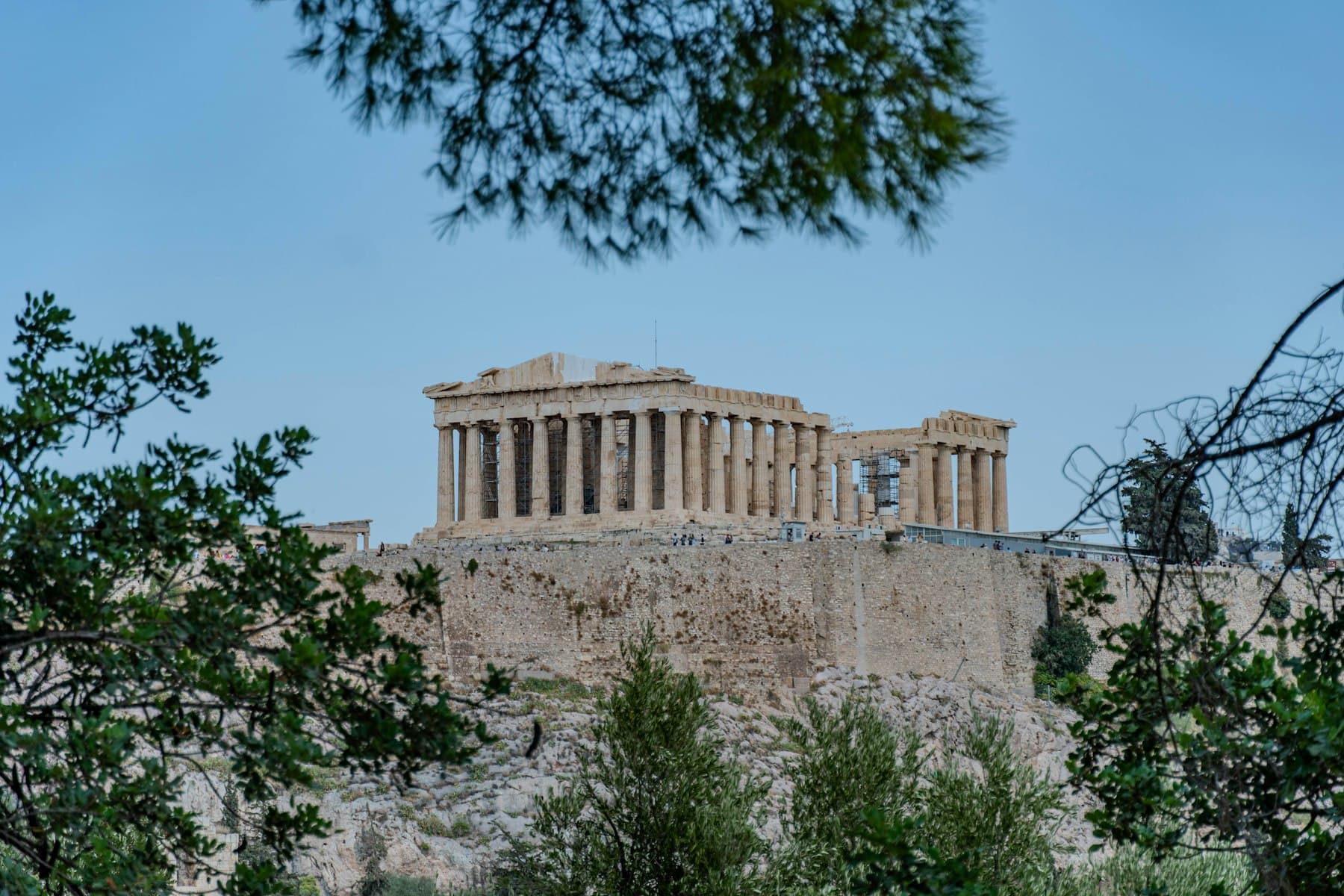
The Calf-Bearer (Moschophoros): A Man, His Calf and His Name in Stone
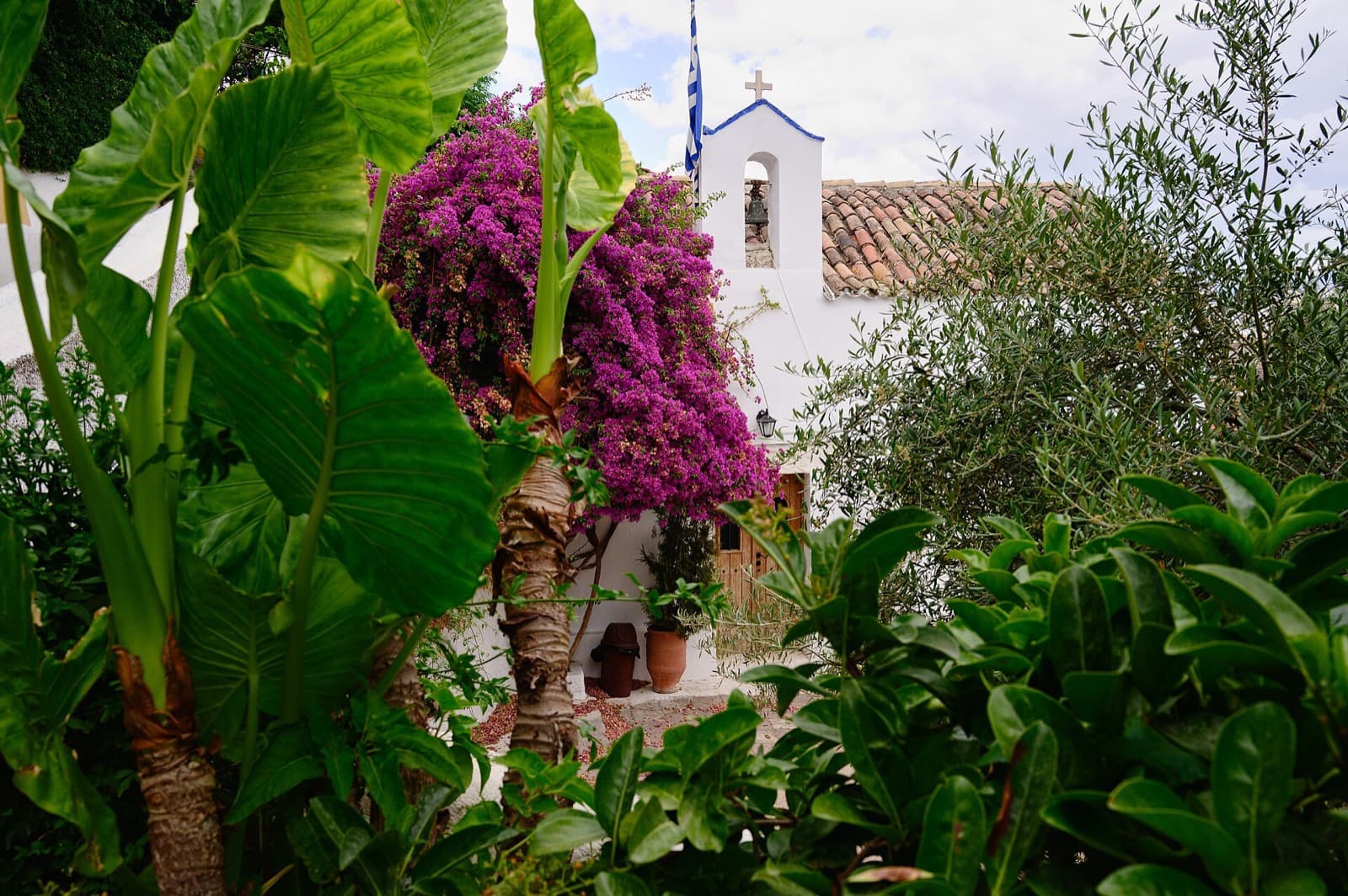
Anafiotika: The Cycladic Island Village Hiding on the Acropolis Slope
The Caryatids: The Maidens of the Erechtheion