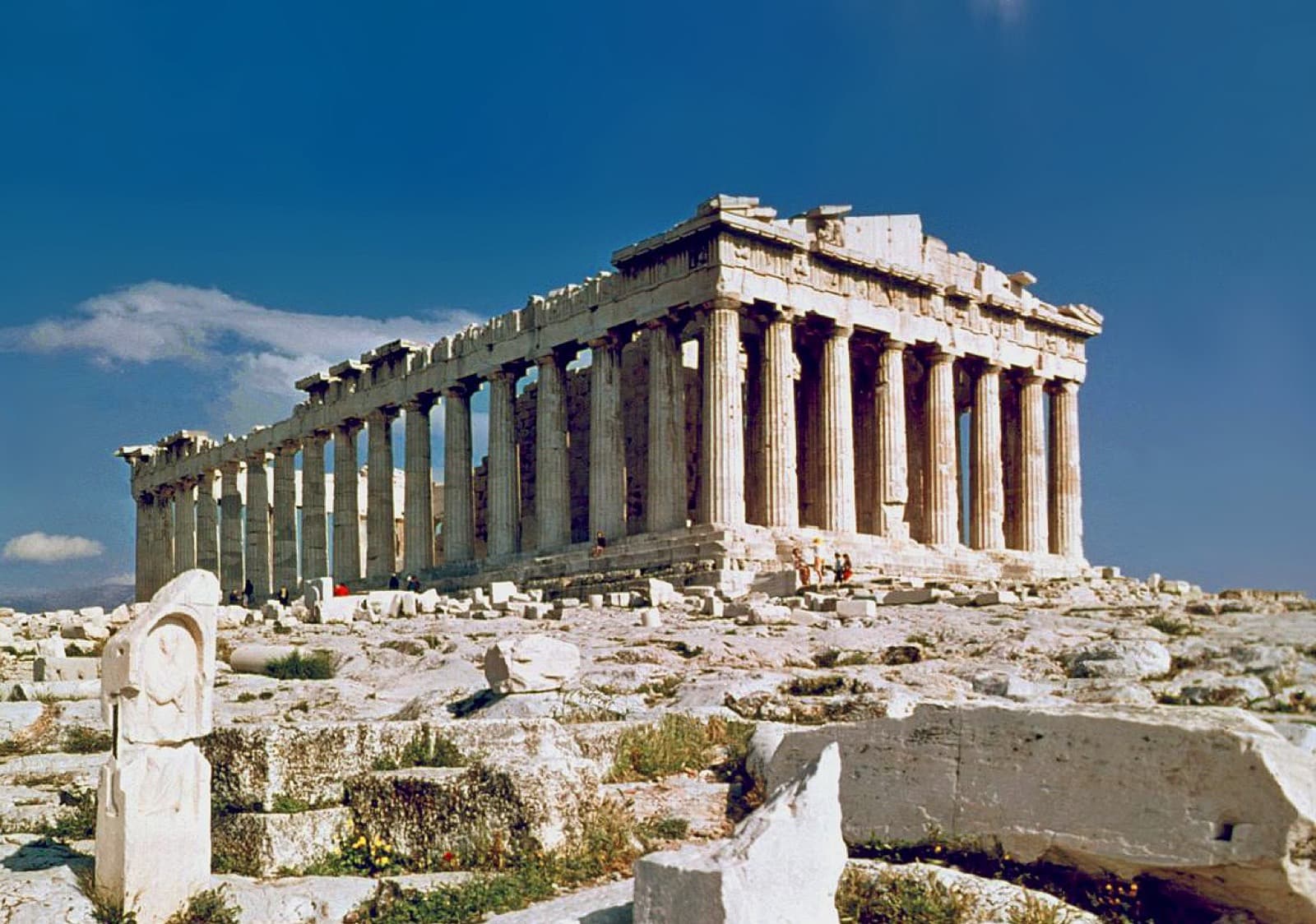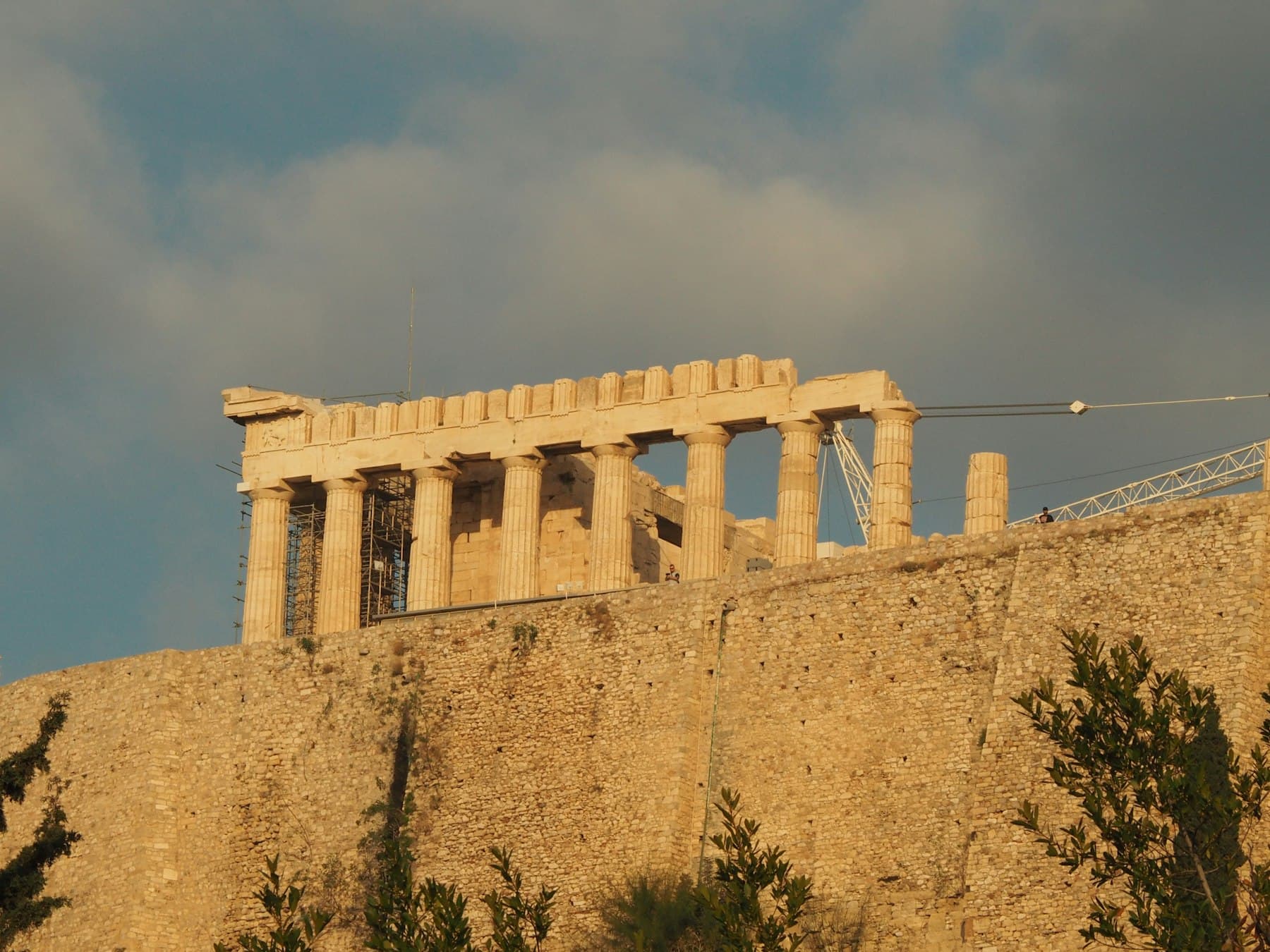
Plan about two hours for the highlights of the Acropolis Museum in Athens, and longer if you want the excavation under the building as well. Start in the glass-floored Gallery of the Slopes, go up to the first floor for the Calf-Bearer, the Peplos Kore, the Kritios Boy, the Karyatids and the Sandalbinder, then take the escalators to the Parthenon Gallery at the top, where the temple's frieze runs round a core the size of the temple's inner room, with the Parthenon itself in view.
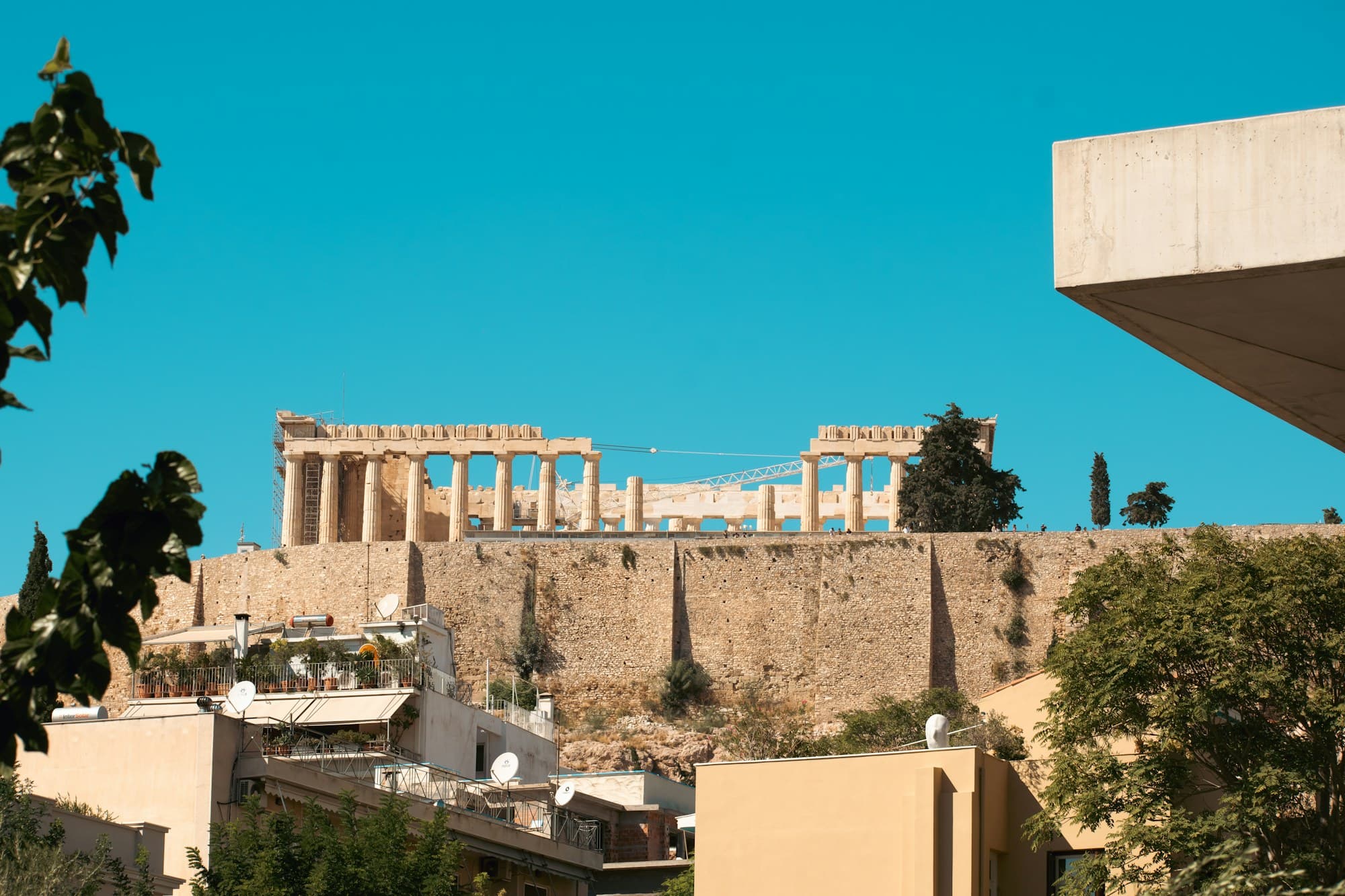
The Acropolis Museum stands below the south side of the Acropolis, about 300 metres from the Parthenon, and almost everything in it was found on the rock or on its slopes. The building is by the architect Bernard Tschumi, working with Michael Photiadis of Athens, and it opened on 20 June 2009, three decades after Greece held its first competition for a new museum. How long does it take? Plan about two hours for the highlights, and longer if you add the excavation underneath.
A museum built as a climb
Tschumi split the building into a base over the ruins, a middle for the galleries and a glass top for the Parthenon, tied together by one route. It climbs from the excavation, up a glass-floored ramp that echoes the hillside, through a tall hall of Archaic statues, to the Parthenon's sculptures, then comes back down through Classical and Roman Athens. The ruins held the project up: an earlier winning design was dropped in 1999, and in the finished building 43 columns stand among the ancient houses, each placed with the archaeologists so as not to damage them.
What is on each floor
Hear a stop from this walk
Areopagus and the Acropolis Museum: The Court and the Keeper
- Level -1, the excavation. A whole Athenian neighbourhood, lived in on and off from between 3500 and 3000 BC until the early 1200s AD, wrecked by Sulla's troops in 86 BC and by the Herulians in AD 267. You walk above streets, wells, private baths and workshops. It has its own entrance from the courtyard, and since June 2024 a small museum down there shows about 1,150 things its people left behind.
- The ground floor, the Gallery of the Slopes. A glass-floored ramp with finds from the shrines on the hillside: wedding vases left for Nymphe, stone eyes, ears and legs offered to the healing god Asklepios, and masks and actors from the theatre of Dionysos.
- The first floor. The early Acropolis, then the Archaic Gallery, a double-height hall of 28 columns with painted limestone pediments from the first temples on the rock and the marble korai, riders and young men given to Athena. Beyond them come the Karyatids and the sculptures of the little temple of Athena Nike. The north side runs on to Alexander the Great and Roman Athens.
- The second floor holds the restaurant and its terrace.
- The top floor, the Parthenon Gallery. A glass hall turned about 23 degrees from the floors below to line up with the temple. Its concrete core matches the orientation and dimensions of the Parthenon's cella, the inner room. The frieze runs round the core in the order it held on the building, brought down low enough to see; the metopes stand in pairs between steel columns that match the temple's in number, and the pediment figures stand at each end.
The plaster casts in the Parthenon Gallery
You will see two colours. The weathered marble is original. The bright white pieces are plaster casts of sculptures held elsewhere, mostly in the British Museum in London, many of them removed for Lord Elgin in the early 1800s, and a few in the Louvre in Paris and other museums. Setting casts beside originals lets each side of the temple be read whole.
The mix changes from side to side. Fourteen of the sixteen west frieze blocks are here in the original, and the first two are in London. On the south side only metopes 1 and 12 are here largely whole, with fragments of nine others; fifteen are in the British Museum and one in the Louvre. Much of the west pediment is plaster. Small originals still arrive: a fragment with Artemis' feet came back from Palermo in 2022, and a head from a south metope from the Vatican Museums in 2023.
The pieces not to miss
- The Calf-Bearer, about 570 BC, a bearded man with a calf across his shoulders. His story starts with the name on his base.
- The Peplos Kore, about 530 BC. Her paint shows a white dress decorated with rows of small animals, birds and riders.
- The Kore of Antenor, the largest kore found on the Acropolis, about two metres tall.
- The Kritios Boy, after 480 BC, resting his weight on one leg. Read the Kritios Boy.
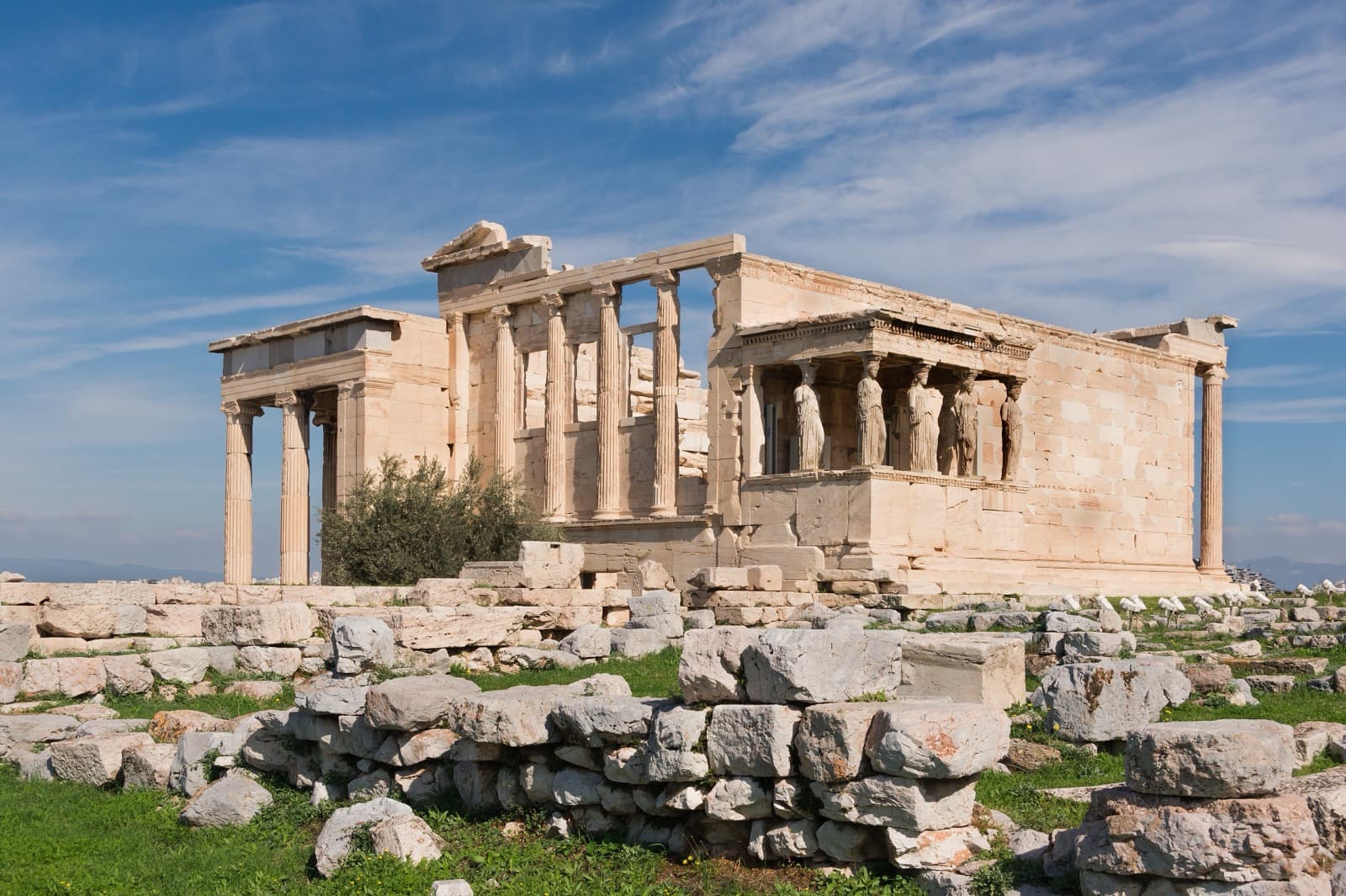
- The Karyatids, five of the six maidens of the Erechtheion's south porch; the sixth is in London. Read their story.
- The Sandalbinder, about 410 BC, a winged Victory bending to her sandal. Read the Sandalbinder.
- The Parthenon Gallery: Selene sinking into the sea on the east pediment, four seated gods on the east frieze, a rider bracing against a rearing horse on the west frieze, and a Centaur and a Lapith on south metope 1. For the temple itself, read the Parthenon.
- Alexander the Great, a young head on the first floor's north side, which the museum attributes to Leochares.
What to see in two hours
- The Gallery of the Slopes (15 minutes). Wedding vases, offerings to Asklepios and Papposilenos with the infant Dionysos.
- The early Acropolis and the Archaic pediments (20 minutes). The bronze Gorgon, the lioness and calf, and Athena fighting the Giants.
- The Archaic Gallery (25 minutes). The Calf-Bearer, the Peplos Kore, the Rampin Rider, the Kore of Antenor and the Kritios Boy.
- The Karyatids and Athena Nike (15 minutes). The maidens and the Sandalbinder.
- The Parthenon Gallery (35 minutes). All four sides, from the west end round to the east pediment.
- The north side (10 minutes). Alexander the Great and the magic sphere.
Five routes as ready-made plans
- The Acropolis Museum in an Hour (60 minutes). Eleven pieces from the Slopes to the Parthenon Gallery.
- The Acropolis Museum in Two Hours (120 minutes). Twenty four stops from the excavated neighbourhood to the Parthenon Gallery and back to Roman Athens.
- Athena's Temples: Before and After the Persians (50 minutes). The painted pediments of the early temples, the Kritios Boy, then the Parthenon's pediments, frieze and metopes.
- Small Things and Everyday Lives (50 minutes). A vessel shaped like a child's head, a sandal carved in stone, a hoard of bronze tools and a magic sphere.
- Glass over Ruins: Tschumi's Acropolis Museum (45 minutes). The building itself in eight stops, from four competitions to a glass hall turned to face the Parthenon.
How this fits the Roamer guide
Roamer has an independent audio guide to the Acropolis Museum. It is not affiliated with or endorsed by the museum, and admission is paid separately. Walk into any part of a floor and play its story, or follow one of the five routes. It is audio and text only, with no photographs of the sculptures or galleries, because the museum licenses images of its collection itself. The museum moves and lends pieces, so one may be off view on the day. You can find it here: the Acropolis Museum guide. To see where the sculptures came from, take Roamer's Acropolis walk up the rock.
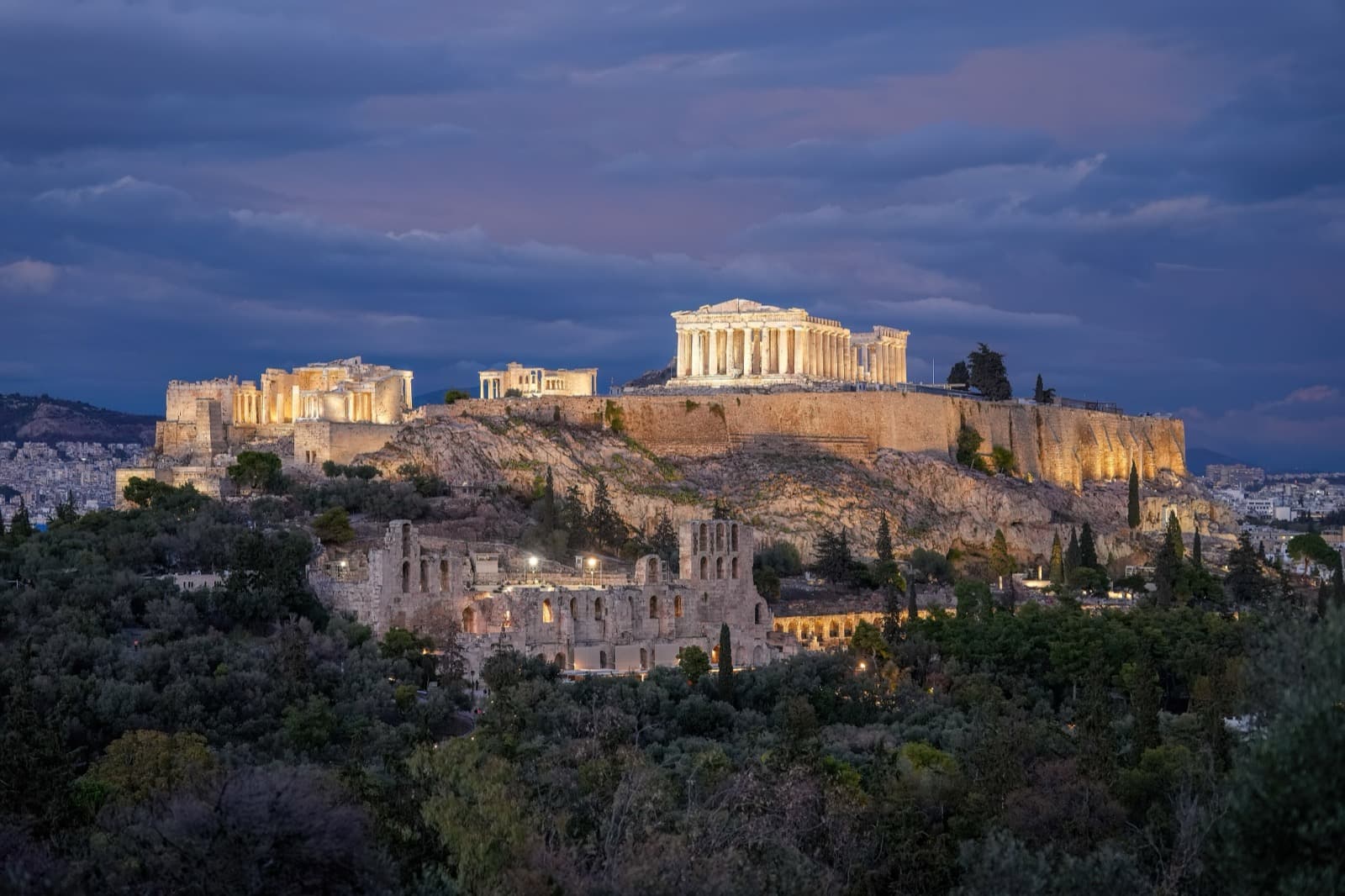
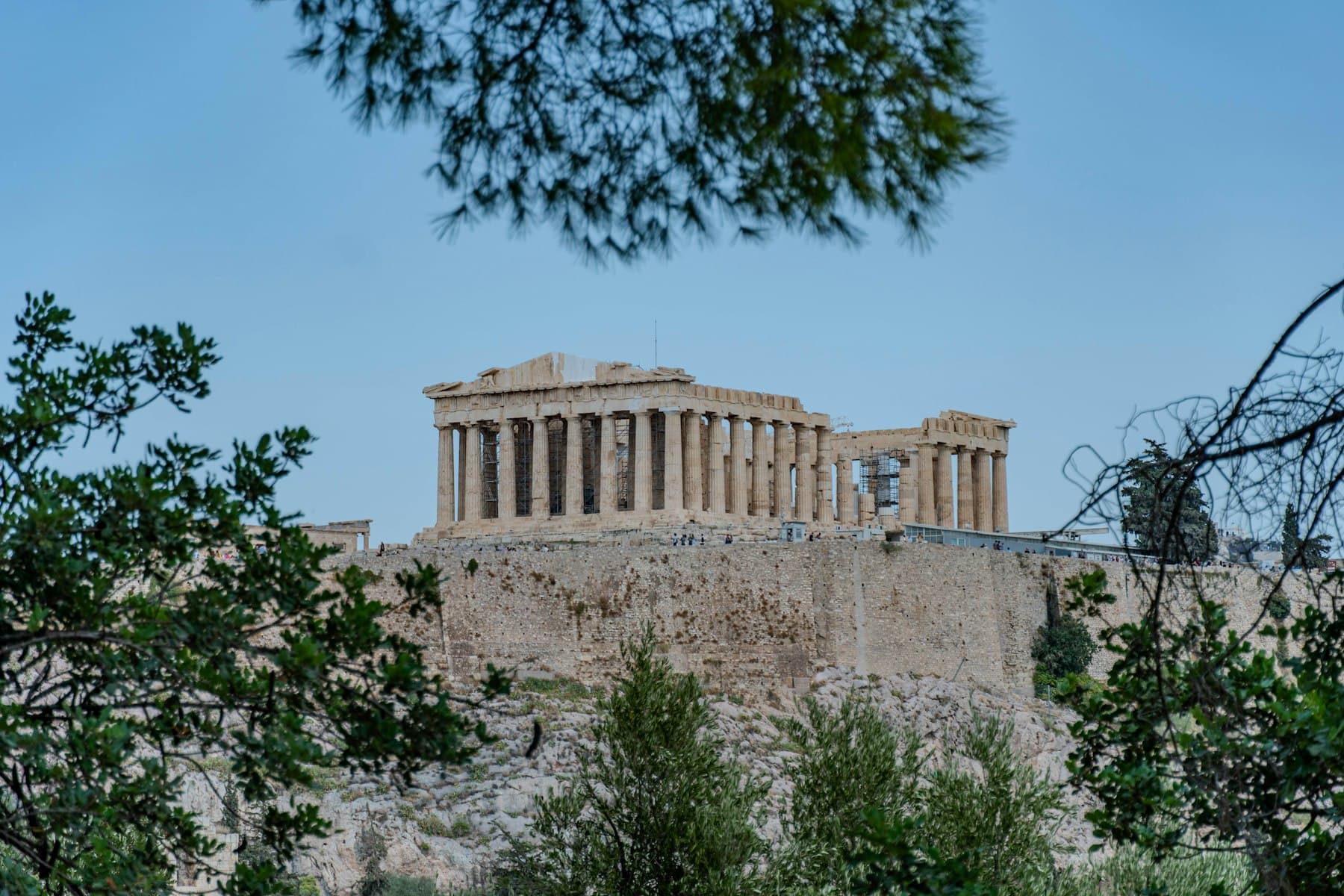
Cover: the Parthenon above the south wall of the Acropolis in evening light. Photo: Rebecca Evy on Unsplash.
Frequently asked questions
- How long do you need at the Acropolis Museum?
- About two hours covers the highlights: the Gallery of the Slopes, the Archaic Gallery, the Karyatids, Athena Nike and a full circuit of the Parthenon Gallery. Add time for the excavated neighbourhood under the building, which has its own entrance from the courtyard, and for the first floor's north side if you want Classical and Roman Athens.
- What should you not miss at the Acropolis Museum?
- The Calf-Bearer, the Peplos Kore, the Kore of Antenor and the Kritios Boy in the Archaic Gallery, the five Karyatids, the Sandalbinder from the parapet of Athena Nike, and in the Parthenon Gallery the east pediment, the seated gods of the east frieze, the west frieze and the south metopes. The head of Alexander the Great is on the first floor's north side.
- Are the Parthenon sculptures in the Acropolis Museum originals?
- Many are, and many are not. The Parthenon Gallery shows original marble beside white plaster casts of pieces held abroad, mostly in the British Museum in London, with a few in the Louvre and other museums. The west frieze is almost all original: fourteen of its sixteen blocks are here, and the first two are in London. Much of the west pediment and most of the south metopes are casts.
- Where are the Karyatids?
- Five of the six Karyatids from the Erechtheion's south porch stand on the first floor. The sixth was removed in the early 1800s for Lord Elgin and is in the British Museum in London.
- Can you see the Parthenon from the Acropolis Museum?
- Yes. The top floor, the Parthenon Gallery, is walled in glass and turned to line up with the temple, which stands on the rock about 300 metres away.
Ready to experience it?
The Acropolis: The Rock That Invented the West
120 min · 1.6 km · moderate
More from Athens
Explore more at your own pace.
Nike Adjusting Her Sandal: The Sandalbinder of the Acropolis Museum
The Calf-Bearer (Moschophoros): A Man, His Calf and His Name in Stone
The Kritios Boy: The Moment Greek Statues Learned to Stand at Ease
Anafiotika: The Cycladic Island Village Hiding on the Acropolis Slope
The Caryatids: The Maidens of the Erechtheion