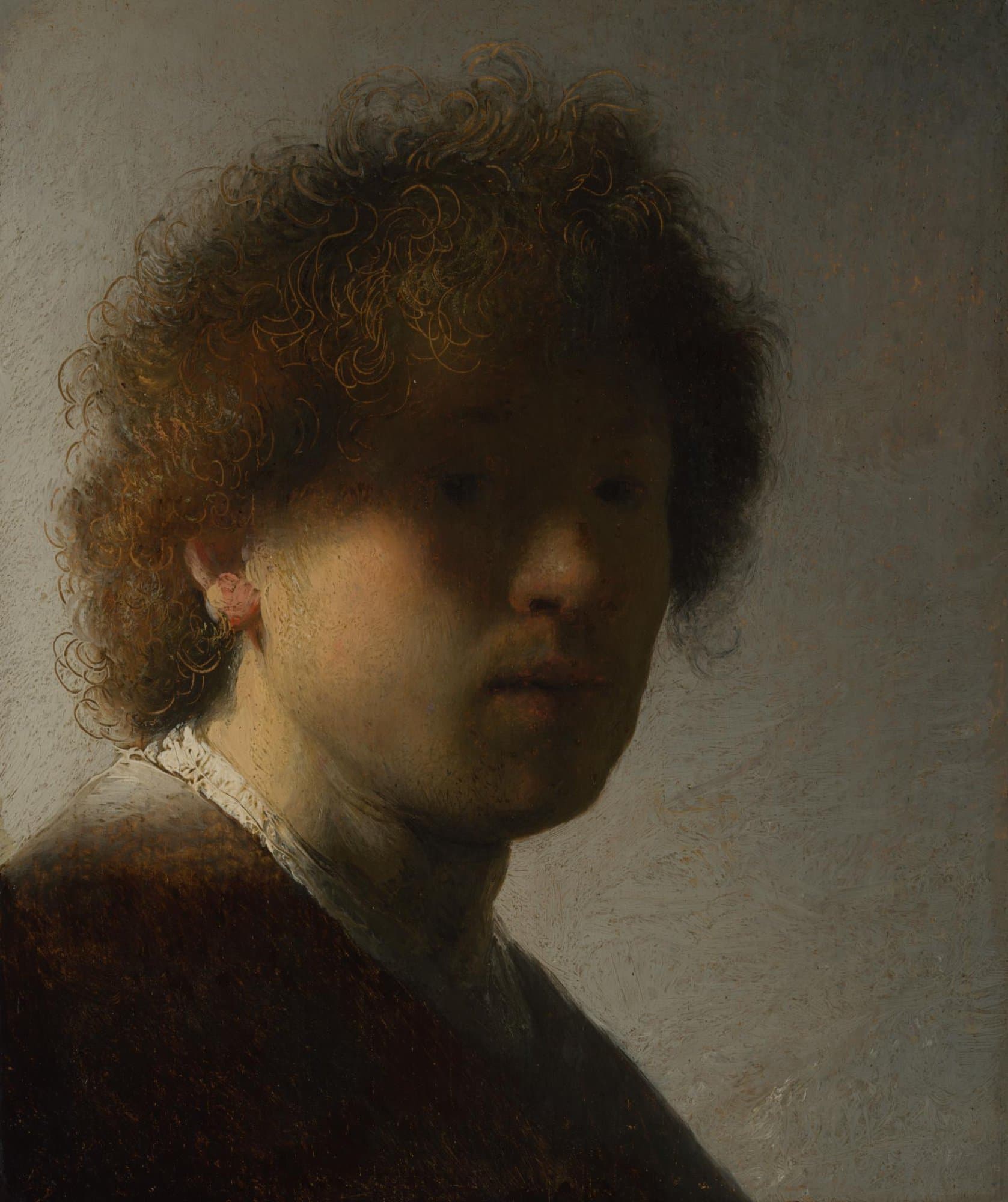
Rembrandt's self-portrait of about 1628, sometimes titled Self-Portrait at an Early Age, is an oil painting on a panel only 22.6 centimetres high and 18.7 wide. Rembrandt was about twenty-two. Light falls along one cheek and the rest of his face is in shadow; he scratched his curls into the wet paint with the end of his brush. The Rijksmuseum bought it in 1977 and shows it in room 2.8.
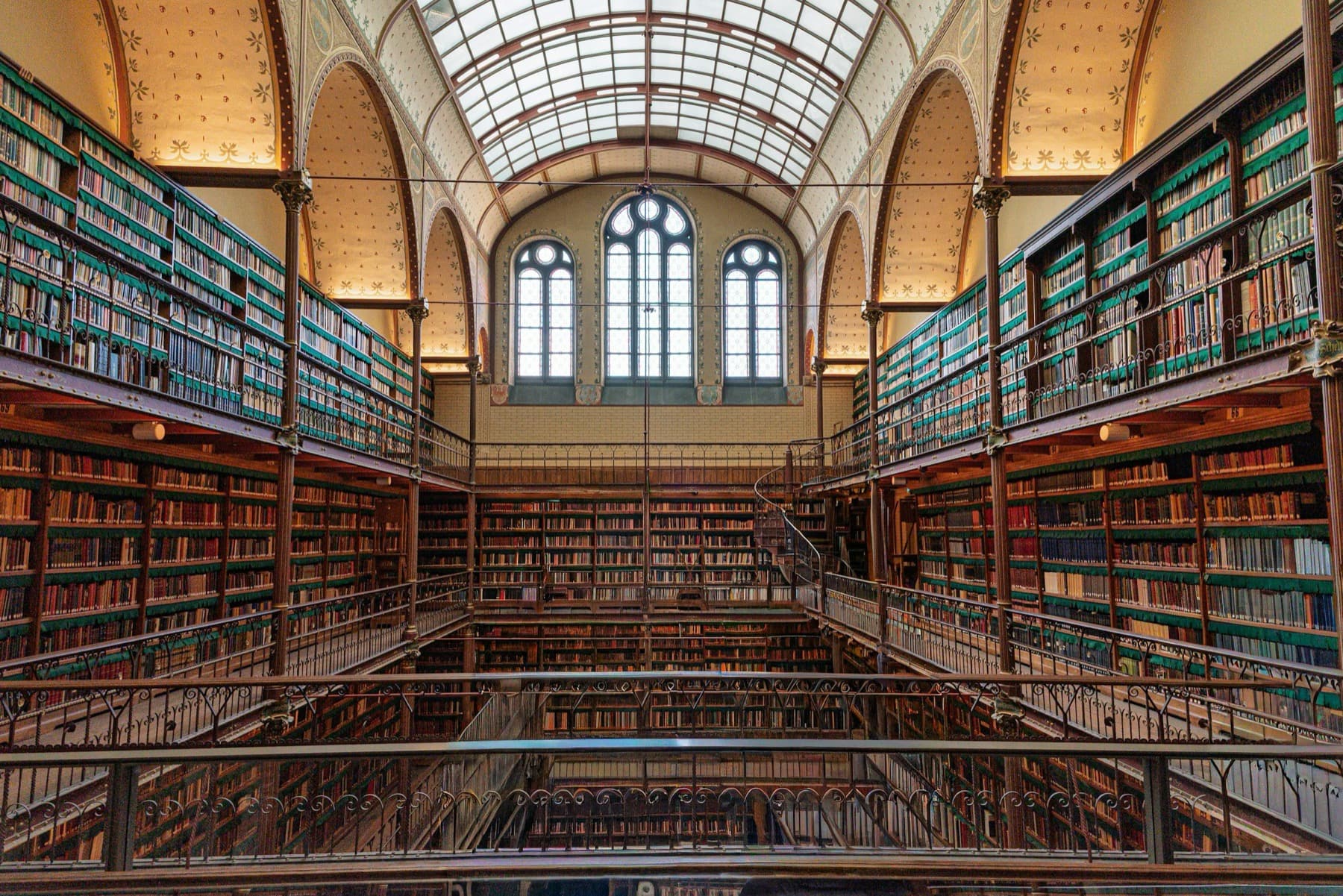
If you are asking where the young Rembrandt self-portrait is: it hangs in room 2.8 of the Rijksmuseum in Amsterdam, a room the museum's record ties to "The young Rembrandt" and the peace treaty of Münster of 1648. It is in the main building.
A very small painting
Start with the size. The panel is 22.6 centimetres high and 18.7 wide, painted in oil. That is smaller than a sheet of paper, and the museum's record lists a frame of 33.2 by 29.3 centimetres. It dates to about 1628, when Rembrandt was about twenty-two.
Titles vary. The museum's page calls it "Self-portrait" and lists "Self-Portrait at an Early Age" as a former title (in Dutch, Zelfportret op jeugdige leeftijd). Its description sums the picture up as a bust turned to the right, the face in shadow, with curly hair.
Light on one cheek
Hear a stop from this walk
Reguliersgracht and the seven-bridges view
Look at the face first. The museum describes it as a bust turned to the right, with light gliding along his right cheek while the rest of the face is veiled in shadow. Most of the picture is dark, and the lit patch is small.
The shadow is the subject. A formal portrait would put the sitter in even light. This one shows what a face looks like when most of it is hidden.
The back of the brush
Now look at the hair. The museum says that Rembrandt used the butt end of his brush to scratch the curls into the wet paint. Scratching through wet paint to the layer below makes a line you could not draw with the bristles, and in a painting this small the tousled hair is full of such lines.
The museum's catalogue text makes the point it wants you to take away: even as an inexperienced young artist, Rembrandt did not shy away from experimenting. That is the way to read this small panel. It is not a grand self-image. It is a young man trying things out on his own face, with the back of his brush.
Why he painted himself
The museum's text does not claim a reason, and we will not invent one. What the painting offers is practical: a face is always available, it sits still on request, and it will pose in whatever light you choose. A self-portrait this small is the cheapest way to try an effect. That reading is ours rather than the museum's, but it fits what the painting shows.
The painting nobody believed in
Here is the part of the story that makes this panel more than a small early work. The museum's record of its provenance shows that the panel was sold at Sotheby's in London on 27 May 1959 as "after Rembrandt", a copy, for 1,700 pounds. The buyer was a dealer in Guernsey. From 1960 to 1971 the museum had it on loan, and in 1977 the Rijksmuseum bought it, for 1.8 million guilders, with support from the Vereniging Rembrandt (the Rembrandt Society) and other funds.
So within two decades, a panel sold as someone else's copy became a Rembrandt the nation helped buy. The record does not say why the attribution changed, so we will not say either.
Where it sits in his early years
Room 2.8 is devoted to the young Rembrandt. One of the paintings in the same room, a portrait of Constantijn Huygens by Jan Lievens, is dated by the museum to probably 1628 to 1629, and is on loan from the Musée de la Chartreuse. If you want to see a young painter learning in public, this room is the place.
What people ask about it
Is it really by Rembrandt? Yes, as the museum presents it today, though the record shows that in 1959 it was sold as "after Rembrandt". The museum's own title for the work in Dutch, Zelfportret op jeugdige leeftijd, translates as self-portrait at a young age.
How old was he? About twenty-two, according to the museum.
Where did the Rijksmuseum get it? It was bought in 1977 with support from the Vereniging Rembrandt, the Stichting tot Bevordering van de Belangen van het Rijksmuseum and the Ministry of Culture, Recreation and Social Work, as the English credit line gives it.
How big is it? 22.6 by 18.7 centimetres, the painted panel; the frame brings it to 33.2 by 29.3 and about 6 centimetres deep.
Is it the only young Rembrandt self-portrait? We have not verified a count and will not give one. The museum shows this one as the centre of its young-Rembrandt room.
Seeing it in the museum
Take your time with the face and then step close, as close as the case allows, for the hair. You are looking for the pale scratches in the paint where the brush's other end dragged through. Then walk through to the Night Watch Gallery, room 2.31, and look at the same hand fourteen years later. The 1642 Night Watch is the same painter doing the same thing at an enormous scale.
How this fits the Roamer guide
Roamer's independent audio guide to the Rijksmuseum has a short story for this panel in room 2.8: the shadow, the scratched curls, and the 1959 sale as a copy. Play it in front of the painting, at your own pace, and skip ahead whenever you like. You can find it in the Rijksmuseum guide. For the big Rembrandt, read the Night Watch story.
Cover image: Rembrandt van Rijn, Self-portrait, about 1628, Rijksmuseum, Amsterdam, public domain, via the Rijksmuseum collection (SK-A-4691).
Ready to experience it?
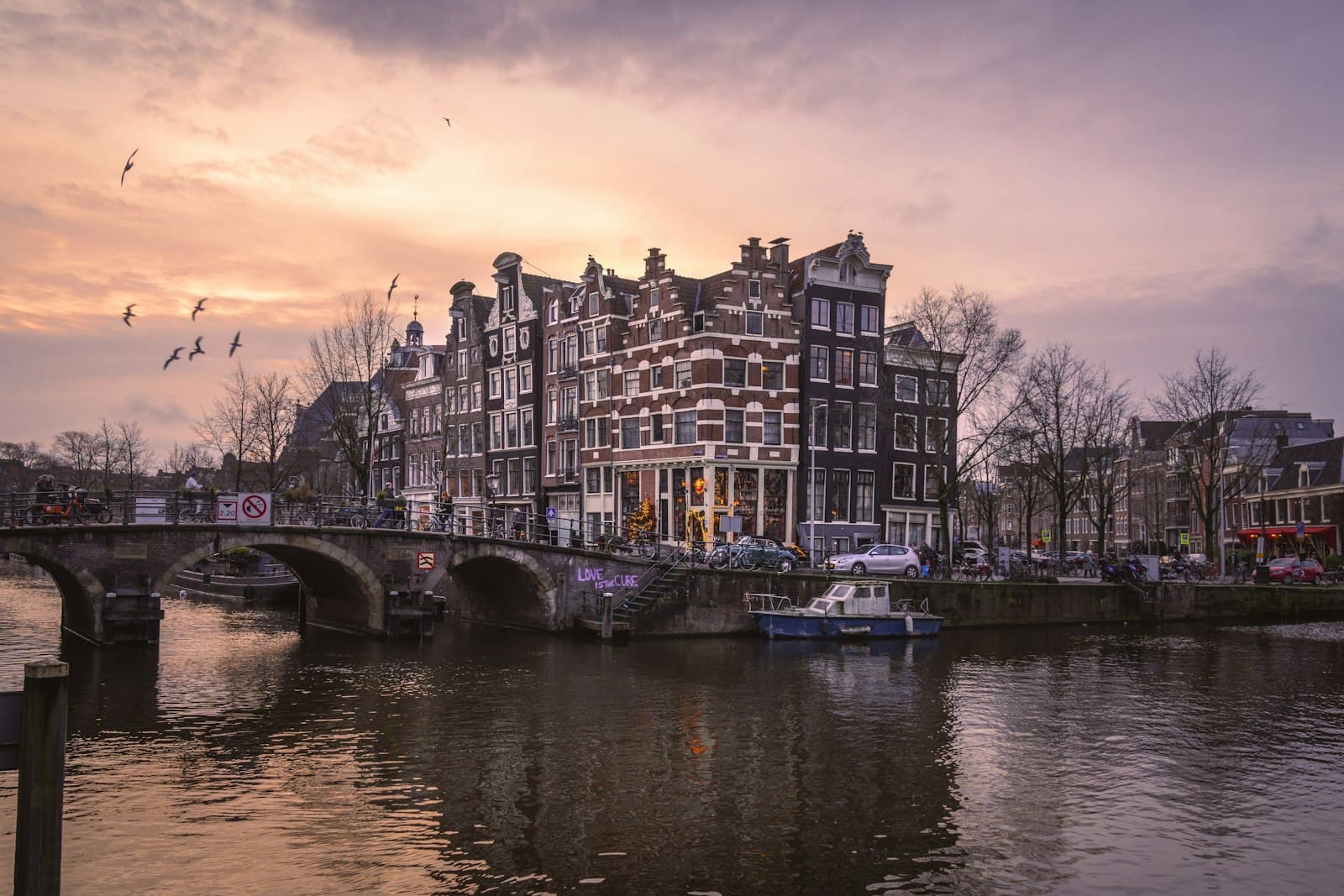
Canal Ring: The City That Planned Its Water
100 min · 3.8 km · easy
More from Amsterdam
Explore more at your own pace.
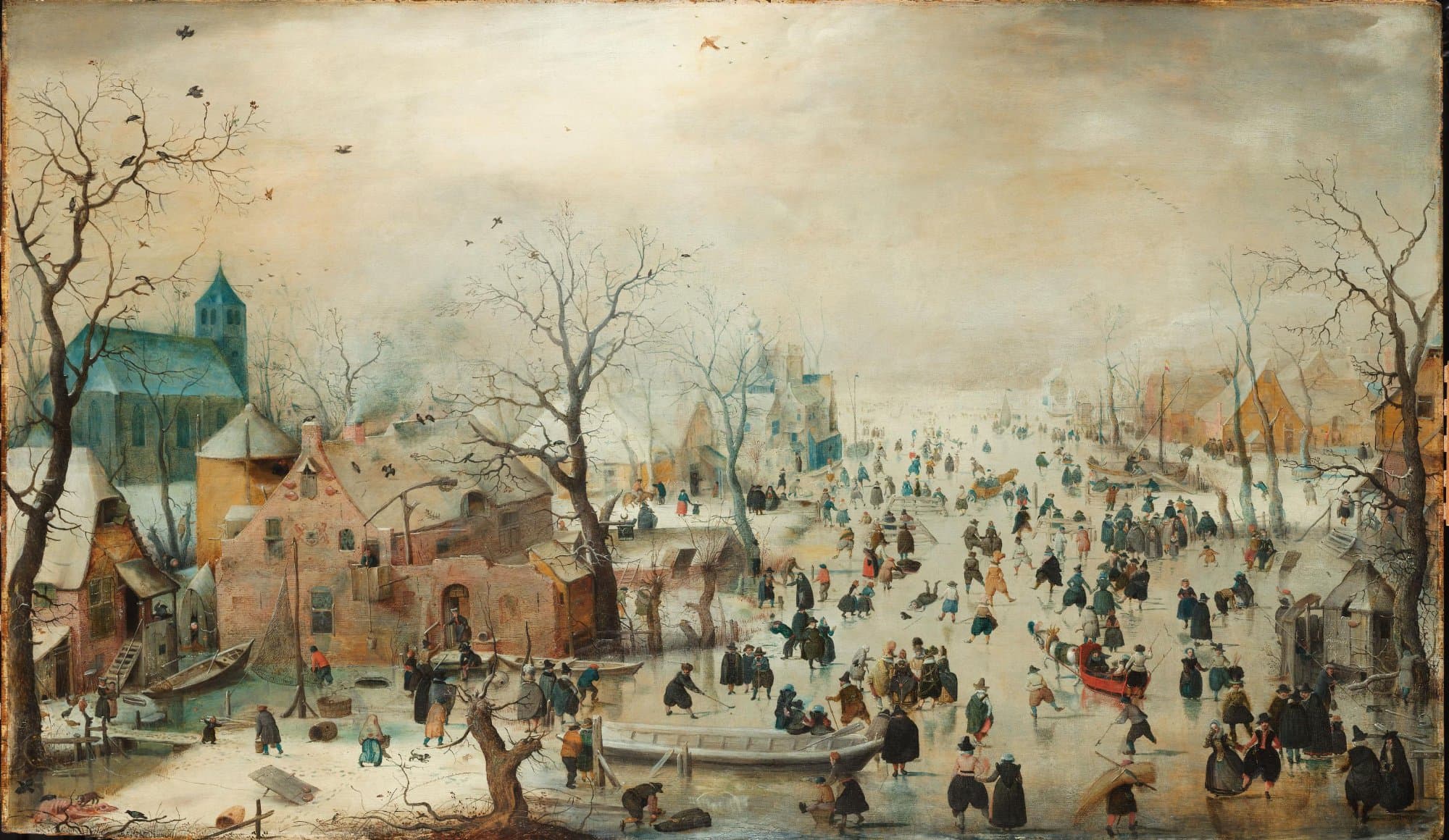
Avercamp's Winter Landscape with Skaters: Hunting the Small Stories
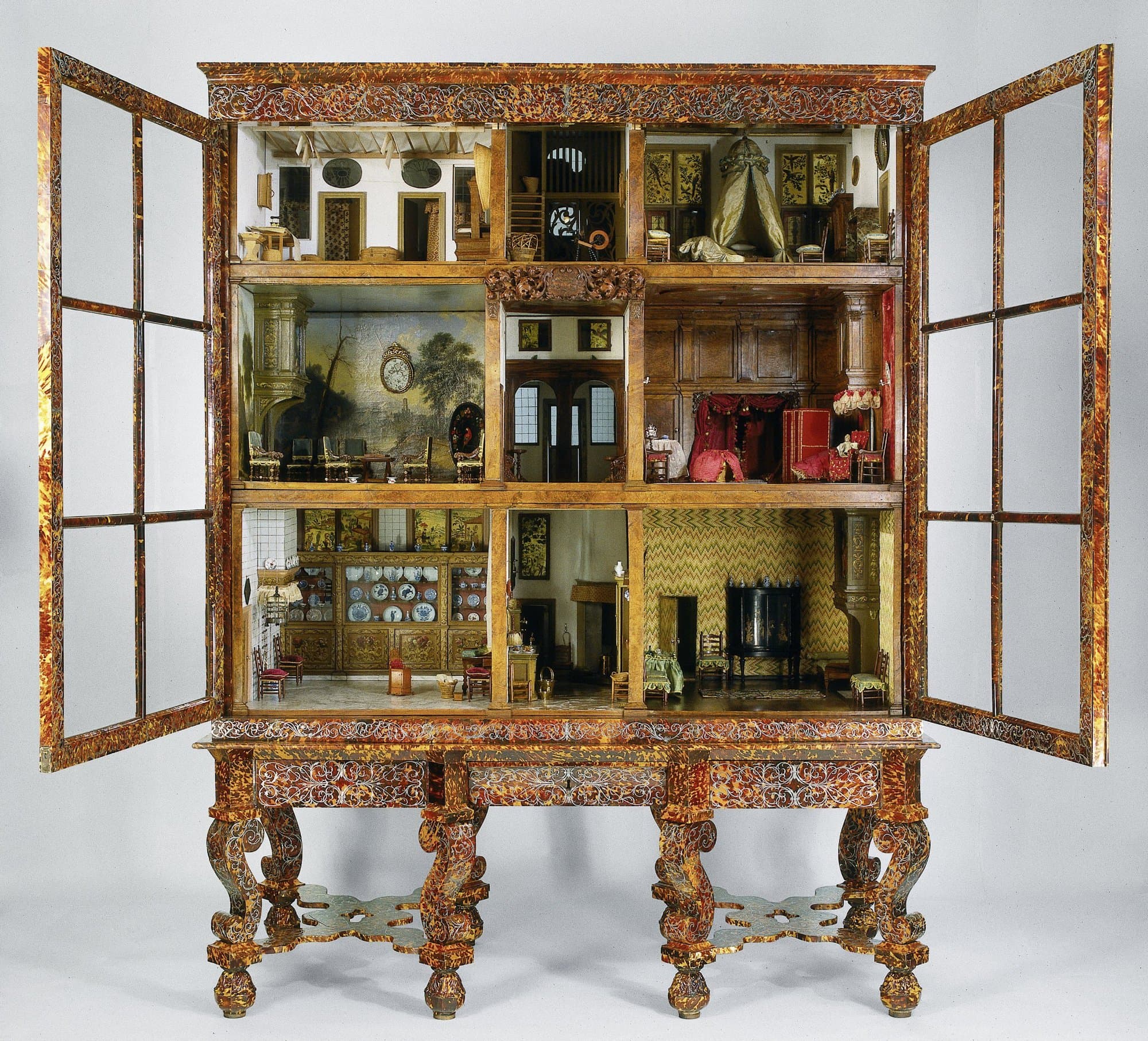
Petronella Oortman's Doll's House: The Miniature Canal House in the Rijksmuseum
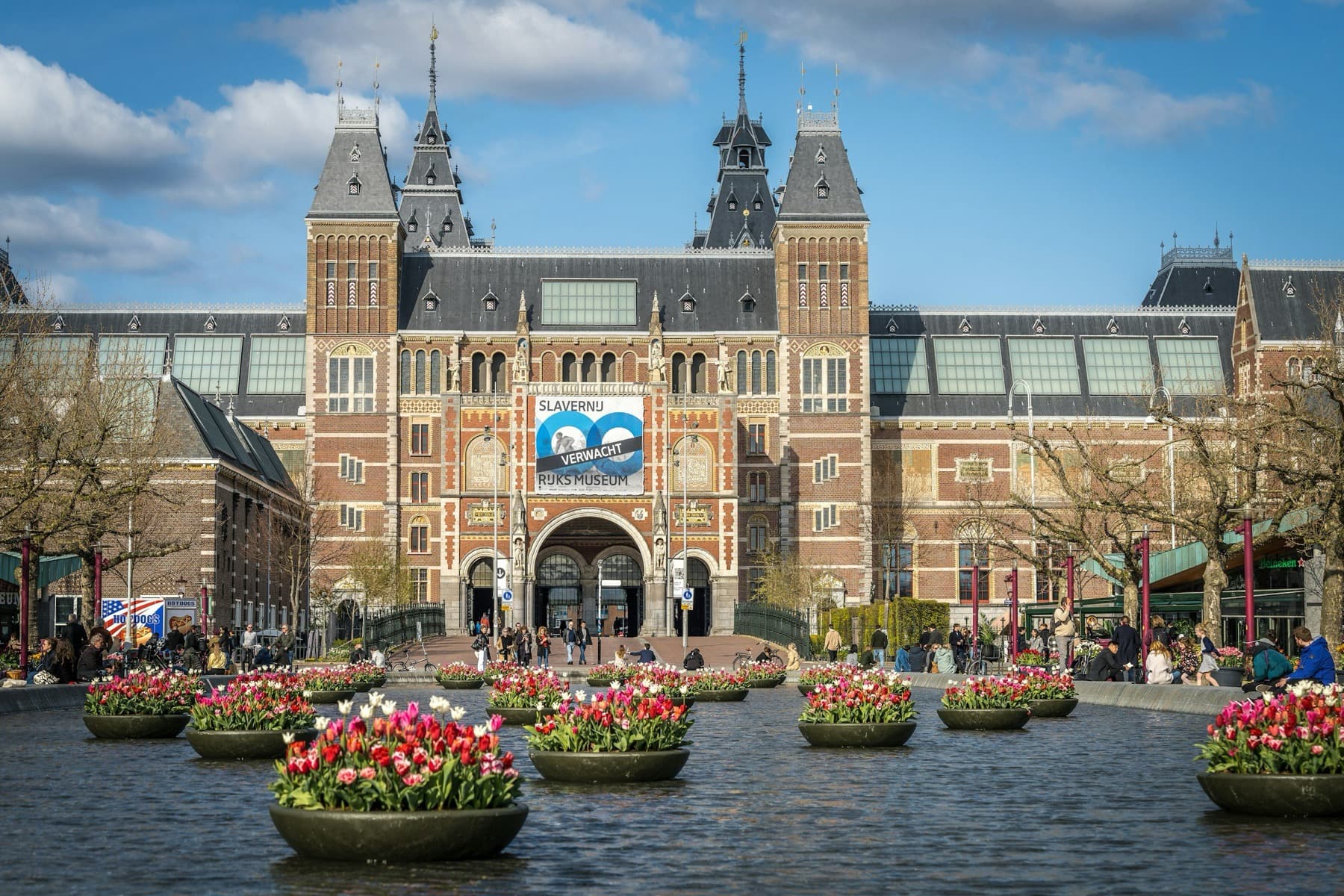
Rijksmuseum: What to See, Room by Room, and a Two-Hour Plan
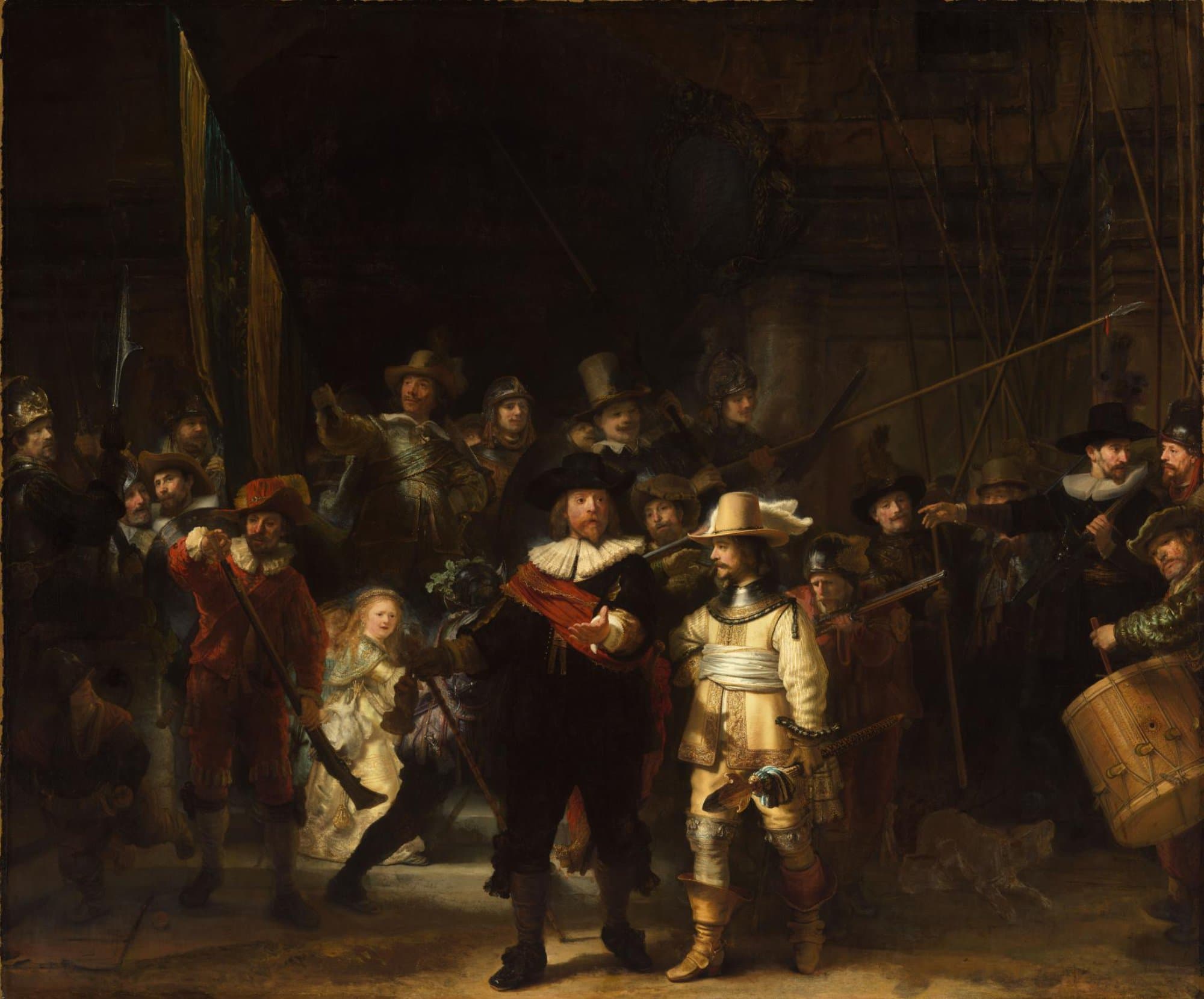
The Night Watch: Why It Is Called That, and What Was Cut Off
Van Gogh at the Rijksmuseum: The 1887 Self-Portrait and What Else You Can See