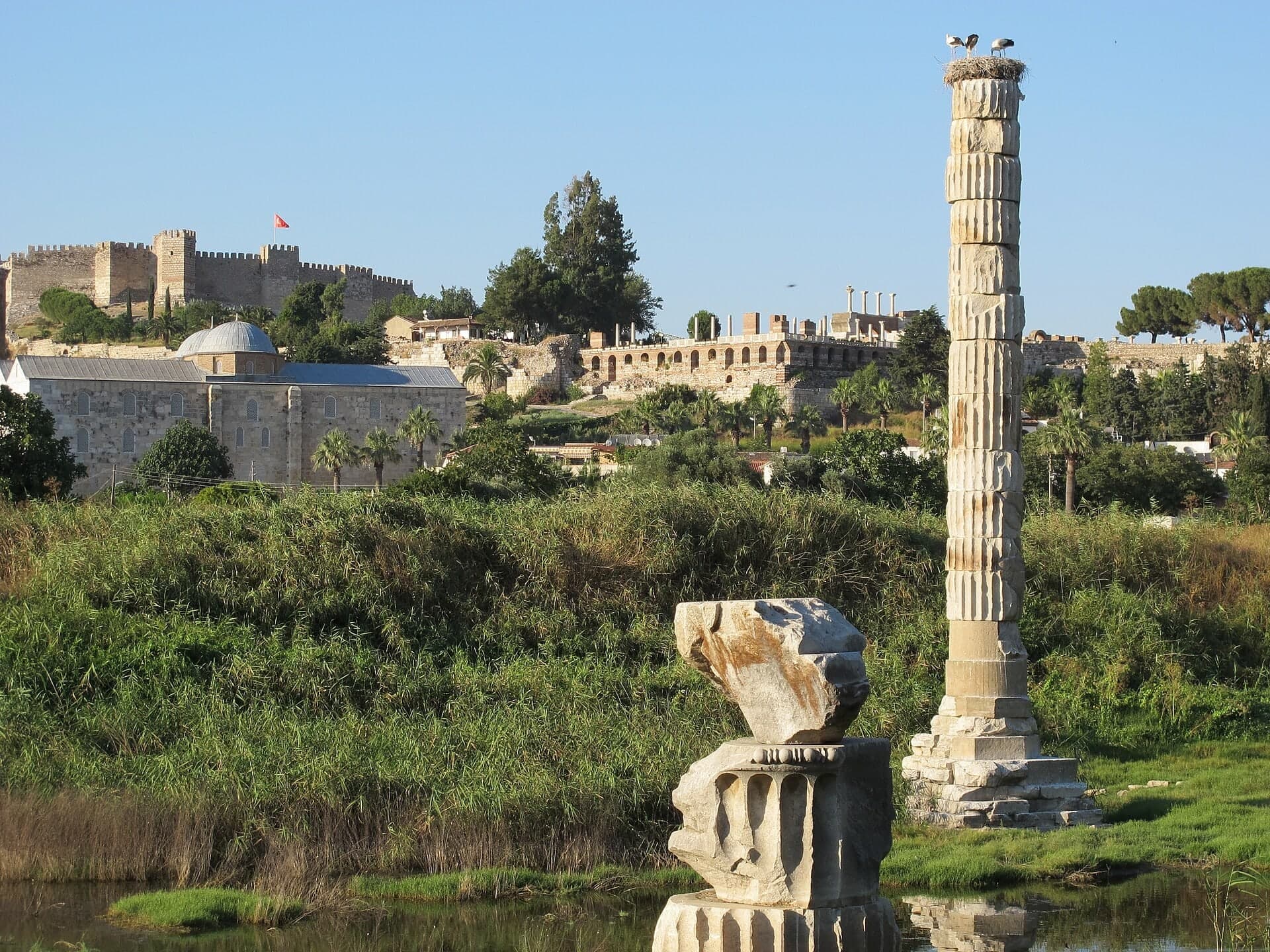
Walk Selçuk from the Ephesus Museum past a Byzantine aqueduct, the gate of Saint John's basilica, the Isa Bey Mosque and its bath, to the lone column of the Temple of Artemis.
Start · Ephesus Museum: The Goddess Before Her Temple
DirectionsStops
- 1
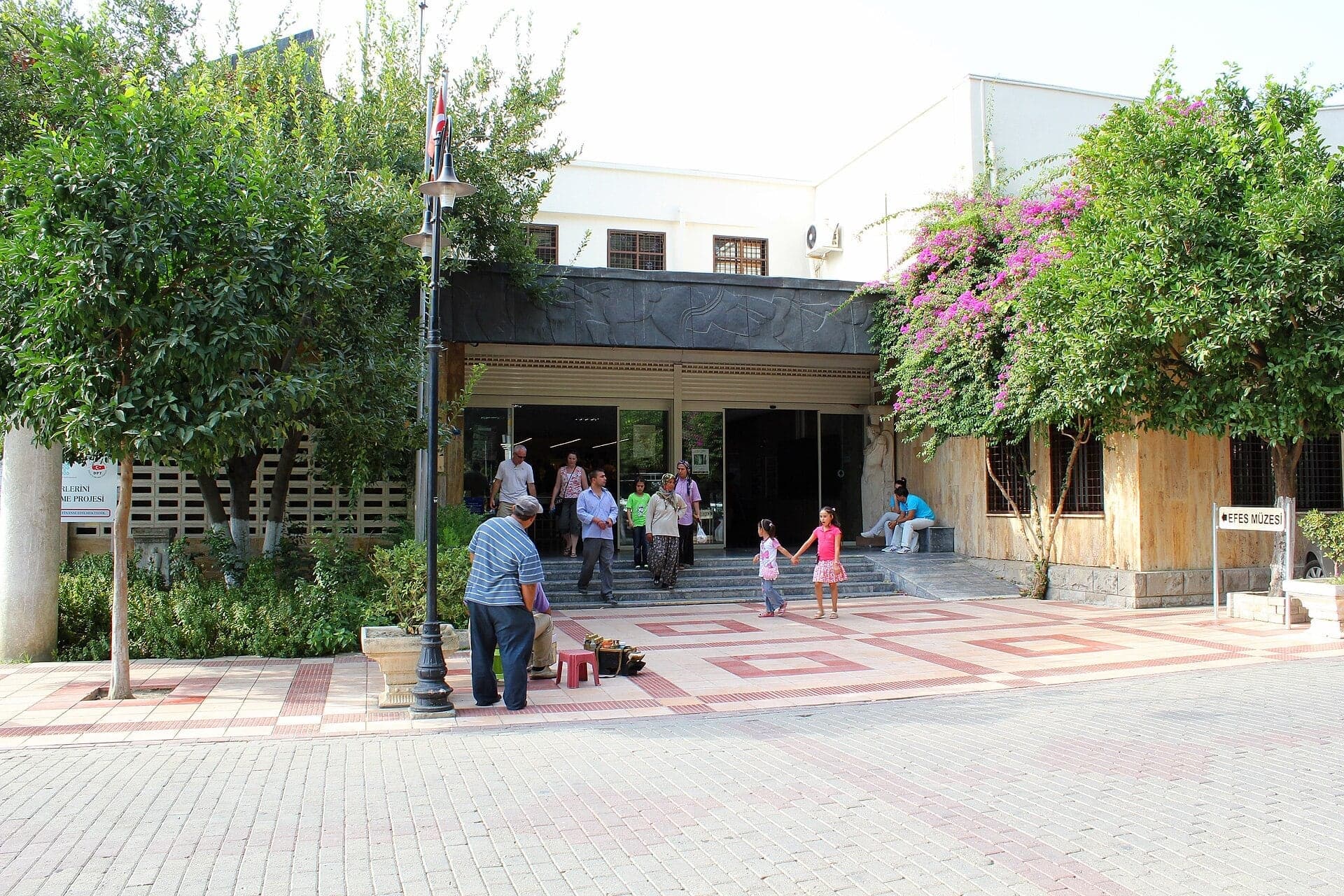
Ephesus Museum: The Goddess Before Her Temple
The walk begins beside the museum that holds the goddess Artemis. Her statues show the temple you will reach at the end.
- 2
Town Square: A Town With Three Names
A small square marks the middle of modern Selçuk. The town's names trace each move its people made.
- 3
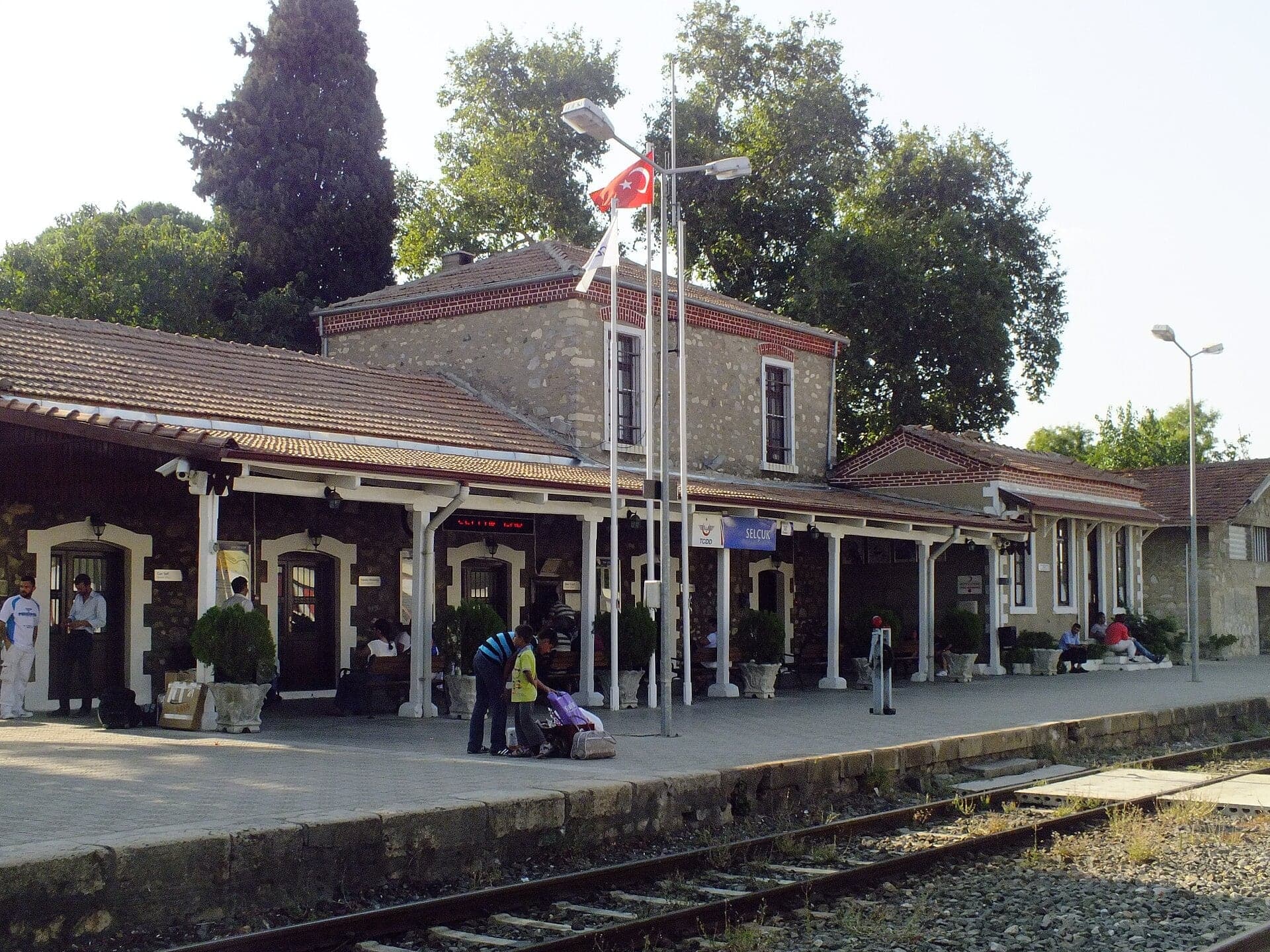
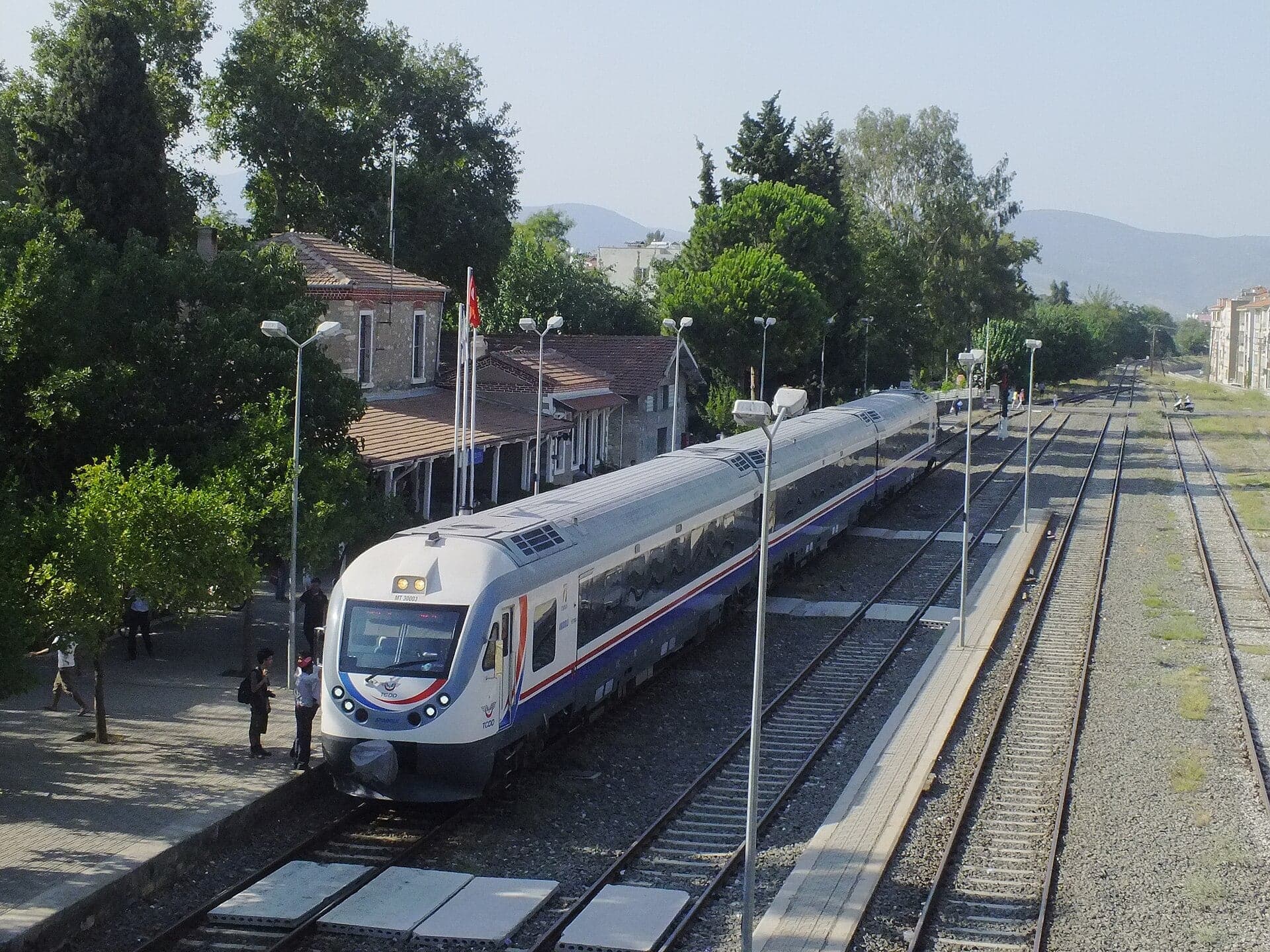
Station and Steam Engine: The Railway Man
A Swedish-built steam engine stands by the railway line. That line brought the man who found the Temple of Artemis.
- 4
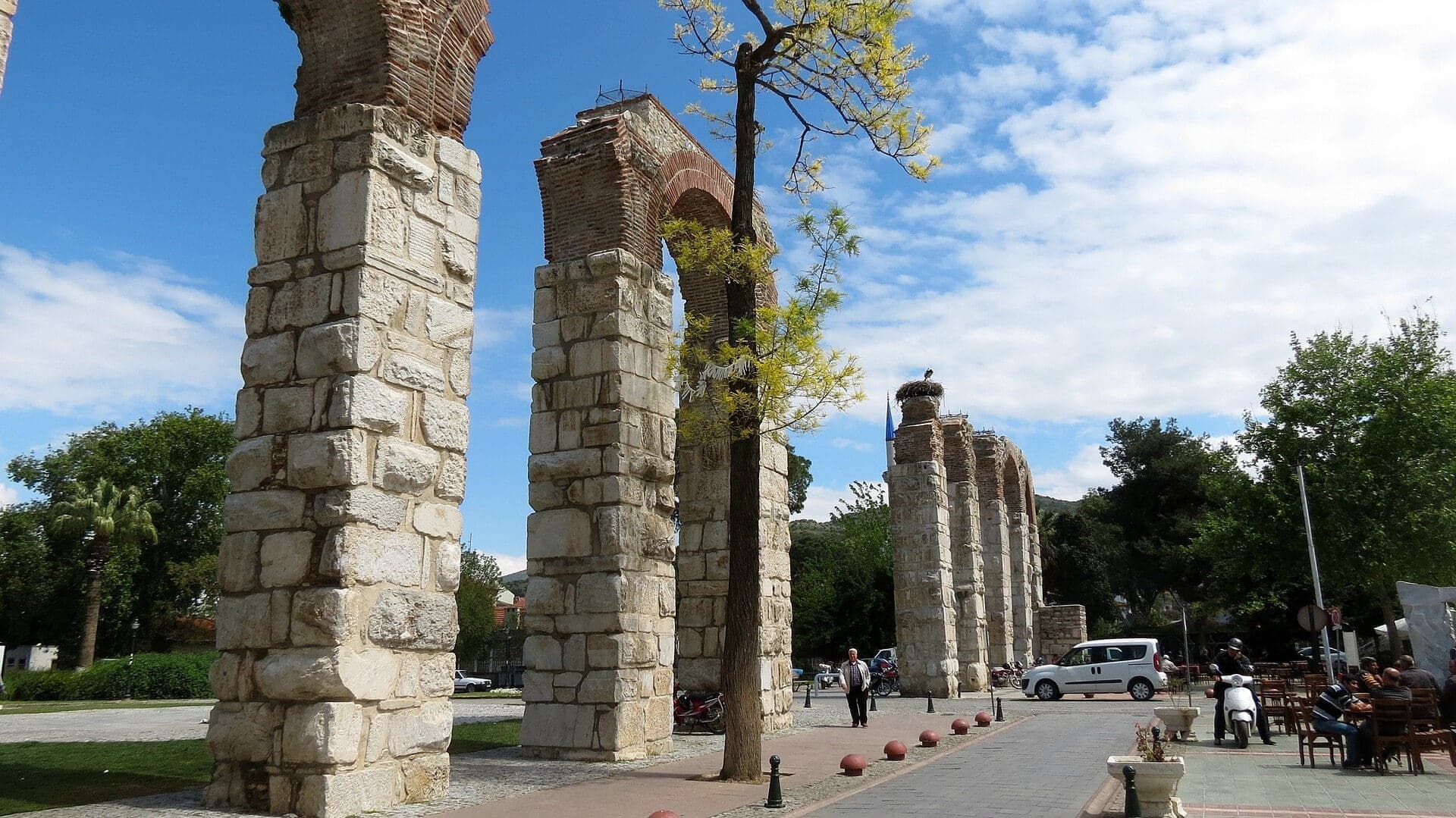
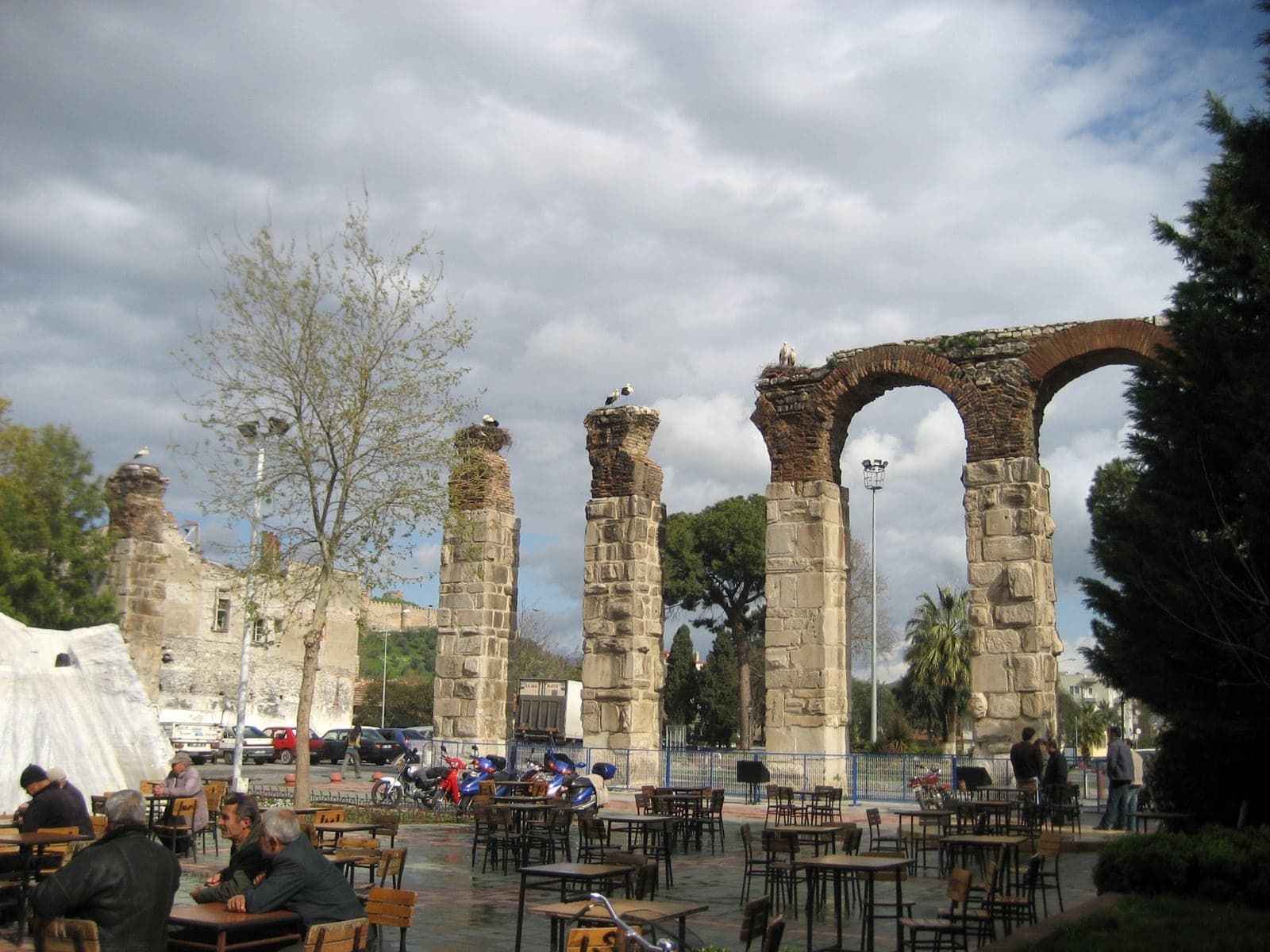
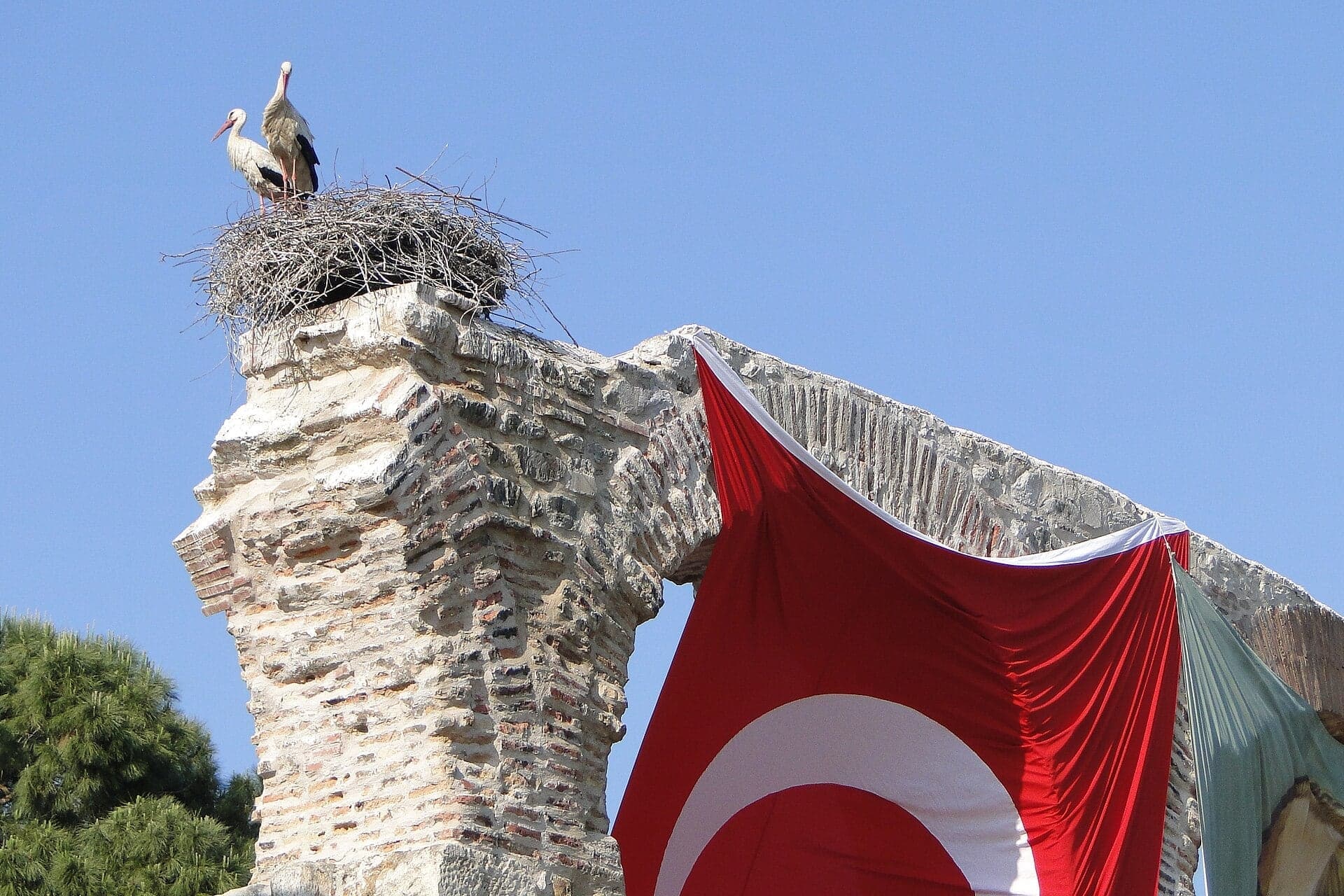
Aqueduct Arches: Water Carried on a Wonder
Tall arches carried water across the town to Saint John's church. Their engineer built many of them from the Temple of Artemis.
- 5
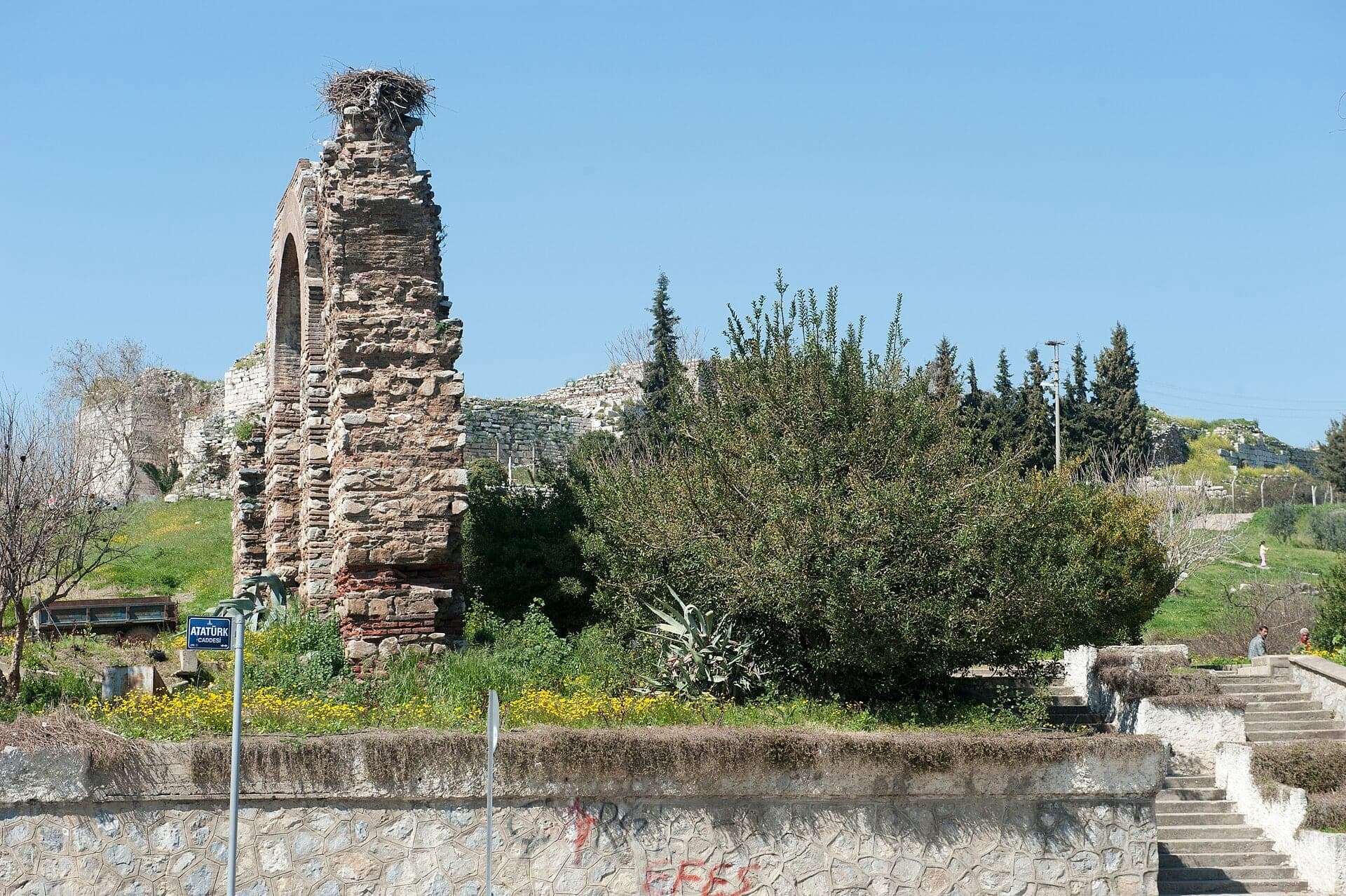
Aqueduct Piers: Where the Water Climbed
The last piers of the aqueduct point up toward the hill. Here the water climbed to the church by pressure, up a chain of towers.
- 6
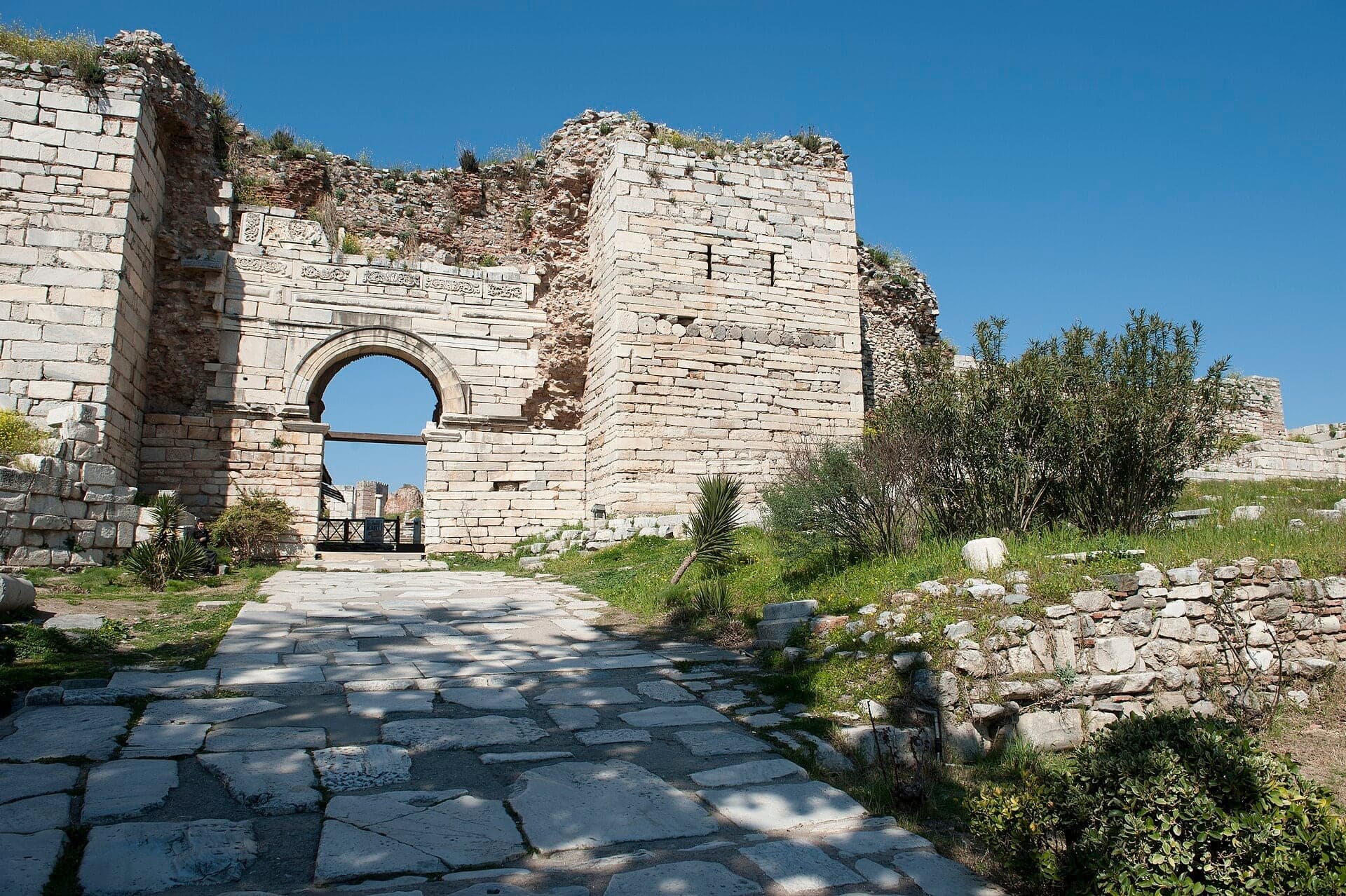
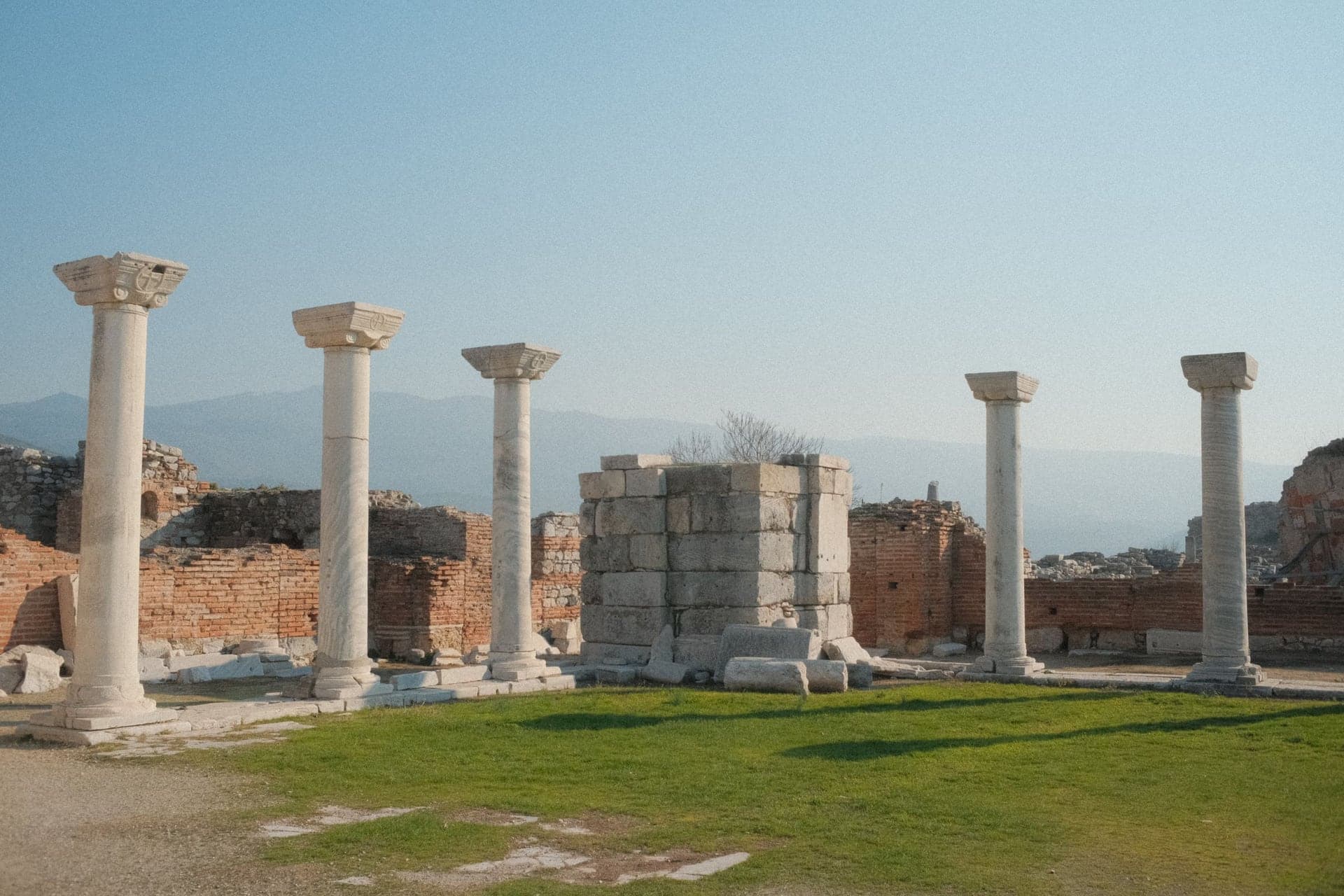
Gate of Persecution and the Basilica of Saint John: Pagan Carvings, Misread
A path climbs to the gate of Saint John's church. Its old pagan carvings were later read as a Christian story.
- 7
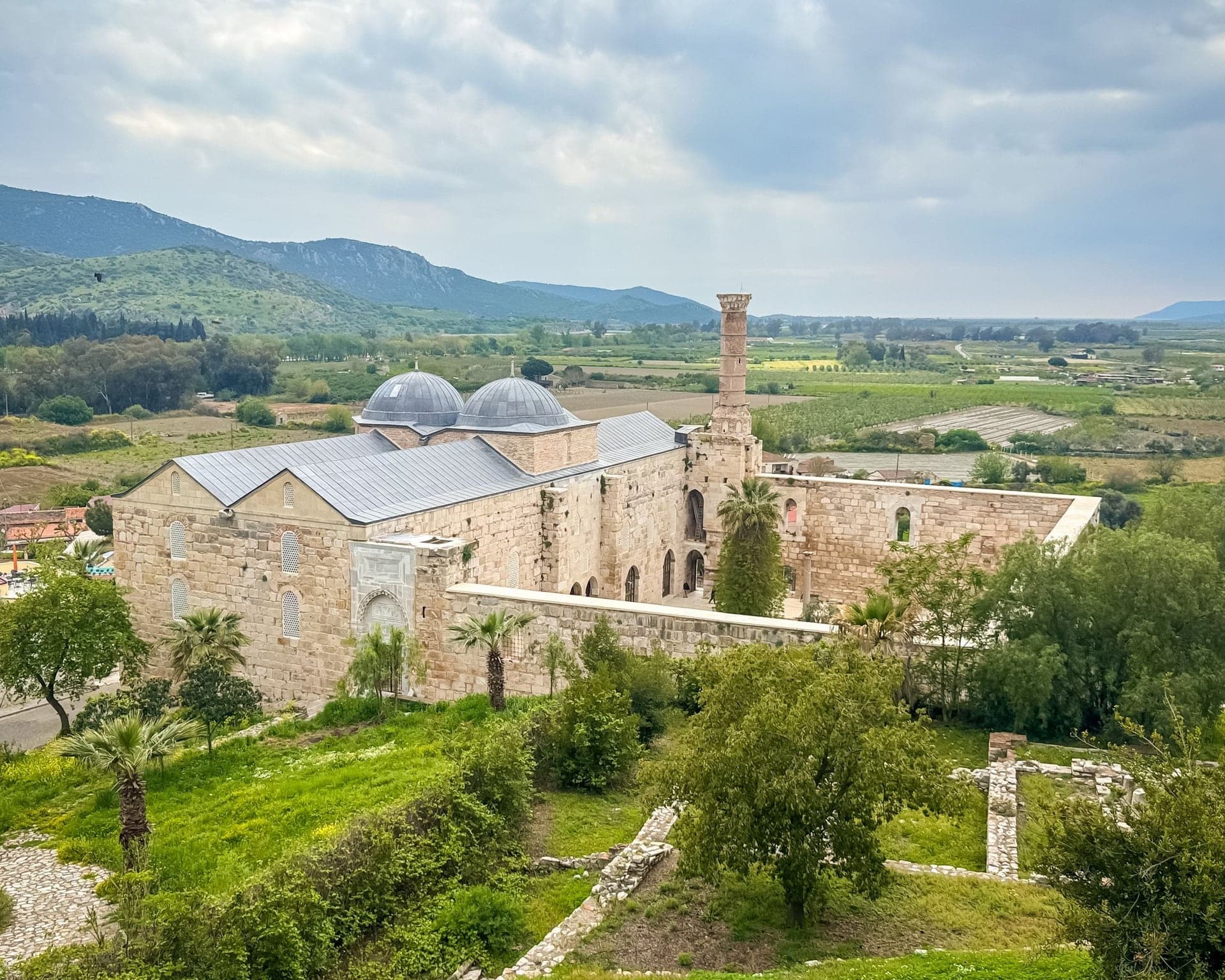
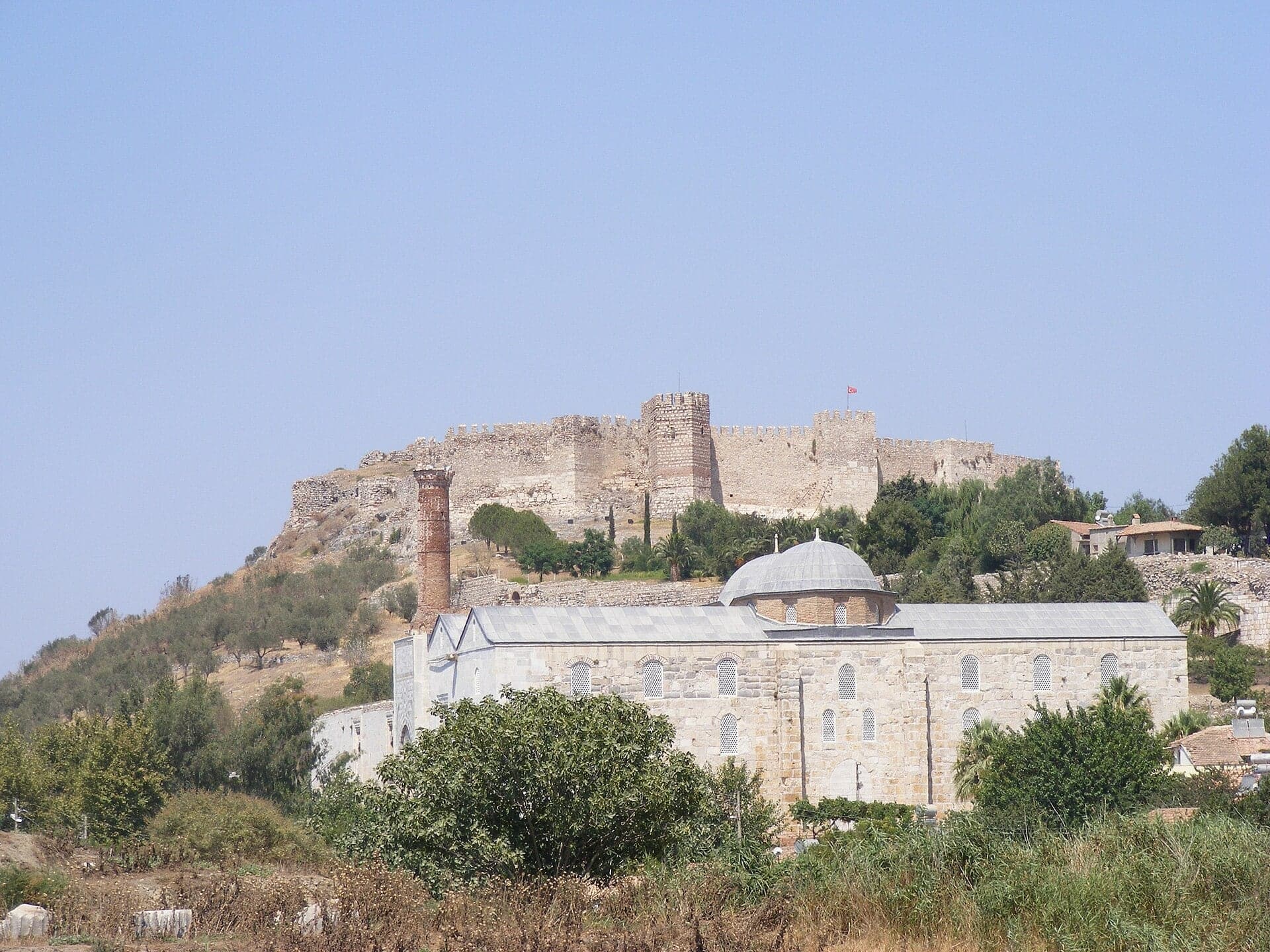
Isa Bey Mosque: Temple Marble in a Mosque's Face
A Turkish ruler's mosque of 1375 shows off a marble west front. Much of that marble came from the Temple of Artemis.
- 8
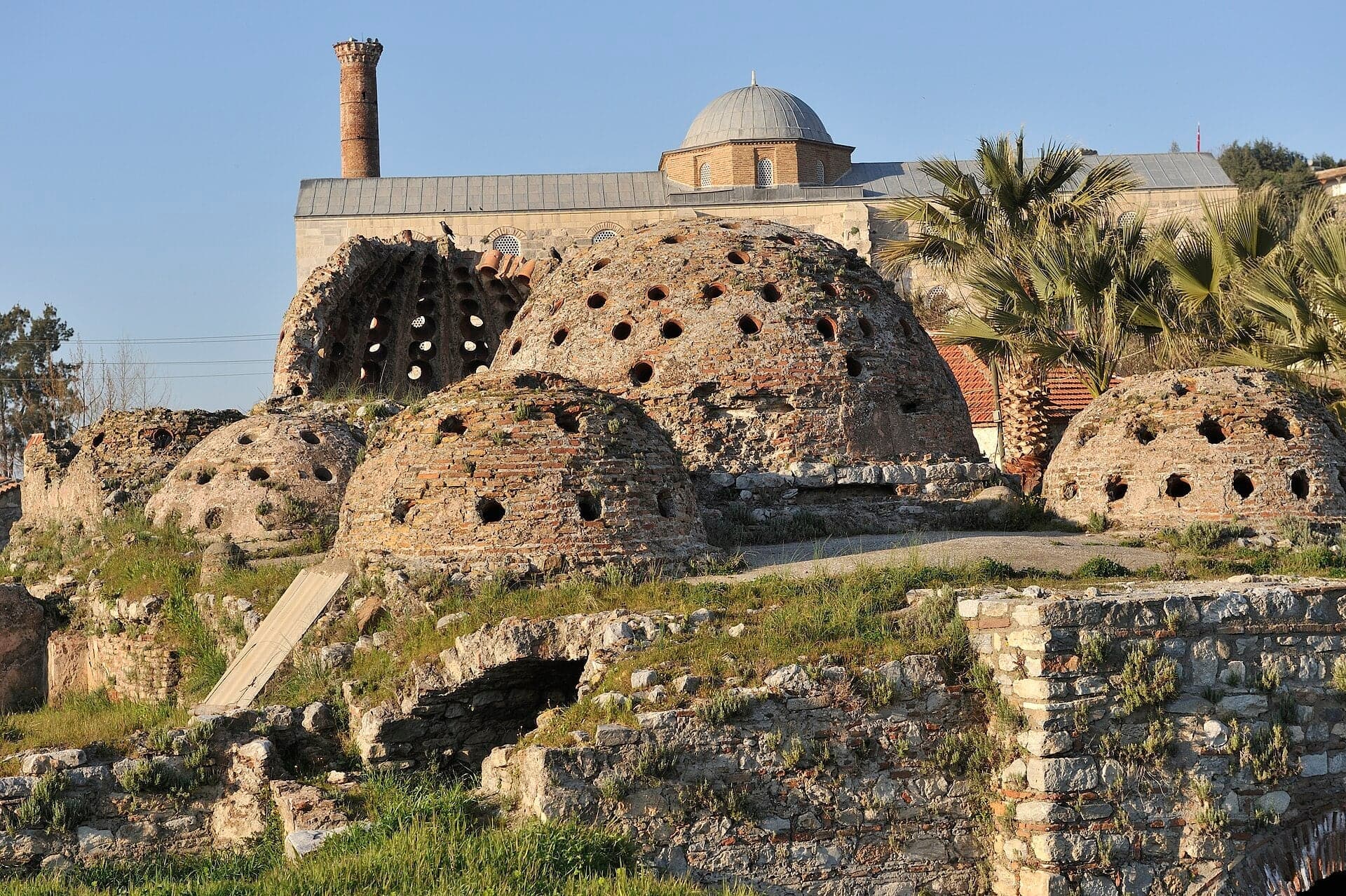
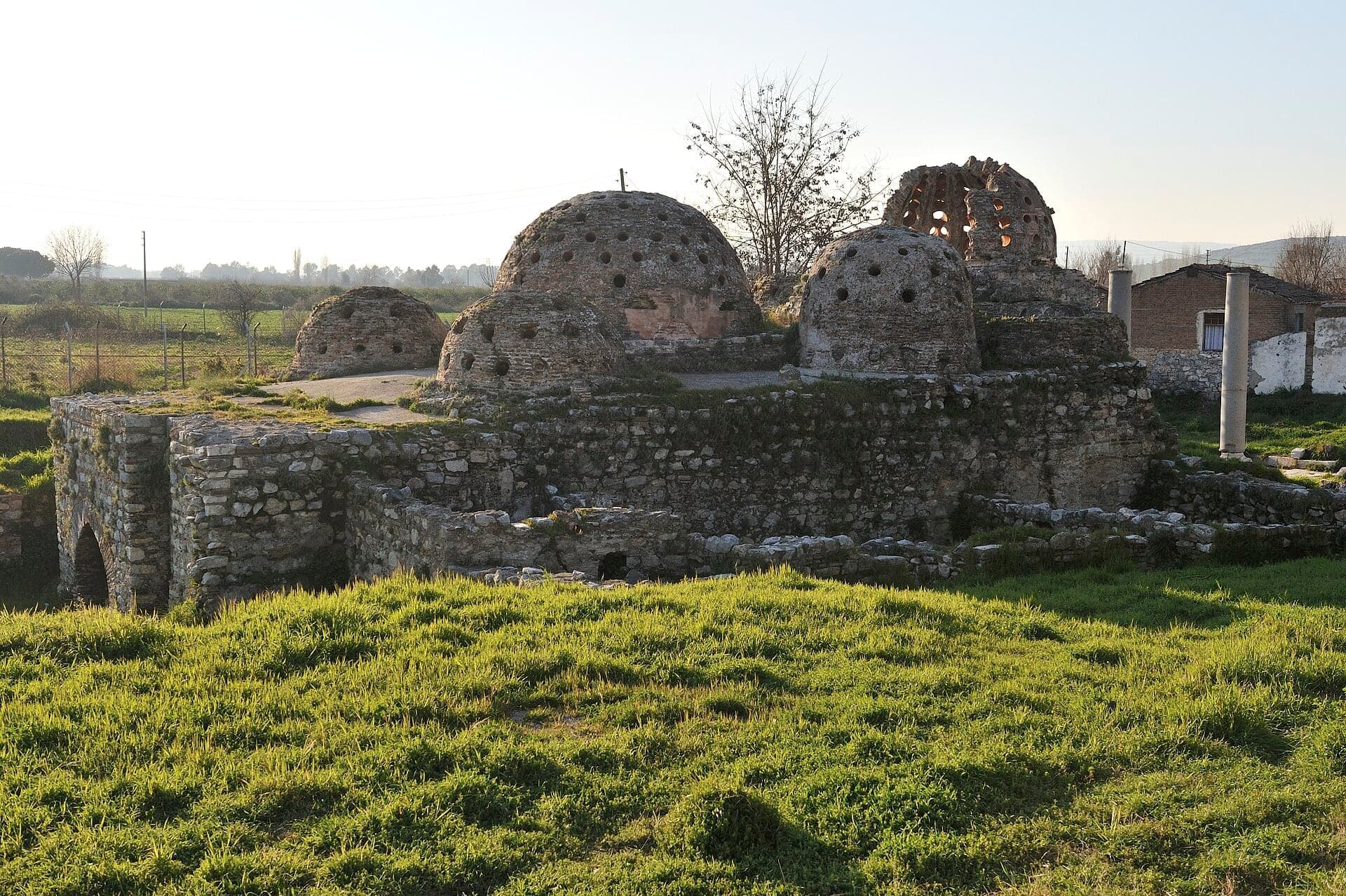
Isa Bey Bath: A Name Nobody Can Prove
A domed Turkish bath stands below the mosque. Its name and date are traditional, and nobody has proved either.
- 9
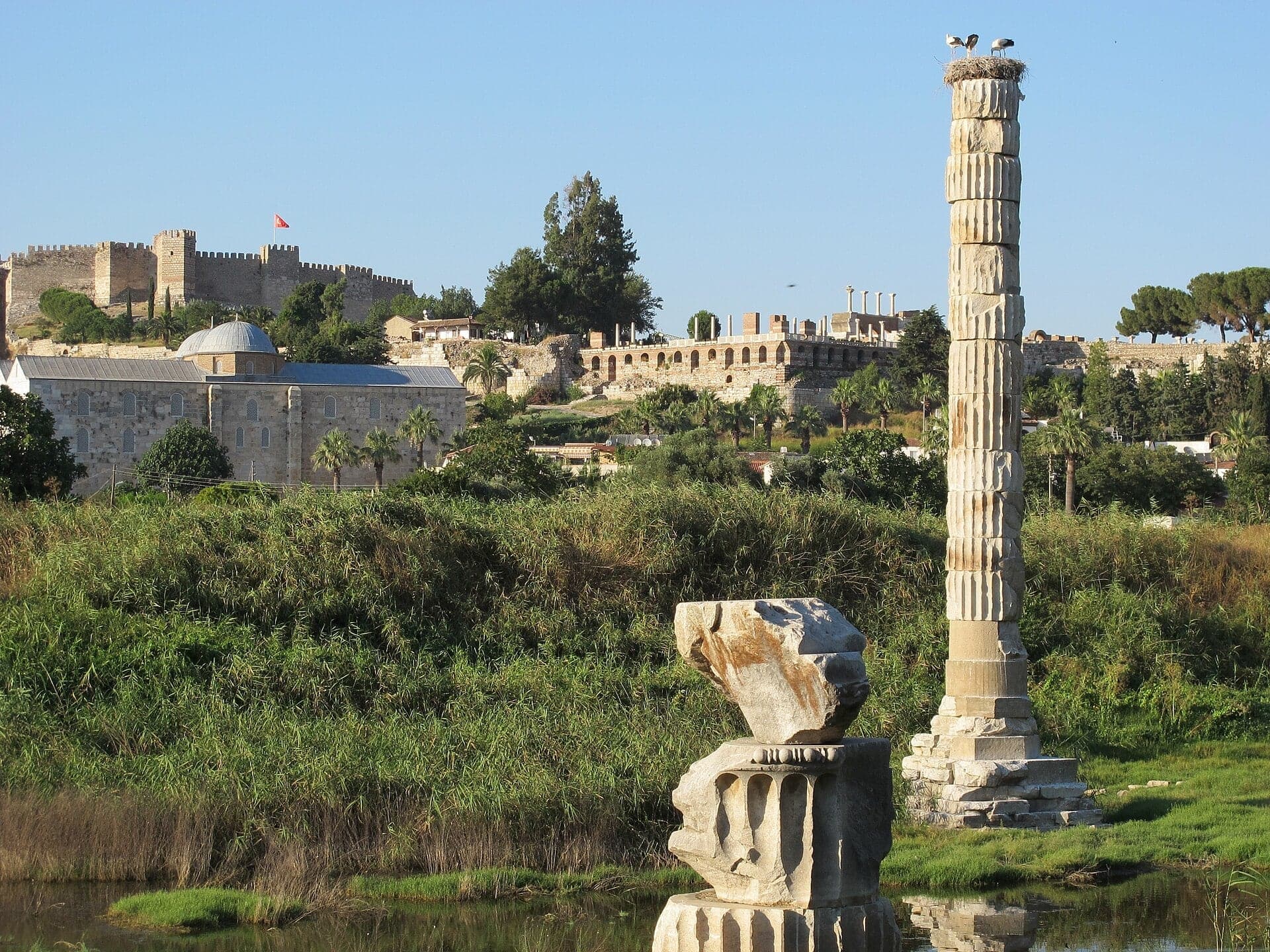
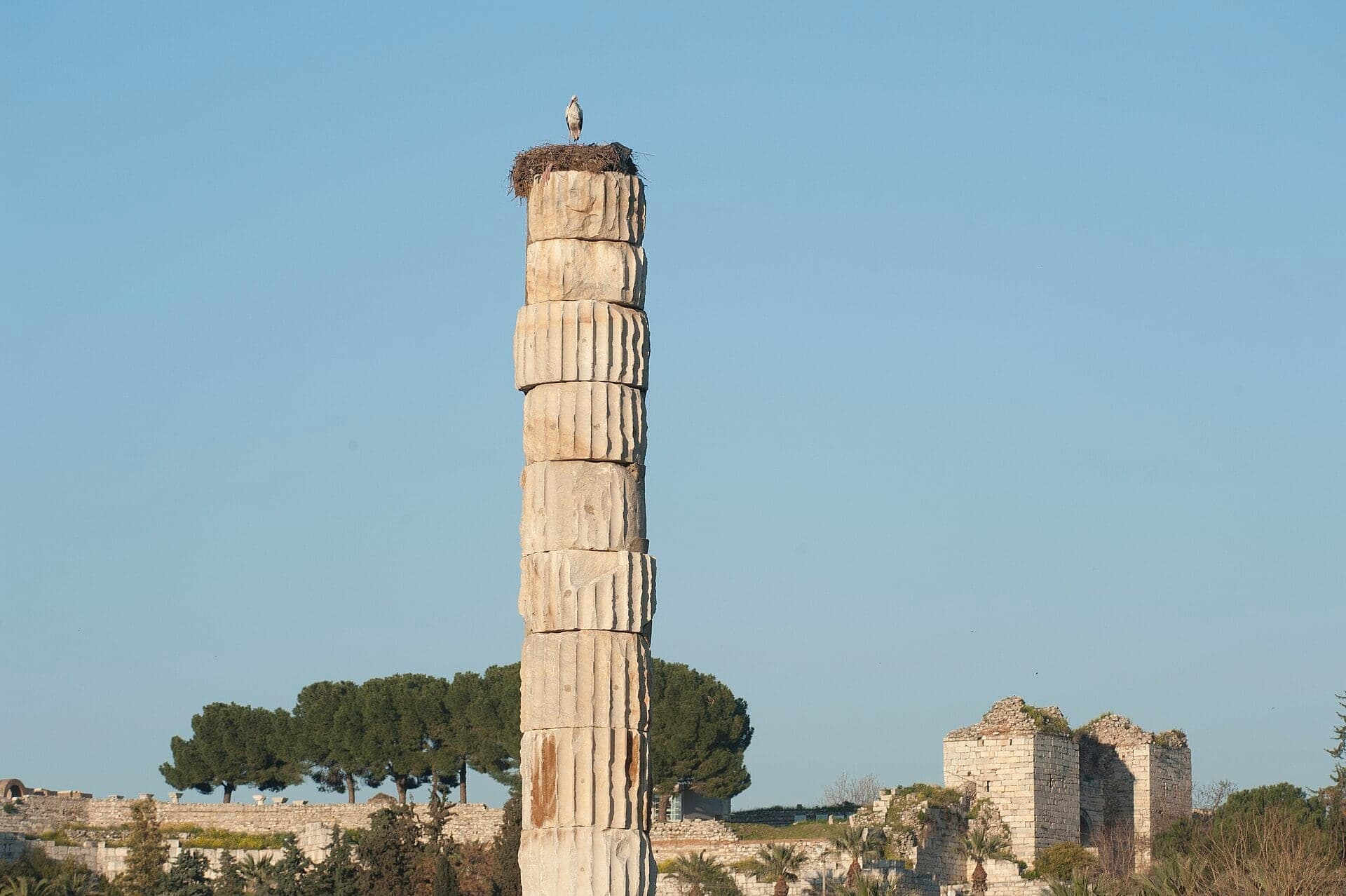
Temple of Artemis: The Wonder That Became a Town
One rebuilt column stands where a wonder of the world once stood. Its stones went into the town you have just walked.
Details
Best Time to Visit
Start at 08:30, when the Ephesus Museum opens, or walk in the late afternoon with the museum first; the last leg to the Temple of Artemis runs beside the main road with little shade, so avoid the midday heat in summer. White storks nest on the aqueduct from about mid-March to the end of August; from September the nests may be empty. Museum and basilica hours checked 5 October 2026.
Pro Tips
- •See the Ephesus Museum first if you can: it holds the statues of Artemis and finds from the temple, the basilica and the fortress on this walk. Open every day 08:30 to 17:30, ticket office until 17:00, €10 (checked 5 October 2026).
- •One ticket (€6, checked 5 October 2026) covers both the Basilica of Saint John and the Ayasuluk fortress above it; give it an hour, and go early, because the ministry lists earlier closing for the fortress (09:00 to 16:00).
- •A modern copy of the Great Artemis stands in a fountain at the west end of Cengiz Topel Caddesi, opposite the road up to the basilica.
- •The road past the Temple of Artemis leads on to the Ephesus ruins. Our Ephesus walk runs downhill from the Upper Gate, so take a taxi to the upper entrance and walk down.
Safety & Precautions
- •The Isa Bey Mosque is a working mosque. If you go in, cover shoulders and knees, women cover their hair, take your shoes off at the door, and avoid prayer times, especially Friday midday. This walk stays outside the courtyard wall.
- •No ticket for the Temple of Artemis is listed by the ministry, and no official opening hours are published; secondary sources disagree on the hours. Check at the site before you count on going in.
- •Between the aqueduct stops, the route crosses the main road at a zebra crossing just south of the junction with St. Jean Caddesi, the road up to the basilica; it may have no lights, so cross with care.
- •The last leg uses the paved path beside the main road toward Ephesus, shared with cyclists, and its final stretch is the access road to the Temple of Artemis car park, with no sidewalk and turning coaches. Walk at the edge.
- •The route has steps: a short flight on the pedestrian street near the square across the main street and a stepped lane round the north side of the mosque. It is not step-free.
- •Do not climb on the aqueduct piers, the bath or the temple's stones.
- •The ministry's two pages for the basilica and fortress give different hours, and hours change with the season; check the official page before you go.
Travel advisory: Exercise Increased Caution (Level 2).
Gallery
Related Reading
Go deeper on what you'll see, hear, and walk through.
Overview
Best Self-Guided Walking Tours in Selcuk (Ephesus) (2026)
3 min
Overview
One Day in Selcuk and Ephesus: A Walkable Morning-to-Evening Itinerary
7 min
Overview
Selcuk and Ephesus Travel Guide: Days, Transport, Costs, Safety
7 min
Thematic
Best History Walking Tours in Selcuk (Ephesus) (2026)
2 min
Thematic
Selcuk: The Afterlife of Ephesus
8 min
Companion
The Temple of Artemis and How Selcuk Reads Its Own Absences
7 min
Deep dive
The Basilica of Saint John: Justinian's Church Built Over a Tomb
7 min
Read
What to Eat in Selcuk (Ephesus)
6 min
Read the walk
The full story of Temple of Artemis and Ayasuluk Hill: Where Ephesus Went, in words. Prefer to listen? Play it narrated, from home or on location.
Introduction
Selçuk, in western Turkey, is the town that Ephesus became. The ruins of the great Roman city lie just down the road, but people never stopped living in this valley. They kept moving. They lived on the hills nearby, came down to live around the Temple of Artemis, moved on to the city whose ruins you can visit today, and, when its harbor became unusable, climbed the hill at the heart of town. Wherever they went, they built with what lay to hand, and a great deal of it came from the temple. Keep an eye out for old marble in newer walls.
Three people turn up along the way. Lazaros, an engineer who carried water to the hill in the time of the emperor Justinian. Isa Bey, a Turkish ruler, and Ali, his architect from Damascus, whose names are carved on a mosque doorway. And John Turtle Wood, who came here to design railway stations and stayed to find a lost wonder of the world.
There are nine stops over about one and three quarter miles, just under three kilometers, and the walk takes about an hour and a half. It starts at the Ephesus Museum and ends at the Temple of Artemis. Two places on the way are ticketed, and both are worth it: the museum, and the Basilica of Saint John with the fortress above it. Every stop also works from outside.
1. Ephesus Museum: The Goddess Before Her Temple
Welcome to Selçuk. One thing first: the Ephesus Museum, beside this promenade, is ticketed and well worth an hour, before this walk or after it. The details are on this stop's card.
Stand here on the promenade, with the museum building close beside you.
This museum holds the finds of Ephesus and the country around it. Among its halls are rooms for the Temple of Artemis, for the Church of Saint John, and for the fortress on the hill, three places this walk will reach. Think of it as the walk's storeroom: much of what is missing out there is in here.
Above all, it holds the goddess. Two marble statues of Artemis of Ephesus, the goddess the old city lived by, were found in its town hall in nineteen fifty-six, and both stand inside. The taller is nearly three meters high, almost ten feet. She is not the slim huntress of Greek myth. The museum describes a figure blended with the mother goddess of Anatolia. On her head sits a tall crown in the shape of a temple, three stories high. Across her chest hang four rows of rounded forms, which the museum links to fruitfulness and fertility; what exactly they are has been argued over for a long time. Her belt is carved with bees, the symbol of Ephesus, and her robe is divided into panels of lions, rams, deer, griffins and bees.
Remember that crown in the shape of a temple. Her real temple stood at the far end of this walk, and almost nothing of it stands today. A good part of its stone went into the town you are about to walk through: into an aqueduct, and into the face of a mosque.
Follow the route across the main street at the traffic lights. Next, the small square across the street, and the names this town has carried.
2. Town Square: A Town With Three Names
Stop in the small square just across the main street.
This is the middle of modern Selçuk, and a good place to sort out the town's names, because each one marks a move.
The oldest is Ephesus, the city whose ruins lie down the road. When its harbor had become unusable, its people moved up onto the hill at the heart of this town. There they gathered around a great church built over what tradition calls the grave of Saint John. Greek speakers called John the Theologian, and the district around his church took the name Hagios Theologos, the Holy Theologian. Worn down over the centuries, that became Ayasuluk, the name this town carried for hundreds of years.
Then, in nineteen fourteen, the town was renamed Selçuk, in memory of the Seljuk Turks. In nineteen fifty-seven it became the center of its own district.
So this square sits in a town with a Turkish name, a Greek name worn smooth beneath it, and an older city still a short way down the road. The hill topped by fortress walls, at the edge of the old town, is Ayasuluk hill. The second half of this walk works its way toward it. The first half follows the water that was carried there.
Follow the route through the pedestrian streets. Next, an old steam engine, and the railway that brought John Turtle Wood to this valley.
3. Station and Steam Engine: The Railway Man
Turn left at the corner and stop beside the old steam engine on its plinth, on your right.
This engine, number three four oh five four, was built in nineteen thirty by Nohab, a locomotive works in Sweden, one of a batch built that year for Turkey. Look at its wheels: a small pair of leading wheels at the front, then six big driving wheels linked by rods. Railway people write that as two, six, oh.
The line it stands beside is much older. It was the railway from Smyrna, today's İzmir, to the inland town of Aydın, built with British money. Its concession was granted in eighteen fifty-six, and it reached Aydın in eighteen sixty-six.
In eighteen fifty-eight an architect named John Turtle Wood was hired to design stations for this railway, and the work brought the ruins of Ephesus to his attention. He set out to find the most famous building the city ever had, the Temple of Artemis, one of the seven wonders of the ancient world. Its site had been lost, buried deep in the mud of the valley. You will meet Wood again at the end of this walk, in the field where he found it.
The railway mattered to the story a second time. When Wood's finds came out of the ground, they traveled down this line to Smyrna, a three-hour journey, and on to the British Museum in London.
As you walk on, the tracks and platforms are close by, and the station building stands a little further along the line.
Follow the route on to the next street. Next, the aqueduct, and the engineer who built it.
4. Aqueduct Arches: Water Carried on a Wonder
Walk on along this street and stop where tall stone arches stand along the curb close beside you. This aqueduct is often called Roman. It is not. It is Byzantine. Between five forty-nine and five sixty-five, in the reign of the emperor Justinian, an engineer named Lazaros built…
Full narration for this stop unlocks with the tour.
5. Aqueduct Piers: Where the Water Climbed
Walk on and stop where a line of low square piers runs along on your right, toward the hill. This is the last stretch of Lazaros's bridge. Follow the line of piers with your eye. It points up toward the walls on the hill, and that is where the water went. Archaeologists have…
Full narration for this stop unlocks with the tour.
6. Gate of Persecution and the Basilica of Saint John: Pagan Carvings, Misread
Walk on and stop at the foot of the path on your right that climbs to an arched gate between two square towers. The Basilica of Saint John and the fortress above it are one ticketed site, worth the climb, and the details are on this stop's card. This stop works from right…
Full narration for this stop unlocks with the tour.
7. Isa Bey Mosque: Temple Marble in a Mosque's Face
Walk on down the path outside the mosque and stop below its great west front, on your left, with its tall doorway close by. This is the Isa Bey Mosque, a working mosque, and the doorway tells you who made it. The inscription on it names the ruler who ordered it, Isa Bey, son of…
Full narration for this stop unlocks with the tour.
8. Isa Bey Bath: A Name Nobody Can Prove
Walk on down the lane and stop beside the low domed ruin just off the path on your right. This is the bath the town calls Isa Bey's, and it may well be. But the archaeologist who led the excavations here writes plainly that neither the name nor the exact date can be…
Full narration for this stop unlocks with the tour.
9. Temple of Artemis: The Wonder That Became a Town
Walk on along the path into the sanctuary and stop where the hollow opens out ahead, with a single tall column standing in it. That column is all that stands of the Temple of Artemis, one of the seven wonders of the ancient world, and even it was put back together in modern…
Full narration for this stop unlocks with the tour.