Ephesus: The City That Rebuilt Itself
90 min · 1.2 km · moderate
You can walk Selcuk and Ephesus in one day on foot by pairing the two sites the town is built around: spend the cool morning descending the marble streets of ancient Ephesus from its council house to the vanished harbour road, then spend the afternoon in Selcuk itself, walking from the Ephesus Museum past the Basilica of Saint John and the Isa Bey Mosque to the last column of the Temple of Artemis. The day works because everything sits within a compact area, the ancient city is walked almost entirely downhill, and the two Roamer self-guided audio tours (Selcuk (Ephesus) walking tours) map cleanly onto morning and afternoon. Below is the hour-by-hour plan, with the current 2026 tickets, hours, and distances you need.
The short answer: one full day, two sites, mostly downhill
Selcuk is the small town next to the ruins of Ephesus, and both are walkable. Give the ancient city about two to two and a half hours in the morning, break for lunch back in town, then give Selcuk's own monuments the afternoon. The audio route through the ancient site is about 1.2 kilometres and descends steadily from the upper gate down to the lower gate by the old harbour road, so entering at the top means you never climb back up in the heat. The town circuit is longer, just under three kilometres, and stays on the streets below the Basilica and fortress on Ayasuluk hill, so save it for when the marble is behind you.
The two Roamer audio tours split the day for you. Ephesus: The City That Rebuilt Itself narrates the eleven-stop descent through ancient Ephesus, and Temple of Artemis and Ayasuluk Hill: Where Ephesus Went covers the town in nine stops: the Ephesus Museum, the clock tower, the station, the Byzantine aqueduct, the Basilica of Saint John, the Isa Bey Mosque, and the Temple of Artemis. Start the day with the first and finish with the second. Both are on the city page at /turkey/selcuk.
Morning: descend ancient Ephesus (about 2 to 2.5 hours)
Hear a stop from this walk
Theater Gymnasium and the Lower Gate: The Long Afterlife
Arrive at opening. As checked on 5 October 2026 the site opens at 08:00 every day and closes at 18:00, with the ticket office closing at 17:45; winter hours are not yet published, so check the official page. Early is the whole game here, because Ephesus is open marble with almost no shade, and the tour buses from the coastal resorts and cruise port at Kusadasi pour in mid-morning.
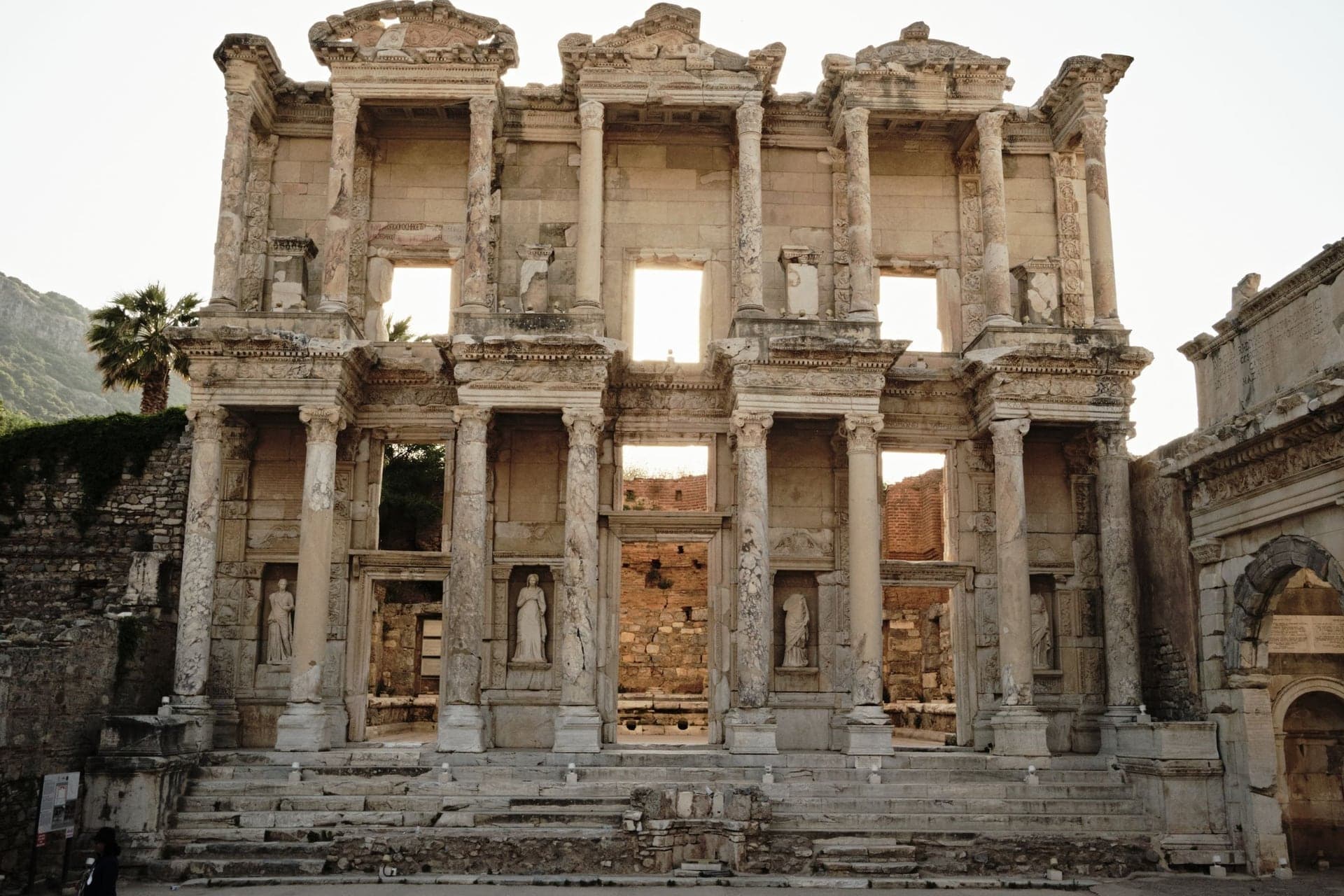
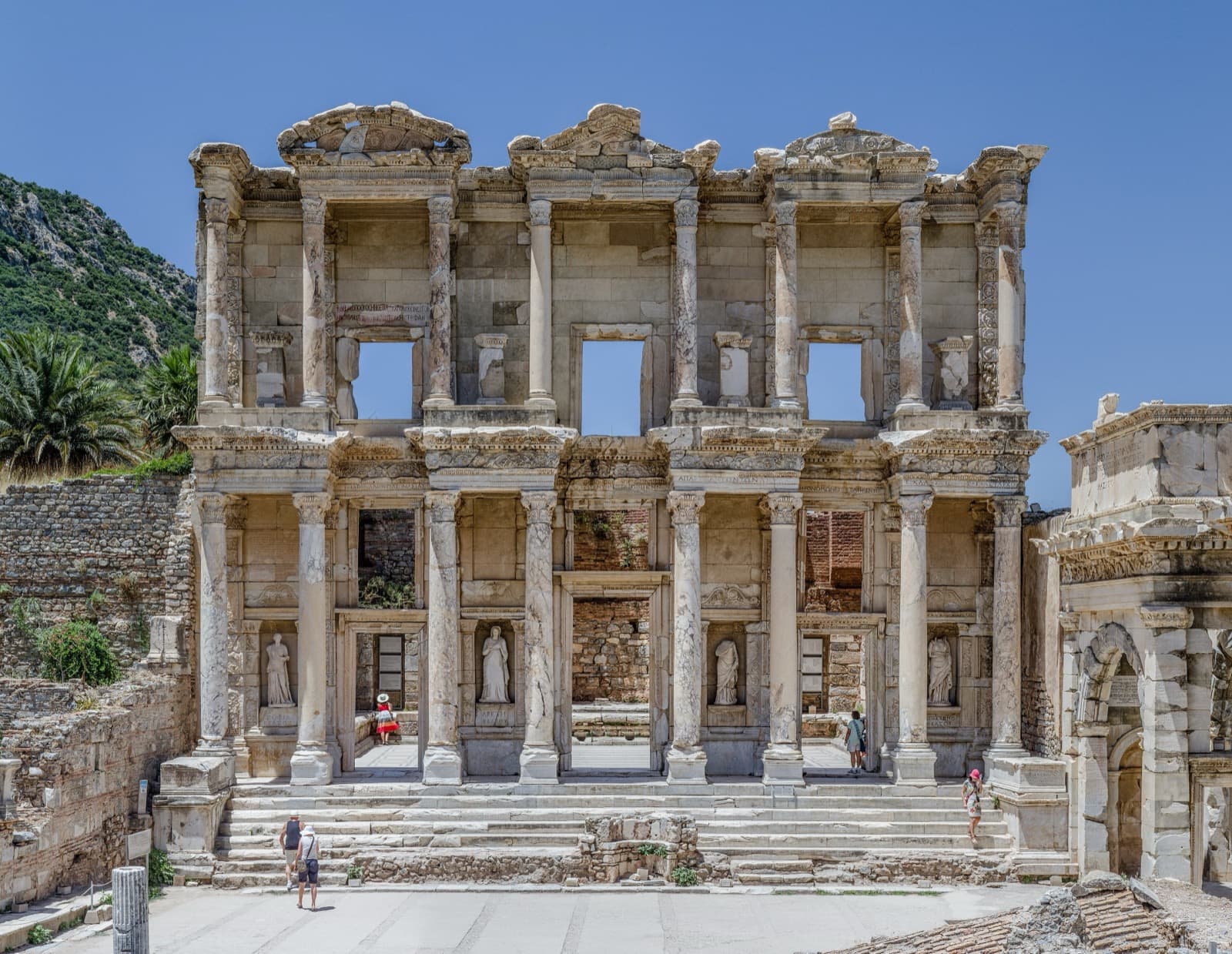
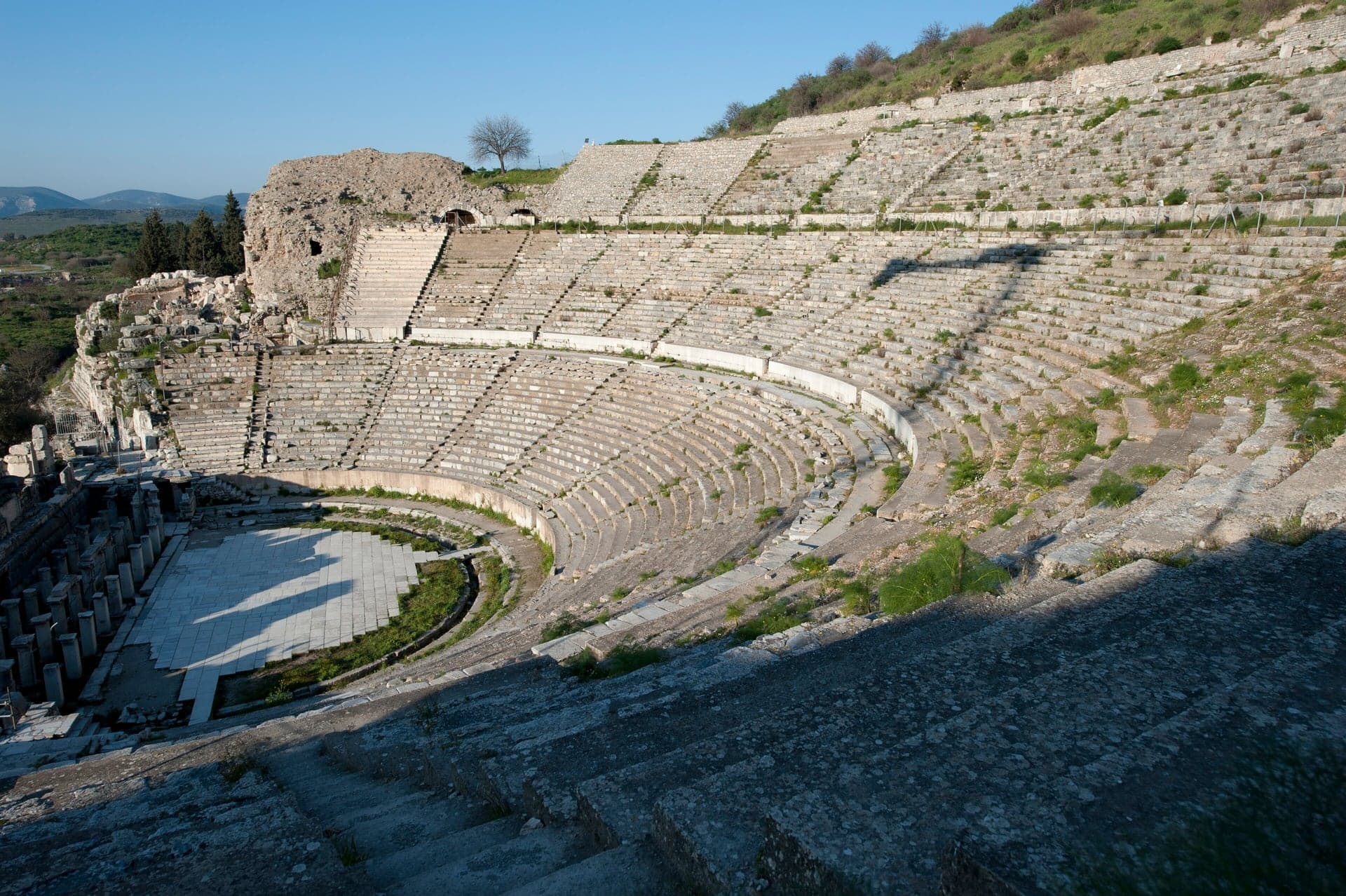
Enter at the upper gate, not the lower one. From the top you walk the entire city downhill. The route runs: the State Agora with its Odeon and Prytaneion, the Gate of Hercules, down Curetes Street, past the small carved porch of the Temple of Hadrian, the Terrace Houses, then the Library of Celsus, the Commercial Agora, the Great Theatre that held about twenty thousand people, the Arcadian Way pointing straight at the empty ground where the harbour silted away, and out through the lower gate. That single downhill line is the argument of the whole city: every street was engineered to move people and goods toward a port that is now five or six kilometres from the sea.
Tickets (2026): the site ticket is 40 euros and now includes the new Ephesus Experience Museum. The Terrace Houses need a separate ticket, an extra 15 euros, and they are worth it if you want to stand inside elite Roman homes with their mosaics, frescoes, and underfloor heating. Cards are accepted at the gate, and you can buy in advance through the official muze.gov.tr site.
Comfort matters more than you expect. The marble paving is uneven and rutted and slippery when wet, so wear closed shoes with grip. Carry more water than you think you need, and bring a hat and sunscreen. Take the descent gently and the stops are short and skippable, so you set the pace.
Midday: walk back to Selcuk and eat
From the lower gate it is about 3.5 kilometres back into Selcuk town, a short taxi (roughly five minutes) or the Selcuk-Pamucak minibus (dolmus) that runs past the site. If your legs are fresh you can walk it in well under an hour on the flat. Selcuk town center has plenty of small restaurants around the train station and market. Eat, refill water, and rest before the afternoon, which involves some uphill.
Afternoon: the town circuit around Ayasuluk hill
The afternoon is a counterpoint to the morning. Where Ephesus is a whole city preserved, Selcuk's greatest monuments are absences: a single column standing for a vanished wonder, and a hilltop where a whole population resettled once the harbour failed.
Start at the Ephesus Archaeological Museum in the town center, opposite the bus station. The finest objects excavated from the ruins are kept here, including the two celebrated statues of Artemis, so you meet the goddess before you look for her temple. Entry is 10 euros (checked 5 October 2026), and it is open every day 08:30 to 17:30, ticket office until 17:00, so go first. From there the walk passes the clock tower and the station to the Byzantine aqueduct arches that run right through the town center, built in the sixth century partly from the temple's own stones, with storks nesting on top from mid-March to the end of August. Then come the Basilica of Saint John, which marks the traditional burial place of John, and the Ayasuluk Fortress above it, sold on one combined ticket (6 euros, checked 5 October 2026); the fortress closes earlier than the basilica, so go in before mid-afternoon if you want the view from the top. Next is the Isa Bey Mosque, built in 1375 with marble from the Temple of Artemis in its west facade.
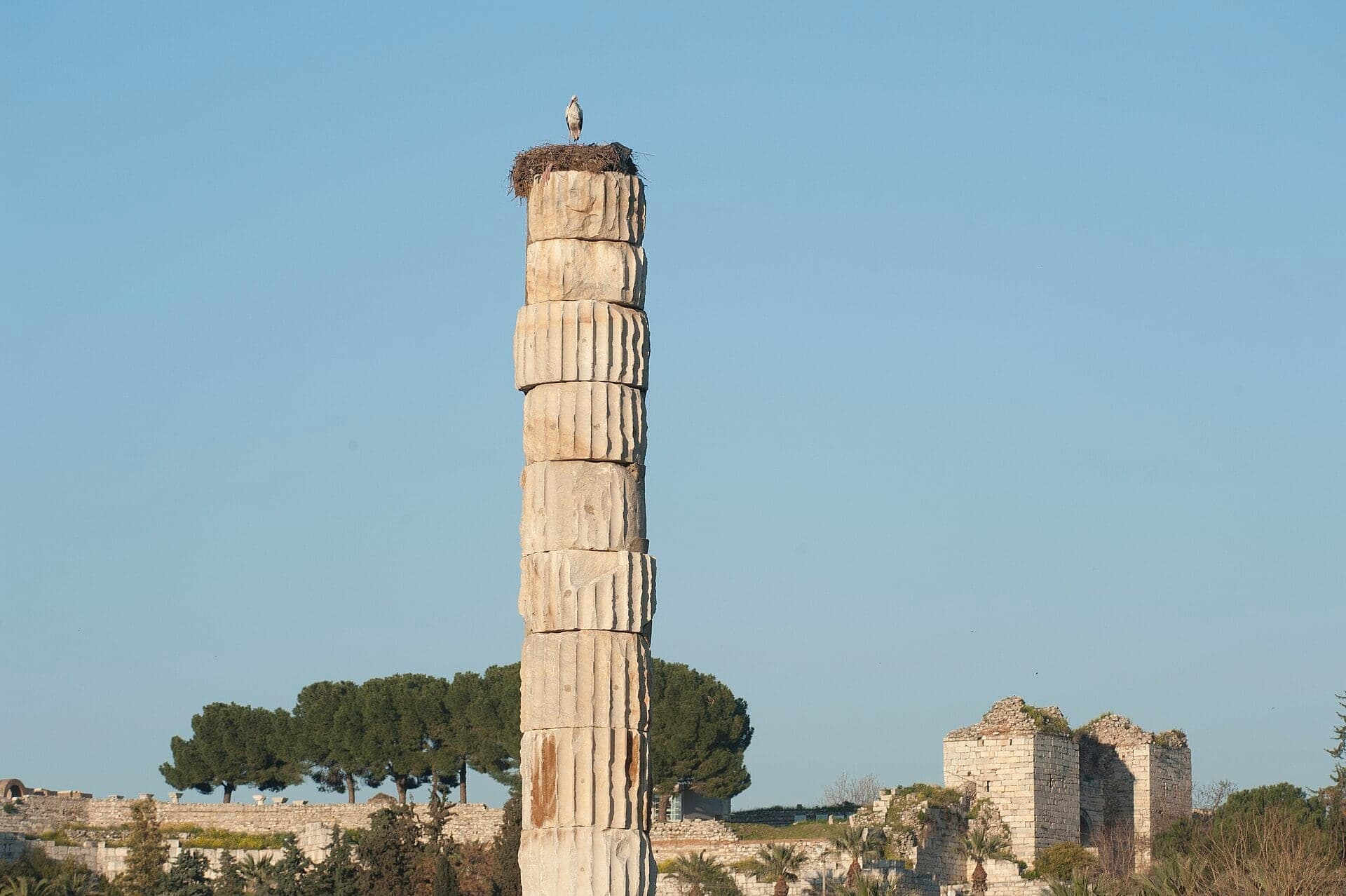
Close at the Temple of Artemis. Once one of the Seven Wonders of the ancient world, it is now reduced to one reassembled column in a marshy field, and that emptiness is the point. The ministry lists no ticket for it, and published hours disagree, so check at the site.
Getting there, and a note on the day's shape
Most travelers reach Selcuk from Izmir Adnan Menderes Airport. The cheapest route is the direct Turkish State Railways (TCDD) train from a station inside the airport to Selcuk, a ride of around an hour for roughly two euros in 2026. A private taxi covers the 65 kilometres in about 50 minutes for around 45 to 55 euros. If you are staying at the coastal resorts near Kusadasi, frequent minibuses connect to Selcuk.
Two honest caveats. First, seasonal hours change, and the site runs evening openings on some nights, so confirm the day's closing time before you plan the afternoon. Second, this is a full, warm day; if the heat is heavy, do Ephesus in the morning as described and keep the town circuit loose, skipping the fortress climb if you need to. Turkey's Aegean coast is a straightforward, welcoming place to travel, and Selcuk in particular is small and easy to navigate on foot.
If you want the narration to carry you stop to stop, both self-guided audio tours are on the Selcuk (Ephesus) walking tours hub and the /turkey/selcuk city page. Play Ephesus: The City That Rebuilt Itself on the morning descent and Temple of Artemis and Ayasuluk Hill in the afternoon, and the day tells one continuous story: a great port that silted inland, and the town that rose on the hill after the water left.
Sources
- Ephesus Entrance Fee 2026: Complete Cost Guide (Ephesus Guide)
- Ephesus Entrance Fee & Hours 2026 (Felicity Travel Turkey)
- Ephesus Archaeological Site, official page (muze.gov.tr)
- Ephesus Museum, Selcuk, official page (muze.gov.tr)
- How to go from Selcuk to Ephesus (Ephesian Tourism)
- Cheapest Way to Get from Izmir to Ephesus in 2026 (Map and Camera)
Frequently asked questions
- How much time do you need to see Ephesus and Selcuk?
- One full day is enough to walk both. Give ancient Ephesus two hours or more in the morning: the audio tour route runs about 1.2 kilometres downhill from the upper gate and takes about an hour and a half at an easy pace, longer with the Terrace Houses. Then spend the afternoon on Selcuk's town circuit, about 2.8 kilometres: the Ephesus Museum, the Byzantine aqueduct, the Basilica of Saint John, the Isa Bey Mosque, and the Temple of Artemis.
- How much does it cost to enter Ephesus in 2026?
- The main site ticket is 40 euros in 2026, and it now includes the new Ephesus Experience Museum. The Terrace Houses require a separate ticket that costs an extra 15 euros. Cards are accepted at the gate, and you can also buy through the official muze.gov.tr site.
- Should I enter Ephesus at the top or bottom gate?
- Enter at the upper gate. The site slopes, so starting at the top lets you walk the whole ancient city downhill, from the civic centre past the Library of Celsus and Great Theatre to the old harbour road. That way you avoid climbing back uphill in the heat, since there is almost no shade along the marble streets.
- How do you get from Selcuk to Ephesus?
- The ancient site is about 3.5 kilometres from Selcuk town center. You can take a short taxi (around five minutes), catch the Selcuk-Pamucak minibus, or walk it on the flat in under an hour. From Izmir Adnan Menderes Airport, the direct Turkish State Railways train to Selcuk is the cheapest option at roughly two euros in 2026.
- What are the Ephesus opening hours?
- As checked on 5 October 2026, the site opens every day at 08:00 and closes at 18:00, with the ticket office closing at 17:45, and there are evening openings on some nights. Winter hours are not yet published, so confirm on the official muze.gov.tr page before you go. Arrive at opening to beat the tour groups and the midday heat.
- Is the Ephesus Museum worth visiting on the same day?
- Yes. The Ephesus Archaeological Museum in Selcuk town center holds the finest objects excavated from the ruins, including the two famous statues of Artemis. Entry is 10 euros (checked 5 October 2026), and it is open every day 08:30 to 17:30. It is the natural start of the afternoon circuit, because you meet the goddess before you walk to the field where her temple stood.
Ready to experience it?
Ephesus: The City That Rebuilt Itself
90 min · 1.2 km · moderate
More from Selcuk
Explore more at your own pace.
Selcuk and Ephesus Travel Guide: Days, Transport, Costs, Safety
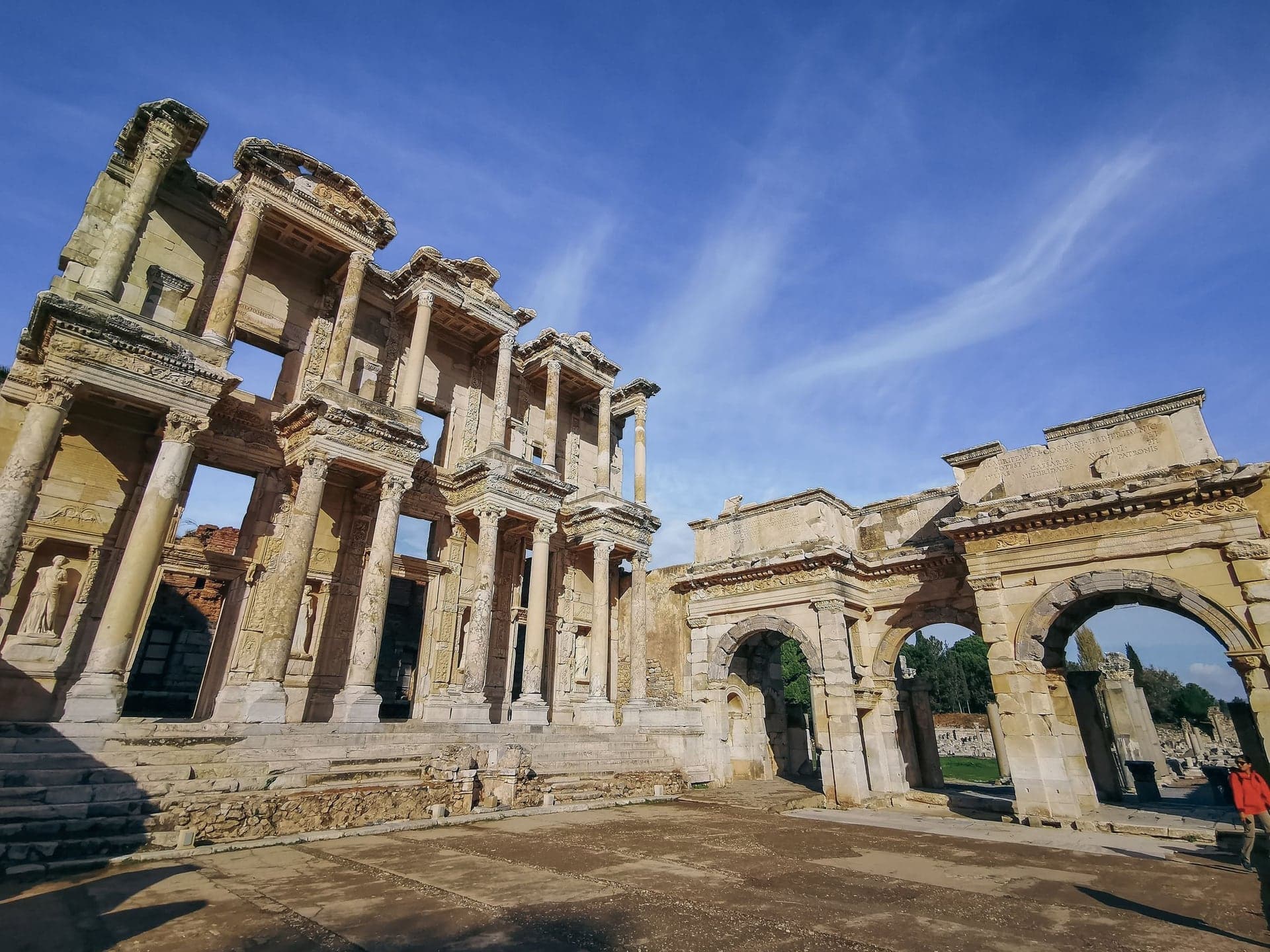
Selcuk: The Afterlife of Ephesus
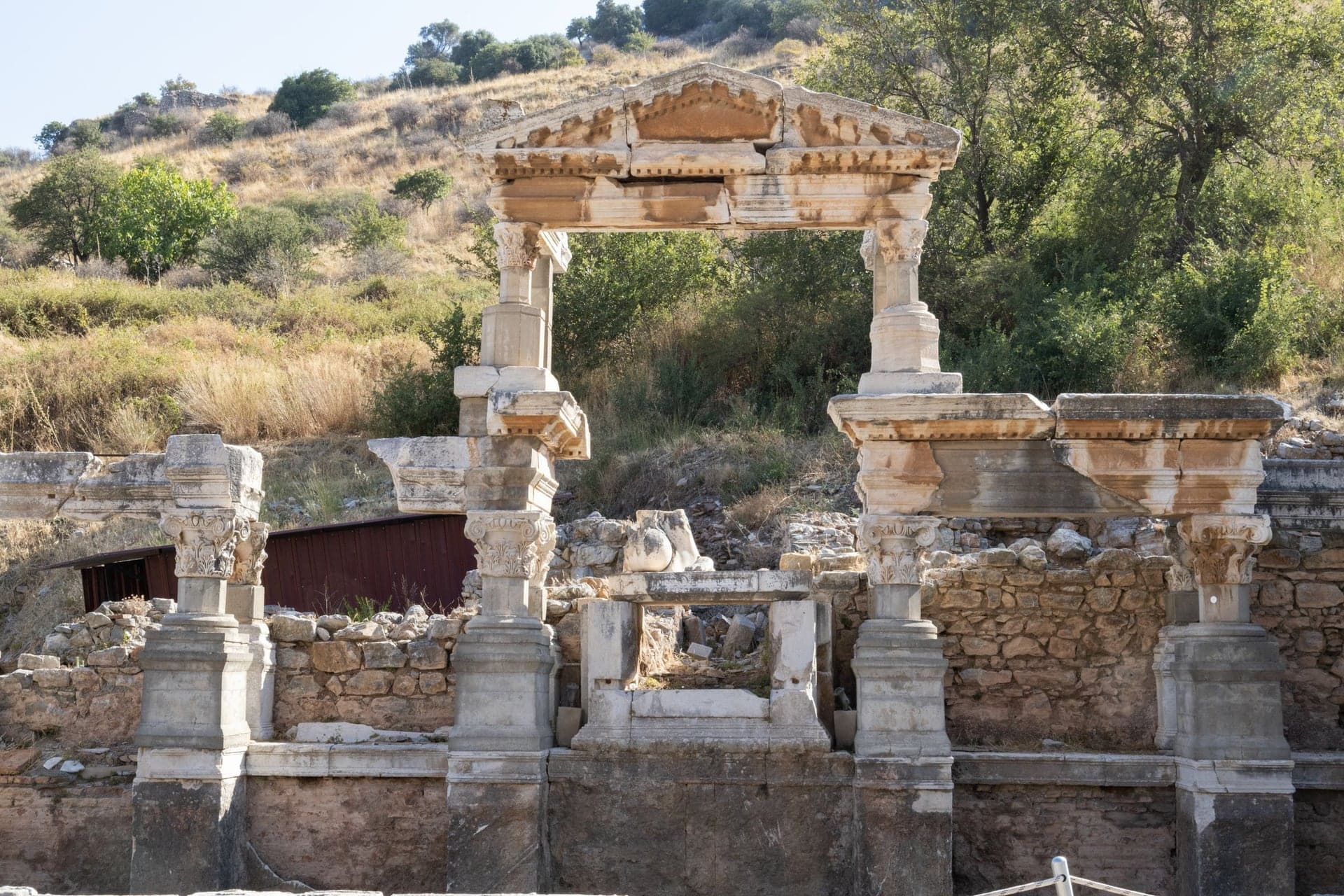
Curetes Street: How to Read the Whole Marble City of Ephesus
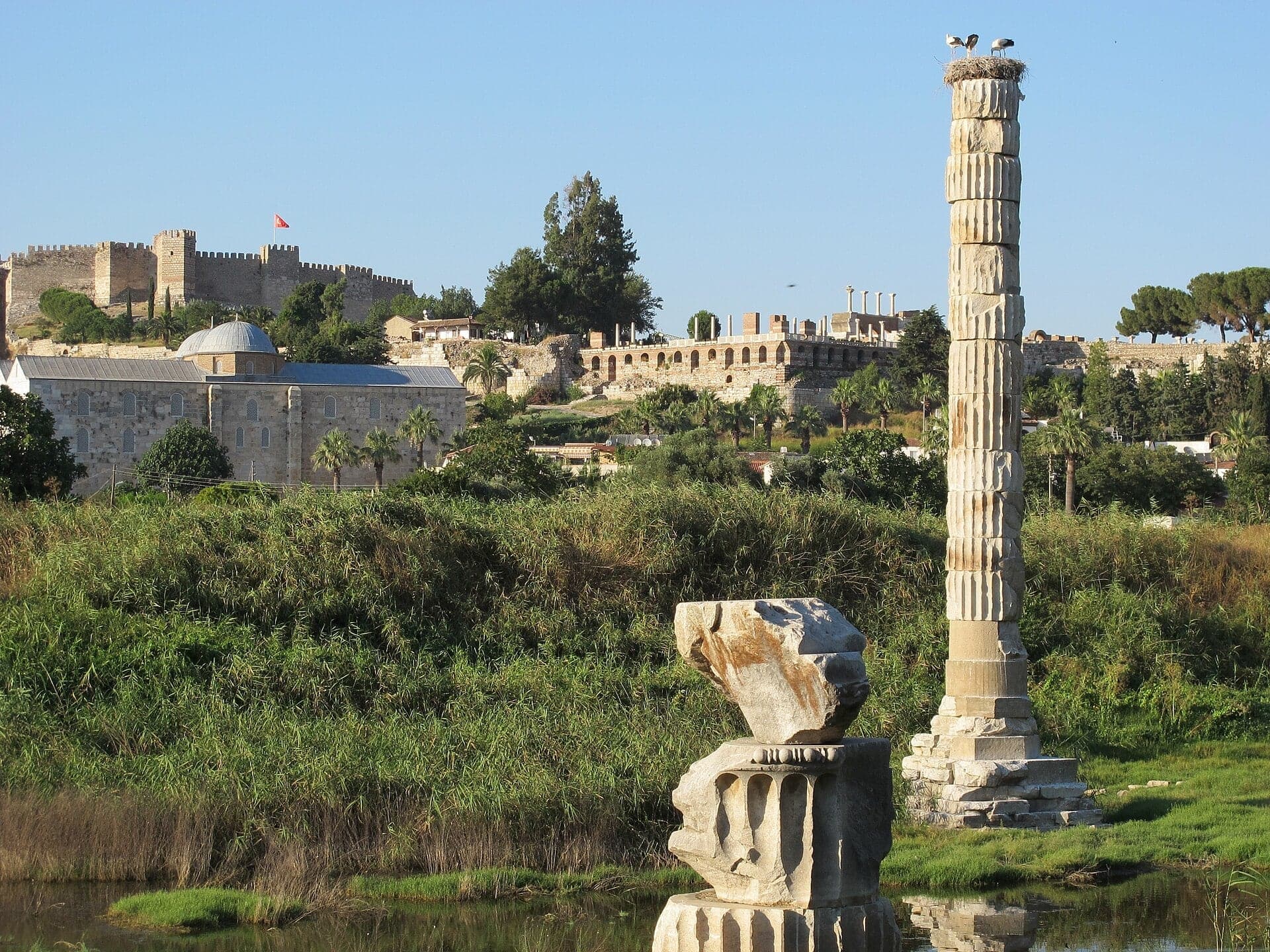
The Temple of Artemis and How Selcuk Reads Its Own Absences
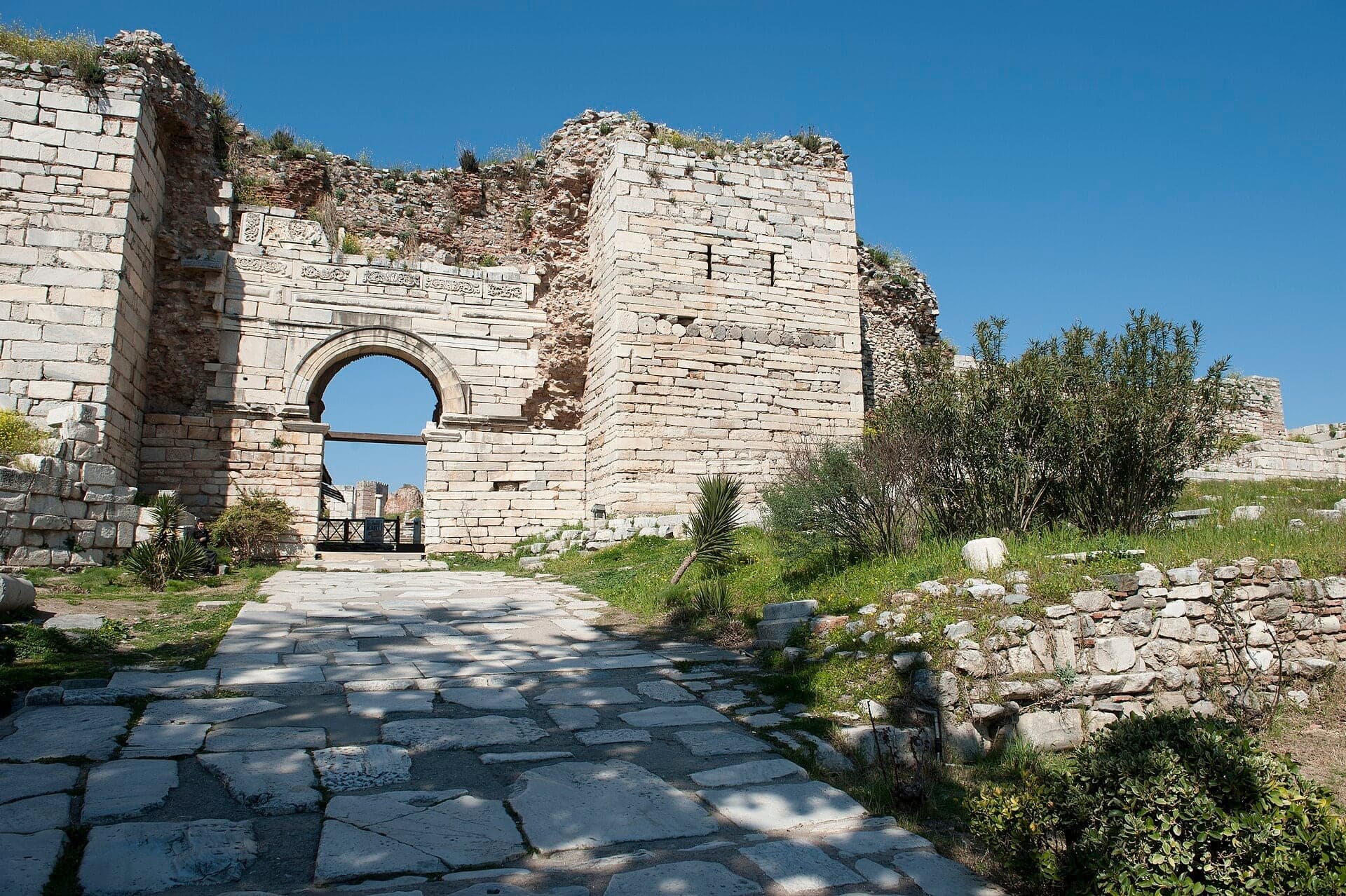
The Basilica of Saint John: Justinian's Church Built Over a Tomb