Amsterdam's name tells its own founding: Amstel plus dam. This walk through the medieval core reads the older city beneath the Golden Age, from the barrier that became the main square to the wharves where the sea trade first came ashore.
Start · Dam Square and the National Monument
DirectionsStops
- 1
Dam Square and the National Monument
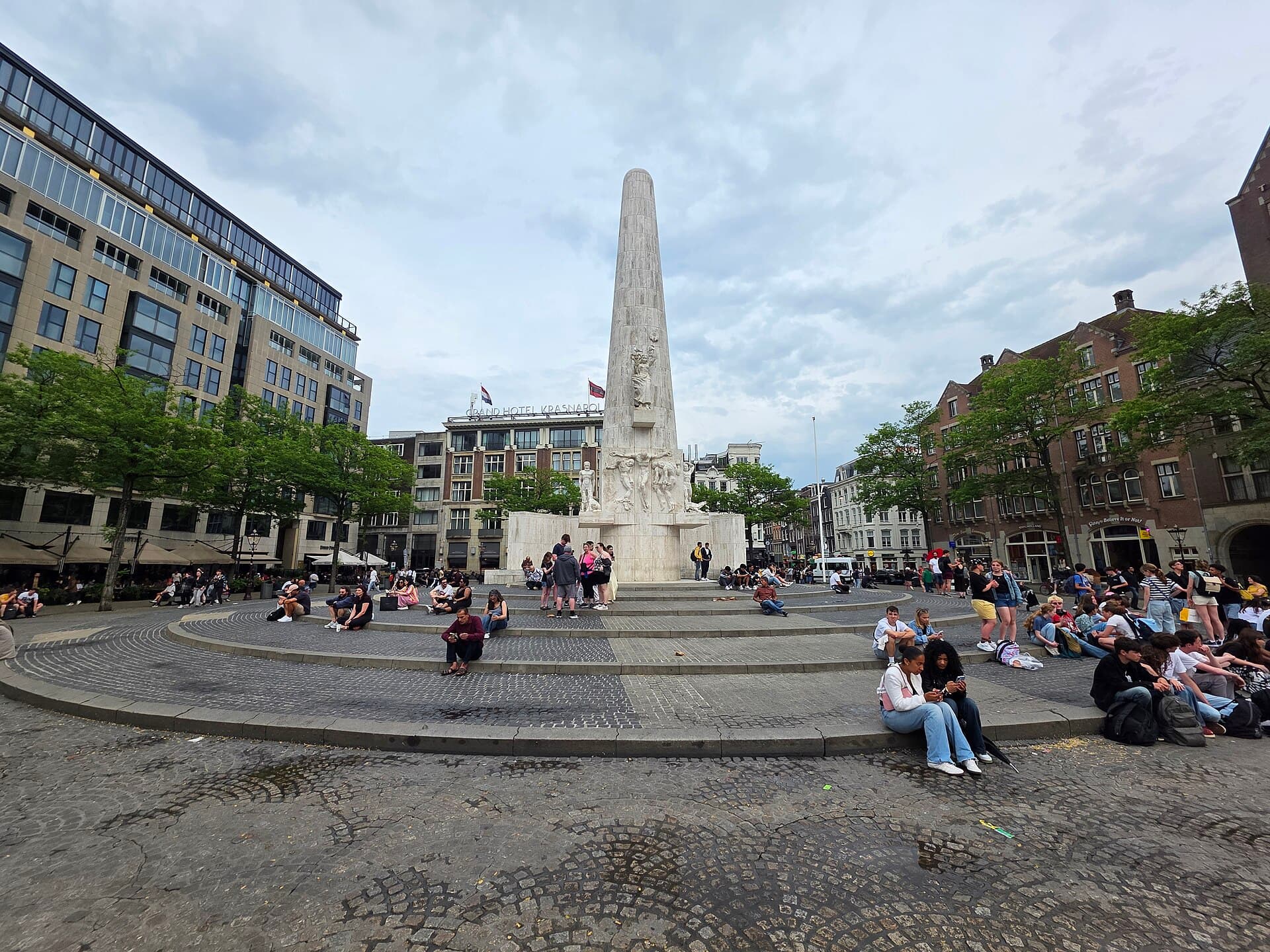
The broad central square that grew from the medieval dam across the Amstel, the literal origin point of the city's name.
- 2
Royal Palace of Amsterdam: the former Stadhuis
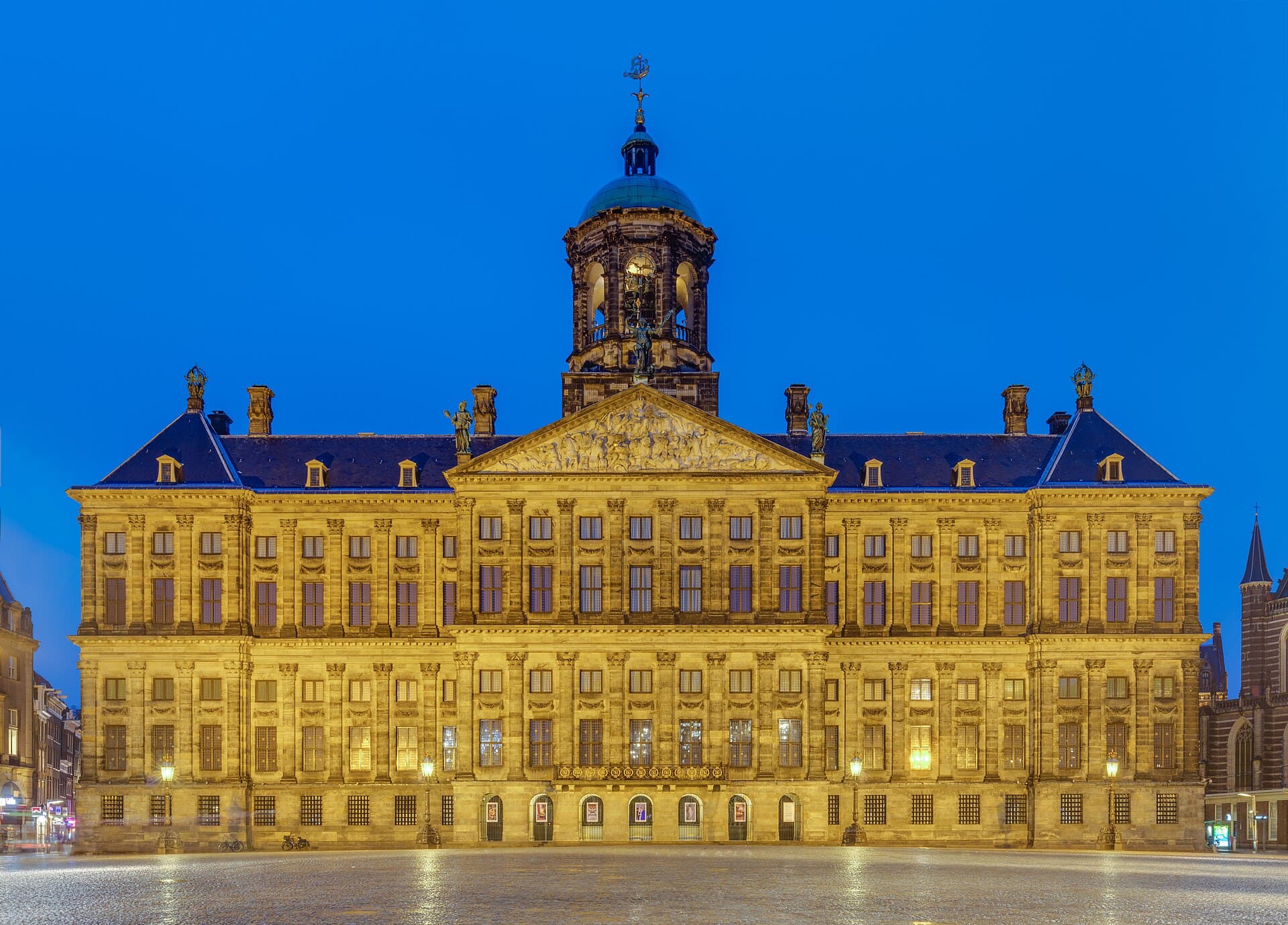
A vast classical palace that was built as the Golden Age town hall, resting on more than thirteen thousand wooden piles driven into the marsh.
- 3
Nieuwe Kerk: the New Church
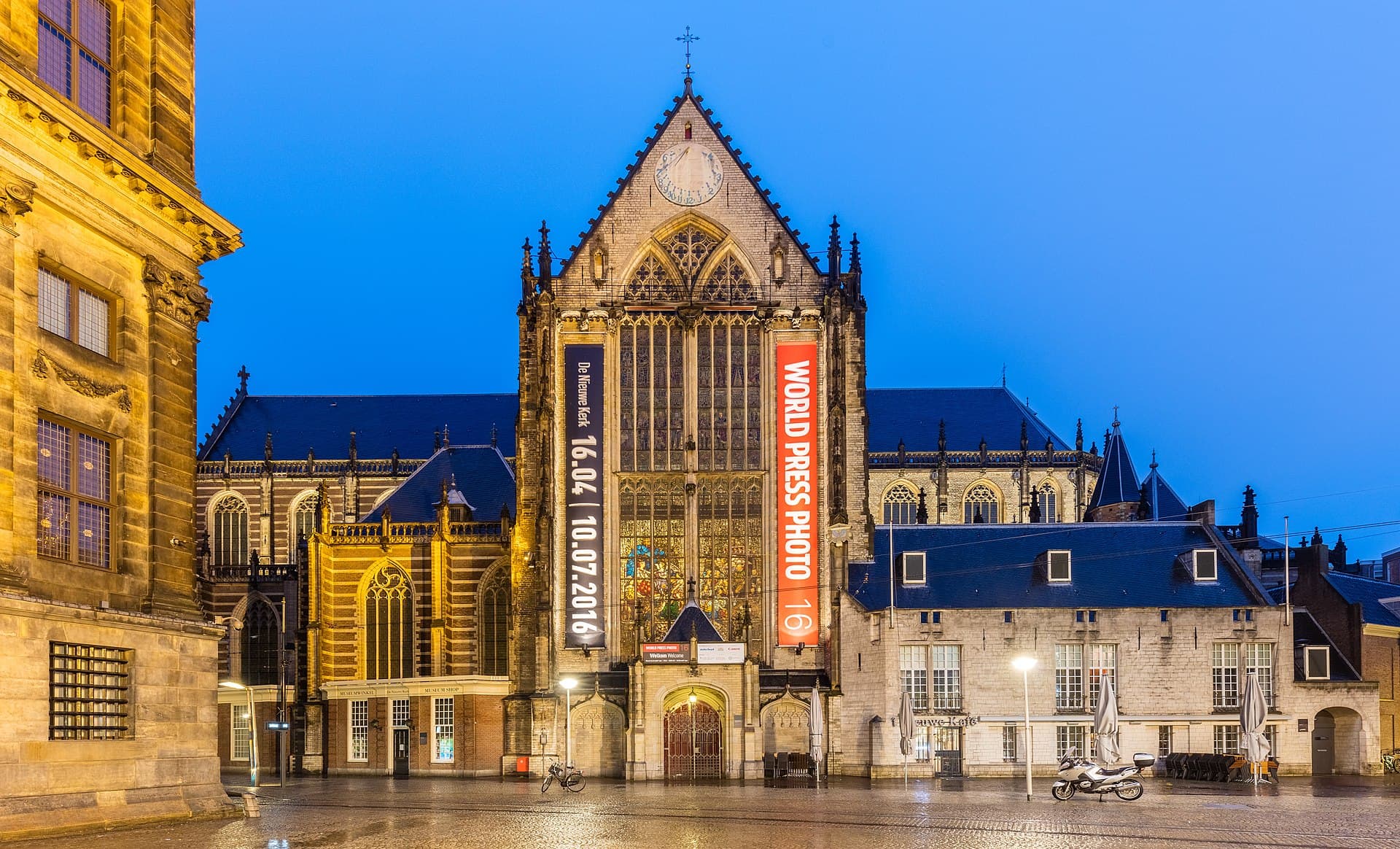
The late-Gothic church beside the palace where Dutch monarchs are invested and royal weddings are held.
- 4
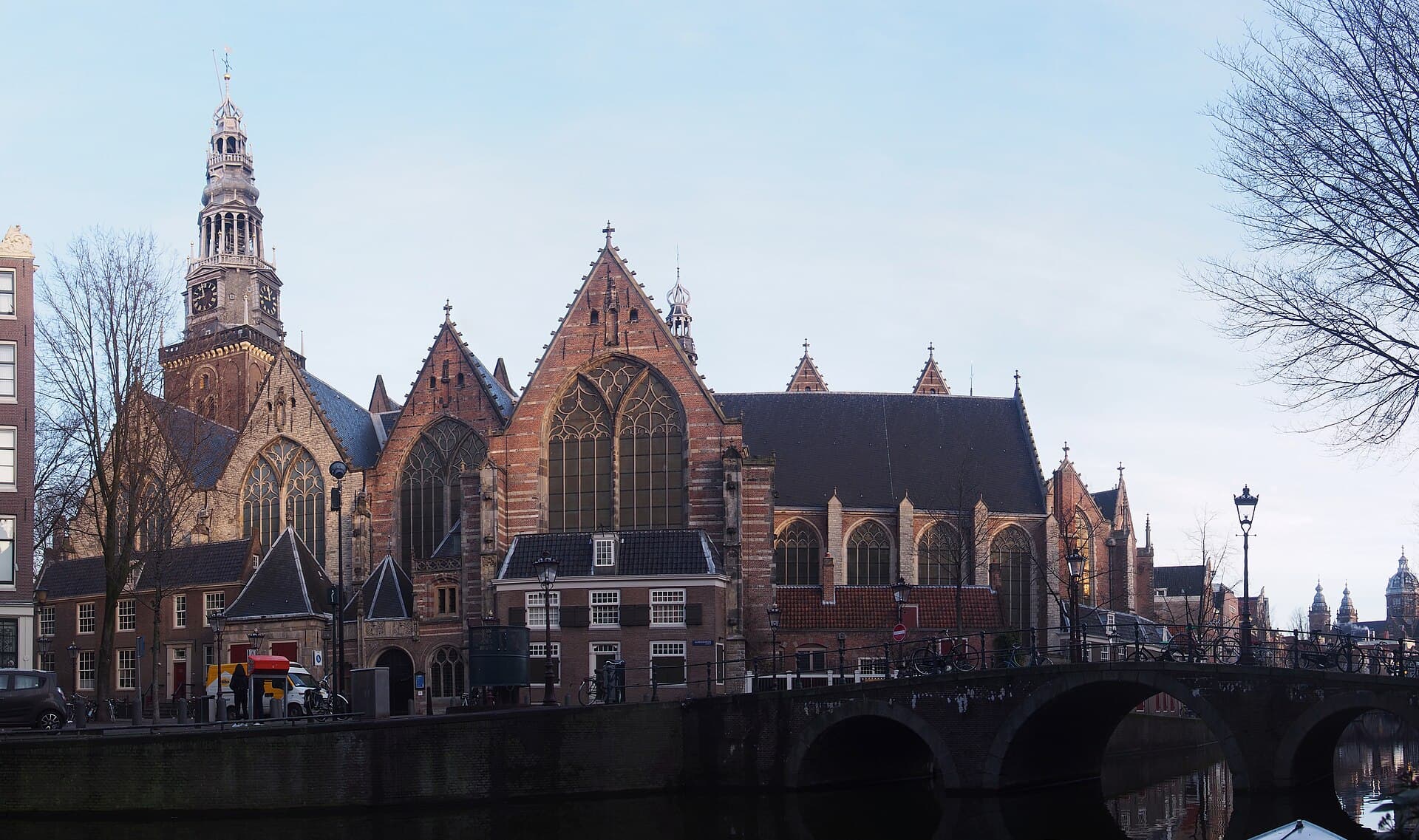
Oude Kerk: the Old Church
Amsterdam's oldest building, a sailors' parish church at the heart of the medieval quarter.
- 5
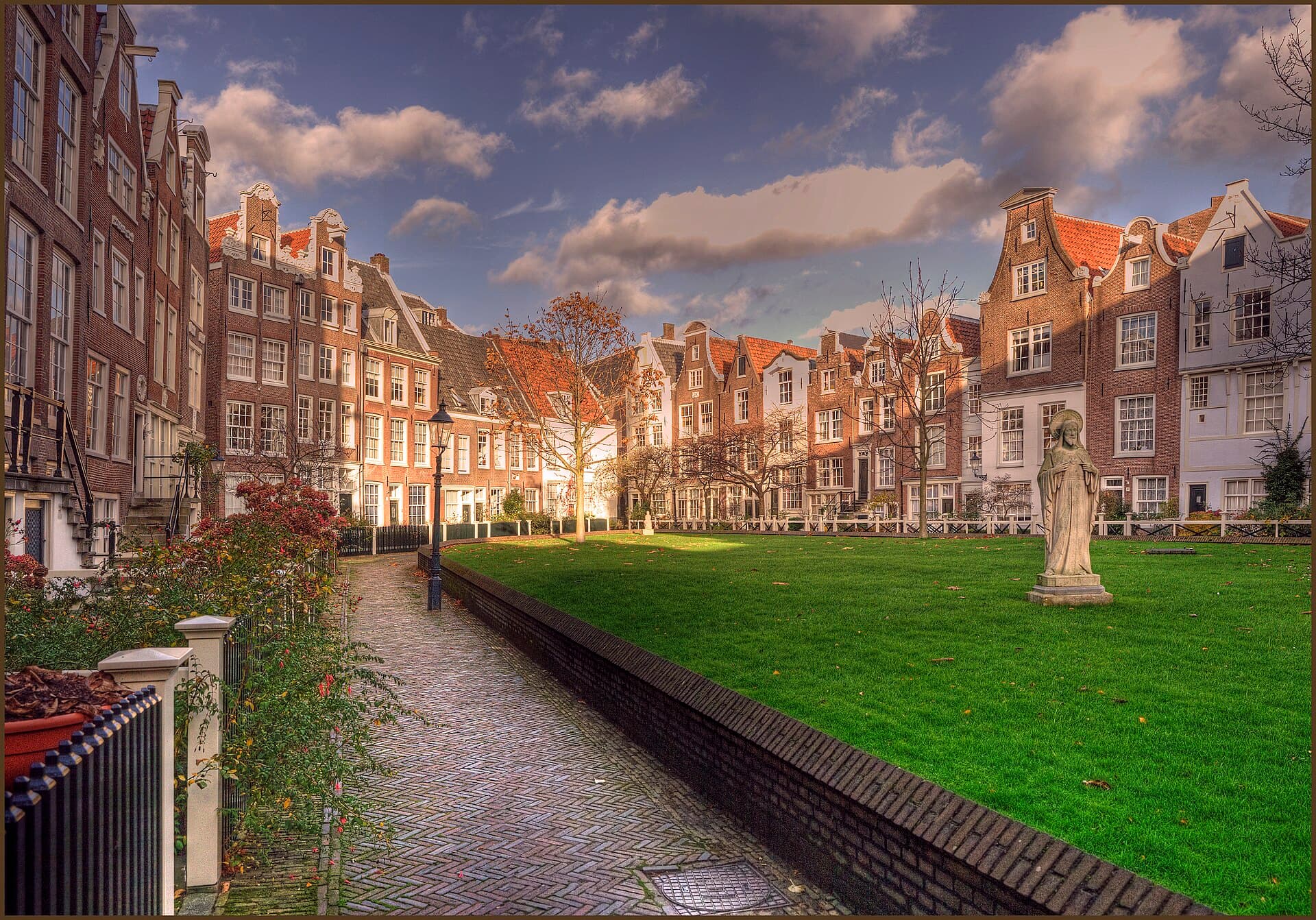
Begijnhof
A hidden medieval courtyard of the Beguines, where the older Catholic city quietly survived Protestant rule.
- 6
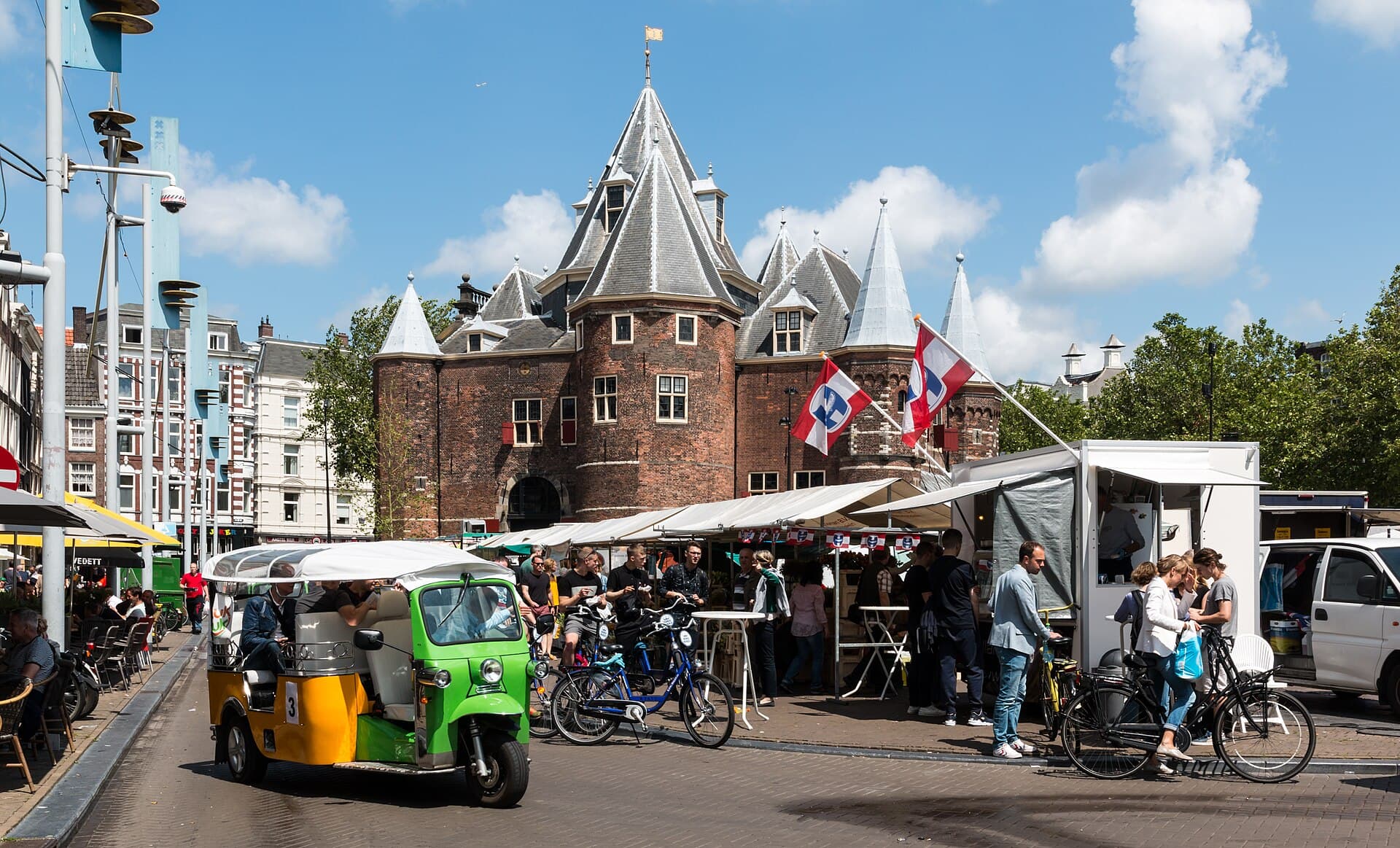
De Waag and the Nieuwmarkt
A medieval city gate turned weigh house on a market square, the setting of Rembrandt's famous anatomy scene.
- 7
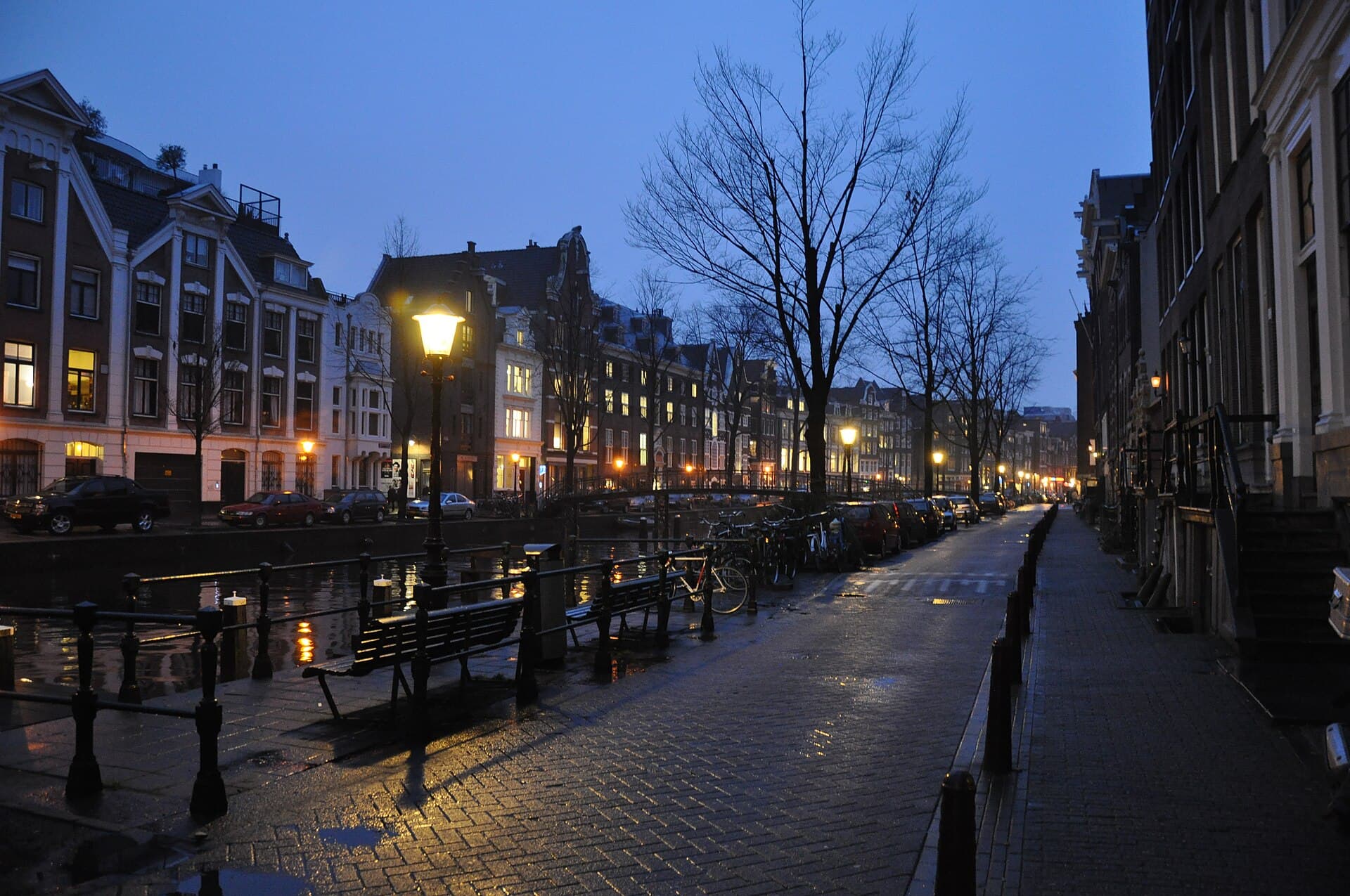
De Wallen and the harbour origins
The oldest quarter of Amsterdam, laced with the original harbour canals where the sea trade first came ashore.
Details
Best Time to Visit
Early morning is the best time to walk this route, roughly between eight and ten, when Dam Square is quiet, the light is soft on the old brick, and the medieval lanes of De Wallen are calm and easy to read. Late afternoon on a weekday is a good second choice. Avoid midday on weekends, when the central square and the harbour quarter grow very crowded. If you want to go inside the churches or the palace, check their opening hours in advance, since the Nieuwe Kerk closes for exhibition changes and the palace closes for state functions on some dates.
Pro Tips
- •Dam Square, the Begijnhof courtyard, the Nieuwmarkt with the Waag exterior, and the streets of De Wallen are all free to walk, so you can enjoy the full arc of this tour without paying a single entry fee.
- •If you want to go inside, buy timed tickets online ahead of time for the Royal Palace, the Nieuwe Kerk, and the Oude Kerk to skip the queues, and check each site's hours since they vary and close for events.
- •The Begijnhof is a quiet residential courtyard where people actually live, so keep your voice low, stick to visiting hours, and treat it as someone's home rather than a photo backdrop.
- •Wear comfortable shoes with real grip: the whole route is on uneven cobbles and old brick, and the bridges and canal wharves get slick when wet.
- •Keep to the walkway and stay alert on the canal edges, many of which have no railing at all, especially when you stop to look up at the buildings.
- •Treat De Wallen soberly and put your camera away when passing windows or residents: it is a working, lived-in neighbourhood, not a spectacle, and photographing people there is unwelcome and can provoke a sharp response.
Safety & Precautions
- •Many canal edges and wharves have no railings and drop straight into deep water, so stay back from the edge, watch children closely, and never step backward to frame a photo.
- •Cyclists and trams have priority and come fast and almost silently: look both ways before crossing any bike lane, do not stand in it, and listen for tram bells, since the tracks run right through the central squares.
- •The cobbles are uneven and the bridges, wharves, and church steps get slippery when wet, and interior stairs in the old buildings are steep and narrow, so take them slowly and use handrails where they exist.
- •Inside the churches, dress modestly and keep quiet, especially during any service, recital, or ceremony, and remember the Oude Kerk and Nieuwe Kerk are places of worship and remembrance, not just photo stops.
- •Dam Square and the crowded old-city lanes draw pickpockets who work in groups, using a fake petition, a spilled drink, or a sudden crowd to distract you while a partner clears your pockets. Keep your phone, wallet, and passport zipped and in front of you, and hold your bag closed in the densest spots.
- •If someone claiming to be a plainclothes officer asks to inspect your wallet or cash for counterfeit money, it is a scam. Real Dutch police do not check tourists' money on the street. Decline, keep your things closed, and walk to a busy, well-lit place or a staffed shop.
Travel advisory: Exercise Increased Caution (Level 2).
Gallery
Related Reading
Go deeper on what you'll see, hear, and walk through.
Overview
Amsterdam Travel Guide: Days, Transport, Timing, Safety, and Cost
7 min
Overview
Best Self-Guided Walking Tours in Amsterdam (2026)
4 min
Overview
One Day in Amsterdam: A Walkable Itinerary from Morning to Evening
10 min
Thematic
Rijksmuseum: What to See, Room by Room, and a Two-Hour Plan
10 min
Thematic
The Dam, the Plan, and the Quarter: How Amsterdam Was Engineered
7 min
Companion
Dam Square: The Barrier That Named Amsterdam
6 min
Deep dive
Amsterdam's Royal Palace: The Town Hall That Became a King's Home
7 min
Read
What to Eat in Amsterdam
7 min
Read the walk
The full story of Dam Square: The Dam That Became a City, in words. Prefer to listen? Play it narrated, from home or on location.
Introduction
Amsterdam, in the Netherlands, is a name that carries its own beginning. Amstel, the little river, plus dam, the barrier thrown across it around the year twelve seventy. On that dam a fishing hamlet grew into a world port, and this walk reads the older city hiding beneath the Golden Age. You will see the dam that became the central square, the town hall of a merchant republic that briefly ran a global trade, the old church of a sailors' parish, a hidden courtyard where the medieval Catholic city survived quietly, a weigh house that began as a gate, and the tangled quarter where the harbour first came ashore. This tour has seven stops, covers roughly three and a half kilometres, and takes about two to two and a half hours at an unhurried pace. It is yours to walk however you like. The stops are short, and you can linger at the ones that pull you in and skip the ones that do not. Along the way, the flat, easy surface hides an engineered city on wooden piles, a marsh drained and dammed, a place that fought water and outgrew every expectation. Some of the wealth here is uncomfortable, tied to colonial trade and the slave trade, and I will be honest about that when it matters. Some of the founding stories are folklore, and I will tell you where the record ends and legend begins. When you arrive at Dam Square, begin with stop one.
1. Dam Square and the National Monument
You are standing on the dam that named the city. Around the year twelve seventy, people threw a barrier across the little Amstel river here, connecting the settlements on opposite banks. The first documentary trace comes a few years later: a road-toll privilege of the year twelve seventy-five, granted by Count Floris the Fifth of Holland to the residents apud Amestelledamme, at the dam in the Amstel. According to Wikipedia's account of the square, that toll grant is the earliest paper record of Amsterdam's existence. So the name is exactly what it says. Amstel plus dam. The dam itself was called the Middeldam and held a fish market. Beside it lay an open plaza called the Plaetse, and as the dam widened it grew broad enough to become a proper town square, the beating core of the settlement. You may have heard a founding legend, the tale behind the old coat of arms with its dog and its boat. Treat that gently. It is tradition, not documented history, a story the city told about itself rather than a fact from the record. What is solid stands in front of you. The tall white stone pillar is the National Monument, unveiled in nineteen fifty-six and designed by the architect J.J.P. Oud, in memory of those who died in the Second World War. Each year, on the fourth of May, the country gathers here for National Remembrance Day, when the whole square falls into two minutes of silence. From a soggy dam in a marsh to the ceremonial heart of a nation. That is the arc of this walk, compressed into one square.
2. Royal Palace of Amsterdam: the former Stadhuis
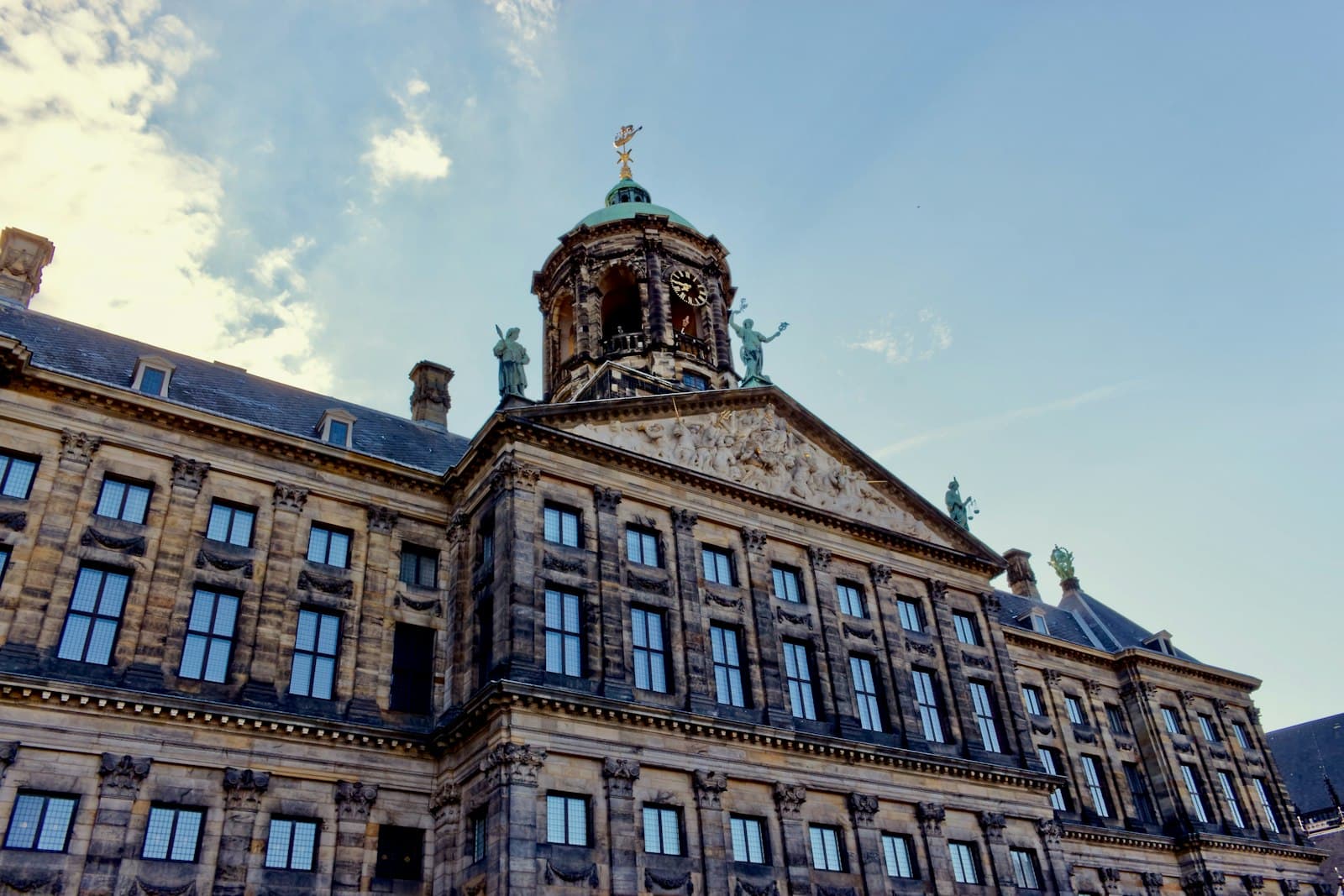
This enormous building on the west side of the square was not born a palace. It was built as the Stadhuis, the town hall, the seat of a merchant city that briefly ran a global trading empire. Construction began in sixteen forty-eight and finished in sixteen sixty-five, and it opened for business as the town hall on the twenty-ninth of July sixteen fifty-five. The primary architect was Jacob van Campen, with Daniël Stalpaert working alongside him. Now consider what it stands on. This is a marsh. To hold up all that stone, builders drove thirteen thousand six hundred fifty-nine wooden piles down into the soft ground. A whole forest sunk into the mud so the city hall would not sink after it. The scale was deliberate. The floor covers around twenty-two thousand square metres, a boast in stone about the reach of the republic. Among the men who commissioned it was the mayor Nicolaes Tulp. Hold that name. You will meet him again at the end of this walk, on the wall of a very different building. In eighteen oh eight the town hall stopped being a town hall. Louis Bonaparte, brother of Napoleon and installed as king, moved his court to Amsterdam and turned the Stadhuis into his palace. That is why we call it the Royal Palace today. It remains one of three palaces at the disposal of the Dutch monarch, used for state functions, and open to visitors on most days. Adult entry runs about twelve to thirteen euros fifty, and under eighteens go free. Be honest about the wealth that raised it. The Golden Age that funded this splendour was inseparable from colonial trade and the slave trade. The grandeur and the cost sit together.
3. Nieuwe Kerk: the New Church
Right next to the palace stands the Nieuwe Kerk, the New Church. Kerk means church, and it was called new to set it apart from the older Oude Kerk you will reach shortly. Work on it ran roughly from thirteen eighty to fourteen oh eight, and it was consecrated in fourteen oh nine, with the first masses following in fourteen ten. So this new church is more than six centuries old. The neo-Gothic touches you see came much later, from renovations between eighteen ninety-two and nineteen fourteen. Since the nineteenth century this has been the ceremonial church of the Dutch monarchy, and here I want to be precise about a common mistake. Dutch monarchs are not crowned. There is no coronation. Under Article thirty-two of the Dutch Constitution they are inaugurated, or invested, in a ceremony that confirms a monarch who already reigns. The word coronation simply does not apply. This church has hosted those investitures for Queens Wilhelmina, Juliana, and Beatrix, and most recently for King Willem-Alexander in twenty thirteen, whose wedding to Máxima was also held here, in two thousand two. The church no longer holds regular services. Today it is an exhibition space with organ recitals, a café, and a shop, so entry varies by exhibition, roughly nineteen euros fifty to twenty-five euros for an adult. Look, too, for the graves of national figures. The admiral Michiel de Ruyter lies here, as does the poet Joost van den Vondel, a name you will hear again in the harbour quarter at the end of this walk. Two monuments, then, share this square. A palace that was a town hall, and a church where the crown is confirmed but never placed on a head.
4. Oude Kerk: the Old Church
This is, by Wikipedia's account, the oldest building in Amsterdam and the oldest parish church in the city. The Oude Kerk, the Old Church. Oude means old, and it earns the name. It began as a wooden chapel around twelve thirteen, and the stone church was consecrated about…
Full narration for this stop unlocks with the tour.
5. Begijnhof
Step off the busy lanes into the Begijnhof and the noise drops away. This is a hofje, an almshouse courtyard, and it belonged to the Beguines, a lay sisterhood of women who took a vow of chastity and attended daily Mass but kept the freedom to leave and marry. That freedom is…
Full narration for this stop unlocks with the tour.
6. De Waag and the Nieuwmarkt
The turreted building in the middle of the Nieuwmarkt is the Waag, the weigh house, but it did not start that way. It began as a medieval city gate, the Sint Antoniespoort, Saint Anthony's Gate. Poort means gate. It was part of the city wall, and its gable stone is dated…
Full narration for this stop unlocks with the tour.
7. De Wallen and the harbour origins
You end where the city began, in De Wallen, the oldest quarter, threaded with the old harbour canals Oudezijds Voorburgwal and Oudezijds Achterburgwal. The nicknames De Wallen and Walletjes mean little walls, after the walled edges of these canals. Gracht means canal, and straat…
Full narration for this stop unlocks with the tour.