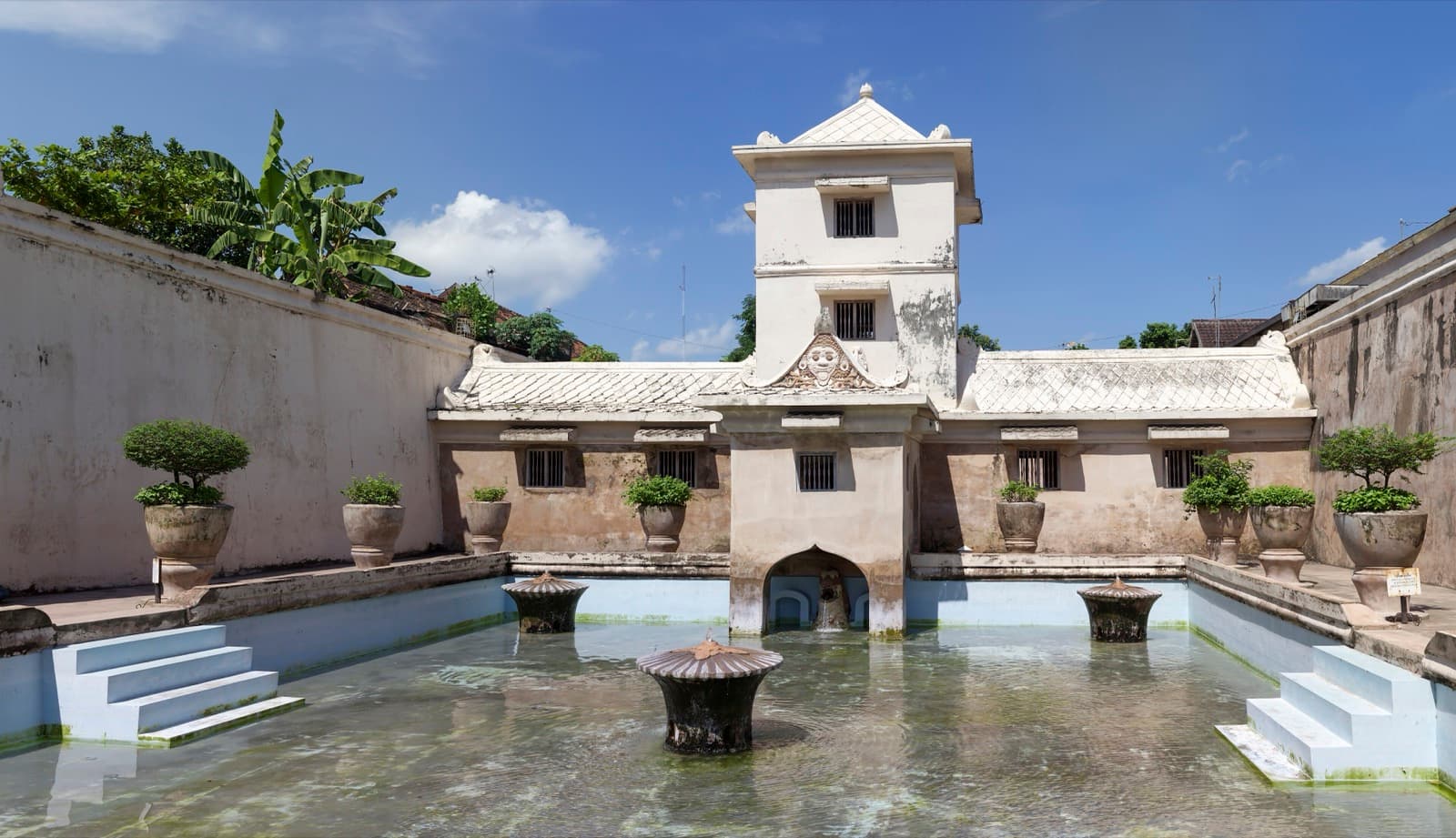
Taman Sari Water Castle is a flooded pleasure garden that Sultan Hamengkubuwono the First built south of his palace in Yogyakarta between about 1758 and 1765, engineered so a system of gates could submerge the whole complex under water, and it hides a circular underground mosque reached by tunnel. Most visitors arrive expecting a ruined garden and find something stranger: a place designed to disappear, a bathing court fed by mushroom-shaped springs, and a domed prayer chamber sunk below ground where four staircases climb to meet at a single platform. Standing in front of it, the one thing worth understanding is that this was never merely decorative. It was a working machine of water, defense, and devotion, built by the same sultan who drew his entire capital as a straight sacred line.
A garden built to vanish under water
The name Taman Sari is usually rendered as fragrant garden, a nod to the perfumed flowers that once ringed the grounds, and the sultan who commissioned it, Hamengkubuwono the First, was the founder of Yogyakarta itself. He raised the city in 1755 after the Treaty of Giyanti split the old realm of Mataram, and within three years he began this water castle just south of his palace core. Construction ran from around 1758 to roughly 1765, and the finished complex was many things at once: a resting place, a workshop, a site for meditation, a hiding place, and a defensive strongpoint.
The word castle is not idle. The most remarkable feature here was hydraulic. A network of gates could flood the complex when the watergates were shut, so the garden could vanish beneath a sheet of water. That capacity blurred the line between pleasure and defense. A retreat that can drown itself is also a fortress, and the sultan who built it had every reason to think about both leisure and survival at the same time.
At its height the complex was far larger than what survives. It once held roughly 59 buildings, including a mosque, meditation chambers, swimming pools, and a series of 18 water gardens and pavilions. Today only the central bathing complex is well preserved. The rest has been absorbed by the Kampung Taman neighborhood that grew up among the old walls, so that houses, alleys, and courtyards now thread through what were once royal grounds. Reading the site means seeing a palace garden and a living village occupying the same ground.
The bathing court and the mirrored pools
Hear a stop from this walk
Alun-Alun Kidul: Where the Sacred Line Meets the Everyday
The first structure that still rewards a visit is the bathing complex, Umbul Pasiraman. Here three enclosed pools are fed by springs shaped like mushrooms, and a tower rises above them from which the sultan could look out over the water and the courtyard. The pools are the postcard image of Taman Sari, framed by warm ochre walls and stepped stone, and they are the part of the complex that has been most carefully kept.
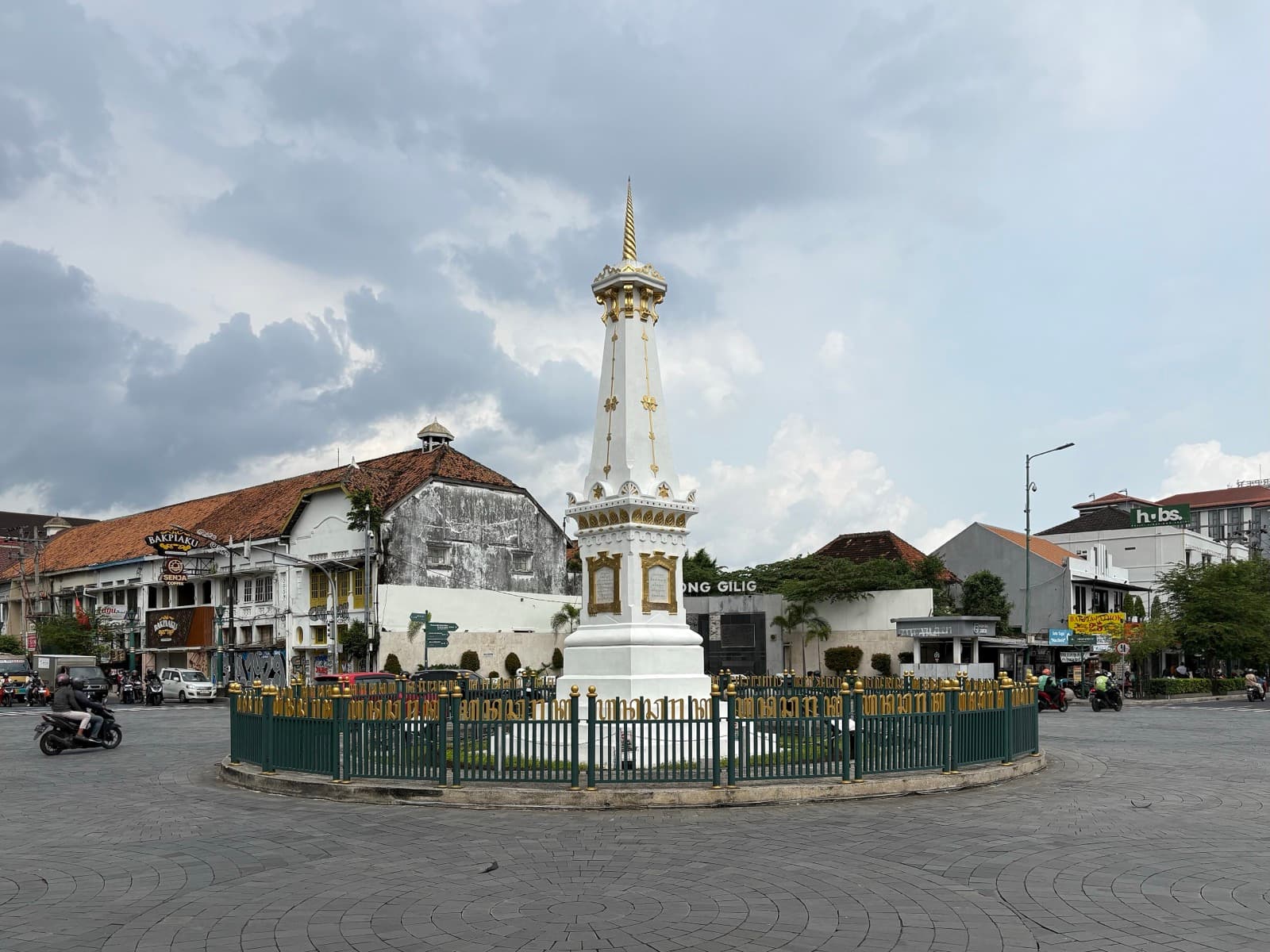
The stonework you see in the bathing court is largely the product of a later rescue. The early 1970s brought a restoration that returned the pools to legible shape after long neglect. Two much earlier blows had done the damage. The British invasion of 1812 destroyed parts of the complex during the brief violent interlude when British forces moved against the Yogyakarta court. Then the 1867 earthquake, the same quake that toppled the Tugu pillar at the northern end of the city's axis, drained the water features and cracked the structures. What stands now is a survivor twice over, damaged by war and by the ground itself.
An underground mosque and a contested designer
The second structure is the one that stops people: Sumur Gumuling, a circular underground mosque reached through a tunnel. Inside, the space opens into a well of light, and four staircases climb from different directions to converge at a single raised central platform, with one further staircase rising from there. Below sits an ablution pool. The geometry is deliberate and unusual, a round Muslim prayer hall built into the earth rather than raised toward the sky, cool and quiet where the daylight falls in from above.
The design carries a genuine puzzle about who made it. Court accounts credit a Javanese official named Tumenggung Mangundipura, who traveled twice to Batavia, the Dutch colonial capital that is now Jakarta, to study European architecture. That study explains the striking blend of Javanese and European forms across the complex. A rival legend, still repeated by guides, claims a shipwrecked Portuguese man built it and was given the title Demang Tegis, a corruption of Portugis, the word for Portuguese. Historians have largely set that story aside. Scholars examining the architecture concluded its character is strongly Javanese, and recent research points to local Javanese creators rather than a European hand. When you stand in the underground mosque, you are looking at Javanese court builders absorbing foreign ideas on their own terms, not a foreigner's imported design.
Reading the water castle on the sultan's line
Taman Sari does not sit alone. It falls near the southern half of the Cosmological Axis of Yogyakarta, the roughly six-kilometer line Hamengkubuwono the First drew from a pillar in the north, through the market street of Malioboro, past a Dutch fort, through his palace, and on toward the Indian Ocean. UNESCO inscribed that axis as heritage in 2023. The water castle is the sultan's private counterweight to the public ceremony of the line: where the axis is a sentence spoken outward to the mountain and the sea, this garden turns inward, into pools, tunnels, and a chamber sunk below ground.
The one thing to hold onto in front of it is that contradiction made concrete. A garden that can flood itself into invisibility. A mosque you descend into rather than ascend toward. A design that borrows European engineering yet reads as unmistakably Javanese. Hamengkubuwono the First built a capital as an argument about order and cosmology, then built himself a place that quietly complicated every clean line. That is why Taman Sari is worth slow attention, and why it belongs to a walk rather than a single photograph.
You can reach it on foot as the sultan's own line intended. The Yogyakarta walking tours collection includes the self-guided audio route that runs north to south down the sacred axis, and Taman Sari is its sixth stop, a couple of kilometers south of the palace, best reached earlier in the day before the heat and the tour groups peak. Foreign visitors pay a modest entry fee of around fifteen thousand rupiah, modest dress is expected, and the uneven stone and dim stepped tunnels reward taking your time. To plan the fuller route through the palace, the squares, and the market street, start from Yogyakarta and walk the line the way its founder meant it to be read.
Sources
- Taman Sari (Yogyakarta), Wikipedia: construction dates circa 1758 to 1765, the 59 buildings and 18 water gardens, the four-staircase Sumur Gumuling, the Demang Tegis legend, and the scholarly conclusion of Javanese authorship.
- Cosmological Axis of Yogyakarta, UNESCO World Heritage List: the 2023 inscription of the roughly six-kilometer axis linking Mount Merapi, the palace, and the Indian Ocean.
- Keraton Ngayogyakarta Hadiningrat, Wikipedia: the founding of Yogyakarta in 1755 under the Treaty of Giyanti and the reign of Hamengkubuwono the First.
- Roamer tour "Old Town: Walking the Sultan's Sacred Line": fact-audited on-site narration for Taman Sari, including the Umbul Pasiraman bathing pools, Tumenggung Mangundipura's two study trips to Batavia, and the 1812 and 1867 damage.
Ready to experience it?
Old Town: Walking the Sultan's Sacred Line
150 min · 6 km · moderate
More from Yogyakarta
Explore more at your own pace.
One Day in Yogyakarta: A Walkable Itinerary
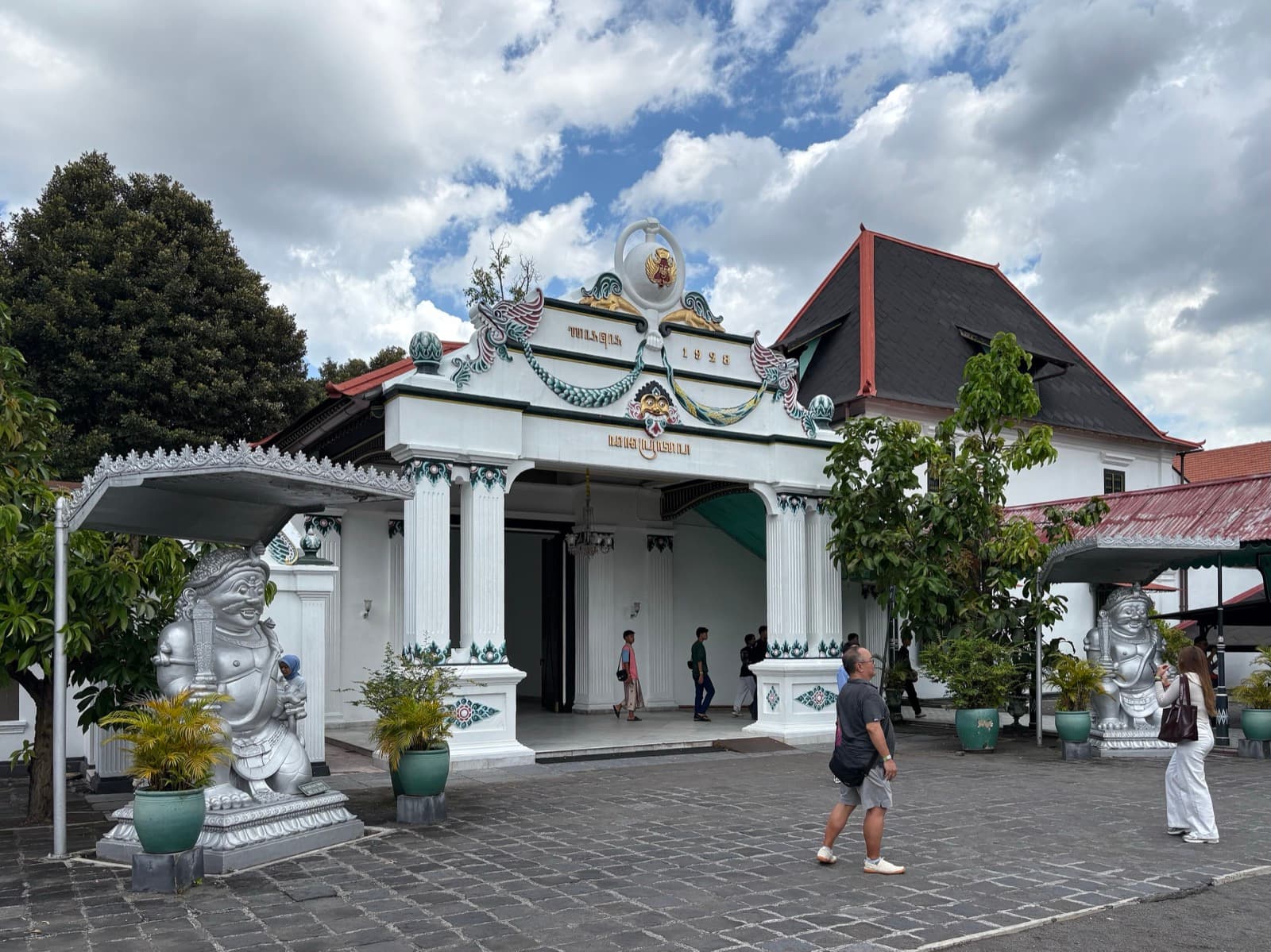
The Kraton at the Center: How Yogyakarta Was Drawn as a Single Straight Line
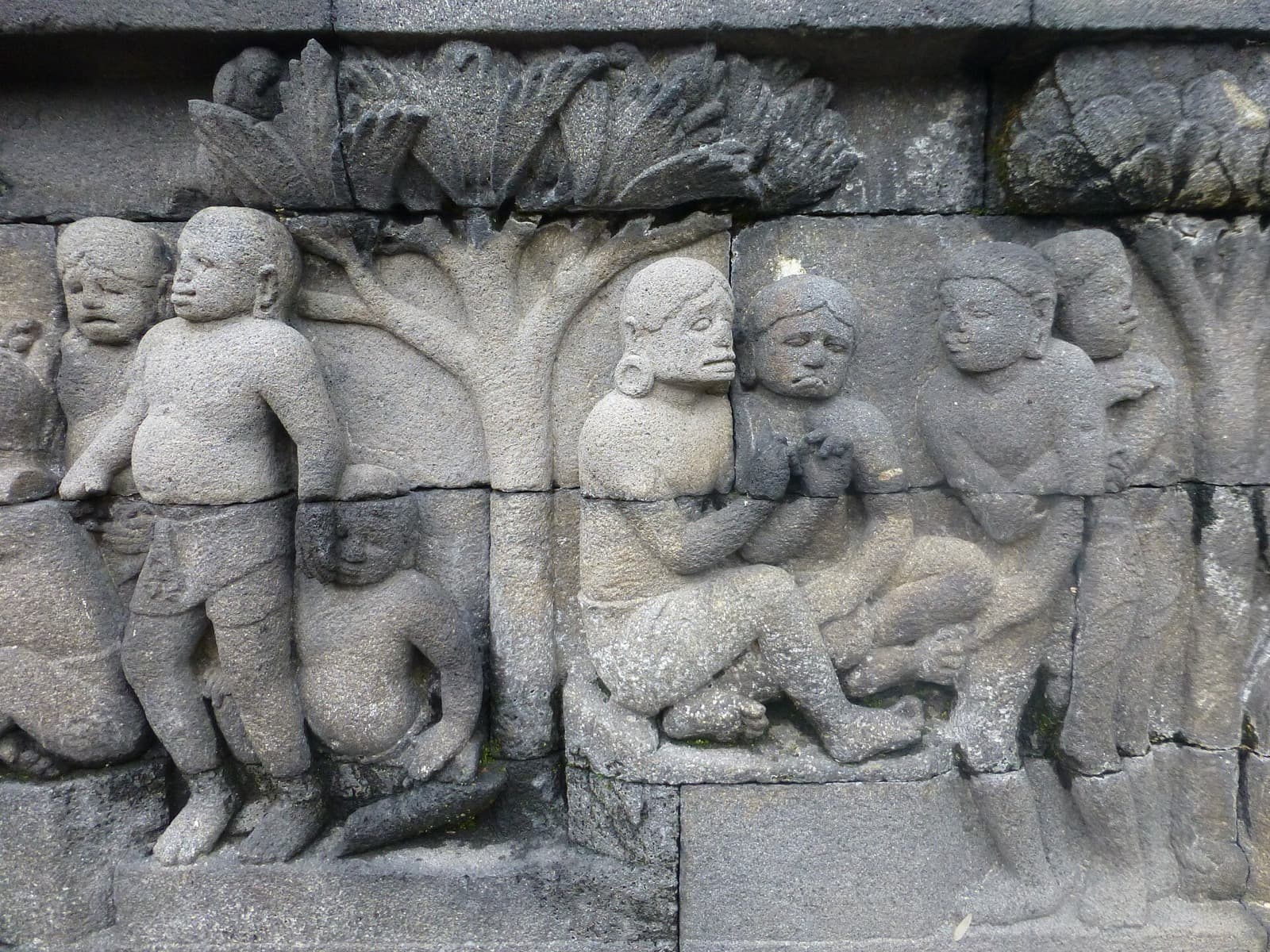
The Rupadhatu Galleries: How to Read Borobudur's 2,670 Carved Panels
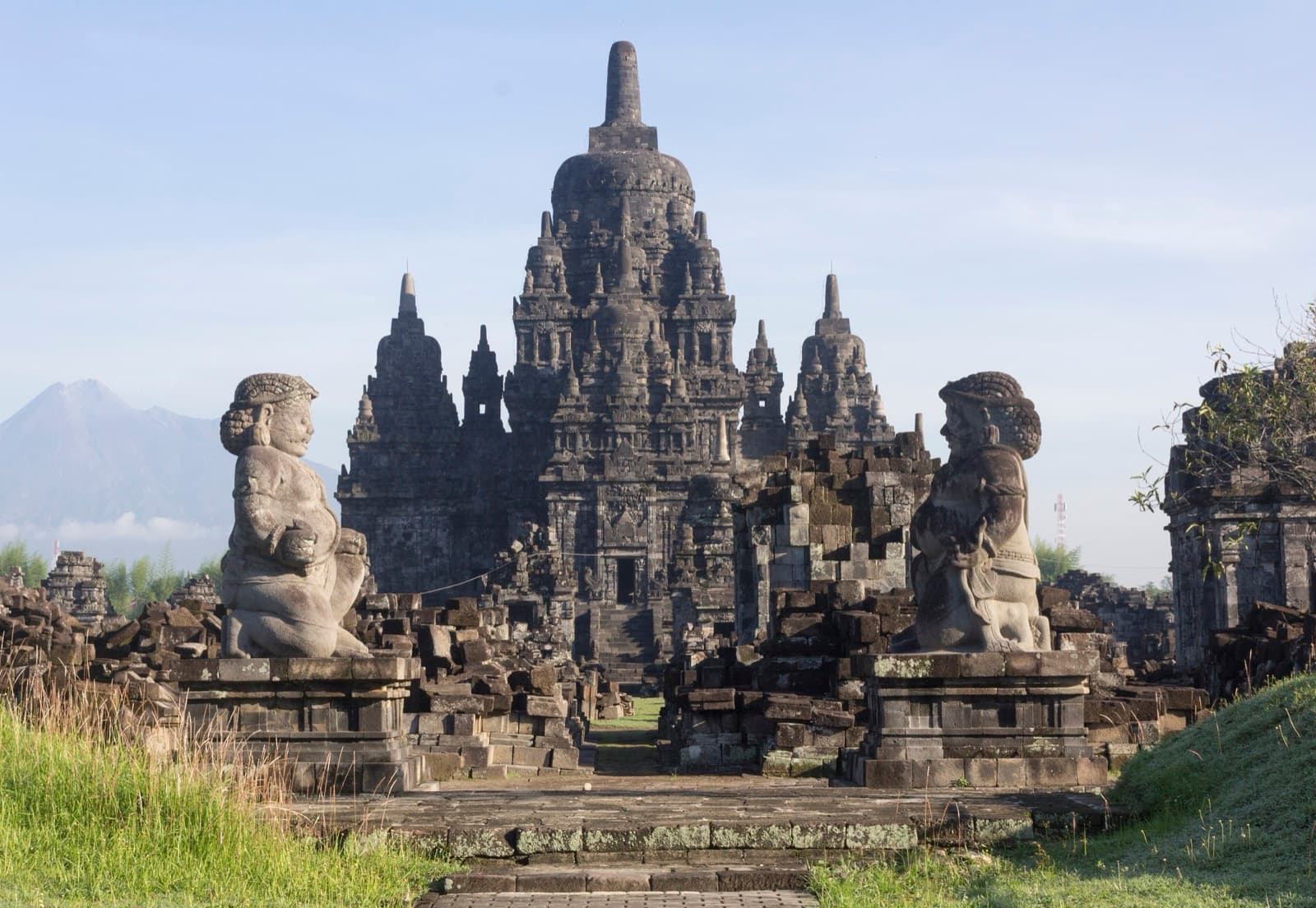
Candi Sewu: The Buddhist "Thousand Temples" That Number 249
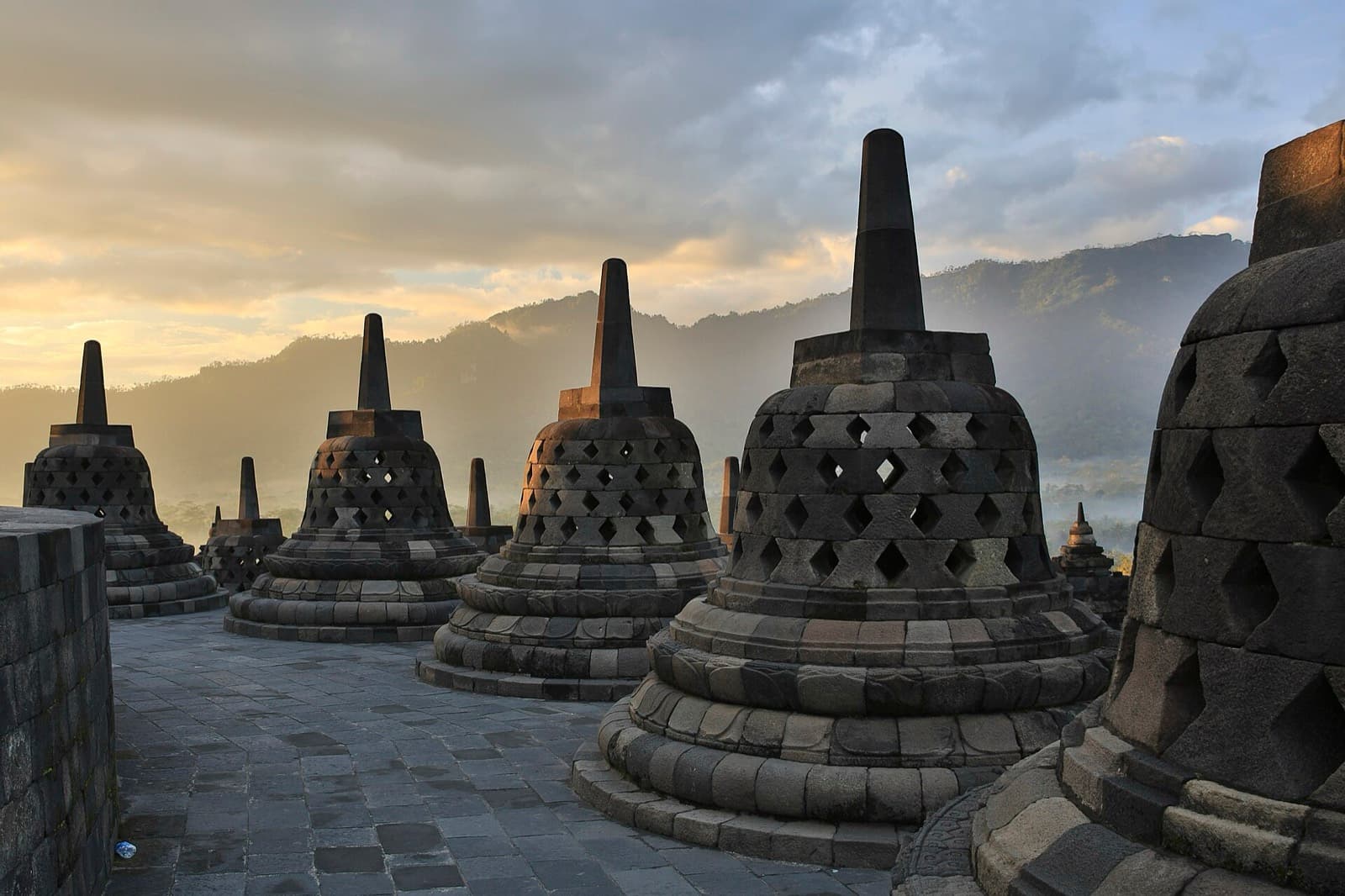
The 72 Perforated Stupas of Borobudur: Why the Buddha Is Half-Hidden