Jewish Ghetto of Cannaregio: The First Ghetto
90 min · 2 km · easy
In Venice, what to eat comes down to one habit and a handful of lagoon dishes: order cicchetti (small bar snacks) with an ombra (a small glass of wine) standing at a bacaro (a traditional Venetian wine bar), and try the city's four signature plates, sarde in saor, baccalà mantecato, risi e bisi, and fegato alla veneziana. Venetian food is a seafood-and-salt-cod cuisine shaped by a lagoon, a fish market, and centuries of Mediterranean trade, and the way locals eat it is grazing, not sitting down to a long dinner. Learn the ritual and a few dish names and you can eat well here without booking a table.
The one ritual to learn: cicchetti and an ombra at a bacaro
Cicchetti are small snacks or plates served in bars called bacari across the city. They are Venice's answer to tapas: a slice of bread or polenta topped with something, a skewer of seafood, a meatball, half a boiled egg with anchovy. The word cicchetti is usually traced to the Latin ciccus, meaning "little" or "nothing." You order a few at the counter, eat standing, and pair them with an ombra, a small glass of wine.
The word ombra literally means "shade." The common story is that wine merchants near Saint Mark's basin moved their stalls to stay in the shade of the bell tower through the day, so "let's go get some shade" drifted into meaning "let's get a glass of wine." Bacaro is thought to derive from Bacco, the Roman name for Bacchus, god of wine. The format is informal on purpose: counter, standing, quick. Venetians move between bacari from late morning into the evening, catching up and grazing rather than committing to one long meal. If you do just one food thing in Venice, do this.
The four dishes to order by name
Hear a stop from this walk
Campo di Ghetto Nuovo: Ground Zero of a Word
Sarde in saor. Fried sardines marinated in sweet-and-sour onions with pine nuts and raisins. It is one of the oldest recorded Venetian dishes: a version appears in the fourteenth-century cookbook "Libro per cuoco" attributed to an anonymous Venetian. Saor (the vinegar-and-onion marinade) began as a way for fishermen to preserve fish before refrigeration, which is why the flavor leans sharp and keeps well. It is a standard cicchetto, usually on bread.
Baccalà mantecato. Salt cod (baccalà) poached, then whipped with oil into a pale, airy cream, spread on bread or grilled polenta. Salt cod is not a lagoon fish. It came to Venice through trade with the far north when the Republic was a major European commercial hub, and the whipped mantecato preparation developed in the city later. Order it as a crostino at almost any bacaro.
Risi e bisi. A loose, soupy rice-and-peas dish tied to spring. It was traditionally served at the Doge's Palace on the twenty-fifth of April, the feast of Saint Mark, the patron saint of Venice, when the first peas of the year came in from the lagoon islands. It is a sit-down dish rather than a bar snack, so look for it on a trattoria menu, especially in spring.
Fegato alla veneziana. Liver cooked slowly with sweet onions. The authentic version uses onions from Chioggia, a town south of Venice on the lagoon. It is a warming, cheap, deeply local plate that shows up on osteria menus year-round.
A few more worth knowing
Bigoli in salsa is thick whole-wheat pasta in a sauce of slow-cooked onions and anchovies (historically sardines), a simple dish once eaten the night before feast days like Christmas and Easter. Moleche are small soft-shell lagoon crabs caught during their molting phase, cleaned, and fried whole; they are scarce and seasonal, appearing mainly in spring with a shorter second run in autumn, and are treated as a delicacy. Tramezzini, the triangular crustless sandwiches you will see stacked in every bar window, are worth knowing honestly: they were invented in Turin in 1926 at Caffè Mulassano, not in Venice, but they became a Venetian staple (locals call them tramezzini) and are a cheap, reliable lunch here.
How to order like a local
Stand at the counter, not at a table, if you want the bacaro price and the bacaro pace. Point at what you want in the case, order a few cicchetti at a time rather than a big plate, and ask for un'ombra (a small glass of house wine) or a spritz alongside. Pay attention to whether prices are for eating standing at the bar (al banco) versus seated (al tavolo); table service often costs more, which is normal and posted. Eat seasonally: moleche and risi e bisi in spring, heavier plates like tripe, beans, and polenta in winter. For the freshest seafood, the source is the Rialto fish market, and the restaurants nearest a working market tend to buy well.
Where the food comes from, and how to walk it
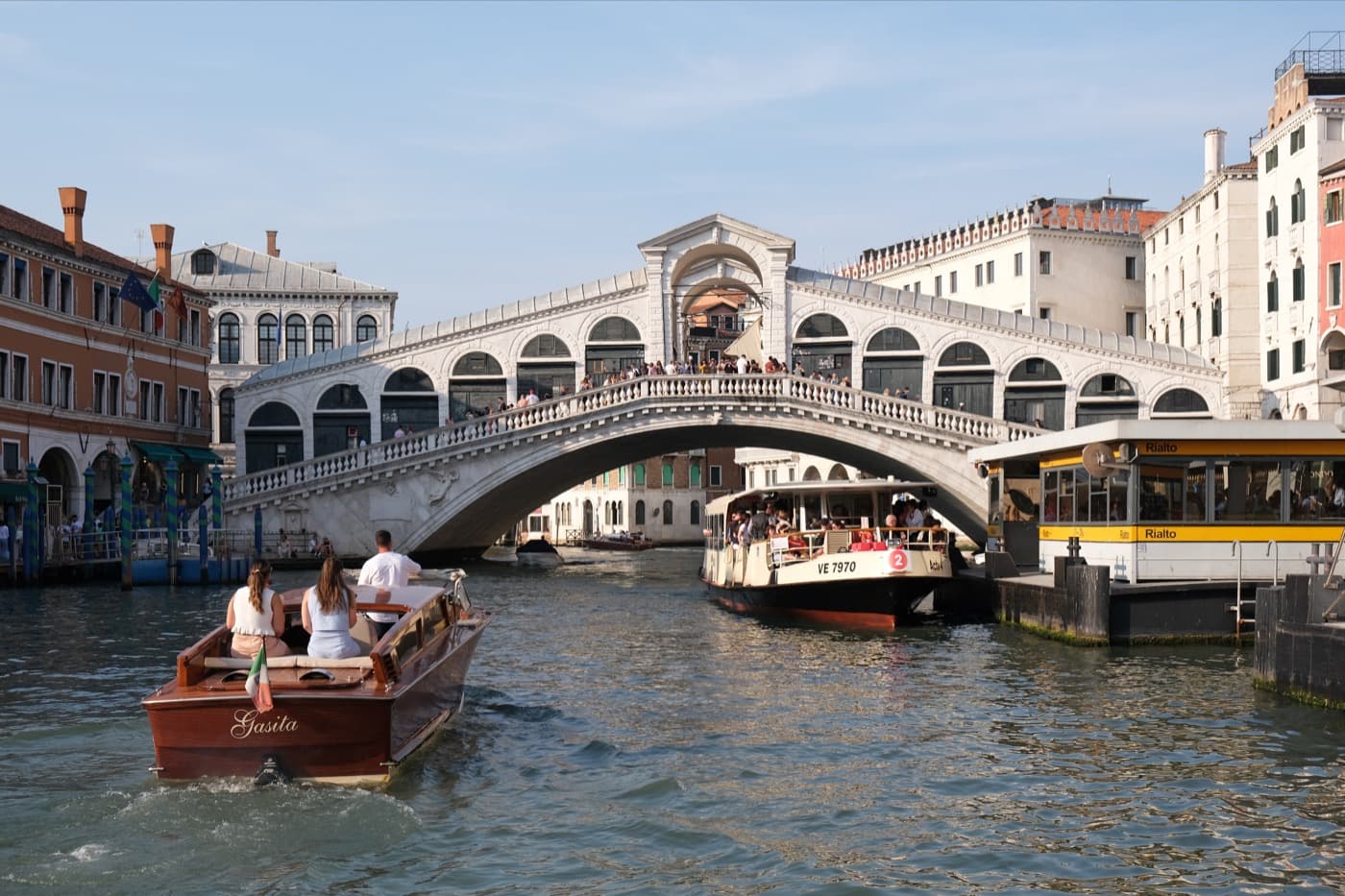
The clearest way to understand Venetian food is to see its supply. The Rialto Market has been the city's commercial center for centuries, and its fish market (the Pescaria) still runs in the mornings. The fish stalls are generally open Tuesday to Saturday, roughly 7:30 in the morning until early afternoon, and the fruit-and-vegetable stalls (the Erbaria) run Monday to Saturday. Both are closed Sunday, and the fish market is also closed Monday, so plan a morning visit Tuesday through Saturday and arrive before 9 to see it working. This is where the sardines, the crabs, and the lagoon fish behind every menu actually arrive.
Our self-guided Venice walking tours let you build a food day around this. The Rialto Engine tour walks the market, the merchant halls, and the money side of Venice, so it pairs naturally with a cicchetti crawl through the bacari clustered around the market. The Dorsoduro tour ends at Campo Santa Margherita, one of the liveliest local squares for evening bacari, and the Cannaregio Ghetto tour runs through quiet canals lined with neighborhood osterie. All three are audio-guided, GPS-triggered, and set your own pace, so you can stop and eat whenever a bacaro looks good. Browse them and the rest of the city on the Venice page.
Sources
Frequently asked questions
- What food is Venice most famous for?
- Venice is most famous for cicchetti, small snacks served at bars called bacari, eaten standing with a small glass of wine known as an ombra. Its signature dishes are seafood and salt-cod based: sarde in saor (sweet-sour sardines), baccala mantecato (whipped salt cod), risi e bisi (rice and peas), and fegato alla veneziana (liver with onions).
- What are cicchetti and how do you order them?
- Cicchetti are Venetian bar snacks, usually bread or polenta topped with seafood, meat, or vegetables, plus skewers, meatballs, and boiled eggs. You order a few at a time at the counter of a bacaro, eat standing, and pair them with an ombra (a small glass of house wine) or a spritz. Standing at the bar (al banco) is typically cheaper than table service (al tavolo).
- What is the oldest traditional Venetian dish?
- Sarde in saor is one of the oldest recorded Venetian dishes. A version appears in the fourteenth-century cookbook Libro per cuoco, attributed to an anonymous Venetian. The saor technique of marinating fried fish in vinegar and onions began as a way for fishermen to preserve fish before refrigeration.
- Is the tramezzino really from Venice?
- No. The tramezzino was invented in Turin in 1926 at Caffe Mulassano, credited to Angela Demichelis Nebiolo. It later spread to Venice and the Veneto, where it became a staple that locals call tramezzini, so you will find it in nearly every Venice bar window as a cheap lunch, but its origin is Piedmontese.
- When is the Rialto fish market open?
- The Rialto fish market (the Pescaria) is generally open Tuesday to Saturday from about 7:30 in the morning until early afternoon, and the fruit-and-vegetable market (Erbaria) runs Monday to Saturday. Both are closed Sunday and the fish market is also closed Monday. Arrive before 9 to see it at its busiest.
- What Venetian dishes are seasonal?
- Risi e bisi is a spring dish, traditionally tied to the twenty-fifth of April feast of Saint Mark when the first lagoon peas arrive. Moleche, small soft-shell lagoon crabs fried whole, are mainly a spring delicacy, with a shorter second season in autumn. In winter, bacari lean toward tripe, beans, polenta, and mulled wine.
Ready to experience it?
Jewish Ghetto of Cannaregio: The First Ghetto
90 min · 2 km · easy
More from Venice
Explore more at your own pace.
One Day in Venice: A Walkable Morning-to-Evening Itinerary
Venice: The City Engineered on Water for Trade
Where the Word Ghetto Was Born: A Walk Through Venice's Cannaregio
St Mark's Basilica: The Church of Gold and Stolen Horses
The Doge's Palace: Seat of an Elected Empire