Colosseum and Roman Forum: Rome Built From Rome
75 min · 1.9 km · moderate
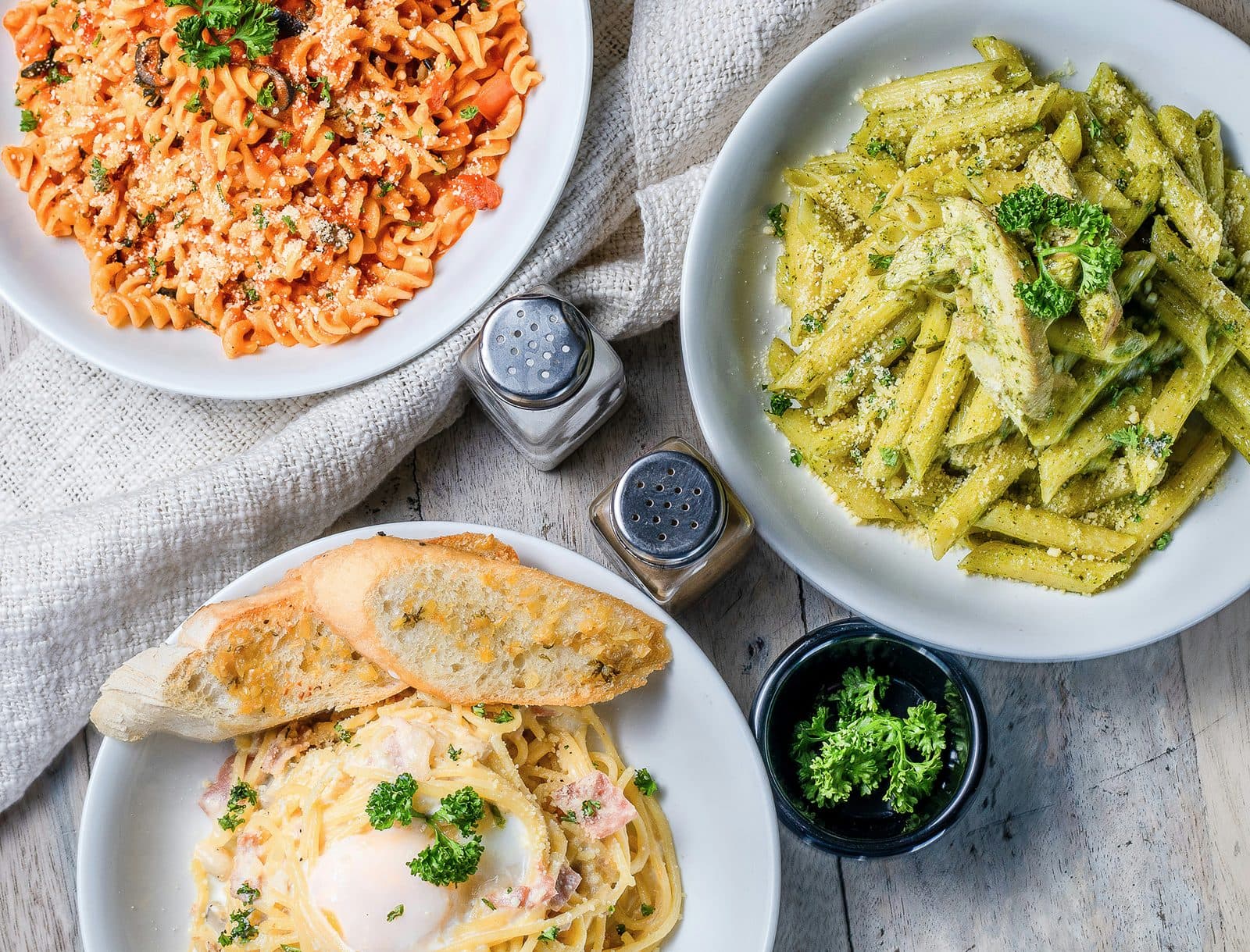
To eat well in Rome, anchor your meals around a short list of dishes the city actually invented: four pasta plates (cacio e pepe, gricia, amatriciana, carbonara), the slaughterhouse cooking known as quinto quarto (coda alla vaccinara, trippa), the Jewish Ghetto's fried artichoke, and street food like supplì and pizza al taglio. Order those, in the neighborhoods where they belong, and you will eat like a Roman rather than like a tourist reading a translated menu.
Rome's food is not refined court cooking. Most of it comes from cucina povera, the cooking of shepherds, bakers, and slaughterhouse workers who had cheap, keeping ingredients: hard sheep's cheese, cured pork jowl, dried pasta, offal, and whatever grew nearby. That constraint is the whole flavor logic of the city, and once you can read it, the menu stops being a mystery. Here is what to eat, where the tradition comes from, and how to order it.
The four Roman pastas, ranked by simplicity
Rome's pasta canon is four dishes built from an overlapping handful of ingredients. Learn them as a family and you will never be lost in front of a trattoria menu.
Cacio e pepe is the simplest: pasta, grated Pecorino Romano, and black pepper, emulsified with starchy cooking water into a glossy sauce. "Cacio" is Roman dialect for cheese. There is no butter, no cream, no garlic. If it arrives clumpy or dry, the kitchen rushed the emulsion.
Gricia adds guanciale (cured pork jowl) to that cheese-and-pepper base. It is essentially cacio e pepe with meat, and it is often called the ancestor of the group. Some accounts tie it to the shepherd village of Grisciano near Rieti, carried as travel food during transhumance, the seasonal movement of flocks between pastures.
Amatriciana takes the guanciale and adds tomato. Its name comes from the town of Amatrice, and because tomatoes only reached Italy from the Americas in the sixteenth century, it is the youngest idea in the group even though it feels ancient. Order it with bucatini or rigatoni.
Carbonara swaps tomato for egg: guanciale, Pecorino Romano, black pepper, and raw egg yolk turned into a silky sauce by the pasta's heat and starch water. It has no cream. That is not a regional preference, it is the definition, and cream is the single fastest way to spot a version cooked for tourists. Carbonara is also the newcomer of the four, an urban Roman dish that took its modern shape after the Second World War.
The through-line: guanciale not pancetta or bacon, Pecorino not Parmesan, and cooking water instead of cream. When a place gets those three right, everything else usually follows. You will pass real versions of all four in the lanes around Piazza di Santa Maria in Trastevere on our Trastevere and the Ghetto walking tour.
Quinto quarto: the fifth quarter
Hear a stop from this walk
Tarpeian Rock: The Cliff and the Church
Rome's most distinctive savory tradition is quinto quarto, the "fifth quarter." The prime quarters of a carcass went to those who could pay for them, and a share of the offal that was left, tripe, tail, cheek, sweetbreads, went to the slaughterhouse workers as part of their wages. They took it home and made it delicious.
This is Testaccio food. The city's main slaughterhouse, the Mattatoio, opened in Testaccio in 1890, was for a time the largest in Europe, and was decommissioned in 1975. The trattorias built into the old meatpacking buildings there still serve the dishes that tradition produced.
The two to know: coda alla vaccinara, oxtail braised slowly with tomato, celery, and sometimes a touch of cocoa or pine nuts, tender enough to fall off the bone; and trippa alla romana, tripe stewed in tomato with mint and Pecorino. Roman Jewish cooking, shaped by the Ghetto that existed under papal decree from 1555 to 1870, also feeds this tradition of thrift. If offal is a step too far on day one, order coda alla vaccinara anyway. It reads as a rich beef stew and is the friendliest doorway into the style.
Carciofi alla giudia and the Ghetto table
The single dish most worth crossing the river for is carciofi alla giudia, Jewish-style fried artichokes. A whole artichoke of the local Romanesco variety is fried twice, first low to soften, then hot so the leaves open and crisp into something like a bronze flower. It comes from Rome's Jewish community, whose kosher rules pushed cooks toward frying in oil rather than butter, and it became the Ghetto's signature.
Season matters here. The Romanesco artichoke is a cool-weather crop, strongest from roughly late winter into spring, so this is a dish that rewards a winter or early-spring visit and can vanish in high summer. Pair it with carciofi alla romana, the braised, herb-stuffed version, to taste the same vegetable two completely different ways.
Street food, sweets, and the second plate
Between sit-down meals, Rome runs on cheap, brilliant handheld food. Supplì is the Roman rice croquette: tomato-flavored rice around a molten mozzarella core, oval, breaded, and fried. Do not call it arancino. That is the Sicilian cousin, usually round or conical and often flavored with saffron. Pizza al taglio, pizza by the cut, is sold by weight from long rectangular trays and eaten standing up; the format was popularized in Rome and is the closest thing the city has to a communal lunch counter.
For a proper sit-down secondo, saltimbocca alla romana is veal layered with prosciutto and sage, cooked fast in butter and white wine. The name means "jump in the mouth." For breakfast or an afternoon sugar hit, find a maritozzo: a soft, slightly sweet bun split and overstuffed with whipped cream, the classic Roman morning pastry.
How to order like a local
A few habits will make you read as a regular rather than a visitor.
Expect a coperto, a small per-person cover charge (commonly one to three euros) that pays for the table, linen, and bread. A 2006 regional law in Lazio, the region that includes Rome, banned charging a line labeled "coperto," so many places now list a "pane e coperto" (bread) line instead. Either way it must be printed on the menu, and it is normal, not a scam.
Tipping is not the American system. Service is built into wages. Italians round up or leave a euro or two for good service, nothing more. If you see "servizio" already on the bill, no further tip is expected.
Coffee has rules. A cappuccino is a morning drink; ordering one after lunch or dinner marks you instantly. After a meal, Romans drink an espresso (just ask for "un caffè"), often standing at the bar, where it is cheaper than at a table.
Finally, eat by neighborhood. Testaccio for quinto quarto, the Ghetto for fried artichokes, Trastevere for classic trattoria pasta. Our self-guided audio walks map onto that logic: Trastevere and the Ghetto starts at the Portico d'Ottavia in the Ghetto and ends in the lanes of Trastevere, and Historic Center: The City That Reuses Everything runs from Campo de' Fiori through Piazza Navona to the Pantheon. Plan a route on the Rome walking tours hub, then let each stop end near a table.
Sources
Frequently asked questions
- What are the four classic Roman pastas?
- Cacio e pepe, gricia, amatriciana, and carbonara. They share a small set of ingredients: cacio e pepe is Pecorino and black pepper, gricia adds guanciale, amatriciana adds tomato, and carbonara adds egg instead of tomato. All use guanciale rather than bacon and Pecorino Romano rather than Parmesan.
- Does authentic carbonara have cream?
- No. Authentic Roman carbonara is made from egg yolk, Pecorino Romano, black pepper, and guanciale, emulsified with starchy pasta water. There is no cream in the traditional recipe, and cream is a common sign a version was adapted for tourists.
- What is quinto quarto in Roman cooking?
- Quinto quarto, the 'fifth quarter,' is Rome's offal tradition. The prime quarters of a carcass went to wealthier buyers, and a share of the remaining organs and cuts was given to slaughterhouse workers as part of their pay. They cooked them into dishes like coda alla vaccinara (oxtail stew) and trippa alla romana (tripe). It is strongly associated with the Testaccio neighborhood, whose main slaughterhouse operated from 1890 until 1975.
- What is carciofi alla giudia and when is it in season?
- Carciofi alla giudia is a whole artichoke fried twice until its leaves crisp open like a flower. It comes from Rome's Jewish community and the Ghetto. Because it uses the cool-weather Romanesco artichoke, it is best from late winter through spring and can be scarce in high summer.
- What is a coperto and do I tip in Rome?
- The coperto is a small per-person cover charge (commonly one to three euros) for the table, linen, and bread, and it must be printed on the menu. A 2006 regional law in Lazio, the region that includes Rome, banned charging a line labeled 'coperto,' so many places now list a 'pane e coperto' bread charge instead. Tipping is not the American percentage system; service is built into wages, and Italians simply round up or leave a euro or two.
- What is the difference between supplì and arancini?
- Supplì is the Roman rice croquette, usually oval, made with tomato-flavored rice around a mozzarella center. Arancini are the Sicilian version, typically round or cone-shaped and often flavored with saffron. Calling a supplì an arancino in Rome marks you as a visitor.
Ready to experience it?
Colosseum and Roman Forum: Rome Built From Rome
75 min · 1.9 km · moderate
More from Rome
Explore more at your own pace.
Best Architecture Walking Tours in Rome (2026)
St. Peter's Square and the Surprise Rome Demolished: Borgo, the Spina and Via della Conciliazione
The Aventine's Orange Garden and Keyhole: A Fortress That Became a View
The Water Behind the Trevi Fountain: Following the Acqua Vergine to the Pincio
Palatine Hill: Where Rome Says It Was Born