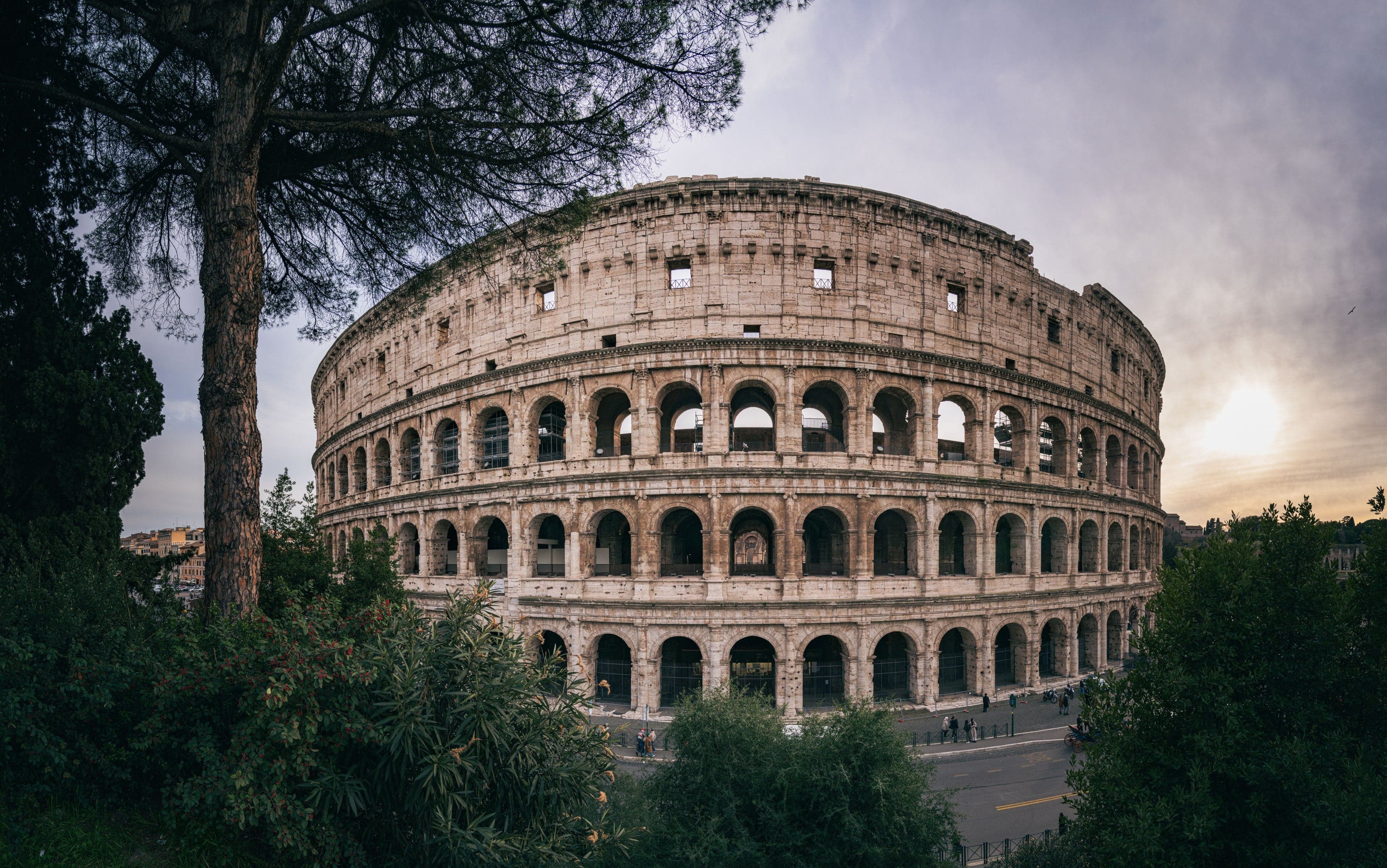
Colosseum and Roman Forum: Rome Built From Rome
75 min · 1.9 km · moderate
Rome's compact core lets a single day on foot cover several neighborhoods, and each one maps to a self-guided audio walk. Cross the river into Trastevere and the old Ghetto in the morning, read the Baroque squares of the center at midday, follow the water to the Trevi Fountain and the Spanish Steps in the afternoon, and finish with the ancient core at the Colosseum. The city rewards walking because its layers sit side by side: an ancient bridge, a working square, a church built from an emperor's columns. This itinerary moves morning to evening through four walkable arcs, keeps distances short, and flags where you need a ticket or a booking so nothing derails the day. Each arc maps to one of our self-guided audio walks, so you can put the map away and just listen. Full set: Rome walking tours. City page: /italy/rome.
The short answer: one day, four walkable arcs
Four arcs add up to a lot of walking, so choose three and slow down, or take all four if you start early.
- Morning: Trastevere and the Ghetto: The River Walled In, twelve stops over about 1.7 km, roughly 75 minutes, flat.
- Midday: Historic Center: The City That Reuses Everything, eleven stops over about 2.5 km, flat.
- Afternoon: Trevi Fountain and Spanish Steps: Upstream to the Pincio, eleven stops over about 2.4 km, with one 20 metre climb up the Spanish Steps and a step-free way round.
- Evening: Colosseum and Roman Forum: Rome Built From Rome, twelve stops over about 1.9 km.
Nearly every stop is a free public space. The paid extras (the Pantheon interior, the Colosseum interior, the Trevi Fountain's inner perimeter) are optional and flagged below.
Morning: Trastevere and the Ghetto
Hear a stop from this walk
Tarpeian Rock: The Cliff and the Church
Start early, before the lanes fill. The walk begins at the Portico d'Ottavia in the former Jewish Ghetto, passes the Theatre of Marcellus, crosses the Tiber Island, winds through the lanes of Trastevere to the front of Santa Maria in Trastevere, and ends on the pedestrian Ponte Sisto, back toward the center. It is flat, with three short flights of steps and plenty of cobbles, and needs no tickets.
The squares, the bridges and the island are free. The walk stays outside the churches; if you go into Santa Maria in Trastevere, dress modestly, with covered shoulders and knees. The Museo Ebraico in the Ghetto is closed on Saturdays and Jewish holidays, and Friday hours are shorter, so plan the morning around that.
Midday: the Baroque center
Ponte Sisto leaves you a short walk from Campo de' Fiori and the start of the next arc. The Historic Center walk begins at Largo di Torre Argentina and runs through Campo de' Fiori, Piazza Farnese, Pasquino, Piazza Navona, Sant'Ivo's spiral lantern, the Pantheon, Piazza di Pietra and Sant'Ignazio. It is easy underfoot.
Logistics to plan around:
- Pantheon: the square is free, the interior is ticketed. Press reports put the adult price at 7 euros from July 1, 2026, with reductions for 18 to 25 year olds. It is open daily 9:00 to 19:00, last entry 18:30, and books ahead on the official Musei Italiani portal.
- Sant'Ivo alla Sapienza: its opening has been unreliable, and works have been reported in the courtyard and church, so treat it as a lantern you see from the street.
Afternoon: Trevi and the Spanish Steps
The Trevi walk starts at Piazza Colonna, about five minutes from Piazza di Sant'Ignazio, where the Historic Center walk ends. It follows the Acqua Vergine, the aqueduct Agrippa built in 19 BC, upstream: from the Trevi Fountain, where the aqueduct puts on its show, past Borromini's tower at Sant'Andrea delle Fratte, the sinking-boat fountain and the Spanish Steps, to the Pincio terrace and Piazza del Popolo.
- Trevi Fountain: the view from the lane is free. Since February 2, 2026, non-residents pay 2 euros to enter the inner perimeter; the ticket office and entrance are on Via della Stamperia.
- Spanish Steps: sitting on the steps or the fountains is banned and fined, so rest on the landing instead. The step-free way up is by Via Sistina or Via Gregoriana.
- Pincio: the gardens are open in daylight and into the evening, and close after dusk.
Evening: the ancient core
Save the ancient layers for last light. The Colosseum walk starts at the Arch of Constantine and circles the amphitheatre on free ground, then follows Via dei Fori Imperiali past the Basilica of Maxentius and the Forum's edge to Trajan's Column and the Capitoline Hill. Metro C's Colosseo-Fori Imperiali station, which opened in December 2025, sits on the avenue.
The Colosseum is free to admire from outside. If you want to go inside, you need a name-bound, timed ticket from the Parco archeologico del Colosseo, which also controls the Forum and Palatine; book in advance. Part of the sidewalk on Via dei Fori Imperiali is scheduled to be demolished from November 2026 as the avenue is rebuilt as a shared surface, so expect works. If you would rather watch the sun set from a hill, Circus Maximus and Aventine: Racetrack to Orange Garden ends at the keyhole on the Knights of Malta square, but the Orange Garden closes at 18:00 from October to February.
If San Clemente's three levels appeal, they are about 400 metres east of the Colosseum; book the excavations through the basilica's website. The Vatican does not combine gently with anything, so give Vatican and St. Peter's Square: The Lost Surprise its own morning.
Getting between the arcs, and one honest safety note
You can link them all on foot. Trastevere to the Baroque center is a short walk over the river; the center to Trevi is five minutes; Trevi to the Colosseum is a longer but flat stroll. If your feet give out, Metro Lines A, B and C and frequent buses cover the gaps.
On safety: Rome is a generally safe city for solo travelers and families, and violent crime against tourists is rare. The real, manageable risk is pickpocketing in the most crowded spots (Trevi Fountain, Spanish Steps, the Colosseum concourse) and on packed transit, especially Metro Line A and the Termini area. Keep your phone and wallet in a front pocket or a zipped crossbody, stay aware when a crowd presses in, and you will be fine. Self-guided walking also means you set the pace and skip the queue-and-wait rhythm of a group, which is much of why one day on foot works so well here.
Putting it together
If you only have time for two arcs, pair Trastevere in the morning with the Baroque center in the afternoon for a lighter, mostly flat day. If ancient Rome is your priority, do the Colosseum arc first with a booked interior slot, then walk the Baroque center as the light softens. Either way, book the timed tickets (Pantheon, Colosseum interior) a day or more ahead, wear real walking shoes, and carry water. Start each arc with the matching Rome walking tours audio walk and let the city do the rest. City hub: /italy/rome.
Sources
- Pantheon Rome official ticketing and entrance fee (Direzione Musei nazionali / museiitaliani.it)
- Trevi Fountain, official site: admission to the inner perimeter
- Basilica di San Clemente official opening hours, booking and excavation ticket
- Parco archeologico del Colosseo official opening times and tickets
- Museo Ebraico di Roma, visitor information
Frequently asked questions
- Can you see Rome's main sights in one day on foot?
- Yes, if you pick three of the four arcs below. Rome's historic core is compact, and Trastevere, the Baroque center, the Trevi area and the Colosseum sit within about a 30 to 40 minute walk of each other. Nearly every stop is a free public square, bridge, or church exterior.
- Do you need a ticket for the Pantheon in Rome?
- The square outside is free, but the interior is ticketed. Press reports put the adult price at 7 euros from July 1, 2026, with reductions for 18 to 25 year olds and free entry for under-18s and Rome residents. It is open daily 9:00 to 19:00, last entry 18:30. Book ahead.
- Is the Trevi Fountain free to visit in 2026?
- You can see the fountain from the lane for free at any time. Since February 2, 2026, non-residents pay 2 euros to enter its inner perimeter, by the water. The ticket office and entrance are on Via della Stamperia.
- How much does the Colosseum cost and do you have to go inside?
- This walking route treats the Colosseum as a free exterior stop: the piazza and the footway around it are free at any hour. To go inside you need a name-bound, timed ticket from the Parco archeologico del Colosseo; the standard one is reported at about 18 euros. Book in advance.
- What is worth booking ahead for a one-day Rome walk?
- Book the Pantheon interior and the Colosseum interior if you want to go in. Check the official booking pages for current prices and hours, because both have changed in the past year.
- Is Rome safe to walk around alone?
- Rome is generally safe for solo travelers and families, and violent crime against tourists is rare. The main risk is pickpocketing in crowded spots like the Trevi Fountain, the Spanish Steps, and the Colosseum concourse, and on packed transit such as Metro Line A and around Termini. Keep valuables in a front pocket or zipped bag and stay alert in crowds.
Ready to experience it?
Colosseum and Roman Forum: Rome Built From Rome
75 min · 1.9 km · moderate
More from Rome
Explore more at your own pace.
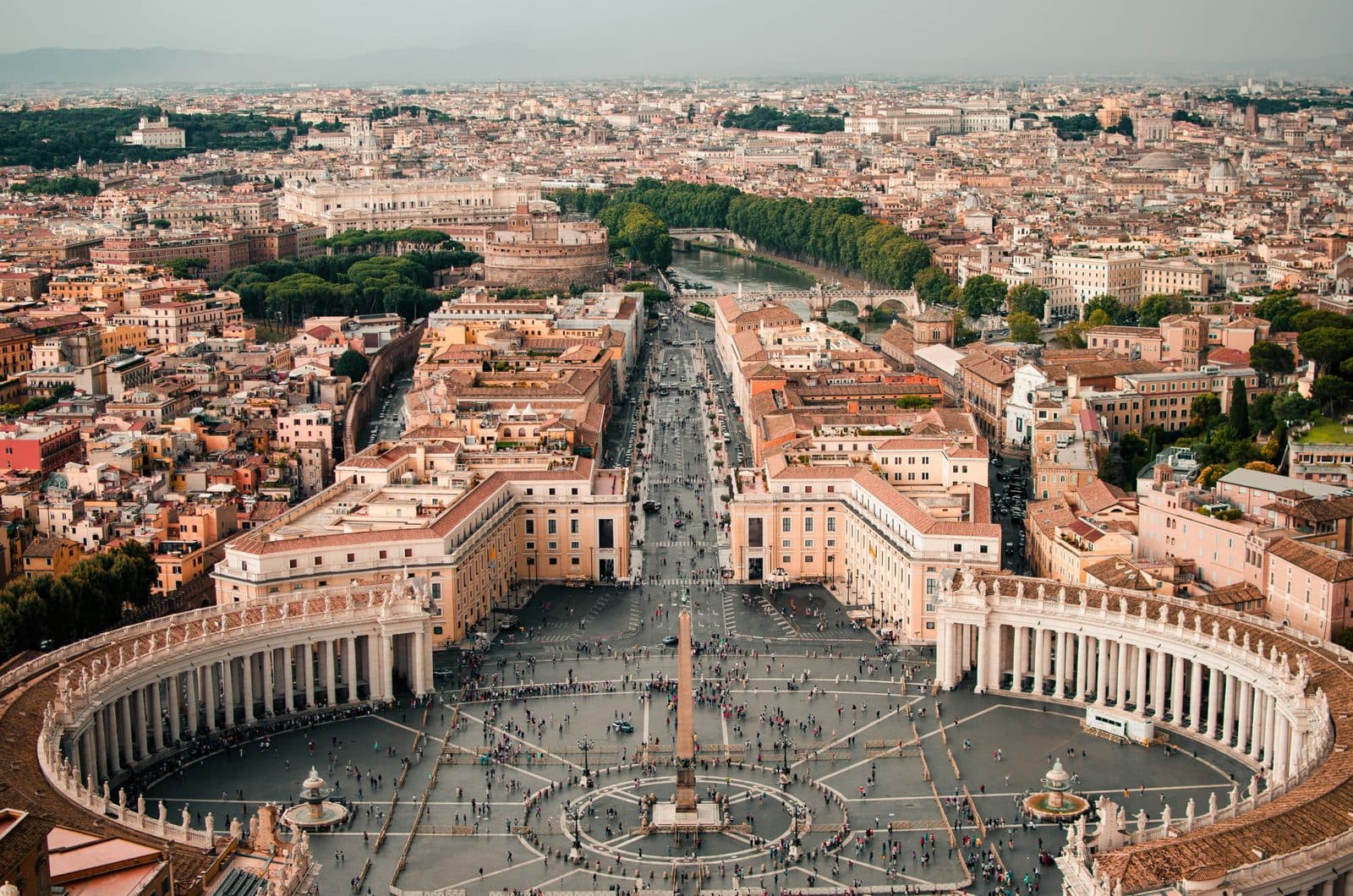
Best Architecture Walking Tours in Rome (2026)
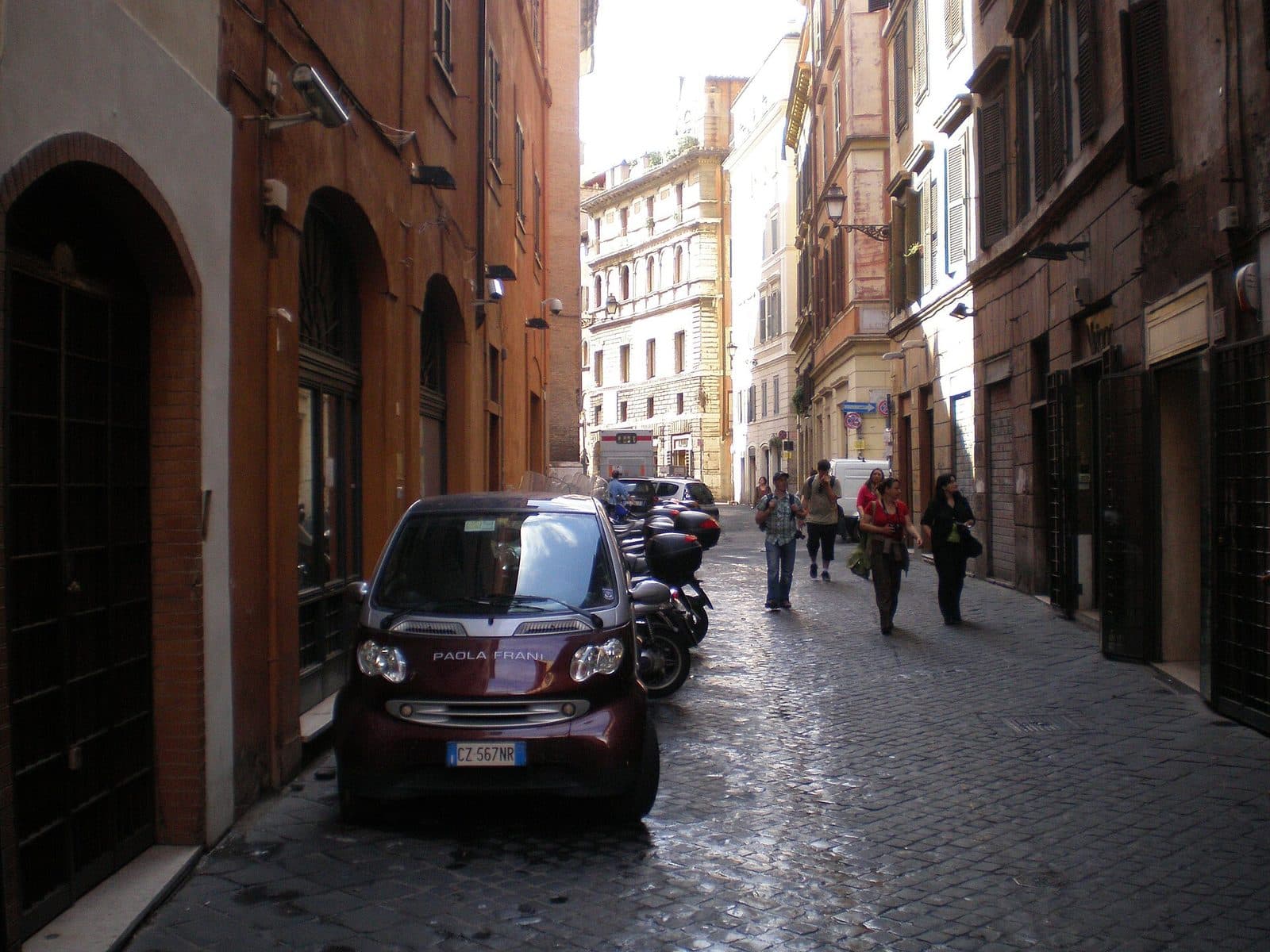
St. Peter's Square and the Surprise Rome Demolished: Borgo, the Spina and Via della Conciliazione
The Aventine's Orange Garden and Keyhole: A Fortress That Became a View
The Water Behind the Trevi Fountain: Following the Acqua Vergine to the Pincio
Palatine Hill: Where Rome Says It Was Born