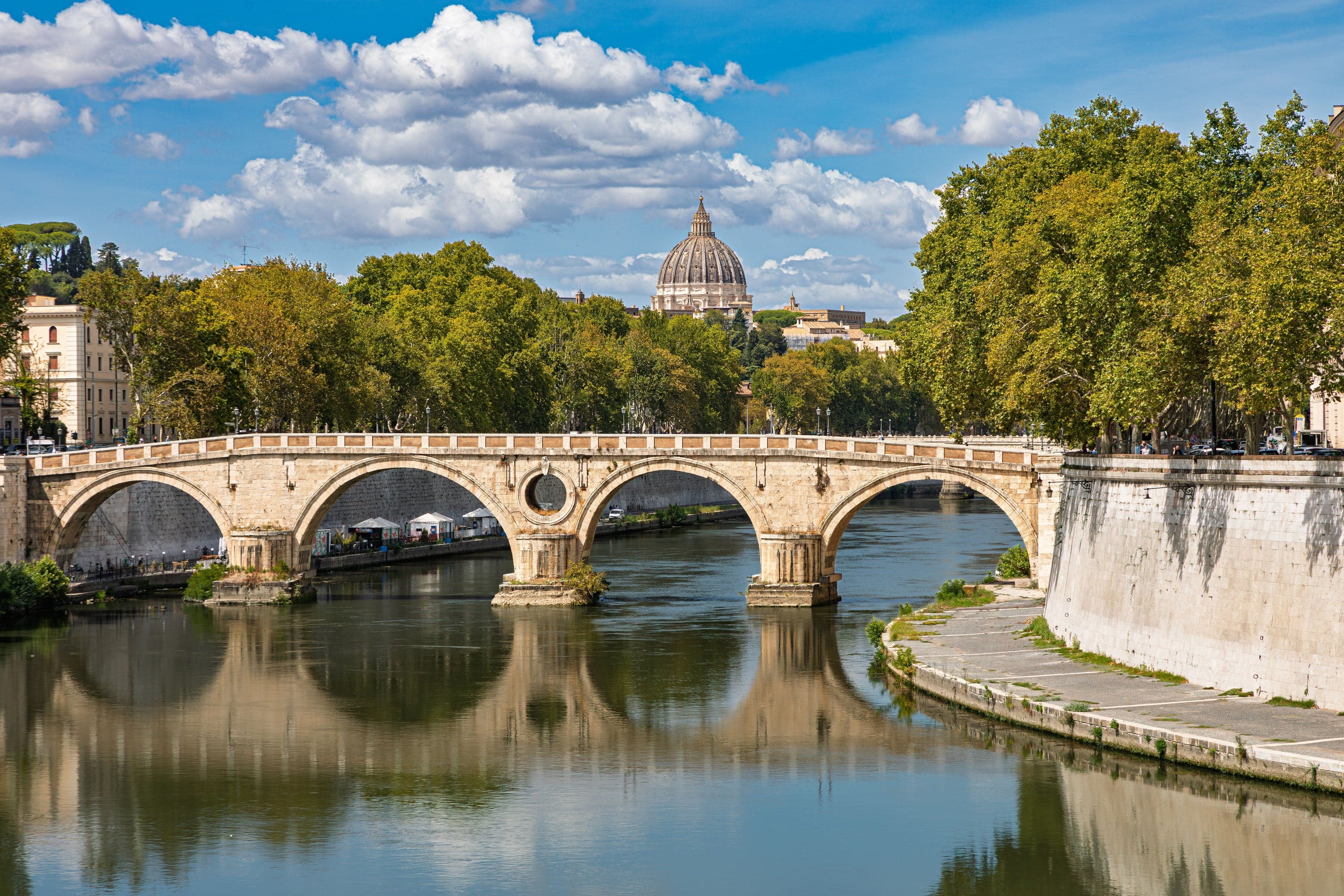
From the Portico d'Ottavia in the old Ghetto past the Theatre of Marcellus, over the Tiber Island's Roman bridges, through the lanes of Trastevere to Santa Maria's gold mosaic, Piazza Trilussa and Ponte Sisto.
Start · Portico d'Ottavia: A Gate to the Ghetto
DirectionsStops
- 1
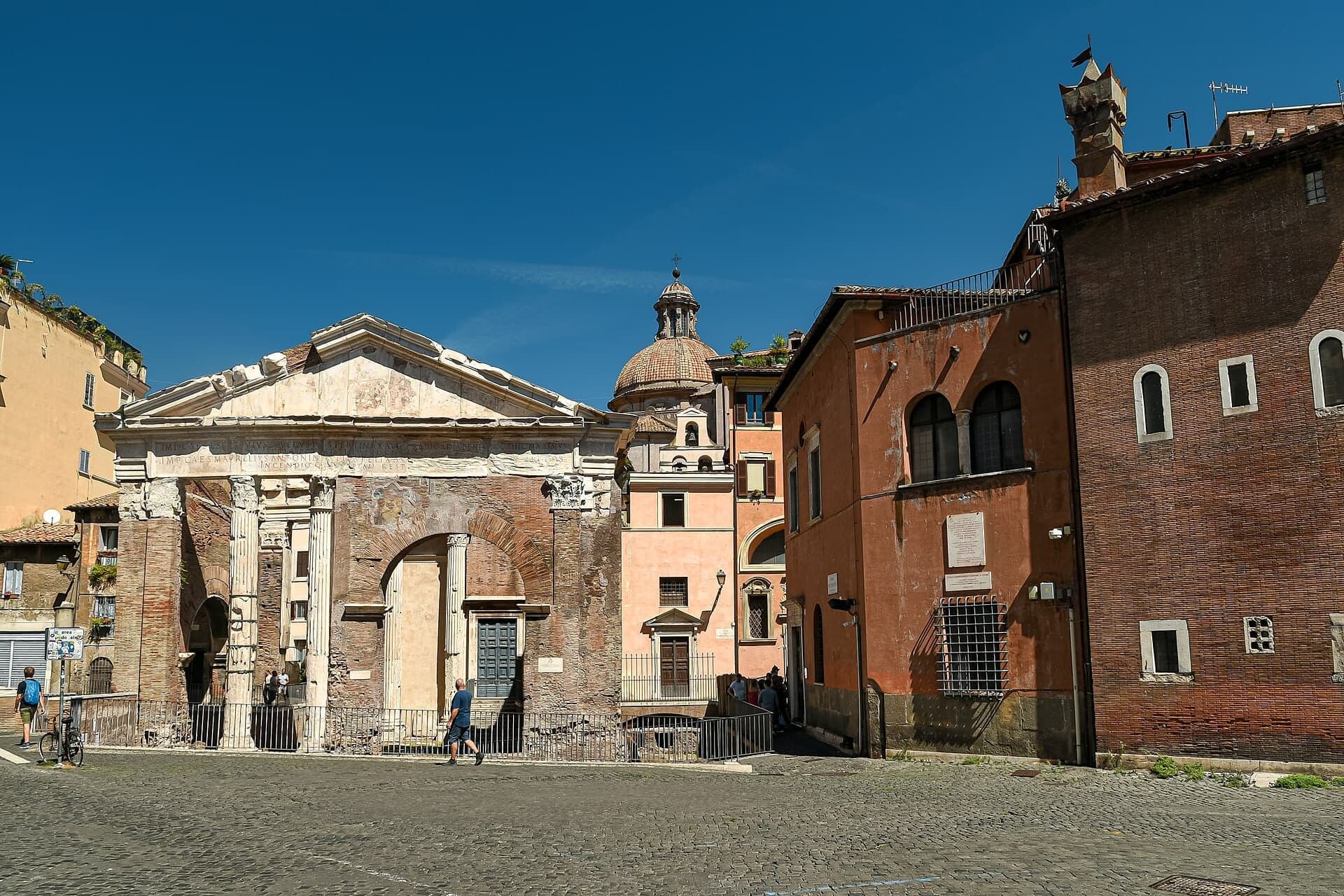
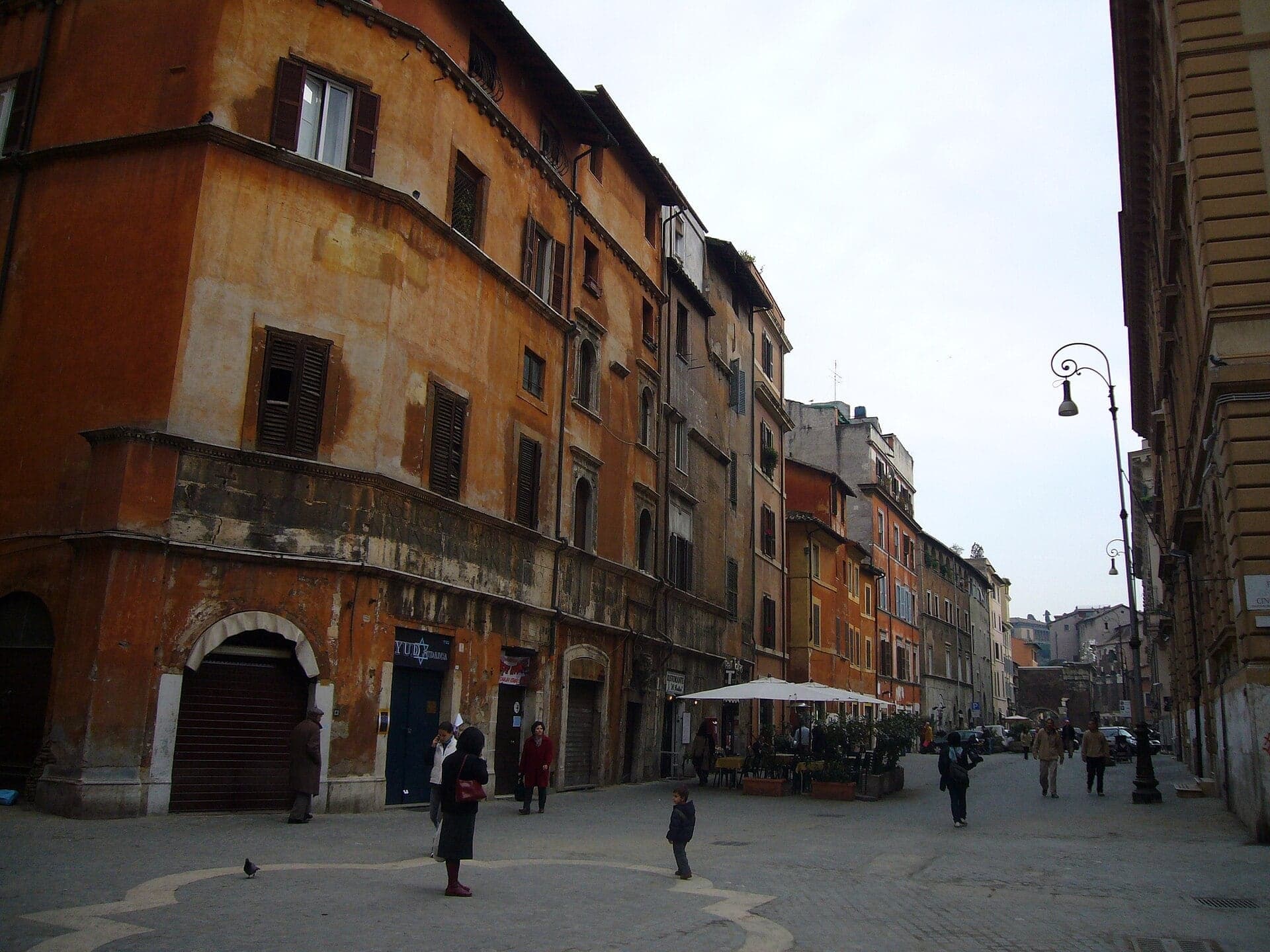
Portico d'Ottavia: A Gate to the Ghetto
A Roman gateway turned fish market, a church and a corner of the Ghetto, on the square named for 16 October 1943.
- 2
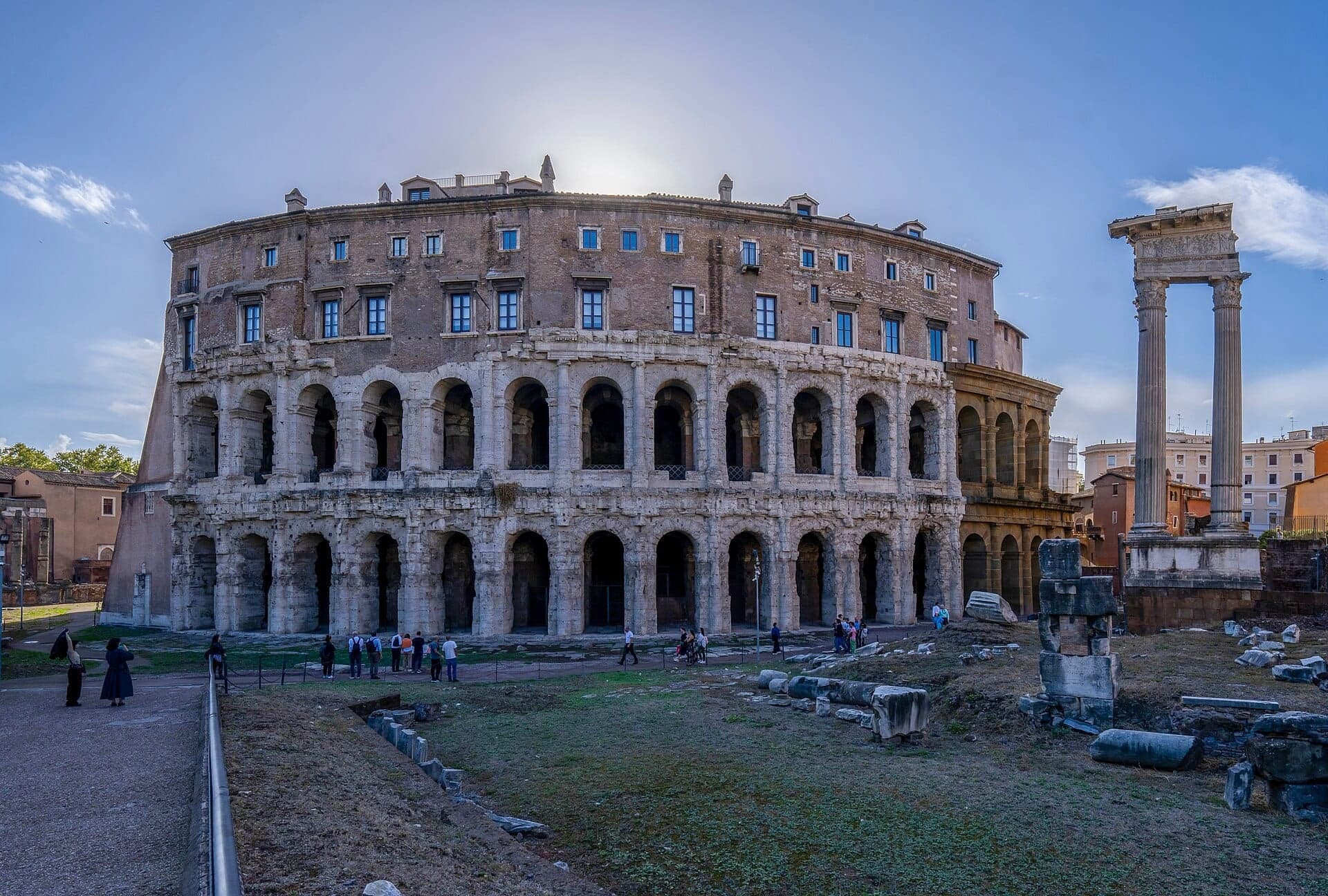
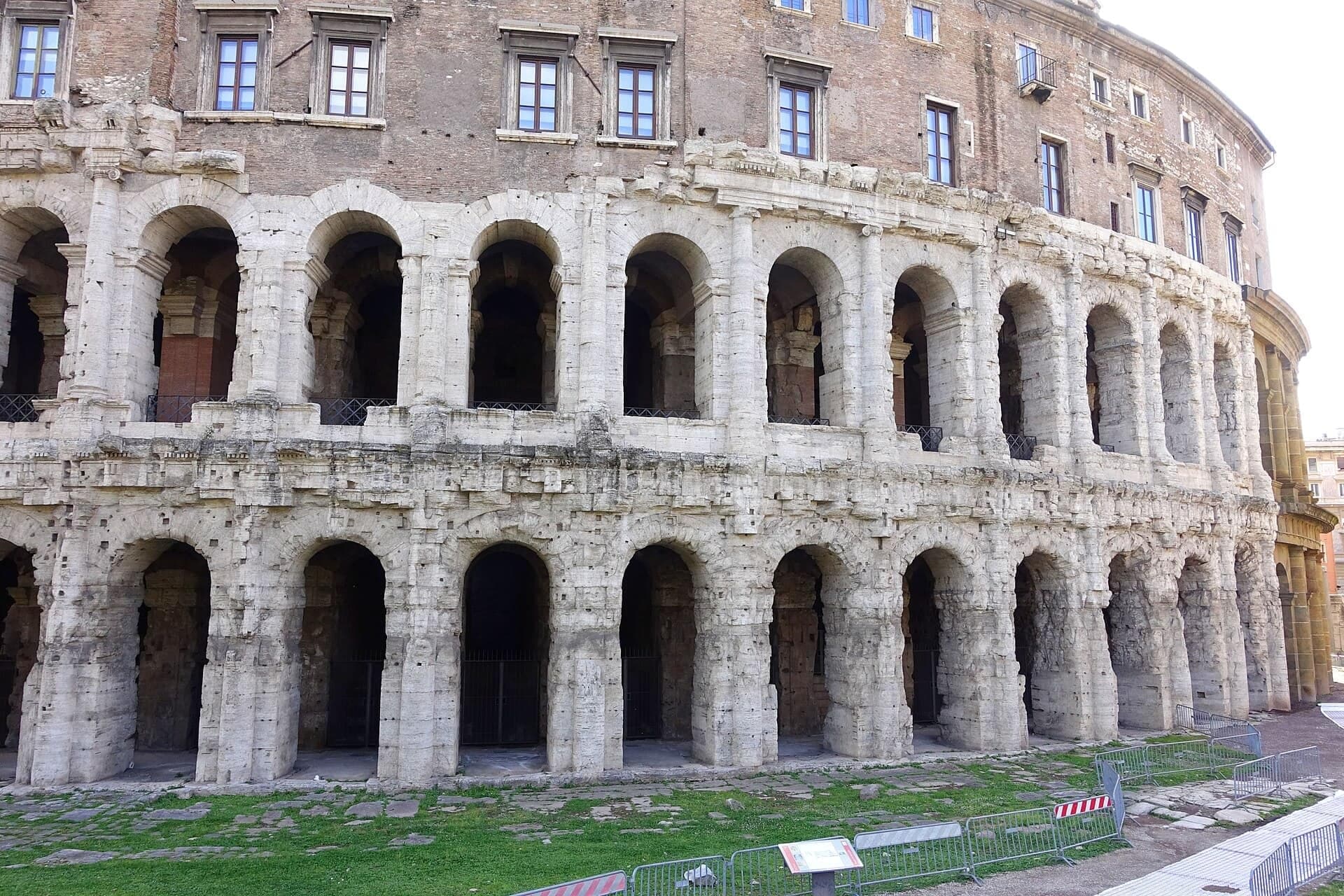
Theatre of Marcellus: A Palace on Top
Roman arches carrying a Renaissance palace, on a theater finished under Augustus and named for his nephew.
- 3
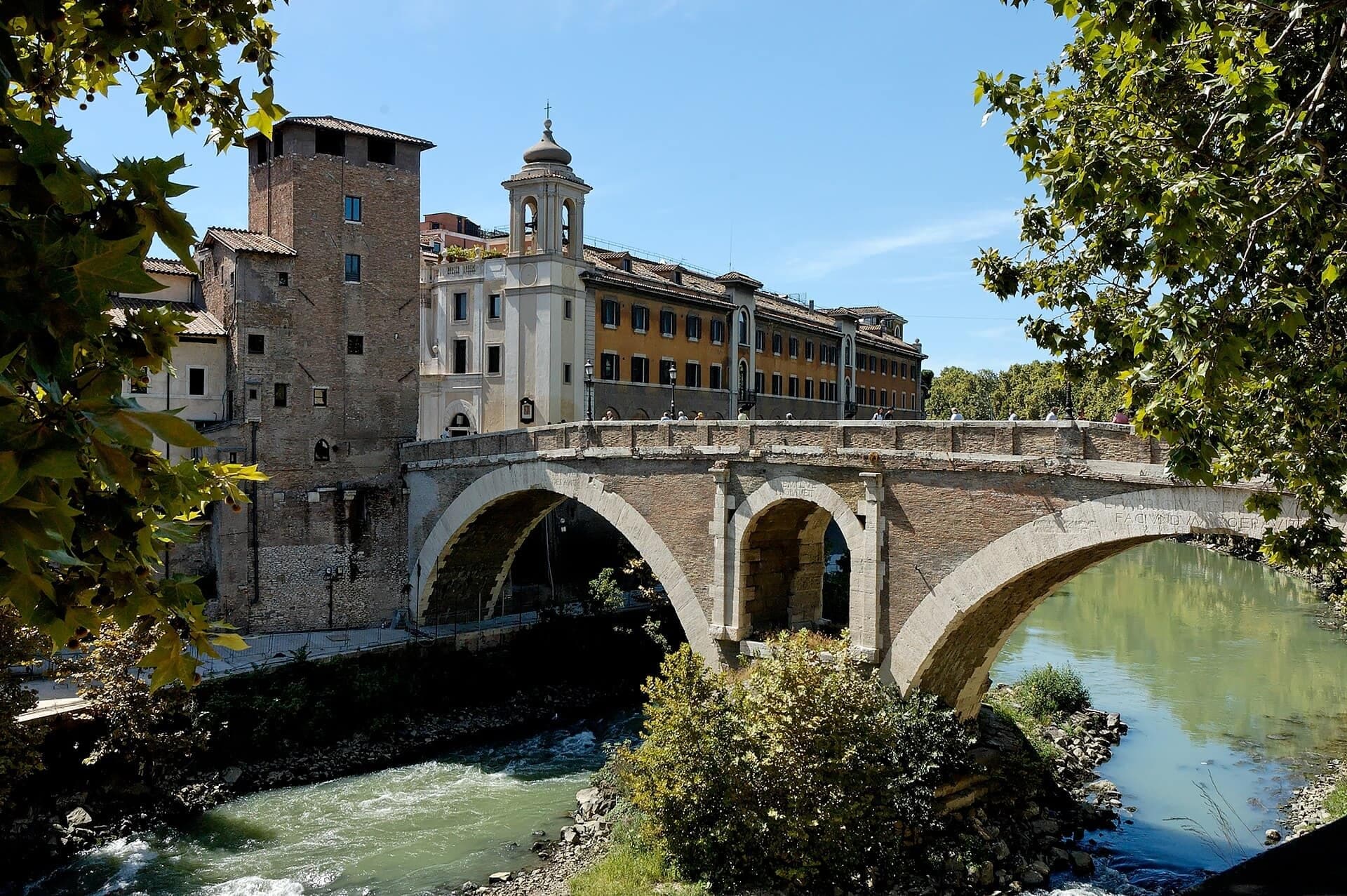
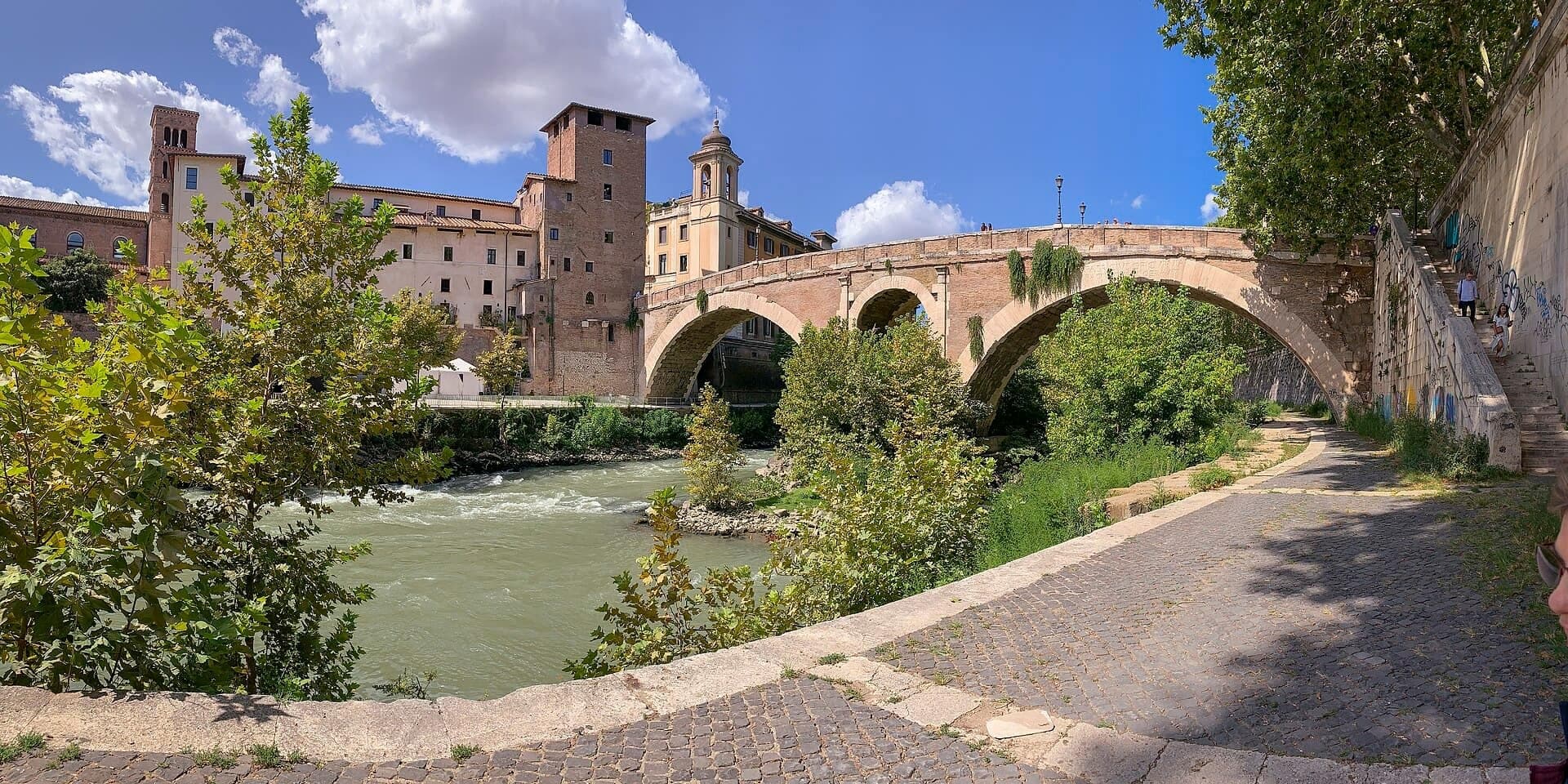
Ponte Fabricio: The Bridge of Four Heads
A Roman bridge of 62 BC, its builder's name cut four times in its arches.
- 4
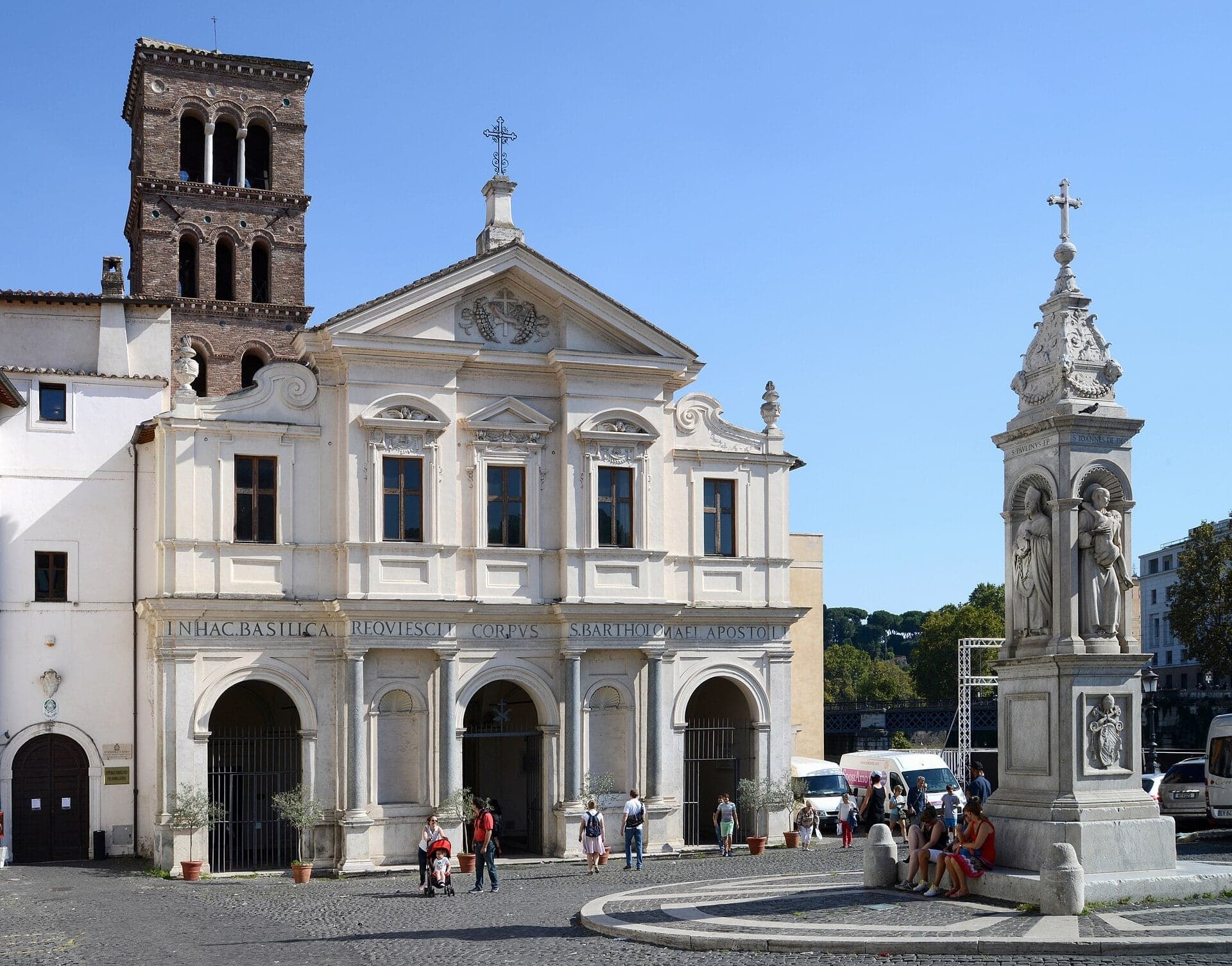
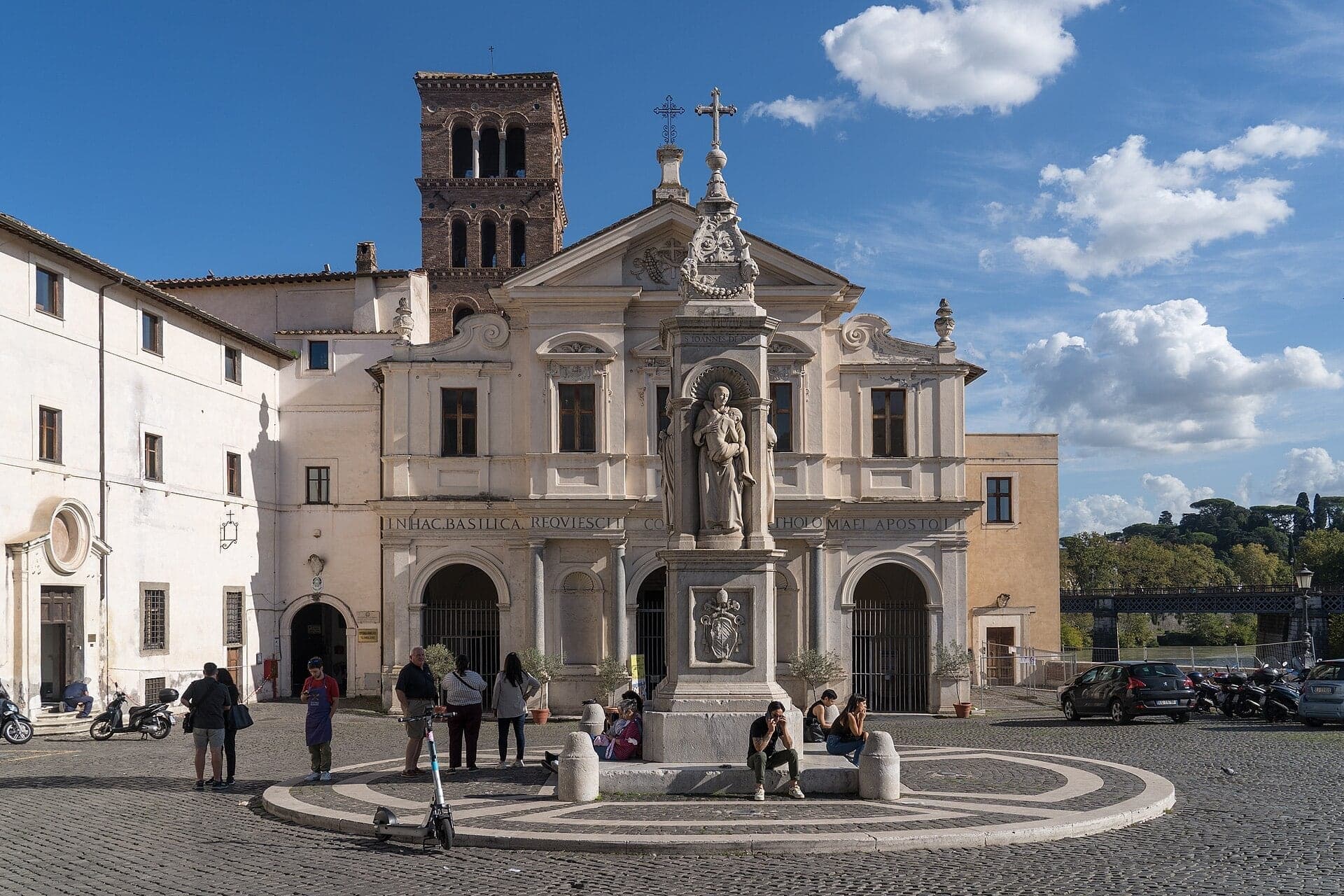
Piazza di San Bartolomeo: The Healing Island
The small square of the Tiber Island, where a temple of the healing god once stood and a hospital still works.
- 5
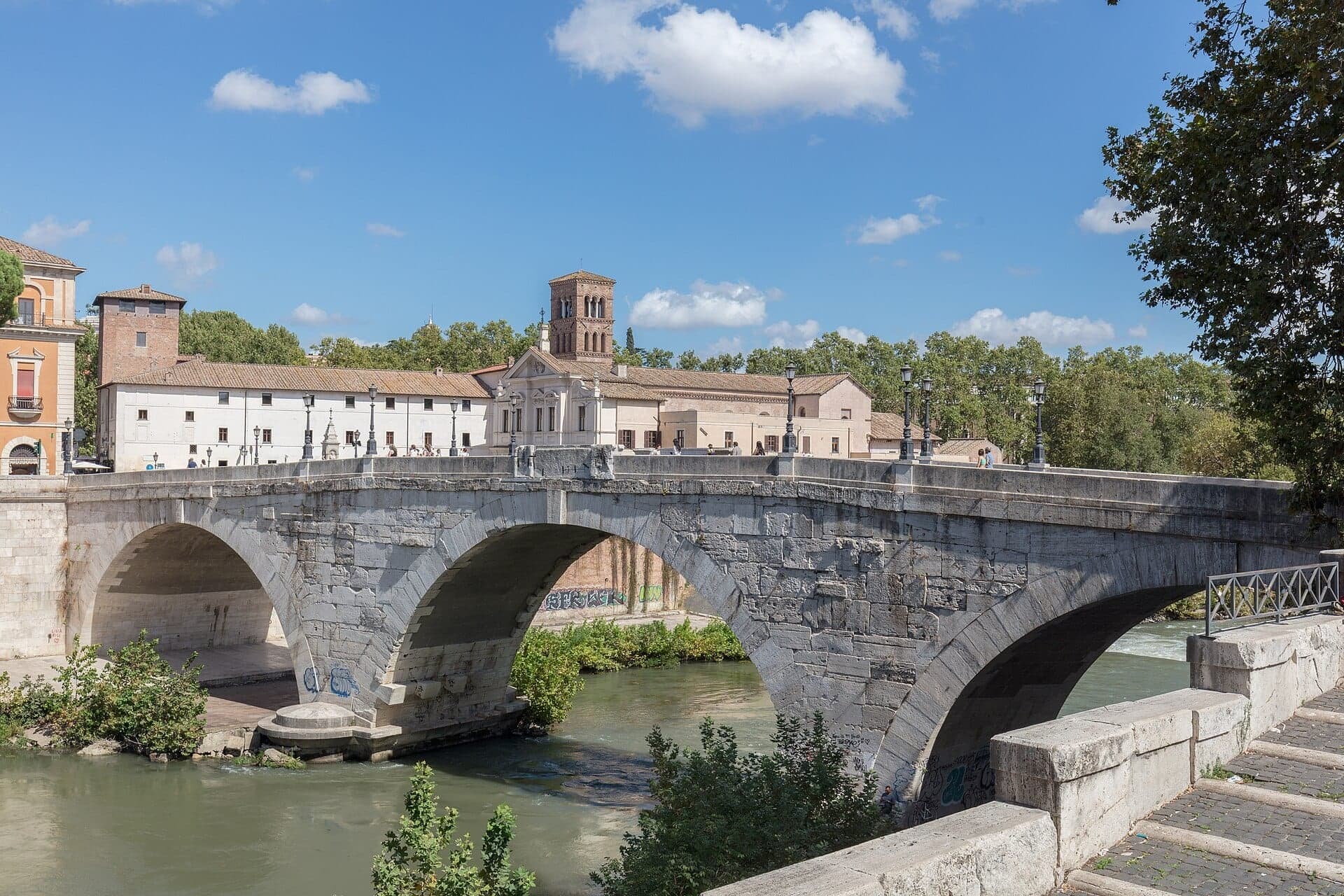
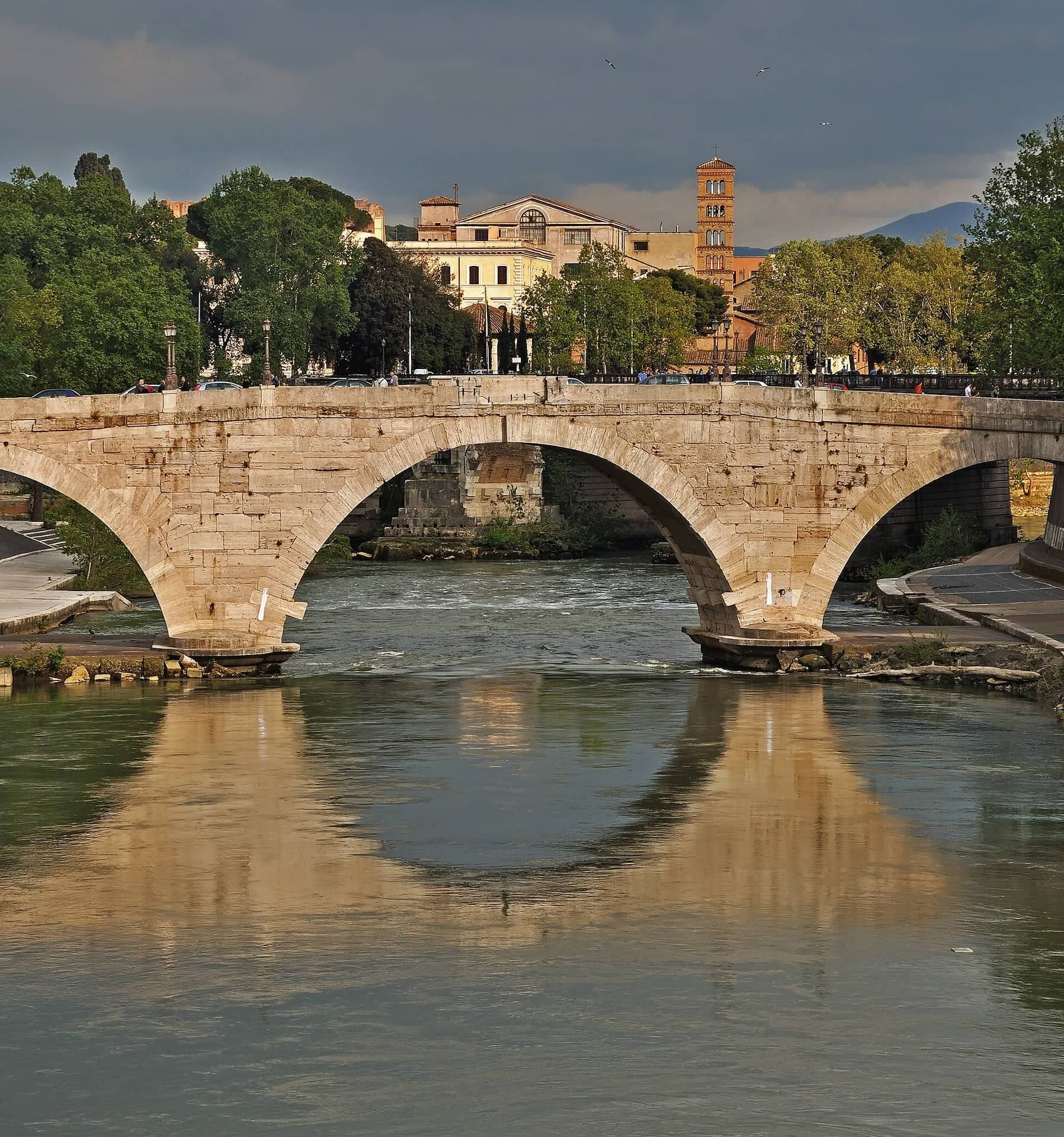
Ponte Cestio: The Broken Bridge Downstream
A Roman bridge rebuilt in 1892, and, trees allowing, a view downstream to a lone ancient arch in the stream.
- 6
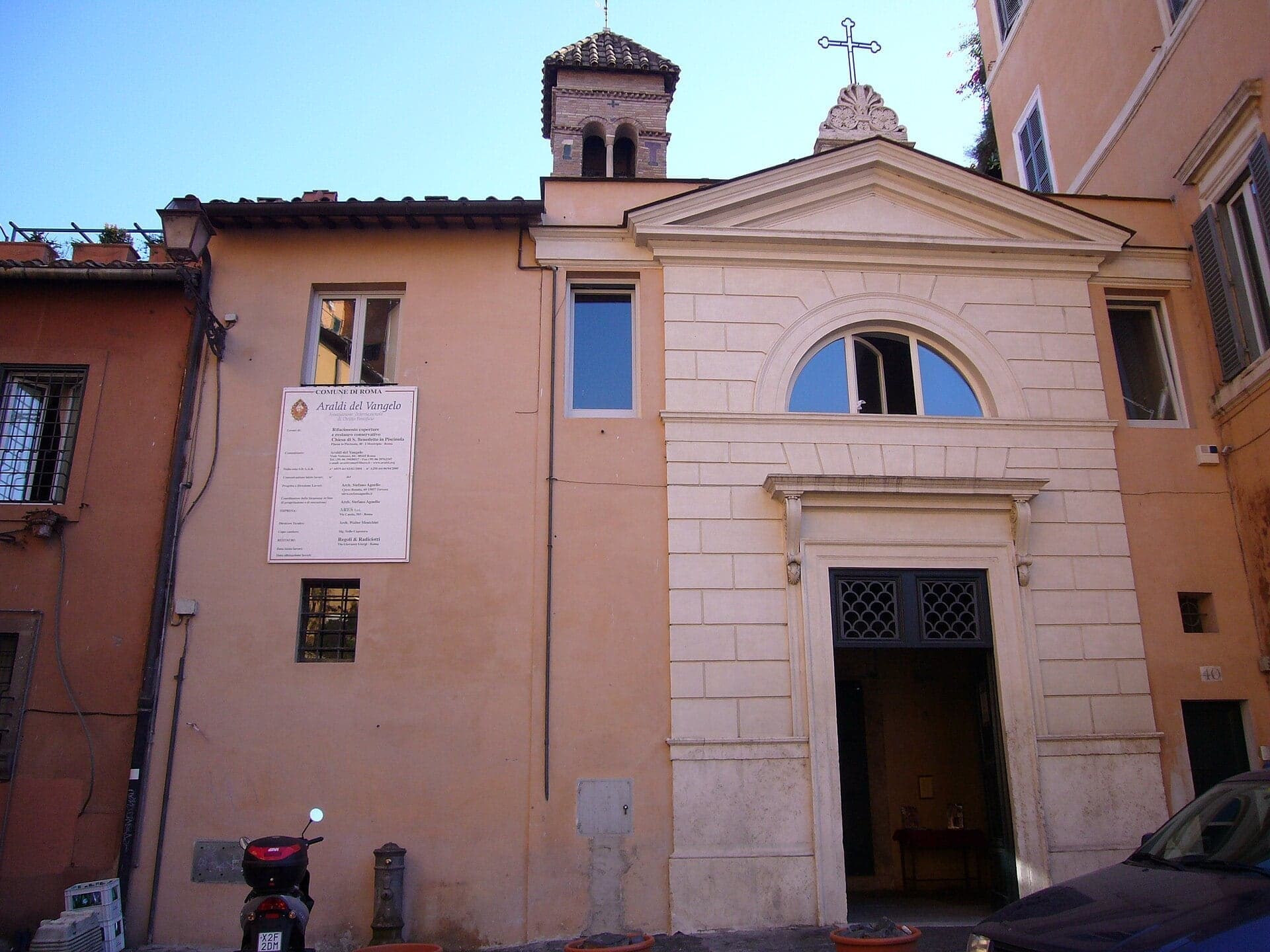
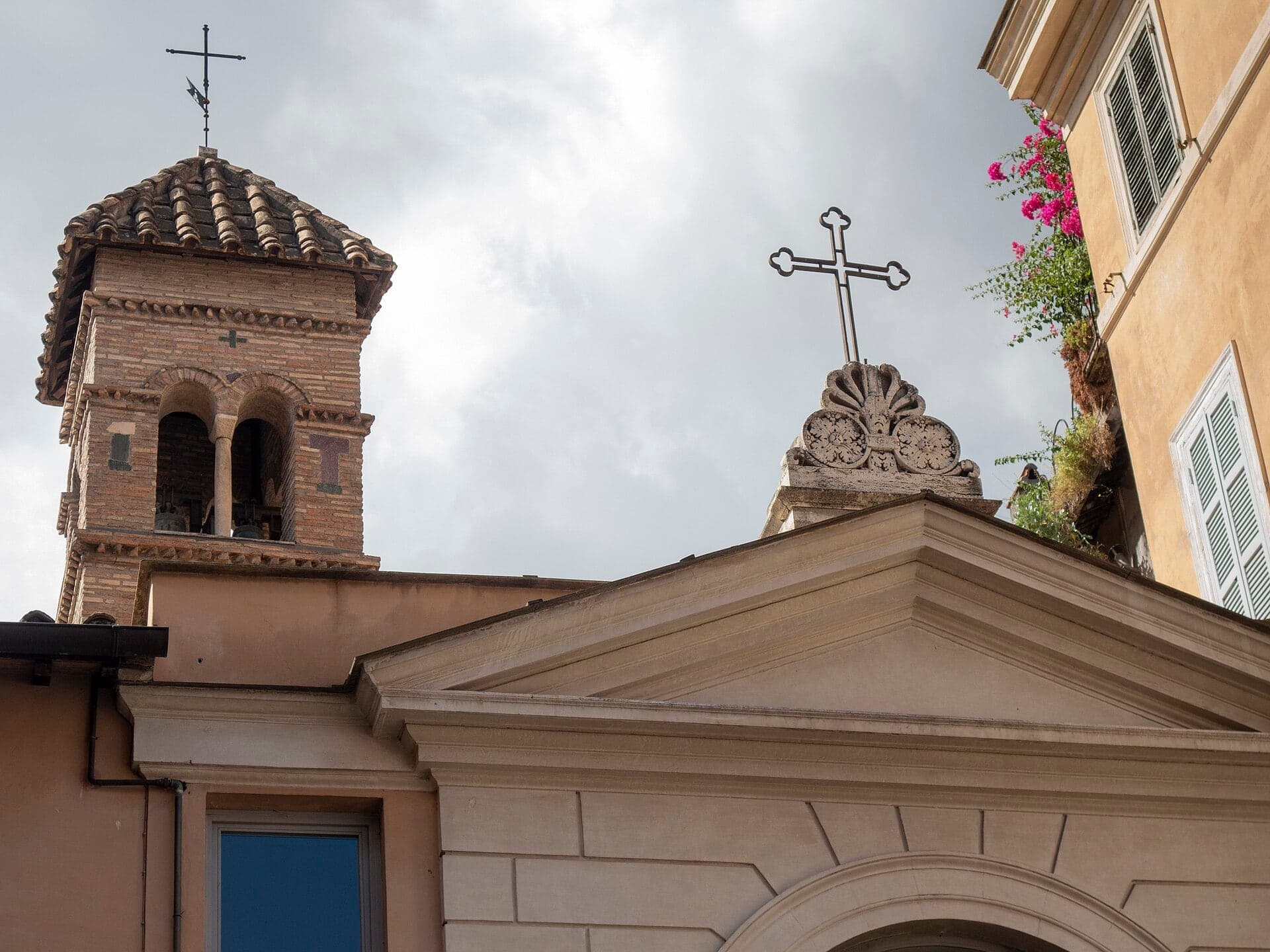
Piazza in Piscinula: The Tiniest Bell Tower
A tiny Romanesque tower over a square. The city calls it the smallest in Rome, with a bell cast in 1069.
- 7
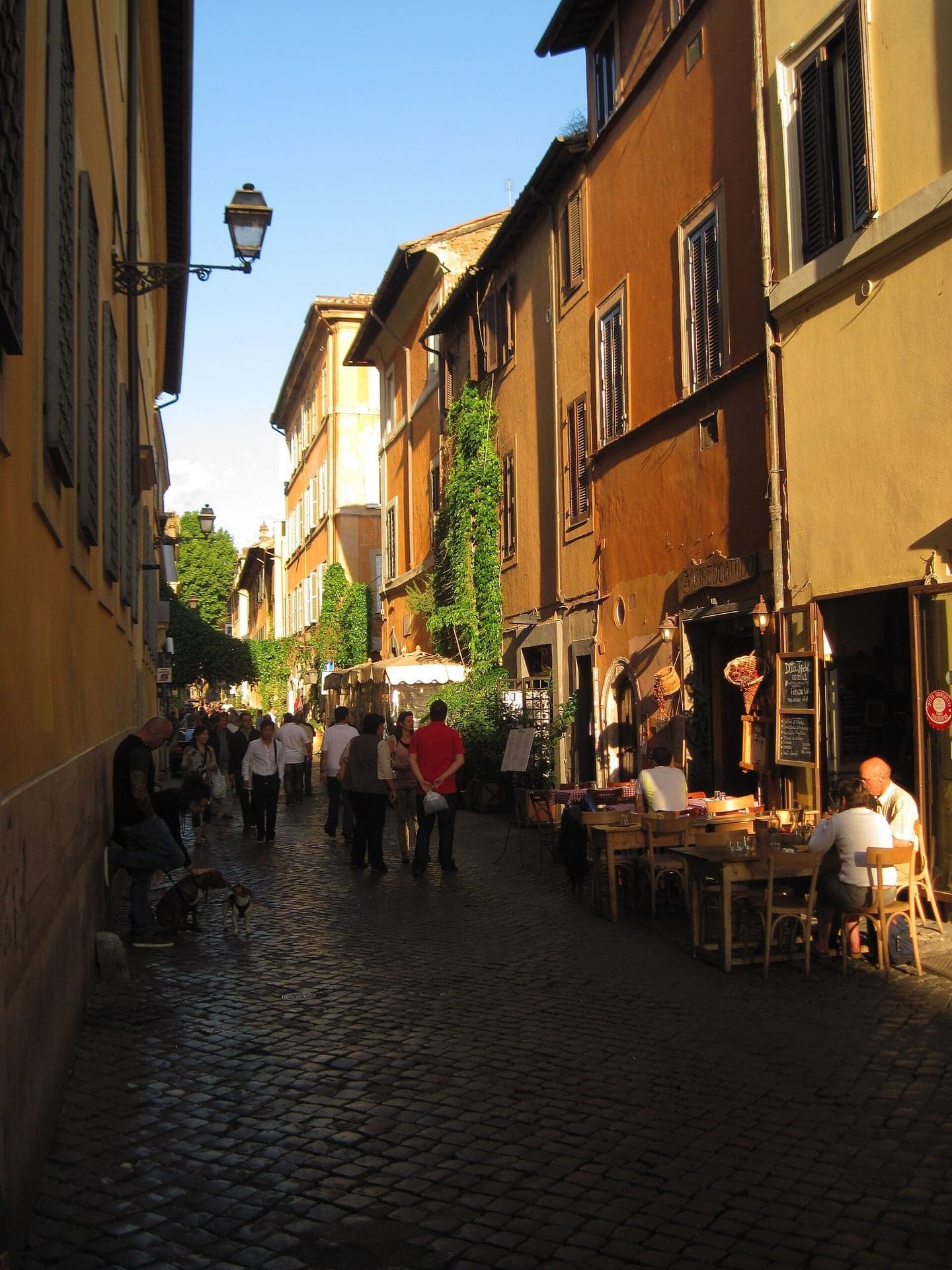
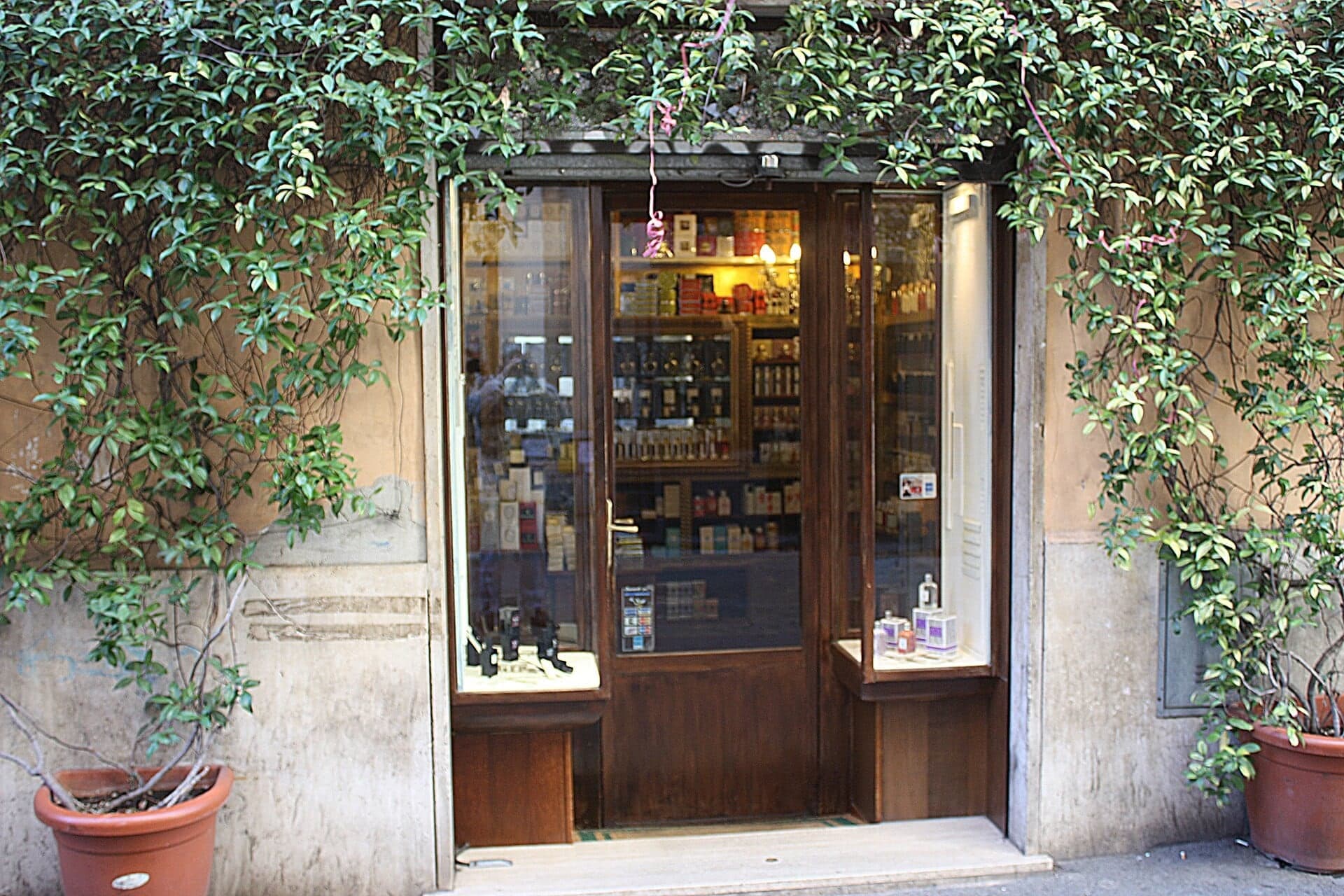
Via della Lungaretta: The Street Cut in Two
A medieval tower of the Anguillara counts: an 1888 cut that split Trastevere's old main street in two.
- 8
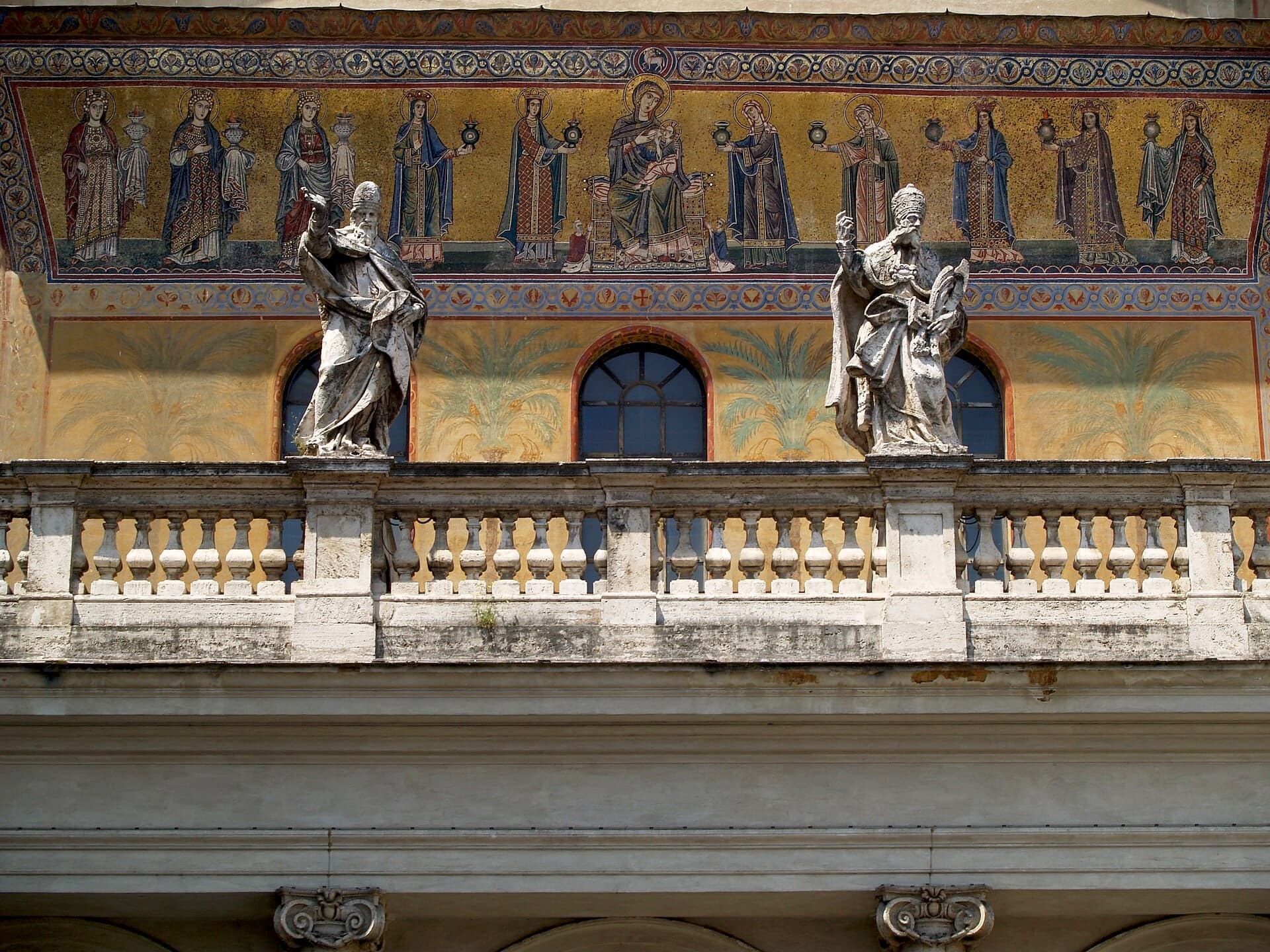
Santa Maria in Trastevere: Gold Above the Square
A medieval gold mosaic above the square. The city calls the church probably Rome's first official place of Christian worship.
- 9
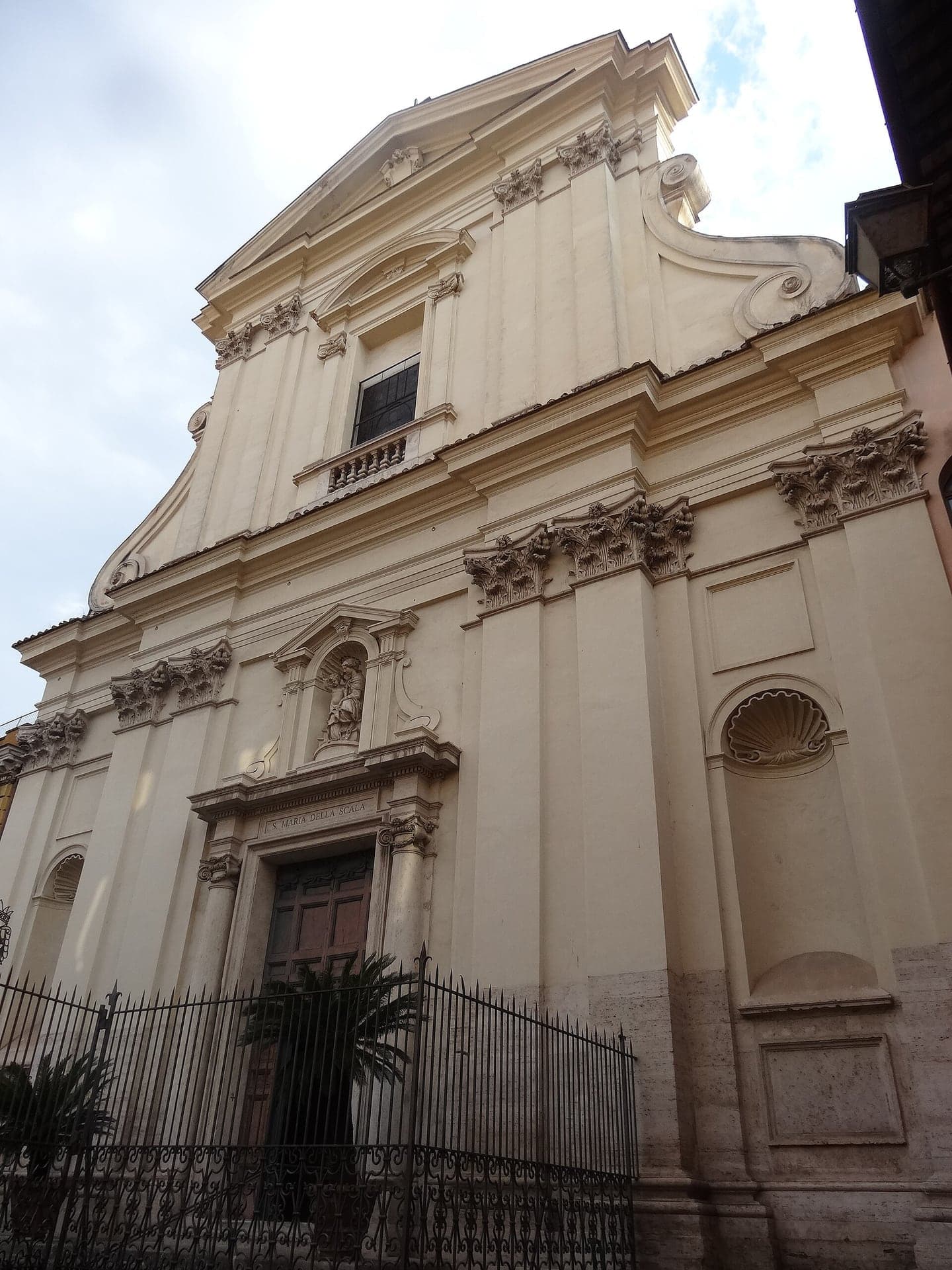
Piazza della Scala: The Church of the Stair
A plain travertine church of the stair, whose friars turned down a Caravaggio.
- 10
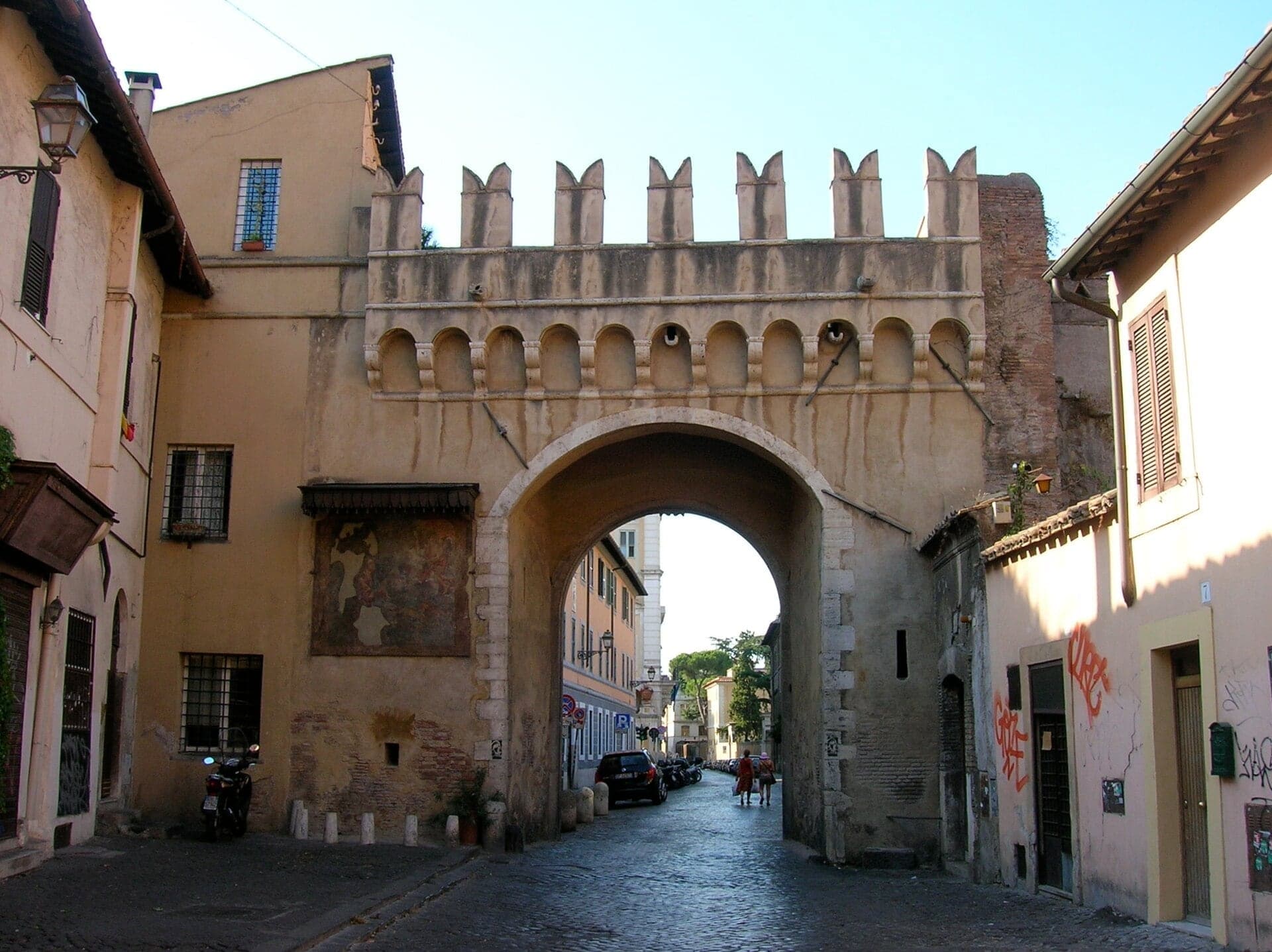
Porta Settimiana: A Gate Dressed as a Fortress
A city gate rebuilt in 1498, at the foot of the road up the Gianicolo.
- 11
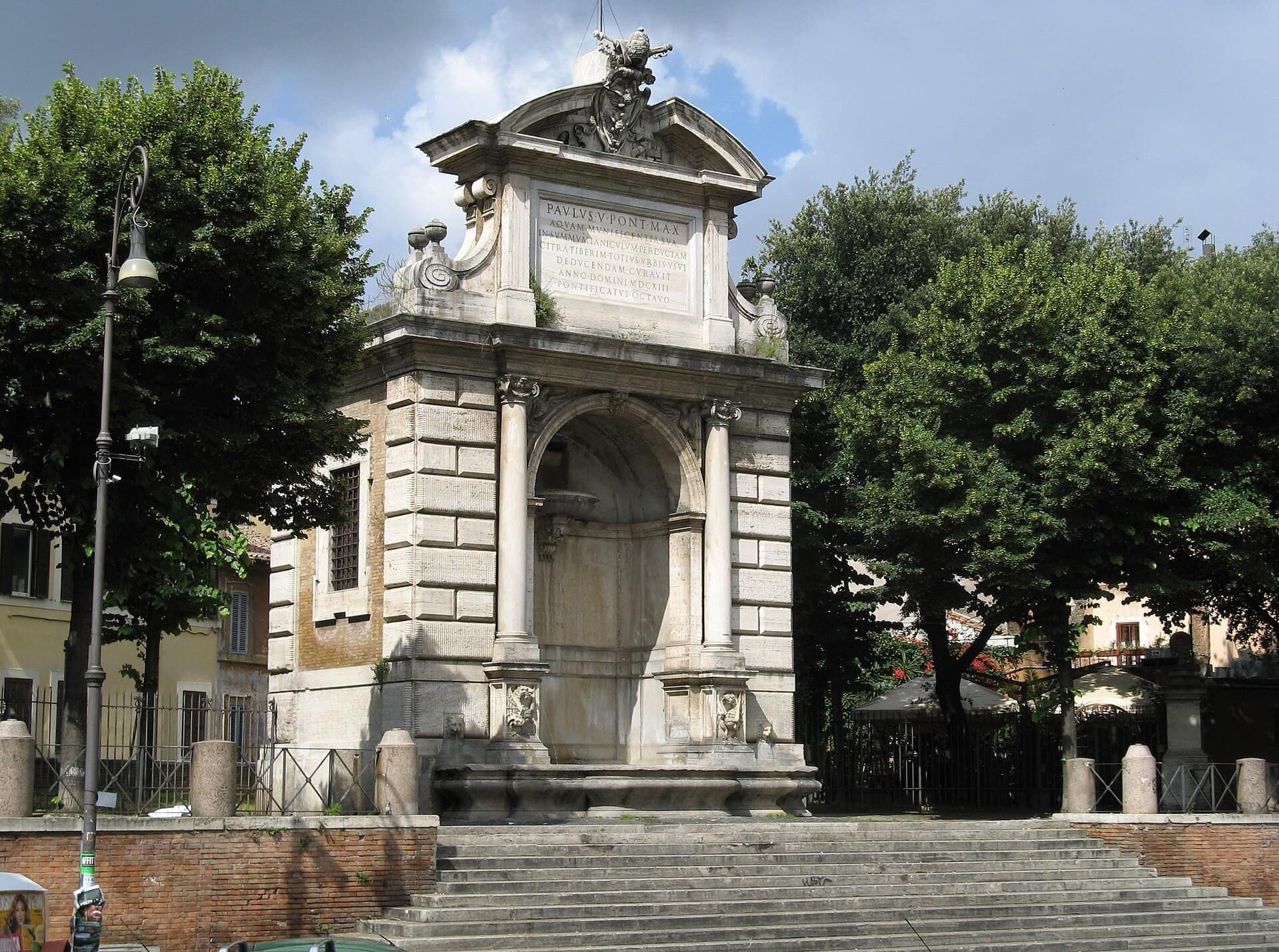
Piazza Trilussa: The Fountain That Crossed the River
A Baroque fountain from across the river, taken apart for the Tiber walls and rebuilt here in 1898 with what was left.
- 12
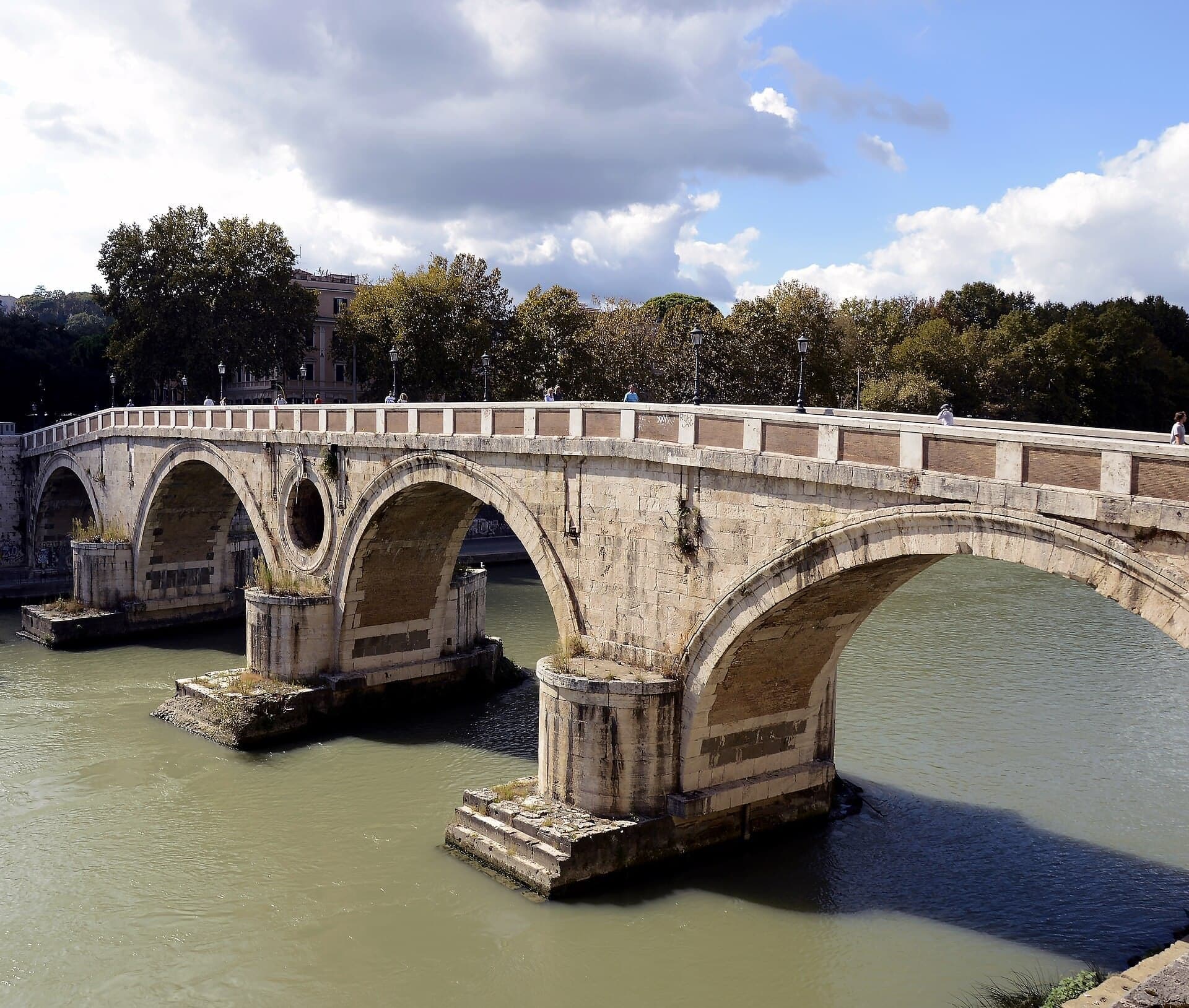
Ponte Sisto: A Pope's Bridge for Pilgrims
A footbridge built for the Jubilee of 1475, with a view upstream to the dome of Saint Peter's.
Details
Best Time to Visit
A morning from Sunday to Thursday, when the old Jewish quarter is open and Trastevere's lanes are quiet; the walk is all outdoors and works at any hour in daylight. The Jewish Museum of Rome is closed on Saturdays and Jewish holidays and closes early on Fridays. Trastevere, Piazza di Santa Maria and Piazza Trilussa are lively and crowded in the evening. Around 15 and 16 October each year a commemoration is held of the 1943 deportation at the first stop.
Pro Tips
- •Getting to the start: no Metro station is close. The nearest is Circo Massimo on line B, about fifteen minutes on foot along Via del Teatro di Marcello; Metro C's Piazza Venezia station is not open. Most visitors walk from Largo di Torre Argentina, about seven minutes away along Via Arenula. Several buses stop nearby; check the ATAC or Roma Mobilità journey planner, because tram services, line 8 included, have been reported disrupted this autumn. Checked 8 October 2026.
- •The Jewish Museum of Rome, beside the Great Synagogue close to stop 1, is the way to visit the synagogue. In October it opens Sunday to Thursday from 10am (to 5pm until 24 October, last entry 4.15pm; to 4.30pm from 25 October) and Friday 9am to 2pm (last entry 1.15pm); it is closed on Saturdays and Jewish holidays. Check prices and holiday closures on museoebraico.roma.it. Checked 8 October 2026.
- •The Gianicolo: from Porta Settimiana (stop 10), Via Garibaldi climbs about 600 metres and 30 metres of height to the square of San Pietro in Montorio, and a little farther and higher to the great Acqua Paola fountain, about 50 metres above the river in all, for a wide view over Rome. The road has a narrow pavement and buses. Buses 115 and 870 also run up the hill; check ATAC before you rely on them.
- •Santa Cecilia in Trastevere is a few minutes' walk from Piazza in Piscinula (stop 6), off the route. Check its hours before you go.
- •The walk ends a few minutes from Campo de' Fiori, across Ponte Sisto, on our Historic Center walk. It begins a short walk north of the Mouth of Truth, which our Aventine and Circus Maximus walk passes on its way up the hill.
- •Drinking fountains: there are nasoni, Rome's free cast-iron drinking fountains, at Piazza in Piscinula (stop 6), on Via della Lungaretta and in Piazza di Santa Maria. Bring a bottle.
Safety & Precautions
- •There are three short flights of steps: down from the lane at the Theatre of Marcellus (no handrail; the step-free way is back down the lane to the bridge), down on the Tiber Island between stops 4 and 5, and eleven steps up from the river road into Piazza in Piscinula (both with handrails). Step-free ways round the last two are not confirmed. The streets are paved with small, uneven cobbles.
- •The river roads (Lungotevere) carry fast one-way traffic. Cross them only at the lights: by Ponte Fabricio (a zebra with a push-button light mapped; ground check pending, so make sure the traffic has stopped), by Ponte Cestio (two stages, with a refuge island), and from Piazza Trilussa onto Ponte Sisto. Viale di Trastevere is crossed at the lights at Piazza Sonnino, one carriageway at a time.
- •Most of Trastevere's lanes, including Via della Paglia, Via della Scala, Via di Santa Dorotea and Via Benedetta, have no pavement and carry slow one-way cars, delivery vans and mopeds. Keep to the wall, especially at Porta Settimiana, where Via Garibaldi starts.
- •Around 15 and 16 October each year (in 2024, on both days) a commemoration is held of the deportation of 16 October 1943 at Largo 16 Ottobre 1943 (stop 1). Expect a ceremony, police and press, and possibly closed areas; if the square is closed, start from stop 2 or 3. Checked 8 October 2026.
- •The Anguillara tower (stop 7) is due for a restoration whose works may start in mid-October; it may be under scaffolding. Checked 8 October 2026.
- •Pickpockets work the crowds on Via del Portico d'Ottavia, on narrow Ponte Fabricio, in Piazza di Santa Maria in Trastevere and in Piazza Trilussa and on Ponte Sisto in the evening. Keep bags closed and in front of you.
- •The palace on top of the Theatre of Marcellus is private, and the island's hospital is working: stay outside, and keep noise down by the hospital doors. Churches on the route are not entered as part of the walk; if you go in, avoid services and cover shoulders and knees.
Travel advisory: Exercise Increased Caution (Level 2).
Gallery
Related Reading
Go deeper on what you'll see, hear, and walk through.
Overview
Best Self-Guided Walking Tours in Rome (2026)
4 min
Overview
One Day in Rome on Foot: A Walkable Morning-to-Evening Itinerary
7 min
Overview
Rome Travel Guide 2026: How Many Days, Getting Around, Costs, and Safety
7 min
Thematic
Rome Keeps Nothing New: The City Built by Reusing Itself
6 min
Deep dive
Santa Maria in Trastevere: Reading Rome's Working Parish Through Its Golden Apse
6 min
Read
Best Audio Tour Apps for Europe (2026)
5 min
Read
Cheapest Self-Guided Tour Apps (2026)
4 min
Read
What to Eat in Rome: A Local's Guide to the City's Signature Dishes
7 min
Read the walk
The full story of Trastevere and the Ghetto: The River Walled In, in words. Prefer to listen? Play it narrated, from home or on location.
Introduction
Rome, the capital of Italy, has always lived beside a dangerous river. After the Tiber's flood of December eighteen seventy, when the river rose above seventeen meters, the king came to Rome for the first time, and the decision was taken to wall the river in. The tall stone embankments on this walk were finished in nineteen twenty-six.
Those were the years when Rome remade its riverside. One Roman bridge was rebuilt and another cut down. A wide avenue was driven through Trastevere. The old Jewish quarter, the Ghetto, was demolished and rebuilt above the level of the river. And a fountain was taken apart on one bank and put back together on the other.
The walk starts in the former Ghetto, a place of memory as well as history, crosses the Tiber Island, winds through the lanes of Trastevere, whose name means across the Tiber, and ends on Ponte Sisto, a footbridge back toward the center.
Names are cut in stone along the way. Augustus named the first two monuments for his sister and his nephew, a Roman official signed his bridge four times, and the Acqua Paola and Ponte Sisto carry the names of the popes who made them.
The walk is twelve stops over about one point seven kilometers, just over a mile, and takes about seventy-five minutes. It is flat, with three short flights of steps and plenty of cobbles, and needs no tickets.
1. Portico d'Ottavia: A Gate to the Ghetto
Welcome to the Portico d'Ottavia, on the square named for the sixteenth of October, nineteen forty-three. Across the square stands what is left of a Roman monument: a tall stone gateway with columns and a big brick arch set into it.
Augustus rebuilt this portico between twenty-seven and twenty-three BC and named it for his sister, Octavia. It was once a vast square of colonnades with two temples inside. Only this entrance and one corner survive, mostly as rebuilt in the year two hundred and three, after a fire.
In the late seven hundreds a church was built into the back of the gateway, and later two front columns gave way to the brick arch. In and around the portico, until the end of the eighteen hundreds, stood the city's main fish market. A stone slab beside the arch is all that is left of it; its Latin says that any fish longer than the slab had its head, up to the first fin, handed to the city's magistrates.
One corner of the gateway looks roughly chiseled: it was a corner of the Ghetto. Jews have lived in Rome without a break for about two thousand two hundred years, the Jewish Museum of Rome says. In fifteen fifty-five Pope Paul the Fourth forced them to live apart, in one of the most run-down and unhealthy quarters of the city, here by the river. They were free only in eighteen seventy.
On the morning of Saturday the sixteenth of October, nineteen forty-three, Nazi troops took more than a thousand Jewish Romans from their homes, about two hundred of them children. They were sent to Auschwitz. Sixteen came back: fifteen men and one woman, Settimia Spizzichino. No child came back. Each October, Rome remembers them here, in this square.
Follow the route along the street and up a narrow lane, toward the curved walls of a Roman theater.
2. Theatre of Marcellus: A Palace on Top
Walk on up the lane and stop where a flight of steps goes down toward the river. Over the wall on the far side of the lane rise the curved arcades of a Roman theater, with a palace sitting on top of them. The wall may hide the lowest arches: look for the tiers above it.
This is the Theatre of Marcellus. Begun a generation earlier, it was finished by Augustus, probably by seventeen BC. It was dedicated in thirteen or eleven BC to Marcellus, Octavia's son, the nephew Augustus had chosen as his heir, who died young. It held perhaps fifteen to twenty thousand people.
Read the outside from the bottom up. Two stories of arches survive, built in travertine, the pale stone you will see all over Rome. The lower arches are framed by plain Doric half-columns, the upper ones by Ionic. A third story, a solid wall, has gone. Once a giant marble mask, of tragedy, comedy or satyr play, looked down from the keystones of the arches.
Then the theater stopped being a theater. In the Middle Ages powerful families turned it into a fortress, because it stood high and close to the river. In the fifteen hundreds a palace was built on top of it, and that palace is still there. In the nineteen twenties and thirties the city bought the lower part, restored it and cleared away the houses packed against it. The street has risen around it since Roman times. The palace on top is private.
Follow the route down the steps toward the river, and cross the busy river road at the crossing by the bridge: press the button for the lights, and if there is none, wait until the traffic stops for you. If you need to avoid steps, go back down the lane the way you came and turn toward the river.
3. Ponte Fabricio: The Bridge of Four Heads
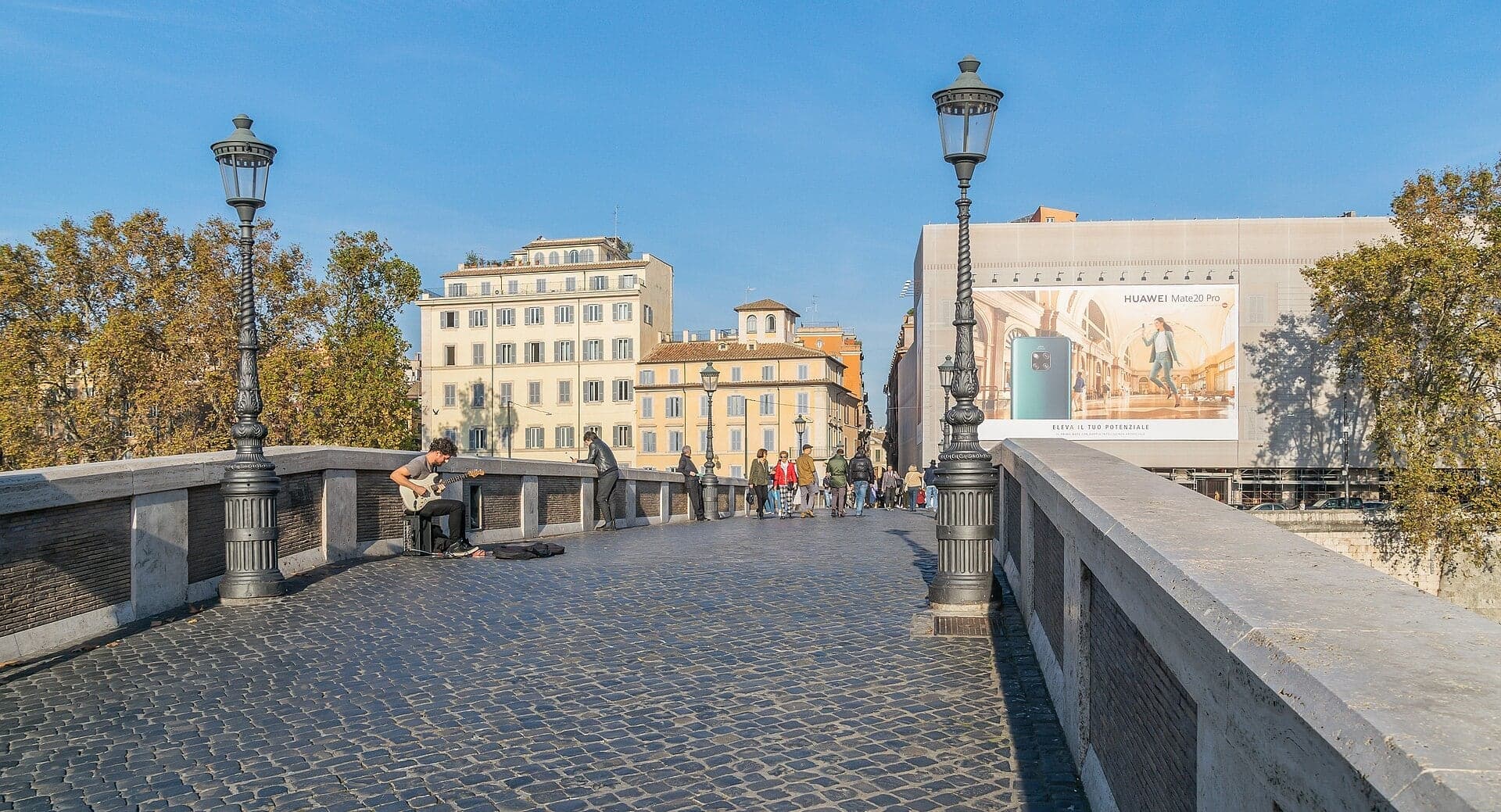
Walk on to the middle of the bridge and stop there, with the island ahead of you. This is Ponte Fabricio. The City of Rome calls it the best-preserved Roman bridge, and, with Ponte Milvio, the oldest still in use. It was built in sixty-two BC, replacing a wooden bridge.
The man who built it signed it. Lucius Fabricius, a commissioner of roads, had his name cut four times into the stone of its arches, out of sight from up here. Two later inscriptions record that it was restored in twenty-one BC, after two floods. Popes repaired it again in fourteen forty-seven and in sixteen seventy-nine.
Look back at the end of the bridge you came from: on its parapets stand stone pillars topped by marble heads, each with four faces. They give the bridge its everyday Roman name, Ponte dei Quattro Capi, the bridge of the four heads. A story says the heads are four architects whom a pope had beheaded for quarreling while they repaired it. But the name is already recorded in the early fifteen hundreds, long before that pope's time. The bridge was also called the Bridge of the Jews, because the Jewish quarter lay at the end you came from.
Now look down at the river walls. When the embankments were built at the end of the eighteen hundreds, workmen found that this bridge had once run out over a ramp of small arches. The new walls swallowed them. On both banks the river now runs between high walls of stone.
If you look back toward the quarter you just left, you may glimpse through the plane trees a square dome clad in aluminum. That is the Great Synagogue, opened in nineteen oh four on the cleared ground of the old Ghetto.
Follow the route over the bridge onto the island and into its small square.
4. Piazza di San Bartolomeo: The Healing Island
Walk on into the square and stop there, and turn to face the church front across it. You are on the Tiber Island, the only island in the city's stretch of the river: about three hundred meters long and ninety wide, a solid bank of tufa stone with river sand settled around it.
The island has a legend, and the City of Rome tells it as one. A plague struck Rome. The Romans consulted their sacred books and sent a ship to Epidaurus, in Greece, the sanctuary of Aesculapius, the god of healing. On the way home a snake leapt from the ship and swam ashore here, and the Romans built the god a temple on the island. It was dedicated in two hundred and ninety-one BC.
Medicine came back to this island much later. The church in front of you, San Bartolomeo all'Isola, stands on the remains of the temple. Find its bell tower: Romanesque, of the eleven hundreds. And the buildings beside the square belong to the Fatebenefratelli hospital, founded in fifteen eighty-four, a working hospital to this day. Keep your voice down near its doors.
Hold on to the snake and the ship. At the next stop, tradition says, the island itself was dressed up as a ship.
Follow the route across the square, away from the church, and down a short flight of steps onto the next bridge.
5. Ponte Cestio: The Broken Bridge Downstream
Walk on onto the bridge and stop on its pavement near the island end. This bridge looks Roman, and its stones are. But it is not the Roman bridge. Ponte Cestio was built around forty-six BC, and restored in the three hundreds. Then, in eighteen ninety-two, as the inscription on…
Full narration for this stop unlocks with the tour.
6. Piazza in Piscinula: The Tiniest Bell Tower
Walk on into the little square and stop at its edge. On the square stands a very small church with a very small bell tower: San Benedetto in Piscinula. The square's name probably comes from the pools of ancient Roman baths. Look at the tower. The city calls it the smallest bell…
Full narration for this stop unlocks with the tour.
7. Via della Lungaretta: The Street Cut in Two
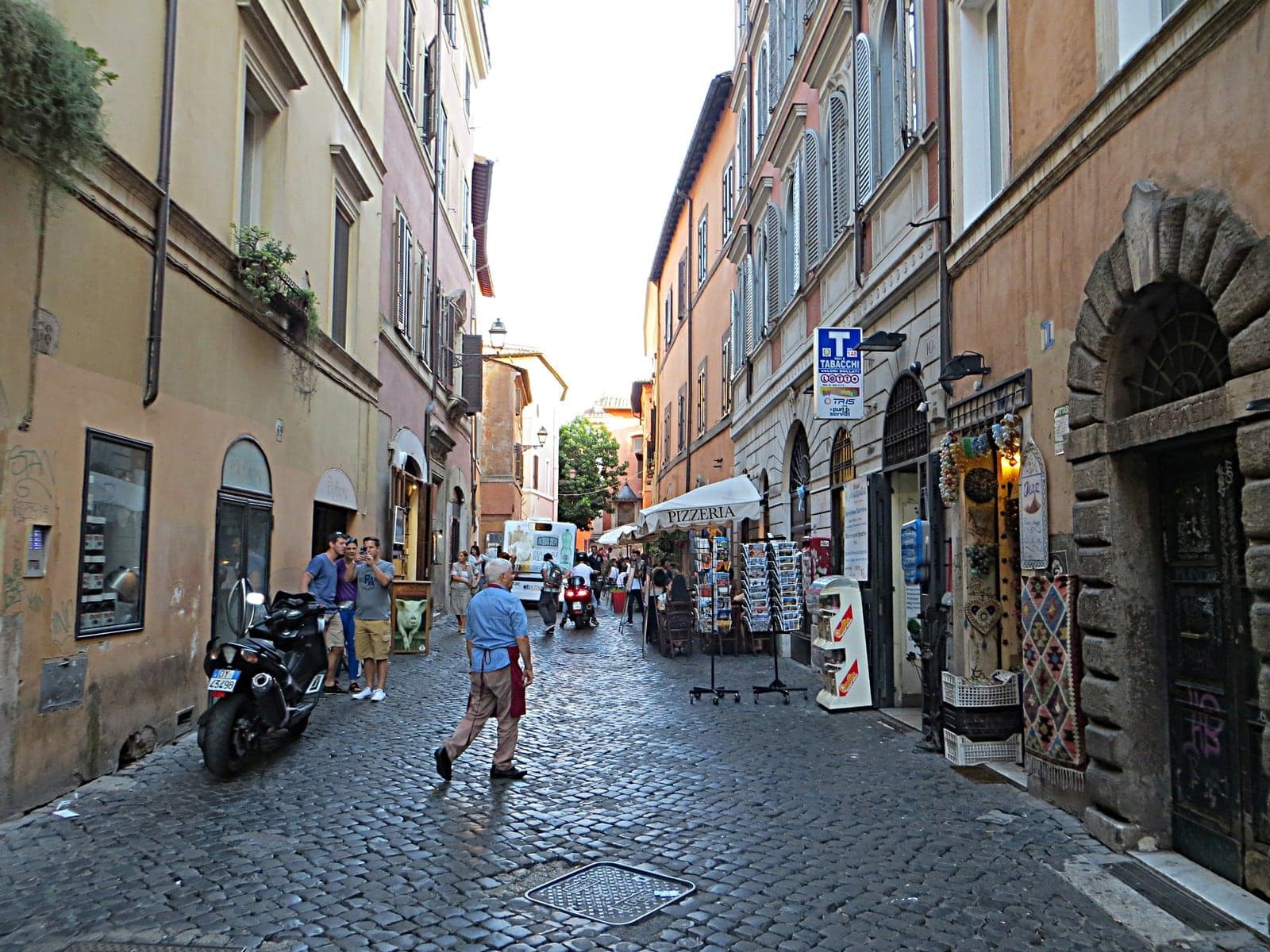
Walk on along Via della Lungaretta and stop before the lights at the wide avenue. Just ahead, rising out of the corner block, is a tall medieval tower. That is the tower of the Anguillara, a family of counts, and the block around it was their fortified house. One of them built…
Full narration for this stop unlocks with the tour.
8. Santa Maria in Trastevere: Gold Above the Square
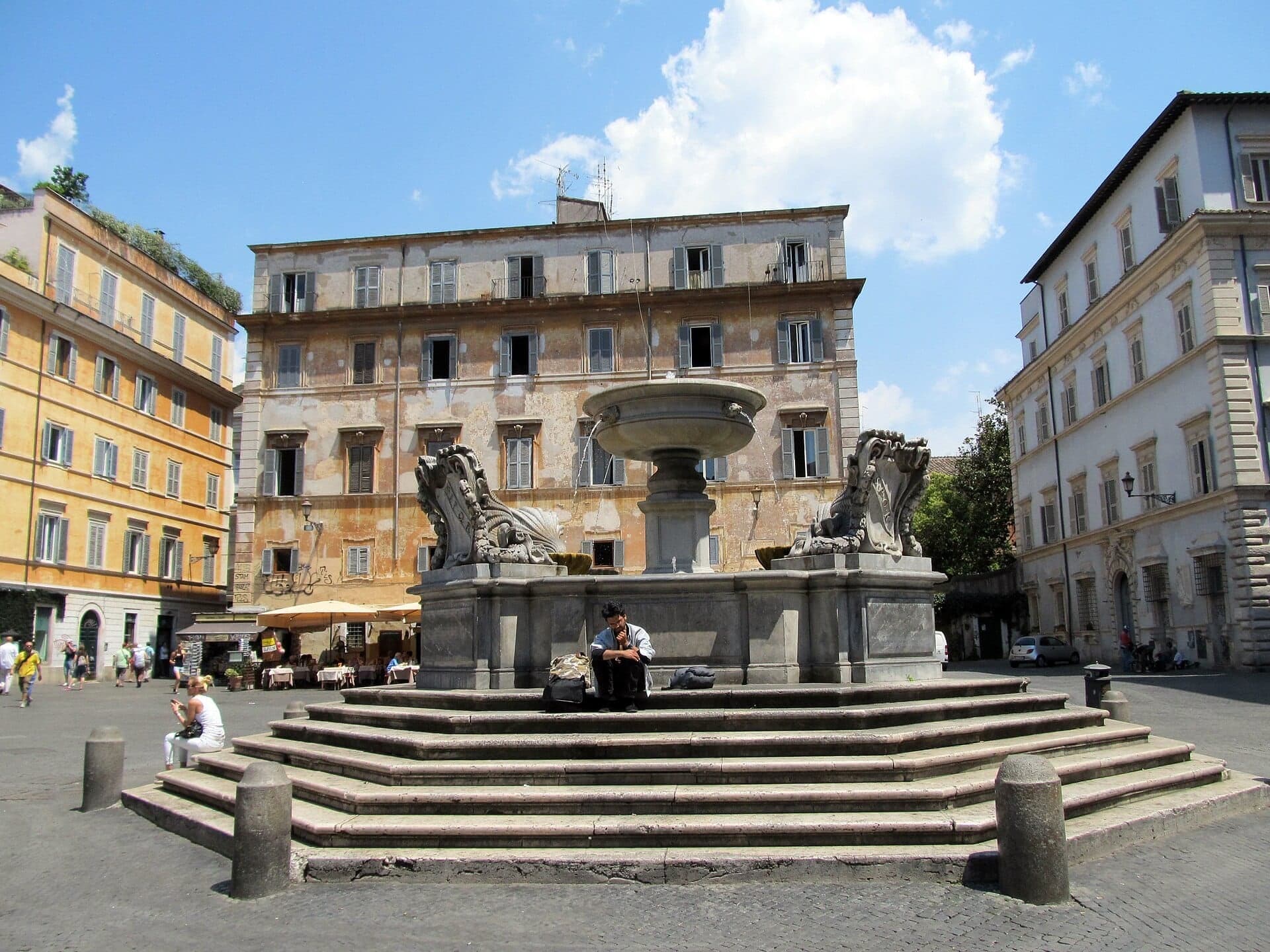
Walk on into the square and stop at its edge, with the fountain between you and the church. Look up at the church front. High under the roof runs a band of gold: a medieval mosaic. In the middle the Virgin sits on a throne, nursing her child, and on each side stand five women…
Full narration for this stop unlocks with the tour.
9. Piazza della Scala: The Church of the Stair
Walk on along Via della Scala and stop where the lane opens into a small square. Facing the square is a plain church front in two stories of travertine, with a statue of the Madonna and Child over the door. This is Santa Maria della Scala, Saint Mary of the Stair. The name…
Full narration for this stop unlocks with the tour.
10. Porta Settimiana: A Gate Dressed as a Fortress
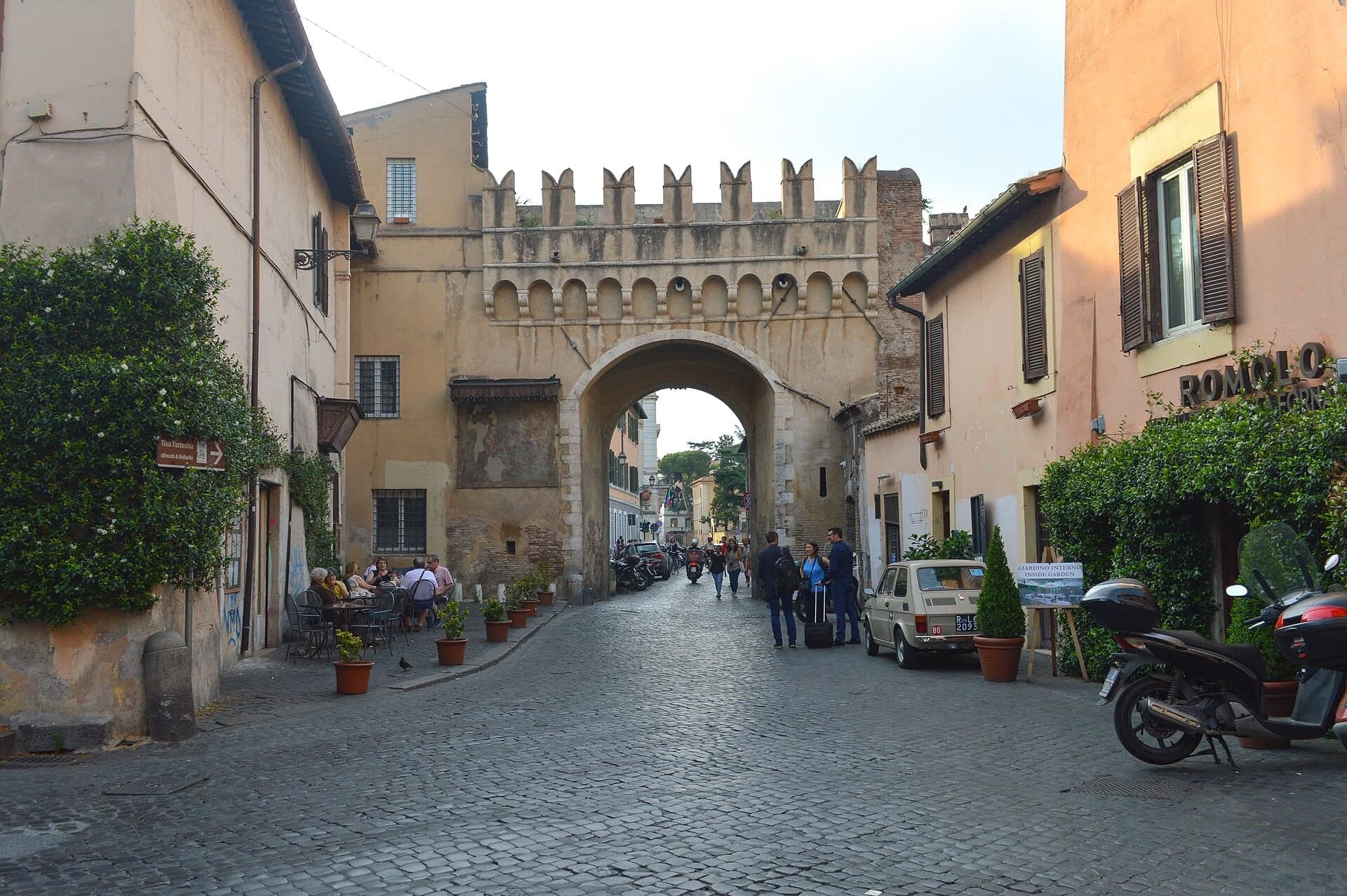
Walk on to the junction where four streets meet and stop against a wall: cars use these lanes, and buses come down Via Garibaldi. Ahead stands a gate with a single arch and a top cut into swallow-tailed battlements, like a medieval castle. This is Porta Settimiana, a gate in…
Full narration for this stop unlocks with the tour.
11. Piazza Trilussa: The Fountain That Crossed the River
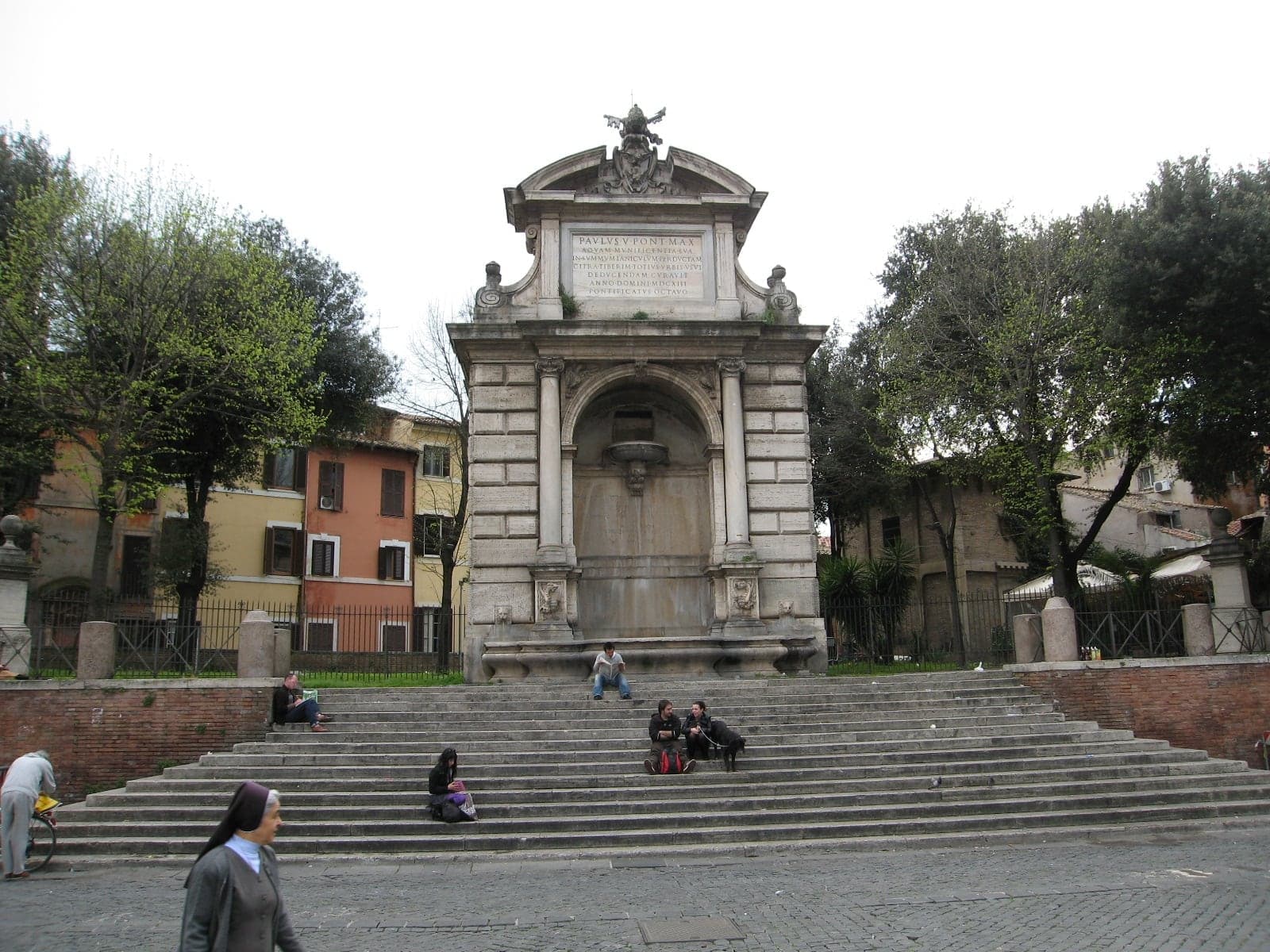
Walk on along Via Benedetta to where the lane opens onto the square, and stop at its edge. At the corner of the square you have just passed, a grand stone arch stands at the top of a flight of steps. Its front faces the bridge, so step out into the square until you can see it:…
Full narration for this stop unlocks with the tour.
12. Ponte Sisto: A Pope's Bridge for Pilgrims
Walk on to the foot of the bridge and stop there, just past the lights. This is Ponte Sisto, a footbridge today, and the last stop of the walk. Pope Sixtus the Fourth built it for the Jubilee of fourteen seventy-five, the holy year that brought pilgrims to Rome, to link…
Full narration for this stop unlocks with the tour.
- Rome (Italy) — Jorge Franganillo, CC BY 2.0 · source
- Roma, via del Portico d'Ottavia; in primo piano, casa Manilio — Lalupa, CC BY-SA 3.0 · source
- Teatro di Marcello intero — Fiat 500e, CC BY-SA 4.0 · source
- Tiber river, Ponte Fabricio, and Tiber Island, Rome — Nicholas Hartmann, CC BY-SA 4.0 · source
- Church of San Bartolomeo all'isola, Rome — Alvesgaspar, CC BY-SA 4.0 · source
- Rome, Piazza di San Bartolomeo all'Isola — Alexkom000, CC BY 4.0 · source
- Ponte Cestio, Rome, Italy — Diego Delso, CC BY-SA 4.0 · source
- Tiber river near Ponte Cestio. Rome — Ввласенко, CC BY-SA 3.0 · source
- Roma, S. Benedetto in Piscinula: facciata — Lalupa, CC BY-SA 3.0 · source
- Facade and bell tower (campanile) of San Benedetto in Piscinula in Rome. This is said to be the smallest campanile in the city. — Nicholas Hartmann, CC BY-SA 4.0 · source
- Via del Lungaretta, Roma, Italia — BrsJvnvc, CC BY 3.0 · source
- Rome, shop 63 Via della Lungaretta — Dguendel, CC BY 3.0 · source
- Roma. Santa Maria in Trastevere. Exterior. — Miguel Hermoso Cuesta, CC BY-SA 4.0 · source
- The fountain of the Piazza di Santa Maria in Trastevere is believed to be the oldest fountain in Rome, originating in the 8th century. The p — daryl_mitchell from Saskatoon, Saskatchewan, Canada, CC BY-SA 2.0 · source
- Santa Maria della Scala (Rome) — Jordiferrer, CC BY-SA 4.0 · source
- Trastevere - Via Della Scala — Mister No, CC BY 3.0 · source
- La porte Settimiana à Rome dans le mur d'Aurélien dans le quartier de Trastevere — LPLT, CC BY-SA 4.0 · source
- Trastevere archway — Francisco Anzola from United States, CC BY 2.0 · source
- The Fontanone di Ponte Sisto in the Piazza Trilussa, Rome. Designed by Giovanni Fontana and originally constructed on the opposite side of t — Mark Landon, CC BY 4.0 · source
- Fontana di Ponte Sisto — trolvag, CC BY-SA 3.0 · source
- Ponte Sisto Rome — Livioandronico2013, CC BY-SA 4.0 · source
- Ponte Sisto in Rome, Lazio, Italy — Krzysztof Golik, CC BY-SA 4.0 · source
Images may be cropped or resized. Other photos via Unsplash and Pexels.