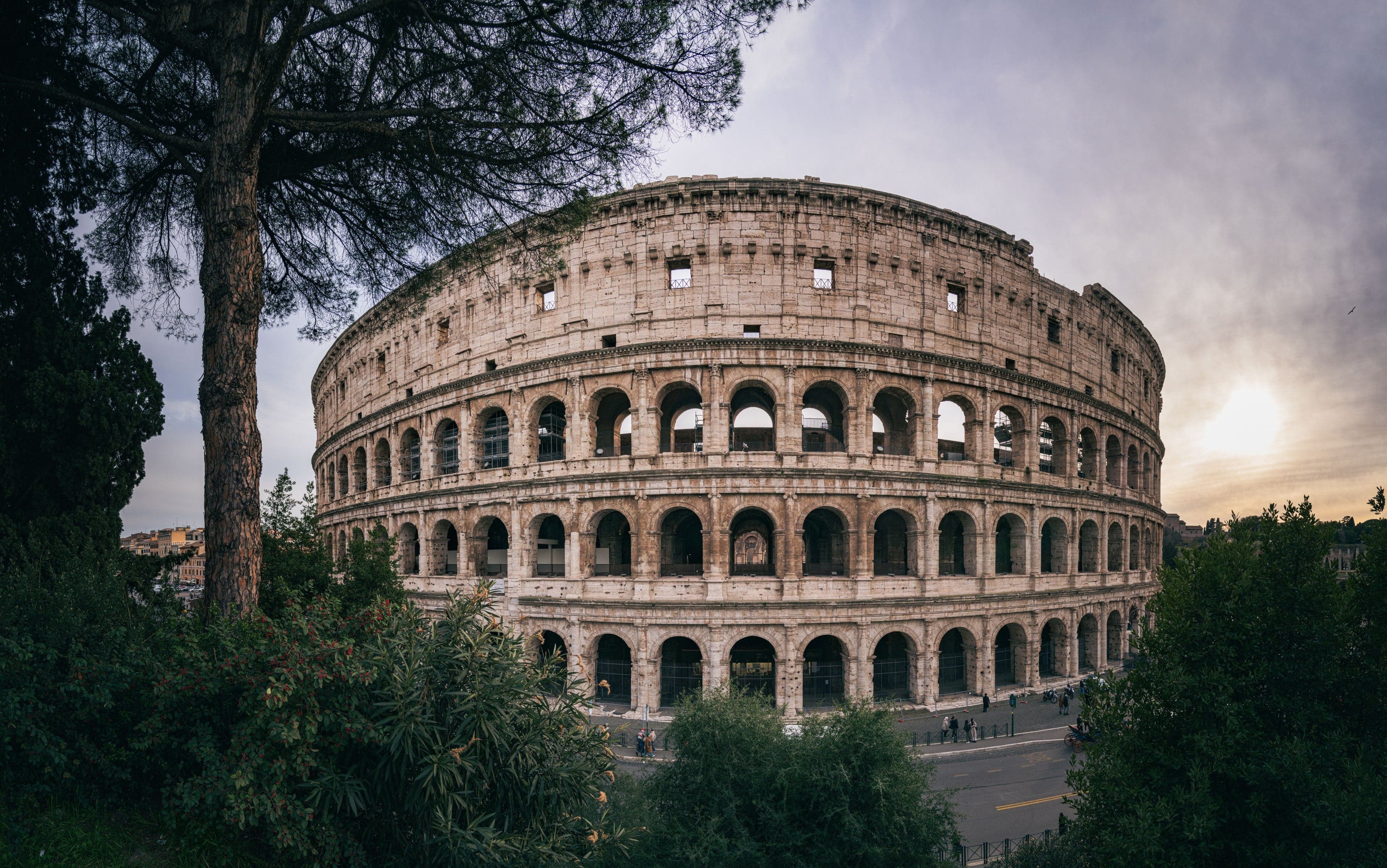
Colosseum and Roman Forum: Rome Built From Rome
75 min · 1.9 km · moderate
Rome keeps nothing new. The city puts monuments on a private lake, churches on imperial columns and a square on a stadium, and it has been doing this for two thousand years. Where most cities clear a site before they build, Rome builds on what is already there: a medieval church on ancient columns, a papal square on a Roman stadium, a whole amphitheatre on the ground of a lake. The six Roman walking tours in this collection each read the same city, but they read it as continuous reuse across time rather than as a set of separate monuments. Once you learn to see the reuse, you cannot unsee it, and the city stops being a museum of finished objects and becomes a single structure that never stopped being edited.
The through-line: reuse is the method, not the exception
Start with the clearest lesson, then watch it repeat. In Colosseum and Roman Forum: Rome Built From Rome, the Arch of Constantine opens the walk as a collage: Dacian statues from Trajan's Forum, panels of Marcus Aurelius and Hadrianic roundels, with the faces reworked. Rome's tourism office says the Colosseum beside it was built on the area previously occupied by the artificial lake of Nero's Golden House, and that in the Middle Ages and Renaissance it was used as a quarry for building materials. A monument for everyone sits on the ground of one ruler's private water, and then supplies stone to other buildings.
The same walk ends on a bigger turn. The Capitoline Hill once faced the Forum; when Michelangelo redid the square in the sixteenth century, the main axis of the hill shifted toward the modern city and away from its ancient position. The city turned around and kept the hill. Rome reused everything, including its own orientation.
Reuse as theatre: the Historic Center
Hear a stop from this walk
Tarpeian Rock: The Cliff and the Church
Historic Center: The City That Reuses Everything shows the seventeenth-century popes practicing reuse deliberately, as propaganda. Piazza Navona keeps its long racetrack outline because the houses sit on the arcades of the Stadium of Domitian, an athletic stadium opened in AD 86. At its center, Bernini's Fountain of the Four Rivers, unveiled in 1651, is crowned by an obelisk that looks Egyptian but was carved in Rome in Domitian's time, then moved to a circus, dug up and raised on the fountain with the Pamphili dove on top.
The method of quoting the ancient world reaches its source at the Pantheon, which Hadrian rebuilt between AD 118 and 125 and which survived nearly intact because it was consecrated as a church in 609. Piazza di Pietra shows the other way to survive: eleven columns of a temple to the deified Hadrian are built into the front of a seventeenth-century papal palace.
Reuse as water: Trevi and the Spanish Steps
Trevi Fountain and Spanish Steps: Upstream to the Pincio follows one piece of reuse that never stopped: the Acqua Vergine, an aqueduct built by Agrippa in 19 BC, which Rome's tourism office calls the only ancient aqueduct still in use. Today its great show is the Trevi Fountain, built against the back of a palace; its weak pressure shaped the boat-shaped fountain at the foot of the Spanish Steps; and it entered the city at the foot of the Pincio.
Reuse as a village practice: Trastevere and the Ghetto
Trastevere and the Ghetto: The River Walled In carries the method into the part of the city across the Tiber, where the recycling is domestic rather than imperial. Inside Santa Maria in Trastevere, the twenty-two granite columns of the nave are probably from the Baths of Caracalla, by the city's own wording. Imperial Rome possibly holds up a Christian nave.
The walk's mechanism, though, is the river. After the flood of December 1870 Rome walled the Tiber in, and the same decades demolished the old Jewish Ghetto, cut an avenue through Trastevere and took apart a fountain on one bank to put it back together on the other. The Acqua Paola fountain, begun in 1613 at the end of Via Giulia, was dismantled after the flood, lost almost half its pieces and was rebuilt in Piazza Trilussa in 1898.
Reuse of power: the Vatican and the Aventine
Vatican and St. Peter's Square: The Lost Surprise begins at Ponte Sant'Angelo, built by Hadrian in AD 134 or 135 to reach his mausoleum, which the popes later turned into the fortress of Castel Sant'Angelo. A raised corridor on the old wall, the Passetto, linked it to the Vatican. The walk then follows the Borgo's lanes into the square.
Circus Maximus and Aventine: Racetrack to Orange Garden is the shortest course in the lesson. A valley was shaped into a chariot racetrack; a round Roman temple, considered the oldest surviving marble building in Rome, became a church in the twelfth century; a medieval fortress was opened in 1932 as the public Orange Garden.
Why the city rewards this way of seeing
The six tours cover different ground, different centuries and different moods, from a racetrack to a fortress garden to open-air theatre. What unites them is a single habit of the city. Rome does not clear the past to make room for the present. It builds the present on top of the past, out of the past, using the past as foundation, quotation and argument. To walk any of these routes is to practice looking down and looking back at once, and to understand that the street under your feet is only ever the top floor. For a deeper look at the stack of buried floors, the San Clemente basilica is the standalone read.
Browse the full collection on the Rome walking tours hub.
Sources
- Roma Capitale, Turismo Roma: the Colosseum, the Arch of Constantine, the Pantheon, the Stadium of Domitian, the Acqua Vergine and the basilica of Santa Maria in Trastevere.
- Musei Capitolini: Michelangelo's square and the shift of the hill's axis.
- Museo Ebraico di Roma and Roma Capitale: the 1870 flood, the embankments, the Ghetto and the Acqua Paola fountain.
- Giardini della Mole Adriana, Roma Capitale, and the Vatican Museums catalogue text on the Ponte Sant'Angelo.
- Roamer tour dossiers for the six walks, fact-checked October 2026.
Frequently asked questions
- What does it mean that Rome is built on continuous reuse?
- Over two thousand years Rome rarely cleared a site before building. Instead it stacked new construction on older layers: the Colosseum rose on the ground of Nero's artificial lake, Piazza Navona keeps the outline of a Roman stadium, and the Basilica di Santa Maria in Trastevere stands on twenty-two ancient granite columns, probably taken from the Baths of Caracalla. Later monuments were routinely built from, or on top of, earlier ones.
- Why does Piazza Navona have its long oval racetrack shape?
- The square preserves the footprint of the Stadium of Domitian, an athletic arena opened in AD 86, 275 metres long and holding about 30,000 spectators. The houses ringing the piazza sit on the stadium's old arcades, and the ruins lie about four and a half metres below the paving. The stadium was used for athletics, not chariot racing.
- Is the Colosseum really built on a lake?
- In effect, yes. Rome's tourism office says the amphitheatre stands on the area between the Palatine, Esquiline and Celian hills that was previously occupied by the artificial lake of Nero's Domus Aurea. Construction began under Vespasian and the building was finished in the year 80 under his son Titus. Centuries later the building itself was used as a quarry.
- Which walking tours cover this theme of reuse in Rome?
- Six tours in the Roamer collection read Rome as continuous reuse: Colosseum and Roman Forum, Historic Center, Trevi Fountain and Spanish Steps, Trastevere and the Ghetto, Vatican and St. Peter's Square, and Circus Maximus and Aventine. Each is self-guided, free to enjoy from the outside at most stops, and runs roughly an hour to an hour and a half at your own pace.
- What is spolia and where can I see it in Rome?
- Spolia means reused sculpture and building material taken from older monuments. The Arch of Constantine, dedicated in the year 315, was assembled with reliefs and statues lifted from earlier monuments, including Dacian statues from Trajan's Forum and panels of Marcus Aurelius, and the faces were reworked. The ancient columns inside Santa Maria in Trastevere are another clear example.
Ready to experience it?
Colosseum and Roman Forum: Rome Built From Rome
75 min · 1.9 km · moderate
More from Rome
Explore more at your own pace.
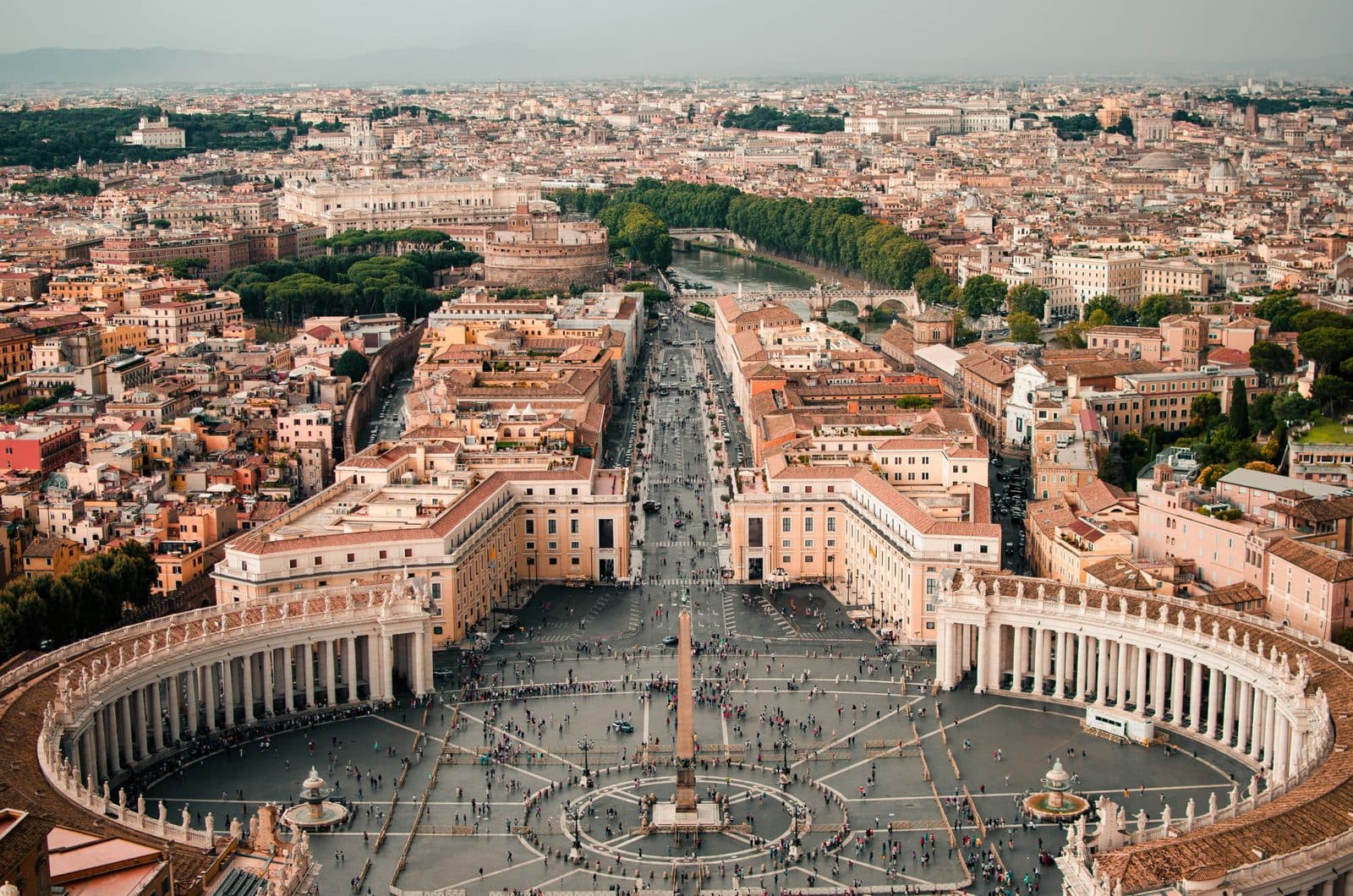
Best Architecture Walking Tours in Rome (2026)
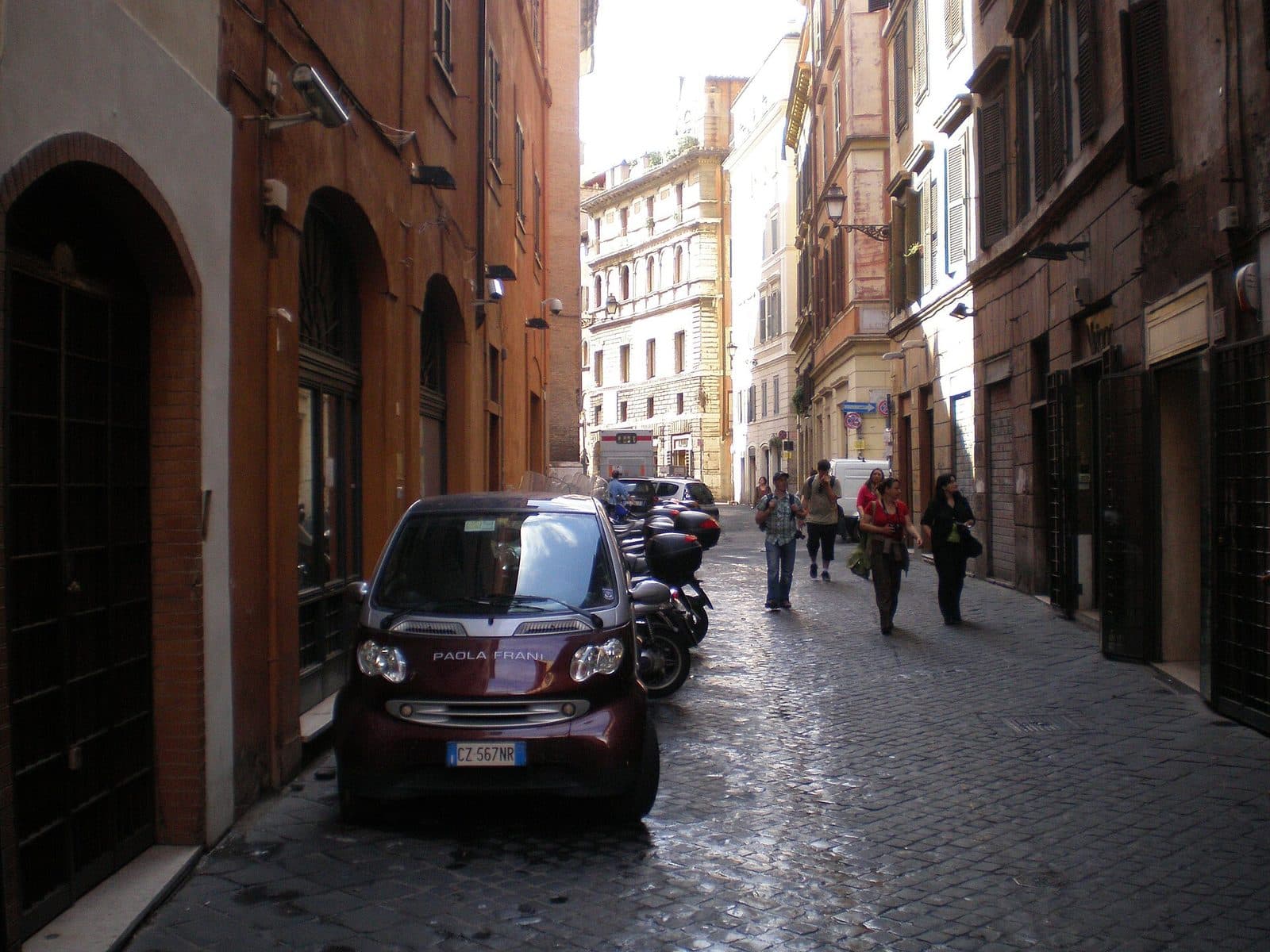
St. Peter's Square and the Surprise Rome Demolished: Borgo, the Spina and Via della Conciliazione
The Aventine's Orange Garden and Keyhole: A Fortress That Became a View
The Water Behind the Trevi Fountain: Following the Acqua Vergine to the Pincio
Palatine Hill: Where Rome Says It Was Born