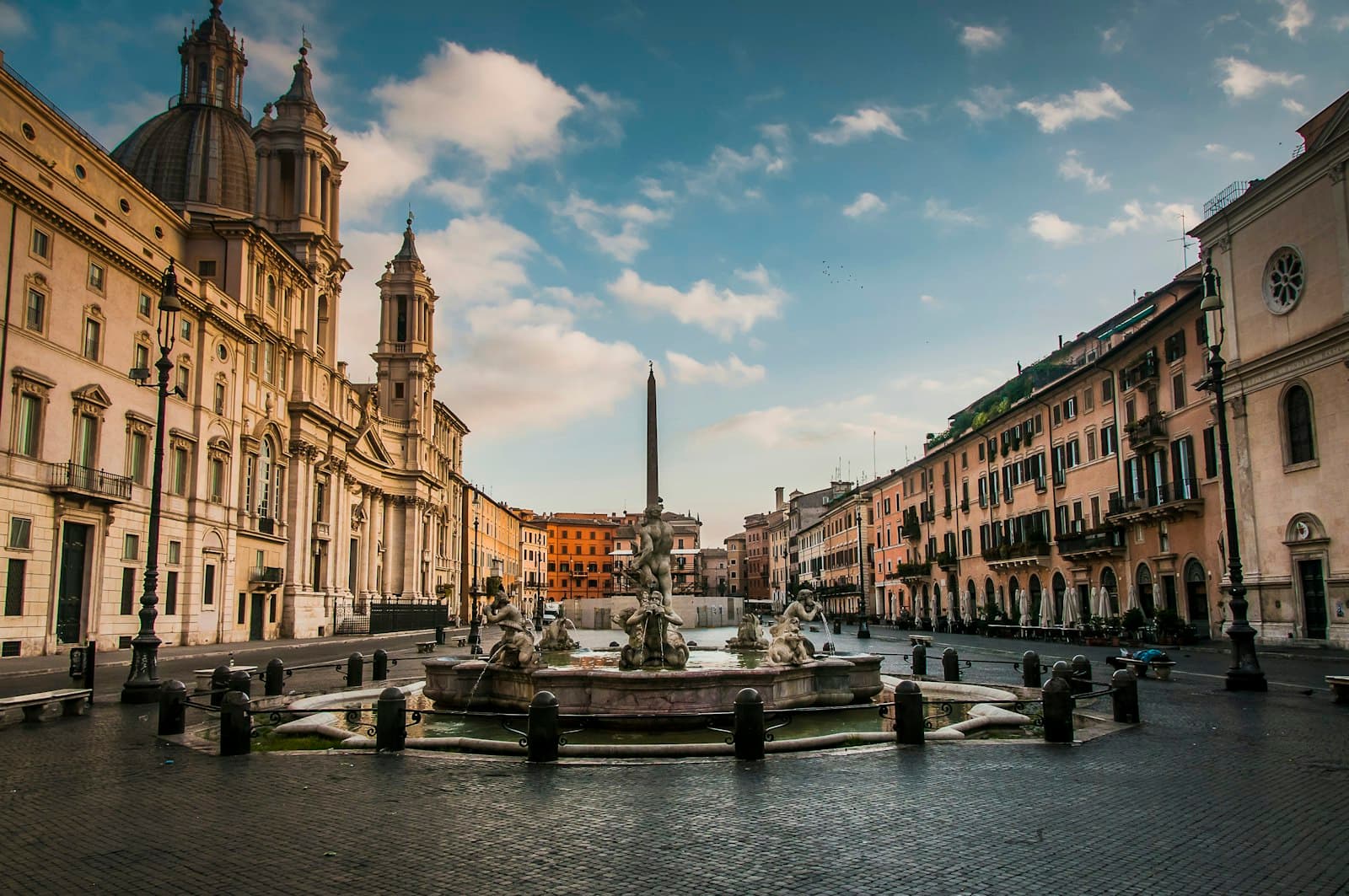
The City as a Stage
A walk through the historic center of Rome that reads Baroque squares as propaganda you can move through, where a square is a stage, an obelisk is a caption, and a fountain is a sentence about who holds the water.
4.68|90 minutes|2.2 km|6 Stops
Start
Piazza Navona: The Racetrack as Stage
1
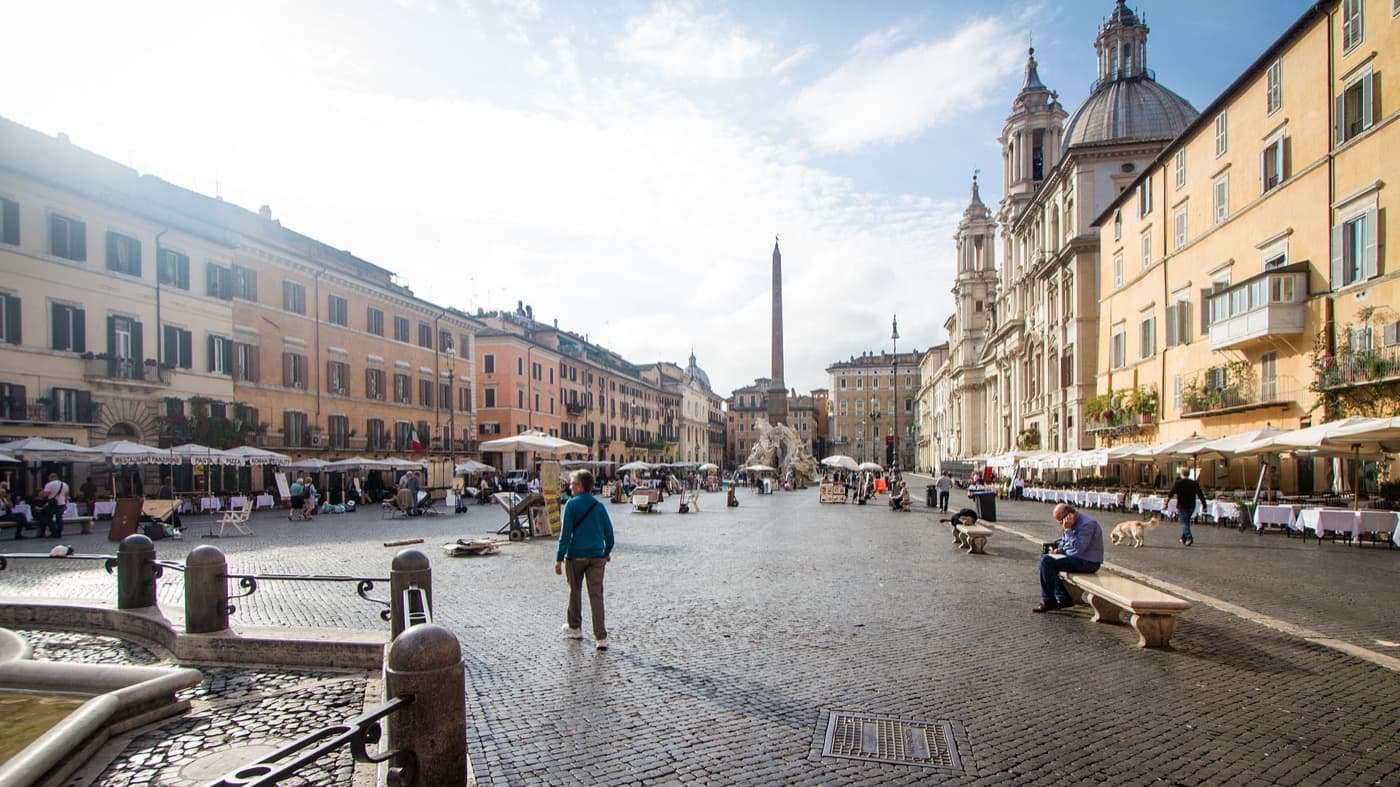
Piazza Navona: The Racetrack as Stage
An ancient stadium footprint reborn as the clearest single lesson in Baroque staging, with Bernini's fountain facing Borromini's curved church across one room of open air.
2
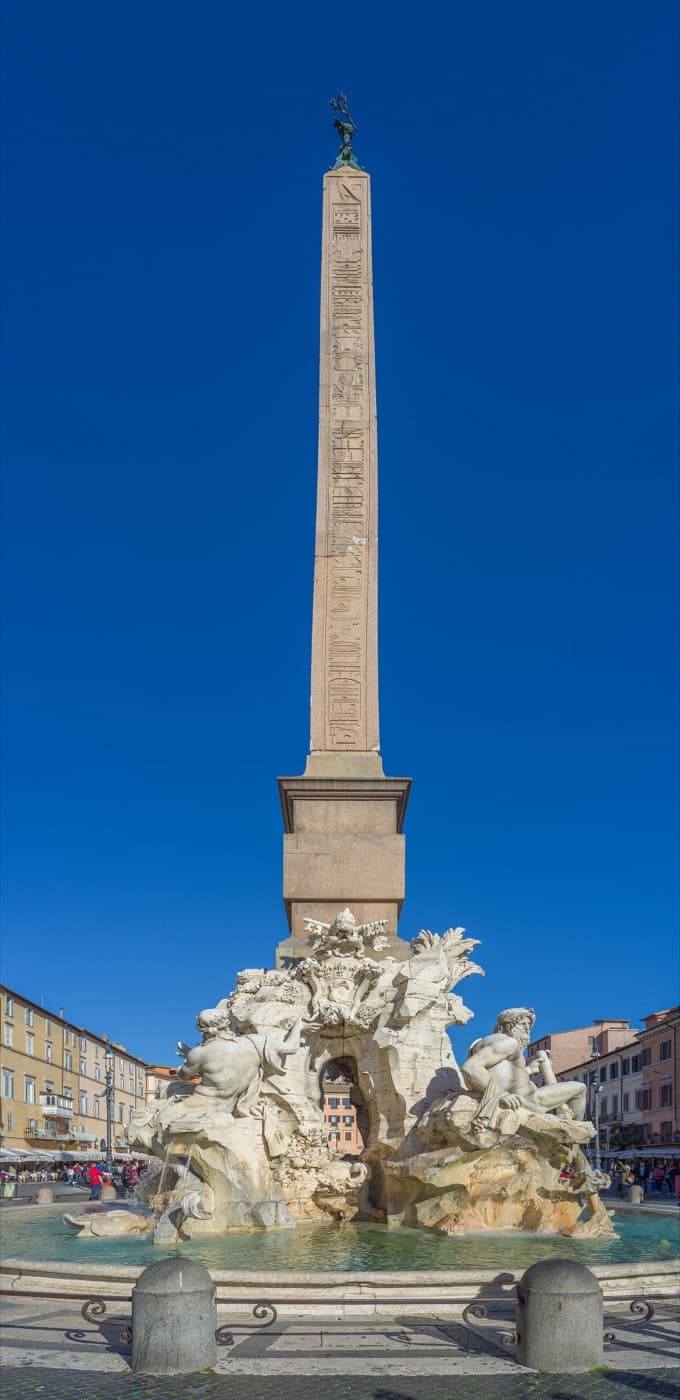
Fontana dei Quattro Fiumi: The Fountain as Sentence
Bernini's Fountain of the Four Rivers, four continents kneeling around a Christian obelisk, read as a single sentence about global papal reach.
3
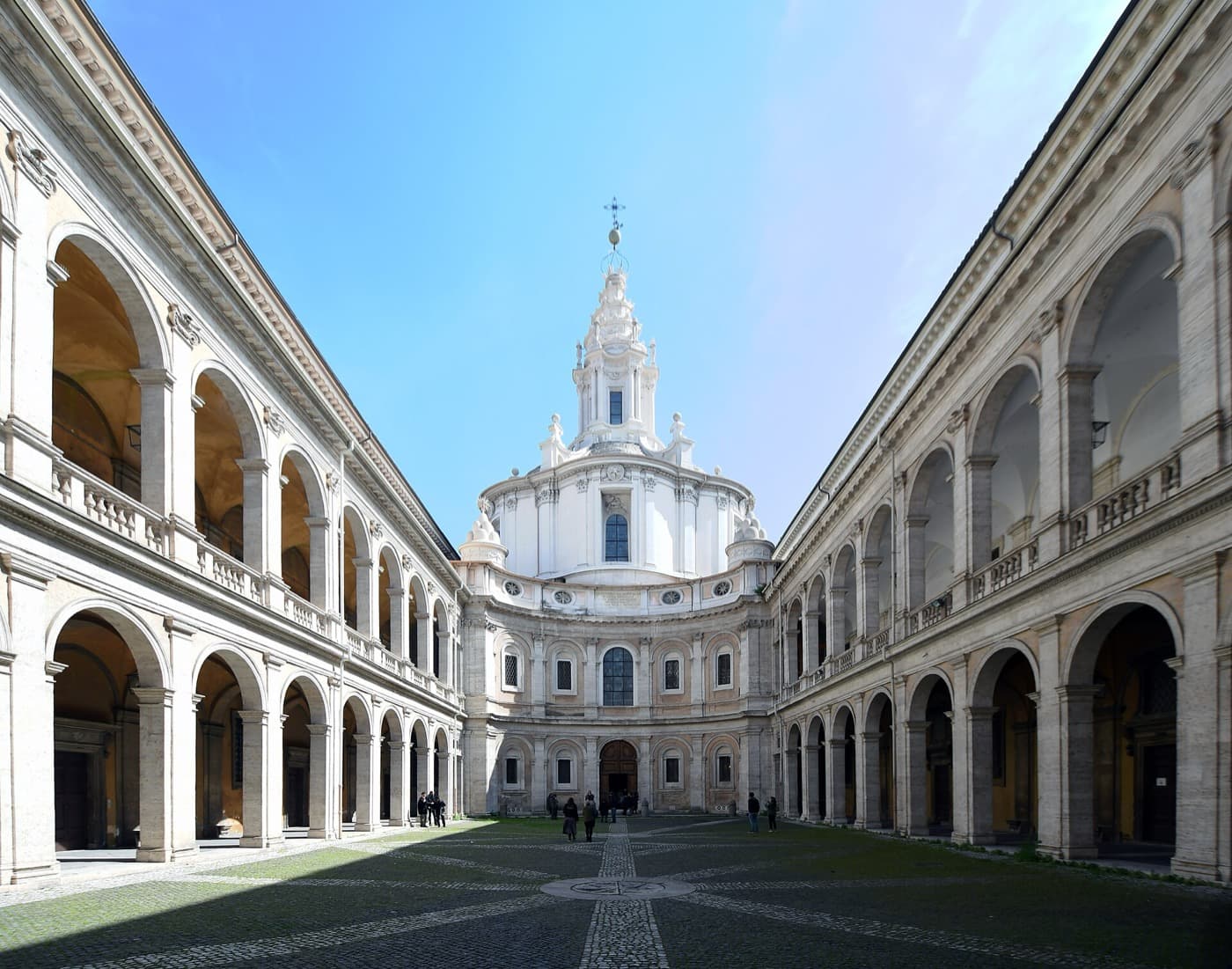
Sant'Ivo alla Sapienza: The Corkscrew
Borromini's private geometry, a spiral lantern reaching up instead of out, offered as the deliberate anti-spectacle to Bernini's crowd-pleasing fountain.
4
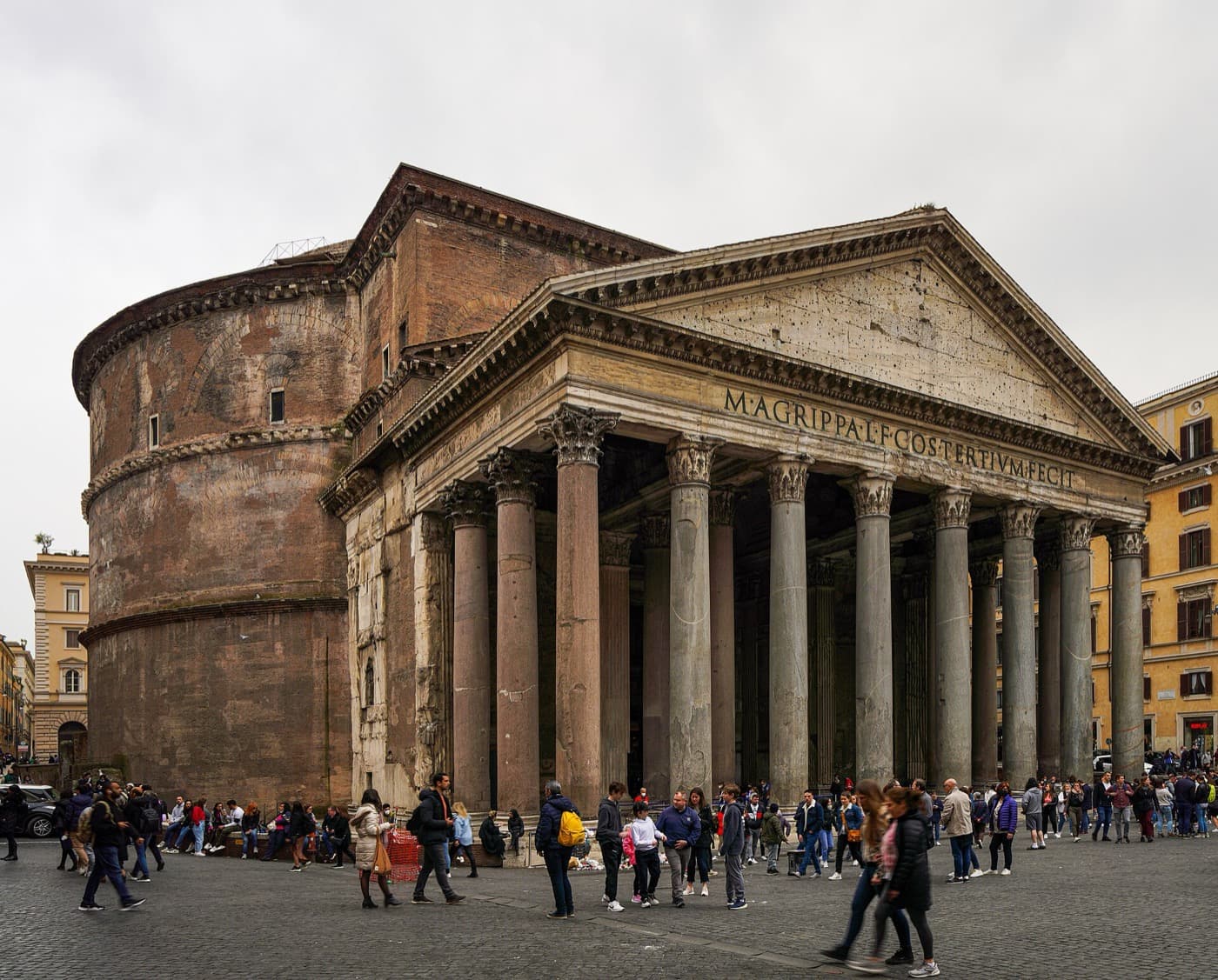
Pantheon: The Source Code
The ancient temple and its unreinforced concrete dome, the source code the Baroque was quoting and answering, read from the free square in front.
5
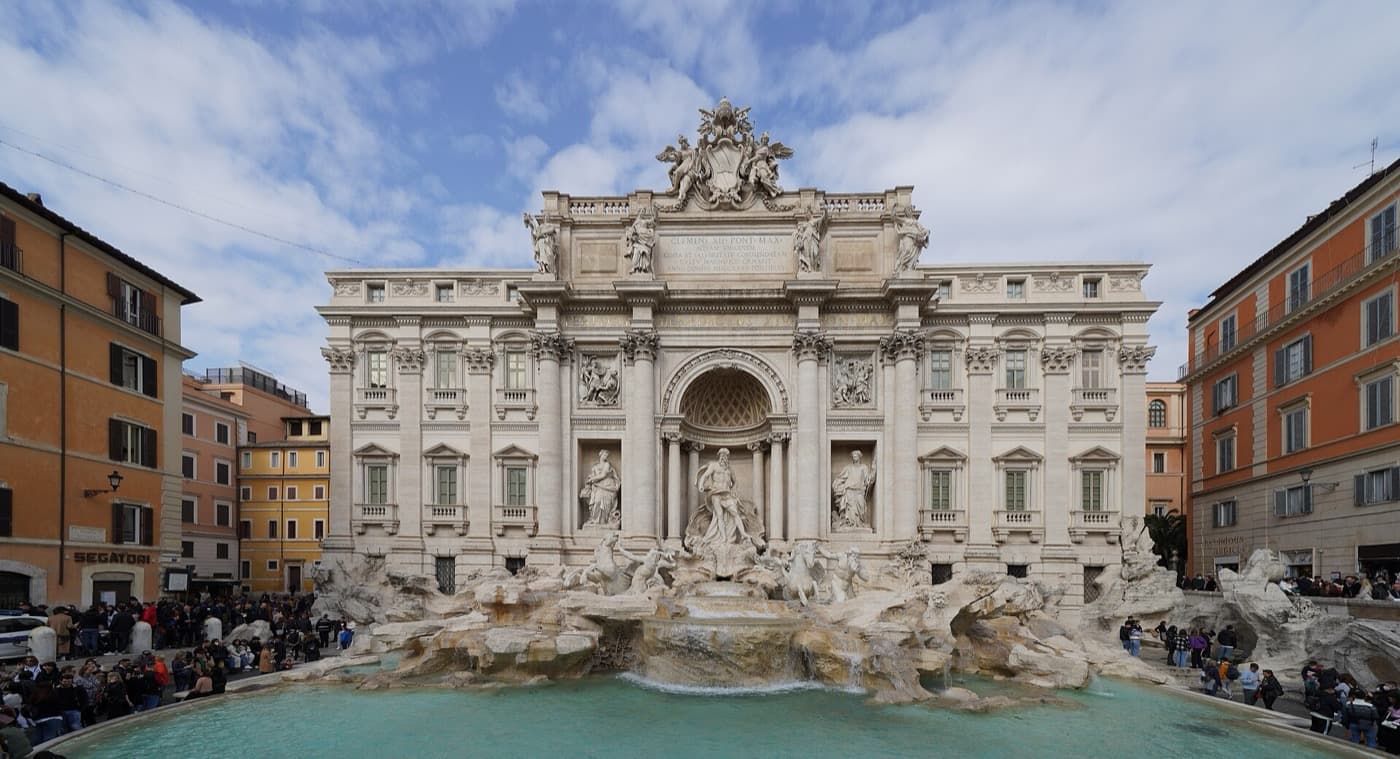
Fontana di Trevi: The Grammar Scaled Up
The largest Baroque fountain in Rome, a palace wall dissolving into rock and water, the grammar of spectacle hardened a century later into an operatic climax.
6
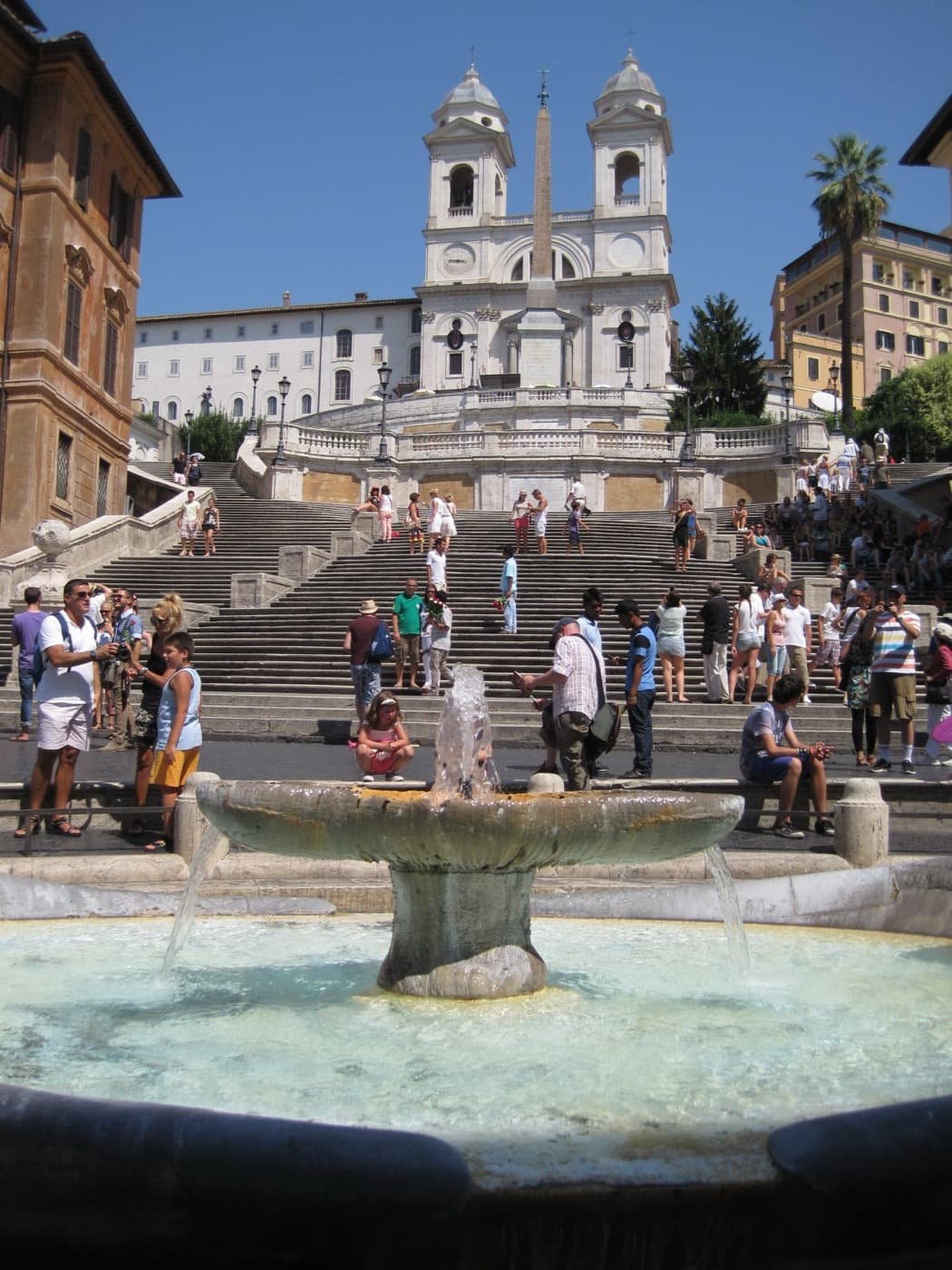
Piazza di Spagna and the Spanish Steps: Choreography Without an Altar
A staircase built as a public stage set, where Baroque staging leaves the church behind and becomes pure urban choreography.
Best Time to Visit
Early morning, soon after sunrise, gives you Piazza Navona, the Pantheon square, and the Spanish Steps nearly empty and softly lit, before tour groups and midday heat arrive. Late evening is the second-best window, when Trevi and the Steps are floodlit and cooler, and Trevi access is free after ten at night. Avoid the middle of a summer afternoon, when crowds peak and shade is scarce.
Pro Tips
- •Do this walk on foot in the order given; the whole loop is roughly two kilometres of flat historic-center streets, easy to pace to your own rhythm.
- •Wear shoes with grip. The center is paved in sampietrini, the small square cobblestones, which are uneven and slick when wet.
- •The three squares and both fountains are free to enjoy from the outside, so you can complete the entire walk without buying a single ticket.
- •Sant'Ivo alla Sapienza opens only at limited hours because the complex holds the State Archives, so treat its corkscrew lantern as an exterior view rather than a guaranteed interior visit.
- •Bring a refillable water bottle and top it up at the nasoni, the cast-iron public drinking fountains found throughout the center; the water is cold and safe.
- •Carry a light layer or scarf if you plan to step inside the Pantheon or any church, since sleeveless tops and short shorts can be turned away.
Safety & Precautions
- These squares are prime pickpocket territory, especially in the crush around Trevi and the Spanish Steps; keep bags zipped and in front of you and be wary of anyone crowding close.
- The cobblestones, curbs, and the one hundred and thirty-five Spanish Steps are uneven and can be slippery, so watch your footing and take stairs slowly.
- If you enter the Pantheon or another church, dress modestly with shoulders and knees covered; sleeveless tops and very short shorts may be refused at the door.
- Roman summers are hot with little shade in the open squares, so carry water, use the public fountains, and consider timing the walk for early morning or evening; note also that the Pantheon interior is ticketed and can require booking, and sitting on the Spanish Steps is prohibited and fined.
Gallery
Related Reading
Go deeper on what you'll see, hear, and walk through.
Overview
Best Self-Guided Walking Tours in Rome (2026)
3 min
Overview
One Day in Rome on Foot: A Walkable Morning-to-Evening Itinerary
7 min
Overview
Rome Travel Guide 2026: How Many Days, Getting Around, Costs, and Safety
7 min
Thematic
Rome Keeps Nothing New: The City Built by Reusing Itself
6 min
Companion
The Fountain That Reads Like a Sentence: Bernini's Four Rivers in Piazza Navona
6 min
Deep dive
The Pantheon: The Source Code Rome's Baroque Was Quoting
6 min
Read
What to Eat in Rome: A Local's Guide to the City's Signature Dishes
7 min