Altstadt: The City the Monks Named
90 min · 2.4 km · easy
Munich's regional food is a small, old set of dishes built around beer and the shared beer-garden bench. It centers on a white veal sausage eaten before noon, a lye pretzel, a spreadable cheese, a slab of Bavarian meatloaf, a roasted pork knuckle, and a salted radish, most of it designed to be eaten at a wooden table with a one-litre mug in front of you. Eat like a Bavarian and you will follow two clocks: the Weisswurst clock that stops at midday, and the beer-garden clock that runs from late spring through early autumn. Here is what each dish is, where it comes from, and how to order it without looking like you just got off the train.
Start with Weisswurst, and beat the noon bell
The dish most tied to Munich's identity is the Weisswurst, a pale, mild sausage of minced veal and pork fatback, seasoned with parsley, lemon, and mace, then heated in water rather than fried. The popular origin story dates it to 22 February 1857 at the Gasthaus zum Ewigen Licht on Munich's Marienplatz, where an innkeeper and butcher named Joseph Moser, known as Sepp, is said to have run out of the usual casings and improvised. That story has circulated for over a century but has never been documented as fact. A Munich city archivist even turned up an 1814 engraving of people eating Weisswurst in a beer cellar, half a lifetime before Moser's supposed invention, so treat the 1857 tale as folklore rather than record.
What is real is the ritual. Weisswurst is a morning food. The old rule, the Zwoelf-Uhr-Regel, holds that the sausage should never hear the noon church bells. It is a preservation habit from the days before refrigeration: the sausages had no preservatives and had to be eaten the same morning they were made. Order it as a Weisswurstfruehstueck, a "white-sausage breakfast," and it arrives in a bowl of the hot water used to warm it. You do not eat the skin. Bavarians either peel it off with knife and fork or "zuzeln" it, squeezing the meat straight out of the casing with their mouth. It goes with sweet mustard (suesser Senf), a soft pretzel, and a wheat beer. Ask for the mustard by name and you will be treated as a local.
The pretzel, the cheese spread, and the meatloaf roll
Hear a stop from this walk
Marienplatz and the Mariensaeule
The Bavarian pretzel, the Brezn, is not the thin crisp American kind. It is soft, chewy, deep brown, and dipped in a food-grade lye bath before baking, which gives it that mahogany skin and coarse-salt finish. In a beer garden it is a plate on its own, often split and buttered, or used as the vehicle for the region's great cheese spread.
That spread is Obatzda. It was popularized in the 1920s by Katharina Eisenreich, landlady of the Braeustueberl Weihenstephan in Freising, who served it to her morning beer guests. The classic mix is two parts aged Camembert to one part butter, worked together with sweet or hot paprika, and often a splash of beer and some onion. It is orange, rich, and made for smearing on bread or pretzel. In 2015 the European Union granted Obatzda protected status (PGI), which fixes what can carry the name.
For a fast, cheap bite, order a Leberkaessemmel: a warm slice of Leberkaese in a bread roll. The name translates as "liver cheese," but Bavarian Leberkaese by law contains no liver. It is a baked loaf of finely ground pork and beef with a crisp brown top, sliced hot and eaten as a mid-morning snack. Bakeries and butcher counters across the old town sell it by the slice.
The big plate: Schweinshaxe
When you want a proper sit-down meal in a beer hall, order Schweinshaxe: a roasted pork knuckle, slow-cooked for hours until the meat pulls off the bone and the skin turns into a shell of crackling that shatters under a knife. It usually comes with a dark beer gravy and sits next to a potato dumpling (Knoedel) and sauerkraut. It is a lot of food. It is also one of the defining plates of Munich beer-hall cooking and a fixture at Oktoberfest, where the fairground gets through tens of thousands of knuckles each year.
Beer-garden food: bring your own, salt your radish
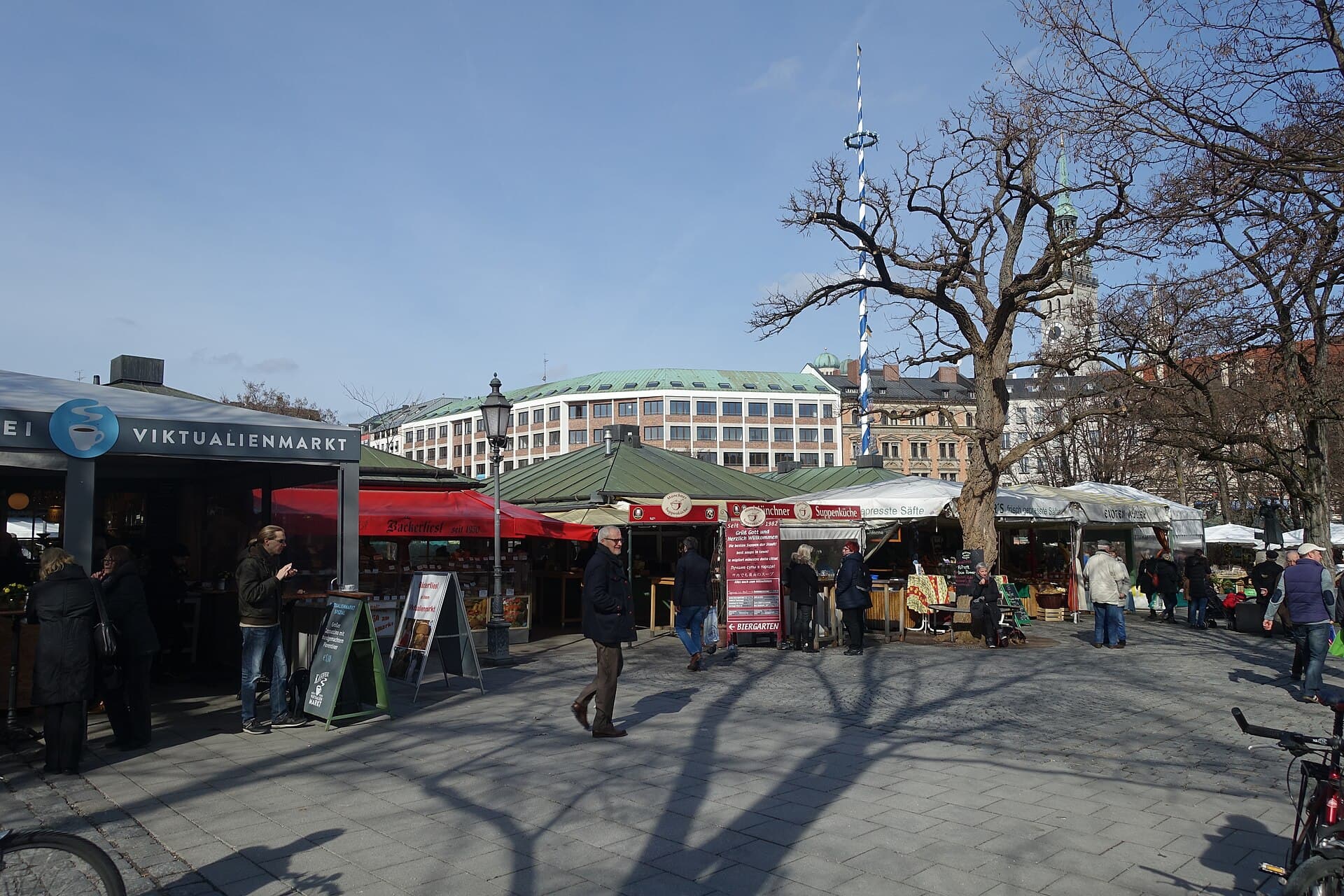
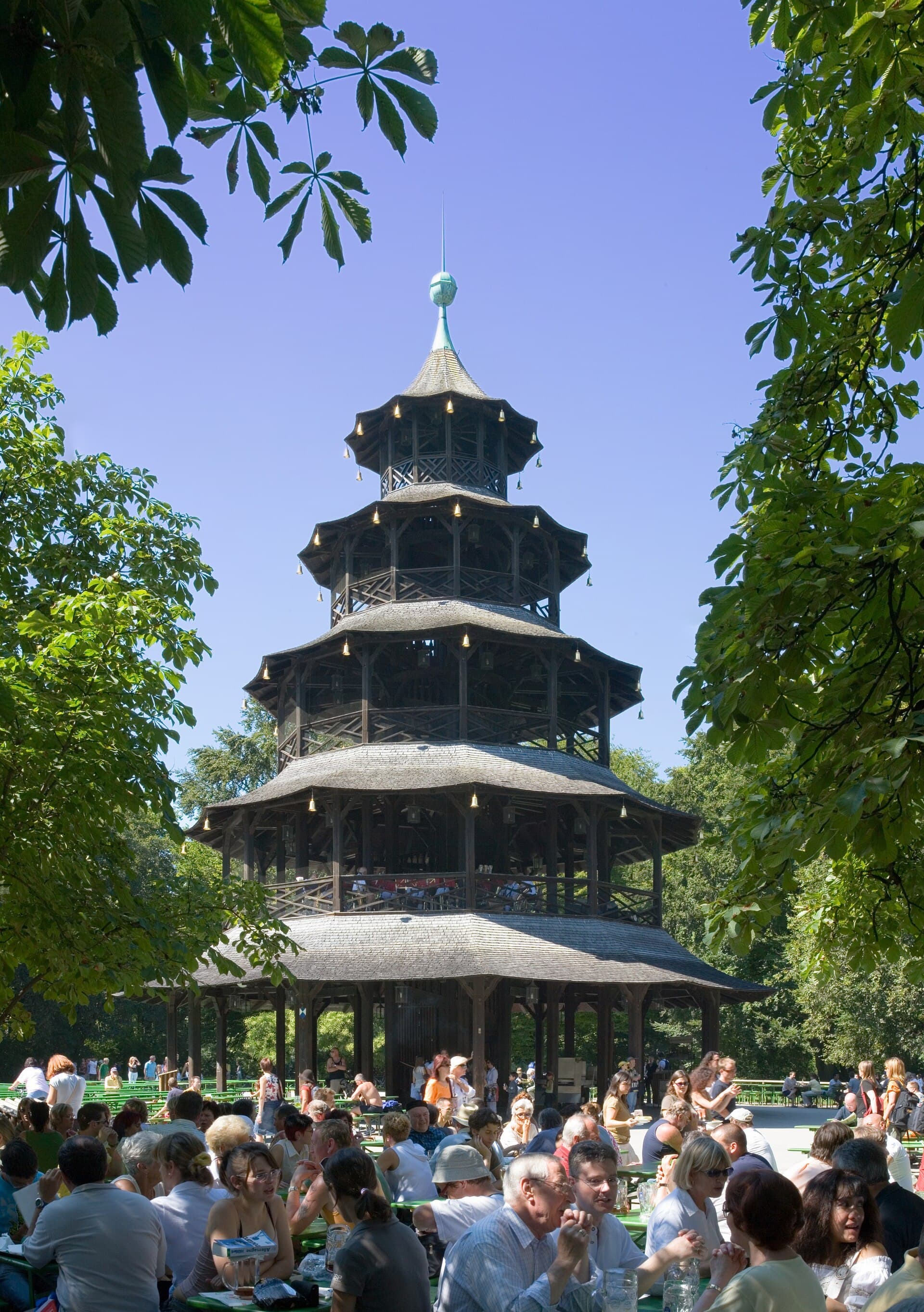
Munich's beer gardens run on a rule that is easy to miss and worth knowing. Under a decree of King Maximilian the First Joseph in 1812, brewers were allowed to serve beer from their cool cellars but could sell no food other than bread. The workaround became a right: at a traditional self-service beer garden you may bring your own food to the bench and buy only the beer. So pack bread, cheese, and fruit from the Viktualienmarkt stalls, find a table under the chestnut trees, and buy your litre there.
If you would rather buy on site, look for two things. Radi is a large white radish sliced in a long salted spiral so it fans open, meant to draw thirst and pair with beer. Steckerlfisch is a whole mackerel or trout marinated and grilled on a stick over coals at the garden's edge, a fisherman's method of cooking fish that long predates beer-garden culture. Both are beer-garden staples and both are eaten with your hands.
How the beer works, in one paragraph
The beer under all of this is shaped by the Reinheitsgebot, the Bavarian purity law adopted across Bavaria on 23 April 1516, which limited beer to water, barley, and hops. The everyday order is a Helles, a pale lager, or a Weissbier, the cloudy wheat beer that pairs with the morning Weisswurst. In a beer hall or garden it comes in a Mass, the one-litre glass mug. If a full litre is too much before lunch, ask for a Halbe, a half. And if you want it lighter and longer, a Radler is beer cut with lemon soda.
Where to eat it on foot
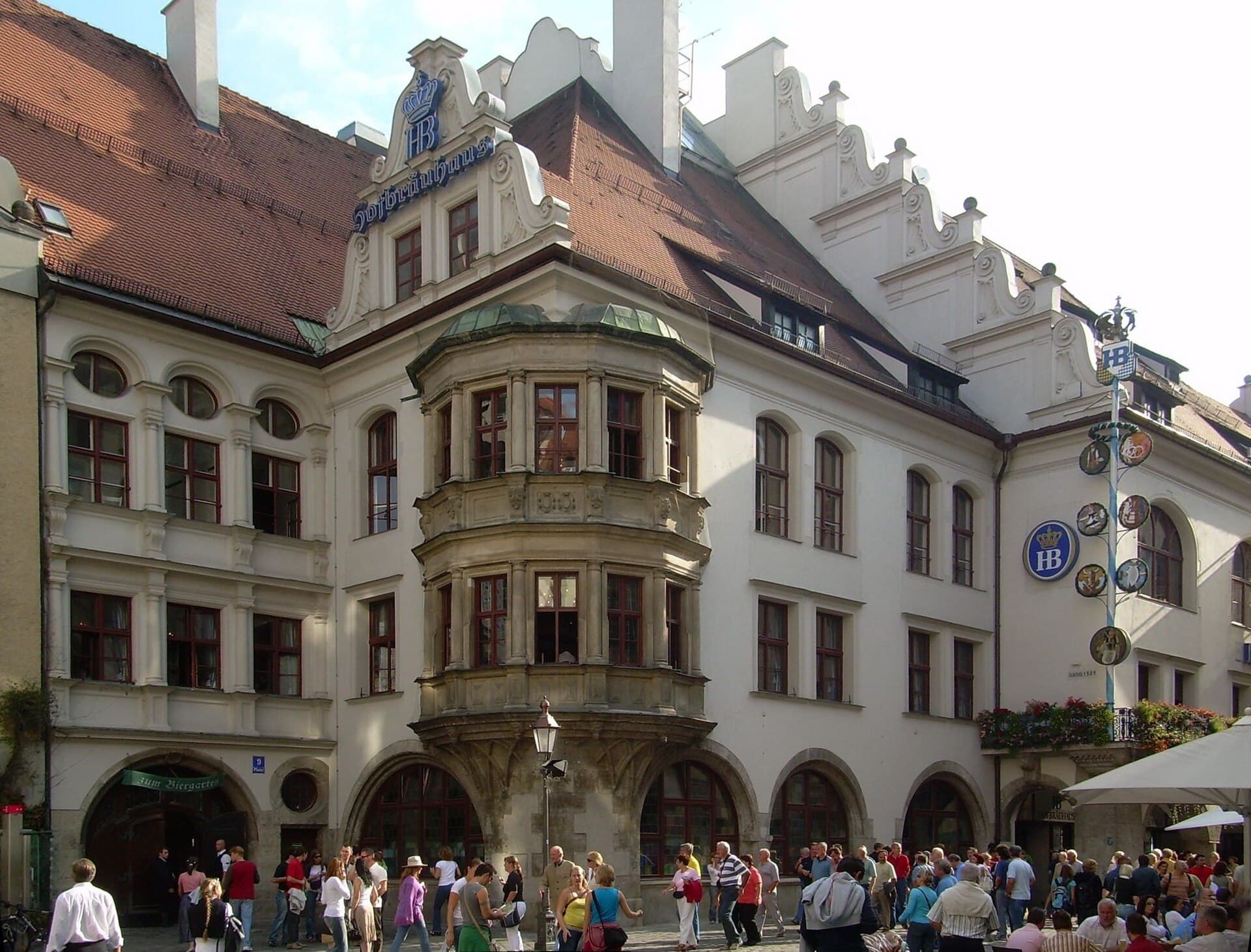
The tidy way to taste all of this is to walk it, because the dishes and the places that made them are minutes apart in the old town. The best route to the food is Munich's beer-and-leisure walk, which runs from the historic state beer hall at the Platzl through the Viktualienmarkt and out to the great royal park, tracing exactly why this city eats the way it does. If you would rather start with the medieval core where the markets and church squares sit, the old-town origins walk covers that ground. You can compare both routes and pick your day on the Munich walking tours hub, or jump straight to the city page at /germany/munich.
Order sweet mustard with your Weisswurst, beat the noon bell, bring your own bread to the bench, and drink your Helles by the litre. That is eating in Munich, done right.
Sources
Frequently asked questions
- What food is Munich most famous for?
- Munich is most associated with Weisswurst, a mild veal-and-pork white sausage traditionally eaten before noon with sweet mustard, a pretzel, and wheat beer. Other regional staples are the soft lye Brezn pretzel, Obatzda cheese spread, Leberkaese, and Schweinshaxe roasted pork knuckle. Most of it is beer-hall and beer-garden food.
- Why is Weisswurst only eaten before noon?
- The custom comes from the days before refrigeration, when the preservative-free sausages had to be eaten the same morning they were made. The old rule, sometimes called the twelve-o-clock rule, says a Weisswurst should not hear the noon church bells. Many places now serve it all day, but ordering it as a morning Weisswurstfruehstueck is the traditional way.
- What is Obatzda made of?
- Obatzda is a Bavarian beer-garden cheese spread of aged soft cheese, usually Camembert, blended with butter, sweet or hot paprika, and often a splash of beer and some onion. It was popularized in the 1920s by Katharina Eisenreich at the Braeustueberl Weihenstephan in Freising. In 2015 it received EU protected status, and it is eaten on bread or pretzels.
- Can you bring your own food to a Munich beer garden?
- At traditional self-service beer gardens, yes. The custom traces to an 1812 decree of King Maximilian the First Joseph that let brewers serve their beer but limited the food they could sell, so patrons brought their own. You can buy bread, cheese, and radish from a market like the Viktualienmarkt and bring it to the bench, buying only the beer on site. This does not apply in table-service restaurant sections.
- What is the difference between Schweinshaxe and Leberkaese?
- Schweinshaxe is a roasted pork knuckle, slow-cooked for hours with crackling skin and served with beer gravy, dumplings, and sauerkraut as a full meal. Leberkaese is a baked loaf of finely ground pork and beef, sliced hot and eaten as a quick snack in a bread roll called a Leberkaessemmel. Despite its name, Bavarian Leberkaese contains no liver.
- How do you order beer in Munich?
- The everyday choices are Helles, a pale lager, and Weissbier, the cloudy wheat beer that pairs with morning Weisswurst. In beer halls and gardens it comes in a Mass, a one-litre mug; ask for a Halbe if you want a half-litre. A Radler is beer mixed with lemon soda for a lighter, longer drink.
Ready to experience it?
Altstadt: The City the Monks Named
90 min · 2.4 km · easy
More from Munich
Explore more at your own pace.
The City the Monks Named: How Munich Turns Privilege Into Public Life
Alter Hof: Where a Burned Bridge Founded Munich
The Chinese Tower Beer Garden: Munich's Whole Idea in One Clearing
Hofbräuhaus am Platzl: How a Duke's Private Brewery Became Munich's Public Beer Hall
Königsplatz, Munich: The Athens on the Isar the Nazis Paved in Granite