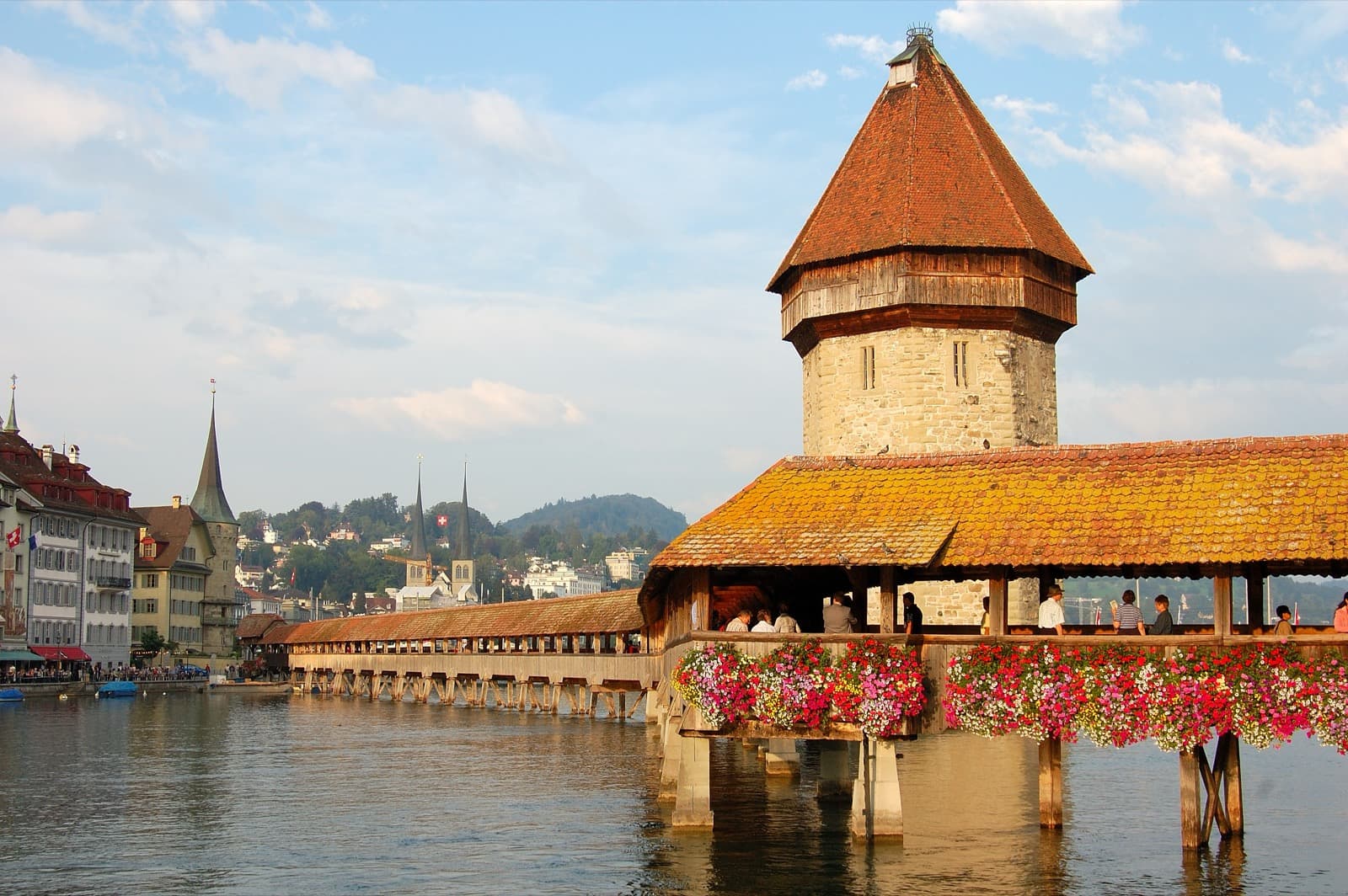
Old Town: The Chapel Bridge and the Painted Squares
50 min · 1.1 km · easy
Eat like Lucerne locals by ordering the city's own historic pastry, the Chügelipastete, then working outward to Alpine comfort food, fresh lake fish, and pear-sweet baking. Lucerne sits where the River Reuss leaves the Lake of the Four Forest Cantons, and its regional cooking follows that geography: a rich guild-table meat pie from the old town, herders' pasta from the pastures above, perch and whitefish from the lake below, and Lebkuchen sweetened with the pears of central Switzerland. This guide tells you what each dish is, where the tradition comes from, and how to order and pay without feeling like a tourist.
Start with the Chügelipastete, Lucerne's own dish
If you order one thing that is specifically Lucerne rather than generally Swiss, make it the Luzerner Chügelipastete (in local dialect, Lozärner Chügelipastete). It is a puff-pastry vol-au-vent filled with a creamy fricassee of veal and mushrooms, studded with small balls of pork-and-veal sausage meat (the "Chügeli," meaning little balls, which give the dish its name) and raisins soaked in brandy or cognac. The result is savory, warm, and slightly sweet at the edges, usually served with peas or spring vegetables.
The pastry dates from the eighteenth century and is one of the few historical specialities unique to Lucerne. It began as an upper-class luxury tied to the city's guilds. Traditionally it is the highlight of the annual Bärteli meal of the Saffron Guild (Zunft zu Safran) on the second of January. You will also see it called the Fritschipastete, after Fritschi, one of the central figures of Lucerne's carnival, so the dish carries both guild history and carnival identity in its two names. Because it is elaborate, many restaurants serve it as a sit-down main rather than a quick lunch. Ask whether it is on the menu that day, since some kitchens make it seasonally or by request.
Älplermagronen: the herders' comfort food
Hear a stop from this walk
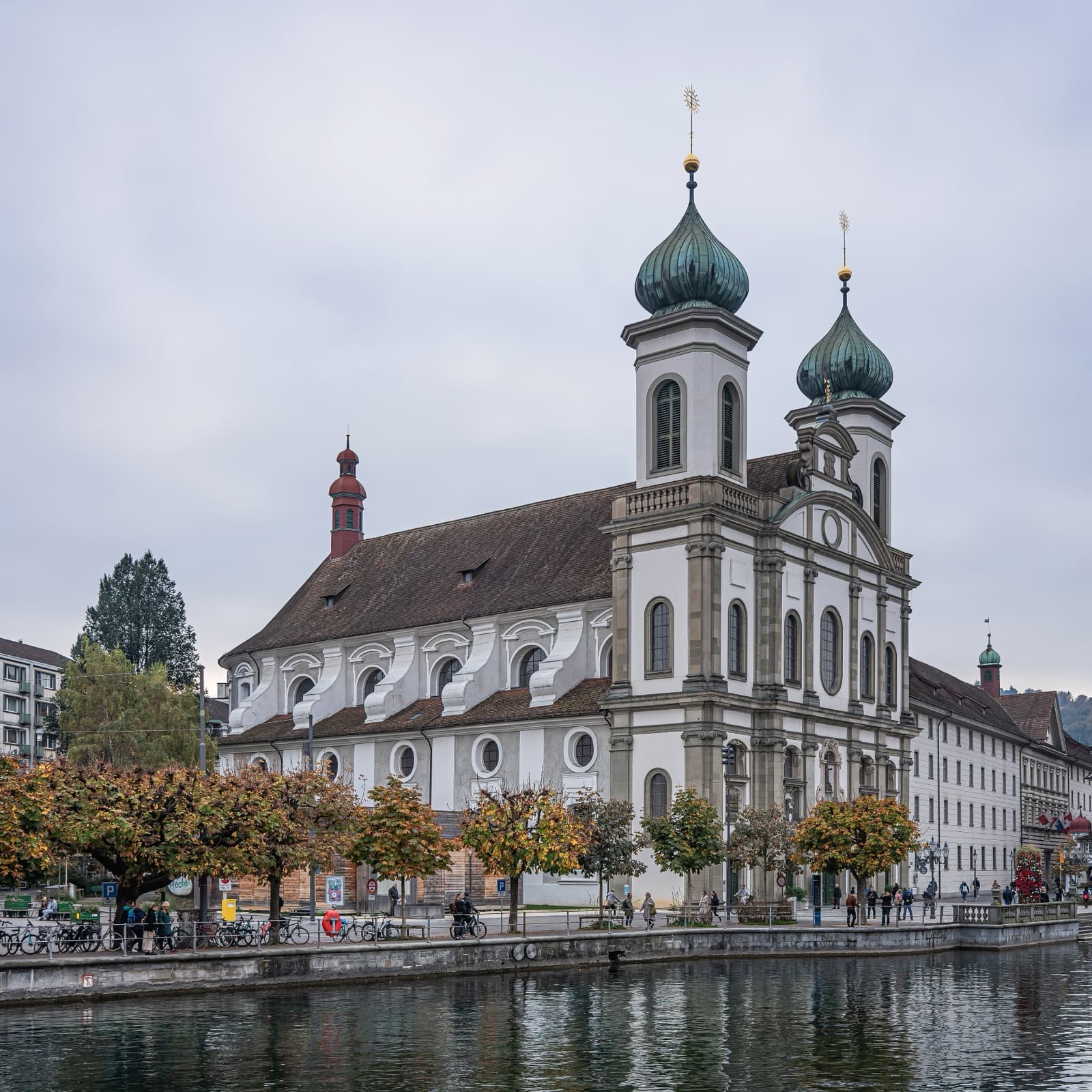
The Jesuit Church: Baroque Lucerne on the River
The dish you are most likely to see everywhere in and around Lucerne is Älplermagronen, sometimes described as Swiss macaroni and cheese but heartier. It combines pasta and diced potatoes boiled together, then bound with cream, grated melting cheese, and fried onions on top. It is traditionally served with a bowl of apple sauce (Apfelmus) on the side, and the sweet-savory contrast is the point, so do not skip the apple sauce even if it looks unusual.
The name tells the story: "Älpler" means Alpine herder and "Magronen" comes from the Italian maccheroni. Dried pasta suited herders because it was light, energy-dense, and kept well when carried up to high summer pastures, where they mostly had milk and cheese on hand. Lucerne has a direct claim on this history: Switzerland's first pasta factory opened in the city in 1838. Herders stretched the pasta with local potatoes, cream, and cheese into a filling one-pot meal, which is the dish you can order today.
Fish from the lake: Egli and Felchen
Because Lucerne sits on the lake, freshwater fish is a genuine local specialty, not a menu afterthought. Look for two names. Egli is perch, usually served as small fillets fried golden in butter (Eglifilet), often with tartar sauce, lemon, and potatoes or a simple salad. Felchen, the whitefish, is milder and appears mostly in the warmer months. On Lake Lucerne (the Vierwaldstättersee) the local whitefish is also called Balchen, and it is caught and prepared as a regional specialty around the lake.
If a menu lists the fish as coming from the Vierwaldstättersee or a named nearby lake, that is your signal it is local rather than imported. A lakeside table with a plate of butter-fried perch is one of the most reliably regional meals you can have in the city, and it pairs naturally with the waterfront you walk on the Lucerne walking tours.
Sweet Lucerne: Lebkuchen and Birnweggen
For something to carry away, central Switzerland's pears run through the local baking. Luzerner Lebkuchen is a soft spiced cake whose two headline ingredients are cream and concentrated pear juice (Birnenhonig, literally "pear honey"), plus a closely guarded spice blend. It is richer and moister than the hard gingerbread the word "Lebkuchen" might suggest, and it is often eaten as a dessert with a spoon of lightly whipped cream. City confiseries such as Confiserie Bachmann sell it as a recognized Lucerne speciality, so a bakery counter is an easy place to try a slice.
The related Birnweggen (also called Birnbrot) is a dense pastry roll filled with dried pears, plus raisins, walnuts, and other dried fruit. It is popular across central Switzerland and travels well, which makes it a practical thing to buy for the road. Both are everyday-priced counter items rather than restaurant dishes, so you can taste your way through a bakery without committing to a full meal.
How to order and pay like a local
A few habits smooth the experience. Service is included in Swiss restaurant prices by law, a rule in place since 1974, so the number on the menu is essentially the number you pay and there is no expected fifteen to twenty percent tip. Locals typically just round up: to the nearest franc on a small bill, or to a convenient round figure on a larger one, and only when the service was good. Anything more is optional and never required.
Prices are in Swiss francs, not euros, so carry or use cards in CHF. Cards and mobile payment are widely accepted, though a few small bakeries or market stalls may prefer cash for a single Lebkuchen or pastry. Lunch is generally served earlier than in southern Europe, roughly from late morning, and some kitchens pause between lunch and dinner service, so a mid-afternoon hot meal is not guaranteed. If you want the Chügelipastete specifically, a quick call ahead or an early arrival helps, since it is a made-to-order dish rather than fast food.
Fit the food to a self-guided walk
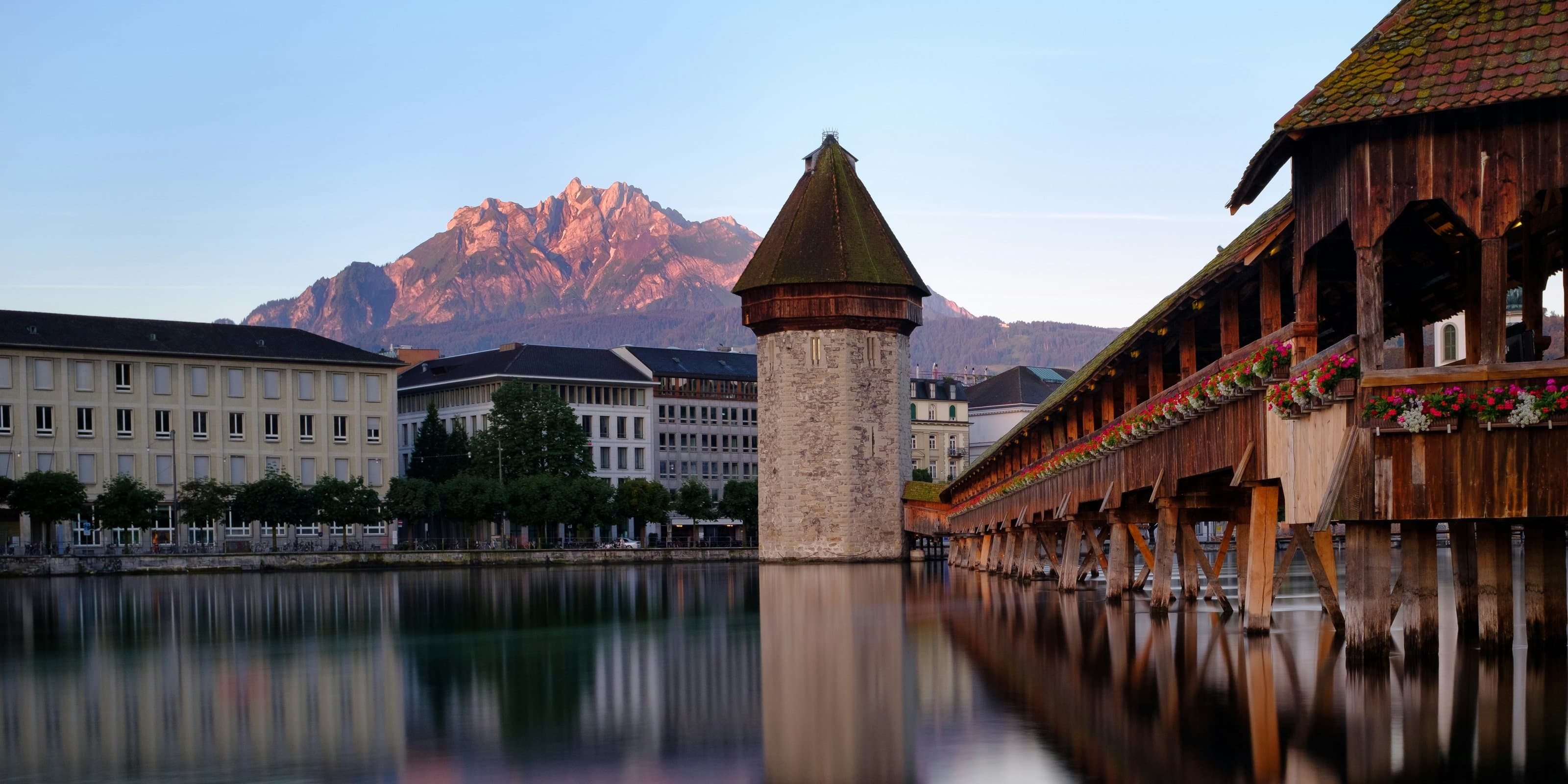
Lucerne's compact old town makes it easy to build a day around both walking and eating. The riverfront and painted squares on the Chapel Bridge and Painted Squares route put you steps from old-town restaurants and bakeries, so you can break for perch or a slice of Lebkuchen between stops and go at your own pace. Because a self-guided audio tour has no fixed group timetable, you can linger over a proper sit-down Chügelipastete lunch, then pick the walk back up at the next stop. Browse the routes on the Lucerne walking tours hub and see the full city at /switzerland/lucerne.
Sources
Frequently asked questions
- What is the traditional dish of Lucerne?
- The signature Lucerne dish is the Luzerner Chügelipastete, a puff-pastry vol-au-vent filled with a creamy veal and mushroom fricassee, small balls of pork-and-veal sausage meat, and brandy-soaked raisins. It dates from the eighteenth century and is one of the few historical specialities unique to Lucerne. It is traditionally the highlight of the Saffron Guild's Bärteli meal on the second of January.
- What is Älplermagronen and what is it served with?
- Älplermagronen is an Alpine comfort dish of pasta and potatoes boiled together, then finished with cream, melted cheese, and fried onions. It is traditionally served with apple sauce on the side, and the sweet-savory pairing is part of the dish. The name means herders' macaroni, reflecting its origin as filling food on high summer pastures.
- What fish should I order in Lucerne?
- Look for Egli, which is perch usually served as small fillets fried golden in butter, and Felchen, the milder whitefish that appears mostly in warmer months. On Lake Lucerne the local whitefish is also called Balchen and is caught and prepared as a regional specialty. Menus that name the Vierwaldstättersee or a nearby lake are serving genuinely local fish.
- Do you tip in restaurants in Lucerne?
- Service has been included in Swiss restaurant prices by law since 1974, so the menu price is essentially what you pay and no large tip is expected. Locals simply round up, to the nearest franc on a small bill or to a convenient round figure on a larger one, and only for good service. Anything beyond that is optional.
- What sweet foods is Lucerne known for?
- Lucerne is known for Luzerner Lebkuchen, a soft spiced cake made largely with cream and concentrated pear juice known as Birnenhonig, often eaten as a dessert with whipped cream. The related Birnweggen, or Birnbrot, is a pastry roll filled with dried pears, raisins, and walnuts. Both are counter items sold at city bakeries and confiseries.
- Does Lucerne use euros or Swiss francs?
- Lucerne uses Swiss francs (CHF), not euros. Cards and mobile payment are widely accepted in restaurants, though a few small bakeries or market stalls may prefer cash for a single pastry. Plan and budget in Swiss francs rather than euros.
Ready to experience it?
Old Town: The Chapel Bridge and the Painted Squares
50 min · 1.1 km · easy
More from Lucerne
Explore more at your own pace.
Lucerne Travel Guide: How Many Days, Getting Around, and When to Visit
The Painted Lake Town: How Lucerne Reads on Foot
The Chapel Bridge Burned in 1993. What Lucerne Rebuilt Tells You How to Read the Whole Old Town
The Dying Lion of Lucerne: What the Monument Really Mourns
The Jesuit Church of Lucerne: Switzerland's First Large Baroque Church, Built as an Argument