Old Town: The Chapel Bridge and the Painted Squares
50 min · 1.1 km · easy
Two full days give you Lucerne at a walkable pace, and three to four days let you add a lake steamer and a mountain like Pilatus or Rigi without rushing. The old town is compact and almost entirely car-free, so you plan mostly around trains, boats, and your own two feet rather than taxis or a rental car. This guide covers how long to stay, how to get around, when to come, an honest word on safety, and roughly what things cost, so you can point your feet at the covered bridges and the painted squares and skip the parts that do not call to you.
How many days in Lucerne
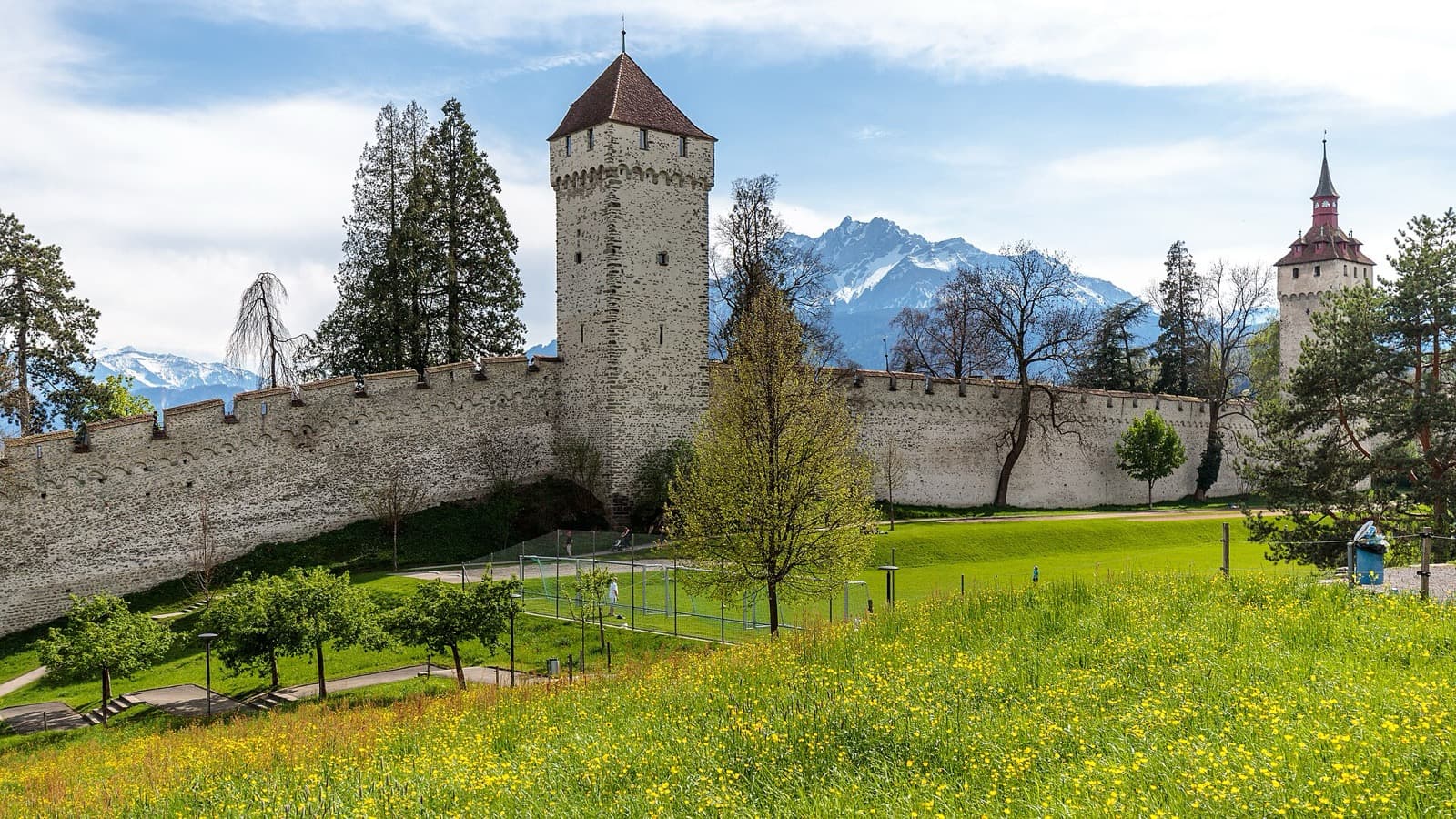
For a first visit, two days covers the city itself: the old town on both banks of the River Reuss, the two covered bridges, the Lion Monument, and the Musegg Wall. Add a third and a fourth day if you want a boat trip on Lake Lucerne or a mountain excursion up Mount Pilatus or Mount Rigi, both of which pull you out of the city for most of a day. A single day is enough to walk the core and cross the Chapel Bridge, but it leaves no room for the lake or the peaks, which are much of why people come to central Switzerland in the first place.
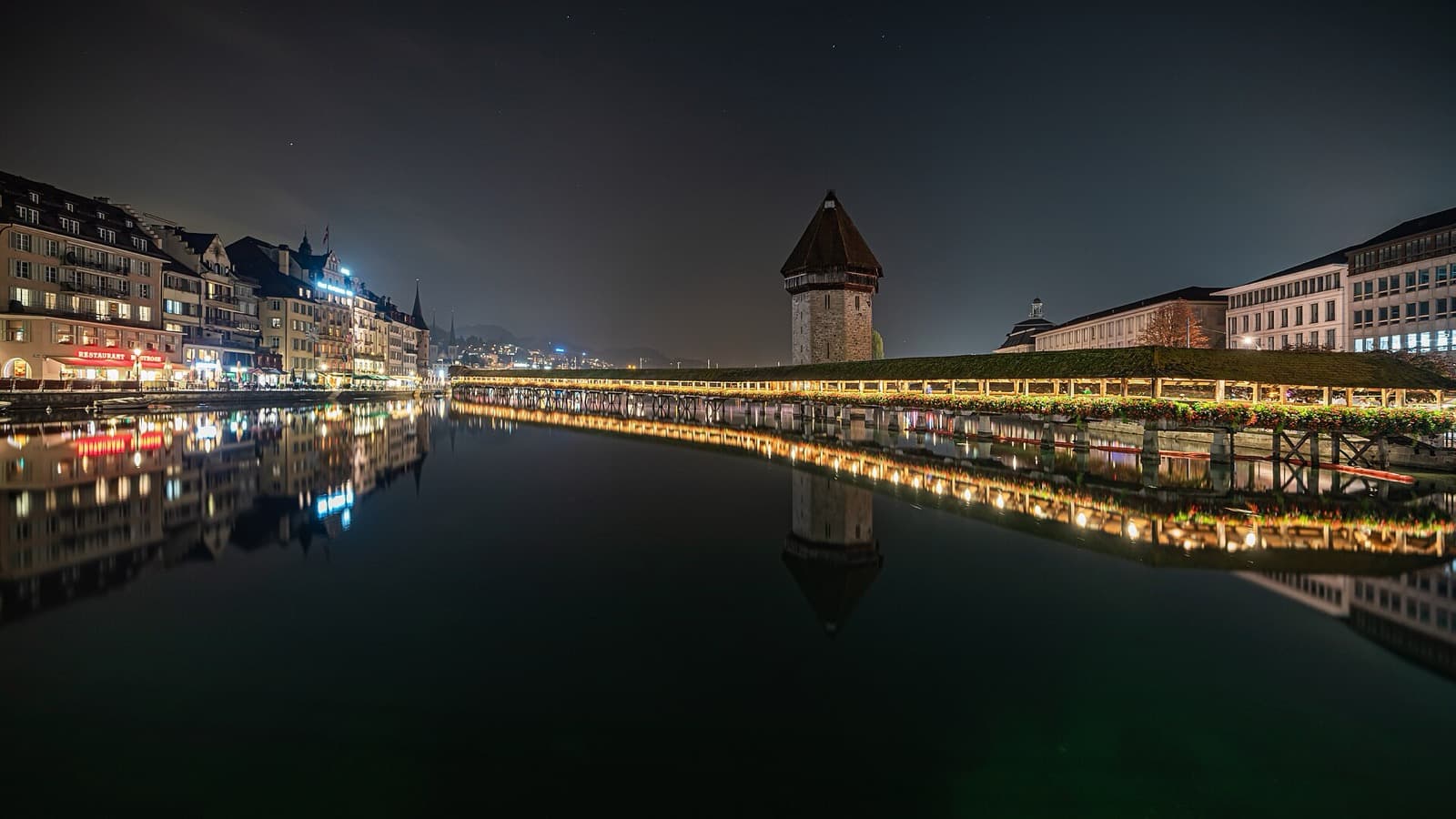
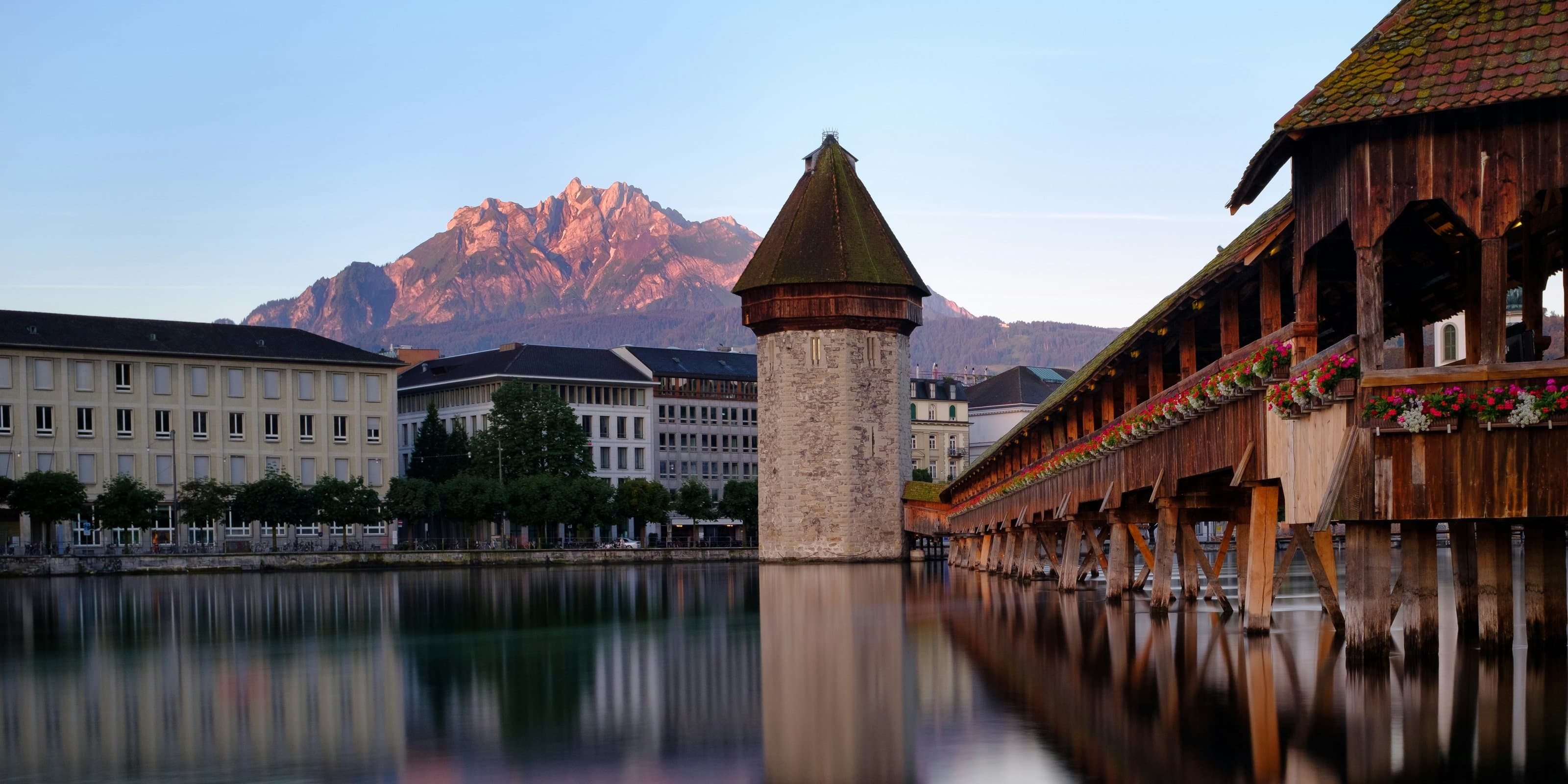
The city core is small enough that the walking is the point. Our two self-guided audio walks split it cleanly. The Old Town: The Chapel Bridge and the Painted Squares route is a loop of about 1.1 kilometres and roughly 50 minutes at an unhurried pace, reading the medieval river town from the reborn Chapel Bridge to the Spreuer Bridge and its Dance of Death, crossing each bridge once. The Lion Monument and Musegg Wall route runs longer, about 4.7 kilometres and a little under two hours, climbing to the dying lion carved in the cliff, the medieval wall of towers, and the lakefront where the steamers leave. Together they fill a comfortable day and a half of the city on foot. Browse both at Lucerne walking tours.
How to get around Lucerne
Hear a stop from this walk
The Jesuit Church: Baroque Lucerne on the River
Walk. The old town is pedestrianized and every stop on both of our routes is reachable on foot, from the Chapel Bridge to the Weinmarkt to the Lion Monument on the hill above. Distances are short, and the covered bridges and painted squares are things you want to slow down for anyway.
For the few longer hops, the city runs an efficient network of buses and local trains. If you stay overnight in a registered hotel, hostel, or holiday apartment in the city, you receive a Lucerne Visitor Card at check-in, usually digitally. It gives free second-class travel on buses and trains within the city zone for the length of your stay, and discounts at several museums. It does not cover the lake boats, which are ticketed separately. The card cannot be bought on its own: it comes with paying the visitor's tax on an overnight stay.
Arriving is simple because everything funnels through the lakeside main station. Lucerne has no airport of its own. Most travelers fly into Zurich Airport and take a direct train, which runs frequently and takes a little over an hour. From Zurich's main station the ride is shorter, in the range of 40 to 50 minutes. Trains are operated by the national railway, SBB, and run often through the day, so you rarely need to plan tightly around a single departure.
The lake steamers are their own way of getting around and a sight in themselves. Five restored paddle steamers still work Lake Lucerne, and they run to fixed timetables from the quays beside the station, so if you want to ride one or simply watch one leave, check the boards before you settle into the old town.
Best time to visit Lucerne
Come between April and October for the reliable weather that makes the lake, the ramparts, and the mountains worth the trip. Summer, June through August, brings the warmest days, with temperatures roughly between 13 and 24 degrees Celsius, long daylight, and the fullest boat and mountain-railway timetables. It is also the busiest stretch, and afternoon thunderstorms are common, so an early start beats both the crowds and the rain.
Spring and autumn are the quieter reward. September and October tend to bring the clearest, most settled air over the lake, which is your best chance of seeing Mount Pilatus and Mount Rigi from the Musegg Wall towers. Crowds thin, prices ease a little, and the light on the painted squares is lovely. Note that the Musegg Wall towers keep a season: they stand open from the first of April to the first of November, roughly eight in the morning to seven in the evening, and close for winter after that. Winter itself can be crisp and clear but cold along the open quays, and the ramparts are shut.
Whatever the season, walk the old town early in the day or in the last hours of daylight. The Chapel Bridge and the lakefront fill up around midday in high summer, and both empty out at the edges of the day, which is when the covered bridges and the reflections in the Reuss are at their best.
Is Lucerne safe
Lucerne is a very safe city, and violent crime is rare. You can walk the old town, the quays, and the bridges day and evening with ordinary care. The one honest caution is petty theft in the crowded tourist spots: pickpocketing does happen around the main station, the Chapel Bridge, the boat piers, and the busiest lakefront streets, and it picks up in summer when those places are densest.
The precautions are the usual urban ones and they are enough. Keep your bag zipped and in front of you in a crowd, do not leave a phone sitting on a cafe table, use the hotel safe for what you do not need, and stay aware where visitors cluster to photograph the water. None of this should change your plans. It simply means treating the packed viewpoints the way you would any popular sight, then relaxing into a city that is genuinely calm and orderly.
Budget and what things cost
Switzerland is expensive, and Lucerne is no exception. Plan in Swiss francs, not euros: many kiosks, towers, and older ticket machines take cash francs more readily than foreign cards, and prices are quoted in francs everywhere.
The good news is that the best of the old town is free. Both covered bridges, the Chapel Bridge and the Spreuer Bridge, are open-air and cost nothing to cross. The painted squares, the Weinmarkt, Hirschenplatz, and Kornmarkt, are public and free to wander. The Jesuit Church and the Hofkirche court church are working churches you can enter without a fee, and the Lion Monument is a free outdoor memorial. Walking the Musegg Wall ramparts and climbing its open towers in season is free as well.
The paid extras are where the francs go. The Glacier Garden beside the Lion Monument charges a museum admission of a little over 20 francs for adults, with a reduced rate for children. Lake steamer cruises are ticketed by distance and fare. Mountain excursions up Pilatus or Rigi are a bigger outlay, priced for the cog railways and cable cars. If you plan to combine several of these, a regional travel pass can be worth pricing against paying per attraction, since some passes cover boats, mountain railways, and museum entry together. Our self-guided audio walks are a low-cost way to give the free half of the city real depth, so you spend on the boats and the peaks rather than on a guided group.
Sources
Frequently asked questions
- How many days do you need in Lucerne?
- Two days cover the city itself: the old town on both banks of the Reuss, the two covered bridges, the Lion Monument, and the Musegg Wall. Add a third and fourth day for a lake steamer cruise or a mountain excursion up Mount Pilatus or Mount Rigi. A single day works for the old town core but leaves no time for the lake or the peaks.
- How do you get from Zurich Airport to Lucerne?
- Take a direct SBB train from Zurich Airport to Lucerne, which runs frequently and takes a little over an hour. From Zurich's main station the ride is shorter, roughly 40 to 50 minutes. Lucerne has no airport of its own, and the train arrives right at the lakeside main station in the center of town.
- What is the best time of year to visit Lucerne?
- April through October brings the reliable weather. Summer is warmest and busiest with the fullest boat and railway timetables, while September and October offer the clearest air over the lake and thinner crowds. The Musegg Wall towers are open only from the first of April to the first of November and close for winter.
- Is Lucerne safe for tourists?
- Yes. Lucerne is a very safe city and violent crime is rare. The main caution is petty theft in crowded tourist spots like the main station, the Chapel Bridge, and the boat piers, especially in summer. Keep your bag zipped and in front of you in crowds and use ordinary urban awareness.
- Is the Lion Monument free to visit?
- Yes, the Lion Monument is a free outdoor memorial with no ticket required. The neighboring Glacier Garden museum charges an admission of a little over 20 Swiss francs for adults, with a reduced rate for children. Both covered bridges, the painted squares, and the city churches are also free.
- Do you need a car in Lucerne?
- No. The old town is pedestrianized and every major sight is reachable on foot. For longer hops, city buses and local trains are efficient, and overnight guests get a free Lucerne Visitor Card covering second-class travel in the city zone. Lake boats are ticketed separately.
Ready to experience it?
Old Town: The Chapel Bridge and the Painted Squares
50 min · 1.1 km · easy
More from Lucerne
Explore more at your own pace.
One Day in Lucerne: A Walkable Morning-to-Evening Itinerary
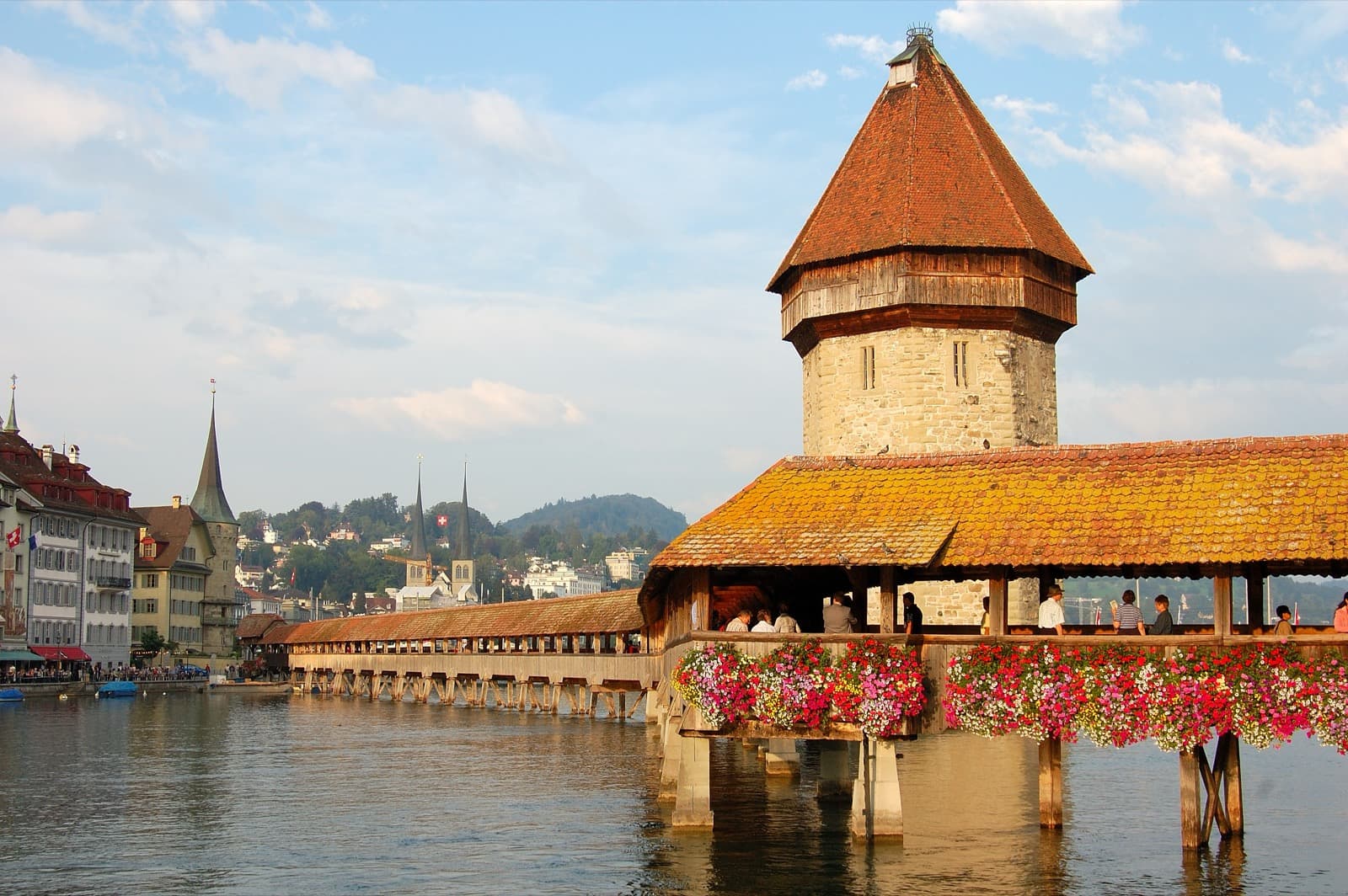
The Painted Lake Town: How Lucerne Reads on Foot
The Chapel Bridge Burned in 1993. What Lucerne Rebuilt Tells You How to Read the Whole Old Town
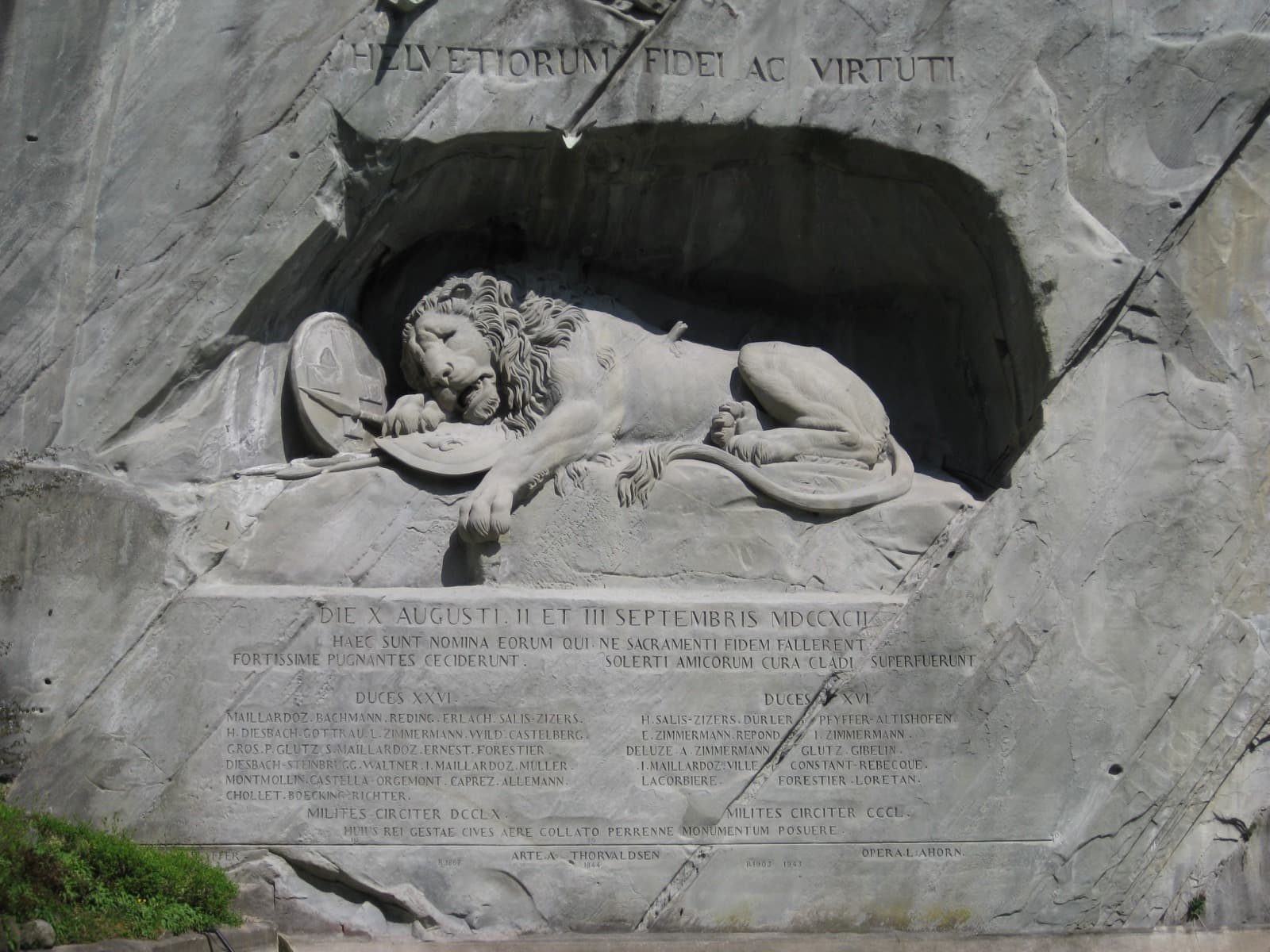
The Dying Lion of Lucerne: What the Monument Really Mourns
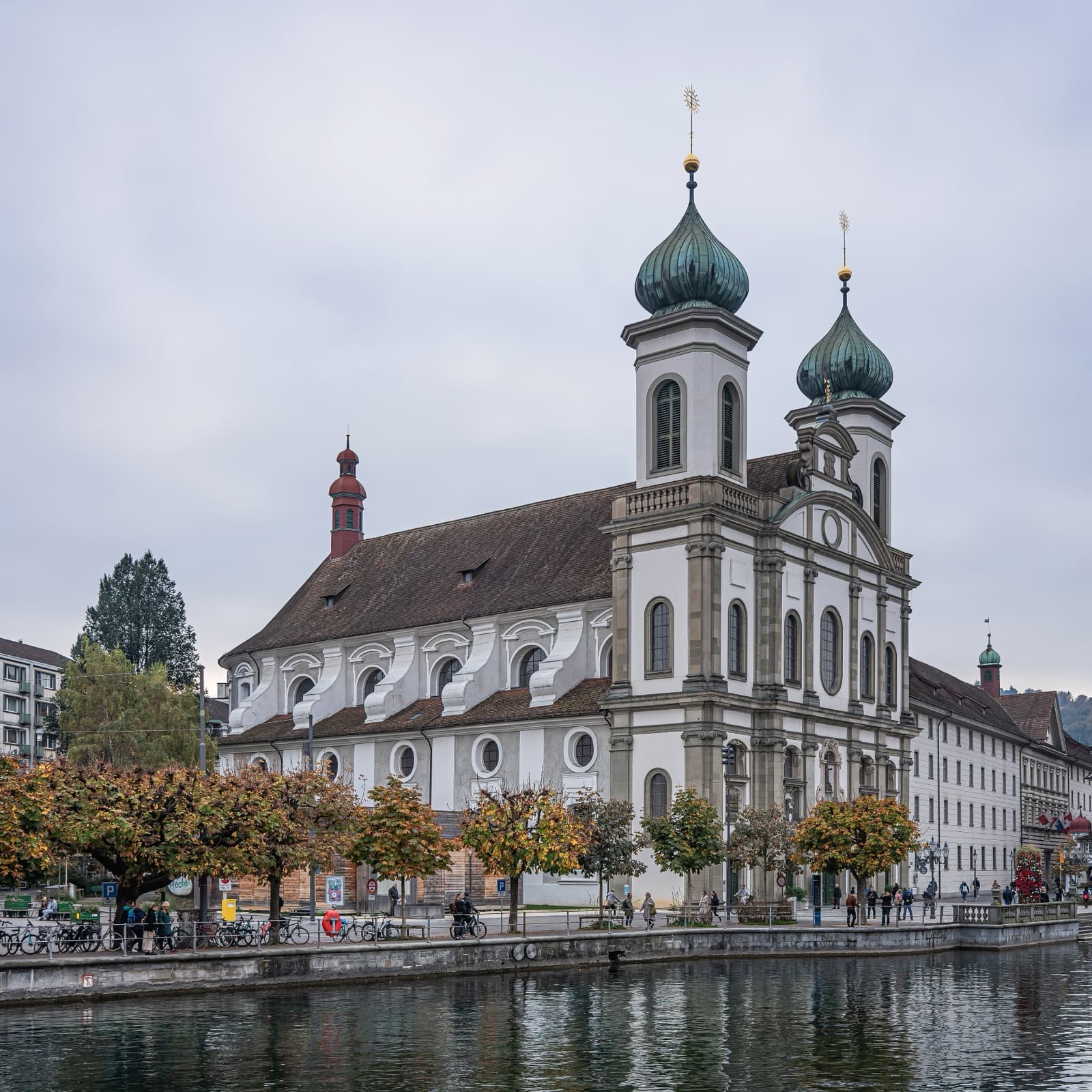
The Jesuit Church of Lucerne: Switzerland's First Large Baroque Church, Built as an Argument