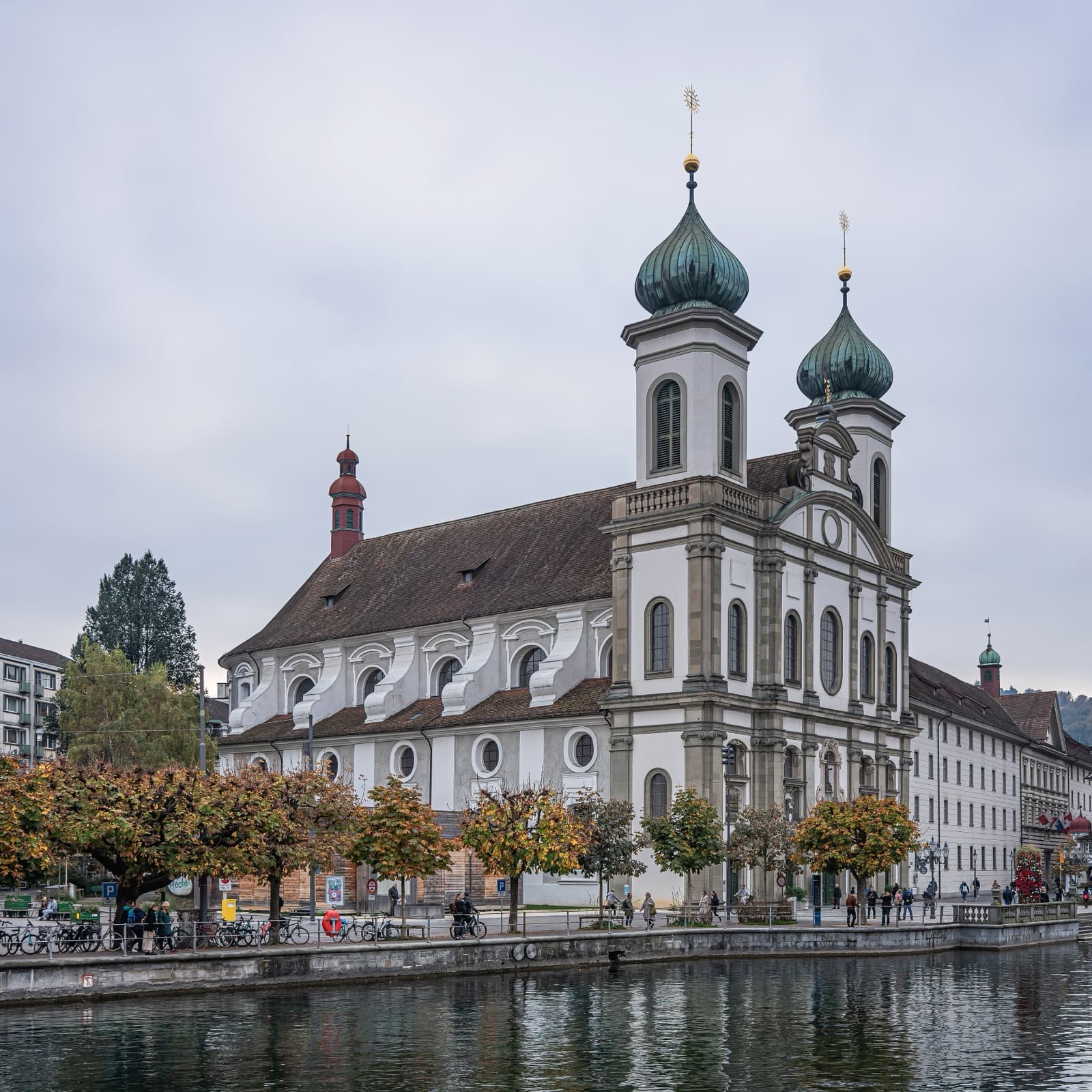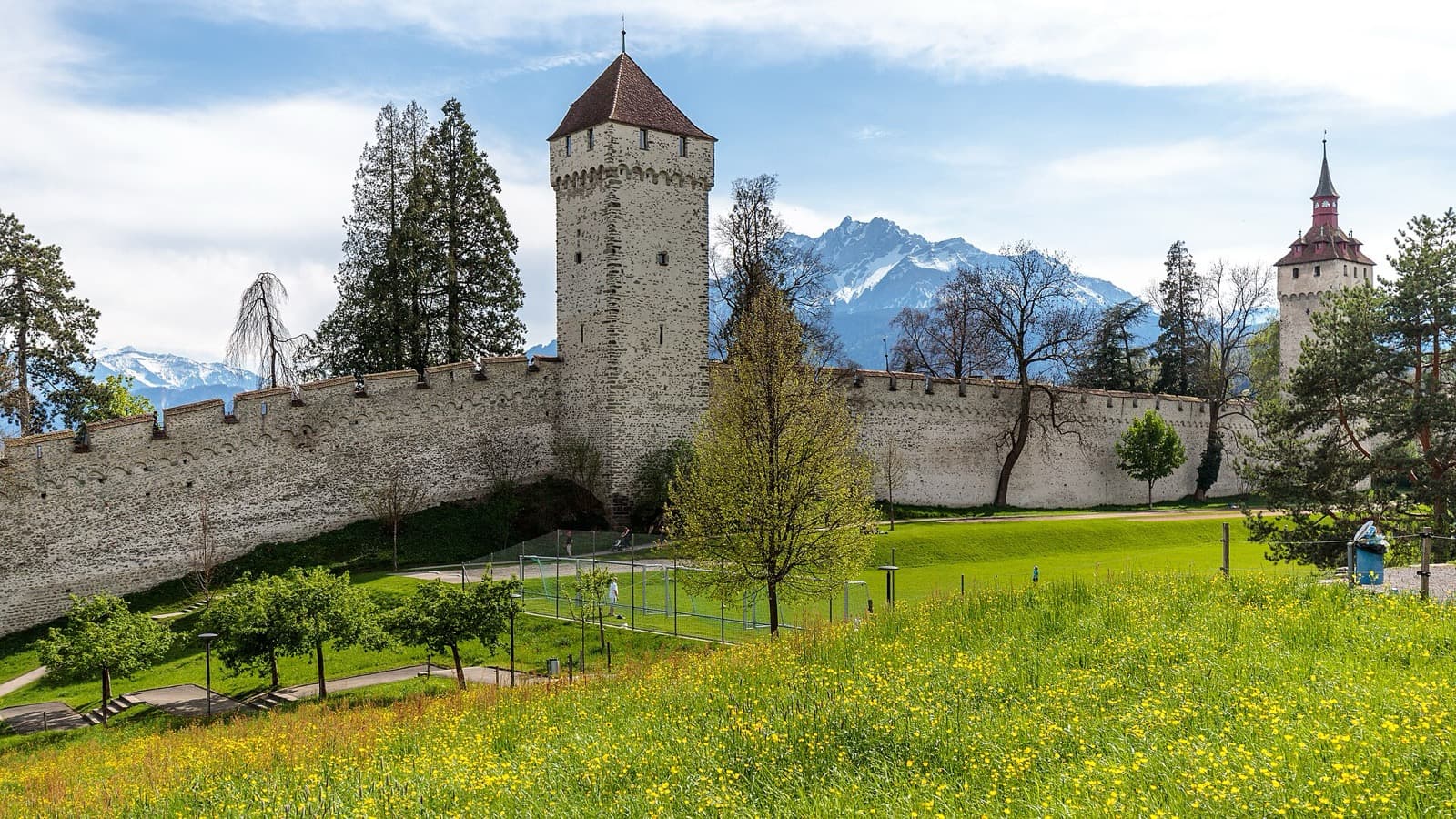
Lucerne sells itself with covered bridges, painted house fronts, and lake cruises, but the ridge above the old town tells a harder story in stone. Along the sandstone spine of the Musegg hill runs the Museggmauer, the Musegg Wall: Lucerne's second ring of fortifications, raised from the fourteenth century, and at about eight hundred and seventy metres the longest surviving town wall in Switzerland. Nine of its original towers still stand along the crest, a line of medieval stone over the resort town below. Standing at the base of it, the one thing to understand is simple. This was a town that knew it needed walls, and it built them well enough that they never came down.
A second ring on the high ground
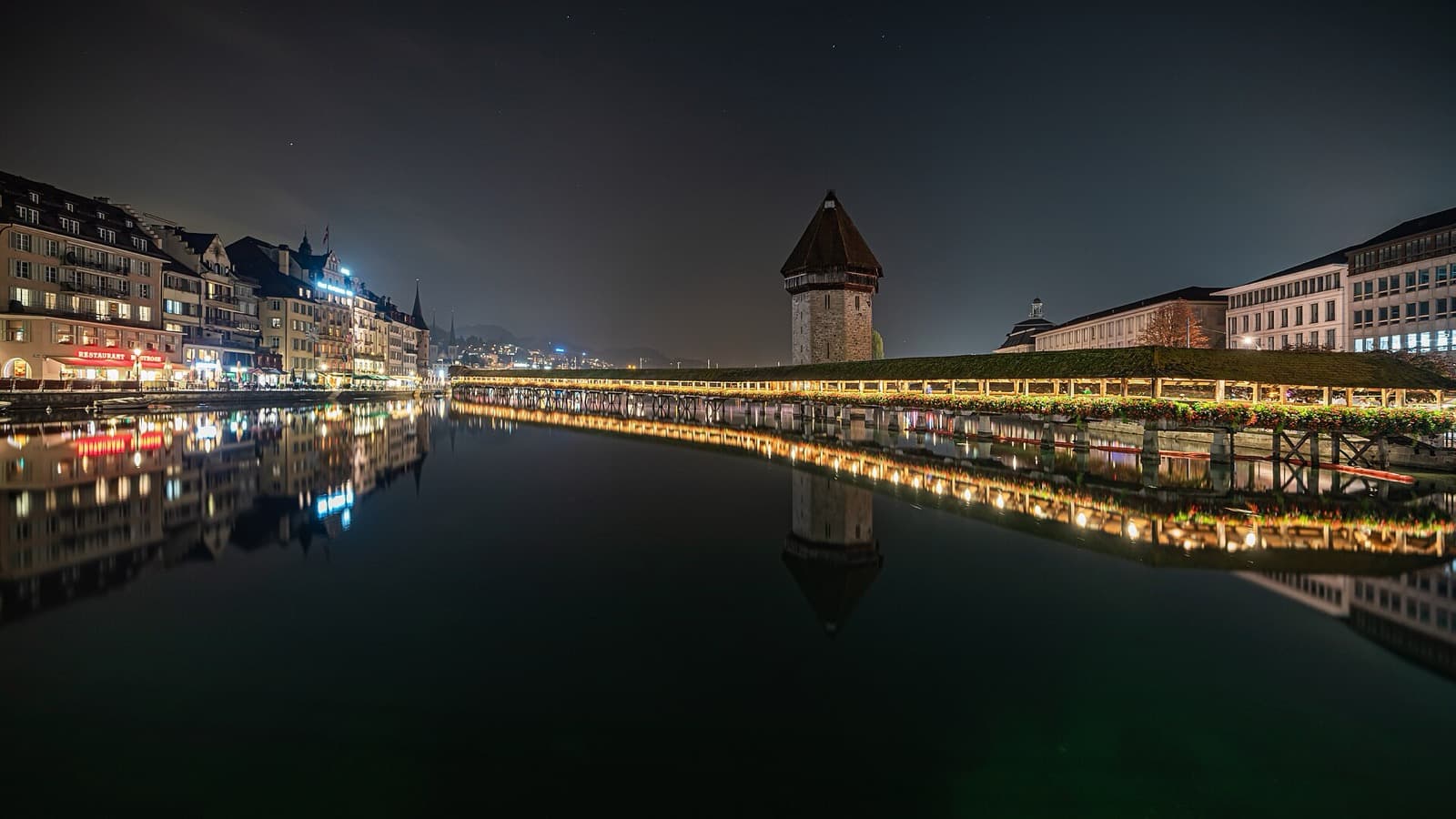
The Musegg Wall was the outer of Lucerne's two defensive rings. Down at the river, the covered wooden bridges and their water tower closed the town at the water line. Up on the ridge, the Musegg guarded the higher ground, the direction from which an army would come overland. The name itself is plain in local terms: Musegg is the hill, and mauer is the German word for wall. What you walk today is not a reconstruction or a fragment dressed up for visitors. The stretch raised around the year thirteen eighty-six still stands almost completely intact, which is unusual for any medieval fortification and rare in a European town center.
That survival is the wall's most quietly remarkable feature. Most towns in Europe treated their walls as an obstacle to growth. As cities spread past their medieval limits, the ramparts came down for building stone, for road width, for the simple reason that a wall in the way of expansion is a nuisance. Lucerne did not do this. It kept its ridge of stone, and the result is a rampart you can still walk end to end, with the whole town spread below.
The date that explains the stone
Hear a stop from this walk
Loewendenkmal: The Dying Lion
The best-preserved section carries a date worth pausing on: around thirteen eighty-six. That was the year of the Battle of Sempach, fought between the Swiss confederates and the Habsburg Duke Leopold the Third. Sempach lies close to Lucerne, and the conflict was not distant news. It was in the years around that battle that Lucerne strengthened this wall.
The logic is worth reading plainly. A town that has just gone to war, or is bracing for one, understands very concretely why it needs stone on its high ground. The Musegg is not decorative fortification, the kind of ceremonial gate a wealthy city might raise to impress. It is a working defensive line built by a community that had reason to fear an army marching over the ridge. When you stand on the rampart and look out over the direction the wall faces, you are looking at what medieval Lucerne was watching for. That is the register of the whole thing: this is the other Lucerne, the fortress behind the painted houses and the lakefront hotels, a town that never quite forgot it was a fortress.
Nine towers, four you can climb
Nine of the wall's original towers still stand along the crest. Four of them are open to the public, and you can walk the ramparts that link them. They carry old names: the Schirmer, the Zyt, the Wacht, and the Maennli. Each tower once had its own function within the defensive scheme, from watch posts to the clock and armory towers, and their different profiles along the ridge are part of what gives the wall its crown-like silhouette from below.
The Zyt tower, the Zytturm, is the one to aim for if you want both history and view in a single stop. Zyt means time and turm means tower, and it earns the name: it holds the oldest clock in Lucerne, a mechanism dated fifteen thirty-five. By local tradition the tower's clock strikes each hour one minute before every other clock and church bell in the city, as if the town's oldest timekeeper claims the right to speak first. That is a recorded custom rather than something you can set your watch by, but it is a fine thing to know as you stand near the top of the hour. The tower rises about thirty-one metres and has been open to the public since nineteen fifty-one. From its platform the town, the covered bridges over the River Reuss, Lake Lucerne, and, on a clear day, Mount Pilatus and Mount Rigi all fall into one frame. It is one of the few places anywhere where a walled medieval town, a lake, and high Alps sit together in a single view.
Walking it on your own clock
The practical shape of a Musegg visit rewards a little planning. The towers and the ramparts open from the first of April to the first of November, roughly eight in the morning to seven in the evening, and the wall walk between the towers is free. The path up to the towers rises on uneven, sometimes steep ground, and the tower stairs are narrow and old, so wear shoes with grip and take the climb at your own pace. In the winter season the towers close, though the wall itself still crowns the ridge whatever the month.
Because it is free and self-paced, the wall is the part of Lucerne where going at your own speed pays off most. Climb a tower when the queue is thin. Linger on the rampart as long as the view holds you. There is no group keeping pace and no schedule but your own. If you want to see the Musegg in the fuller context of the city that built it, from the dying lion carved into a cliff nearby to the twin-towered court church that is the oldest root of the town and the lakefront where the paddle steamers leave for the mountains, the walk that includes it does exactly that. You can read more about the city and its other routes among the Lucerne walking tours, or start from the Lucerne city page.
The wall itself asks little of you. It has stood on this ridge for more than six centuries, watching the direction danger once came from. Walk its length, climb the Zytturm, and you will have read the harder Lucerne that the covered bridges tend to hide.
Sources
- Musegg Wall, luzern.com (official city tourism): the wall's length, its nine towers, the four open towers, and seasonal opening dates.
- Musegg Wall, Switzerland Tourism (myswitzerland.com): overview of the Museggmauer as the longest surviving town wall in Switzerland.
- Battle of Sempach and the Habsburg conflict of thirteen eighty-six: context for why Lucerne strengthened its ridge fortifications in that period.
- Zytturm clock tower, turmuhrenluzern.ch: the fifteen thirty-five clock mechanism and the tower's early-striking custom.
- Roamer tour transcript, "Lion Monument: The Dying Lion and the Wall of Towers," fact-audited stop notes for the Musegg Wall and Zytturm.
Ready to experience it?
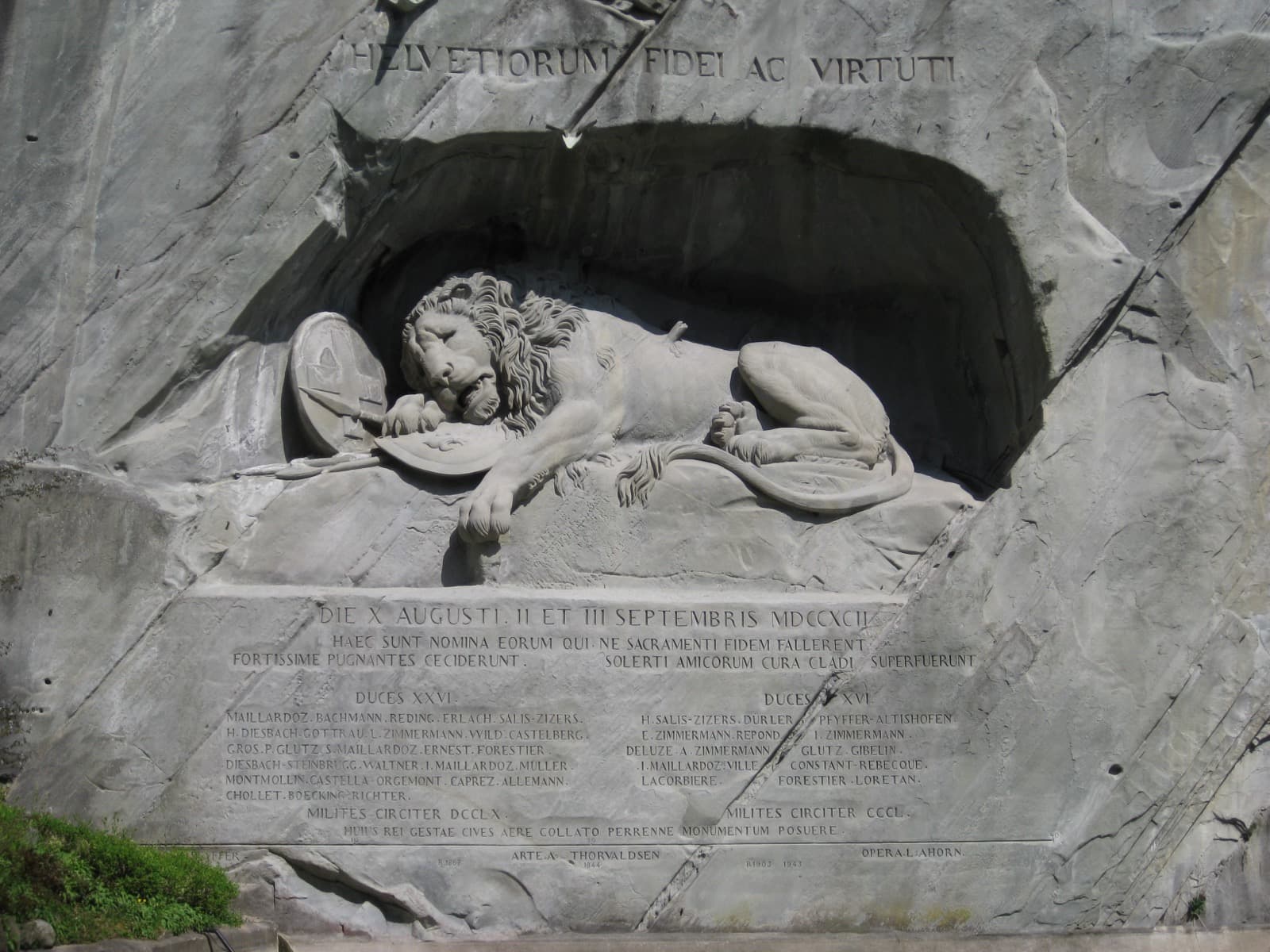
Lion Monument: The Dying Lion and the Wall of Towers
110 min · 4.7 km · moderate
More from Lucerne
Explore more at your own pace.
Lucerne Travel Guide: How Many Days, Getting Around, and When to Visit
One Day in Lucerne: A Walkable Morning-to-Evening Itinerary
The Painted Lake Town: How Lucerne Reads on Foot
The Chapel Bridge Burned in 1993. What Lucerne Rebuilt Tells You How to Read the Whole Old Town
The Dying Lion of Lucerne: What the Monument Really Mourns