Old Town: The Chapel Bridge and the Painted Squares
50 min · 1.1 km · easy
Lucerne wears two faces, and the pleasure of walking it on foot is reading both at once. On the surface it is a painted resort town where the River Reuss leaves the Lake of the Four Forest Cantons: covered wooden bridges, frescoed merchant squares, and paddle steamers setting out toward Mount Pilatus and Mount Rigi. Underneath runs a harder history. This was a poor cantonal town that sent its young men abroad as hired soldiers, and a settlement that ringed itself in stone because it knew it needed walls. Take the walk slowly and both faces come into a single view: the bright picture and the fortress underneath it, the carnival fountain and the dying lion. Two self-guided tours in Lucerne walking tours trace this doubleness, one along the river and one up into the harder history behind the postcards.
The river reads in two bridges
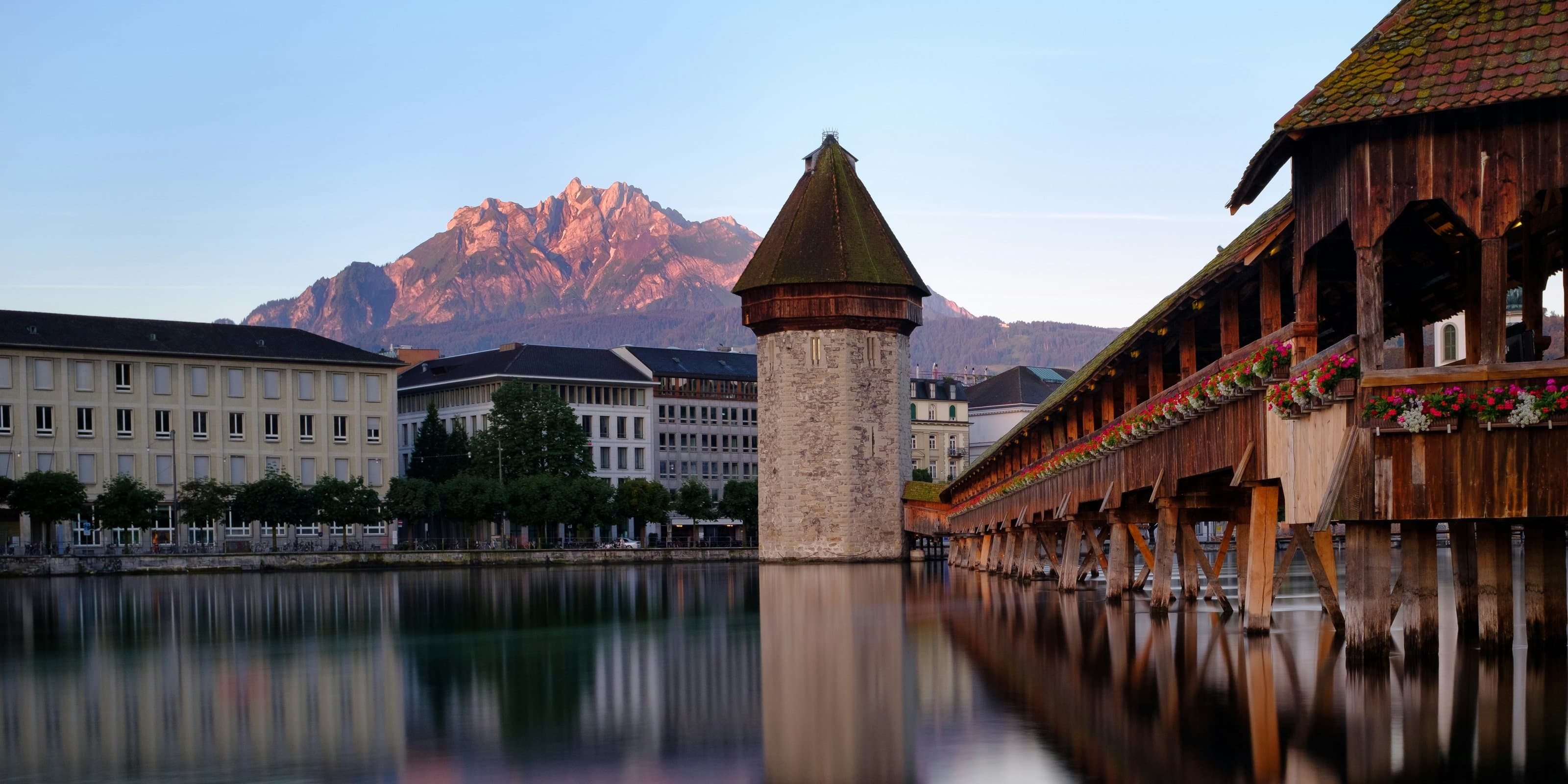
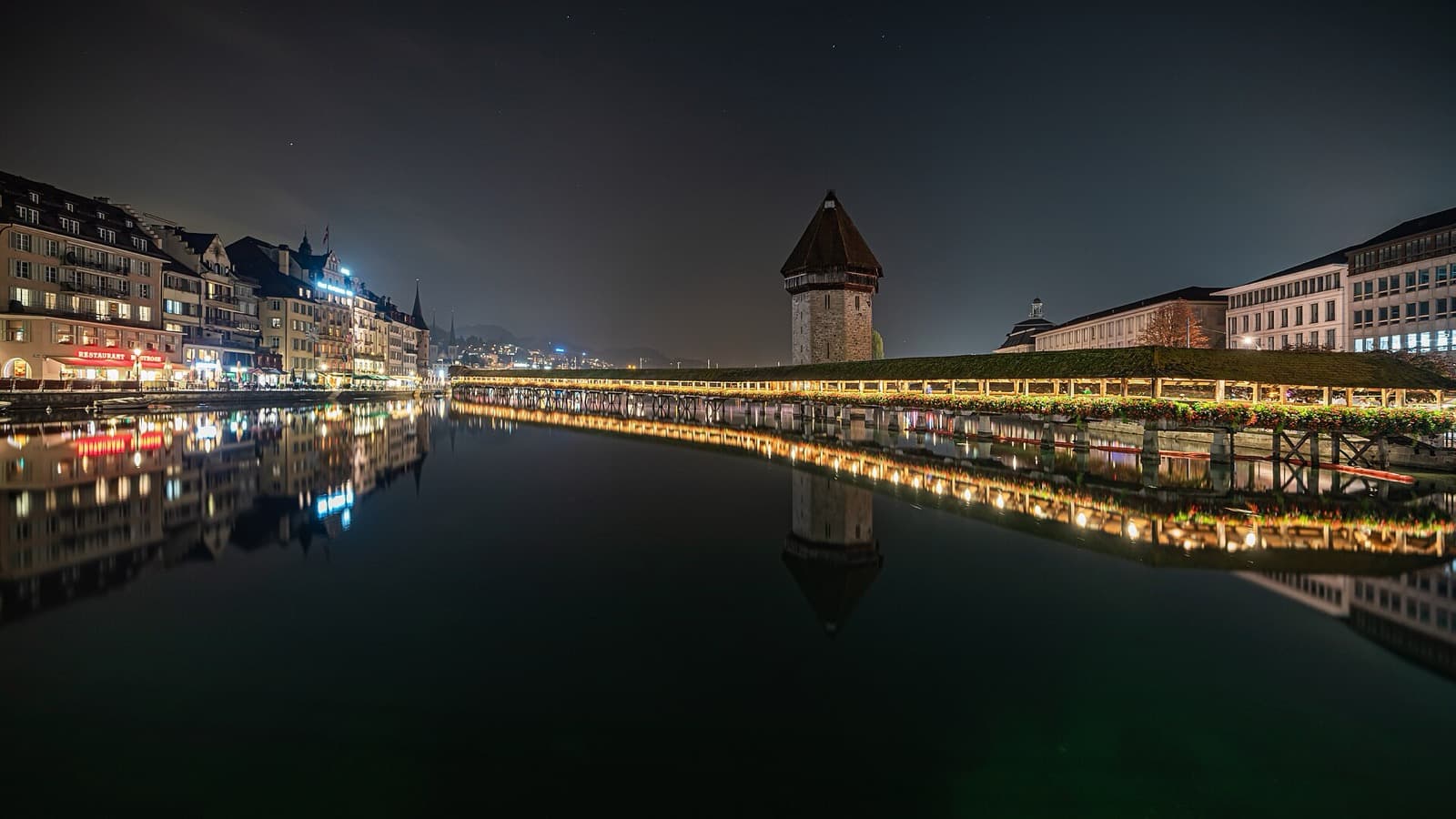
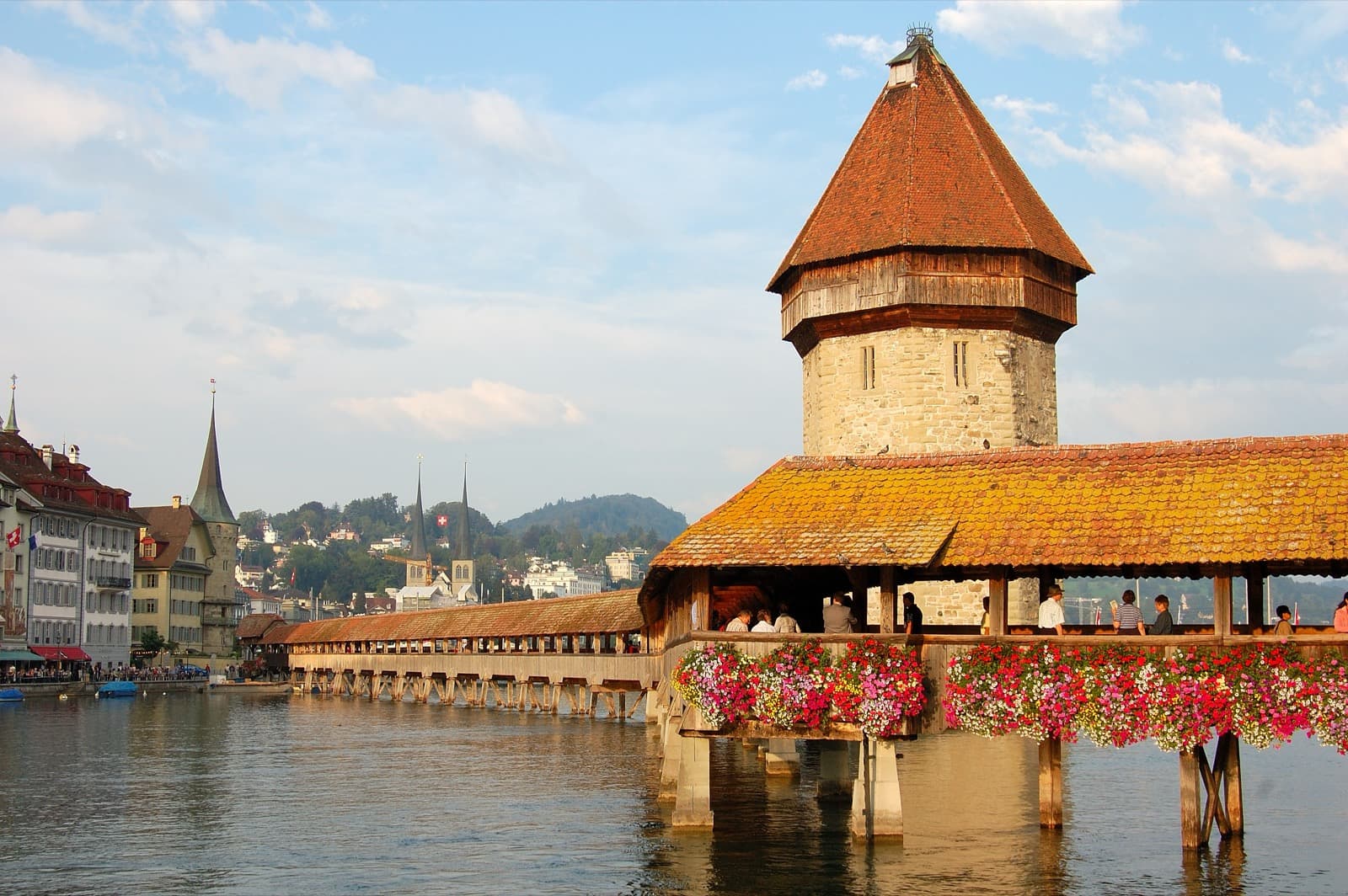
Start where every image of the city starts. The Old Town and Chapel Bridge walk opens at the Kapellbruecke, the covered wooden footbridge that zigzags across the green Reuss beside a stout octagonal stone tower standing in the water. Tree-ring dating shows it was built no earlier than thirteen fifty-six, as part of the town's fortifications, and it is counted among the oldest wooden bridges in Europe. Set into the triangular gables of its rafters hang painted panels, a cycle of one hundred and fifty-eight planned in sixteen eleven by the councillor Renward Cysat and painted by Hans Heinrich Waegmann. On the eighteenth of August nineteen ninety-three a fire destroyed much of the bridge and most of those paintings; only thirty could be fully restored. The people of Lucerne rebuilt it in about eight months and reopened it on the fourteenth of April nineteen ninety-four. So Lucerne's most photographed sight is both very old and, in part, very new: a medieval townscape almost lost to flame and raised again.
The Water Tower beside it is older still, raised about thirteen hundred, some decades before the bridge. It rises about thirty-four and a half metres and its history is not gentle. Over the centuries it held the town archives, kept here until nineteen nineteen, the treasury, and in its lower reaches a prison and torture chamber. Switzerland Tourism calls the bridge and tower probably one of the most popular photo subjects in the country. The lovely picture and the hard old fortress are the same object.
Downstream waits the dark mirror. The Spreuerbruecke, first recorded as a full crossing in fourteen oh eight, carries a Dance of Death under its roof, painted between sixteen sixteen and sixteen thirty-seven under Kaspar Meglinger. It is the largest known cycle of its kind, and forty-five of its paintings survive. The Dance of Death is a moral image in which Death comes for people of every rank in turn, meant to level the living. Read the two bridges as a pair, one luminous and reborn, one grave, and the whole river makes sense: beauty and its shadow standing side by side.
The painted squares and the councils that ruled them
Hear a stop from this walk
The Jesuit Church: Baroque Lucerne on the River
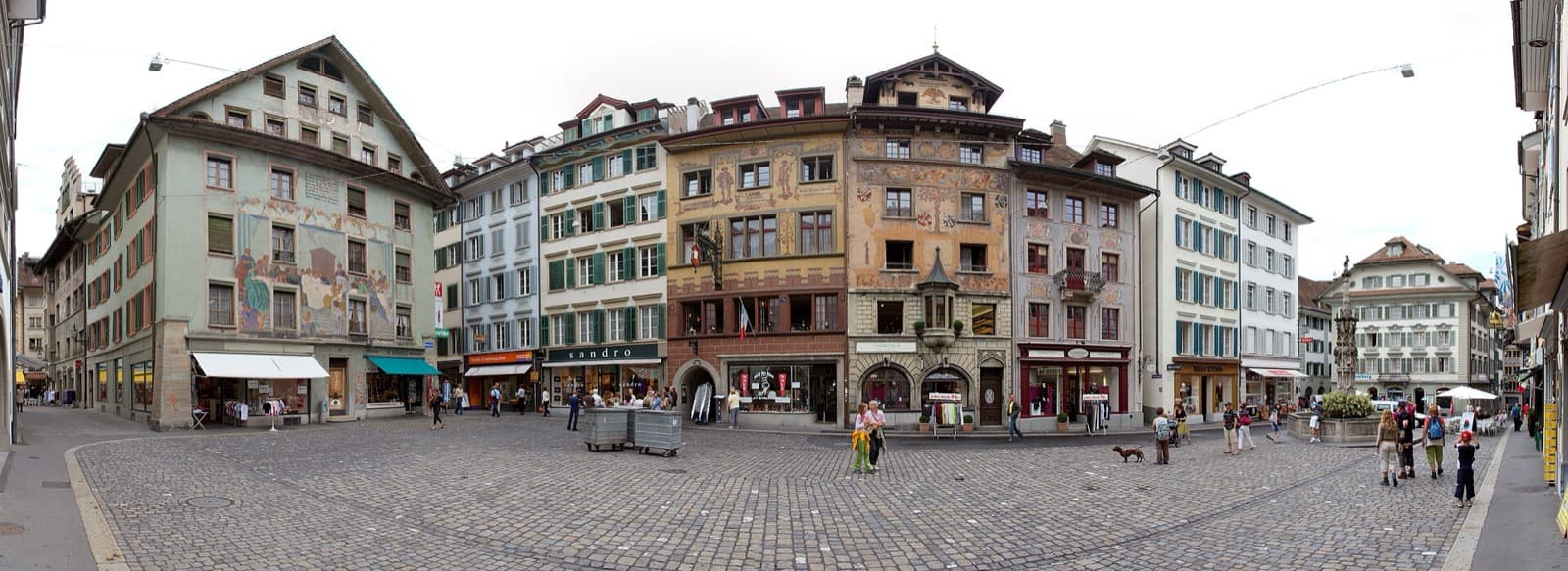
Between the bridges lie the linked squares that gathered the life of the city for centuries. One is the Weinmarkt, the Wine Market, closed on every side by tall old houses whose facades are painted. At its centre stands a fountain first commissioned from the sculptor Konrad Lux in fourteen eighty-one, with Saint Maurice at the top of its column; the one in the square today is a copy carved in the nineteen fifties, and the original is kept in the city's museum. The square's history runs into the story of Switzerland itself: citizens of Lucerne are recorded swearing their oath to the Confederation here in thirteen thirty-two, the year the town allied itself with Uri, Schwyz and Unterwalden. From fourteen fifty-three to sixteen sixteen it was also the stage for the town's Easter play, and Renward Cysat drew the stage plan for the performance of fifteen eighty-three.
From the Weinmarkt the squares open one into another, the Hirschenplatz with its frescoed houses protected as historical monuments, and the Kornmarkt, the old grain market, where a public trading hall and granary was built about thirteen seventy. On the Kornmarkt stands the Town Hall, rebuilt between sixteen oh two and sixteen oh six by the architect Anton Isenmann. Its walls follow Italian Renaissance style; over them spreads a low, broad roof in the Bernese farmhouse manner. The Small and Grand Councils of Lucerne met under that roof until seventeen ninety-eight, the year the old order fell, and the city parliament still meets there. The eye reads Italy in the walls and the Swiss countryside in the roof, one building holding both, which is how a small alpine republic dressed its power.
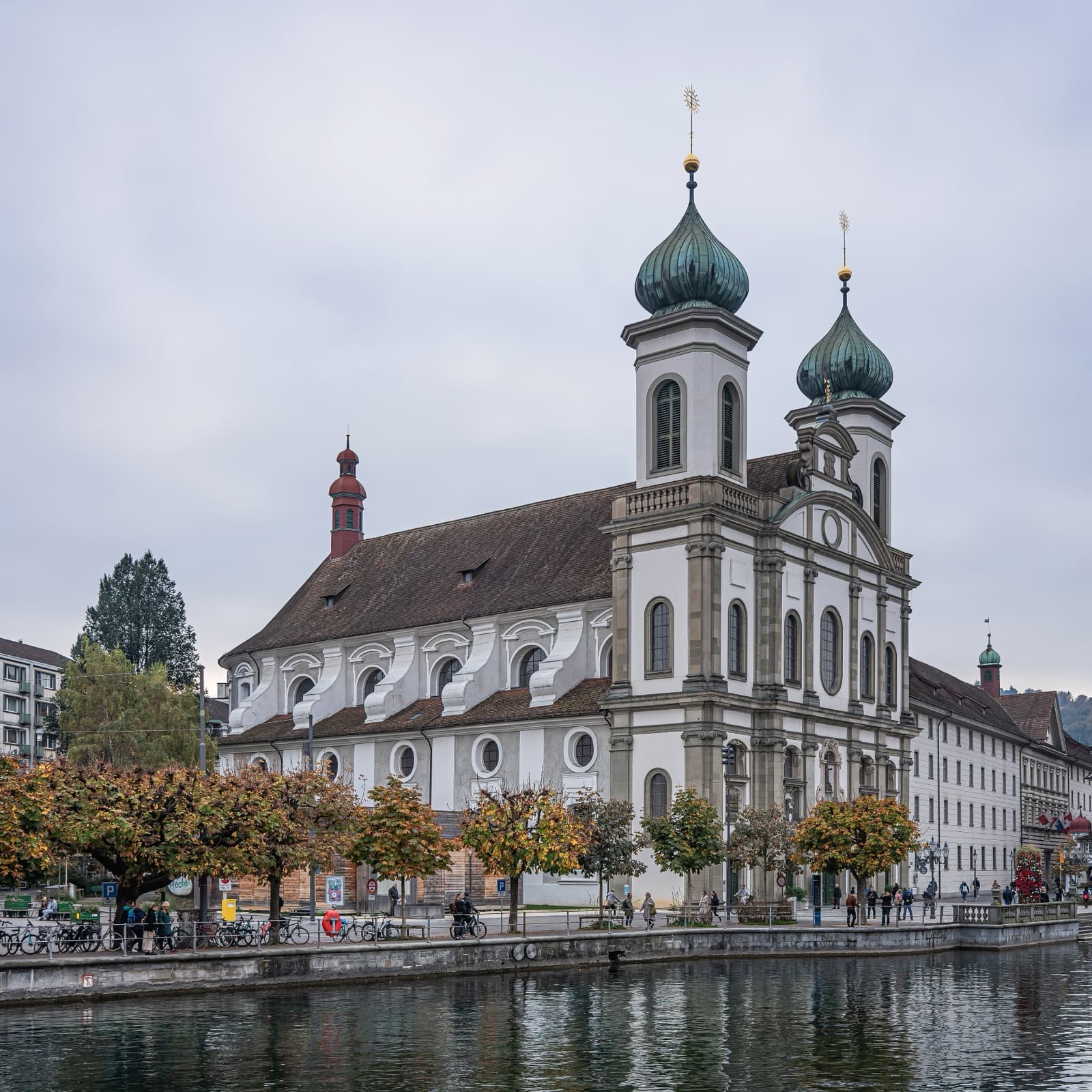
The walk closes across the water at the Jesuitenkirche, the Baroque church of Saint Francis Xavier, consecrated in sixteen seventy-seven and recorded as the first large Baroque church built in Switzerland, modelled on the Gesu in Rome. Its onion-domed towers were finished only in eighteen ninety-three. It rose in the Counter-Reformation, when Catholic Lucerne held its ground against the Protestant towns, among them Zurich, where Huldrych Zwingli had preached from fifteen nineteen. Here the answer to the Reformation was a church of light and colour, confident and Roman.
The soldiers' city behind the postcards
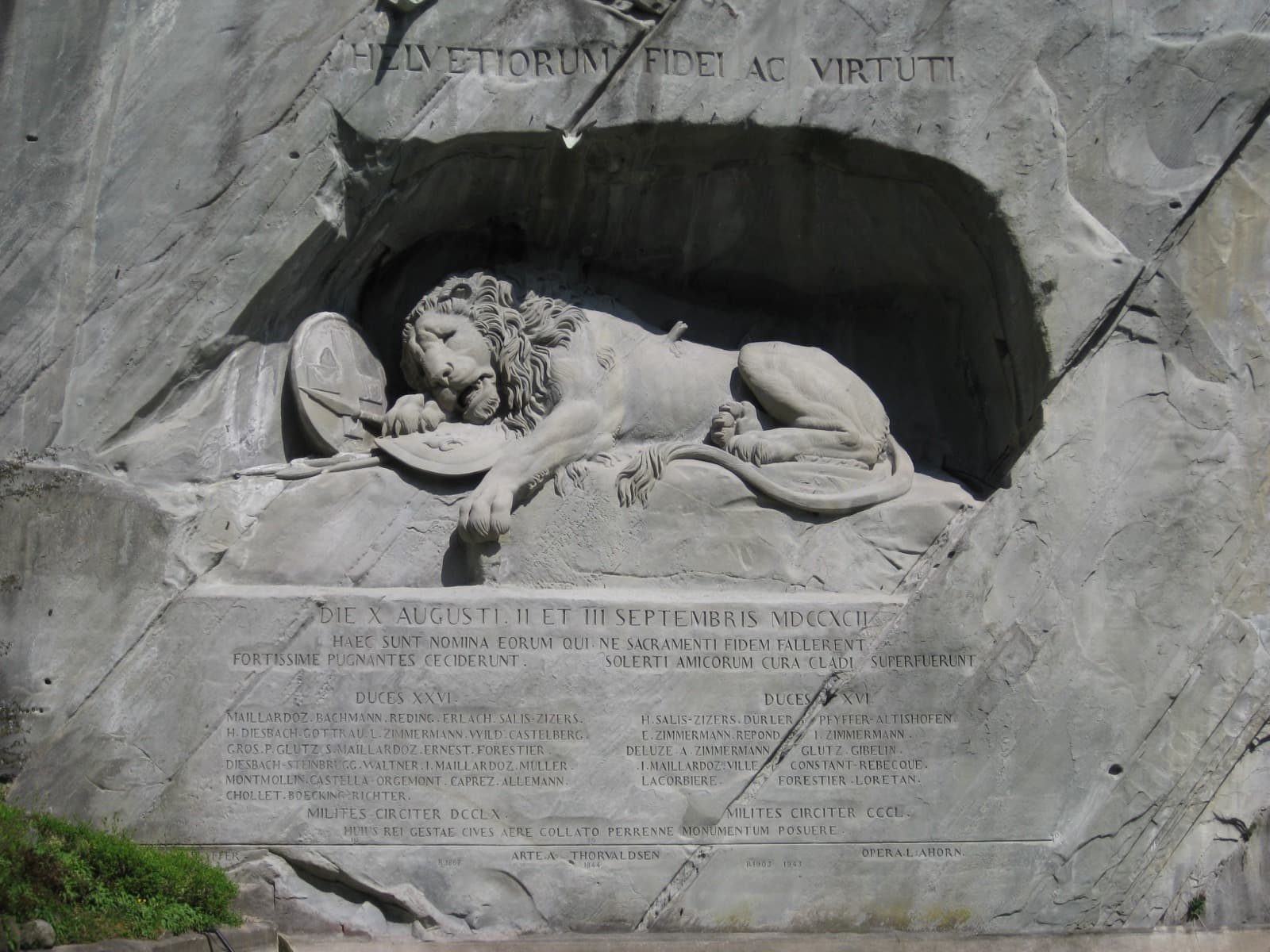
The second walk turns to the harder history the squares only hint at. The Lion Monument and Musegg Wall tour begins at the Loewendenkmal, a colossal dying lion carved into a sandstone cliff above a still pool, a broken spear in its side. It was designed by the Danish sculptor Bertel Thorvaldsen and cut into the rock by the stonemason Lukas Ahorn between eighteen twenty and eighteen twenty-one. The lion mourns the Swiss Guards, mercenary soldiers of the French king, killed defending the Tuileries Palace in Paris on the tenth of August seventeen ninety-two. For centuries the poor cantons sent their young men abroad as hired soldiers, and the lion holds that memory. Mark Twain, who stood here in eighteen eighty, called it the most mournful and moving piece of stone in the world.
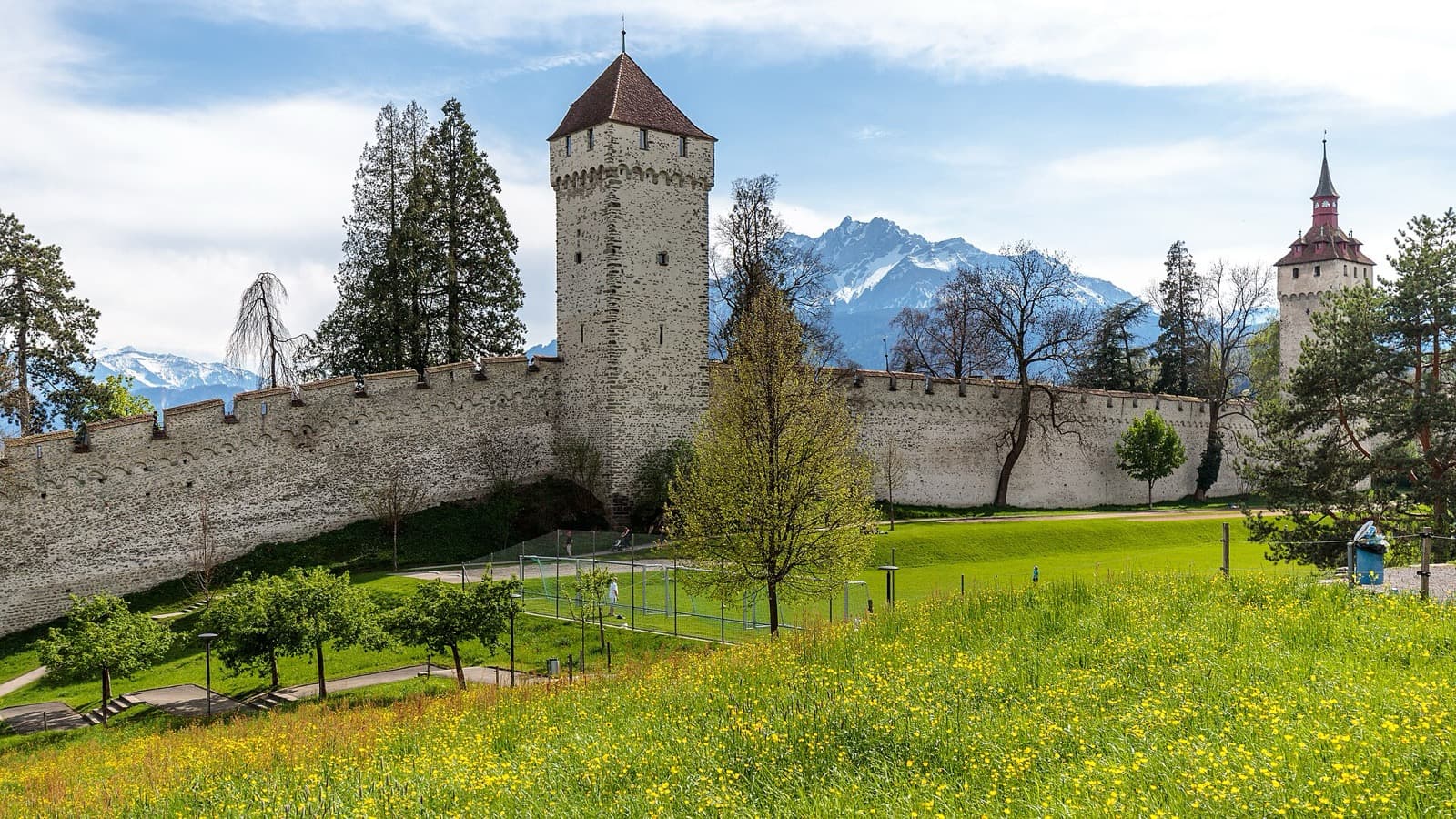
From the memorial the route climbs to the Museggmauer, Lucerne's second ring of fortifications, raised from the fourteenth century along the ridge above the town. Its best-preserved stretch dates to around thirteen eighty-six, the same period as the Battle of Sempach against the Habsburg Duke Leopold the Third. A town fresh from war understood plainly why it needed stone. At about eight hundred and seventy metres it is the longest surviving town wall in Switzerland, with nine of its original towers still standing and four open to climb. From the Zytturm, which holds the oldest clock in Lucerne with a mechanism dated fifteen thirty-five, the town, the lake and the Alps come into one frame.
Below the wall stands the Hofkirche Sankt Leodegar, the twin-spired court church on a monastery site that dates to the middle of the eighth century, older than the town itself. Its two Gothic towers survived the Easter fire of sixteen thirty-three and were built into the church rebuilt between sixteen thirty-three and sixteen thirty-nine. The walk ends at the lakefront, where the first paddle steamer, the Stadt Luzern, made its maiden voyage in eighteen thirty-seven, and where the Vitznau to Rigi line of eighteen seventy-one, the first rack railway in Europe, helped make Lucerne one of the birthplaces of Alpine tourism. Two faces, one town, best read at your own unhurried pace.
Sources
- Old Town: The Chapel Bridge and the Painted Squares, Roamer self-guided tour, Lucerne
- Lion Monument: The Dying Lion and the Wall of Towers, Roamer self-guided tour, Lucerne
- Lucerne Tourism, official visitor information on the Chapel Bridge, Water Tower and Musegg Wall
- Mark Twain, A Tramp Abroad (1880), on the Lion Monument
Frequently asked questions
- What are the two covered bridges in Lucerne?
- The Chapel Bridge (Kapellbruecke) and the Spreuer Bridge (Spreuerbruecke). The Chapel Bridge, built no earlier than thirteen fifty-six according to tree-ring dating, is counted among the oldest wooden bridges in Europe and carries a cycle of painted panels planned in sixteen eleven. The Spreuer Bridge, first recorded as a full crossing in fourteen oh eight, carries a Dance of Death cycle painted by Kaspar Meglinger, counted the largest known of its kind.
- What is the Lion Monument in Lucerne?
- The Loewendenkmal is a colossal dying lion carved into a sandstone cliff above a pool, designed by the Danish sculptor Bertel Thorvaldsen and cut by the stonemason Lukas Ahorn between eighteen twenty and eighteen twenty-one. It mourns the Swiss Guards killed defending the Tuileries Palace in Paris on the tenth of August seventeen ninety-two. Mark Twain called it the most mournful and moving piece of stone in the world in eighteen eighty.
- How long is the Musegg Wall and when can you visit it?
- The Musegg Wall (Museggmauer) is about eight hundred and seventy metres long, the longest surviving town wall in Switzerland, with nine of its original towers still standing and four open to climb. The towers and ramparts are open from the first of April to the first of November, roughly eight in the morning to seven in the evening, and are free to walk.
- Was the Chapel Bridge really destroyed by fire?
- Yes. On the eighteenth of August nineteen ninety-three a fire destroyed much of the bridge and most of its painted panels; the two bridgeheads survived, the stone Water Tower came through scorched, and only thirty paintings could be fully restored. The people of Lucerne rebuilt it in about eight months and reopened it on the fourteenth of April nineteen ninety-four.
- Why is Lucerne called a birthplace of Alpine tourism?
- Lucerne sits where the Reuss leaves Lake Lucerne beneath Mount Pilatus and Mount Rigi, and its lakefront drew early travellers. The first paddle steamer, the Stadt Luzern, sailed in eighteen thirty-seven, and the Vitznau to Rigi line of eighteen seventy-one was the first rack railway in Europe. Grand nineteenth-century hotels rose along the quay to serve those Belle Epoque visitors.
Ready to experience it?
Old Town: The Chapel Bridge and the Painted Squares
50 min · 1.1 km · easy
More from Lucerne
Explore more at your own pace.
Lucerne Travel Guide: How Many Days, Getting Around, and When to Visit
One Day in Lucerne: A Walkable Morning-to-Evening Itinerary
The Chapel Bridge Burned in 1993. What Lucerne Rebuilt Tells You How to Read the Whole Old Town
The Dying Lion of Lucerne: What the Monument Really Mourns
The Jesuit Church of Lucerne: Switzerland's First Large Baroque Church, Built as an Argument