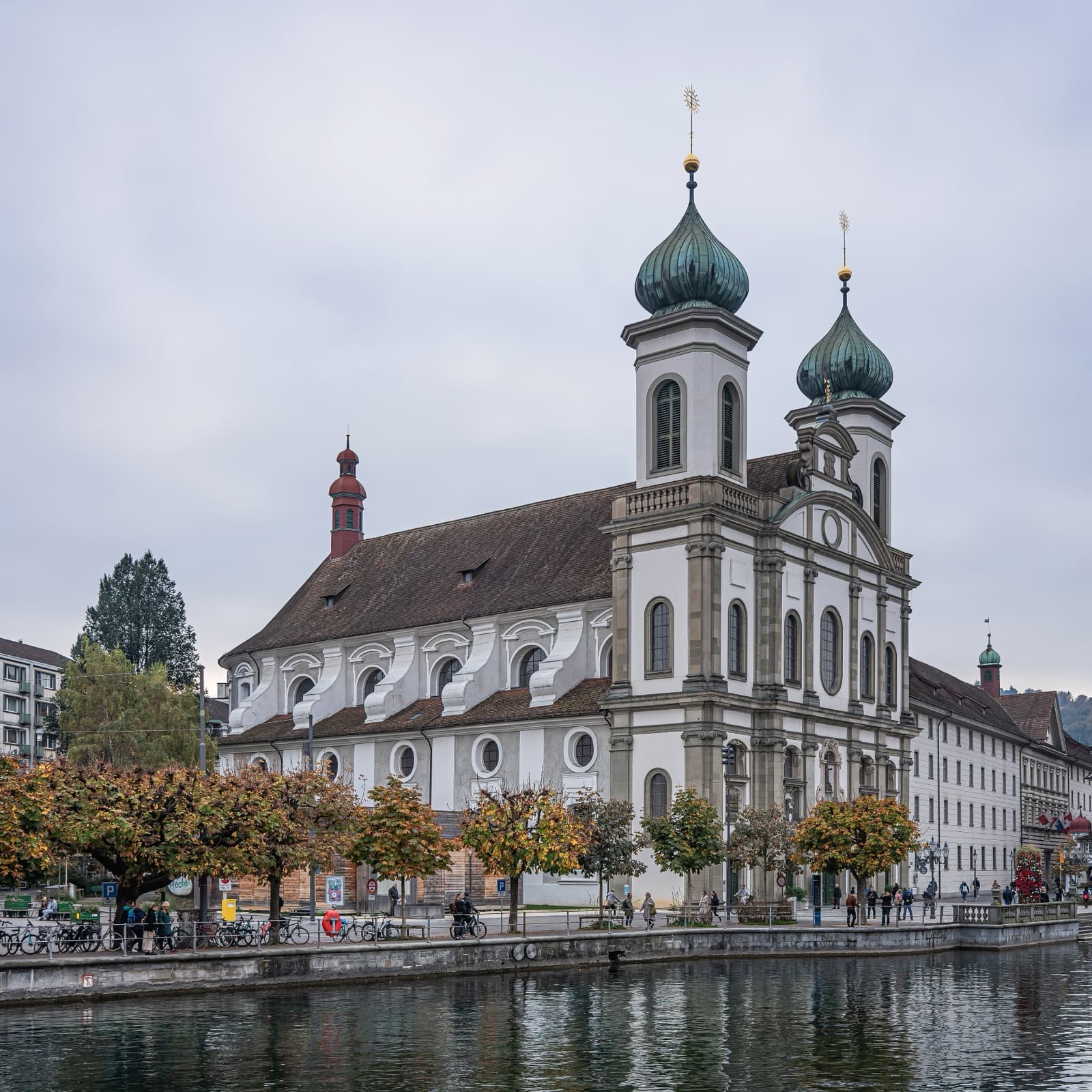
The Jesuit Church of Lucerne, dedicated to Saint Francis Xavier, was the first large Baroque church built in Switzerland, and it was built as an argument. Its façade faces the medieval old town from the south bank of the Reuss, and everything about it, the ornament, the light, the Roman model it follows, was chosen to answer the stripped and image-free churches of the Reformation with the opposite: ornament, brightness, and Roman confidence. Stand in front of it and you are looking at how Catholic Lucerne chose to speak in the seventeenth century, when the town had made itself a stronghold of the old faith while Zurich and other towns turned Protestant.
What you are looking at
The building begins with the Jesuit order. The Jesuits came to Lucerne in 1574, called in by the city council to run a school, and it was nearly a century later that the school had grown enough to need a far larger church. The foundation stone was laid on 3 December 1666, the feast day of Francis Xavier himself, and the church was consecrated on 29 August 1677, even though the interior was far from finished: several side altars were still missing, and money was so tight that the high altar only went in four years later. The model is clear. The church was built to follow the Gesù in Rome, the mother church of the Jesuits, and through it the Italian Baroque entered Switzerland at scale for the first time.
The twin towers you see, capped with their onion domes, are a later addition and a good lesson in reading a building slowly. The body of the church was finished in the seventeenth century, but the towers were completed only in 1893, more than two hundred years after consecration. A church is rarely a single moment. It is a long argument continued by later generations who kept adding to it.
The one thing to understand
Hear a stop from this walk
The Jesuit Church: Baroque Lucerne on the River
Here is the thing to hold in your mind as you walk the riverside path toward it. This is not a neutral piece of scenery. It is a monument from a religious war that ran, in places, to blood, and it was built to win.
In Zurich, the reformer Huldrych Zwingli had been preaching since 1519, and Calvin later led the Reformation in Geneva. The break was not a gentle disagreement over doctrine. Radical reformers in Zurich who rejected infant baptism were persecuted, and one of them, Felix Manz, was drowned in the River Limmat in 1527. That is the temperature of the era. The Reformation split the Swiss Confederation down the middle, town by town, and Lucerne planted itself firmly on the Catholic side. The Counter-Reformation was the Catholic answer, and the Jesuits were its sharpest instrument: educators, preachers, builders. Their church was part of that program.
So the design is a message. Where the reformed churches whitewashed their walls, emptied their niches, and let the plain word do the work, the Jesuit Church filled its interior with light and colour. Step inside and the walls carry Baroque and rococo stucco, and the high altar draws your eye straight down the nave. The vault was redecorated in the mid-eighteenth century, layering rococo lightness over the original Baroque, which is why the interior feels so airy rather than heavy. The whole room is engineered to move you, to make faith feel abundant and beautiful and unmistakably Roman. It is an argument made in plaster and paint, and it was aimed across the river at everything the Reformation stood for.
On both sides of that split there were real people and real conviction. The point of standing here is not to take a side four centuries late. It is to see that a building this pretty was also a claim, and to read the claim.
A detail most visitors walk past
The church is free to enter, and inside there is a small thing easy to miss. The inner chapel holds the original vestments of Brother Klaus, Nicholas of Flüe, the fifteenth-century hermit and mediator who became the patron saint of Switzerland. His story reaches back before the Reformation, to a moment when he helped hold the Confederation together, and Catholic Lucerne kept his relics close for a reason. In a church built to assert the old faith, the presence of Switzerland's own national saint is not decoration. It is part of the argument, a claim on the country's deepest identity.
Why this stop closes the walk
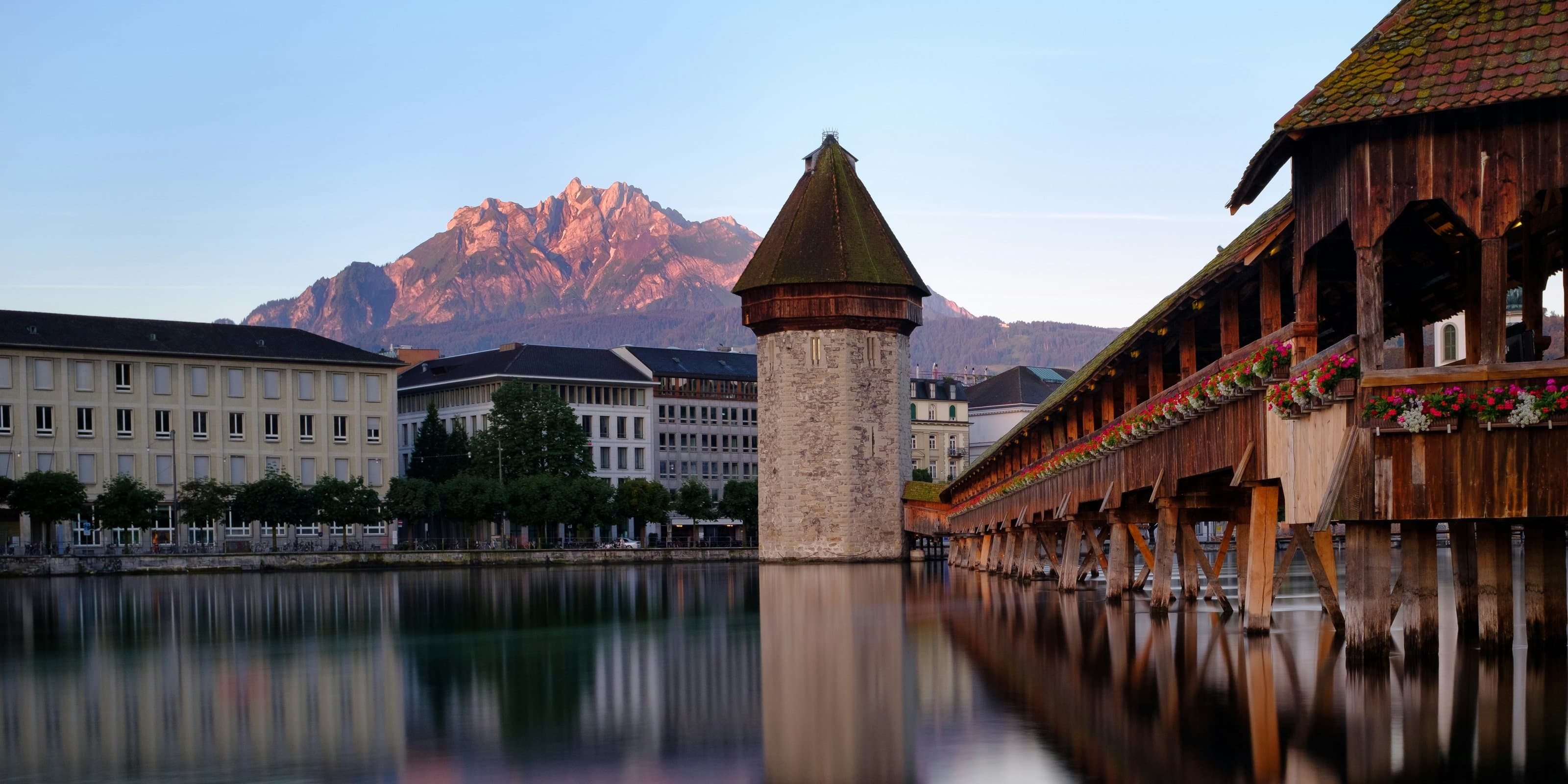
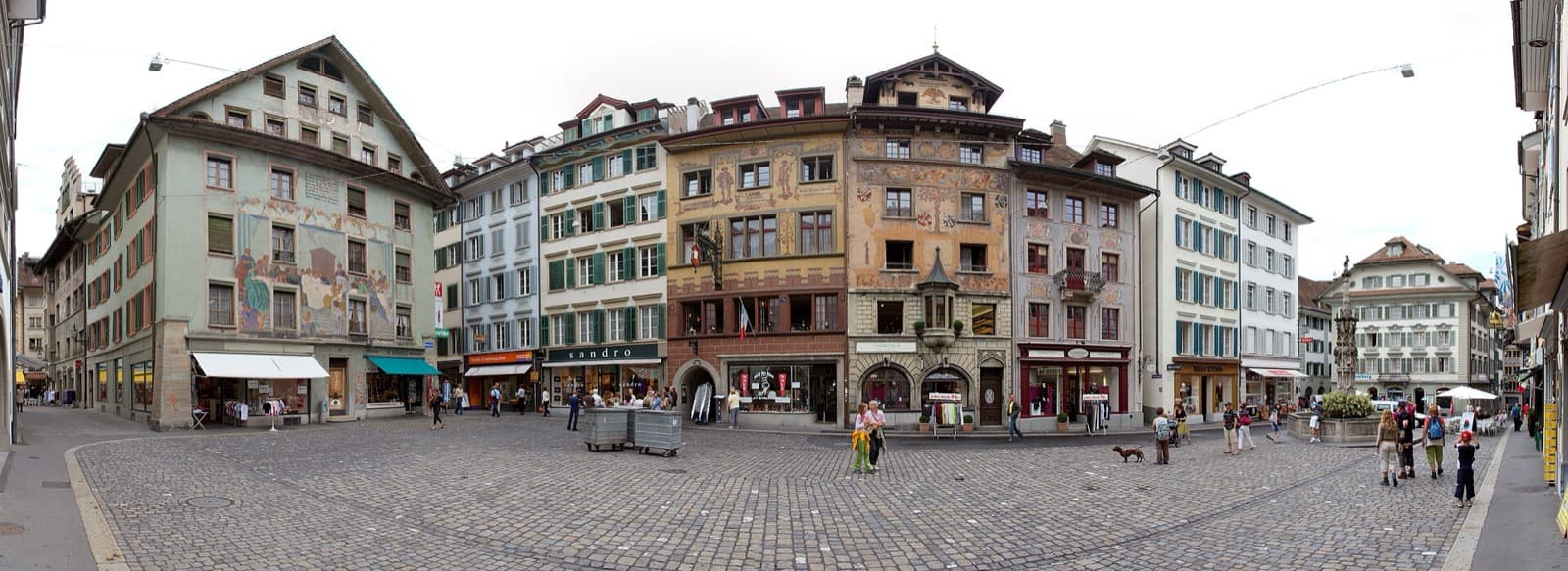
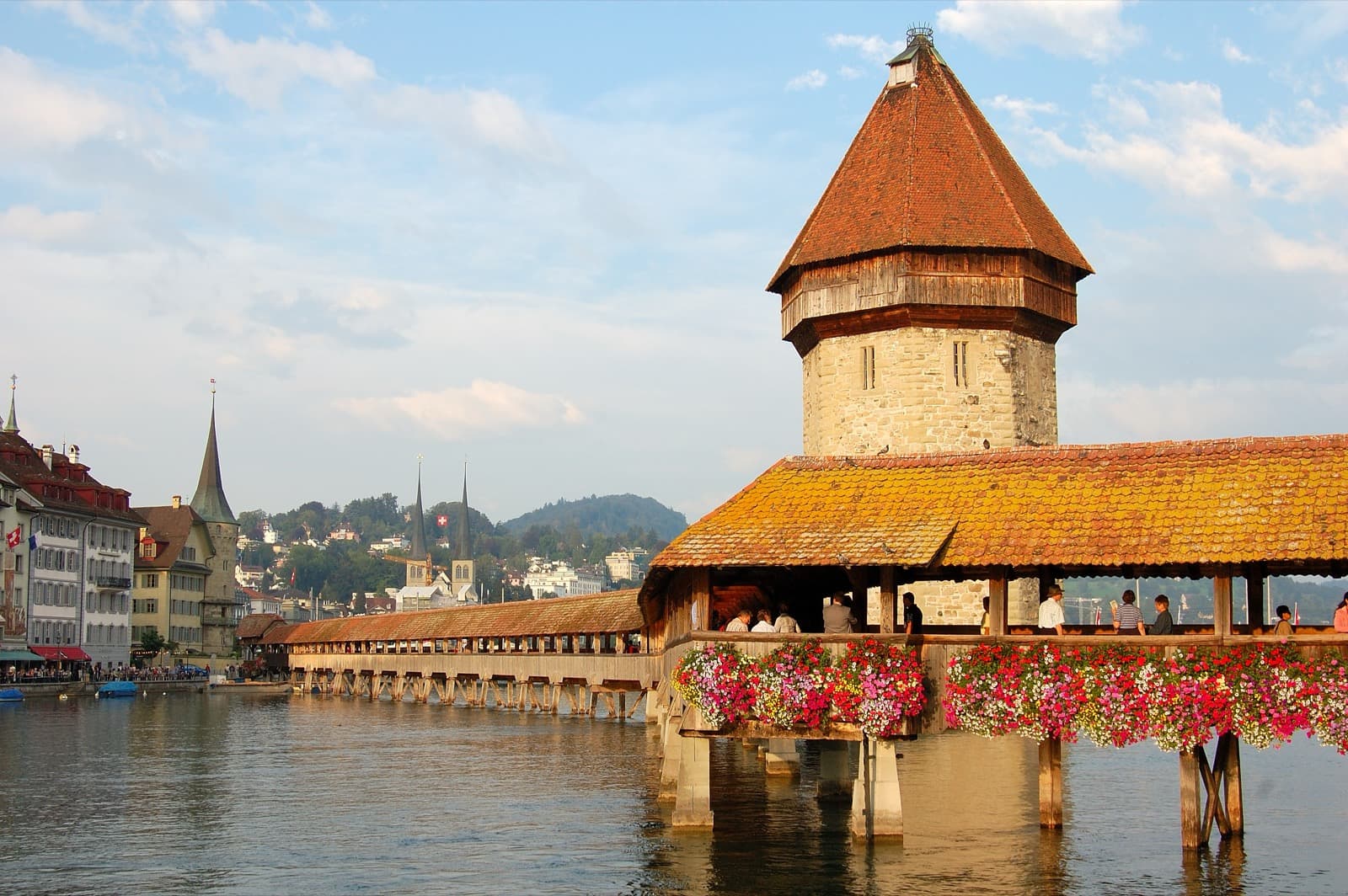
The Jesuit Church is the final stop on the Old Town tour, and its position is deliberate. The rest of the walk moves through the medieval river town: the reborn Chapel Bridge and its Water Tower, the Town Hall on the Kornmarkt, the painted Weinmarkt, and the Spreuer Bridge with its Dance of Death paintings. Those places speak of the Middle Ages, of guilds and merchants and a town huddled inside its walls. The Jesuit Church speaks of what came next: a later, Catholic Lucerne, confident enough to build in the newest Italian style and set it on the far bank, facing the old town across the water. Ending here lets you feel the two Lucernes at once, the medieval and the Baroque, separated by the Reuss and by two centuries.
To walk it in order, with the audio guiding you stop to stop across both banks of the river, take the Lucerne walking tours and start the Old Town route. You can plan the rest of your time in the town from the Lucerne city page. The church stays open and free, and it is worth timing your arrival for when the low light is on the river and the old town across it. That is the view the whole walk has been building toward.
Sources
- Jesuit Church, Lucerne (Wikipedia): consecration in 1677 with the interior unfinished, the late high altar, towers completed 1893, the mid-eighteenth-century vault, and Brother Klaus vestments in the inner chapel.
- Geschichte, Jesuitenkirche Luzern (jesuitenkirche-luzern.ch): the Jesuits' arrival in 1574, the foundation stone laid on 3 December 1666, and consecration on 29 August 1677.
- Jesuitenkirche, Switzerland Tourism (myswitzerland.com): official overview of the church as the first Baroque church in Switzerland, modelled on the Gesù, with Baroque and rococo interior.
- Jesuit Church, Lucerne Tourism (luzern.com): local tourism description of the onion-domed towers, the Gesù model, and the Baroque and rococo stucco interior, with free public entry.
- Church of the Gesù, Rome: the Jesuit mother church that served as the design model, useful for understanding the Italian Baroque template the Lucerne church followed.
- Huldrych Zwingli and Felix Manz (Wikipedia): Zwingli preaching in Zurich from 1519, the drowning of Felix Manz in 1527, and the confessional split that made Lucerne a Catholic stronghold.
Ready to experience it?
Old Town: The Chapel Bridge and the Painted Squares
50 min · 1.1 km · easy
More from Lucerne
Explore more at your own pace.
Lucerne Travel Guide: How Many Days, Getting Around, and When to Visit
One Day in Lucerne: A Walkable Morning-to-Evening Itinerary
The Painted Lake Town: How Lucerne Reads on Foot
The Chapel Bridge Burned in 1993. What Lucerne Rebuilt Tells You How to Read the Whole Old Town
The Dying Lion of Lucerne: What the Monument Really Mourns