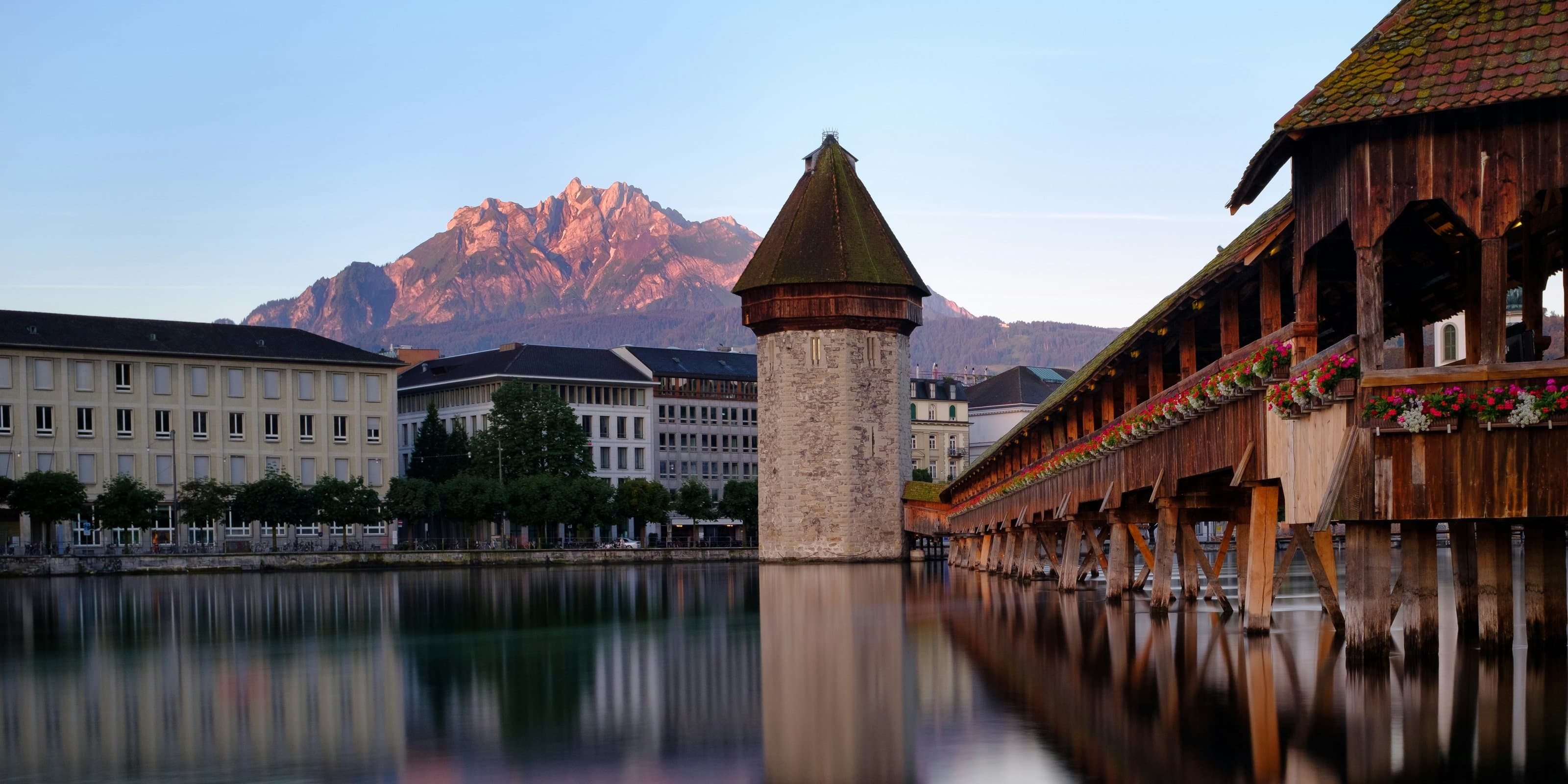
Read the medieval river town on both banks of the Reuss, from the reborn Chapel Bridge to the Dance of Death, through the painted squares of Lucerne at your own pace.
Start · The Chapel Bridge: Burned and Raised Again
DirectionsStops
- 1
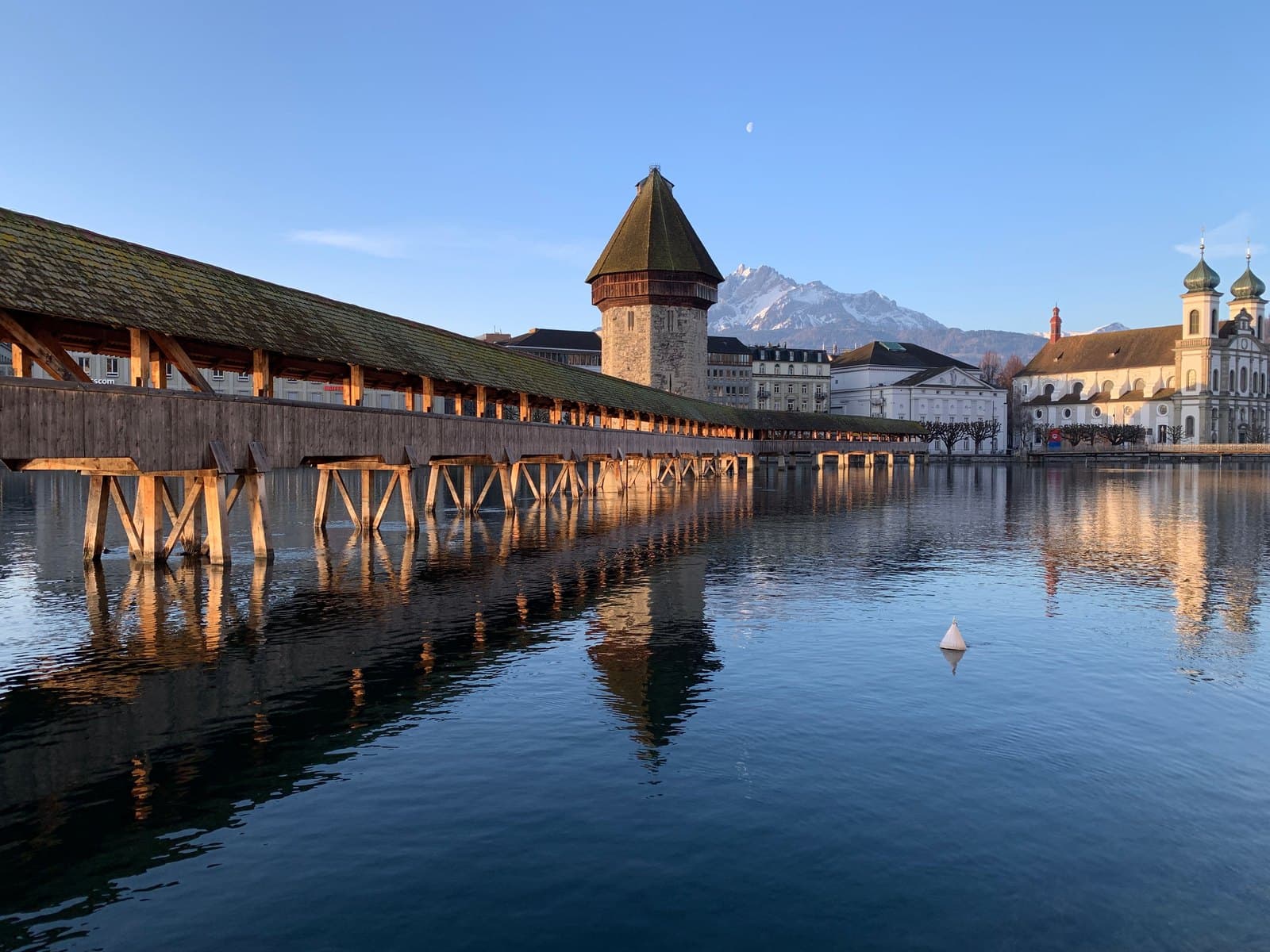
The Chapel Bridge: Burned and Raised Again
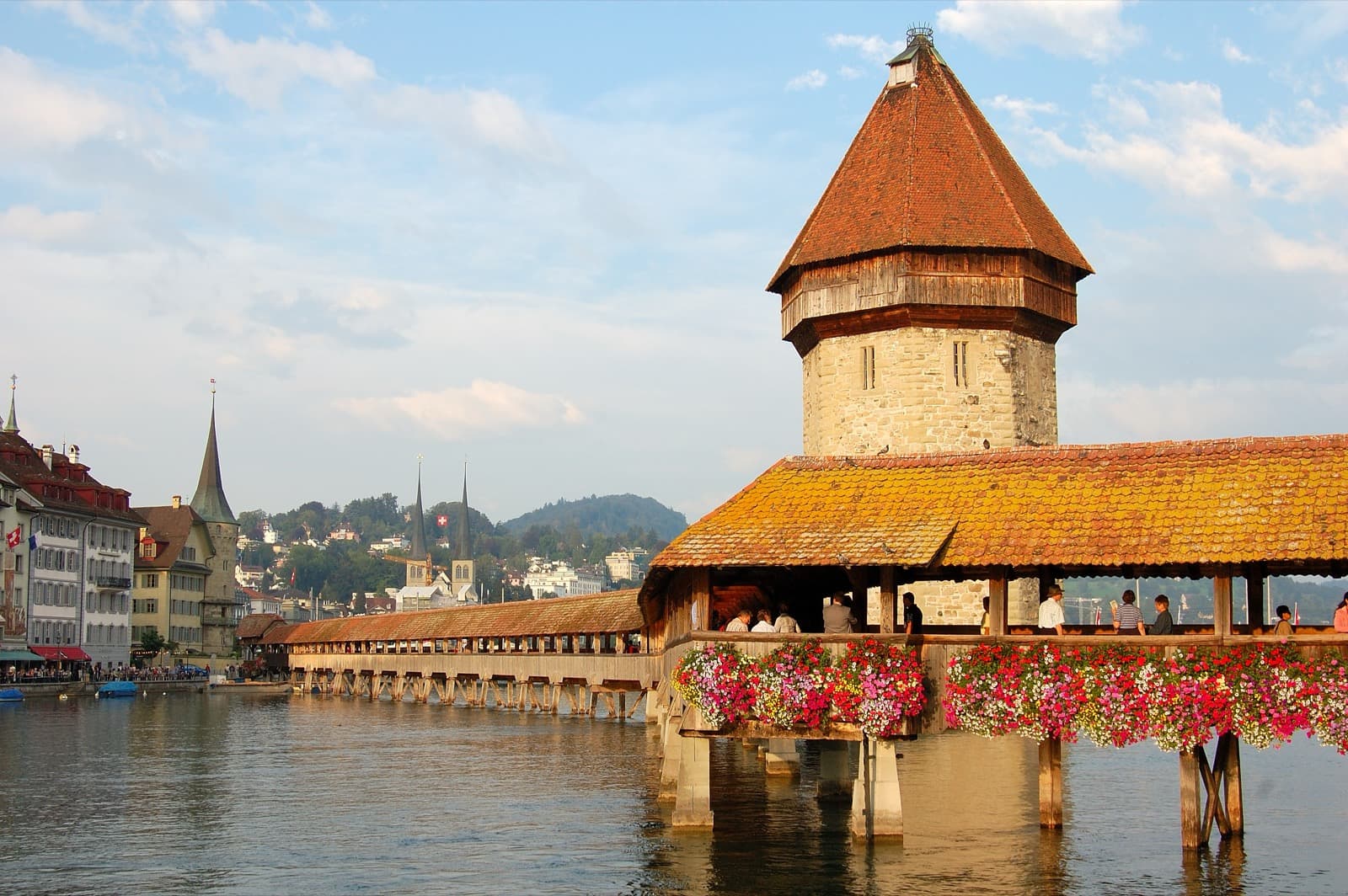
This is Lucerne's fourteenth-century covered bridge. Its painted gables were planned by Renward Cysat, and it was badly burned in nineteen ninety-three and rebuilt in eight months.
- 2
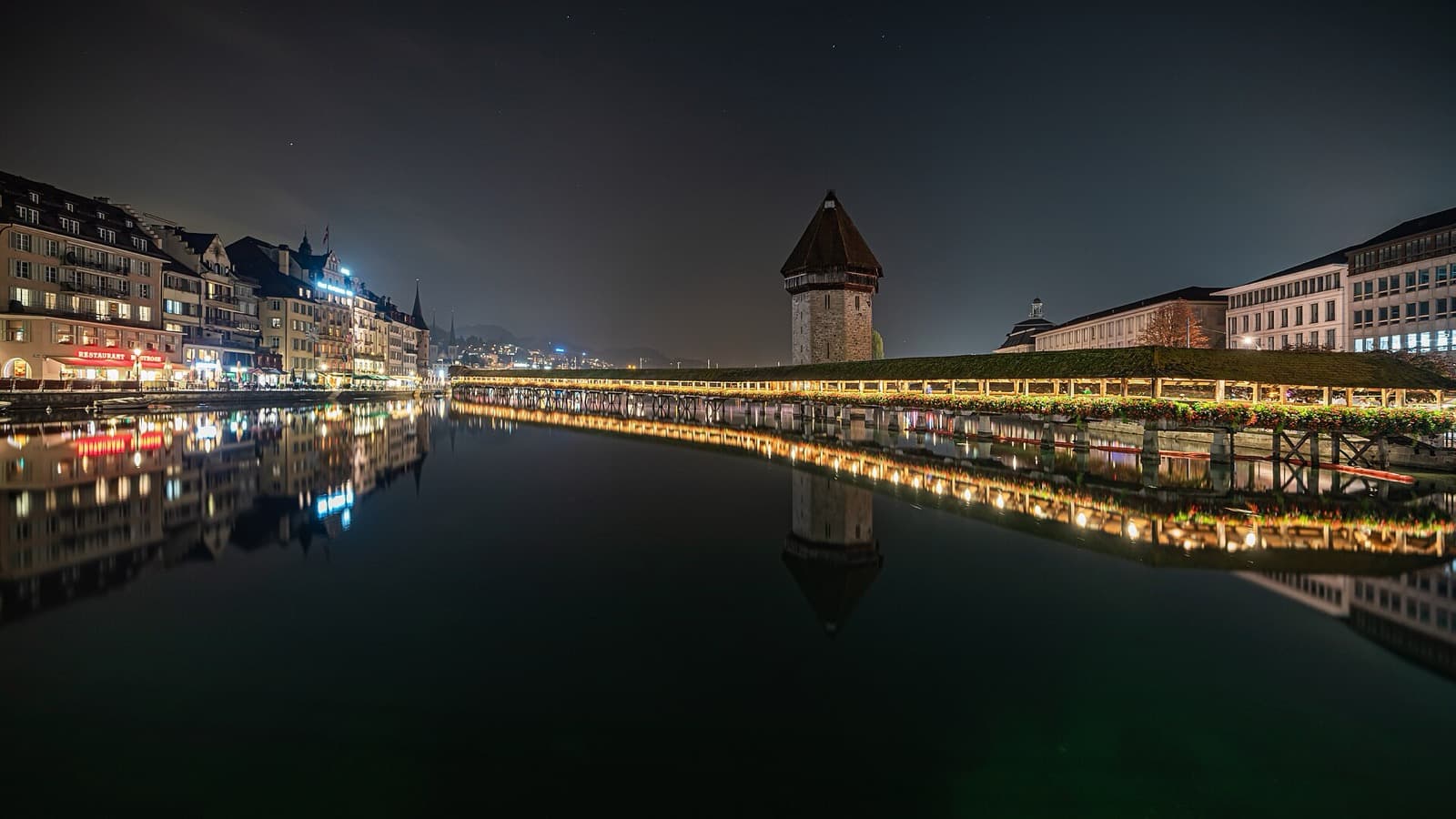
The Water Tower: The Fortress in the River
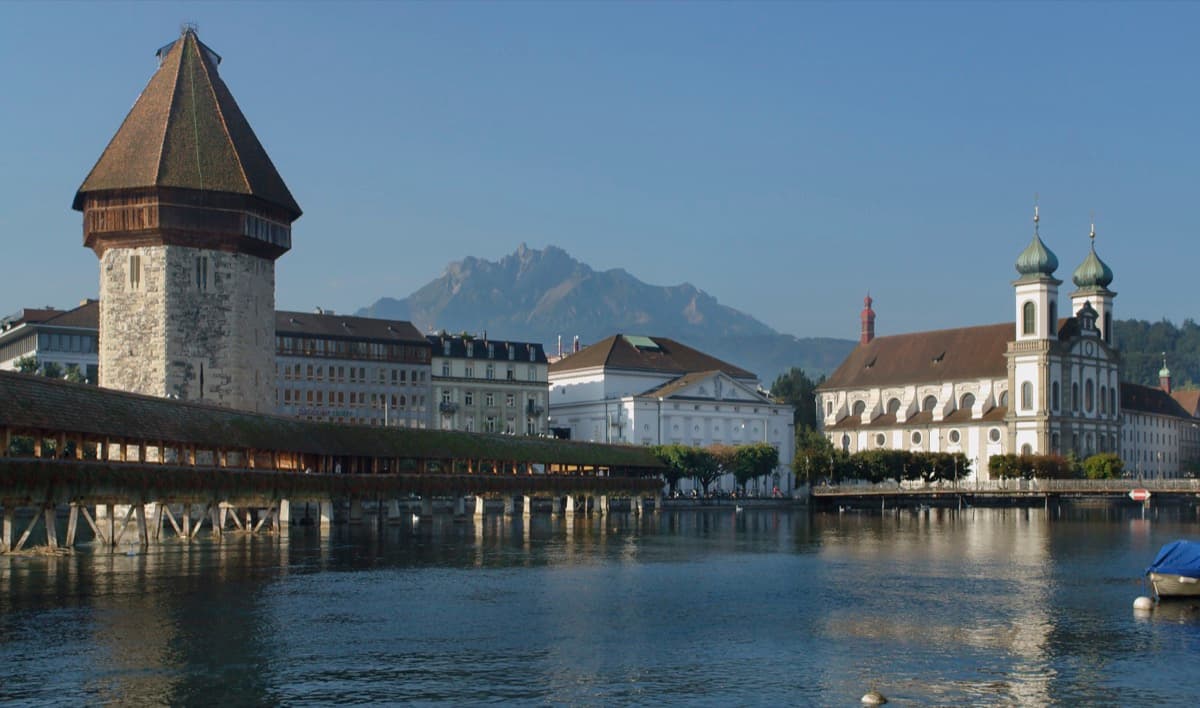
The eight-sided stone tower standing in the Reuss, older than the bridge beside it and once the town's archive, treasury and prison. Seen from the quay.
- 3
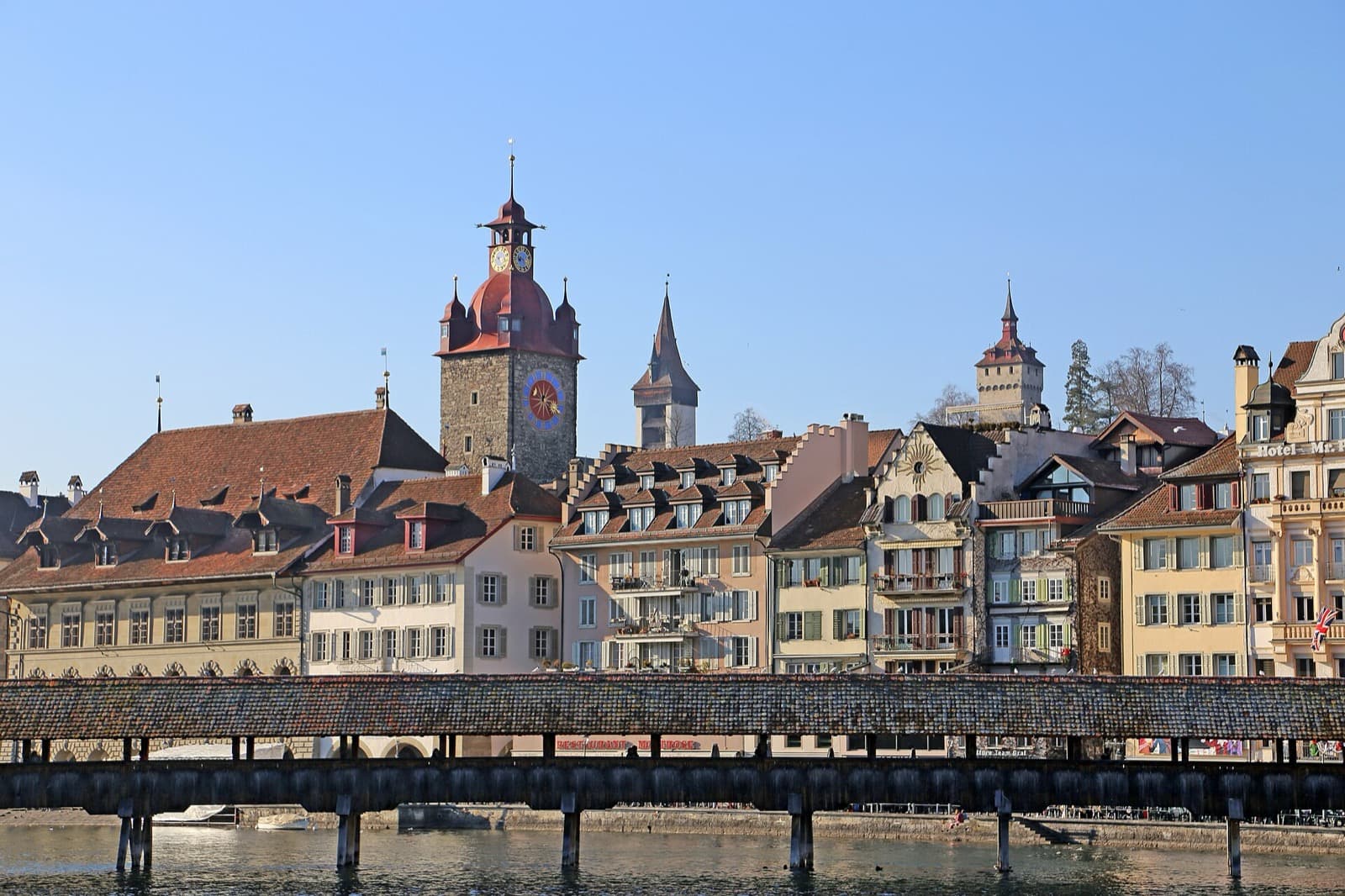
The Town Hall and the Kornmarkt: Italian Walls, Farmhouse Roof
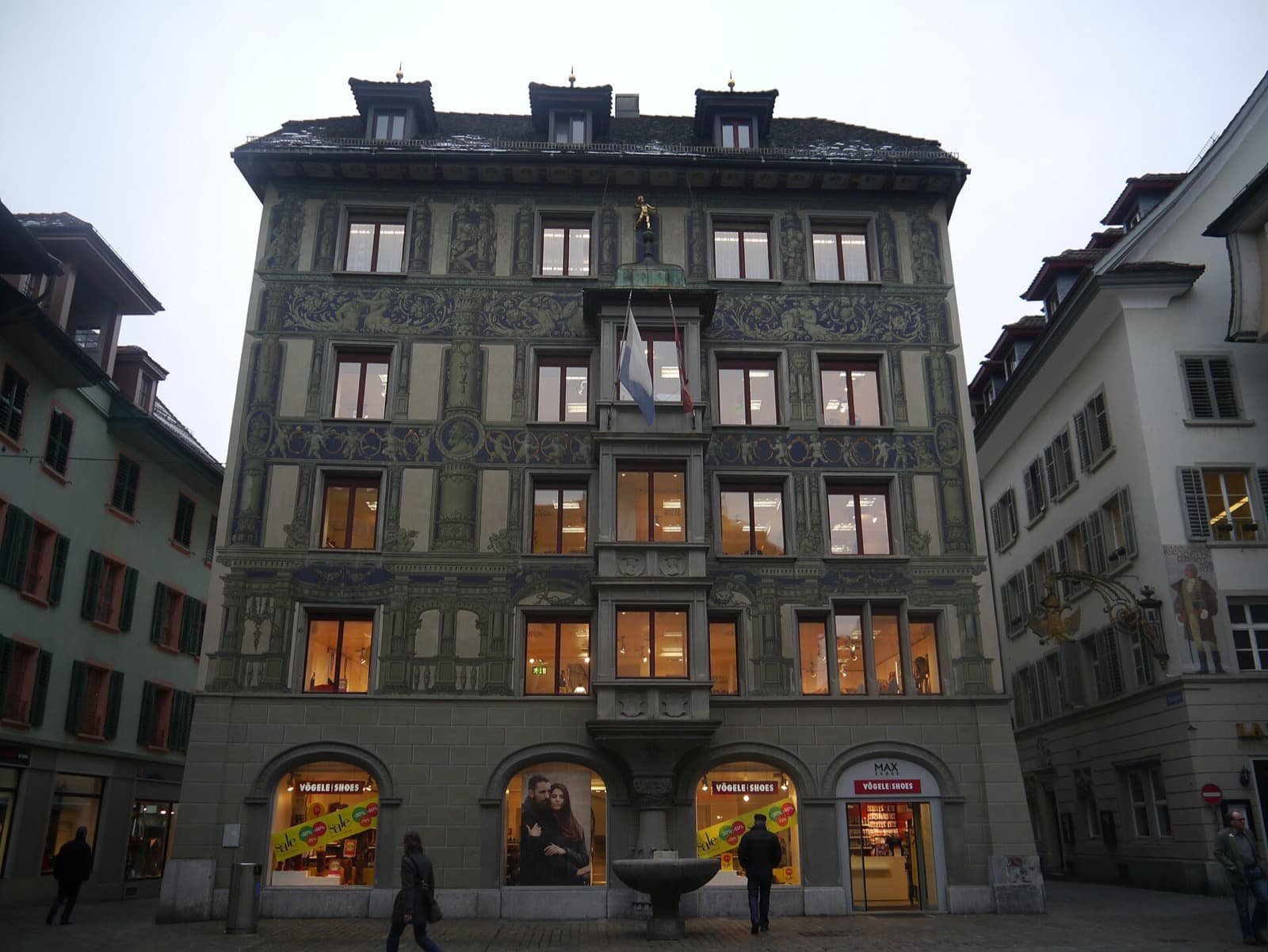
The medieval grain market and the Town Hall rebuilt over it between sixteen oh two and sixteen oh six: Italian Renaissance walls under a Bernese farmhouse roof.
- 4
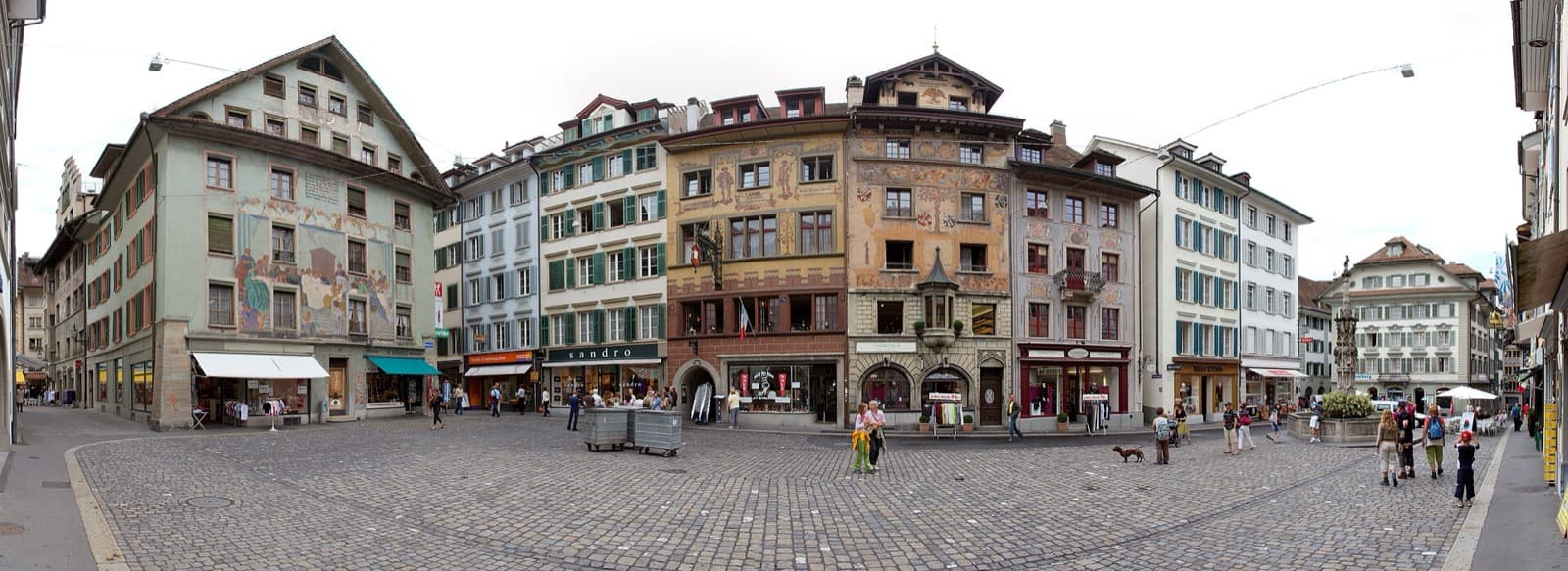
The Weinmarkt: The Square That Became a Stage
The painted square where Lucerne's citizens swore their oath to the Confederation in thirteen thirty-two. The town also staged its Easter play here for over a century and a half.
- 5
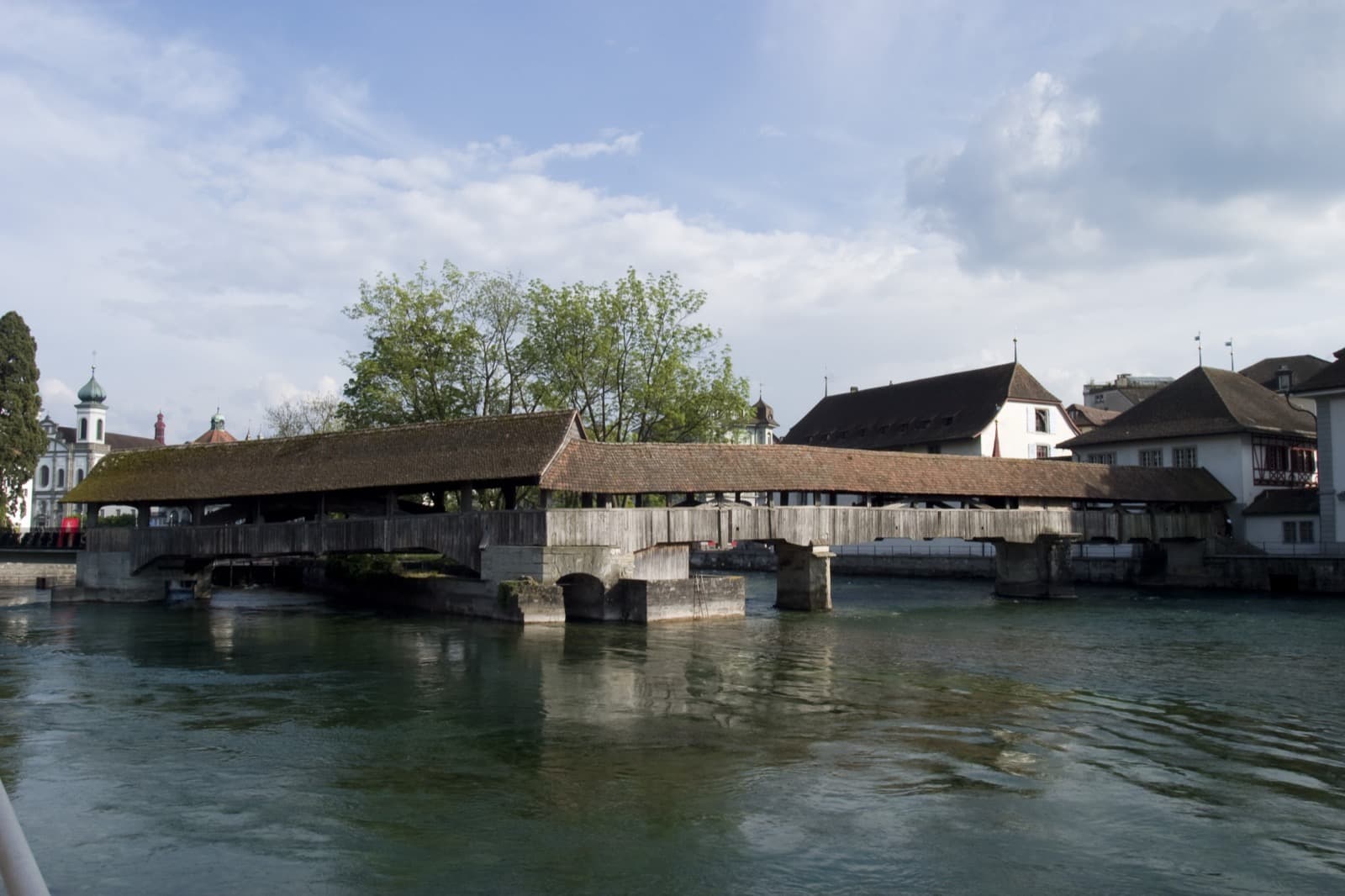
The Spreuer Bridge: The Dance of Death
The mill bridge downstream is hung with the largest known Dance of Death cycle. It was painted under Kaspar Meglinger in the seventeenth century.
- 6
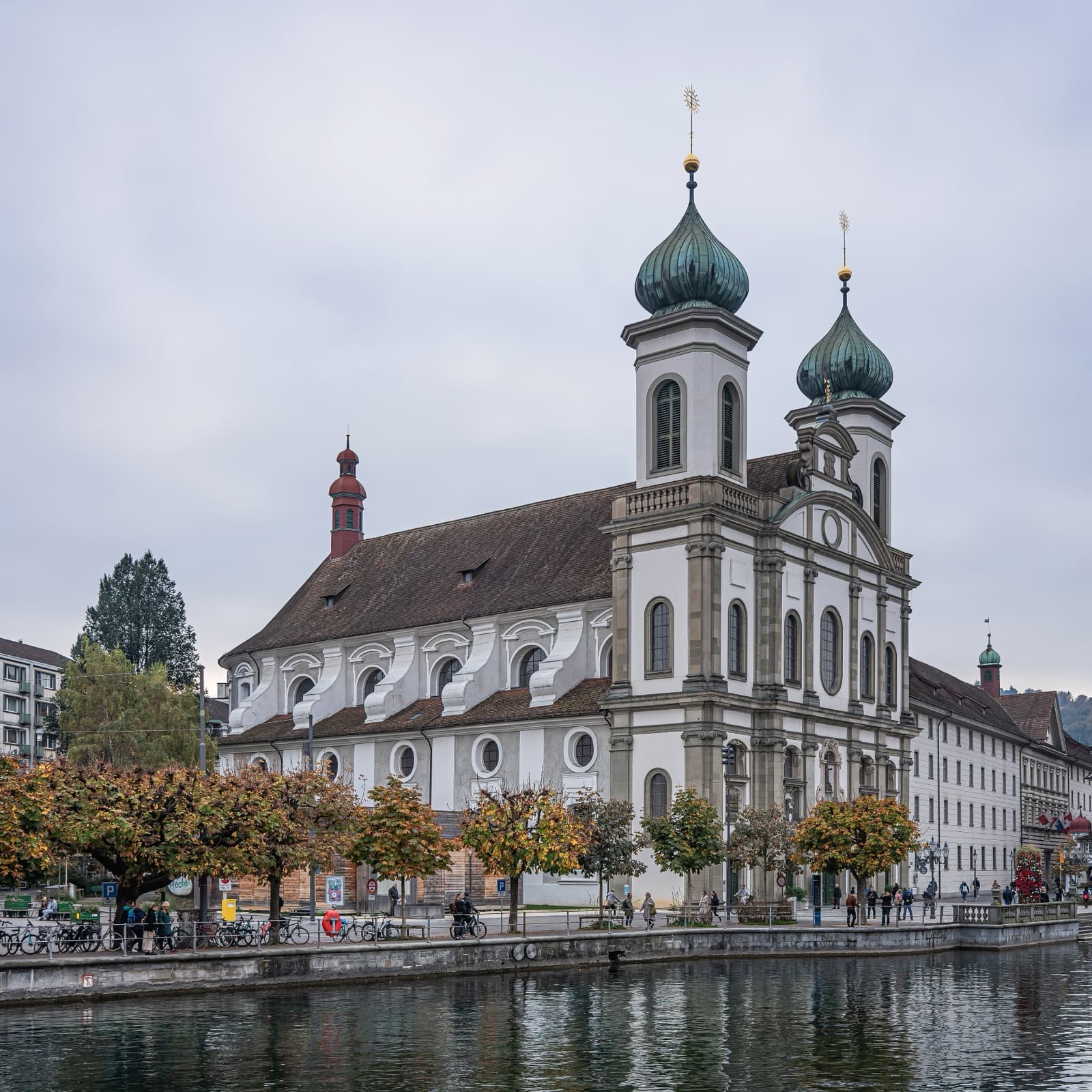
The Jesuit Church: Baroque Lucerne on the River
The first large Baroque church built in Switzerland, consecrated in sixteen seventy-seven, facing the old town across the Reuss.
Details
Best Time to Visit
Early morning or the last hours of daylight are the loveliest times to walk this loop, when the covered bridges and painted squares are quieter and the low light doubles the Water Tower in the River Reuss. Midday in high summer brings the largest crowds to the Chapel Bridge, so an early start rewards you with room to linger under the painted gables. Spring and autumn offer mild weather and thinner crowds, while winter can be crisp and clear but cold along the open quays.
Pro Tips
- •Start at the Chapel Bridge early in the day to cross it before the tour groups arrive, then follow the quay into the old town as the bridge fills up.
- •Look up as you cross both covered bridges: the paintings sit in the triangular gables of the roof timbers and are easy to miss if you keep your eyes on the water.
- •On the Spreuer Bridge, check the lower left corner of the Dance of Death panels for the coat of arms of the family who paid for each one.
- •The Hirschenplatz is a few steps from the Weinmarkt; detour through it for more painted facades before heading to the river.
- •The Jesuit Church is free to enter outside services, and its acoustics make it a concert venue, so it is worth checking for an evening concert.
- •The loop ends a short stroll from where it began and a few minutes from Lucerne station, so it fits neatly before or after a train or a lake cruise.
Safety & Precautions
- •The covered wooden bridges and the stone quays along the Reuss can be crowded and slippery when wet, so wear sturdy shoes and take care underfoot.
- •The riverside path between the Spreuer Bridge and the Jesuit Church has a few steps; for a step-free route, follow Pfistergasse and Bahnhofstrasse instead.
- •The Jesuit Church is a working place of worship, so dress modestly, keep your voice low, and be respectful of any service in progress.
- •Alpine weather changes fast, so carry a waterproof and sun protection even on a clear morning, and remember that Switzerland uses Swiss francs, not euros.
Travel advisory: Exercise Normal Precautions (Level 1).
Gallery
Related Reading
Go deeper on what you'll see, hear, and walk through.
Overview
Best Self-Guided Walking Tours in Lucerne (2026)
3 min
Overview
Lucerne Travel Guide: How Many Days, Getting Around, and When to Visit
7 min
Overview
One Day in Lucerne: A Walkable Morning-to-Evening Itinerary
8 min
Thematic
Best History Walking Tours in Lucerne (2026)
2 min
Thematic
The Painted Lake Town: How Lucerne Reads on Foot
7 min
Companion
The Chapel Bridge Burned in 1993. What Lucerne Rebuilt Tells You How to Read the Whole Old Town
7 min
Deep dive
The Jesuit Church of Lucerne: Switzerland's First Large Baroque Church, Built as an Argument
6 min
Read
What to Eat in Lucerne: Local Dishes and How to Order Them
6 min
Read the walk
The full story of Old Town: The Chapel Bridge and the Painted Squares, in words. Prefer to listen? Play it narrated, from home or on location.
Introduction
In August nineteen ninety-three, fire ran along the roof of a wooden bridge in Lucerne, Switzerland, and destroyed much of it in a single night. Eight months later the town was walking across it again. That speed tells you what this place holds onto. Lucerne keeps two covered bridges over the River Reuss, and they tell opposite stories. The Chapel Bridge is bright and reborn, a picture book of the town's own history hung under its roof. The Spreuer Bridge, downstream, carries a Dance of Death, where Death comes for people of every rank. Between the two lie the painted squares where Lucerne's citizens swore their oath to the Swiss Confederation and once turned the market into an Easter stage, and the walk ends at the first large Baroque church built in Switzerland, facing the old town across the water. One man links the first bridge to the old stage: Renward Cysat, a councillor and apothecary who planned the bridge paintings and drew the stage for the Easter play. This loop has six stops and covers a little over a kilometre, about fifty minutes at your own pace, on flat ground with a few steps near the end. It crosses each bridge once and finishes a short stroll from where it begins. Linger wherever you like, and skip anything that does not call to you. When you arrive at the southern end of the Chapel Bridge, on the station side of the river, begin with stop one.
1. The Chapel Bridge: Burned and Raised Again
Welcome to the Chapel Bridge, the Kapellbruecke, your first stop and the most photographed sight in Lucerne. Bruecke means bridge. Tree-ring dating shows it was built no earlier than thirteen fifty-six, as part of the town's fortifications. It runs about two hundred and five metres today, and it was once longer, close to two hundred and eighty, before it was cut back in the nineteenth century. Step onto it and look up. Set into the triangular gables under the roof are painted panels. In sixteen eleven, Renward Cysat, an apothecary, mapmaker and city councillor, finished the plan for the cycle: scenes from the history of Lucerne and of the Swiss Confederation, and from the lives of the city's patron saints, Leodegar and Maurice. The painter Hans Heinrich Waegmann brought it to life over the following decade. Hold on to Cysat's name. He turns up again on the old market square. Then came the night of the eighteenth of August, nineteen ninety-three. Fire ran along the roof and destroyed much of the bridge. The two bridgeheads survived, and so did the stone tower in the river beside it, scorched but standing. Of the paintings hanging that night, only thirty could be fully restored. Lucerne rebuilt its bridge in about eight months and walked across it again on the fourteenth of April, nineteen ninety-four. So cross slowly. Look up at each gable as you pass, and remember that much of the timber around you is younger than the fire. At the far end, turn left along the riverside quay and look back across the water. The tower the bridge angles past is our next stop, and it is best seen from there.
2. The Water Tower: The Fortress in the River
You've reached the Rathausquai, the Town Hall quay, and this is the view to stop for. Face the river and find the stone tower standing in the water beside the bridge. This is the Wasserturm, the Water Tower, turm meaning tower. It has eight sides, it rises about thirty-four and a half metres, and it was built around thirteen hundred, some decades before the bridge that now angles past it, as part of the young town's fortifications. Here is the second thing hidden in the postcard. Lucerne's great landmark was, for most of its life, a strongbox and a jail. Over the centuries the tower held the town archives, kept here until nineteen nineteen, and the treasury. Its lower rooms served as a prison and a torture chamber, and the records tell that prisoners were lowered into the dungeon on a rope. The tower is still closed to the public, so this is a stop for looking, not for entering. Notice, too, how the timber and the stone came through the fire of nineteen ninety-three. The wooden bridge burned. The tower survived it, its sandstone damaged by the heat but still standing in the current, as it has for more than seven centuries. Hold both readings at once, the lovely picture and the hard old fortress underneath it. It is a habit worth keeping for the rest of this walk, because almost nothing in this old town is only what the postcard shows. When you are ready, keep following the quay downstream, with the river on your left, for about a hundred metres. The Town Hall stands at the water's edge, with a small square behind it.
3. The Town Hall and the Kornmarkt: Italian Walls, Farmhouse Roof
You've arrived at the Kornmarkt, the Corn Market, and the building beside you is Lucerne's Town Hall, the Rathaus. Markt means market, and Rathaus means council house. Around thirteen seventy the town built a public trading hall and granary here, and the square took its name…
Full narration for this stop unlocks with the tour.
4. The Weinmarkt: The Square That Became a Stage
Welcome to the Weinmarkt, the Wine Market, one of the painted squares at the heart of old Lucerne. Take a moment in the middle and turn slowly. Tall old houses close the space on every side, their facades painted with figures and bands of colour. Until the middle of the fifteen…
Full narration for this stop unlocks with the tour.
5. The Spreuer Bridge: The Dance of Death
You've reached the Spreuerbruecke, the Spreuer Bridge, the second of Lucerne's covered bridges on this walk, and the one that tends to stay with people. Its name is a working name. Spreu means chaff, and chaff from the city's mills could be tipped into the river only from this…
Full narration for this stop unlocks with the tour.
6. The Jesuit Church: Baroque Lucerne on the River
Welcome to the Jesuit Church, the Jesuitenkirche, your final stop, standing on the south bank and facing the old town across the Reuss. It is dedicated to Saint Francis Xavier, and it is free to enter outside services. The Jesuits came to Lucerne in fifteen seventy-four to run a…
Full narration for this stop unlocks with the tour.