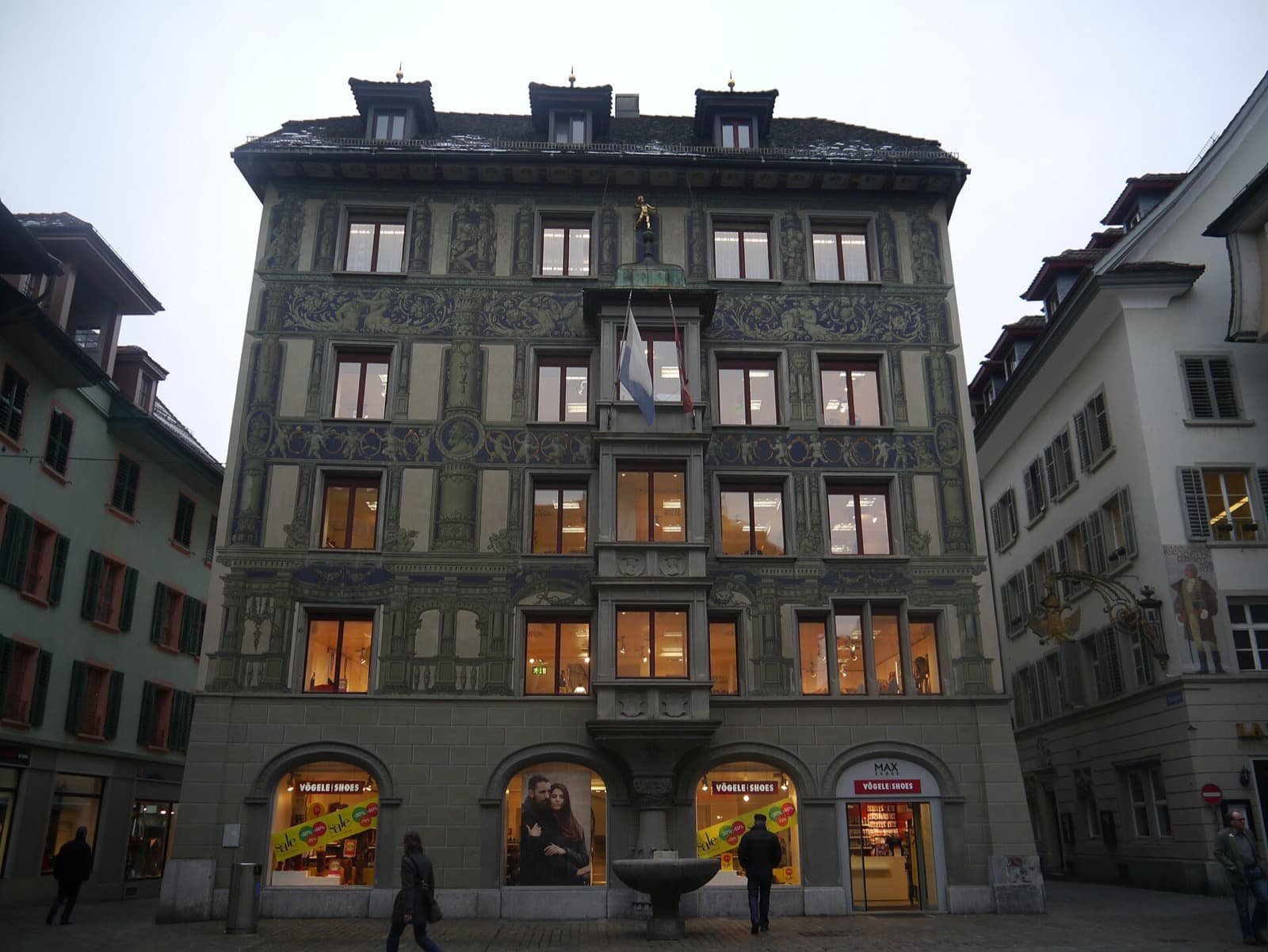
Behind Lucerne's painted facades lies a soldiers' city and a walled city: a dying lion carved in a cliff, a crown of medieval towers, a twin-towered court church, and the lake where the steamers leave for the mountains.
Start · Loewendenkmal: The Dying Lion
DirectionsStops
- 1
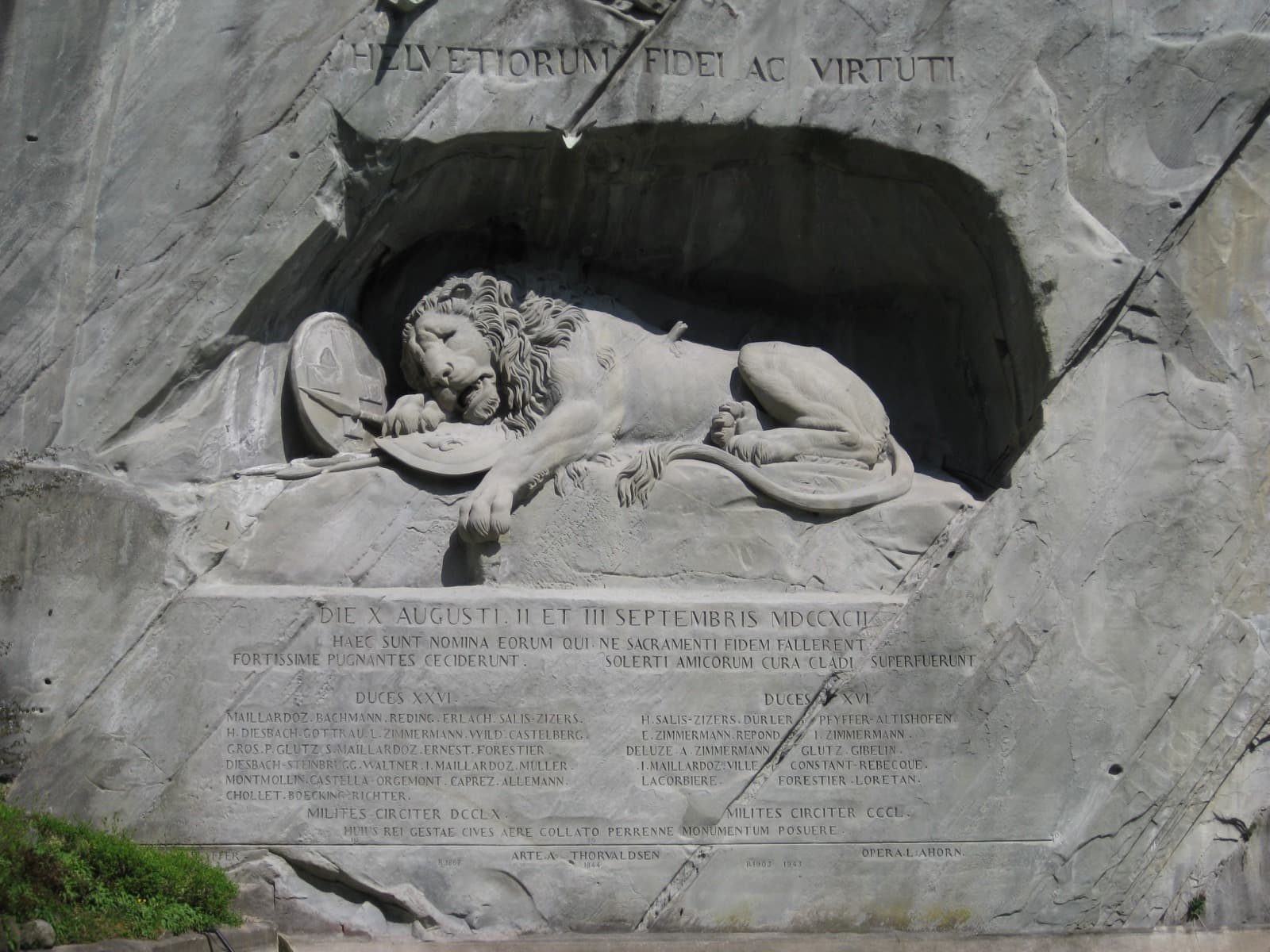
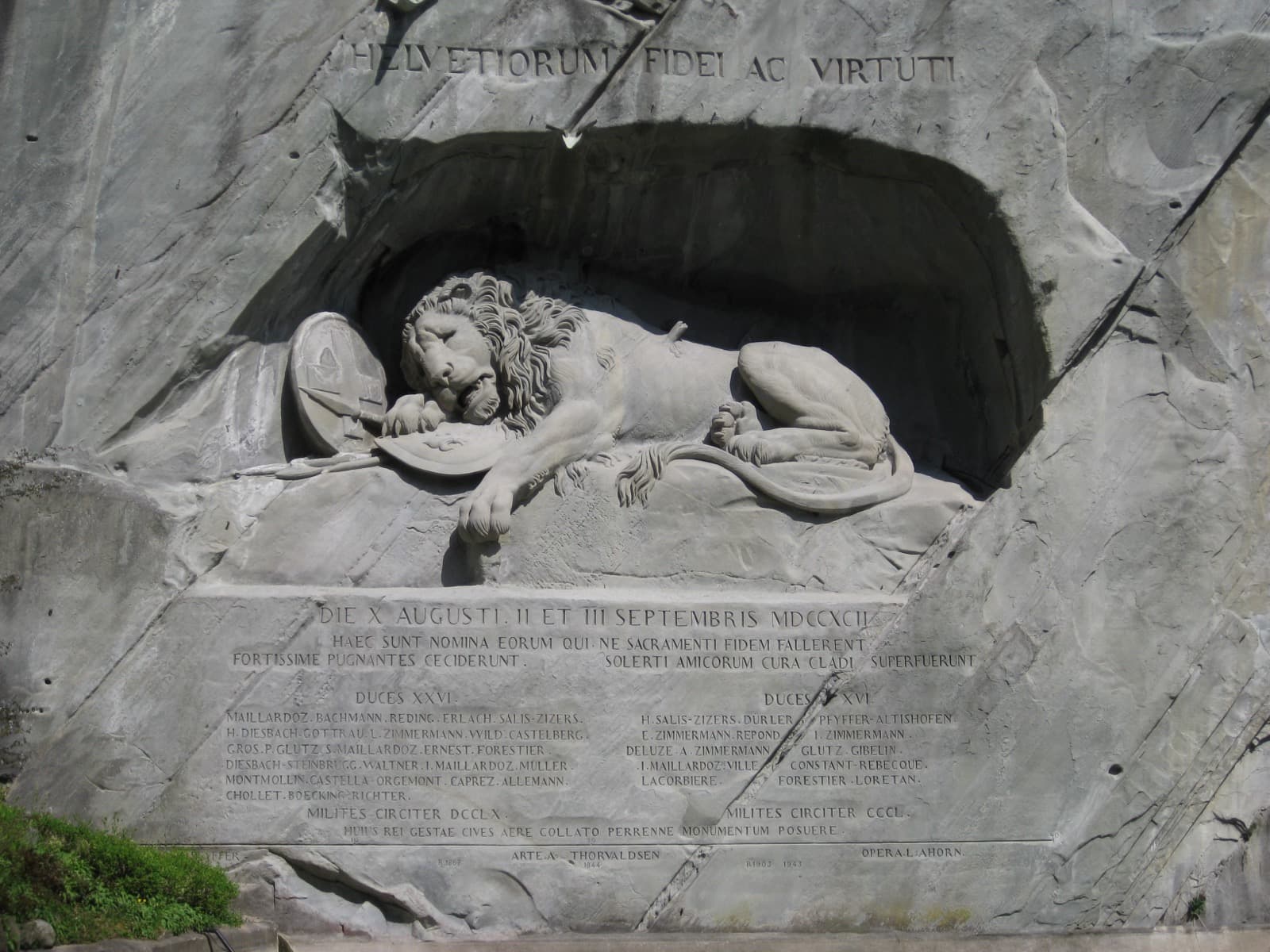
Loewendenkmal: The Dying Lion
A colossal dying lion carved into a sandstone cliff above a still pool, a memorial to the Swiss Guards killed in Paris in seventeen ninety-two.
- 2
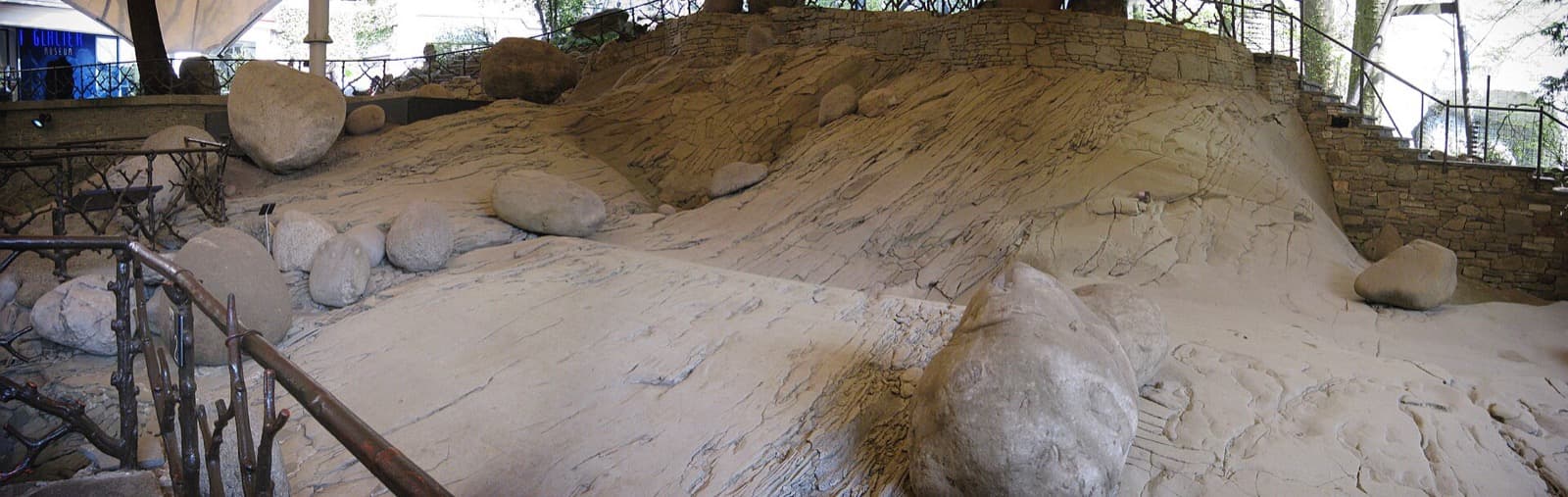
Gletschergarten: The Ice Age Ground
A natural monument of glacial potholes ground out of the rock at the end of the last Ice Age, discovered by a man digging a wine cellar.
- 3
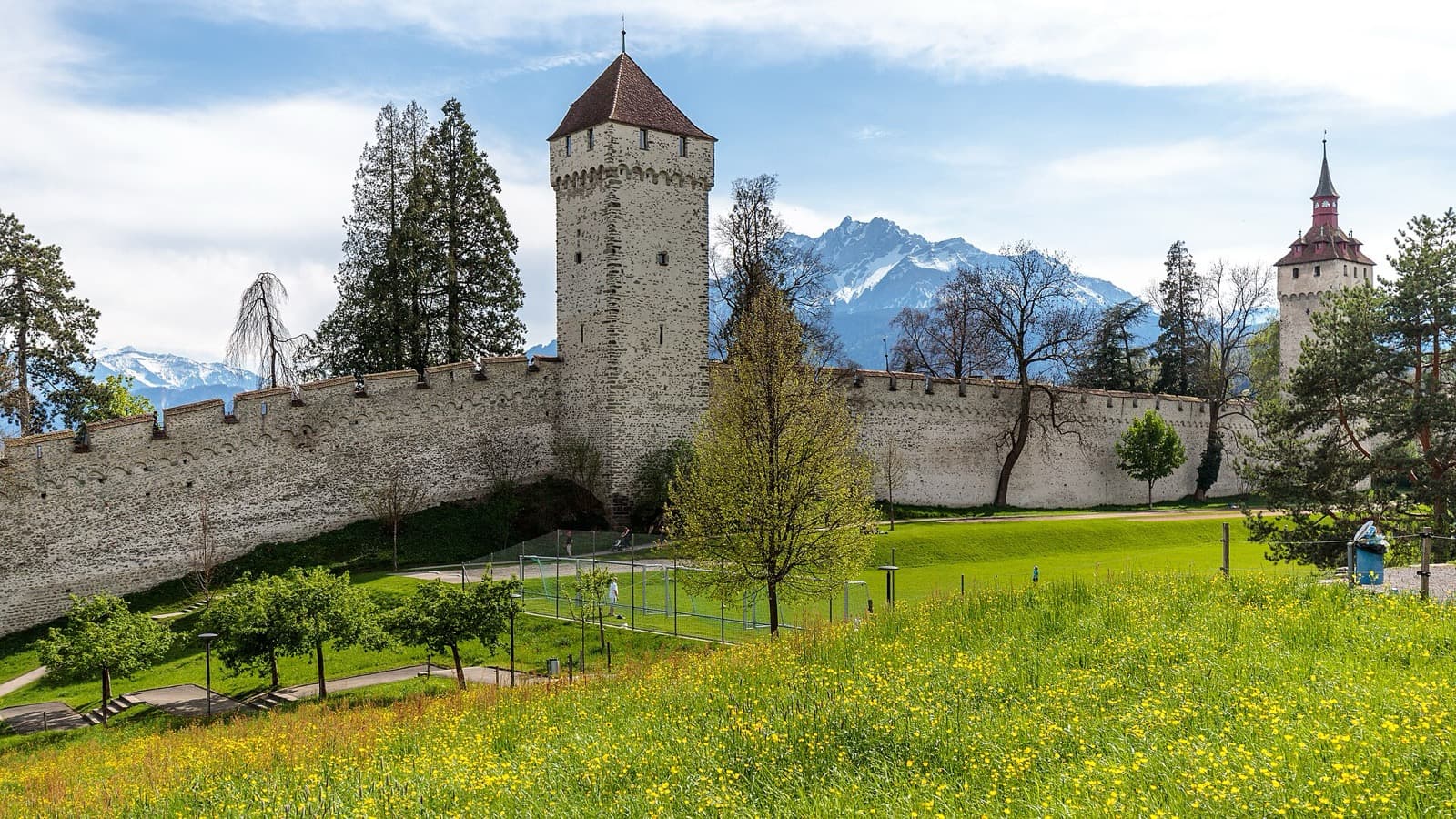
Museggmauer: The Wall of Nine Towers
Lucerne's second ring of fortifications, built from the fourteenth century, the longest surviving town wall in Switzerland with nine towers still standing.
- 4
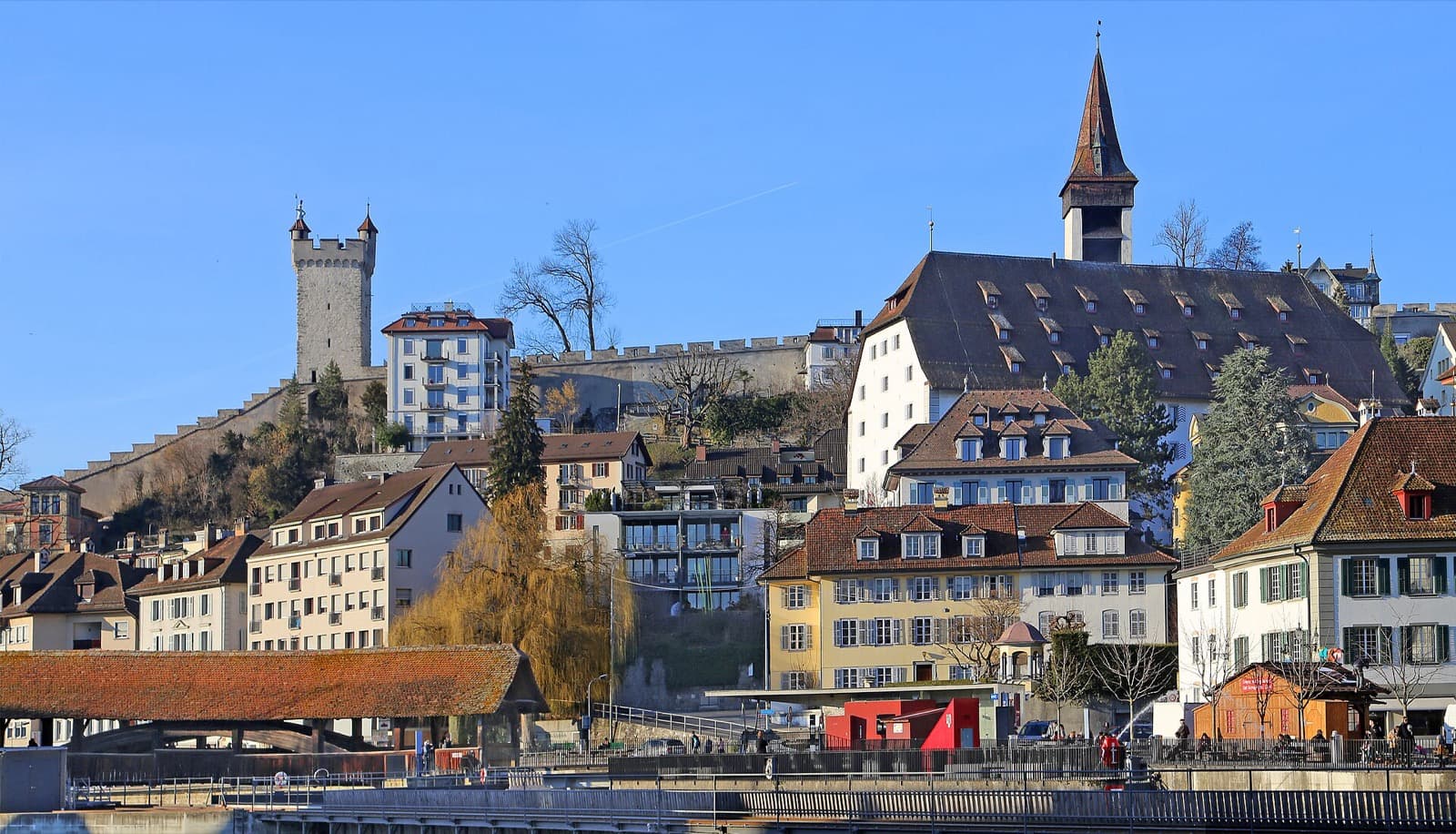
Zytturm: The Rampart Panorama
A walkable Musegg tower holding Lucerne's oldest clock, with a rampart view over the old town, the lake and the Alps.
- 5
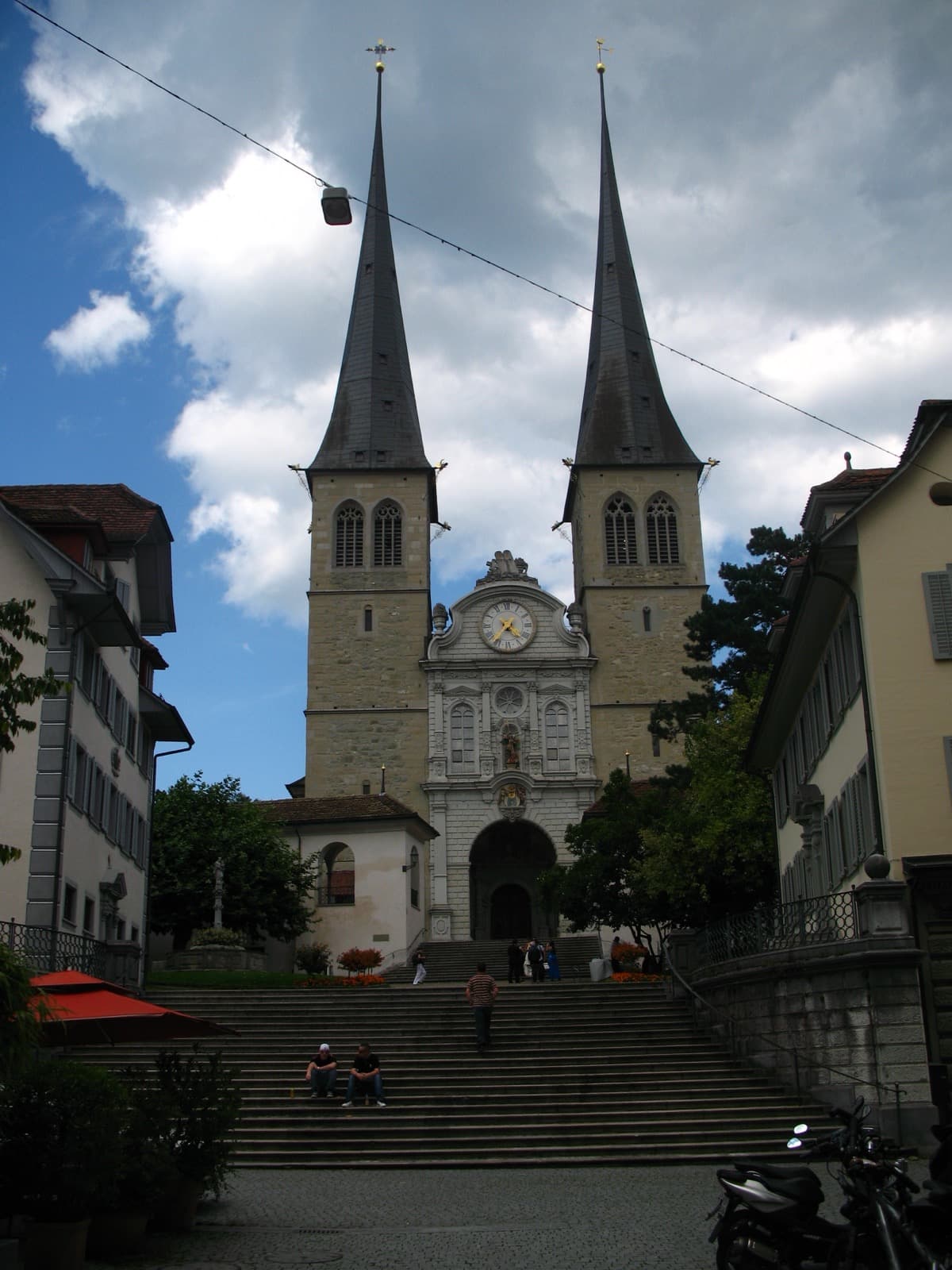
Hofkirche Sankt Leodegar: The Court Church
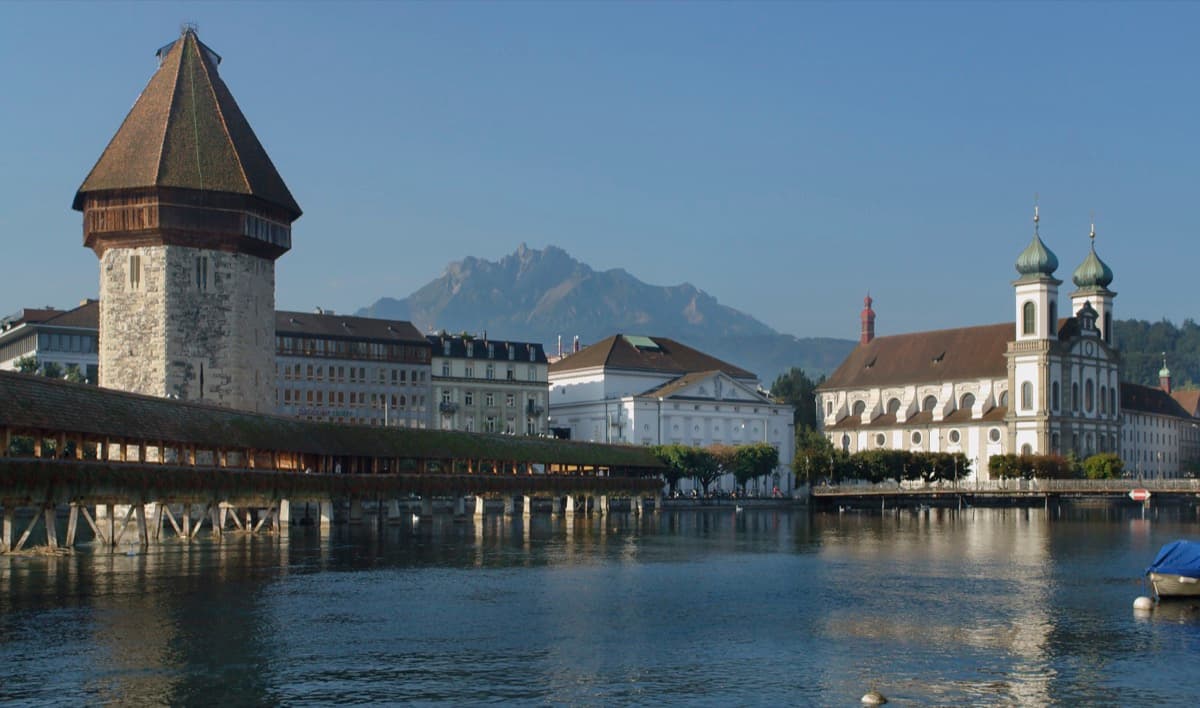
The twin-spired court church above the lake, its Gothic towers survivors of a great fire, standing on the monastery that is the root of the town.
- 6
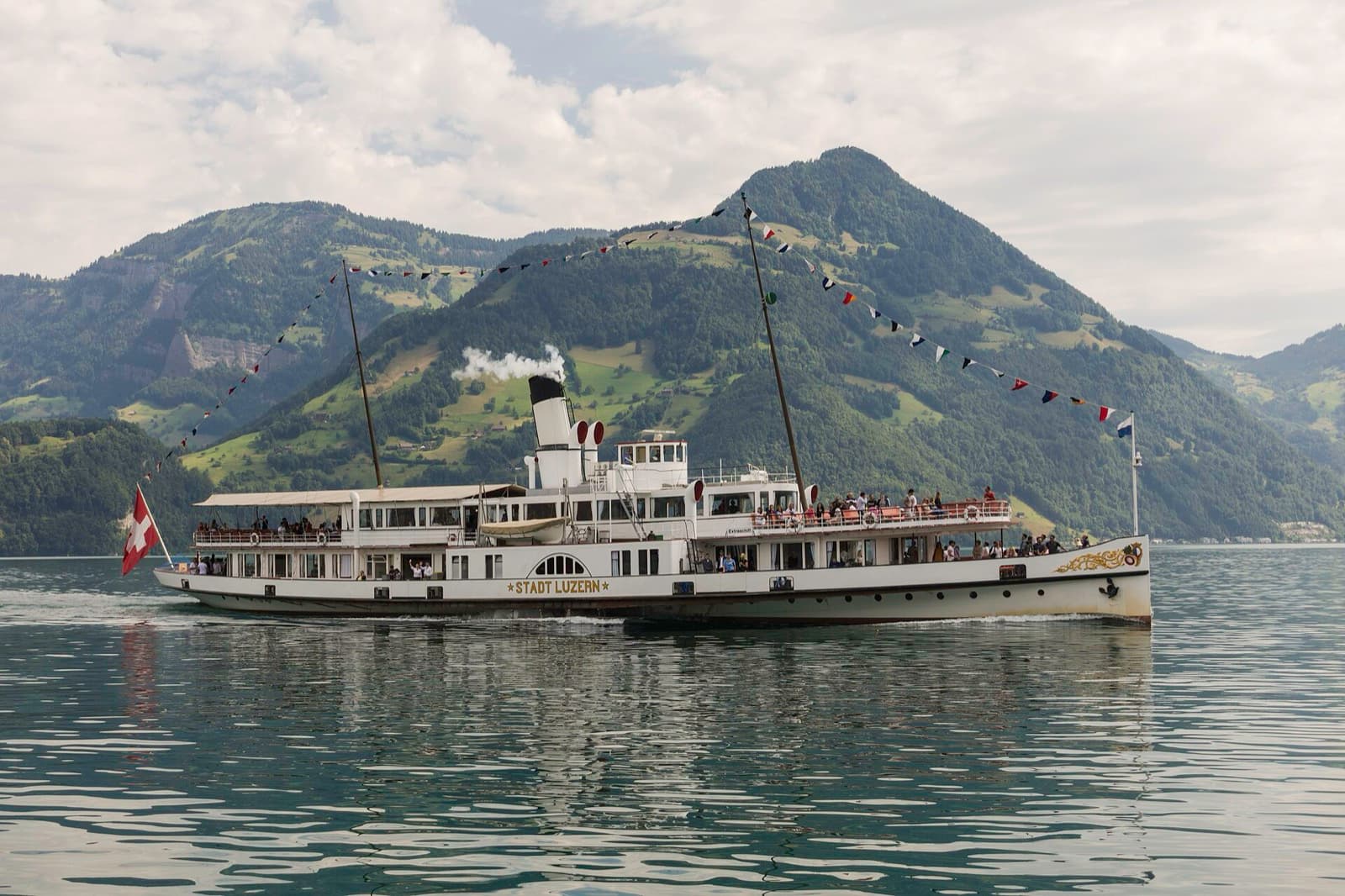
The Lakefront: The Steamers Under the Mountains
The lakefront quays where the historic paddle steamers set out across Lake Lucerne, one of the birthplaces of Alpine tourism.
- 7
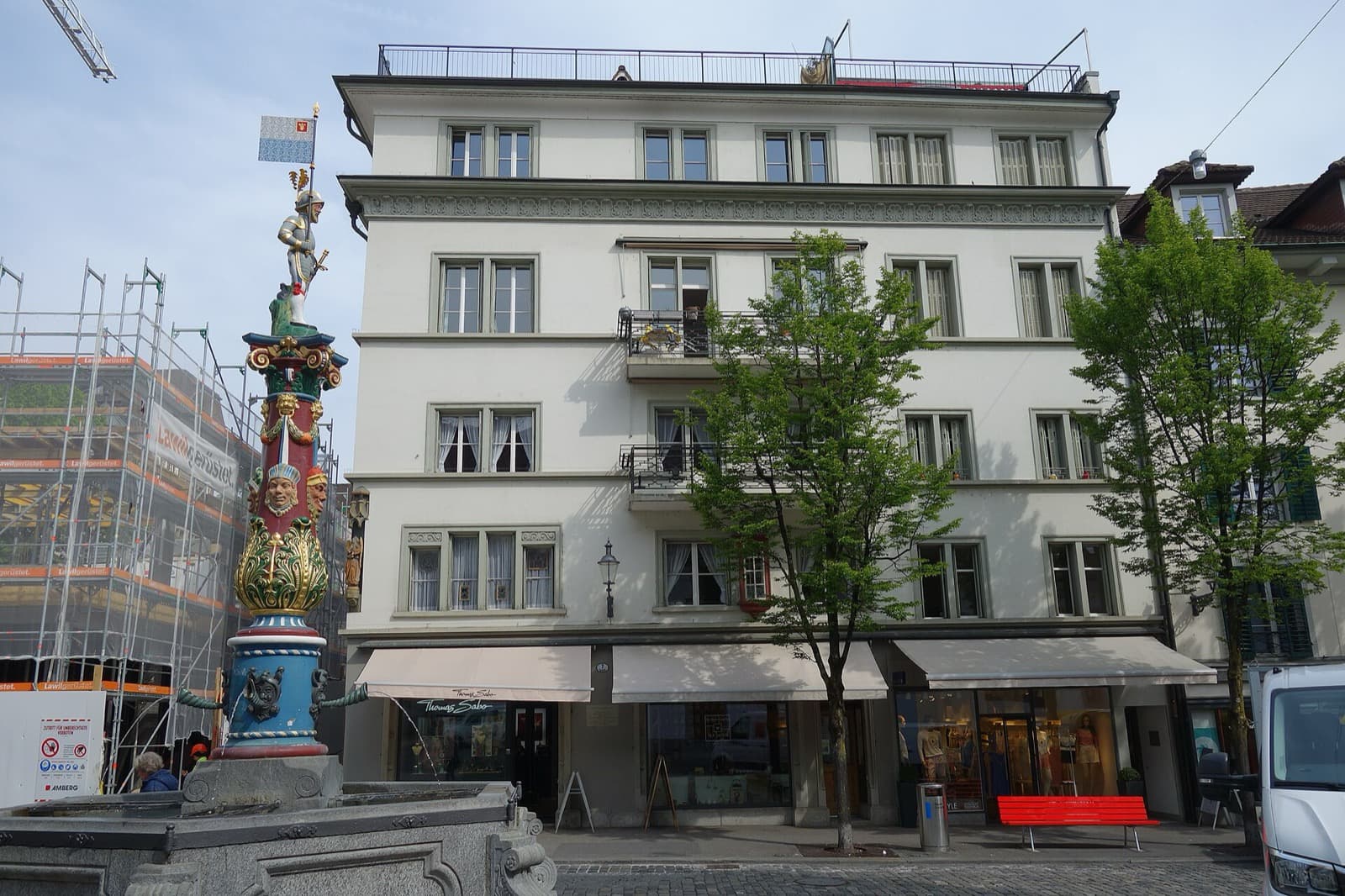
Kapellplatz: The Carnival Fountain
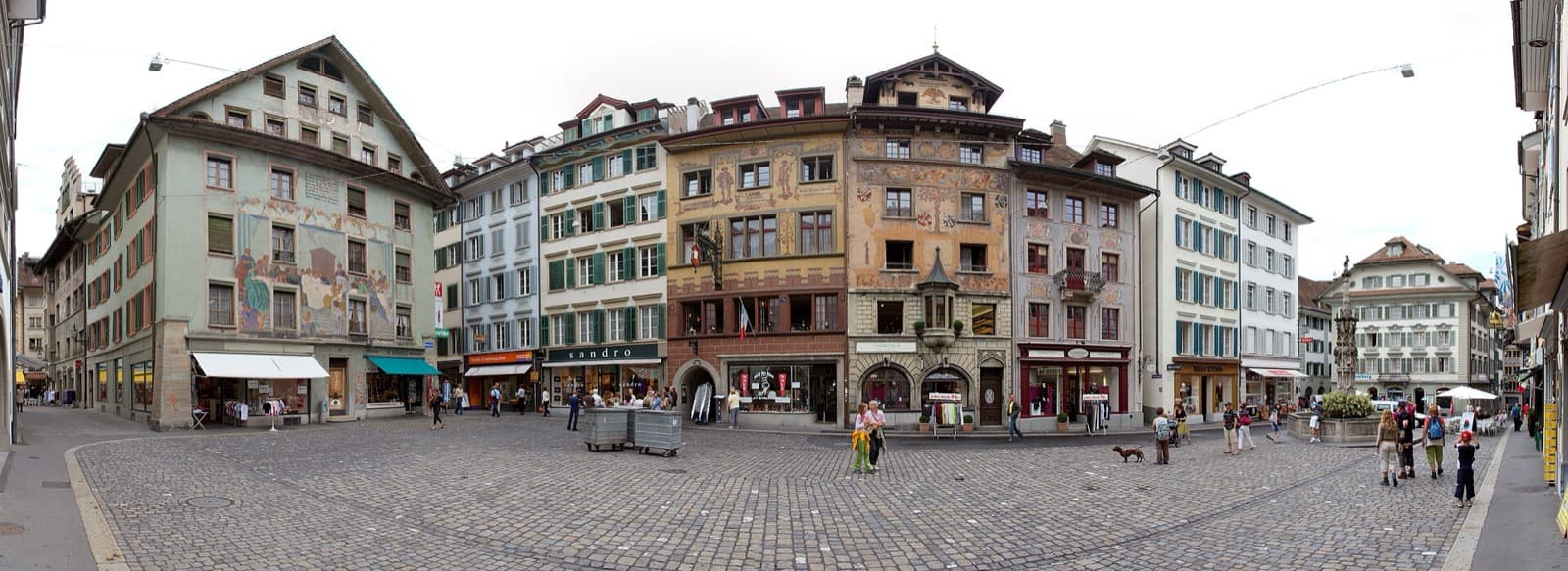
A square by the oldest chapel within the old walls, home to a carnival fountain and the source of the Chapel Bridge's name.
Details
Best Time to Visit
Late morning to early afternoon, when the Musegg Wall towers are open (they stand open from the first of April to the first of November, roughly eight in the morning to seven in the evening) and the light falls well on the sandstone cliff of the Lion Monument. Come on a weekday if you can: the covered bridges, the memorial and the lakefront are among the busiest sights in the Alps, and mornings before the tour buses arrive or the hour before dusk both give you the old town at its quietest. Spring and autumn bring clear air over the lake and the best chance of seeing Mount Pilatus and Mount Rigi from the ramparts, while summer keeps the towers and the paddle steamers running on their fullest timetables. Whenever you come, the walk is yours to set: linger at the pool below the lion, climb a tower when the queue is thin, and sit by the Reuss on your own clock.
Pro Tips
- •Buy tower and museum tickets in Swiss francs, not euros. Switzerland keeps its own currency, and many small kiosks and older machines take cash francs more readily than cards.
- •Do the Musegg Wall in the middle of the walk while the towers are open. The ramparts between the towers are free to walk from the first of April to the first of November, so climb a tower when the queue is short and linger on the wall as long as you like.
- •Time the Zytturm for its clock. The tower holds the oldest clock in Lucerne, its mechanism dated fifteen thirty-five, and by tradition it strikes the hour one minute before the other clocks in the city, so pause near the top of the hour if you can.
- •Check the paddle-steamer timetable at the quay. The historic steamers run to a schedule, so if you want to watch one leave or plan a later cruise, read the boards on the Schweizerhofquai before you settle into the old town.
- •Wear shoes with grip. The quays, the covered bridges and the cobbled squares can be slick when wet, and the path up to the Musegg towers rises on uneven ground.
- •Keep your visits to the working churches brief and quiet. The Hofkirche and Saint Peter's Chapel are active places of worship, so dress modestly and step in gently, especially around services.
Safety & Precautions
- •The covered wooden bridges and the lakefront quays can grow crowded and slippery when wet. Take care on the smooth timbers and the stone quays, and watch your footing where visitors gather to photograph the water.
- •The climb to the Musegg towers rises on uneven, sometimes steep ground, and the tower stairs are narrow and old. Take the ramparts at your own pace, mind your head on low openings, and skip the climb if stairs are difficult for you.
- •The lake steamers and the ticketed towers and museums run to timetables and charge entry in Swiss francs. Plan around their opening hours, and remember the towers close for the winter season from early November.
- •Alpine weather changes fast. Bring sun protection for the exposed ramparts and the open quay, and a waterproof layer, since a clear morning over the lake can turn to rain by afternoon.
Travel advisory: Exercise Normal Precautions (Level 1).
Gallery
Related Reading
Go deeper on what you'll see, hear, and walk through.
Overview
Best Self-Guided Walking Tours in Lucerne (2026)
3 min
Overview
Lucerne Travel Guide: How Many Days, Getting Around, and When to Visit
7 min
Overview
One Day in Lucerne: A Walkable Morning-to-Evening Itinerary
8 min
Thematic
Best History Walking Tours in Lucerne (2026)
2 min
Thematic
The Painted Lake Town: How Lucerne Reads on Foot
7 min
Companion
The Dying Lion of Lucerne: What the Monument Really Mourns
6 min
Deep dive
The Musegg Wall: Why Lucerne Kept Its Ring of Nine Towers
6 min
Read
What to Eat in Lucerne: Local Dishes and How to Order Them
6 min
Read the walk
The full story of Lion Monument: The Dying Lion and the Wall of Towers, in words. Prefer to listen? Play it narrated, from home or on location.
Introduction
Lucerne, in central Switzerland, wears two faces. On the surface it is a resort town of covered bridges, painted house fronts and lake cruises. Underneath runs a harder history: a city that sent its young men abroad as hired soldiers, and a town that ringed itself in stone because it knew it needed walls. This tour follows that harder story across seven stops, a walk of roughly four and a half kilometres that takes a little under two hours at an unhurried pace, with time to climb a tower or sit by the water as you please. You will begin at a colossal dying lion carved into a cliff, a memorial to the Swiss Guards killed far from home in Paris. From there the route moves to the deep-time ground of the Glacier Garden, then up to the Museggmauer, the medieval wall whose nine towers still crown the hill. You will walk the ramparts to a tower where the view opens over the old town, the lake and the Alps, then down to the twin-towered court church that is the oldest root of the town. The walk ends at the lakefront where the paddle steamers leave for the mountains, and in a square where a carnival fountain marks the meeting of the old town and the lake. This is your route and your clock. There is no group to keep pace with, no schedule but your own, and no one hurrying you past the pool below the lion. When you arrive at the Lion Monument, begin with stop one.
1. Loewendenkmal: The Dying Lion
This is the Loewendenkmal, the Lion Monument. Loewe means lion, denkmal means monument. Into the face of a sandstone cliff, above a still pool of water, a colossal lion lies dying, a broken spear buried in its side. It was designed by the Danish sculptor Bertel Thorvaldsen and carved into the rock by the stonemason Lukas Ahorn between eighteen twenty and eighteen twenty-one, and unveiled in eighteen twenty-one. The lion mourns the Swiss Guards, mercenary soldiers of the French king, who were killed defending the Tuileries Palace in Paris on the tenth of August seventeen ninety-two, during the French Revolution. The monument's inscription records roughly seven hundred and sixty of the Guard killed and about three hundred and fifty survivors, though modern historians count considerably fewer dead. It is worth saying plainly what these men were. For centuries the poor cantons of Switzerland sent their young men abroad to serve as hired soldiers, a practice the Swiss called Reislauf. They fought and died in the wars of foreign kings, far from the mountains they came from. The lion, about ten metres long and six metres high, shields a shield marked with the French fleur-de-lis, with a Swiss coat of arms beside it. It was placed under Swiss monument protection in two thousand and six. The American writer Mark Twain, who stood here in eighteen eighty, called it, in his book A Tramp Abroad, the most mournful and moving piece of stone in the world. That is his phrase, not a fact, but many who stand at this pool have felt its weight. Take your time. The dead here were real people, and the monument asks only that you remember them. When you are ready, the next stop is a short step away.
2. Gletschergarten: The Ice Age Ground
Just beside the Lion Monument lies the Gletschergarten, the Glacier Garden. Gletscher means glacier, garten means garden. It is a natural monument, and its story begins by accident. On the second of November eighteen seventy-two, a man named Josef Wilhelm Amrein-Troller was digging into the Lucerne sandstone to build a wine cellar when he uncovered strange round hollows worn deep into the rock. He recognised that they were something remarkable, and on the first of May eighteen seventy-three he opened the site to the public as the Glacier Garden. What he had found were glacial potholes: giant round cavities ground out of solid rock by swirling glacial meltwater at the end of the last Ice Age, roughly twenty thousand years ago. The largest is about nine and a half metres deep and eight metres wide. They are evidence, written in stone, that glaciers once buried this land under ice. There is a quiet symmetry here worth pausing on. Steps away, the Lion Monument mourns men who died within living memory of the town. Here, the ground itself records a far older time, when no town existed and ice covered everything. The Glacier Garden today holds a museum and fossils, and a mirror maze from the nineteenth century known as the Alhambra. But the potholes are the heart of it: deep time, sitting right beside the soldiers' memorial. You can spend as long here as you like, or move on when you are ready. There is no queue to keep pace with. When you leave, the walk turns uphill toward the old defensive wall of Lucerne.
3. Museggmauer: The Wall of Nine Towers
This is the Museggmauer, the Musegg Wall. Musegg is the name of the hill, and mauer means wall. It is Lucerne's second ring of fortifications, raised along the sandstone ridge above the town from the fourteenth century onward. The stretch built around thirteen eighty-six still stands almost completely intact. That date matters. In thirteen eighty-six the Swiss confederates fought the Battle of Sempach against the Habsburg Duke Leopold the Third, and it was in the years around that conflict that Lucerne strengthened this wall. A town that had just gone to war understood, very plainly, why it needed stone. At about eight hundred and seventy metres, this is the longest surviving town wall in Switzerland, and one of the best preserved anywhere. Nine of its original towers still stand along the ridge, a crown of stone over the painted houses below. This is the other Lucerne, the one behind the covered bridges and the lakefront hotels: a fortress that never quite forgot it was a fortress. Four of the towers are open to the public, called the Schirmer, the Zyt, the Wacht and the Maennli, and the ramparts between them can be walked. They open from the first of April to the first of November, roughly eight in the morning to seven in the evening, and they are free to walk. This is where your own pace pays off. Climb a tower when the queue is thin. Linger on the rampart as long as you like, with the whole town spread below. There is no group here, no schedule but yours. When you are ready, we walk the wall itself toward a tower with the finest view.
4. Zytturm: The Rampart Panorama
Here on the wall stands the Zytturm, the clock tower. Zyt means time, turm means tower. It is one of the Musegg towers you can climb, and it makes the finest anchor for the view. From the rampart and the platform, Lucerne opens below you: the painted old town, the covered wooden…
Full narration for this stop unlocks with the tour.
5. Hofkirche Sankt Leodegar: The Court Church
This is the Hofkirche Sankt Leodegar, the Court Church of Saint Leodegar. Hof means court, kirche means church. Its two tall spires rise on the slope above the lake, and this is the most important church in Lucerne. It stands on ground far older than the town around it. A…
Full narration for this stop unlocks with the tour.
6. The Lakefront: The Steamers Under the Mountains
Here the River Reuss leaves Lake Lucerne and the town meets the water. The Swiss call this lake the Vierwaldstaettersee, the Lake of the Four Forest Cantons. Along the Schweizerhofquai and the Nationalquai runs a promenade lined with grand nineteenth-century hotels, and from…
Full narration for this stop unlocks with the tour.
7. Kapellplatz: The Carnival Fountain
The walk ends at Kapellplatz, the Chapel Square. Kapelle means chapel, platz means square. It takes its name from Saint Peter's Chapel, the Peterskapelle, the little church at the lake end of the old town. That chapel dates to eleven seventy-eight and is the oldest church within…
Full narration for this stop unlocks with the tour.