Old Town: The Buddha That Named a City
90 min · 2.2 km · easy
If you have one afternoon and one appetite in Luang Prabang, eat this: a bowl of Luang Prabang khao soi (a clear-broth rice-noodle soup topped with spiced minced pork and fermented soybean paste, not the coconut-curry Chiang Mai dish of the same name), a spoonful of jaew bong (the sweet, smoky chili paste that gives this town its signature flavor), and a plate of or lam (the peppery herb stew that locals call their most traditional dish). Around those three, add the river snacks and grilled sausages that fill the night market. This is a small royal town on a peninsula where the Mekong meets the Nam Khan, and its food is distinct from both Thailand next door and the rest of Laos. Below is what each dish is, where the tradition comes from, and how to order it without pointing at a menu photo.
Start with the three that define the town
Luang Prabang khao soi. The name confuses people, and it should. In Chiang Mai, just across the Thai border, khao soi means egg noodles in a rich coconut curry with a chicken leg and crispy fried noodles on top. In Luang Prabang it is a completely different bowl: flat rice noodles in a clear pork broth, crowned with a spiced, tomato-tinged minced pork topping and a dab of fermented soybean paste, finished with fresh herbs and chili. It leans sweet, sour, and savory all at once. Locals eat it for breakfast, and the best-known stalls run out by late morning, so treat it as an early meal rather than a late one. To order, just say "khao soi" and hold up fingers for how many bowls. If you have eaten the Thai version and expected curry, you did not get the wrong dish. This is simply the Lao one.
Jaew bong. This is the condiment you will meet on almost every table, and it is genuinely local: a sweet-savory chili paste that Wikipedia and Lao food writers both trace specifically to Luang Prabang. What sets it apart from other Southeast Asian chili pastes is its distinguishing ingredient, shredded water buffalo or pork skin, which gives it a chewy, smoky depth. Sundried chilies, galangal, garlic, and fish sauce round it out. It was a favorite of the former Lao royal family, and recipes for it were recorded by Phia Sing, chef to the king. You scoop it with a ball of sticky rice or a raw vegetable. Ask for "jaew bong" and you will usually get a small dish alongside your rice.
Or lam. If jaew bong is the flavor of the town, or lam is its comfort food. It is a thick, peppery herb stew that originates in Luang Prabang, built by simmering lemongrass, chilies, garlic, dill, and onions, thickened with crushed sticky rice. The signature note comes from sakhaan, a Lao "chili wood" vine that adds a mild, tongue-numbing tingle closer to Sichuan pepper than to heat. It is traditionally cooked with dried buffalo skin plus meat, eggplant, wood-ear mushrooms, and yard-long beans. In the old royal recipe it used venison. Order it as "or lam," and know going in that the numbing sensation is the point, not a mistake.
The river on your plate
Hear a stop from this walk
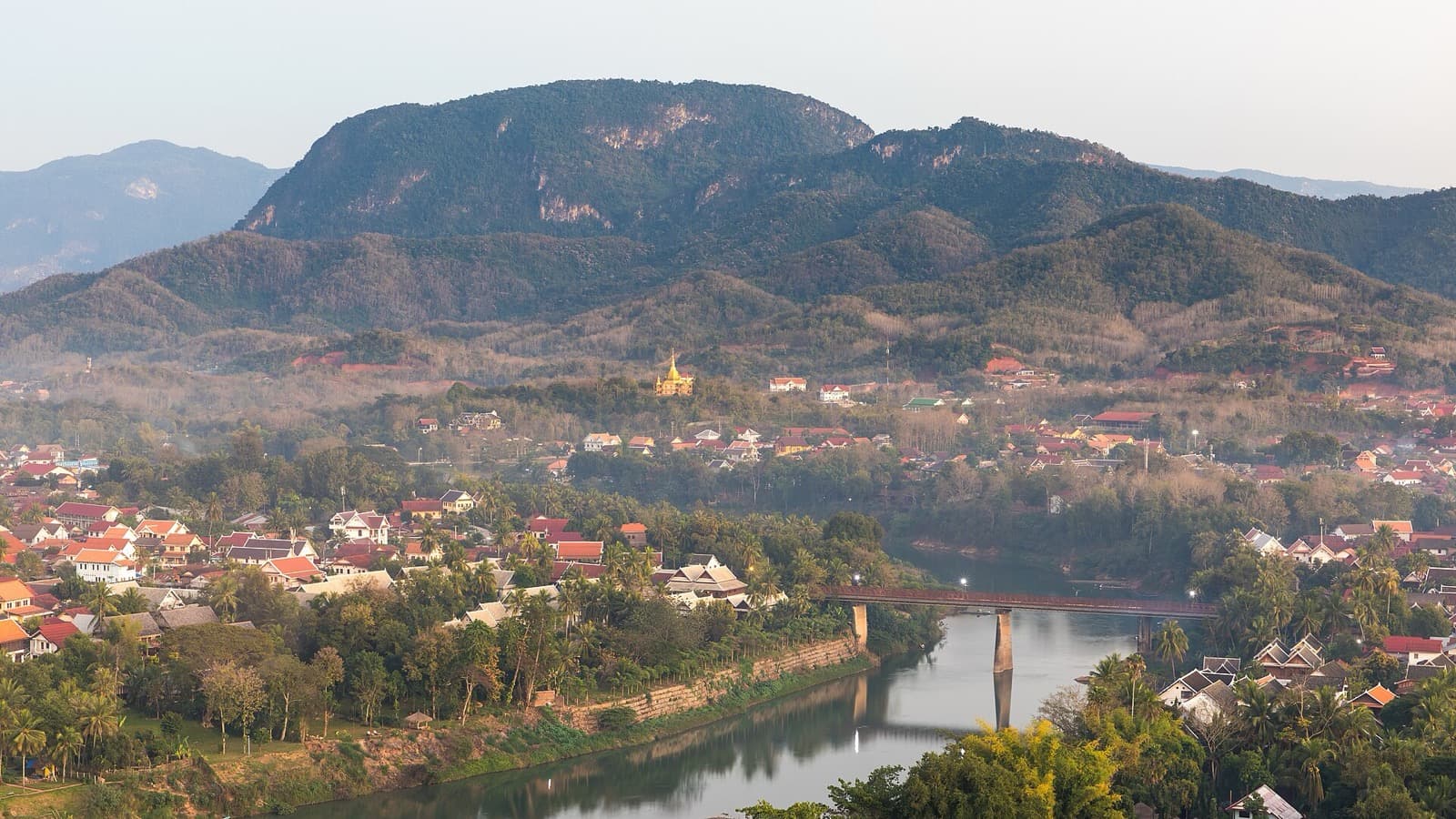
Where Two Rivers Meet: The Point of the Peninsula
Luang Prabang sits where two rivers meet, and its snacks come straight out of that water. Kaipen is the one to try: sheets of freshwater river algae harvested from the Mekong, especially in the dry season when the water drops, then pressed flat, seasoned with garlic, tomato, and sesame seeds, dried, and lightly fried. It arrives as crisp green sheets, often served with jaew bong for dipping. It is the closest thing this landlocked town has to a seaweed snack, and it is entirely local. Grilled river fish, frequently wrapped in banana leaf, turns up at market stalls in the evening.
For the fuller story of where these two rivers meet, the Old Town: The Buddha That Named a City self-guided audio walk ends at the confluence itself, the geography that made the town and its food.
Grilled, wrapped, and sweet
Sai oua is the Lao sausage you will smell before you see it: grilled pork packed with lemongrass, galangal, kaffir lime leaves, shallots, garlic, and chili, sliced and eaten with fresh greens and a chili dip. It is a night-market staple. Pair it with sticky rice, which is the default grain here, eaten by hand in small pressed balls. Look for the deep-purple version at breakfast stalls. For a lighter start, khao piak sen is a chewy rice-noodle soup in a peppery pork or chicken broth, often described as the Lao cousin of pho, and it makes an easy first meal if khao soi has already sold out.
Where to eat, honestly
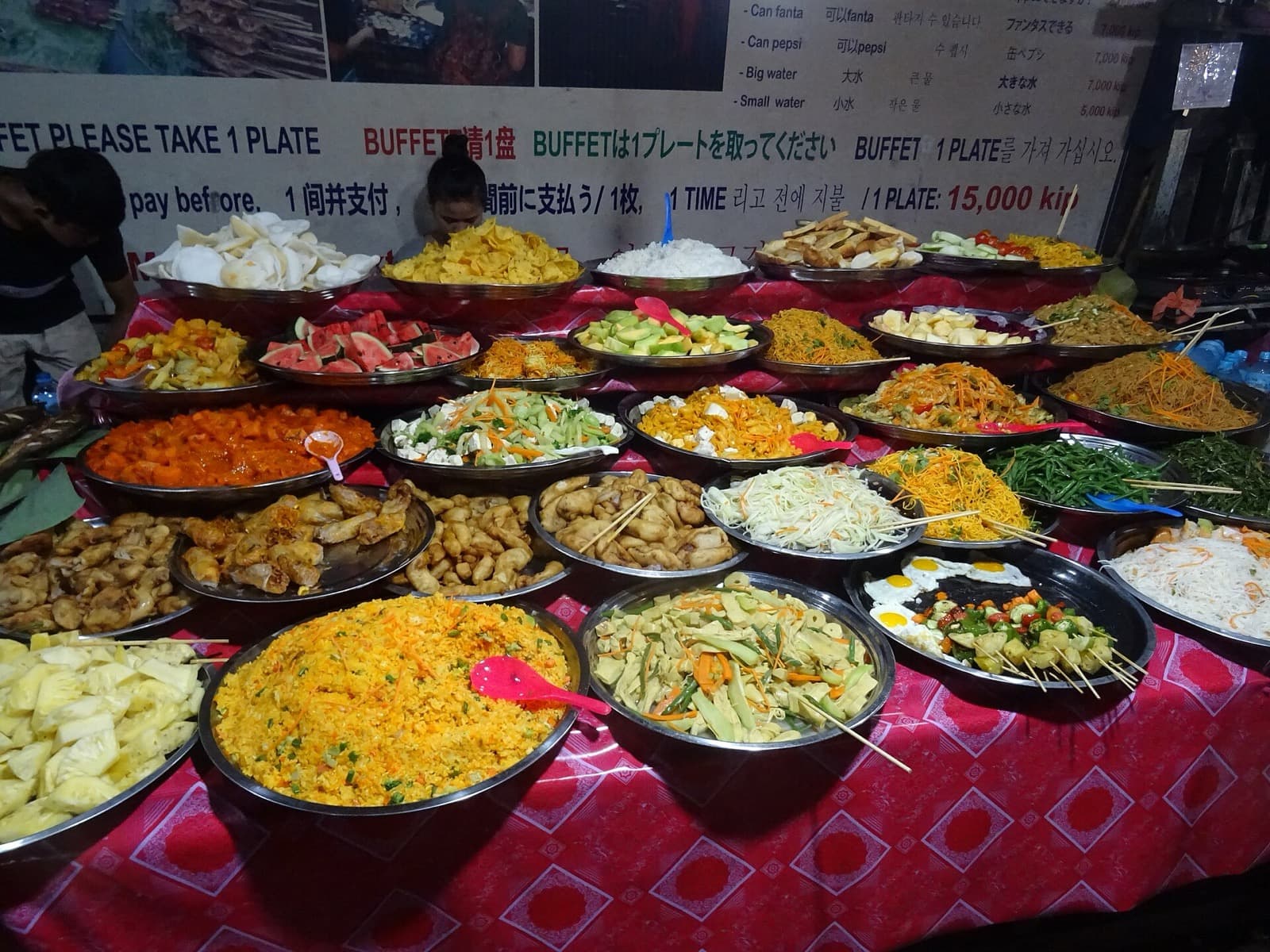
You do not need a reservation or a famous name to eat well here. The evening handicraft night market along the main street has a food lane, and one long-running fixture is a pile-your-own-plate vegetarian buffet where you fill a bowl for around fifteen thousand kip, plus stalls grilling sai oua and river fish. Prices are low and cash-only in Lao kip, so carry small notes; many stalls do not take cards. Tap water is not safe to drink, so stick to bottled or filtered water and skip ice you are unsure about. Beyond that, the rule is simple: eat where locals are eating, go early for khao soi, and let the market be your dinner.
What to drink
Beerlao is the national beer, brewed by the Lao Brewery Company (a French-Lao venture founded in the early 1970s) from local jasmine rice with imported German hops and yeast. It is cheap, cold, and everywhere. Lao coffee is worth seeking out: arabica and robusta grown mostly on the Bolaven Plateau in the south, a crop French colonists introduced in the early twentieth century, usually served strong and sweet with condensed milk. If you are offered lao-lao, that is the home-distilled rice whisky, an unaged spirit made from fermented sticky rice in small village stills. It is potent, and a taste is plenty.
Fit it into your walk
The food and the history occupy the same few streets, so it makes sense to walk and eat in one loop. The temple-lined main street that anchors the Old Town walk is exactly where the night market sets up after about five in the evening, so you can read the colonial spine by day and eat along it after dark. For the two other routes through town, see the full list of Luang Prabang walking tours. One quiet note on timing: at dawn the town's monks walk these streets barefoot to collect rice in the alms round called the Tak Bat. It is a sacred ritual, not a food photo op. If you rise early for khao soi, keep your distance and let it be.
Sources
Frequently asked questions
- What food is Luang Prabang famous for?
- Luang Prabang is known for its own version of khao soi, a clear pork-broth rice-noodle soup with spiced minced pork and fermented soybean paste, plus jaew bong, a chili paste made with shredded buffalo or pork skin. Or lam, a peppery herb stew thickened with sticky rice and flavored with sakhaan chili wood, is considered the town's most traditional dish. River snacks like kaipen (dried fried Mekong algae) and grilled sai oua sausage round out the local table.
- How is Luang Prabang khao soi different from Chiang Mai khao soi?
- They share a name but are different dishes. Chiang Mai khao soi is egg noodles in a coconut curry topped with crispy fried noodles. Luang Prabang khao soi is flat rice noodles in a clear pork broth topped with spiced, tomato-tinged minced pork and fermented soybean paste, tasting sweet, sour, and savory at once. Locals often eat it for breakfast, and popular stalls can sell out by late morning.
- What is jaew bong?
- Jaew bong is a sweet-savory chili paste that originates specifically in Luang Prabang. Its distinguishing ingredient is shredded water buffalo or pork skin, combined with sundried chilies, galangal, garlic, and fish sauce. It was a favorite of the former Lao royal family, with recipes recorded by the king's chef, Phia Sing. You eat it by scooping with sticky rice or raw vegetables.
- Is street food safe to eat in Luang Prabang?
- Freshly cooked, hot street food from busy stalls is generally fine, and eating where locals eat is a good rule. Tap water is not safe to drink, so use bottled or filtered water and be cautious with ice from unknown sources. Most stalls are cash-only in Lao kip, so carry small notes.
- What should I drink in Luang Prabang?
- Beerlao is the national beer, brewed from local jasmine rice by the Lao Brewery Company. Lao coffee, grown mostly on the southern Bolaven Plateau, is usually served strong and sweet with condensed milk. Lao-lao is the local home-distilled rice whisky, an unaged and potent spirit best tried in small amounts.
- Where can I eat cheaply in Luang Prabang?
- The evening handicraft night market along the main street has a food lane with grilled sai oua sausage, river fish, and a well-known pile-your-own-plate vegetarian buffet where you fill a bowl for around fifteen thousand kip. Prices are low and cash-only in Lao kip. Going early in the day is the way to catch khao soi before the popular stalls sell out.
Ready to experience it?
Old Town: The Buddha That Named a City
90 min · 2.2 km · easy
More from Luang Prabang
Explore more at your own pace.
Luang Prabang Travel Guide: Days, Transport, Season, Safety, Budget
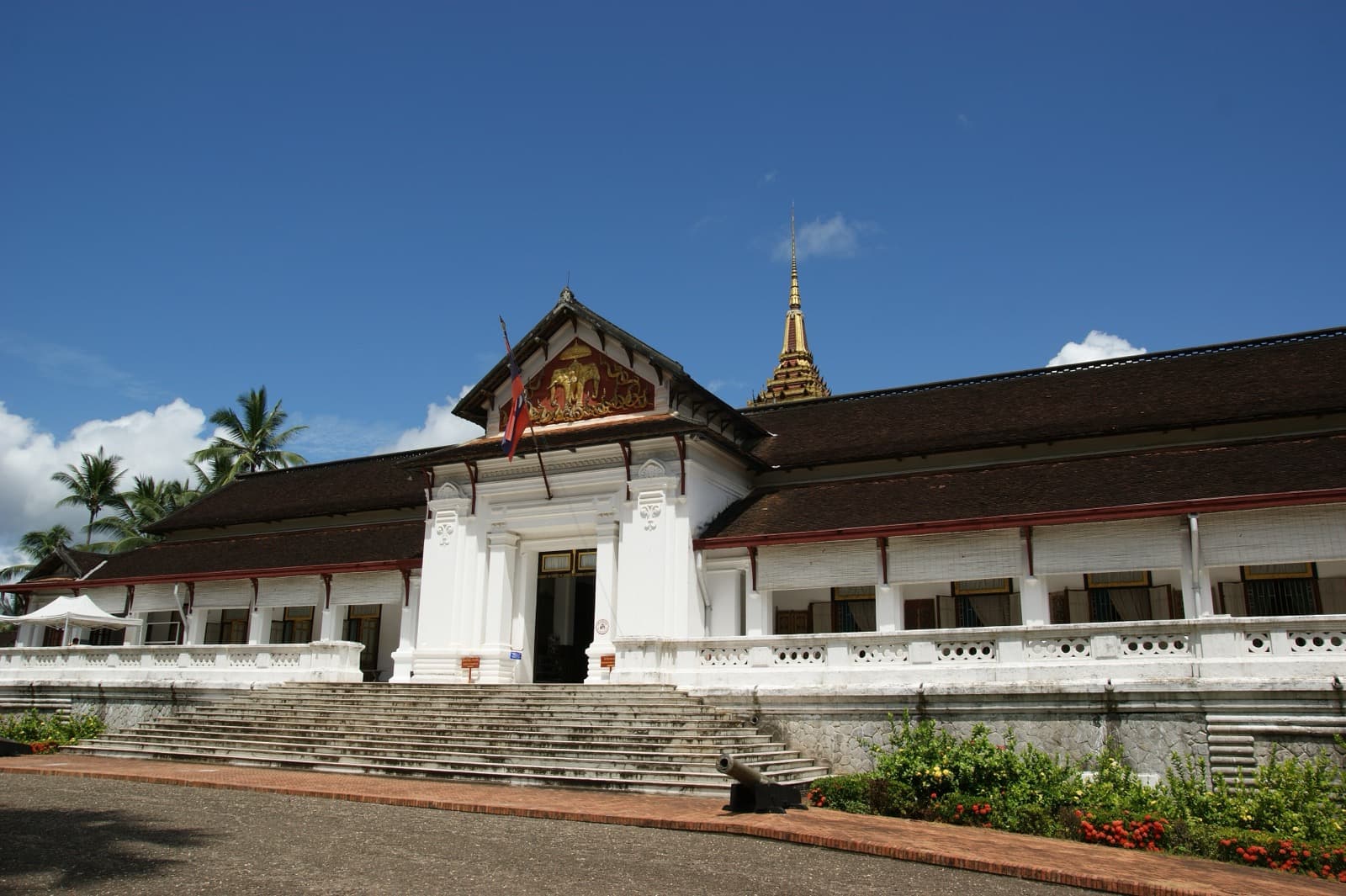
Luang Prabang: The Fusion Royal Town Between Two Rivers
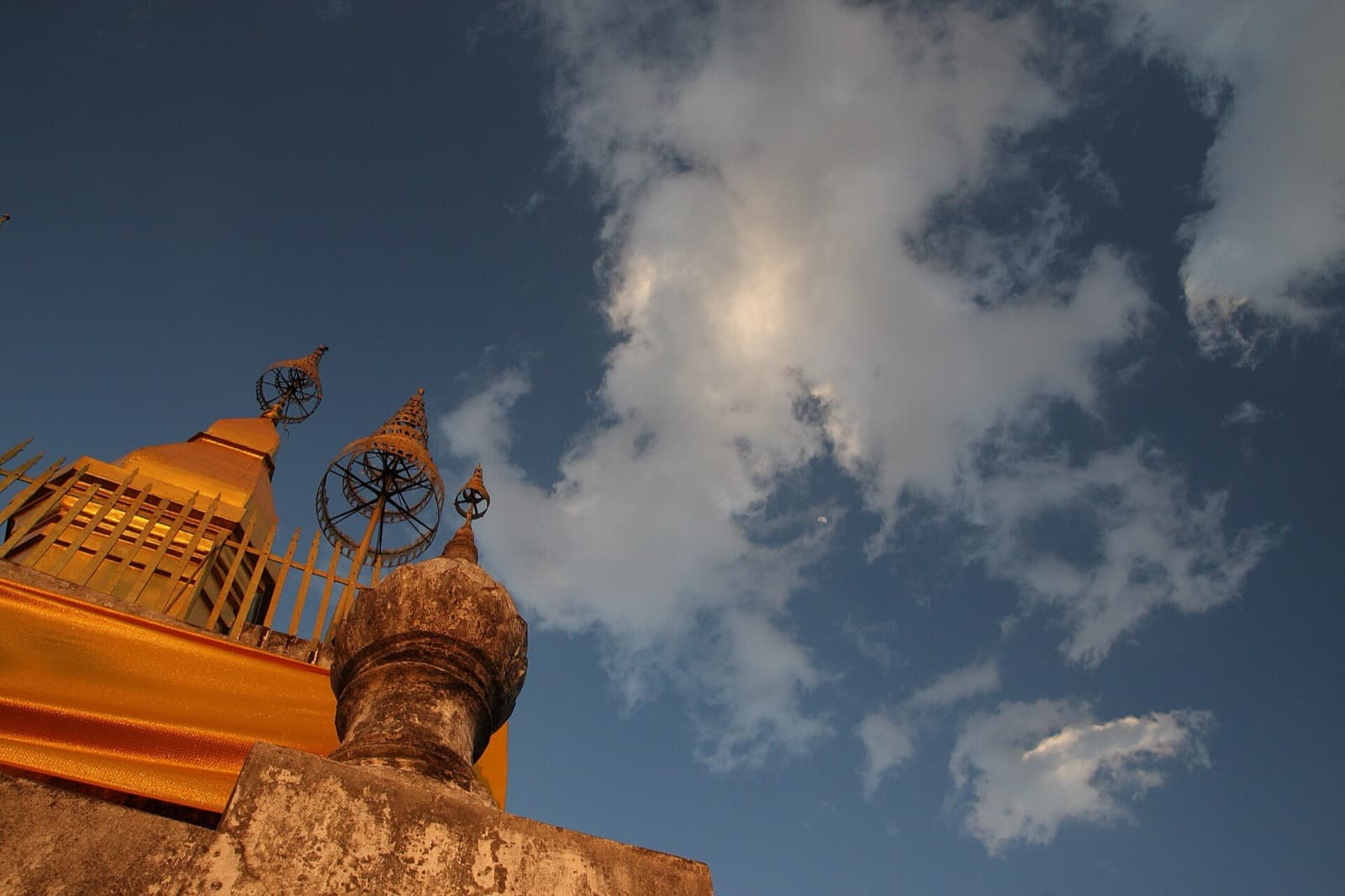
That Chomsi Stupa: Why the Golden Point Above Luang Prabang Reads the Whole Town
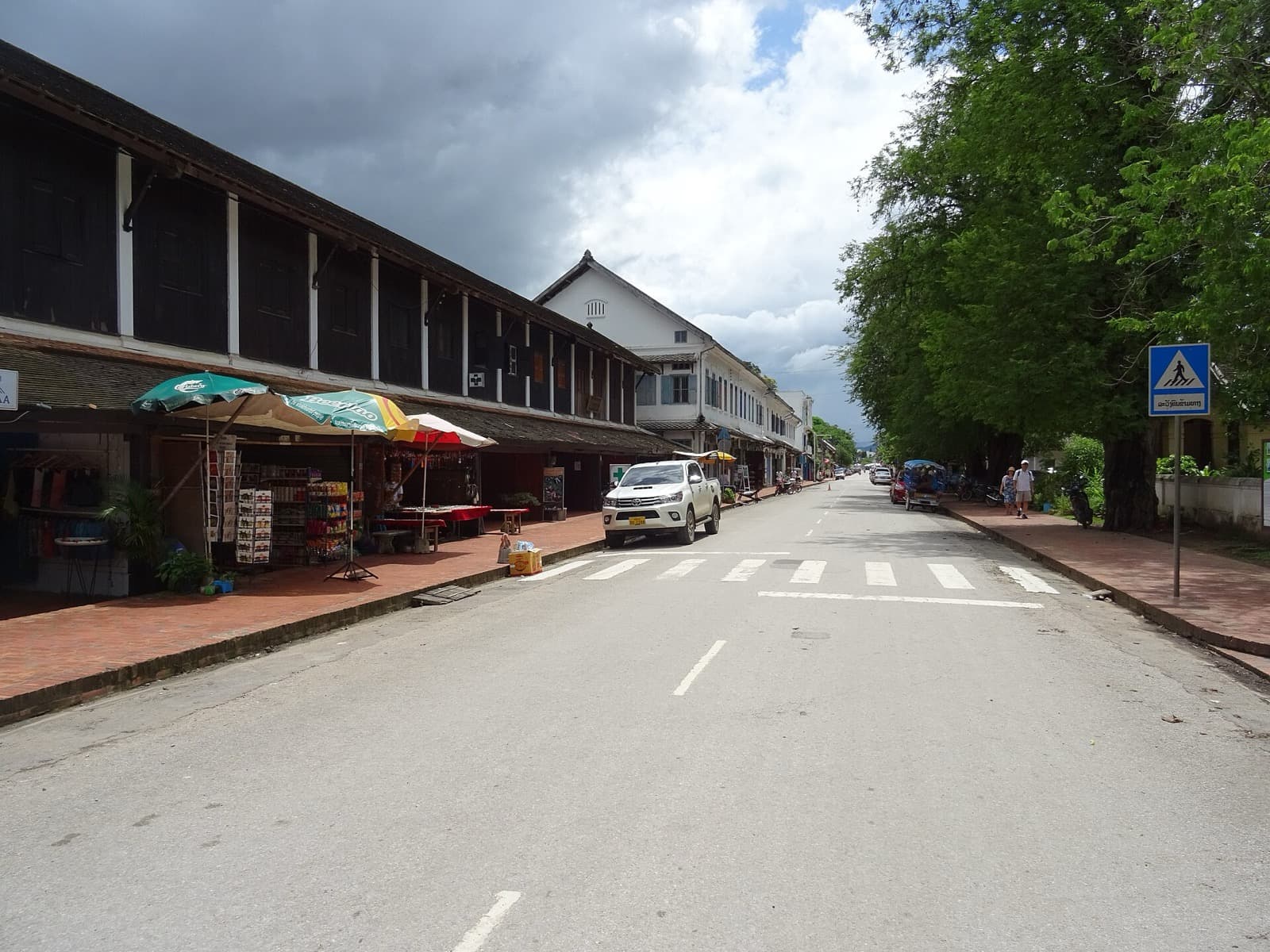
The Colonial Shophouses of Luang Prabang: The Fusion UNESCO Chose to Protect
The Royal Palace of Luang Prabang: Where a Kingdom Kept Its Last Throne