Old Town: The Buddha That Named a City
90 min · 2.2 km · easy
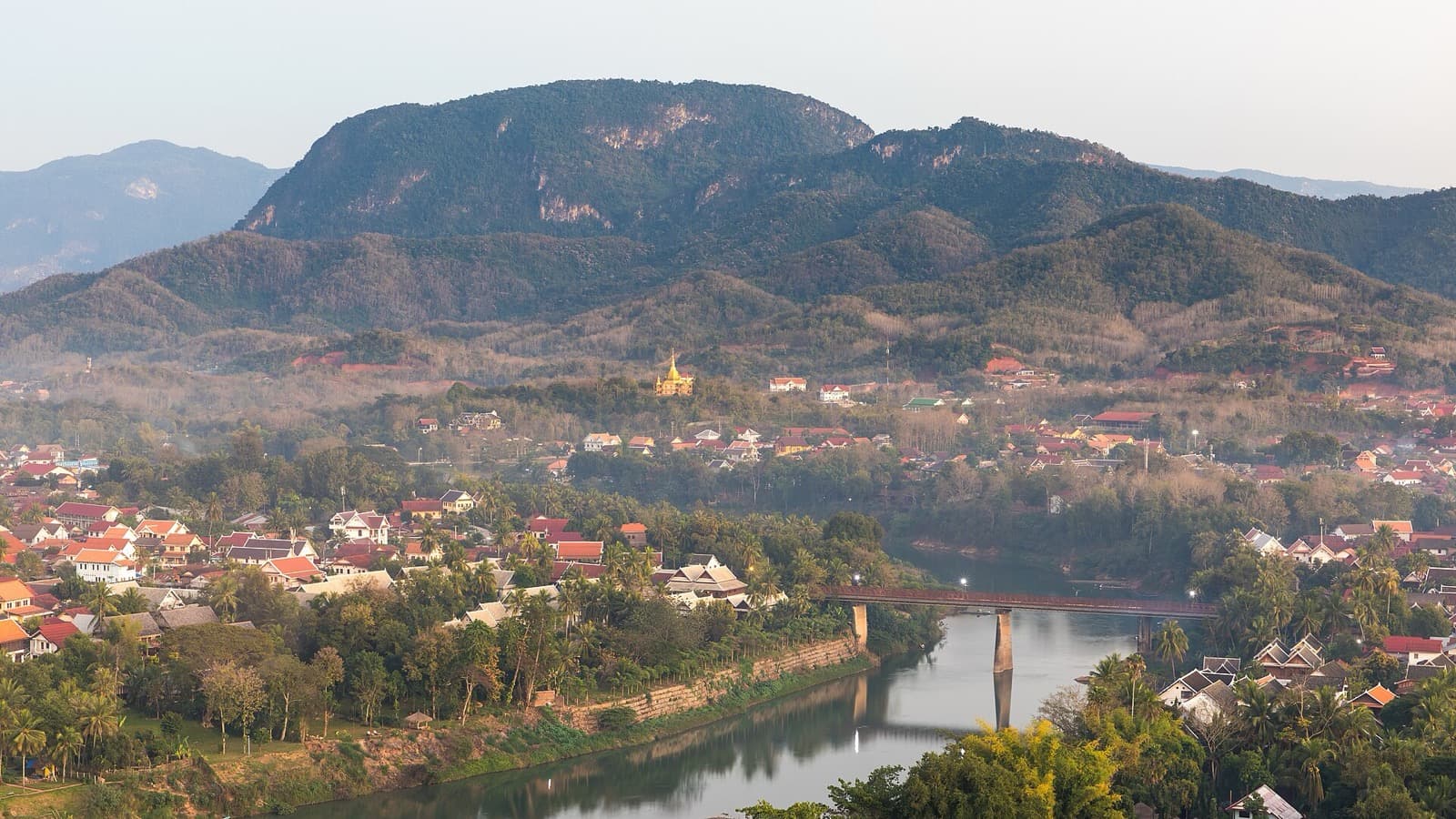
You can walk Luang Prabang's old town in a single day, and the town is small enough that the whole day fits on foot. The historic core sits on a peninsula about one kilometre long and only around 250 metres wide, wedged between the Mekong and the Nam Khan, and walking from one end to the other takes well under half an hour. That scale is the point: you can start before dawn at an alms-giving ceremony, cross the royal town on foot, climb a sacred hill, and end the day at a night market without ever needing a vehicle. This guide lays out that day hour by hour, ties each leg to a self-guided audio tour, and gives you the ticket prices, opening hours, and etiquette you actually need.
The short answer: one walkable day, three connected walks
Luang Prabang's one-day itinerary breaks cleanly into three routes that already exist as self-guided audio tours, and they chain together end to end. The morning belongs to the Old Town walk down Sisavangvong Road, from the former Royal Palace to Wat Xieng Thong at the tip of the peninsula. Late morning or early afternoon is the layered Colonial Riverfront walk through French shophouses, the Mekong quay, and the older spirit temples inland. Then, timed for the cooler hours, you climb Mount Phousi, the wooded hill at the exact centre of town, and read the whole royal capital off the rock. See all three under Luang Prabang walking tours.
Everything below is walkable. You will not exceed a few kilometres total across the day, spread over many hours, so the effort is really about heat and pacing, not distance.
Before sunrise: the alms-giving procession
Hear a stop from this walk
Where Two Rivers Meet: The Point of the Peninsula
If you want to see the Tak Bat, or Sai Bat, the daily alms-giving procession, you have to be out early. Lines of monks walk the streets to receive food from kneeling residents, and the ceremony begins around 5:30 to 6:30 in the morning from roughly March to October, shifting a little later, about 6:00 to 7:00, in the cooler November to February months. It happens along Sisavangvong Road and the surrounding lanes, which is exactly where your morning walk begins anyway.
Treat this as a religious act, not a photo opportunity. The expectation is silence, modest dress with shoulders and legs covered, no flash, and real distance from the monks. If you want to give alms rather than watch, arrange fresh sticky rice through your accommodation rather than buying from street vendors near the procession. If you would rather sleep, the ceremony is easy to skip and the rest of the day stands on its own.
Morning: the Old Town spine, palace to river tip
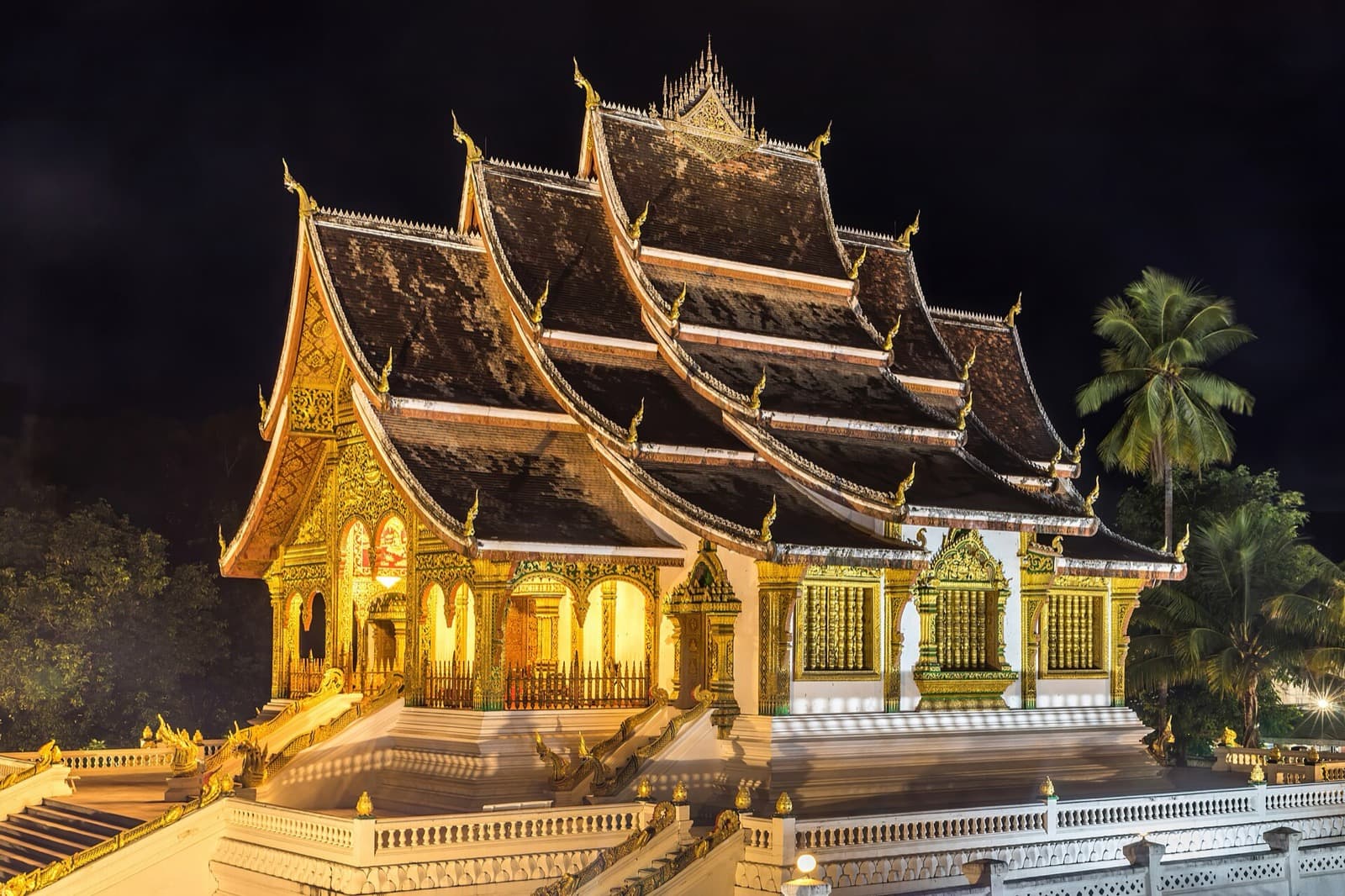
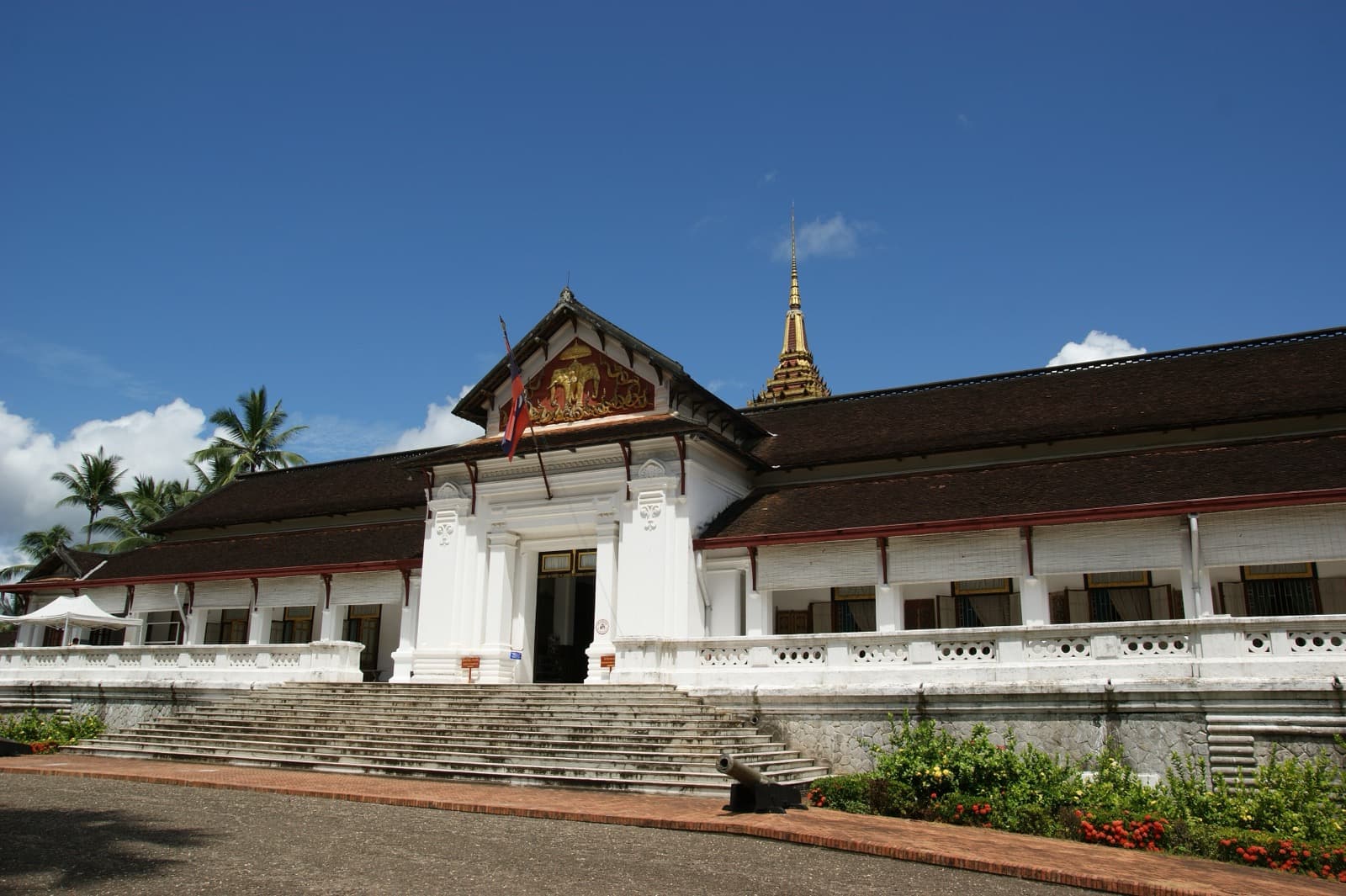
Start the daytime walk at the former Royal Palace, known as Haw Kham, a low white building with a steep Lao roof built between 1904 and 1909 for King Sisavang Vong. It is now the National Museum. The museum keeps split hours, roughly 8:30 to 11:30 in the morning and 1:30 to 4:00 in the afternoon, and it is closed on Tuesdays, so plan around that if Tuesday is your day. Entry is a small fee (around 30,000 kip, a few US dollars). Photography is not allowed inside, and modest dress is required. In the southeast corner of the grounds stands the Haw Pha Bang, the golden-roofed shrine built for the Prabang itself, the small standing Buddha, about eighty-three centimetres tall and around fifty kilograms of gold, silver, and copper alloy, that gave the city its name.
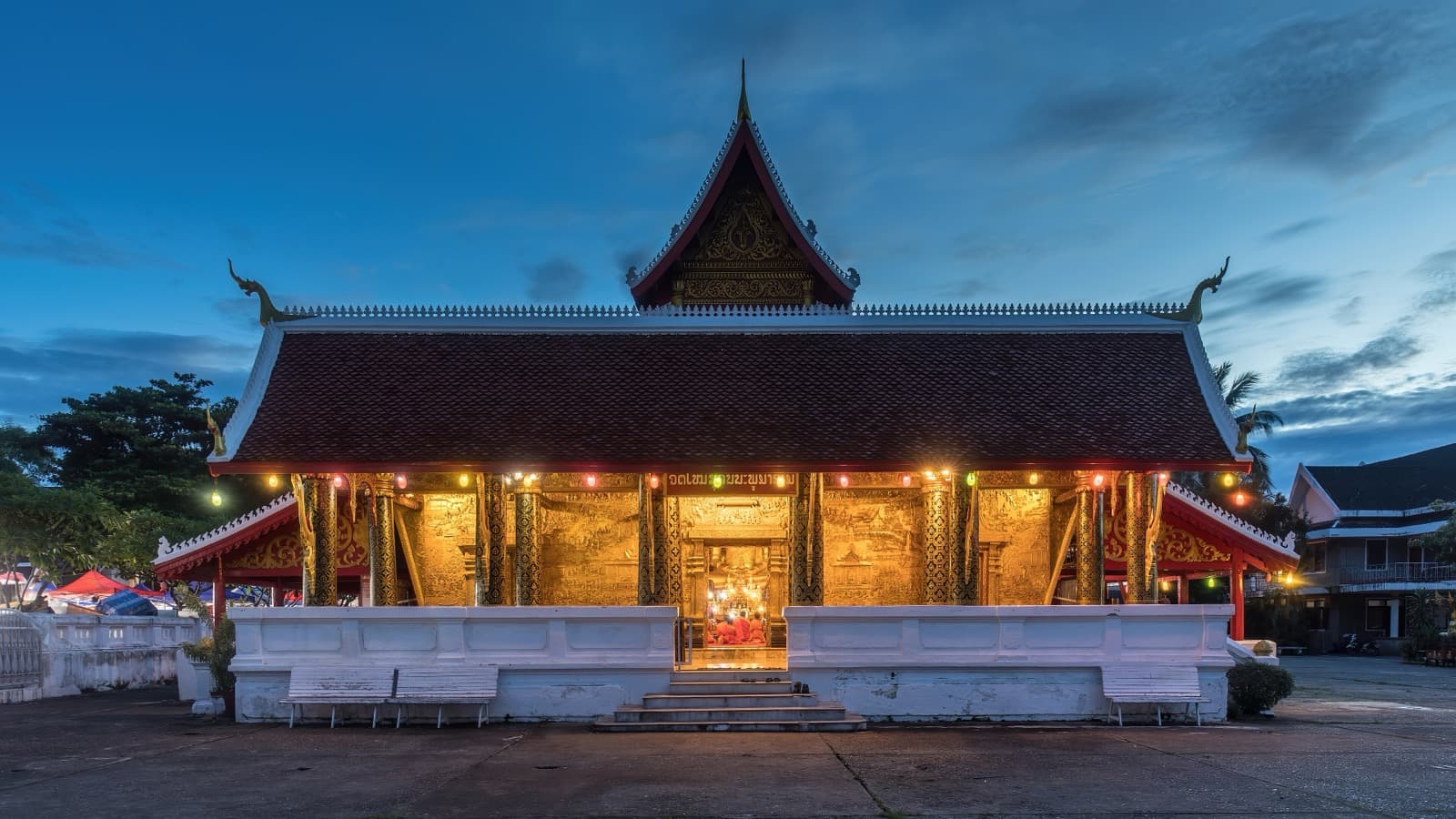
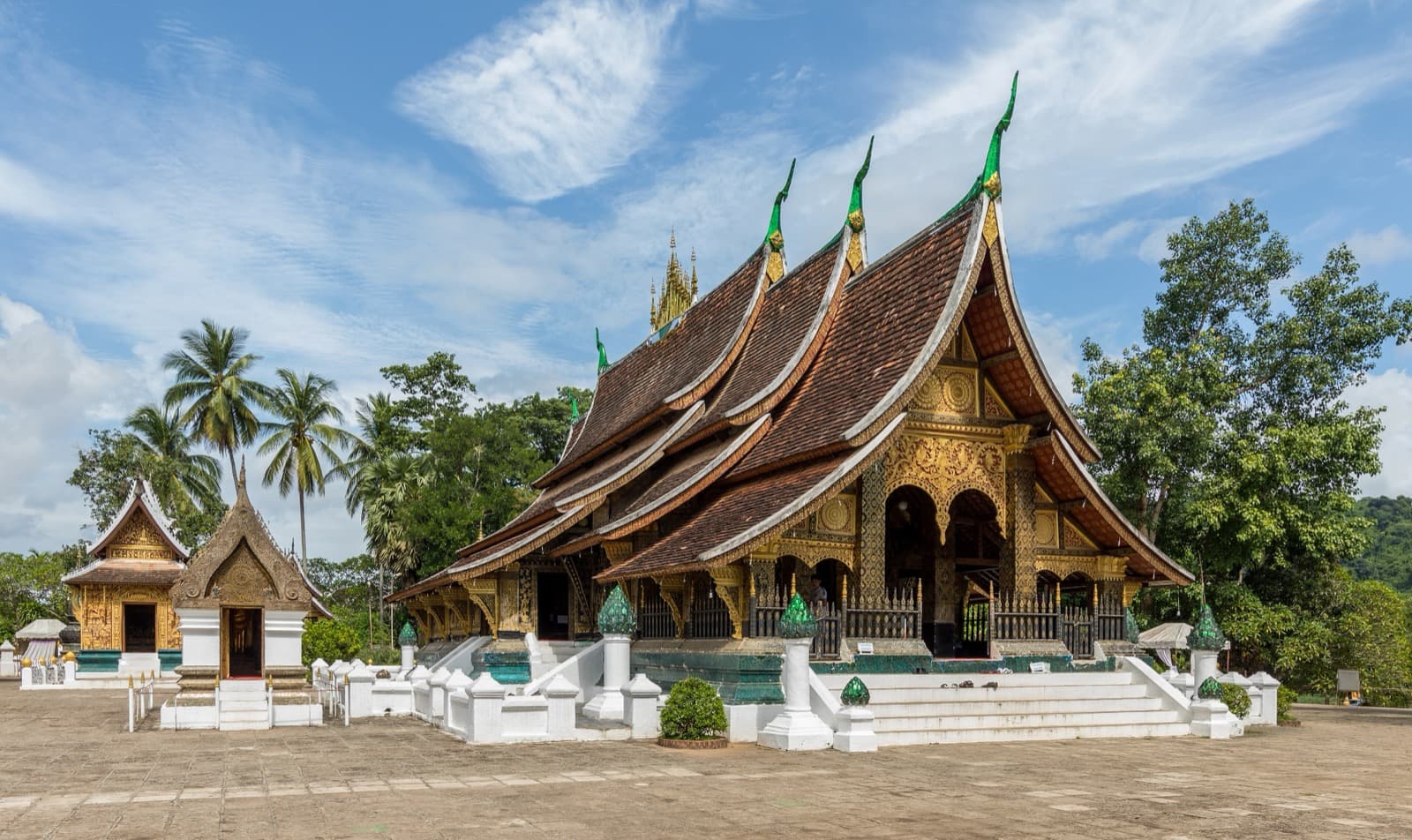
From there the Old Town audio walk follows Sisavangvong Road northeast: Wat Mai, the monastery founded around 1796 and long the seat of the head of Lao Buddhism; Wat Sensoukharam with its gold facade; and at the peninsula's tip, Wat Xieng Thong, the temple of the golden city. Wat Xieng Thong is generally open daily from about 8:00 to 5:00, with a small entrance fee (around 30,000 kip). Remove your shoes before entering any temple building, cover your shoulders and knees, and take your hat off indoors. The Old Town: The Buddha That Named a City audio tour narrates this whole spine, seven stops, ending where the Mekong meets the Nam Khan.
Midday: the layered riverfront and inland temples
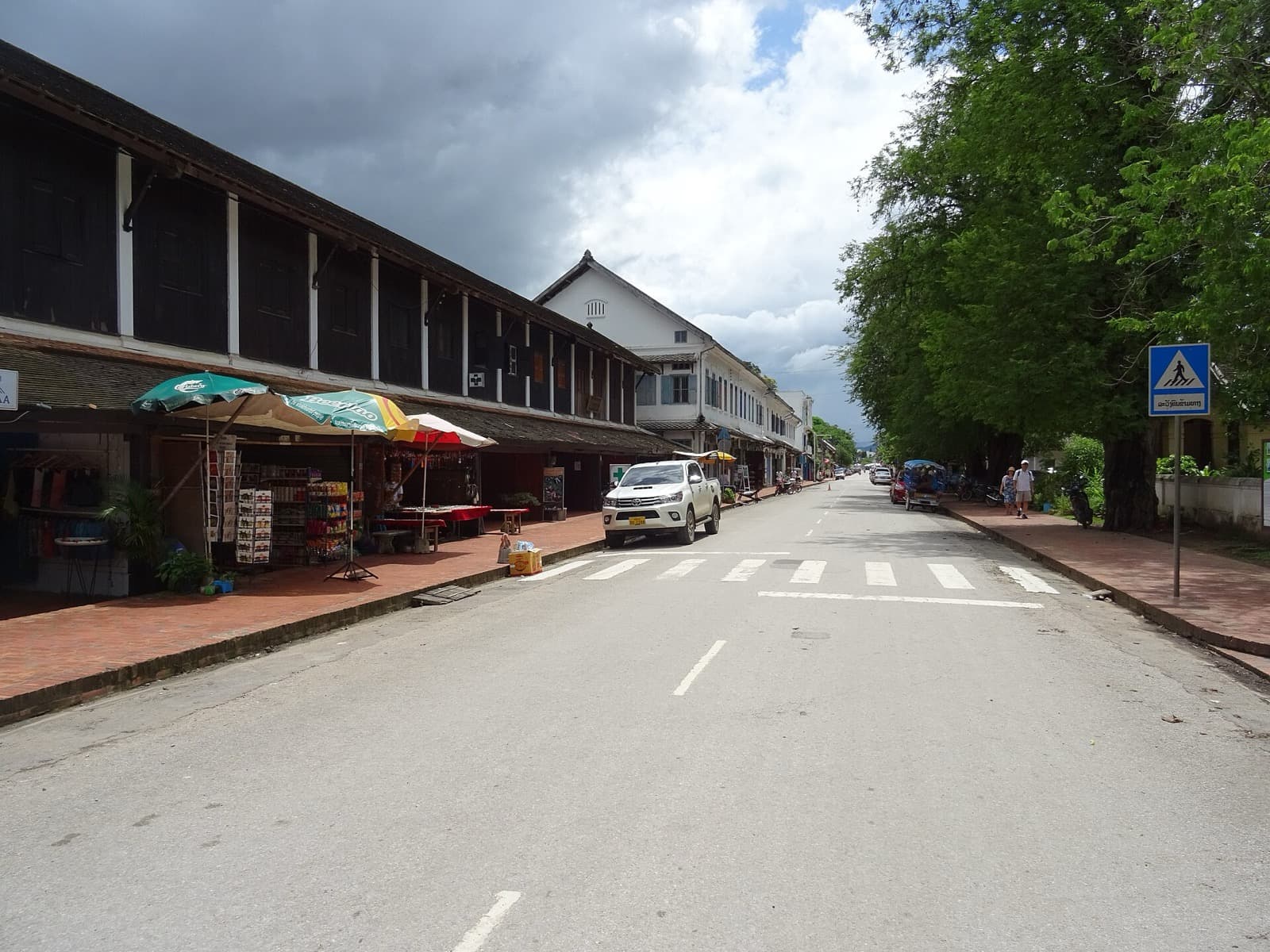
By late morning the sun is high, so the Colonial Riverfront walk works well because much of it is shaded by riverside trees and lane canopies. Begin at the Traditional Arts and Ethnology Centre, a French colonial mansion that now explains the many peoples of Laos. It is open Tuesday through Sunday, roughly 9:00 to 6:00, and closed on Mondays, the mirror image of the palace's Tuesday closure, so between the two, one of them is always open whichever day you visit. From there the route runs along Khem Khong, the Mekong quay that was once the town's only road, through the inland lanes where people actually live, and out to the older sacred ground: Wat Visounnarath with That Makmo, the rounded watermelon stupa, and Wat Aham, the spirit temple under its old trees where the town's pre-Buddhist gods still keep their place.
This is the right window for a long lunch. The peninsula is thick with cafes and noodle shops, and stepping out of the midday heat for an hour costs you nothing on an itinerary this compact.
Late afternoon: climbing Mount Phousi
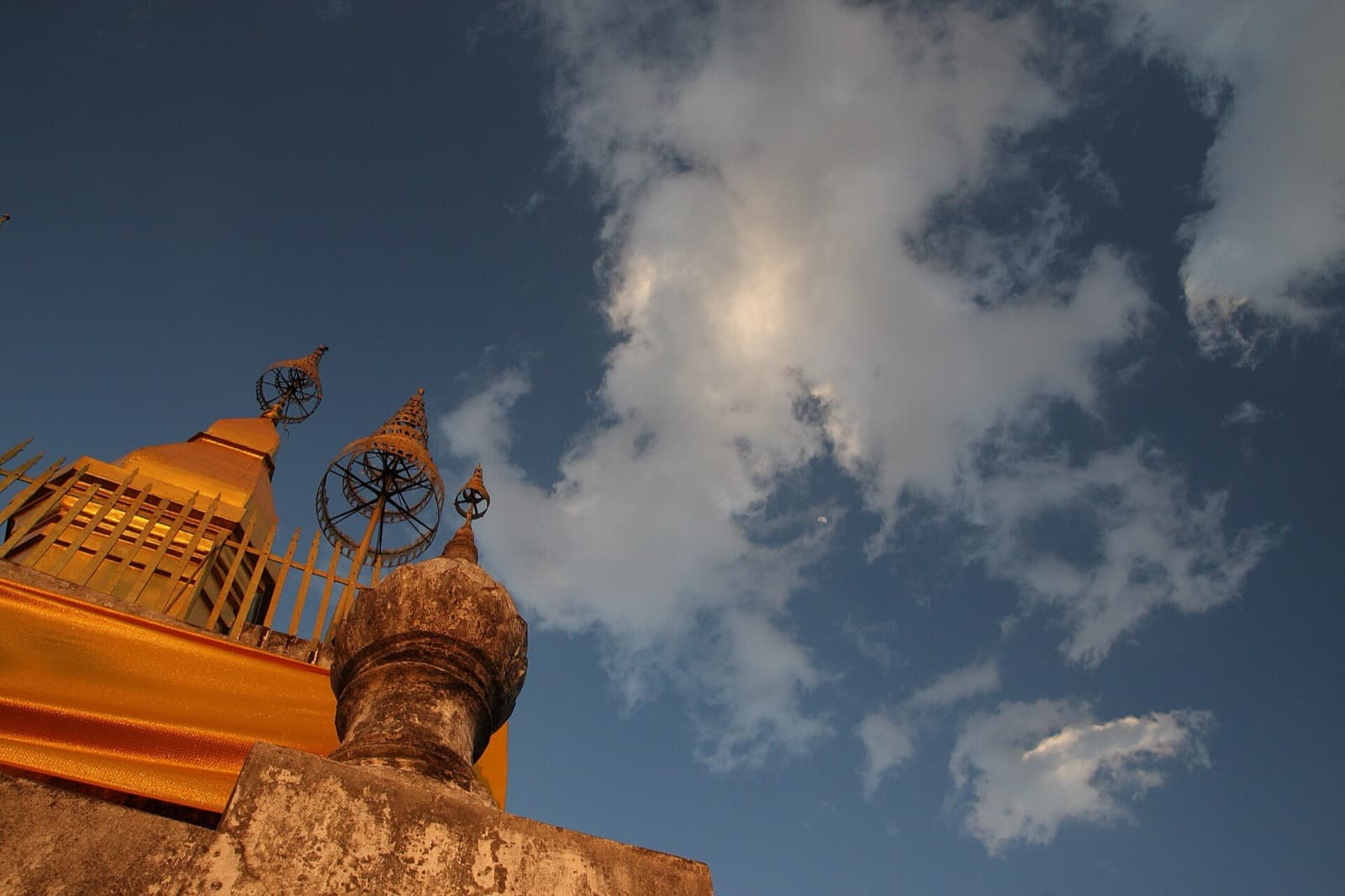
Save Mount Phousi for the cooler hours. The hill stands about one hundred metres high at the centre of the peninsula, and the climb is a few hundred steps to the summit stupa, That Chomsi, which dates to 1804. There is a small entrance fee (about 20,000 kip), usually collected partway up rather than at the base. The Mount Phousi: The Sacred Hill Between Two Rivers audio walk starts at Wat Pa Huak at the foot of the stairs, passes the temple built against the living rock and the Buddha footprint, and reads the layout of the royal town off the summit, the Mekong on one side, the Nam Khan on the other.
The summit is the most popular sunset spot in town and it gets genuinely crowded, so if you want space, climb earlier in the afternoon rather than joining the sunset crush. The hill officially closes around 6:00 in the evening but in practice stays open through sunset. There is little shade on the steps, so carry water and take the stairs at your own pace.
Evening: the night market
End on Sisavangvong Road, where the night market opens each evening around 5:00 and runs until roughly 10:00. The street closes to traffic and fills with textile, craft, and food stalls, and it sits directly at the foot of Mount Phousi, so you can walk straight down from the summit into it. Prices are negotiable and the food lanes are a cheap dinner. Because the market is on the same spine you walked in the morning, the day closes exactly where it opened, which is the whole logic of a peninsula this small.
Practical notes for the day
Dress for temples all day, since you will pass many: shoulders and knees covered, shoes off inside buildings. Carry small kip notes for the string of modest entrance fees rather than relying on cards. Water and sun protection matter more than sturdy shoes here, given the heat and the exposed Phousi stairs. Luang Prabang is generally calm and walkable for solo travellers, including at the market in the evening, though ordinary care with valuables in crowds applies. And build the day around the two fixed closures: the palace shuts on Tuesdays, the arts centre on Mondays, so glance at the day of the week before you set your order. Load the three self-guided tours before you set out and let each one narrate its leg as you walk it.
Sources
Frequently asked questions
- Can you see Luang Prabang's old town in one day on foot?
- Yes. The historic peninsula is about one kilometre long and only around 250 metres wide, so walking from one end to the other takes well under half an hour. A single day on foot easily covers the Royal Palace, the main temples along Sisavangvong Road, Wat Xieng Thong at the tip, the colonial riverfront, and a Mount Phousi climb.
- What are the Royal Palace Museum hours and entry fee in Luang Prabang?
- The former Royal Palace, now the National Museum, keeps split hours of roughly 8:30 to 11:30 in the morning and 1:30 to 4:00 in the afternoon, and it is closed on Tuesdays. Entry is a small fee of around 30,000 kip. Photography is not permitted inside and modest dress is required.
- How much does it cost to climb Mount Phousi and how many steps is it?
- The climb is a few hundred steps to the summit stupa, That Chomsi, which dates to 1804. There is a small entrance fee of about 20,000 kip, usually collected partway up rather than at the base. The hill officially closes around 6:00 in the evening but stays open through sunset, which is when it gets most crowded.
- What time is the alms-giving ceremony in Luang Prabang?
- The Tak Bat, or Sai Bat, procession begins around 5:30 to 6:30 in the morning from roughly March to October, and a little later, about 6:00 to 7:00, in the cooler November to February months. It takes place along Sisavangvong Road and nearby lanes. Observe in silence, dress modestly, avoid flash, and keep well clear of the monks.
- When is the Luang Prabang night market open?
- The night market opens each evening around 5:00 and runs until roughly 10:00 on Sisavangvong Road, which closes to traffic. It sits at the foot of Mount Phousi, so you can walk down from the summit straight into it. Prices are negotiable and the food lanes make a cheap dinner.
- Which day should I avoid for the Luang Prabang museums?
- The Royal Palace Museum is closed on Tuesdays, and the Traditional Arts and Ethnology Centre is closed on Mondays. Between the two, one is always open on any given day, but check the day of the week before setting your order so you do not arrive at a closed door.
Ready to experience it?
Old Town: The Buddha That Named a City
90 min · 2.2 km · easy
More from Luang Prabang
Explore more at your own pace.
Luang Prabang Travel Guide: Days, Transport, Season, Safety, Budget
Luang Prabang: The Fusion Royal Town Between Two Rivers
That Chomsi Stupa: Why the Golden Point Above Luang Prabang Reads the Whole Town
The Colonial Shophouses of Luang Prabang: The Fusion UNESCO Chose to Protect
The Royal Palace of Luang Prabang: Where a Kingdom Kept Its Last Throne