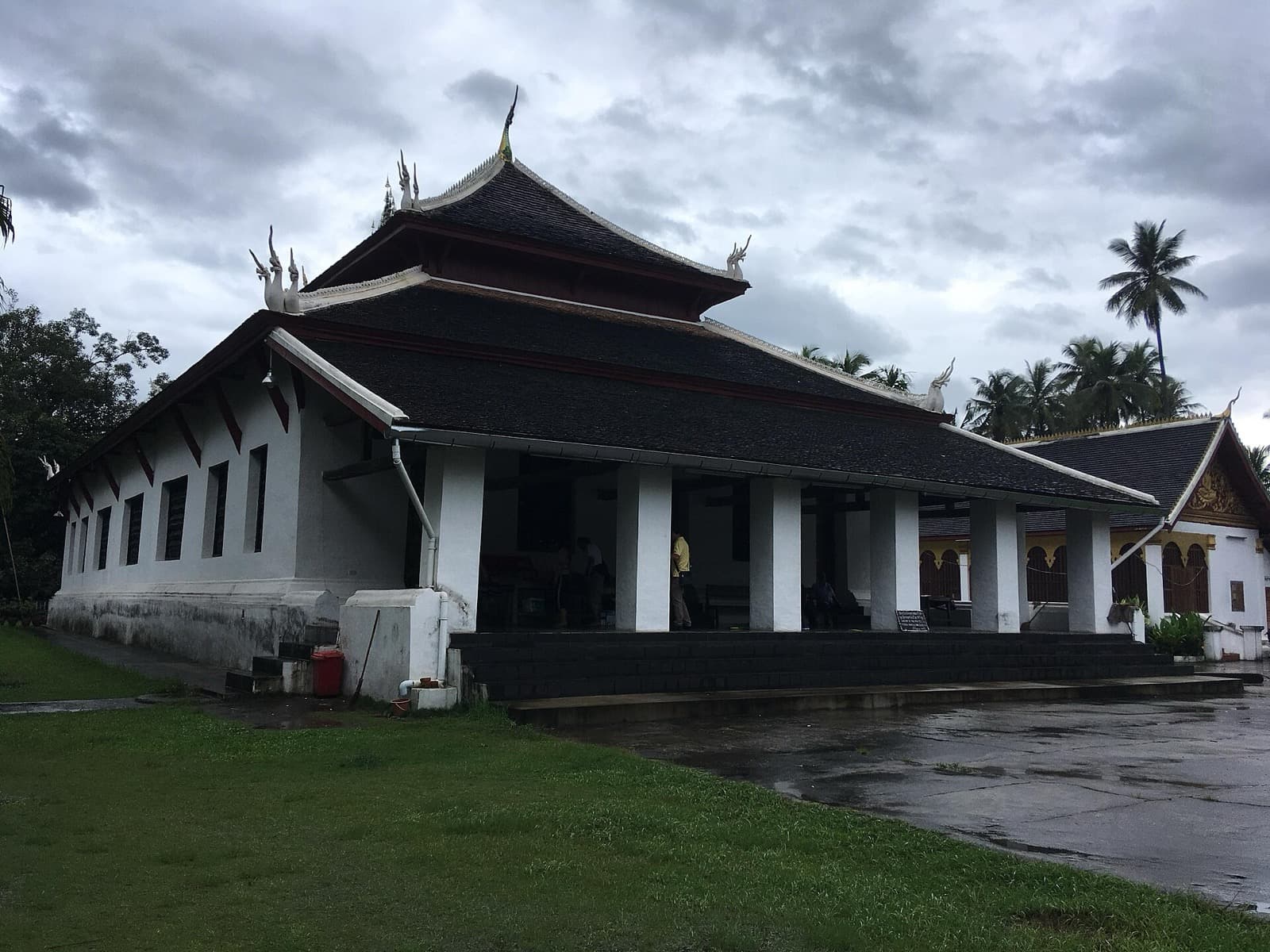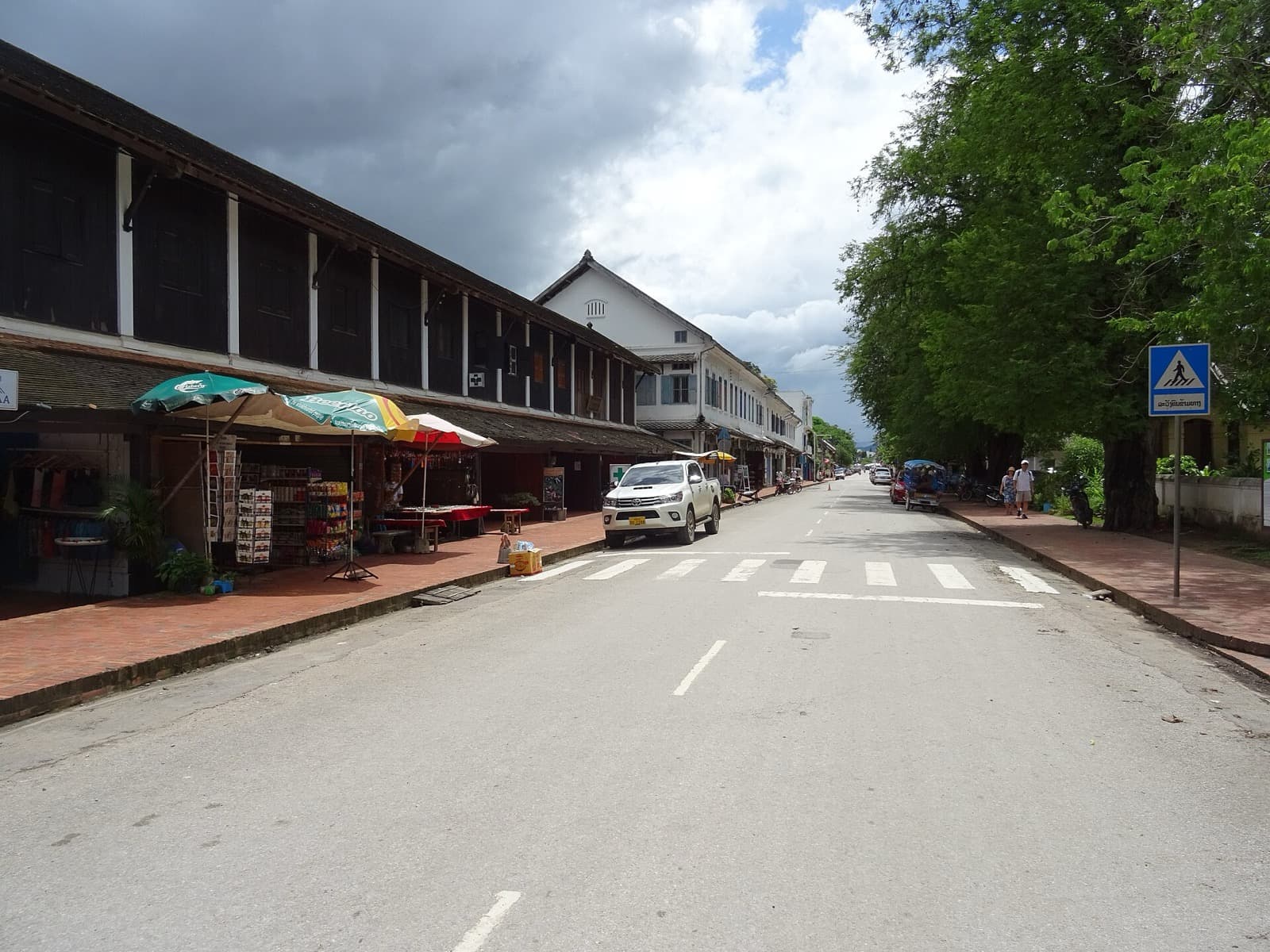
Walk the spine of the Luang Prabang peninsula and you are looking at the exact thing UNESCO chose to protect: two-storey shophouses of brick and stucco, French and Franco-Lao in style, standing shoulder to shoulder with wooden Lao homes and gilded temples. When UNESCO inscribed the Town of Luang Prabang on the World Heritage List in 1995, this blend was the reason. The citation praised the fusion of Lao traditional architecture and nineteenth and twentieth century European colonial style buildings. Those shophouses, with their arcaded ground floors, tall shuttered windows, and tiled roofs, are not a pretty setting for the monuments. They are the monument. Learning to read them on two levels, as charm on the surface and as the built record of colonial power underneath, is the single most useful thing you can do before you walk this town.
What UNESCO actually protected
It helps to be precise about the inscription, because most visitors assume a World Heritage listing means one grand building. Here it means the opposite. UNESCO recorded 611 civilian and religious buildings in the town as heritage value to be preserved. That is a streetscape, not a single site. The value lies in the way the whole fabric holds together: the colonial shophouses, the wooden Lao houses, and the temples, all continuous, all still in use. The peninsula sits between the Mekong and the Nam Khan, and the two rivers nearly encircle it, which is why the old town forms a peninsula at all and why its layers stayed so tightly packed into a few streets.
Once you know the number 611, the shophouses stop reading as backdrop. Every arcade and shutter is a counted, protected object. The town is a single artifact you happen to be able to walk through, and the shophouse row is its clearest sentence.
The harder history behind the shutters
Hear a stop from this walk
Wat Aham: The Spirit Temple Under Its Ancient Trees
The prettiness carries a heavier story, and this is where the second level of reading comes in. The French protectorate over Laos was established after the Franco-Siamese crisis of 1893. Luang Prabang remained the royal capital and the king kept his throne, but real power passed to French officials, and the administrative capital of the country was moved to Vientiane. The shophouses went up during that protectorate. They are the physical residue of an arrangement in which a Lao king reigned but did not rule.
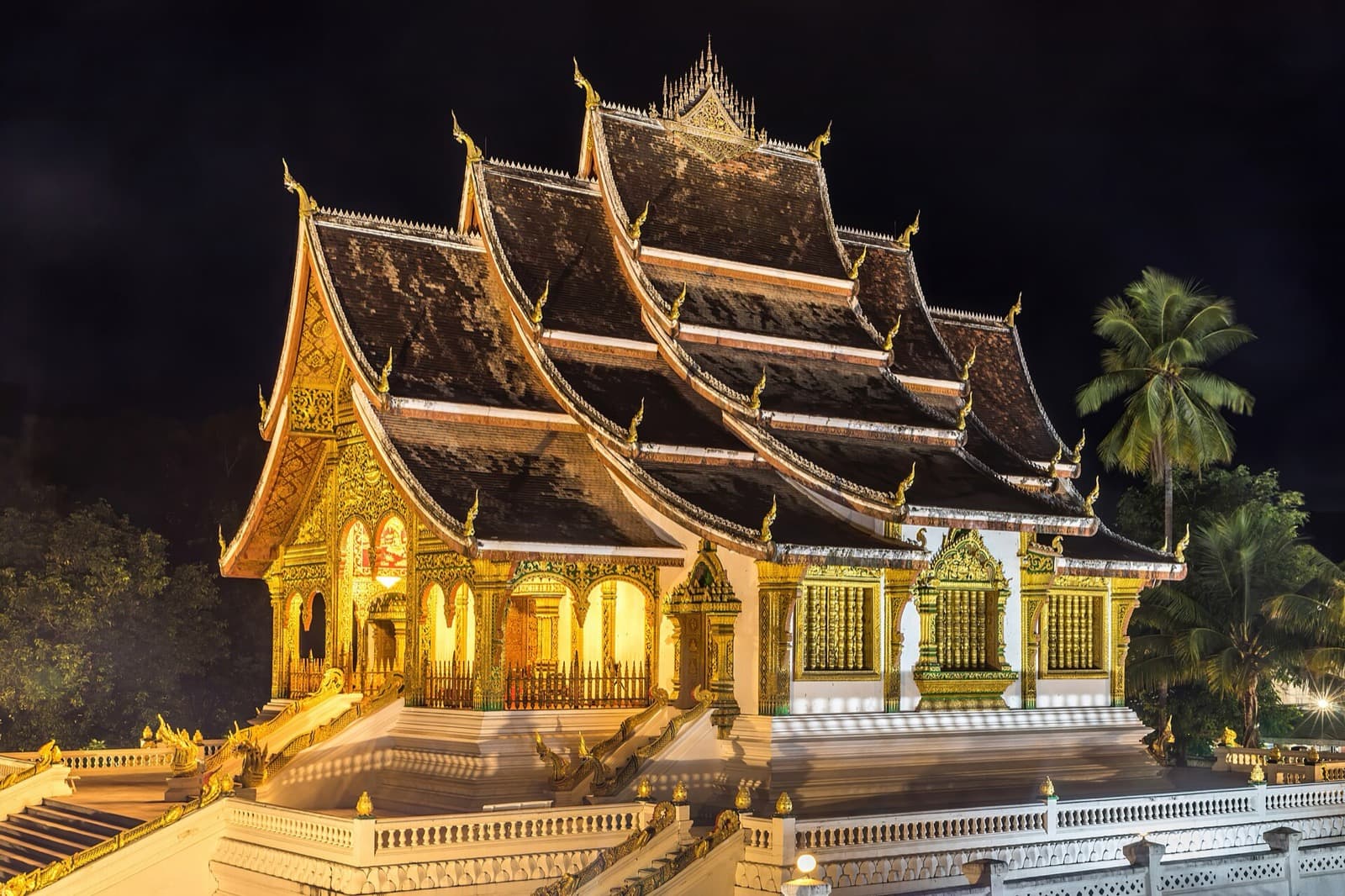
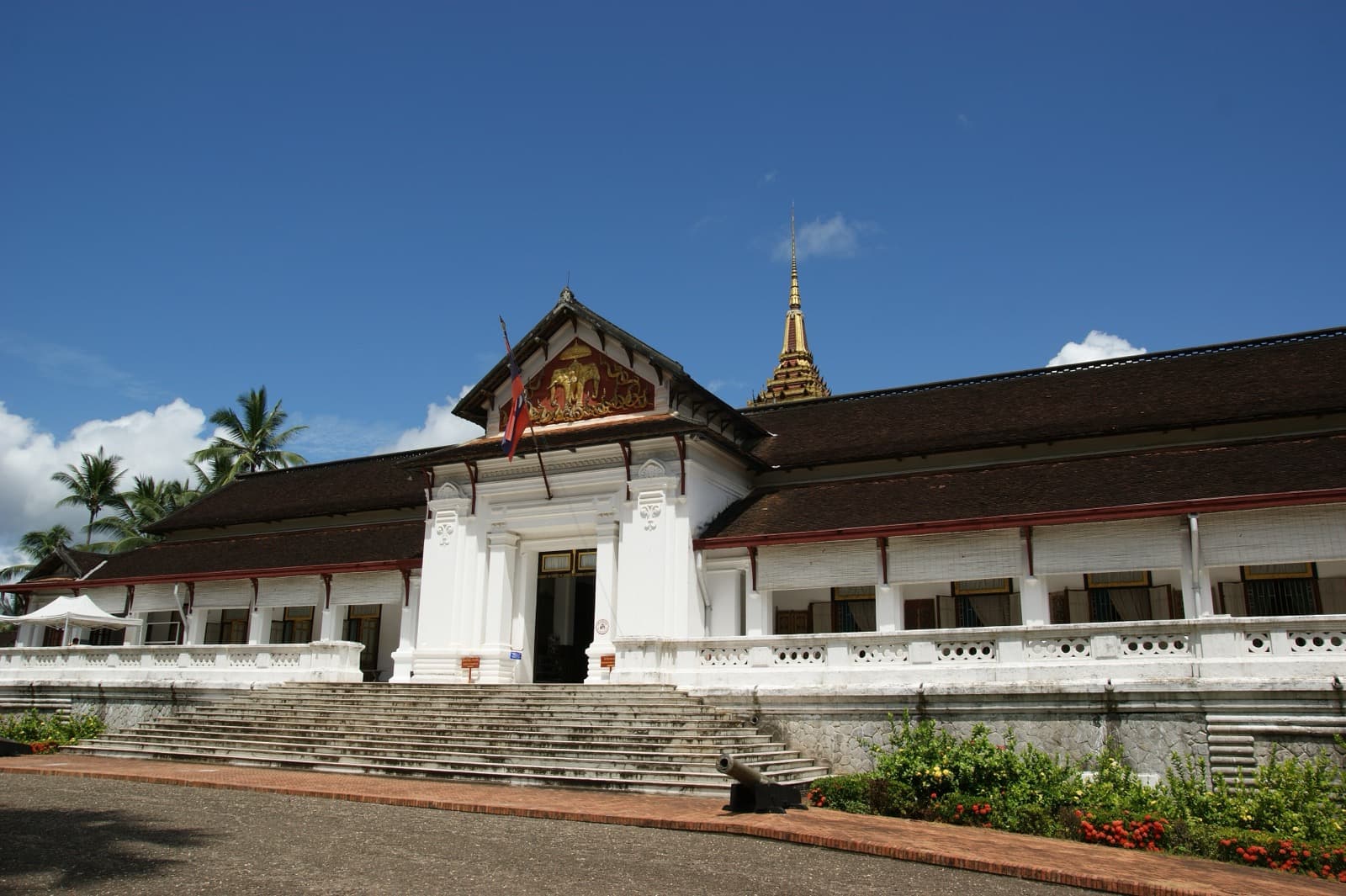
The grandest building of this fusion is the former Royal Palace, built between 1904 and 1909 and now the National Museum, which sits nearby on the peninsula. Palace and shophouse belong to the same period and the same logic: French-influenced form draped over a Lao capital that had been quietly stripped of its authority. When you stand on the street looking at warm plaster and arcades, you are looking at charm and at power in the same frame. That doubleness, the beauty and the machinery beneath it, is precisely what makes this a World Heritage town rather than merely a photogenic one.
Reading a shophouse
Slow down at a single facade and the vocabulary becomes legible. The ground floor arcade was a working shopfront, open to the street for trade. The upper floor, with its louvered shutters, was living space, shuttered against sun and rain in a climate that runs hot and wet. The brick-and-stucco construction is European in technique; the way the building sits in the row, gable to gable, and shares the street with a wooden Lao house and a temple wall a few doors down, is entirely local. That is the fusion in miniature. Neither element erased the other. They were folded together and left standing.
This is also why the walk works best at your own pace rather than on a group's clock. A shophouse rewards a minute of attention, the kind of minute a scheduled tour never grants. There is no one ahead of you and no schedule pulling you on, so you can stop, look up at a cornice, and move when you are ready.
The shophouses as a doorway to the whole town
The reason the colonial row matters so much is that it is only the newest visible layer, and it opens onto older ones. Luang Prabang is not one town but several laid over each other in the same streets: an animist spirit-town, a Buddhist royal capital, a French protectorate, and a modern republic. The Colonial Riverfront self-guided tour is built to read that stack in reverse, newest layer first, oldest layer last, and the shophouses are the entry point.
From the row you can walk to the Mekong quay, the river that was effectively the only road in or out before the roads existed, the artery that brought people, goods, faith, and eventually the French. Turn inland and quieter lanes carry you toward the old religious quarter, past working monasteries where the town lives its ordinary life. There you reach Wat Visounnarath, among the oldest temples in the city, and its rounded sixteenth-century stupa that everyone calls the watermelon, formally That Pathum but universally That Makmo. The walk ends at Wat Aham, where two great trees are said to hold the town's guardian spirits, the pre-Buddhist layer that Buddhism folded over but never erased. That is what UNESCO meant by fusion, seen at its deepest: the older gods kept their place beside the Buddha.
The shophouses are where all of this begins to make sense. They teach you to see the town as a set of layers rather than a set of postcards, and once you can do that, every wall on the peninsula has two things to say at once.
Walking it yourself
The Colonial Riverfront route runs roughly three kilometres over six stops and takes about two hours at an unhurried pace, though the pace is the point. The cooler, drier months from about November to February are the most comfortable, and early morning or late afternoon spares you the midday sun. Carry small Lao kip in cash, since temple entries are cash only, and dress for temples the whole way with shoulders and knees covered so you can step into any working wat you pass. These are living streets and functioning monasteries, not a stage set, so move gently.
If you want the wider set of routes through the old town, the peninsula, and Mount Phousi, start with the full guide to Luang Prabang walking tours, then let the shophouse row be the first thing you read on the ground.
Sources
- UNESCO World Heritage Centre, Town of Luang Prabang (List no. 479): the 1995 inscription and the fusion of Lao and European colonial architecture that justified it.
- Tourism Luang Prabang, UNESCO World Heritage page: local heritage-authority account of the protected streetscape and the count of civilian and religious buildings.
- Traditional Arts and Ethnology Centre (taeclaos.org): context on the historic peninsula mansions and the ethnic story the town's architecture houses.
- Roamer, Colonial Riverfront: The Fusion City on the Mekong (self-guided tour): fact-audited transcripts for the shophouse stop and the wider route referenced throughout.
Ready to experience it?
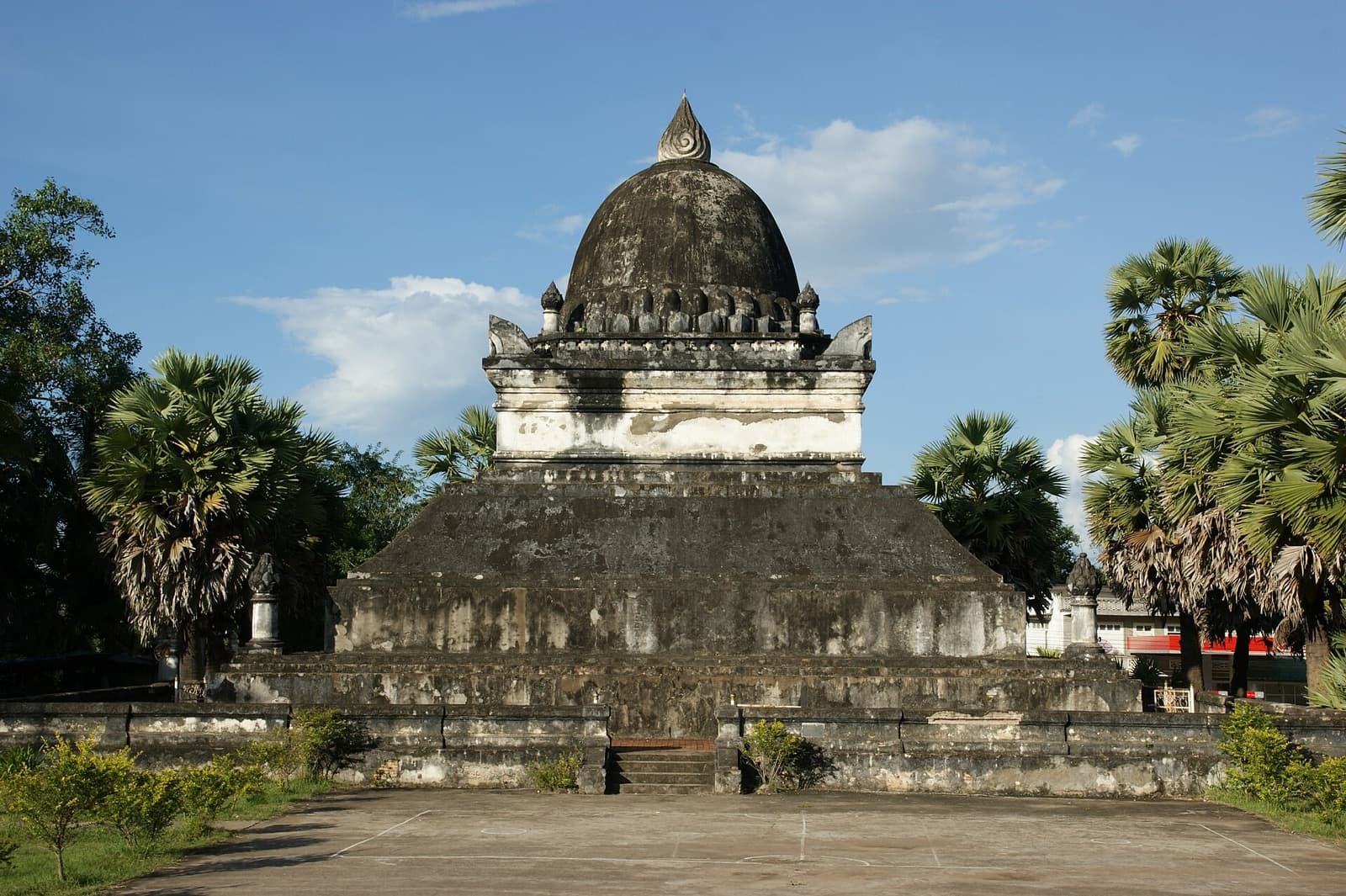
Colonial Riverfront: The Fusion City on the Mekong
90 min · 2.9 km · easy
More from Luang Prabang
Explore more at your own pace.
Luang Prabang Travel Guide: Days, Transport, Season, Safety, Budget
Luang Prabang: The Fusion Royal Town Between Two Rivers
That Chomsi Stupa: Why the Golden Point Above Luang Prabang Reads the Whole Town
The Royal Palace of Luang Prabang: Where a Kingdom Kept Its Last Throne
The Summit of Mount Phousi: Reading Luang Prabang From the Sacred Hill