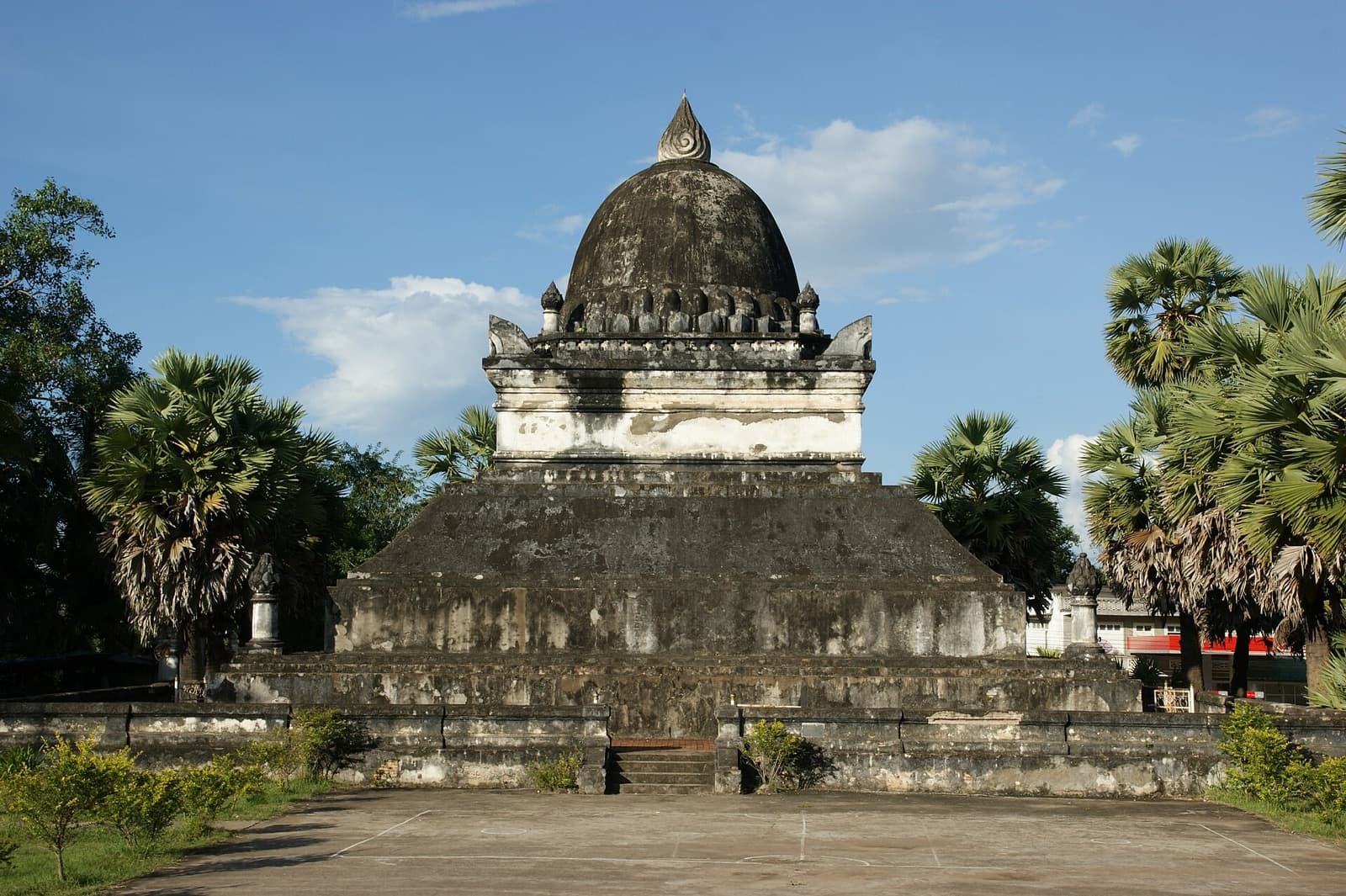
A self-guided walk through the layered old town of Luang Prabang, from a French colonial mansion turned museum of the peoples of Laos to the ancient watermelon stupa and the spirit temple where the town's oldest gods still keep their place beside the Buddha.
Start · The Traditional Arts and Ethnology Centre: A Colonial Mansion Opens Up the Many Peoples of Laos
DirectionsStops
- 1
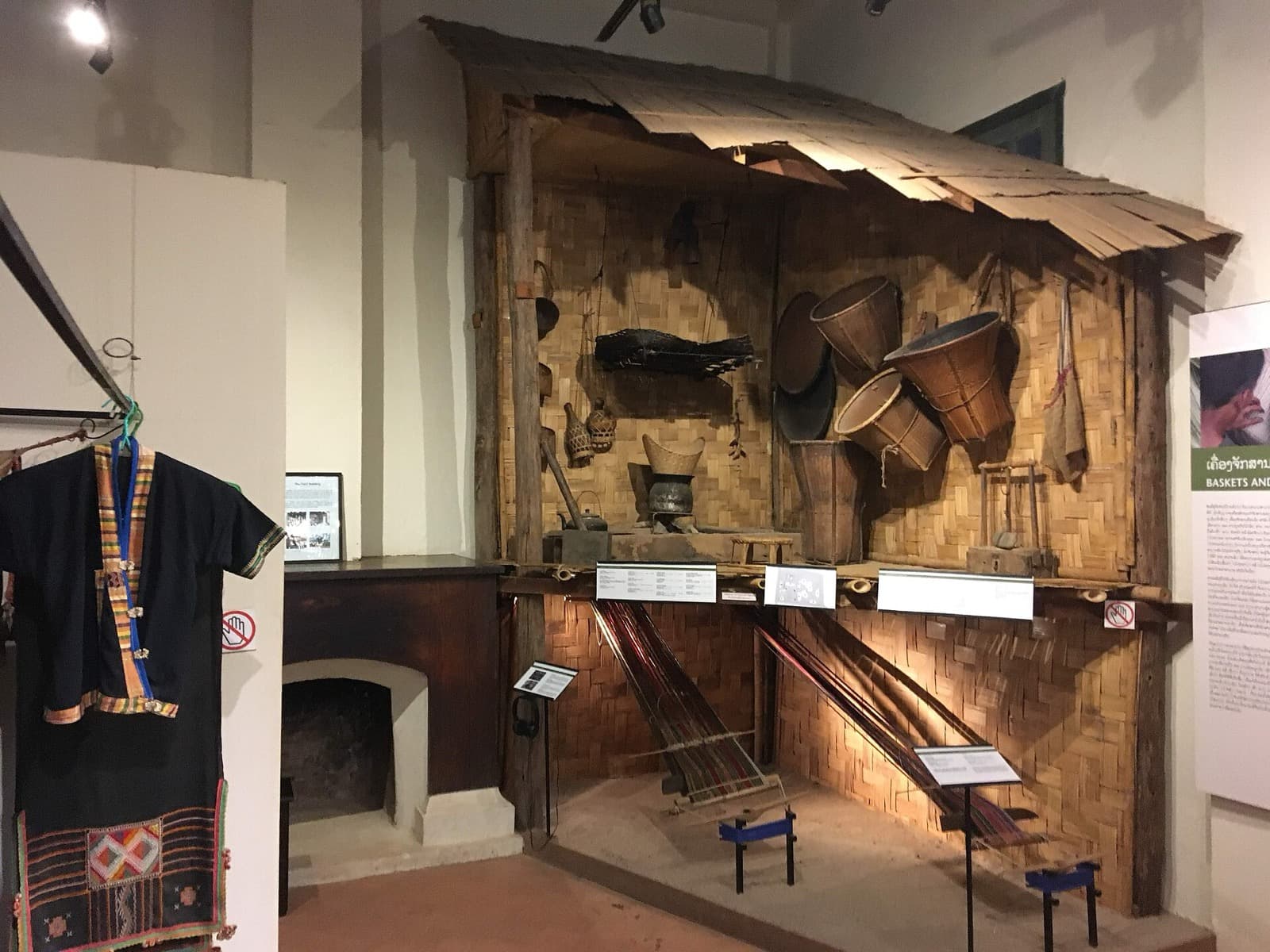
The Traditional Arts and Ethnology Centre: A Colonial Mansion Opens Up the Many Peoples of Laos
A former French colonial mansion at the foot of Mount Phousi, now the only independent museum in Laos devoted to the country's ethnic diversity.
- 2
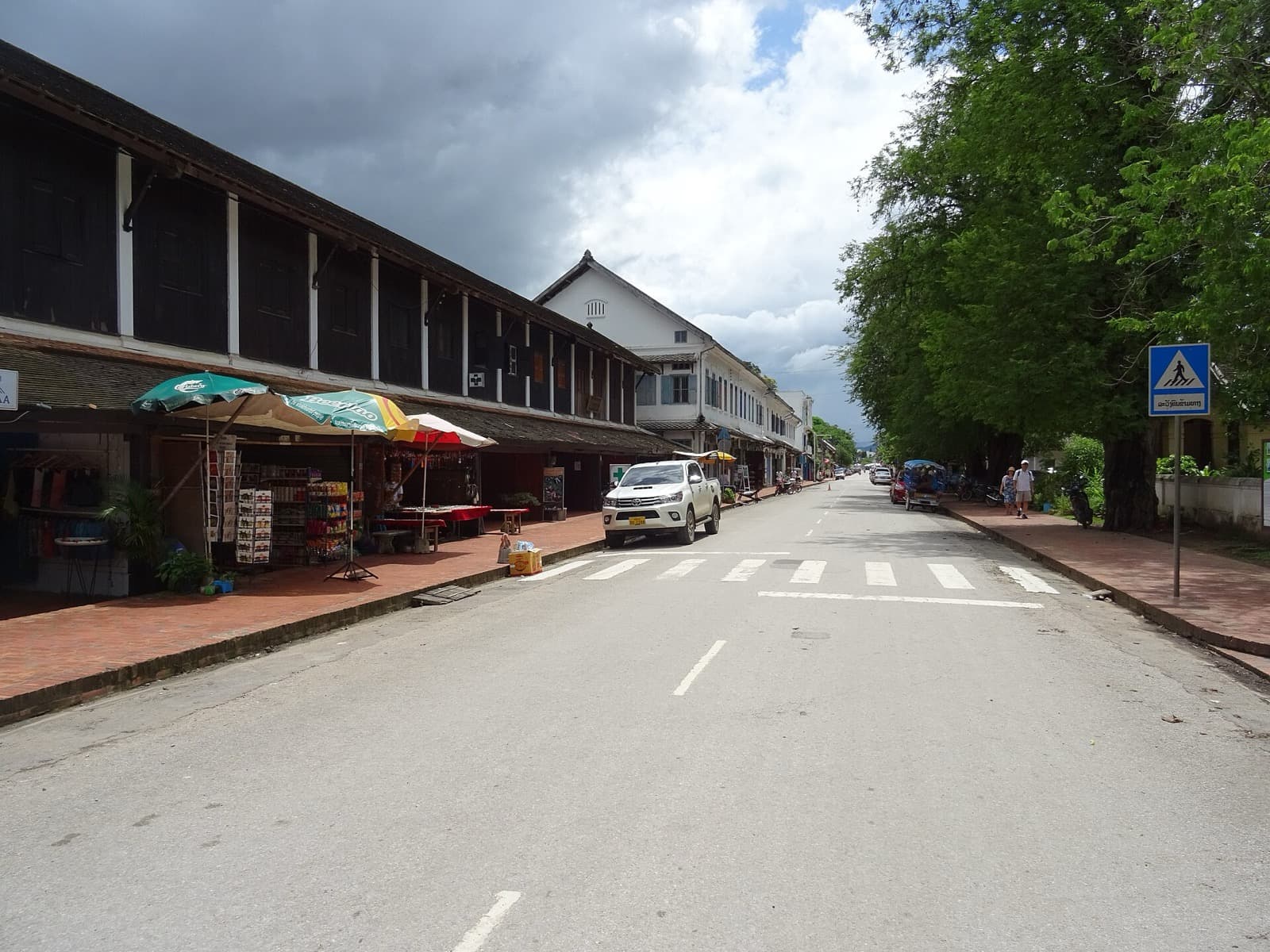
The French Colonial Shophouses: The Fusion UNESCO Preserved
The peninsula's spine of two-storey brick-and-stucco colonial shophouses standing shoulder to shoulder with wooden Lao homes and gilded temples.
- 3
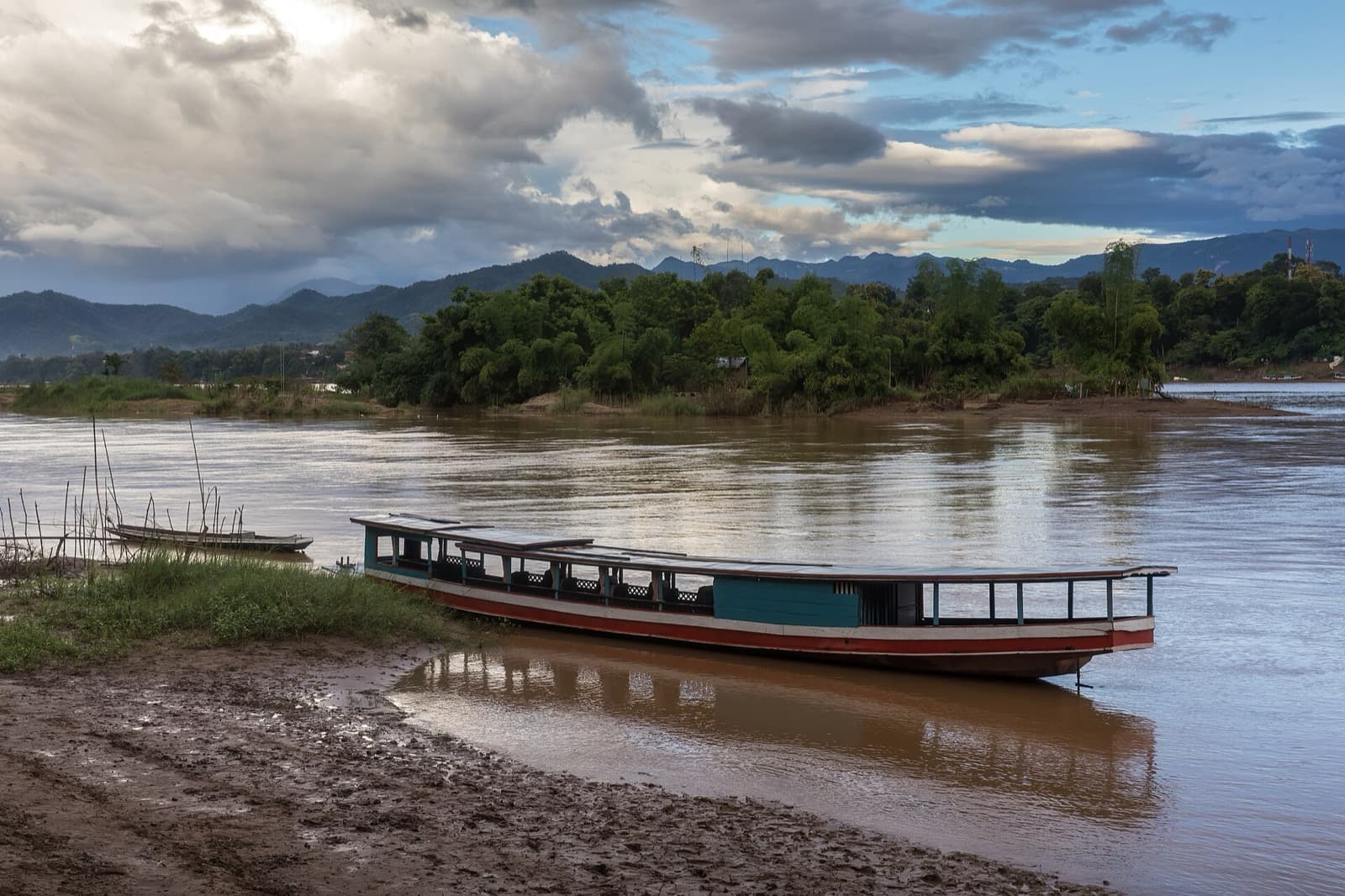
Khem Khong: The Mekong Quay, the River That Was the Only Road
The working Mekong-side quay on the northwest of the peninsula, where the river that was the town's only route to the world still slides past the old streets.
- 4
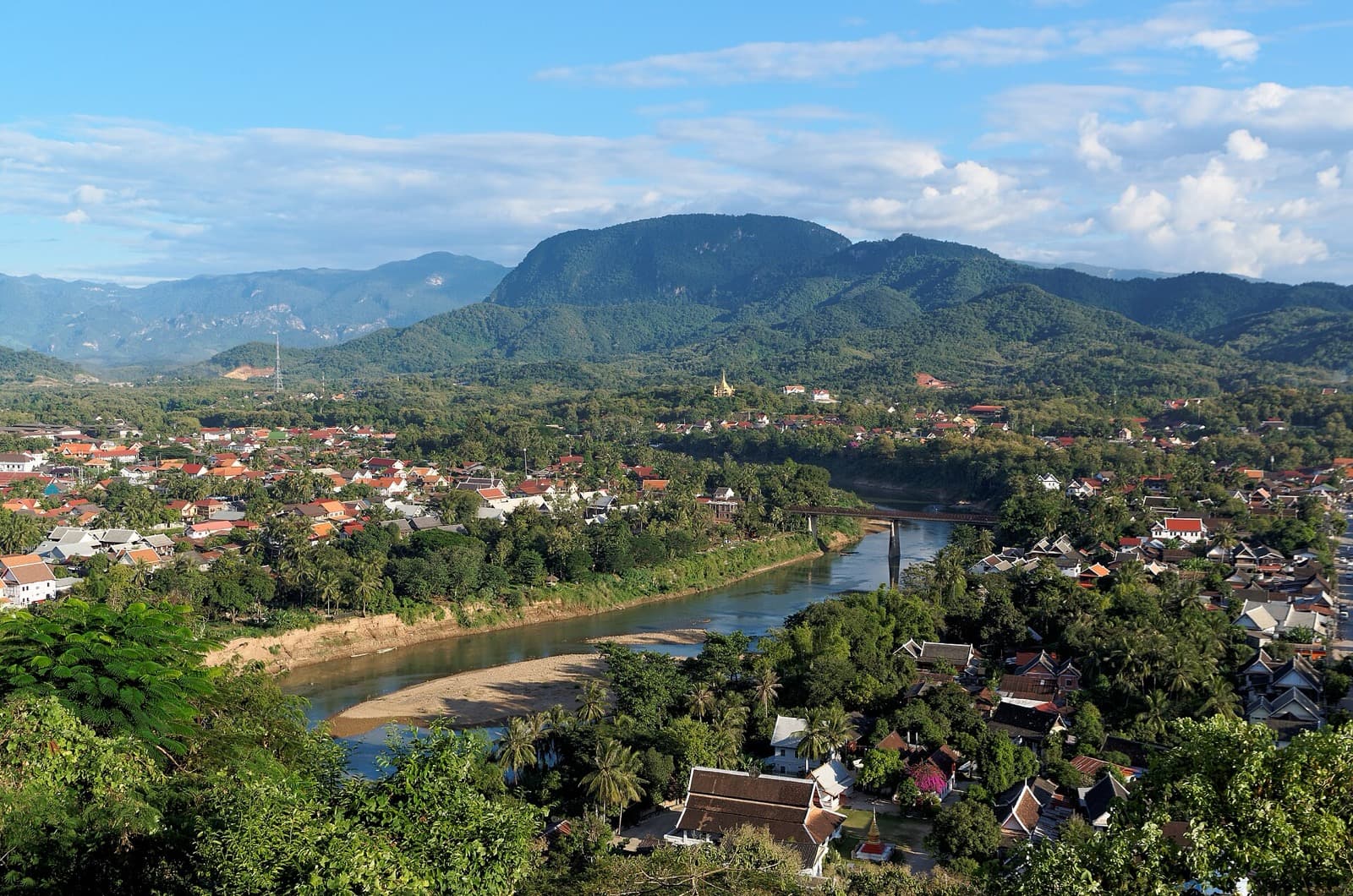
The Inland Lanes: The Everyday Town Between the Famous Temples
Quieter lanes leading inland toward the old religious quarter, where the working town lives on beyond the postcard peninsula.
- 5
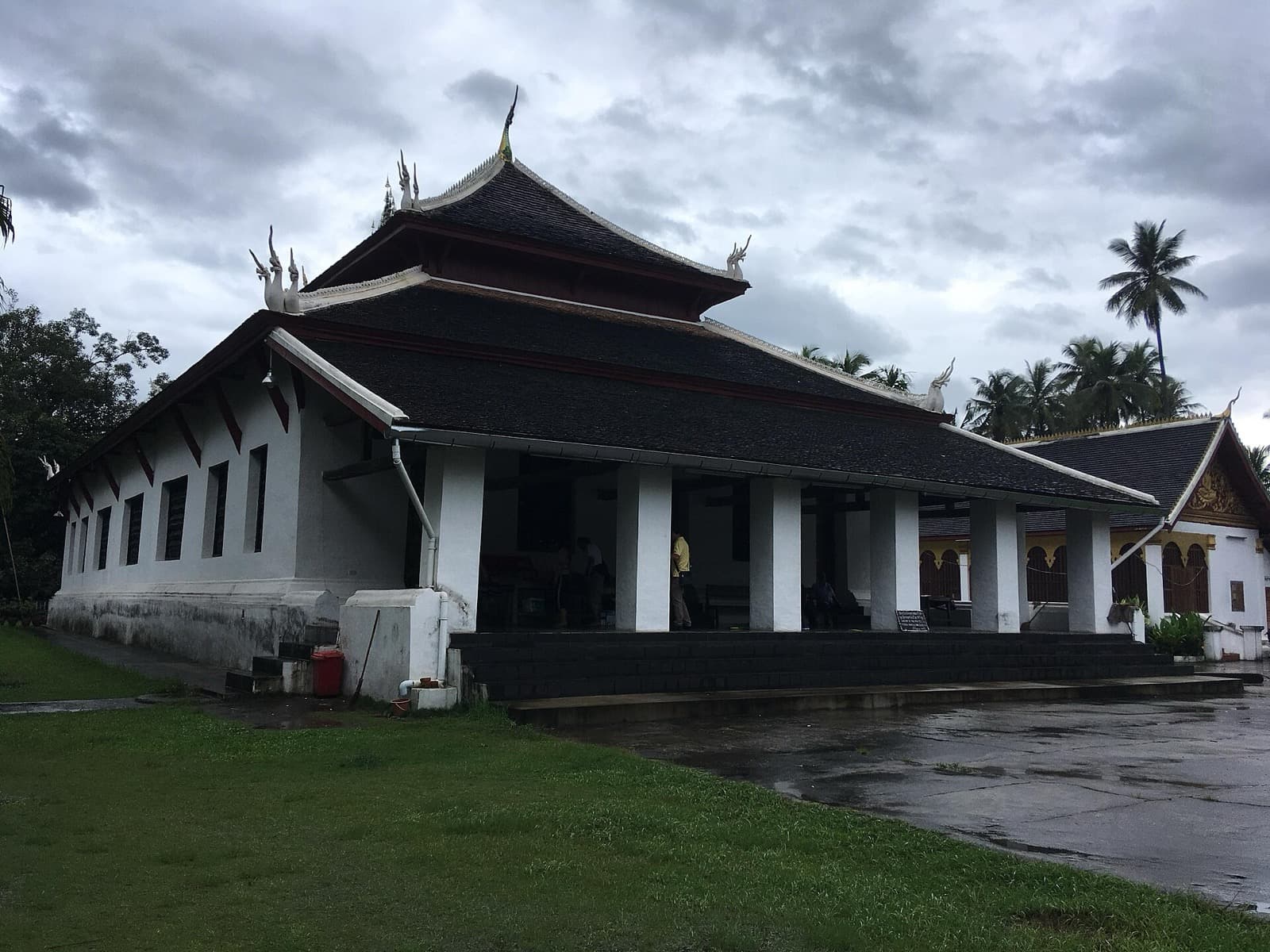
Wat Visounnarath and That Makmo: The Ancient Temple and the Watermelon Stupa
Among the oldest temples in Luang Prabang, fronted by the rounded sixteenth-century stupa that everyone calls the watermelon.
- 6
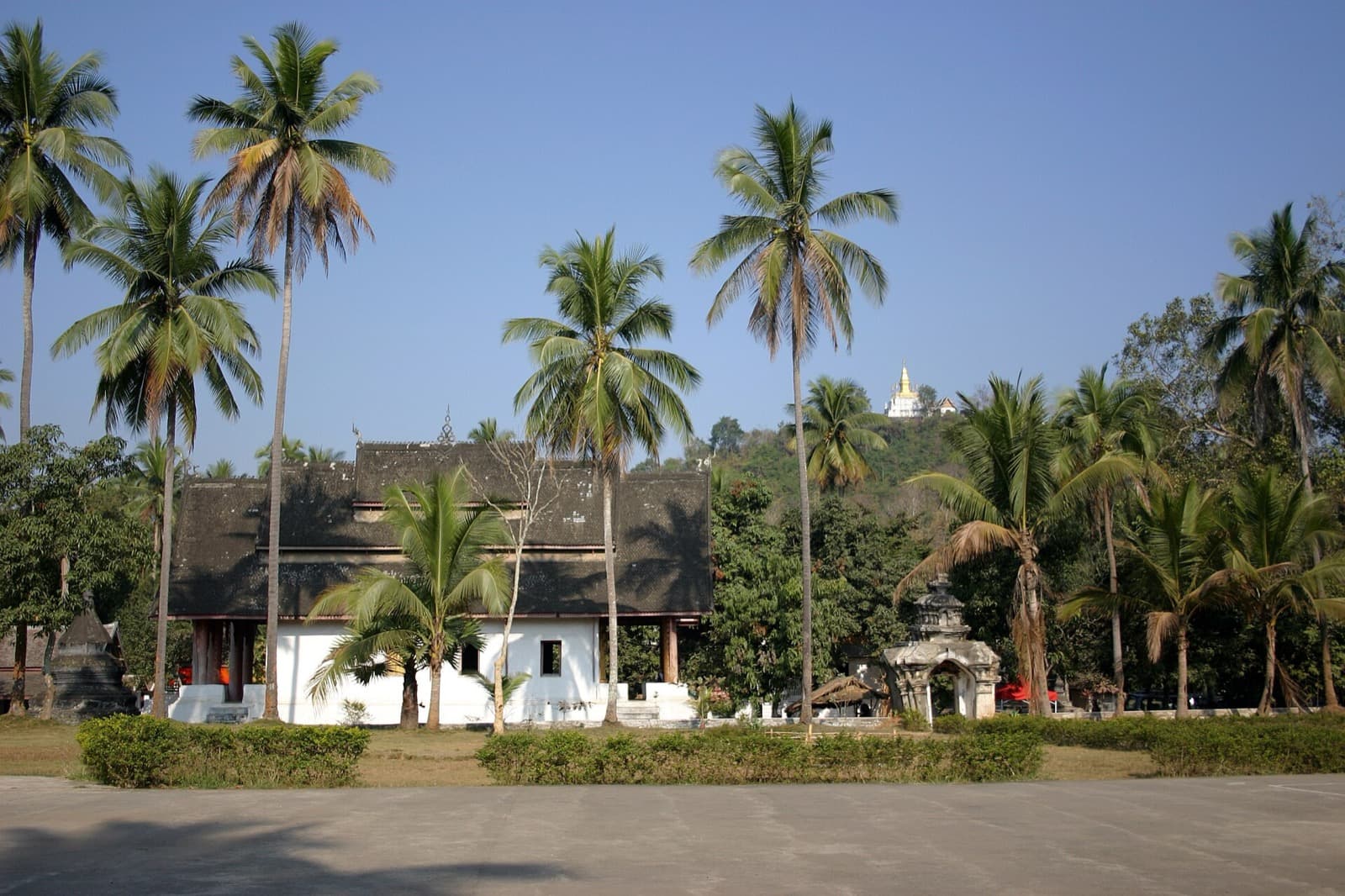
Wat Aham: The Spirit Temple Under Its Ancient Trees
The humble temple beside Wat Visoun where two great banyan trees are said to hold the town's guardian spirits, the oldest layer of the fusion city.
Details
Best Time to Visit
The cooler, drier months from about November to February are the most comfortable for walking the old town, with clear light on the river and gentler heat. Set out in the early morning or the late afternoon to avoid the midday sun and the sunset crowds along the Mekong. The temples are quietest and most contemplative early in the day, well after the dawn alms-giving has ended.
Pro Tips
- •Go early or late. The temples are calmest in the morning after the alms round, and the Mekong quay at stop three is far quieter before the packaged sunset crowd arrives, so time the walk to dodge both.
- •Carry small Lao kip in cash. Temple entries such as the twenty-five thousand kip at the TAEC and the small fee at Wat Visounnarath are cash only, and many places in the old town do not take cards.
- •Dress for temples the whole way. Keep your shoulders and knees covered so you can step into any working wat you pass without having to double back, and be ready to remove your shoes.
- •The TAEC is closed on Mondays. If you want to go inside the mansion at stop one rather than just read it from the street, plan the walk for any other day of the week.
- •Pause at stop four to let the ordinary town in. The inland lanes and the night-market street are where Luang Prabang actually lives, so slow down here rather than rushing to the temples.
- •You set the clock. Every stop is short and skippable, so linger in the courtyard of Wat Visounnarath or under the trees of Wat Aham as long as you like, with no group and no schedule pulling you on.
Safety & Precautions
- •These are living temples, not museums. Cover your shoulders and knees, remove your shoes before entering an ordination hall, keep your voice low, and move respectfully around monks and worshippers.
- •If you witness the dawn alms-giving, the Tak Bat, treat it as sacred. Watch quietly from a distance, dress modestly, never use flash, and never step into the line, buy a place in it, or block the monks.
- •The riverbanks and quays along the Mekong and the Nam Khan can be steep and often have no railings, so take care near the edges, especially with children or after dark.
- •The tropical sun and heat are strong and, in the wet season, the paths and temple steps turn slippery, so carry water, sun protection and a hat, watch your footing, and note that the town keeps quiet hours and a nightly curfew.
Gallery
Related Reading
Go deeper on what you'll see, hear, and walk through.
Overview
Best Self-Guided Walking Tours in Luang Prabang (2026)
4 min
Overview
Luang Prabang Travel Guide: Days, Transport, Season, Safety, Budget
7 min
Overview
One Day in Luang Prabang: A Walkable Itinerary, Dawn to Night Market
7 min
Thematic
Best Culture Walking Tours in Luang Prabang (2026)
2 min
Thematic
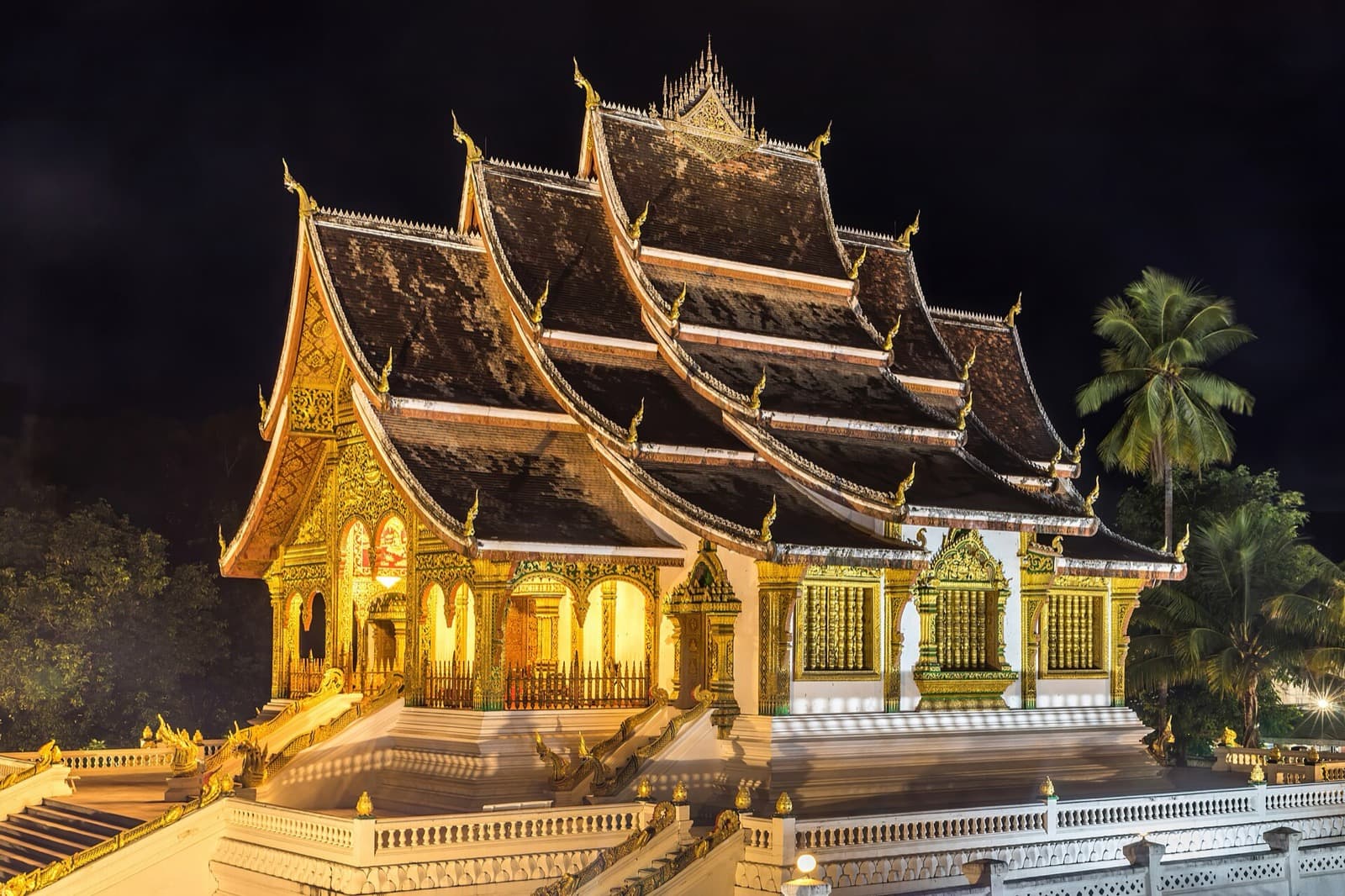
Luang Prabang: The Fusion Royal Town Between Two Rivers
7 min
Companion
The Colonial Shophouses of Luang Prabang: The Fusion UNESCO Chose to Protect
6 min
Deep dive
Wat Visounnarath and That Makmo: The Watermelon Stupa That Broke Open
6 min
Read
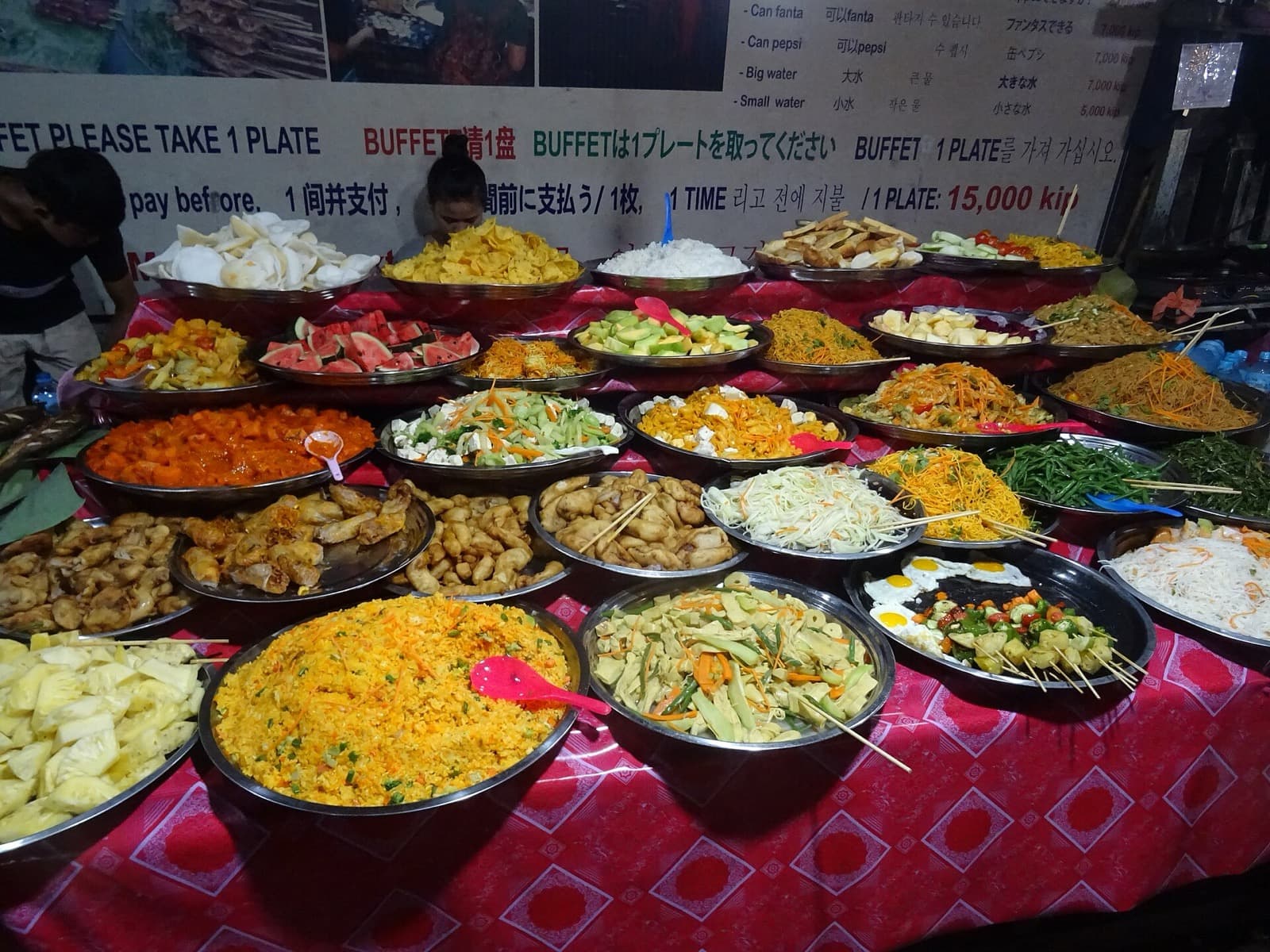
What to Eat in Luang Prabang: A Local Food Guide
6 min
Read the walk
The full story of Colonial Riverfront: The Fusion City on the Mekong, in words. Prefer to listen? Play it narrated, from home or on location.
Introduction
Luang Prabang, in the mountainous north of Laos, is not one town but several laid one over another in the same few streets. There is an animist spirit-town, a Buddhist royal capital, a French protectorate, and a modern republic, and all of them are still visible along this peninsula between the Mekong and the Nam Khan. In nineteen ninety-five, UNESCO inscribed the Town of Luang Prabang on the World Heritage List not for a single monument but for a fusion: traditional Lao religious architecture and nineteenth and twentieth century European colonial buildings, two worlds preserved together as one streetscape. This walk reads that fusion the way you peel an onion, newest layer first, oldest layer last. It has six stops, runs roughly three kilometres, and takes about two hours at an unhurried pace, though the whole point is that the pace is yours. You begin at a colonial mansion that has become a museum of the many peoples of Laos. You move through the brick-and-stucco shophouses that gave this town its World Heritage status. You reach the Mekong quay, the river that was the only road to the world before the roads. Then quieter inland lanes carry you to Wat Visounnarath, among the oldest temples in the city, and its rounded stupa the people simply call the watermelon. The walk ends at Wat Aham, where two ancient sacred trees are said to hold the town's guardian spirits, the older layer Buddhism was folded over but never erased. This is a living town, with working temples and everyday streets, so move gently and let it unfold. When you arrive at the Traditional Arts and Ethnology Centre at the foot of Mount Phousi, begin with stop one.
1. The Traditional Arts and Ethnology Centre: A Colonial Mansion Opens Up the Many Peoples of Laos
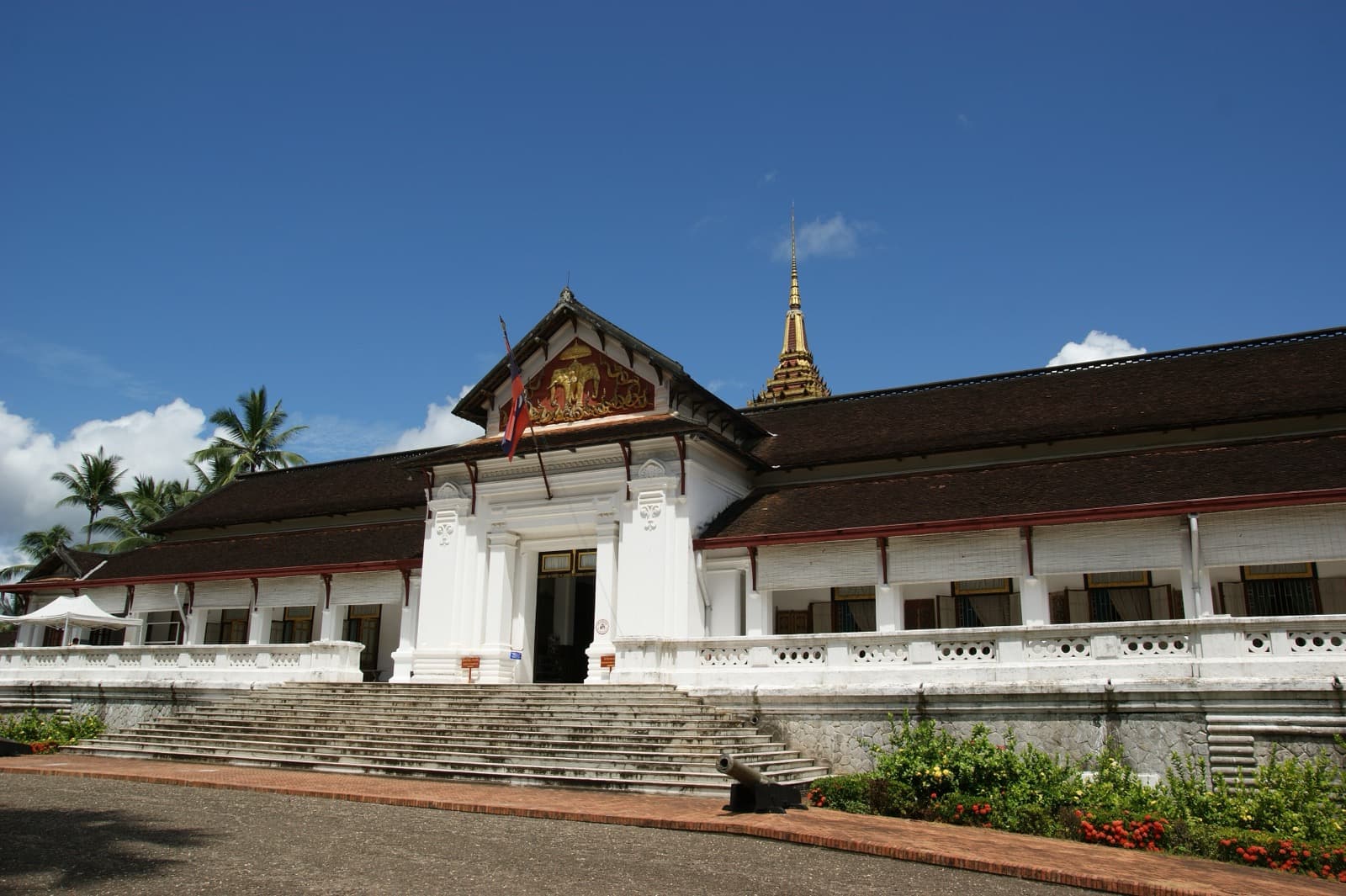
This handsome two-storey house of brick and stucco, with its shuttered windows and its tiled roof, sits at the western foot of Mount Phousi on Kingkitsarath Road. It was built around nineteen twenty, in the middle of the French colonial protectorate, and it was among the most opulent houses in the town. By tradition it was the residence of a French colonial judge, though that attribution is a widely-repeated story rather than a matter of archival proof, so hold it lightly. Over the years it served other uses, including a spell as a military court. Since two thousand seven it has been open to the public as the Traditional Arts and Ethnology Centre, founded the year before, in two thousand six. It is, by its own account, the only independent museum in Laos dedicated to collecting, preserving and interpreting the country's ethnic diversity. That makes this house the first fusion object of the walk, and a telling one: a French colonial shell now holding the story of the highland and lowland peoples of Laos, the many communities who live beyond the lowland royal Lao town. Inside, the permanent exhibition gathers the textiles, dress, jewelry, religious objects and everyday tools of groups such as the Akha, the Hmong, the Tai Lue and the Khmu. Entry is twenty-five thousand kip, and free for Lao citizens, and the museum is closed on Mondays, so plan around that. Whether you go in or simply read the building from the street, notice the point it quietly makes. The colonial architecture is only the outer wrapper. What matters is who is inside, and the answer here is the whole plural country, not just the palace and the peninsula.
2. The French Colonial Shophouses: The Fusion UNESCO Preserved
Look along this street and you are looking at the exact thing UNESCO chose to protect. Two-storey shophouses of brick and stucco line the peninsula, French and Franco-Lao in style, with their arcaded ground floors, their tall shuttered windows and their tiled roofs. They went up during the French protectorate, and they stand shoulder to shoulder with wooden Lao houses and with gilded temples. When UNESCO inscribed the Town of Luang Prabang on the World Heritage List in nineteen ninety-five, this blend was the reason. The citation praised what it called the exceptional fusion of Lao traditional architecture and nineteenth and twentieth century European colonial style buildings. UNESCO records that six hundred and eleven civilian and religious buildings here were identified as heritage value to be preserved, so this streetscape is not a backdrop, it is the monument. Behind the pretty facades sits a harder history. The French protectorate over Laos was established after the Franco-Siamese crisis of eighteen ninety-three. Luang Prabang remained the royal capital and the king kept his throne, but real power passed to French officials, and the administrative capital of the country was moved to Vientiane. The grandest building of this fusion is the former Royal Palace of nineteen oh four to nineteen oh nine, now the National Museum, which you may see nearby. So read the street on two levels at once. On the surface it is charm, shutters and arcades and warm plaster. Underneath, it is the built record of an era when a Lao king reigned but did not rule. That doubleness, the beauty and the power beneath it, is precisely what makes this a World Heritage town, and it is yours to walk at whatever pace you like, no group ahead of you, no schedule pulling you on.
3. Khem Khong: The Mekong Quay, the River That Was the Only Road
You have reached the water. This is Khem Khong, the quay road running along the Mekong on the northwest side of the peninsula. The great river slides past the old town here, wide and brown and unhurried. Long-boats and slow cargo craft tie up along the bank, colonial buildings…
Full narration for this stop unlocks with the tour.
4. The Inland Lanes: The Everyday Town Between the Famous Temples
Turn away from the river and the crowds and head inland along these quieter lanes, south toward the old religious quarter around Wat Visounnarath and Wat Aham. The tourist spine of the peninsula thins out here. You pass smaller working monasteries and everyday Lao streets, and…
Full narration for this stop unlocks with the tour.
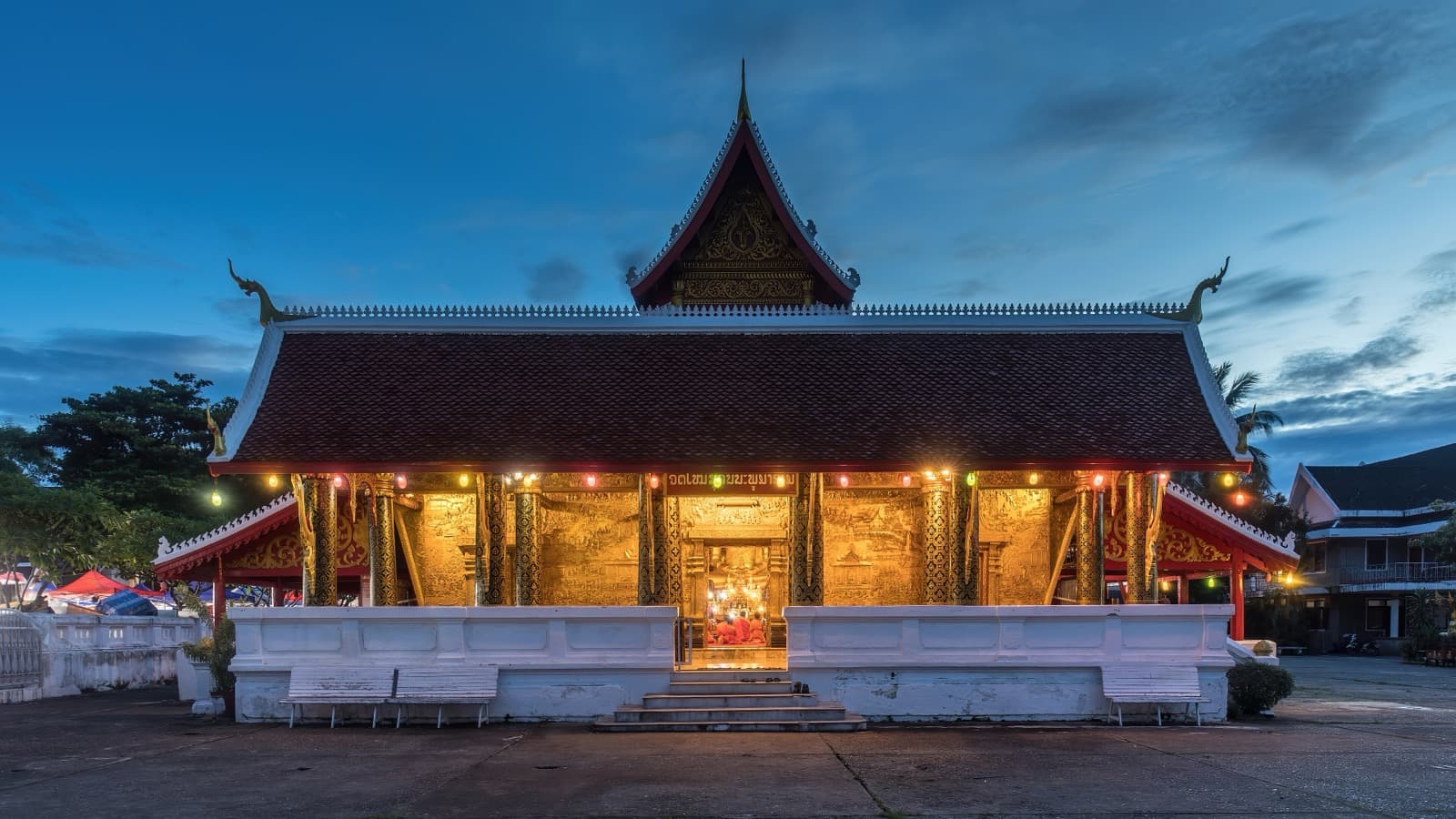
5. Wat Visounnarath and That Makmo: The Ancient Temple and the Watermelon Stupa
This is the ancient core of the walk. Wat Visounnarath, often shortened to Wat Visoun, was ordered under King Visounnarath, who reigned in the early fifteen hundreds. The temple's construction is dated to about fifteen oh three to fifteen oh four, with completion reported a…
Full narration for this stop unlocks with the tour.
6. Wat Aham: The Spirit Temple Under Its Ancient Trees
Here, beside Wat Visounnarath, the walk reaches its oldest layer and its close. Wat Aham stands right next to the great temple you have just left, on the side toward the Nam Khan. Its name is often translated as the Monastery of the Blossomed Heart. The ordination hall you see…
Full narration for this stop unlocks with the tour.