Wat Visounnarath and the rounded stupa in front of it, the one everyone calls the watermelon, are the ancient core of Luang Prabang, a sixteenth-century temple whose stupa collapsed in 1914 and gave up a hidden hoard of early Buddha images. Most visitors arrive here after the colonial mansions and the riverfront, and that is exactly the right order. Everything else on this peninsula is younger. If you want to understand the deepest layer of the town, this quiet courtyard, set back in the old religious quarter toward the Nam Khan, is where you stand and look.
The oldest temple, rebuilt more than once
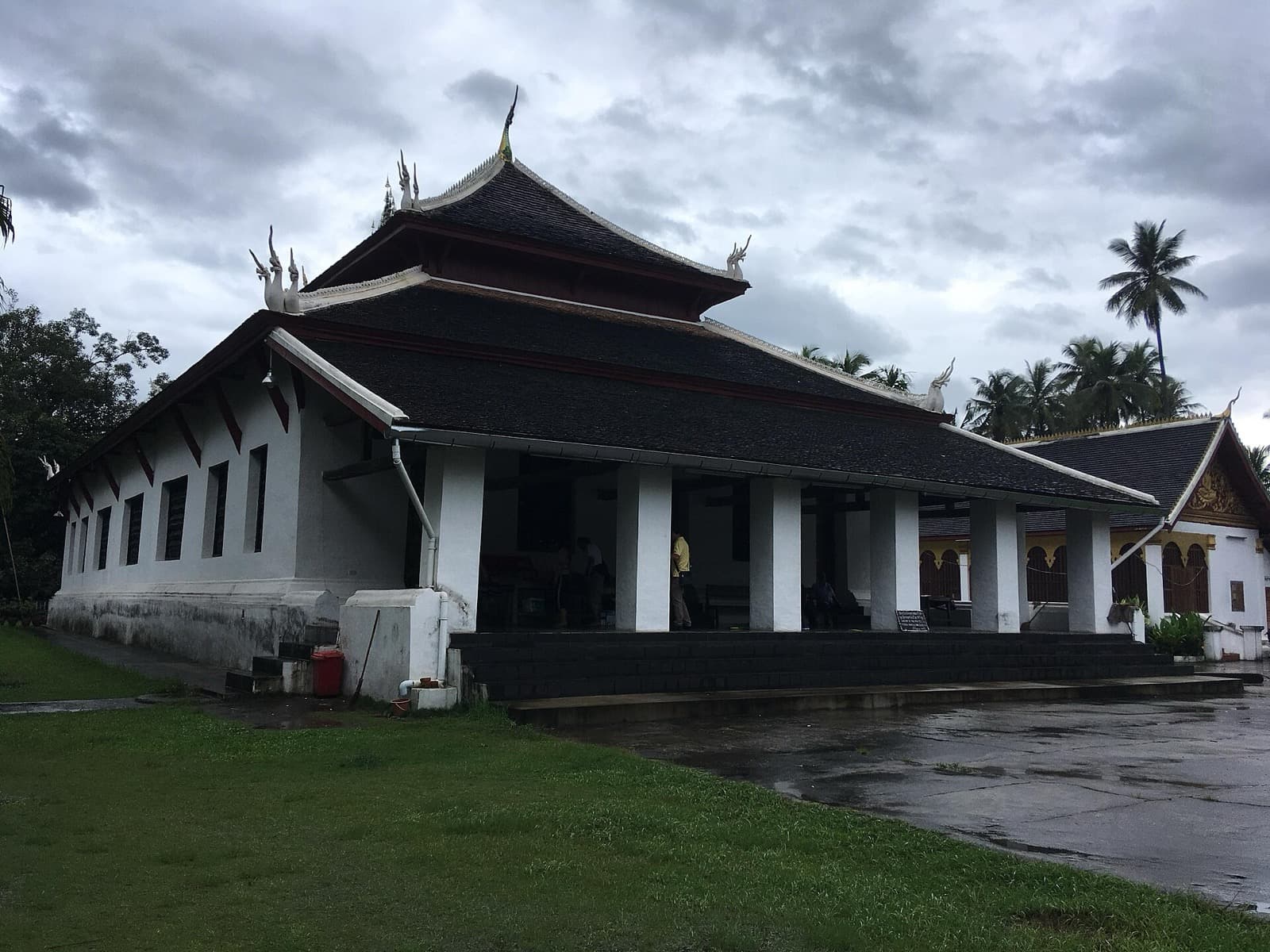
Wat Visounnarath, usually shortened to Wat Visoun, was ordered under King Visounnarath, who reigned in the early fifteen hundreds. Its construction is dated to roughly 1503 to 1504, with completion reported a decade or so later. The exact figures wander from one source to another, so it is honest to hold the date loosely as the early sixteenth century rather than pin it to a single year. Even at its vaguest, that makes it among the oldest temples in the city.
The tall two-tiered hall you see today is not the original. The first hall burned in 1887, during the Black Flag raid that looted the town, and it was restored in the years that followed and again more recently. So the building carries a doubled history: an early-sixteenth-century foundation, a nineteenth-century catastrophe, and a modern repair, all folded into one silhouette. For a period this temple also sheltered the Prabang, the revered image that gives the city its name, before that image moved on. Knowing that changes how the place feels. This was not a minor neighborhood wat. It once held the object at the spiritual center of the whole kingdom.
Take a slow look at the ordination hall before you turn to the stupa. The height and the two receding tiers are unusual for Luang Prabang, where many halls sit low and horizontal. But the hall is the supporting act. The thing you came to see stands in front of it.
Why they call it the watermelon
Hear a stop from this walk
Wat Aham: The Spirit Temple Under Its Ancient Trees
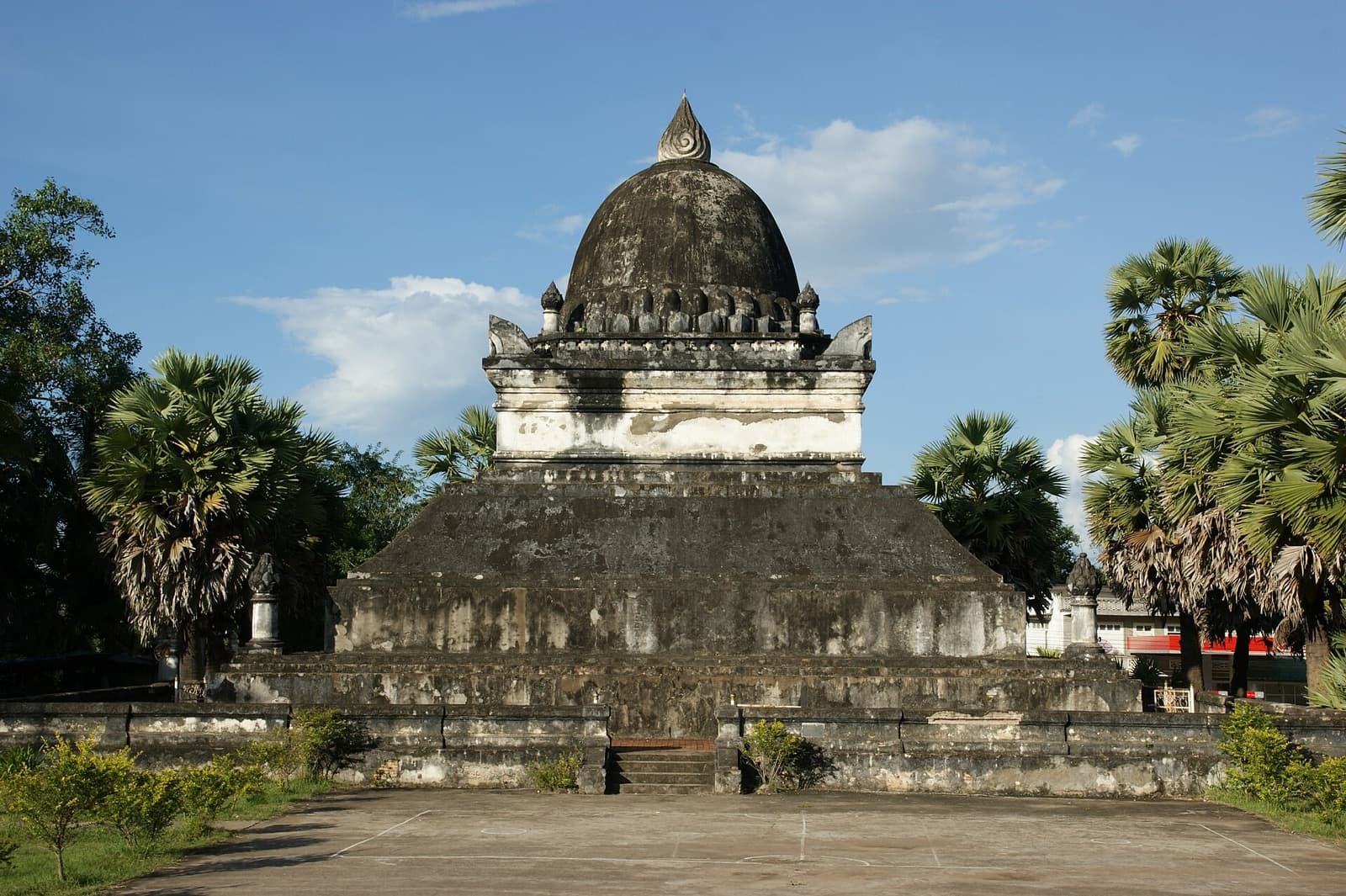
Properly, the stupa is named That Pathum, the Lotus Stupa. Almost nobody uses that name. Everyone calls it That Makmo, the watermelon stupa, because its rounded, swelling dome looks like a great melon set down in the courtyard. In Lao, makmo means watermelon. It is one of those local nicknames that tells you more than the formal title does, because the moment you hear it you cannot unsee the shape.
The tourism authority records that the stupa was built around 1514 by Queen Phantixieng, the wife of King Visounnarath, that it rises to about thirty-five metres, and that its Sinhalese style is described as the only one of its kind in Laos. That last detail is worth pausing on. Luang Prabang has more than thirty temples, and its stupas mostly follow familiar Lao and Lan Xang forms. This bulbous, hemispherical dome points somewhere else, toward the stupa traditions of Sri Lanka, a shape that arrived here and, by the tourism authority's account, was never repeated anywhere else in the country. You are looking at an outlier that has stood in this one courtyard for roughly five centuries.
The day it broke open
The most dramatic moment in the stupa's long life came in 1914. In that year the structure collapsed, and its failure turned out to be a kind of gift. Inside the ruined dome lay a hidden treasury: fifteenth and sixteenth century Buddha images of gold, silver, bronze and wood. These were not decorations. They were consecrated deposits, sealed into the monument when it was built and forgotten for four hundred years, until the stupa's own collapse brought them back into daylight.
Those recovered images are now displayed in the National Museum, the former Royal Palace a short walk away toward the peninsula. If you visit both on the same trip, the connection is quietly satisfying. The palace holds the treasure; this courtyard is where the treasure slept. It is a reminder that a stupa is not a hollow marker. It is a reliquary, a vessel built to hold something precious and to keep it hidden. That Makmo simply kept its contents longer than anyone expected, and then, when it fell, it revealed why it had been built in the first place.
Stand in the courtyard and let that idea settle. The melon shape that draws the cameras is the outside of a container. What made it matter was always on the inside.
Standing in front of it
There is a rhythm to how people move through this place, and most of it is a rush. Groups arrive, circle the stupa, photograph the dome, and move on to the next stop on a fixed clock. You do not have to. The whole point of walking Luang Prabang on your own is that nobody is behind you pulling you forward. Linger. Walk a full slow circle around the stupa and watch how the light changes on the plaster as you go. Notice the repairs, the seams where the twentieth-century restoration meets the older core.
This is a working temple, so move gently. Keep your shoulders and knees covered, lower your voice, and be ready to remove your shoes if you step inside the hall. There is a small temple fee, around twenty thousand kip, and it is cash only, so carry a little Lao kip. The temples in the old town rarely take cards.
Wat Visounnarath and That Makmo sit near the end of the Luang Prabang walking tours that read the old town in reverse, peeling it back from the French colonial mansions down to this sixteenth-century core and the spirit temple just beside it. The self-guided Colonial Riverfront route on the Roamer app brings you here on foot, at your own pace, with the full story narrated in your ear as you stand in the courtyard. If you want to plan the wider walk and see how this stop fits the layered town around it, start from Luang Prabang and build the day the way you like it. The watermelon stupa has kept its place here for five hundred years. It is in no hurry, and neither are you.
Sources
- Wat Visounnarath, Tourism Luang Prabang. Official city tourism authority page for the temple and its stupa, including the height, the Queen Phantixieng attribution, and the Sinhalese-style note.
- Town of Luang Prabang, UNESCO World Heritage Centre (List entry 479). Context for the old town's 1995 inscription and its status as a living heritage town of temples and colonial buildings.
- Traditional Arts and Ethnology Centre, taeclaos.org. Background on Luang Prabang's ethnic and cultural layers referenced across the wider walk.
- Buddhist temples of Luang Prabang, Tourism Luang Prabang. Overview of the town's monastic quarter and its more than thirty working temples.
Ready to experience it?
Colonial Riverfront: The Fusion City on the Mekong
90 min · 2.9 km · easy
More from Luang Prabang
Explore more at your own pace.
Luang Prabang Travel Guide: Days, Transport, Season, Safety, Budget
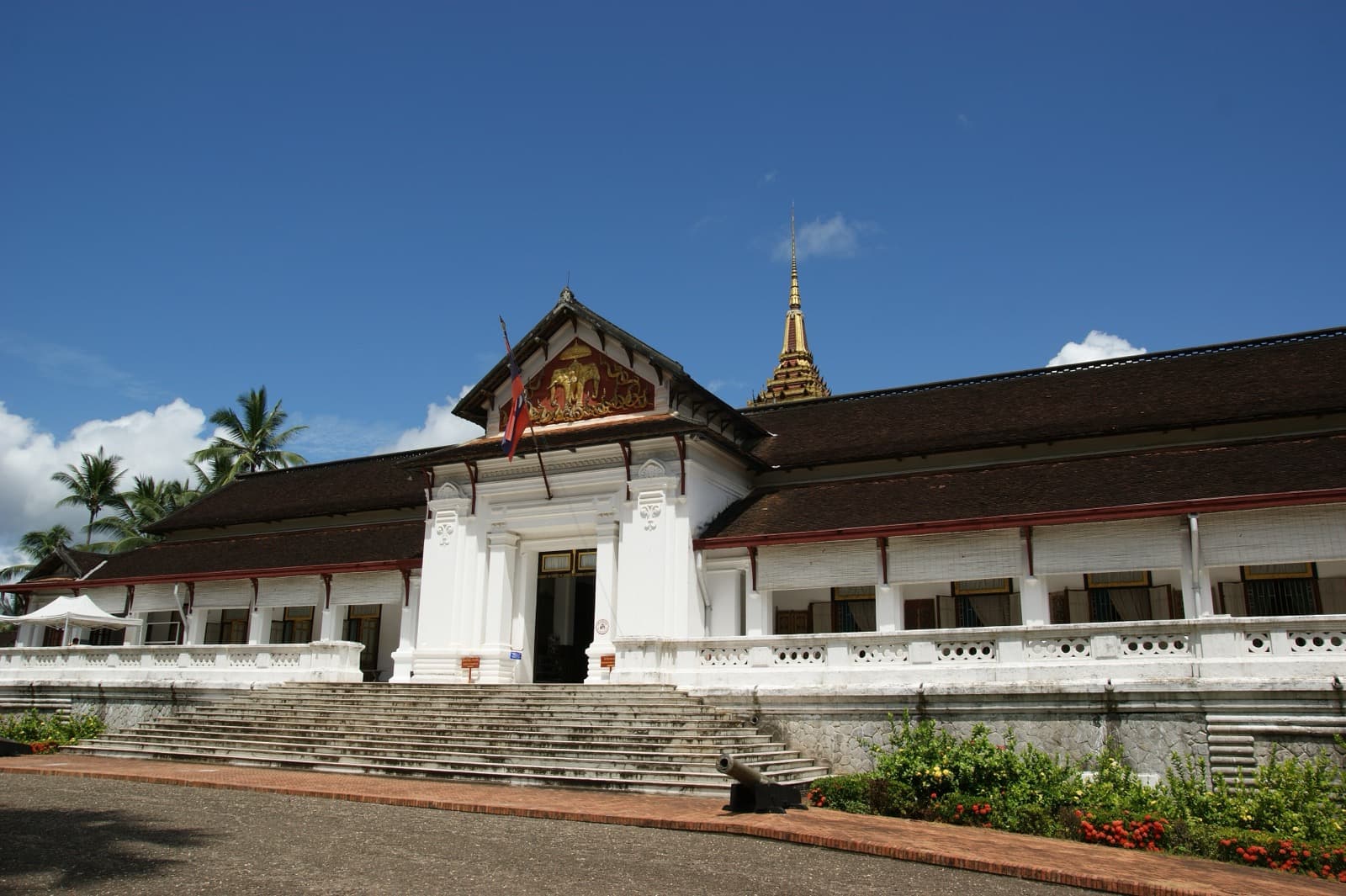
Luang Prabang: The Fusion Royal Town Between Two Rivers
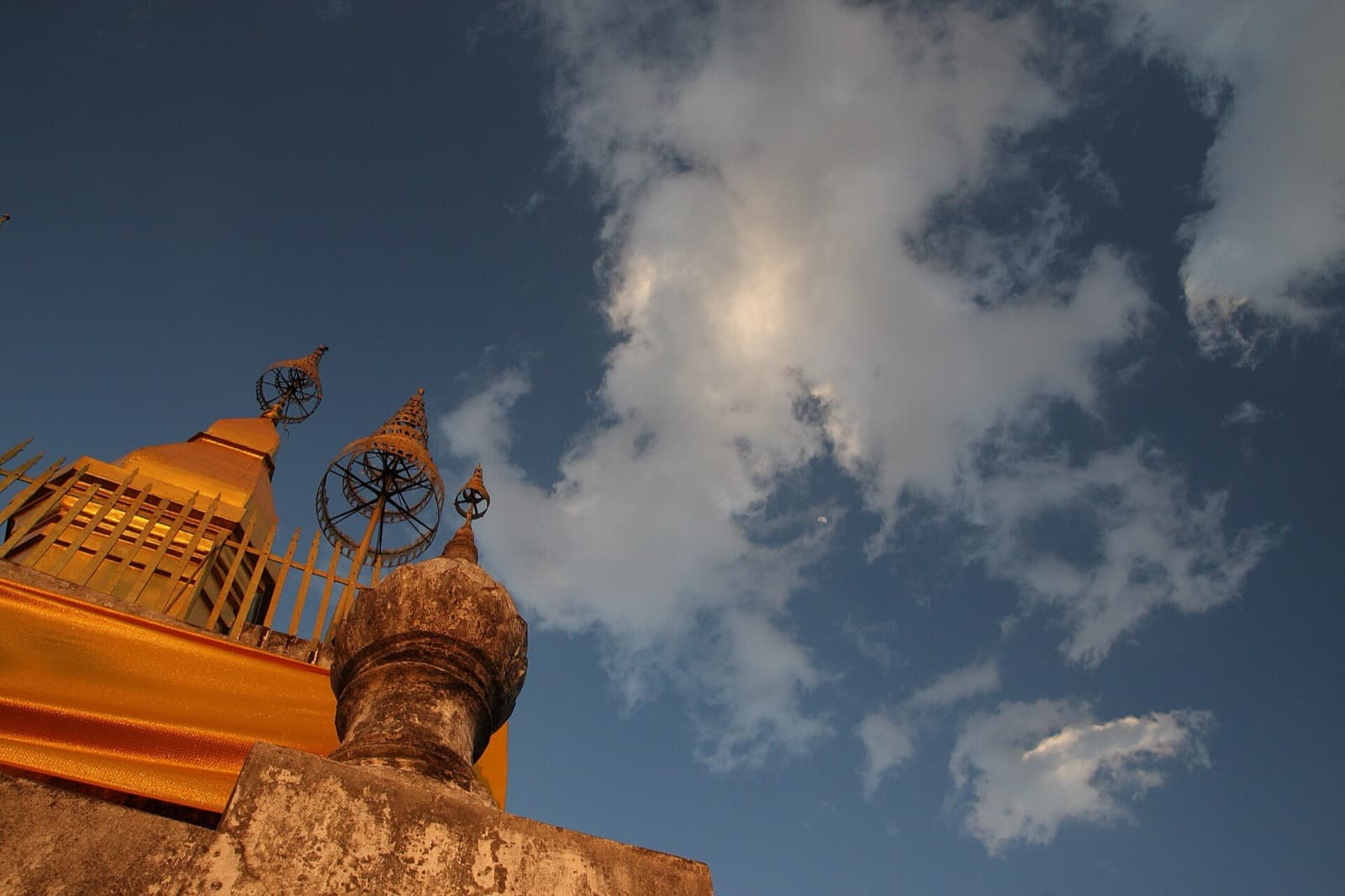
That Chomsi Stupa: Why the Golden Point Above Luang Prabang Reads the Whole Town
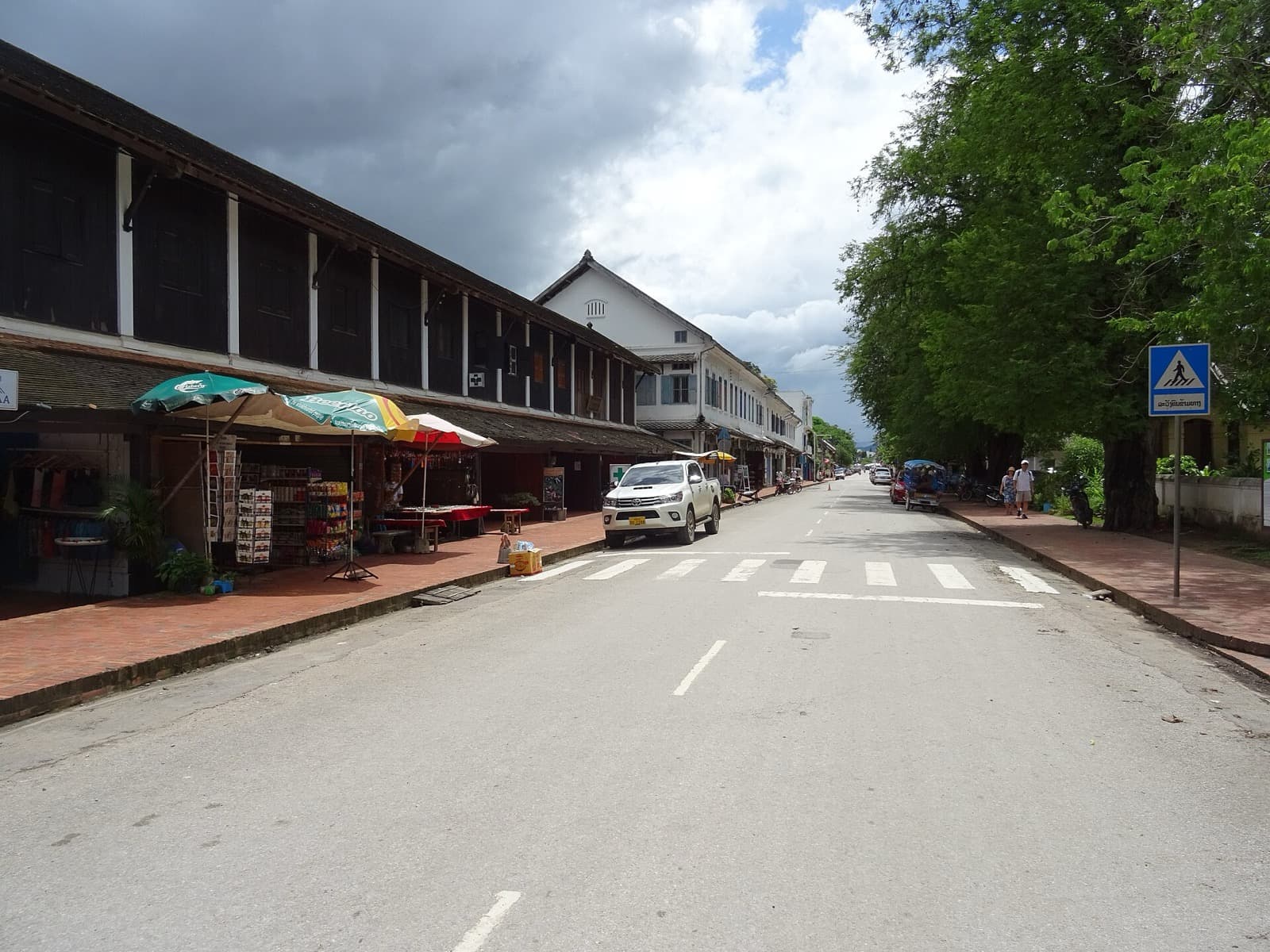
The Colonial Shophouses of Luang Prabang: The Fusion UNESCO Chose to Protect
The Royal Palace of Luang Prabang: Where a Kingdom Kept Its Last Throne