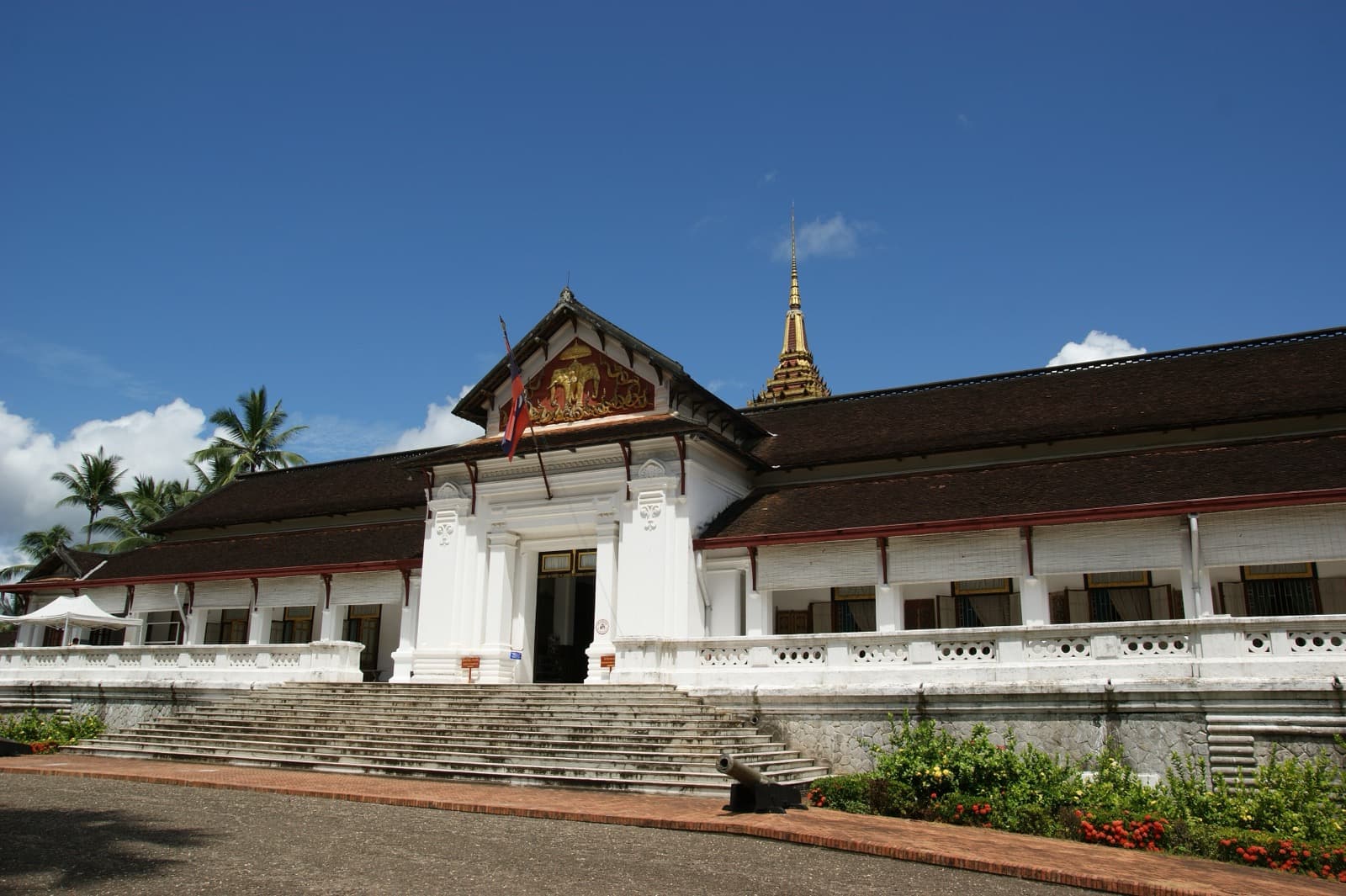
The former Royal Palace of Luang Prabang, the low white building the Lao call Haw Kham, is the single throne that explains the whole peninsula. It kept a kingdom of six centuries, it guards the small golden Buddha that gave the city its name, and it marks the end of the Lao monarchy in 1975. Read the palace closely and you have already read the town: the royal line, the sacred image, the French colonial layer, and the quiet end of it all. Everything else along the peninsula is a variation on what this one gate tells you.
A palace built to be seen from the river
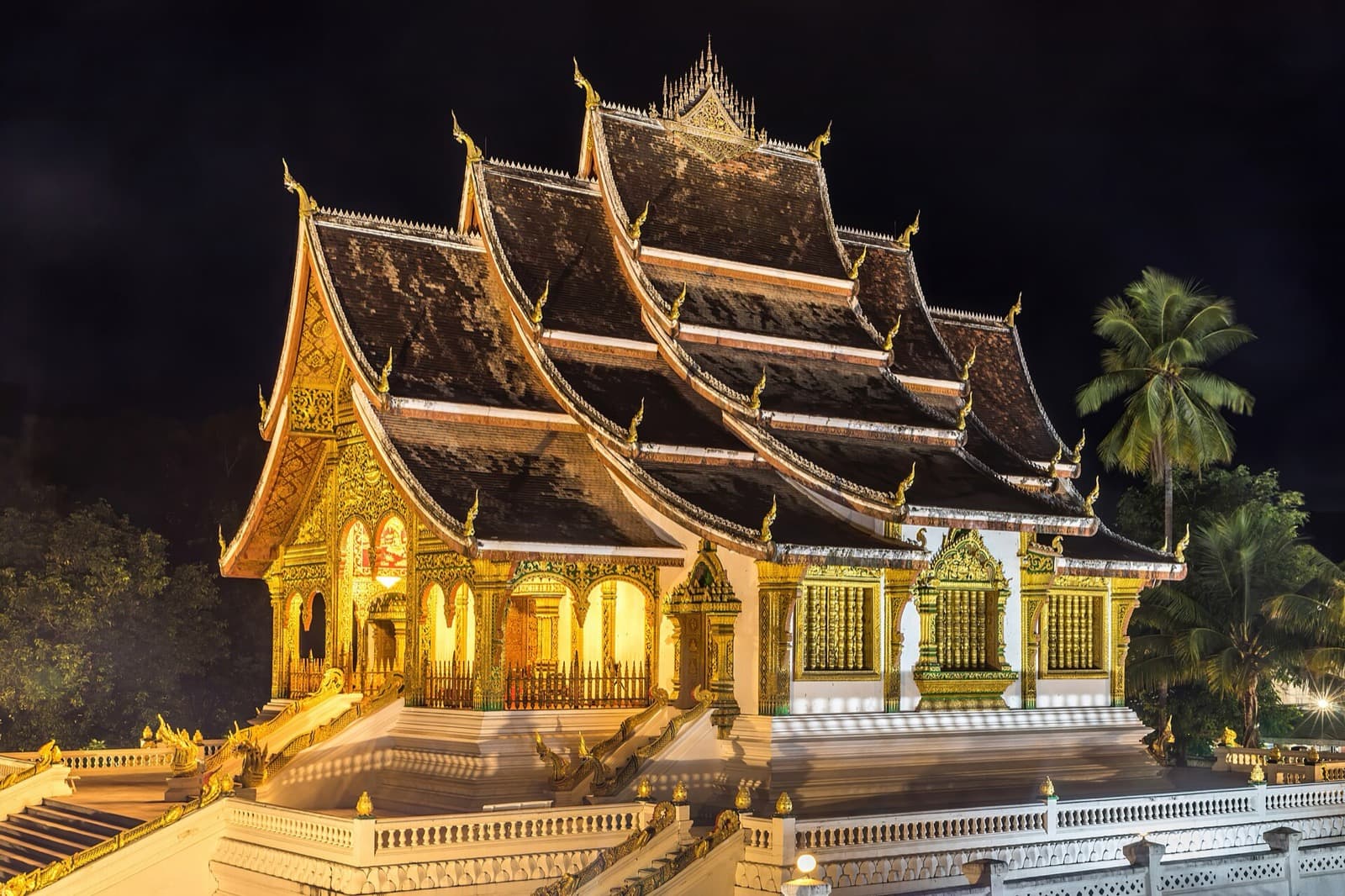
The palace was built between 1904 and 1909 for King Sisavang Vong, during the French protectorate, and its walls carry that double parentage plainly. French Beaux-Arts symmetry sits under a steep, multi-tiered Lao roof, the work of an architect known in Lao as Thone. It is one building in two traditions at once, and neither one wins.
The siting is the detail worth standing still for. The palace faces the Mekong so that arrivals by boat could step off the water and walk almost straight up to the king. In a town whose entire life ran along a river, that was not decoration. It was protocol. The river was the road, and the palace was placed at the head of it.
Inside, the National Museum keeps the royal bedrooms much as they were in 1975, the year the monarchy ended. There is a small entry fee, foreigners pay more than locals, and the dress code is the same as at the temples: shoulders and knees covered, shoes off before you enter the halls. You do not need the ticket to begin the walk. Even the gate on Sisavangvong Road carries the argument.
The Buddha that named the city
Hear a stop from this walk
Where Two Rivers Meet: The Point of the Peninsula
In the southeast corner of the grounds stands the Haw Pha Bang, the gilded royal shrine built to house the object the whole town is named for. The Prabang, or Pha Bang, is a small standing Buddha, an alloy of gold, silver, and copper, only about eighty-three centimetres tall and weighing something like fifty kilograms. Both hands are raised in the gesture that dispels fear. It is regarded as the most sacred Buddha image in Laos, and the city's name means, roughly, the royal Pha Bang image.
The statue's origin is legend, and honest history treats it as legend. By tradition the Prabang was cast far away in Ceylon, the island now called Sri Lanka, carried to Lan Xang through the Khmer court, and given to King Fa Ngum in the middle of the fourteenth century. Scholars think an Angkor origin more likely and note that the tale survives only in Buddhist chronicles written down centuries later. What is not in doubt is that the statue is real, that it moved from temple to temple across this peninsula over the centuries, and that the town grew up around its resting places.
The shrine itself tells a smaller, sadder version of the same story. It was commissioned under the last king, Sisavang Vatthana. Work stopped with the revolution of 1975 and was completed only in the twenty-first century, decades after the king who ordered it had fallen. You are looking at a golden shrine for a small golden Buddha, finished long after the kingdom that wanted it was gone. That is the tour in one glance, and it is why this anchor stop opens the walk rather than caps it.
The end that the whole walk carries
Luang Prabang was the royal capital of Lan Xang, the Land of a Million Elephants, from the kingdom's founding around 1353 by King Fa Ngum. It held that role for about six centuries. Then the story ended at this palace. After the Pathet Lao came to power, the Lao People's Democratic Republic was proclaimed on the second of December, 1975. The monarchy was abolished. The last king, Sisavang Vatthana, abdicated, and the royal family were later taken to re-education camps. The king is widely reported to have died in detention in the years that followed, though the full circumstances were never publicly documented. The record there is genuinely incomplete, and the tour says so rather than inventing a clean ending.
That unresolved note is the thread the rest of the route pulls on. If you want to see the whole arc before you commit, the Luang Prabang walking tours hub lays out how this old-town route sits beside the Mount Phousi climb and the colonial riverfront walk.
Why the palace is a beginning, not an end
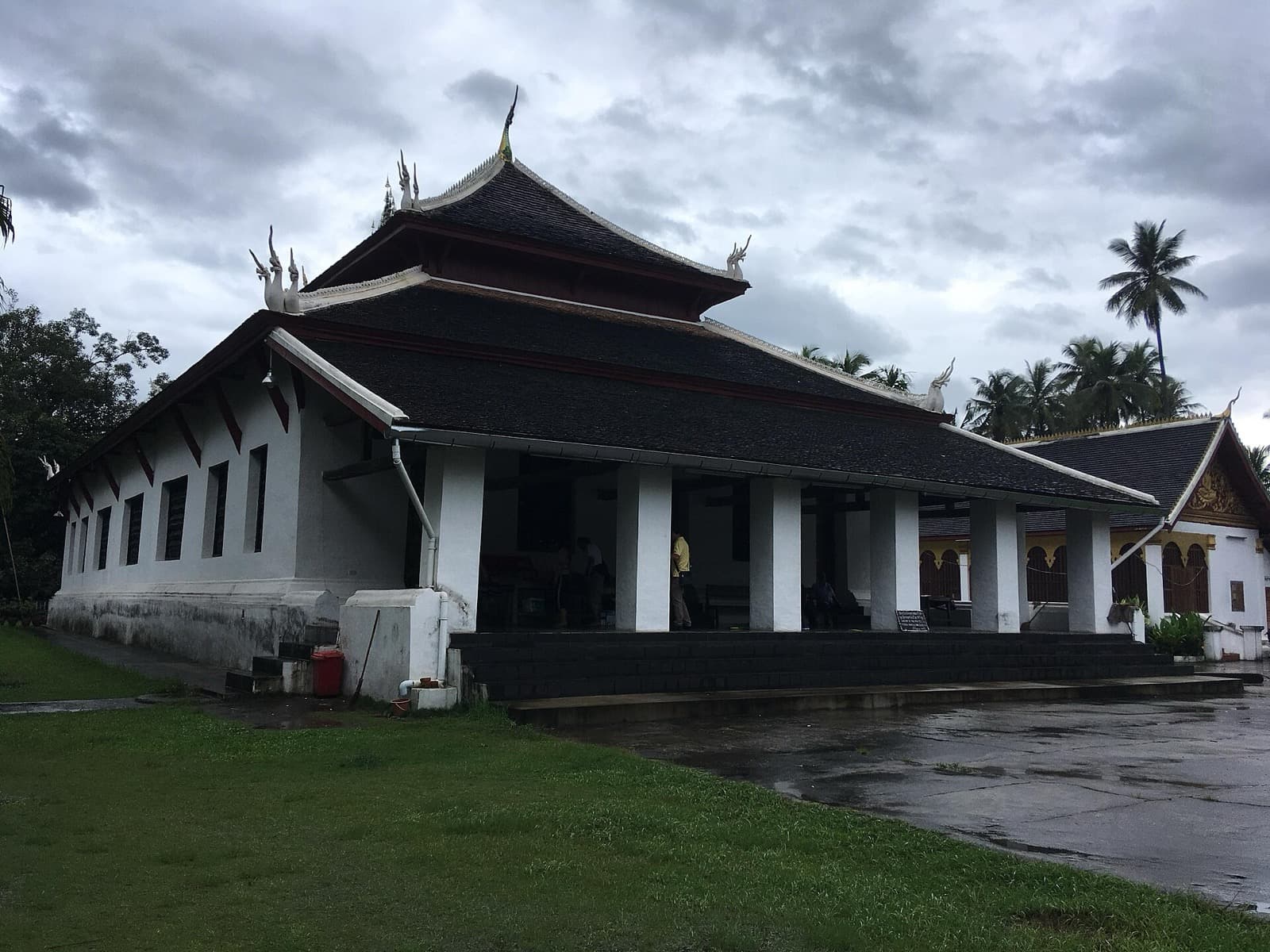
From the palace gate the walk runs down the spine of the peninsula, and every stop answers back to what you saw here. Just south on the main street is Wat Mai Suwannaphumaham, the temple that sheltered the Prabang after the town was sacked in 1887 and kept it until the mid-twentieth century; its front porch is a wall of gilded relief you read from across the street. Sisavangvong Road itself is the axis UNESCO singled out when it inscribed the town in 1995, protecting six hundred and eleven buildings for their fusion of Lao and colonial architecture. By day the street is a calm colonial spine. After about five in the evening more than a kilometre of it turns into the lantern-lit night market.
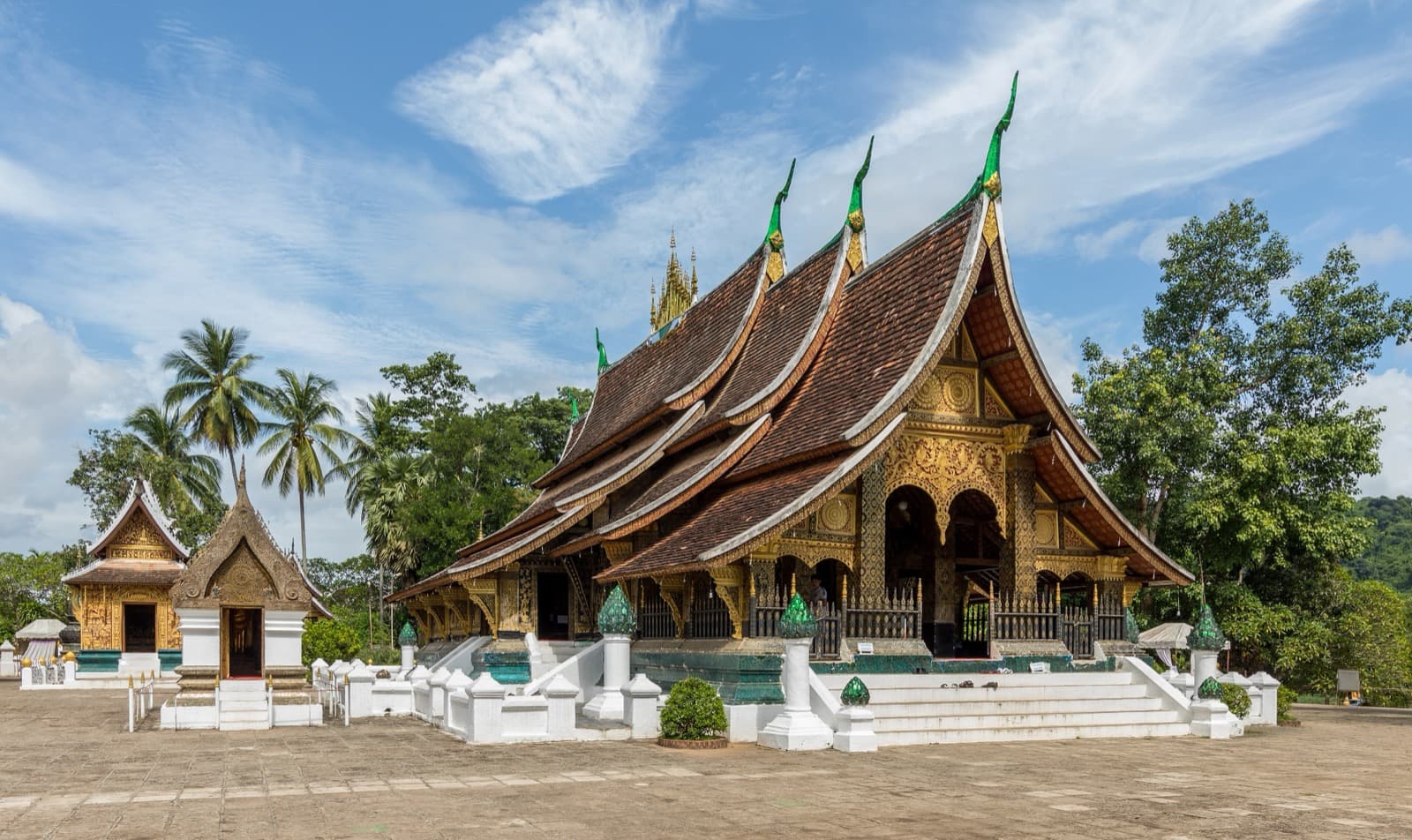
The route climbs toward Wat Xieng Thong, the Temple of the Golden City, built between 1559 and 1560 by King Setthathirath, where Lao kings were crowned. Inside its funeral-carriage chapel stand the urns of Sisavang Vatthana and his family. That is the quiet rhyme with the palace: the walk opens where the last king lived and closes near where his ashes rest. Beyond the temple the land simply runs out, at the point where the Nam Khan flows into the Mekong and the whole royal town narrows to a single spur.
The tour is about two kilometres over seven stops, an easy couple of hours at your own pace. There is no group, no schedule, no queue at the funeral chapel. You can stand alone in front of the last king's urns for as long as it takes, which is exactly the kind of stop that packed group circuits rush you past. Start at the palace gate, let the golden Buddha set the terms, and walk the peninsula it named. When you are ready, Luang Prabang has the full route and audio.
Sources
- Royal Palace, Luang Prabang (Wikipedia): construction dates under King Sisavang Vong, the Beaux-Arts-and-Lao architecture, and conversion to the National Museum.
- Phra Bang (Wikipedia): the Prabang's alloy, dimensions, dispelling-fear gesture, and the legendary Ceylon-and-Khmer origin now treated with scholarly caution.
- Town of Luang Prabang (UNESCO World Heritage Centre): the 1995 inscription, the six hundred and eleven protected buildings, and the Mekong-Nam Khan peninsula geography.
- National Museum, Official Tourism Luang Prabang: the architect known in Lao as Thone, the Haw Pha Bang commission under Sisavang Vatthana, and its much-later completion.
- Wat Xieng Thong, Official Tourism Luang Prabang: the 1559 to 1560 construction under King Setthathirath and the royal funeral chapel holding the last king's urns.
Ready to experience it?
Old Town: The Buddha That Named a City
90 min · 2.2 km · easy
More from Luang Prabang
Explore more at your own pace.
Luang Prabang Travel Guide: Days, Transport, Season, Safety, Budget
Luang Prabang: The Fusion Royal Town Between Two Rivers
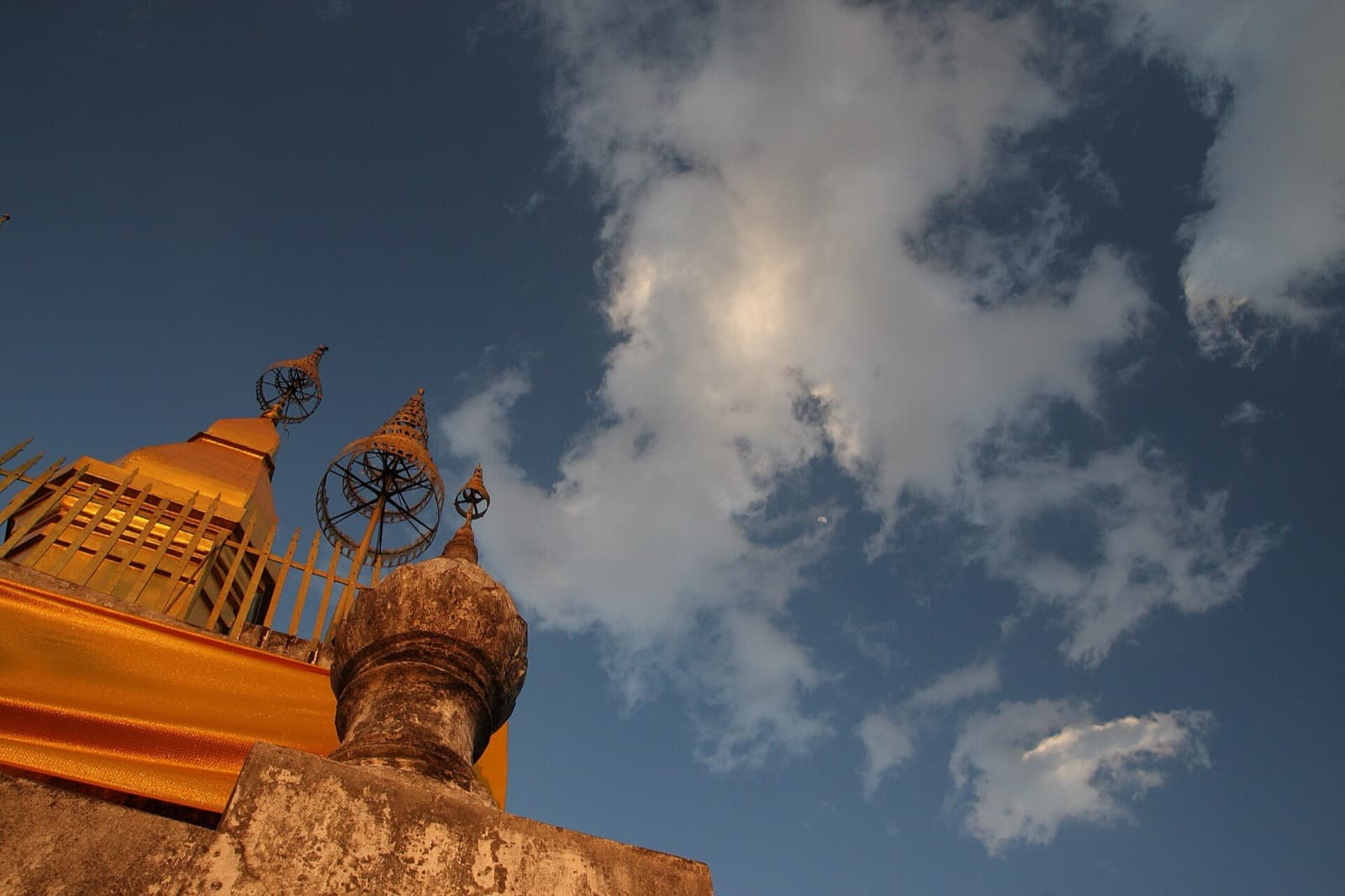
That Chomsi Stupa: Why the Golden Point Above Luang Prabang Reads the Whole Town
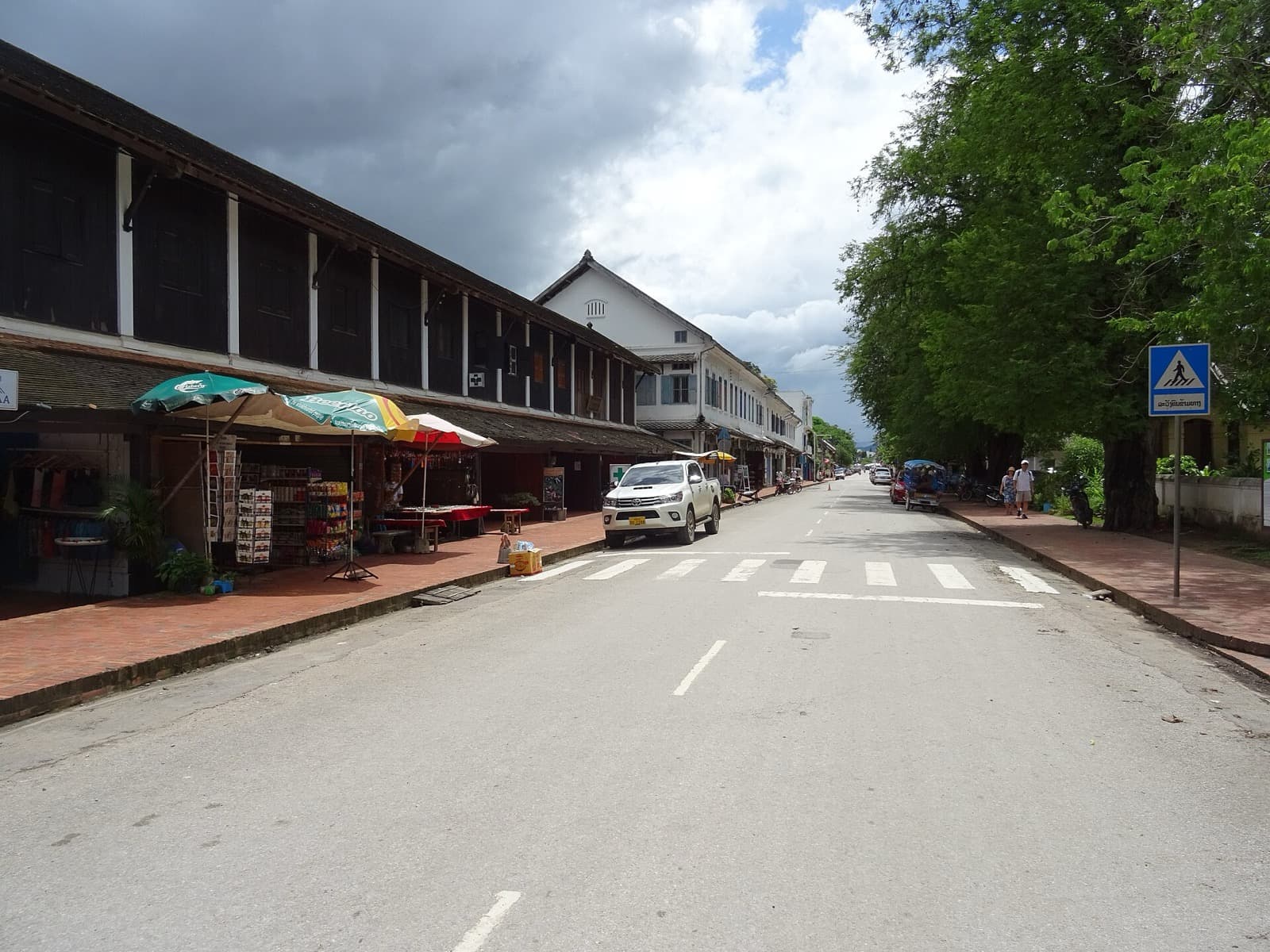
The Colonial Shophouses of Luang Prabang: The Fusion UNESCO Chose to Protect
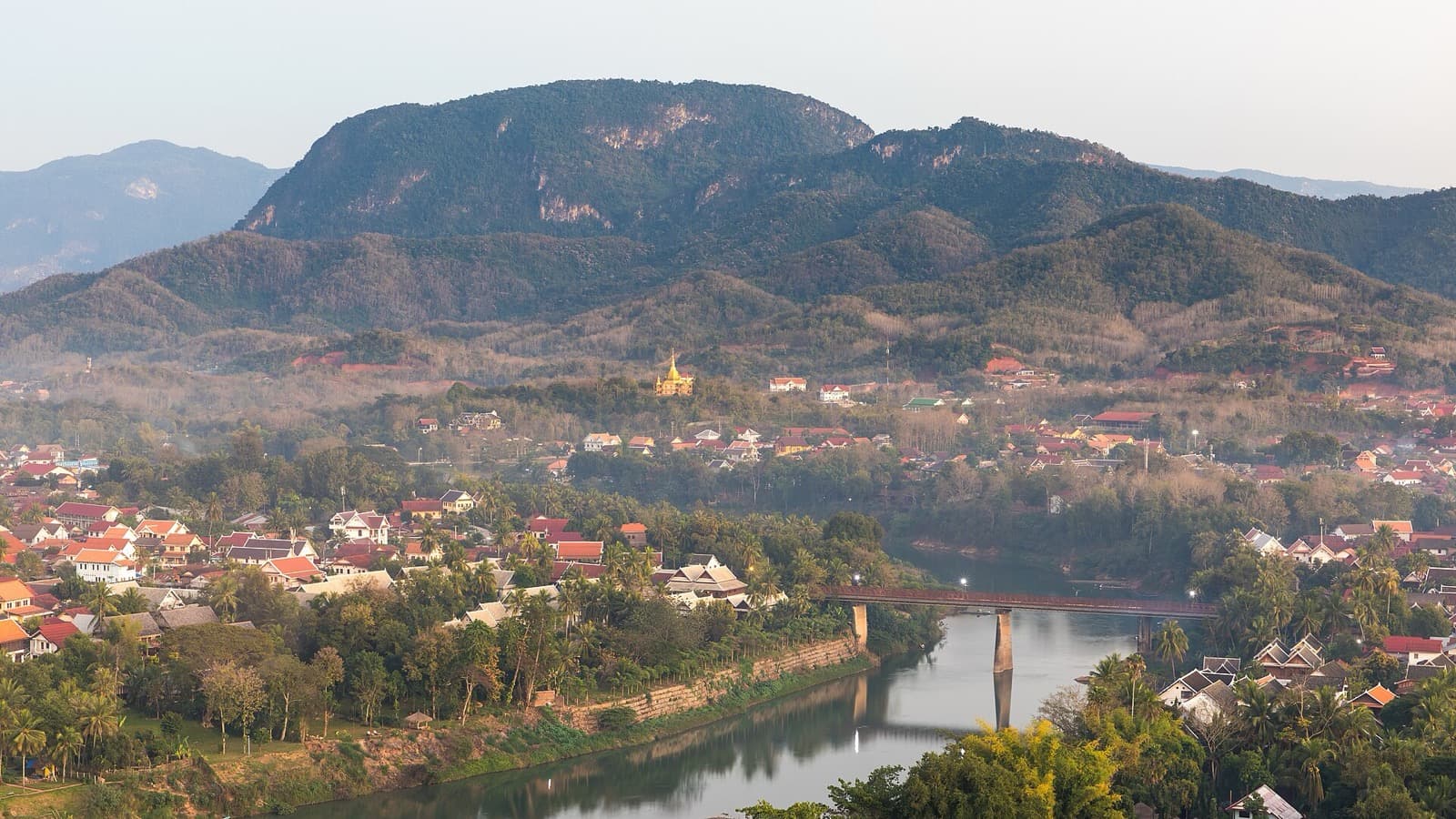
The Summit of Mount Phousi: Reading Luang Prabang From the Sacred Hill