Pink City: The Walled Bazaar Grid
90 min · 4 km · moderate
Eat Jaipur the way Rajasthan learned to cook in a desert: start your morning with a pyaaz kachori, build your day around dal baati churma and the fiery mutton curry laal maas, and finish with ghevar, the honeycomb sweet the city is famous for. Jaipur sits in a dry, hot corner of northern India, and the local kitchen turned scarcity into a style: lentils, ghee, buttermilk, dried desert beans, and slow wood-fire cooking instead of fresh vegetables that never grew easily here. That logic is on every plate. Below is what to order, where the dish comes from, and how to eat it without guessing.
The five dishes to prioritize
Dal baati churma is the plate that says Rajasthan. It has three parts that arrive together: baati (round, hard wheat balls, traditionally baked in the coals or over firewood), dal (a spiced lentil mix, traditionally a panchmel or five-lentil blend), and churma (baati crushed with ghee and sugar into a sweet crumble). You break the baati, soak it in dal, drown it in ghee, and alternate bites with the sweet churma. It is filling and rich by design, built for a climate where you did not eat often.
Pyaaz kachori is the Jaipur breakfast. It is a deep-fried pastry shell packed with a spiced fried-onion filling ("pyaaz" means onion), served with sweet and spicy chutneys. Eat it hot, in the morning, standing up. Rawat Misthan Bhandar near the railway station, founded in 1972, has built its reputation on this kachori and is one of the names most locals give first, though good versions are everywhere in the bazaars.
Laal maas is the one meat dish to seek out, and it is genuinely hot. It is a red mutton curry built on Mathania red chilies, yogurt, ghee, and garlic. Its origin is a hunting food: Rajput royalty prepared it on hunts, and the heavy chili was used to mask the gamy taste of wild meat like boar or deer. Today it is usually made with tender mutton. If you do not eat spice, ask the kitchen to dial it back, because the default is fierce.
Ghevar is the sweet Jaipur owns. It is a disc-shaped, porous, honeycomb-textured cake made by drizzling a thin batter of flour, ghee, and milk into hot ghee, then soaking it in sugar syrup. Plain ghevar is crisp; the celebrated versions are topped with rabri (thickened, reduced milk) as malai ghevar, or made with paneer. It is tied to the monsoon-season festivals of Teej and Raksha Bandhan, so if you are here in July or August you will see it stacked in every sweet shop window.
A vegetarian city, and proud of it. Rajasthan is one of India's most vegetarian states, so this is not a place where meat-free means fewer options. Beyond dal baati, look for mirchi bada (a battered, deep-fried chili fritter), gatte ki sabzi (gram-flour dumplings in a yogurt curry), and ker sangri (a dried desert-bean-and-berry preparation that is pure desert cooking). Jain travelers who avoid onion and garlic can lean on ghevar, mawa kachori, jalebi, kulfi, and lassi.
How to order like a local
Hear a stop from this walk
Johari Bazaar: The Street of Jewels That Proves the Plan
Have the pyaaz kachori for breakfast, dal baati churma at midday when you want one big meal, laal maas at dinner, and ghevar or lassi as a break between sightseeing. Portions are large and ghee-heavy, so one substantial meal plus snacks is a saner plan than three full sit-downs.
Lassi is the drink to pair with it all. A Jaipur lassi is thick, served in a clay cup (kulhad), often crowned with a layer of malai (clotted cream). Lassiwala on MI Road is the long-running name locals point to for the malai version. Sweet lassi tames the chili; salted lassi is more of a cooler.
For sweets and a proper vegetarian sit-down, Laxmi Misthan Bhandar (LMB) sits right inside Johari Bazaar, which is a stop on the Pink City walking route. The business traces to a group of sweet-makers who set up shop in Johari Bazaar around Jaipur's founding in 1727 and was formally branded LMB around 1949 to 1950; it is known for its paneer ghevar and sweet lassi. That means you can taste the two dishes this whole guide is built around, ghevar and lassi, without leaving the tour.
Where to eat: bazaars, not a food-court crawl
Jaipur's food clusters in a few places, and most of them overlap with the old-city walk. The classic street-food streets are Johari Bazaar, Tripolia Bazaar, and Chandpole Bazaar inside the walled Pink City, plus MI Road just outside it. If you want a lot of Rajasthani options in one clean, seated spot, Masala Chowk is an open-air food court near Ram Niwas Garden and the Albert Hall Museum, with around twenty stalls and a small entry fee (a token ten rupees to keep crowds down). It is the low-risk introduction: many kitchens, one table, vegetarian throughout.
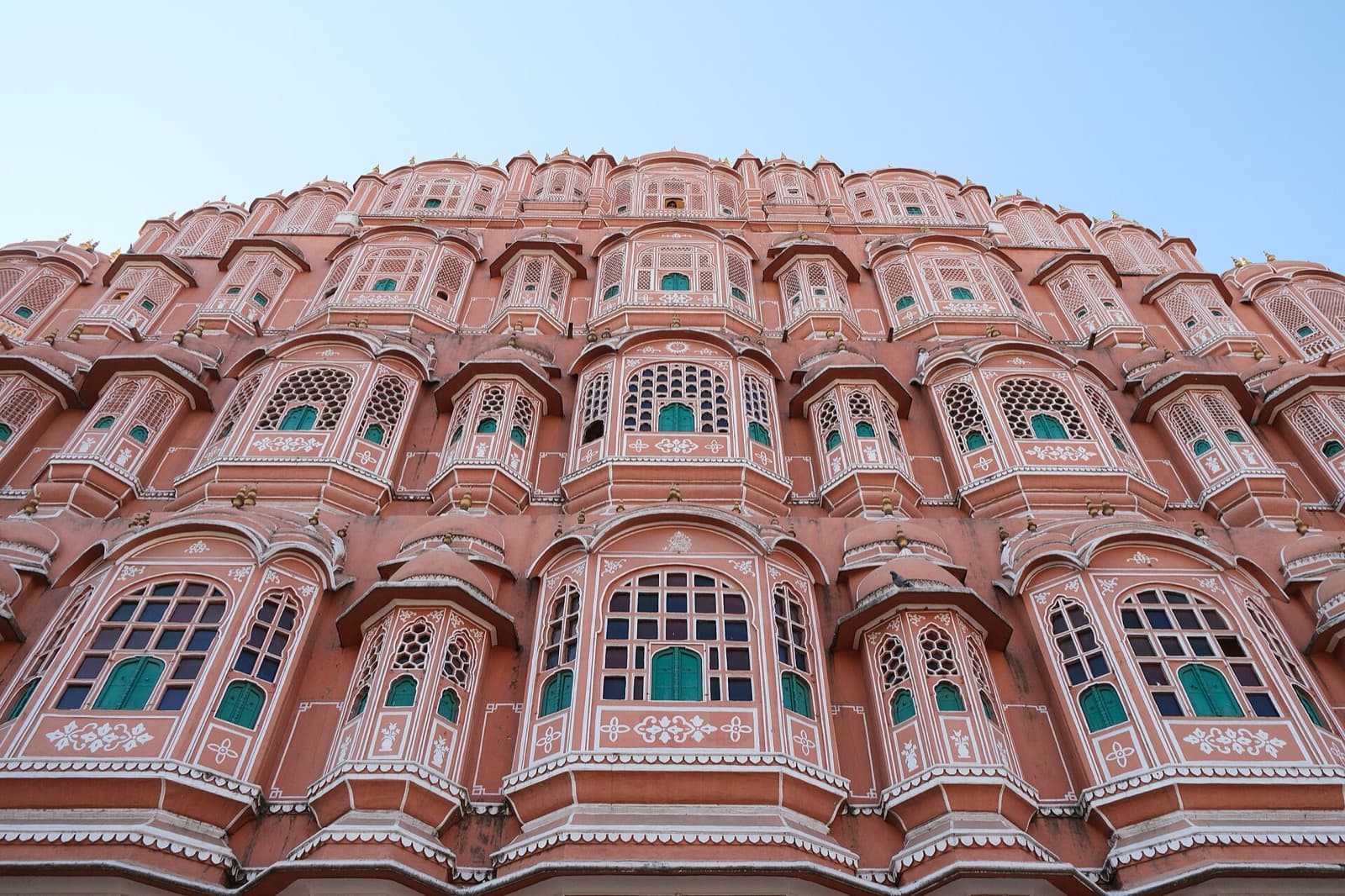
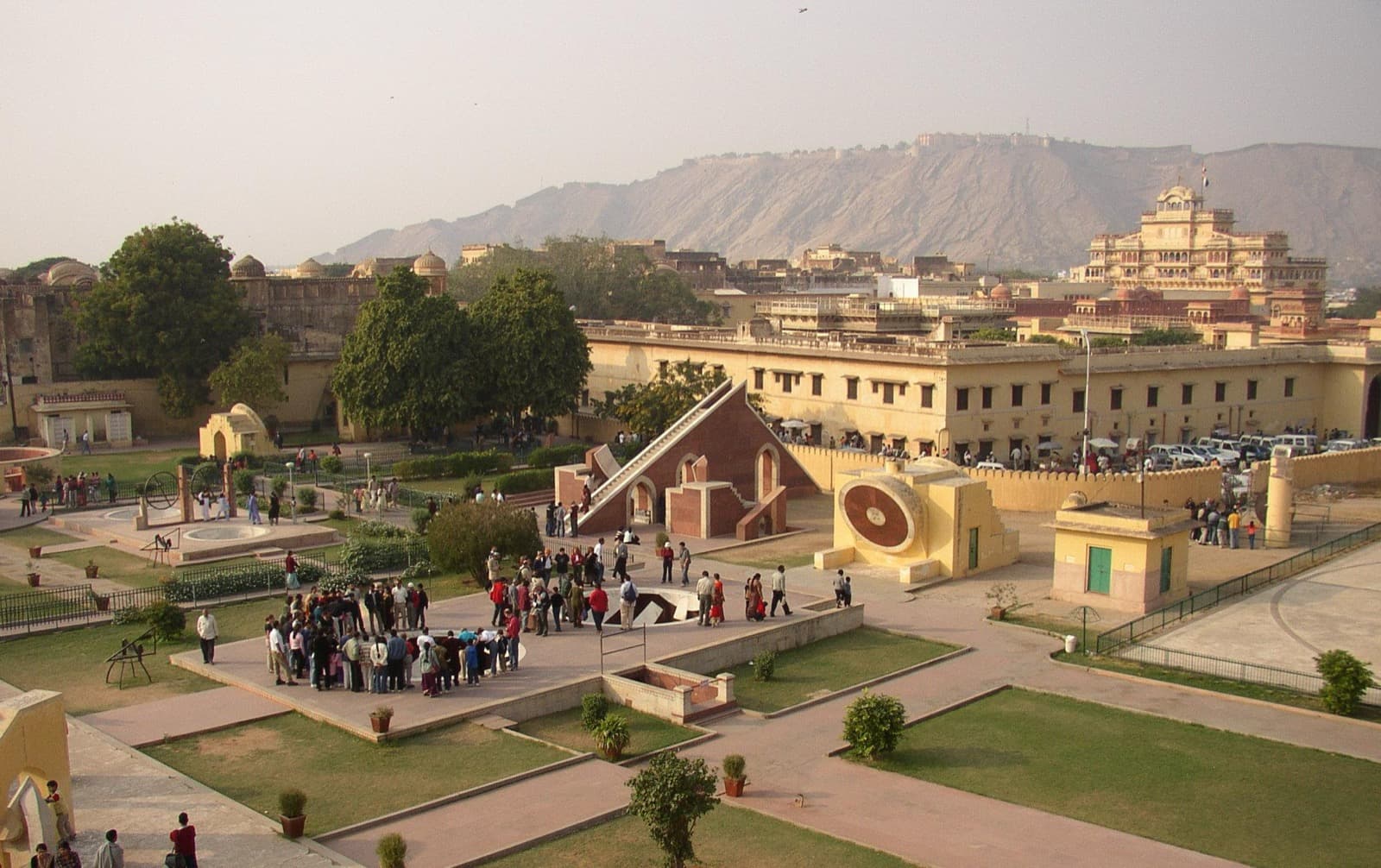
Because the best eating and the best walking are the same streets, the food fits the Jaipur Pink City tour naturally. The route runs from New Gate up through Johari Bazaar (jewellers and LMB), past Hawa Mahal, Jantar Mantar, and the City Palace. You can pause for a kachori or a lassi between stops without breaking the thread of the walk. For the fort day, the Amber Fort tour is a separate trip up the hill, so plan to eat in the old city before or after rather than expecting street food inside the palace.
Eating safely without missing out
Street food in Jaipur is a highlight, not a hazard, if you pick sensibly. Choose busy, well-known stalls with high turnover, so the food is freshly cooked and does not sit. Favor things served hot straight out of the oil (kachori, mirchi bada) and freshly made sweets. Drink bottled or filtered water rather than tap, and let that same caution guide whether you take ice or cut fruit from an unknown source. If you are new to Indian spice levels, ask for laal maas and the chili-heavy items to be made milder, since the local baseline is high. None of this means avoiding the bazaars. It means eating where the locals crowd, which is exactly where the best kachori and ghevar are anyway.
The short version: kachori for breakfast, dal baati churma for your one big meal, laal maas if you want the meat and the heat, ghevar and a malai lassi to finish, and Johari Bazaar as the place where the food and the Jaipur walking tours meet.
Sources
Frequently asked questions
- What food is Jaipur famous for?
- Jaipur is famous for dal baati churma (baked wheat balls with spiced lentils and a sweet crumble), pyaaz kachori (a deep-fried onion-stuffed pastry), laal maas (a fiery red mutton curry), and ghevar (a honeycomb-textured sweet disc soaked in sugar syrup). Ghevar in particular is closely tied to Jaipur and to the Teej and Raksha Bandhan festivals. Rajasthan is also strongly vegetarian, so meat-free dishes are plentiful.
- What is the most famous street food in Jaipur?
- Pyaaz kachori, a deep-fried pastry filled with spiced fried onions and served with chutneys, is Jaipur's signature street-food breakfast. Rawat Misthan Bhandar near the railway station, founded in 1972, is one of the names locals most commonly recommend for it. Good kachori is also sold throughout Johari, Tripolia, and Chandpole bazaars.
- Is Jaipur street food safe to eat?
- Yes, if you choose busy, well-known stalls with high turnover so food is cooked fresh and does not sit out. Favor items served hot straight from the oil and freshly made sweets, and drink bottled or filtered water rather than tap. The same caution applies to ice and cut fruit from unknown vendors. The stalls locals crowd around tend to be both the safest and the best.
- Where should I eat in Jaipur's old city?
- The main food streets are Johari Bazaar, Tripolia Bazaar, and Chandpole Bazaar inside the walled Pink City, plus MI Road just outside. Laxmi Misthan Bhandar (LMB) is a well-known vegetarian sweet shop and restaurant in Johari Bazaar, on the Pink City walking route. Masala Chowk, an open-air food court near Ram Niwas Garden and the Albert Hall Museum, gathers around twenty stalls in one seated spot for a small entry fee.
- Is laal maas very spicy?
- Yes, laal maas is genuinely hot by default. It is built on Mathania red chilies, yogurt, ghee, and garlic, and its origin as a Rajput hunting dish meant heavy chili was used to mask the taste of game meat. If you are sensitive to spice, ask the kitchen to make it milder, because the local baseline is fierce.
- What can vegetarians eat in Jaipur?
- A great deal. Rajasthan is one of India's most vegetarian states, so meat-free food is the norm rather than a compromise. Look for dal baati churma, mirchi bada (a fried chili fritter), gatte ki sabzi (gram-flour dumplings in yogurt curry), and ker sangri (a dried desert-bean dish). Jain travelers avoiding onion and garlic can rely on ghevar, mawa kachori, jalebi, kulfi, and lassi.
Ready to experience it?
Pink City: The Walled Bazaar Grid
90 min · 4 km · moderate
More from Jaipur
Explore more at your own pace.
Jaipur Travel Guide: Days, Transport, Costs, Timing, and Safety
Jaipur: The City That Was Drawn Before It Was Built
Amber Fort's Sheesh Mahal: Why One Candle Becomes a Galaxy
Hawa Mahal: The Honeycomb Window Onto Jaipur's Grid
Jantar Mantar, Jaipur: The Astronomer-King's Instruments in Stone