Pink City: The Walled Bazaar Grid
90 min · 4 km · moderate
One good day in Jaipur walks the walled Pink City on foot in the morning, then takes a short taxi or auto-rickshaw north to Amber Fort for the afternoon. The old city was drawn on a grid in 1727, so its wide bazaars are genuinely walkable, and the two halves of the day fit around India's practical rhythm: cool early light, midday heat you plan around, and a hillfort that rewards a late-afternoon arrival. This itinerary follows the two Roamer self-guided audio tours that already cover both, and everything below is checked against current 2026 opening hours and ticketing.
Here is the shape of the day, then the detail.
The one-day plan at a glance
- Early morning (about 8:00 to 11:00): walk the Pink City grid, from the old wall through Johari Bazaar to the City Palace quarter. Roughly 4 km on flat streets, easy to stretch or shorten.
- Late morning: a short auto-rickshaw or taxi (about 11 km north) up to Amber.
- Midday: rest, eat, and stay out of the strongest sun.
- Late afternoon (from about 3:00 to closing near 5:30): climb Amber Fort, ending in the Sheesh Mahal.
- Optional evening: the Amber light-and-sound show, or a slow return to the old city for dinner.
You do not need a group van or a fixed departure to do any of this. Both walks are self-paced, so you decide how long to linger.
Morning: the Pink City on foot
Hear a stop from this walk
Johari Bazaar: The Street of Jewels That Proves the Plan
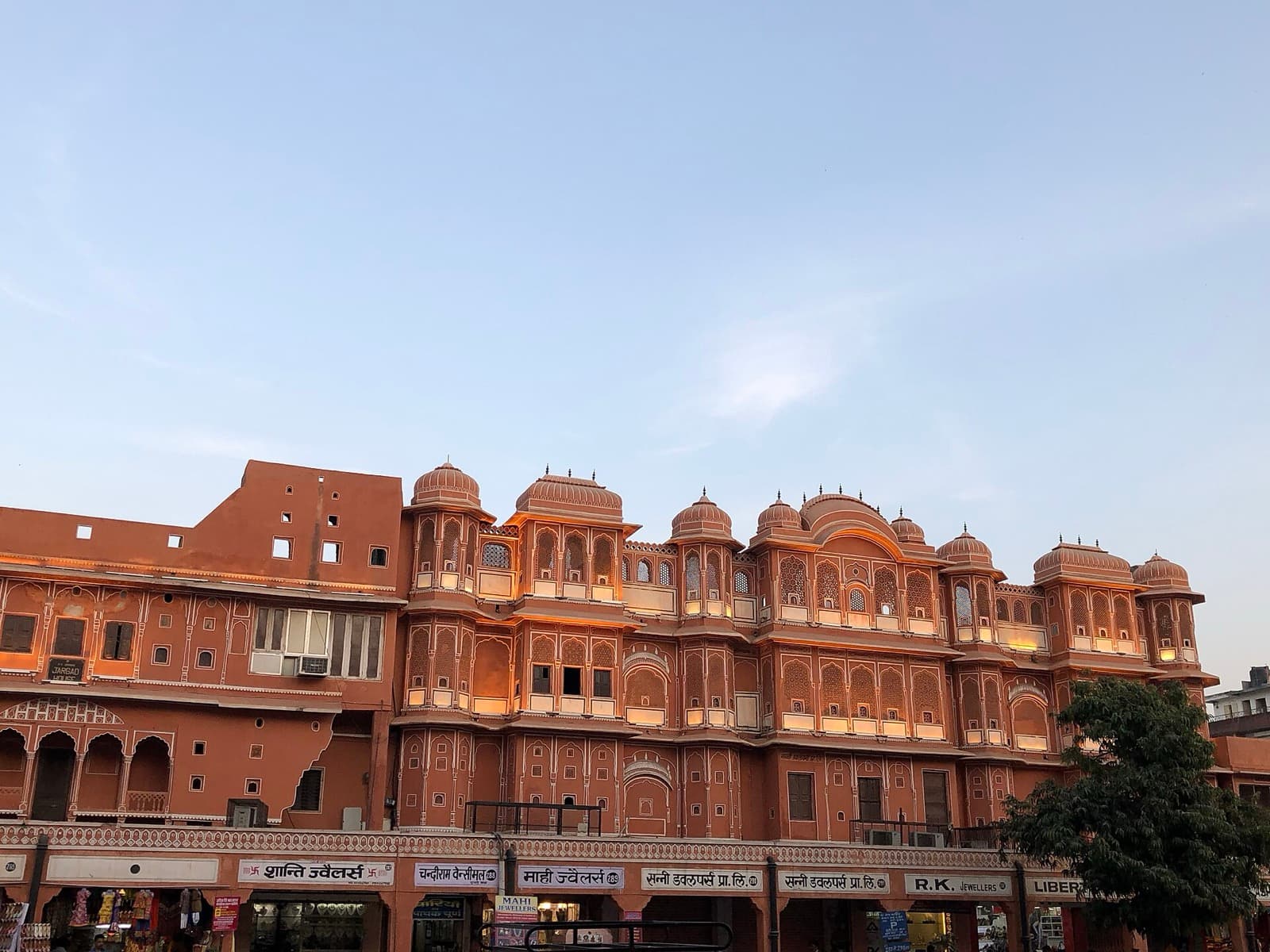
Start inside the walled old city soon after the bazaars open, when the streets are quieter and the sun is soft on the pink plaster. The reason the grid walks so well is deliberate. In 1727 Maharaja Sawai Jai Singh the Second moved his capital down from the hills of Amber and had his planner, Vidyadhar Bhattacharya, lay out a new city in nine rectangular blocks with wide, straight bazaars. The whole old town was painted its warm terracotta pink in 1876 to welcome a visiting prince, and it has kept the colour since. The walled city was inscribed on the UNESCO World Heritage list in 2019.
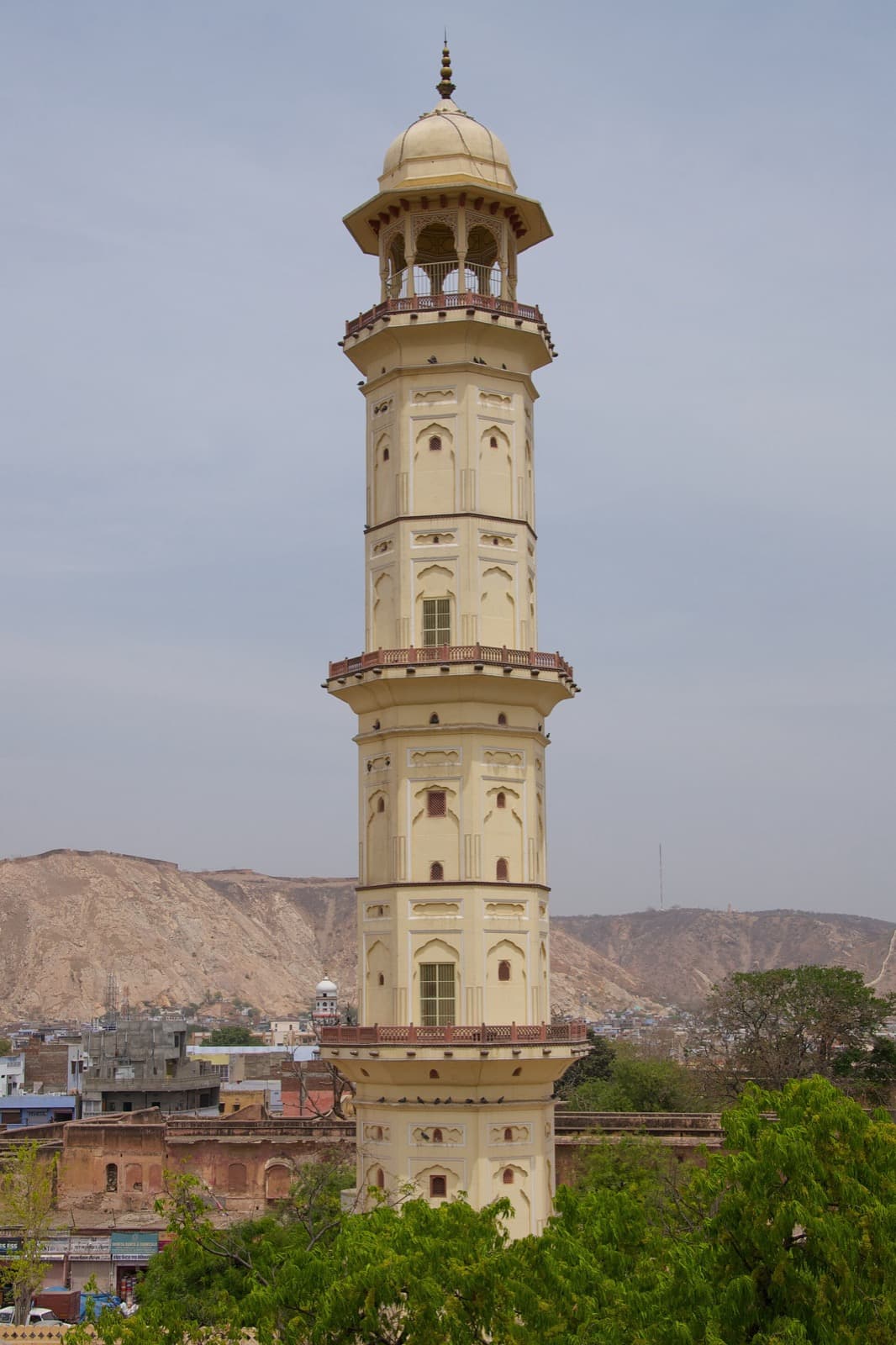
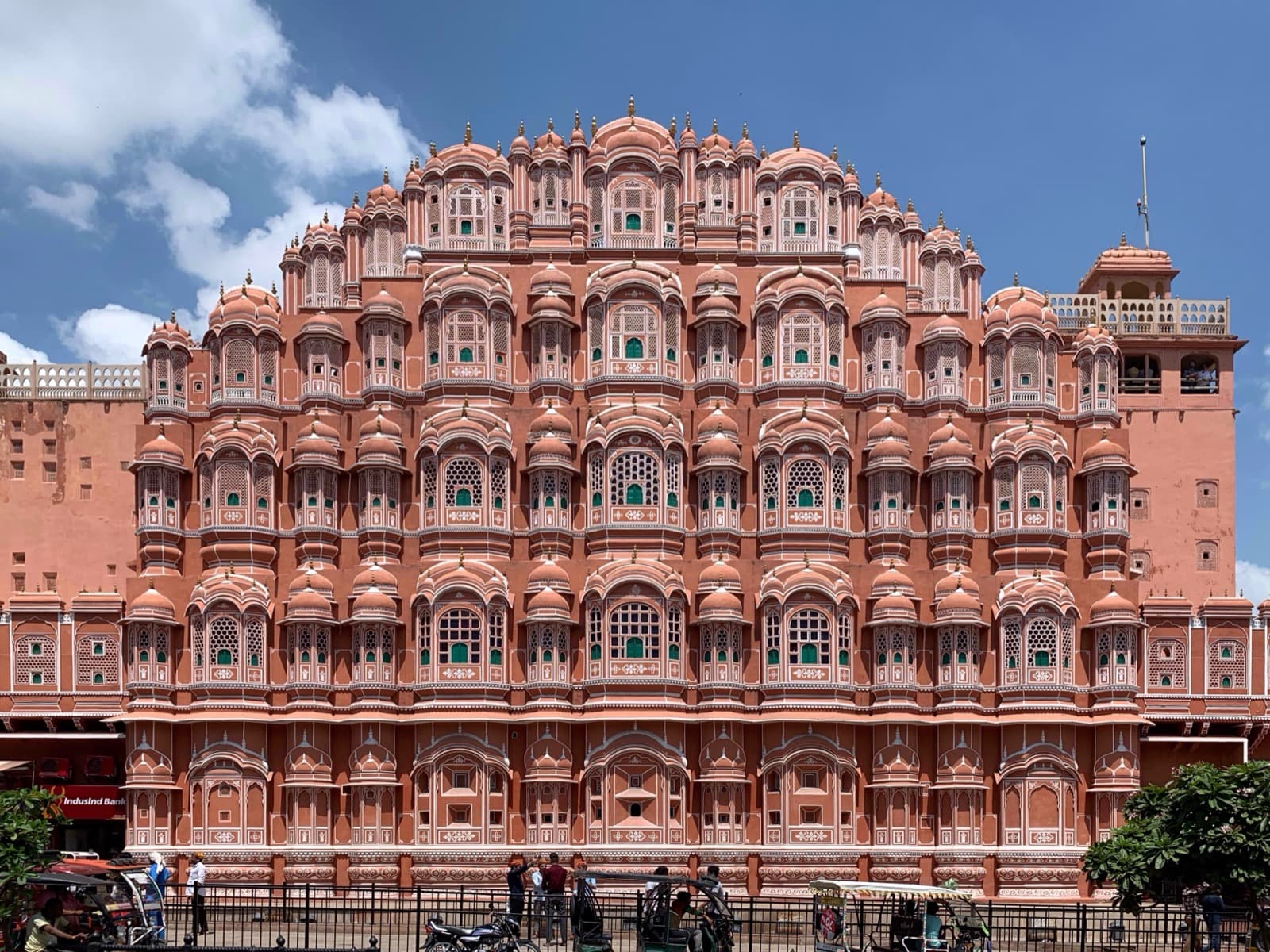
A natural route runs from one of the old gates up through Johari Bazaar, the jewellers' street, past the Iswari Minar Swarga Suli (a tower you can usually climb for a small fee for a rooftop read of the grid), to the cluster of Hawa Mahal, Jantar Mantar, and the City Palace. This is the exact line the Pink City audio walk traces, stop by stop, so you can let the narration carry the history while you watch the street.
Ticketing here is a la carte, and it changed on January 1, 2026, so treat any single figure as approximate and confirm at the counter. As a practical guide: Hawa Mahal is open daily about 9:00 to 5:00; Jantar Mantar, the royal observatory, opens around 9:00 and runs into the evening; the City Palace keeps roughly 9:30 to the early evening. Foreign-visitor rates are higher than the Indian rate at each. If you plan to enter several monuments, ask about the Jaipur composite ticket, which bundles Amber Fort, Jantar Mantar, Hawa Mahal, Nahargarh Fort, Isarlat, Albert Hall Museum and more over two consecutive days. Because a single Amber Fort ticket alone now costs about what the whole composite does, the bundle usually works out cheaper than paying separately. Carry small cash in rupees, because not every counter takes cards.
Many of the best stops cost nothing. Photographing Hawa Mahal's honeycomb facade from the street is free. Walking Johari Bazaar is free. The Govind Dev Ji temple, just past the City Palace, is free to enter if you dress modestly, remove your shoes, and time your visit around the darshan hours when the deity is unveiled.
Midday: move north, then rest
Late morning, break for lunch and get out of the sun. Amber Fort sits about 11 km north of the old city. Take an auto-rickshaw or a taxi and either agree the fare before you set off or ask for the meter. App-based cabs are the simplest way to lock a fair price. There is no need to wait for a scheduled tour bus, and going on your own terms means you arrive when the light and the crowds suit you.
The heat is the real constraint, not distance. From April to June the sun on Amber's exposed ramps is severe, so the middle of the day is for resting, not climbing. October to March is the comfortable season for both the walk and the fort.
Afternoon: Amber Fort
Amber Fort is open daily from about 8:00 in the morning to 5:30 in the evening, with last entry roughly half an hour before closing. The foreign-visitor ticket rose with the January 1, 2026 revision and now runs several hundred rupees, higher than the Indian rate, so confirm the current figure at the counter; the ticket covers the inner palace sections, so keep it handy. A late-afternoon arrival lands you in soft light with the mid-morning tour-bus rush already thinning.
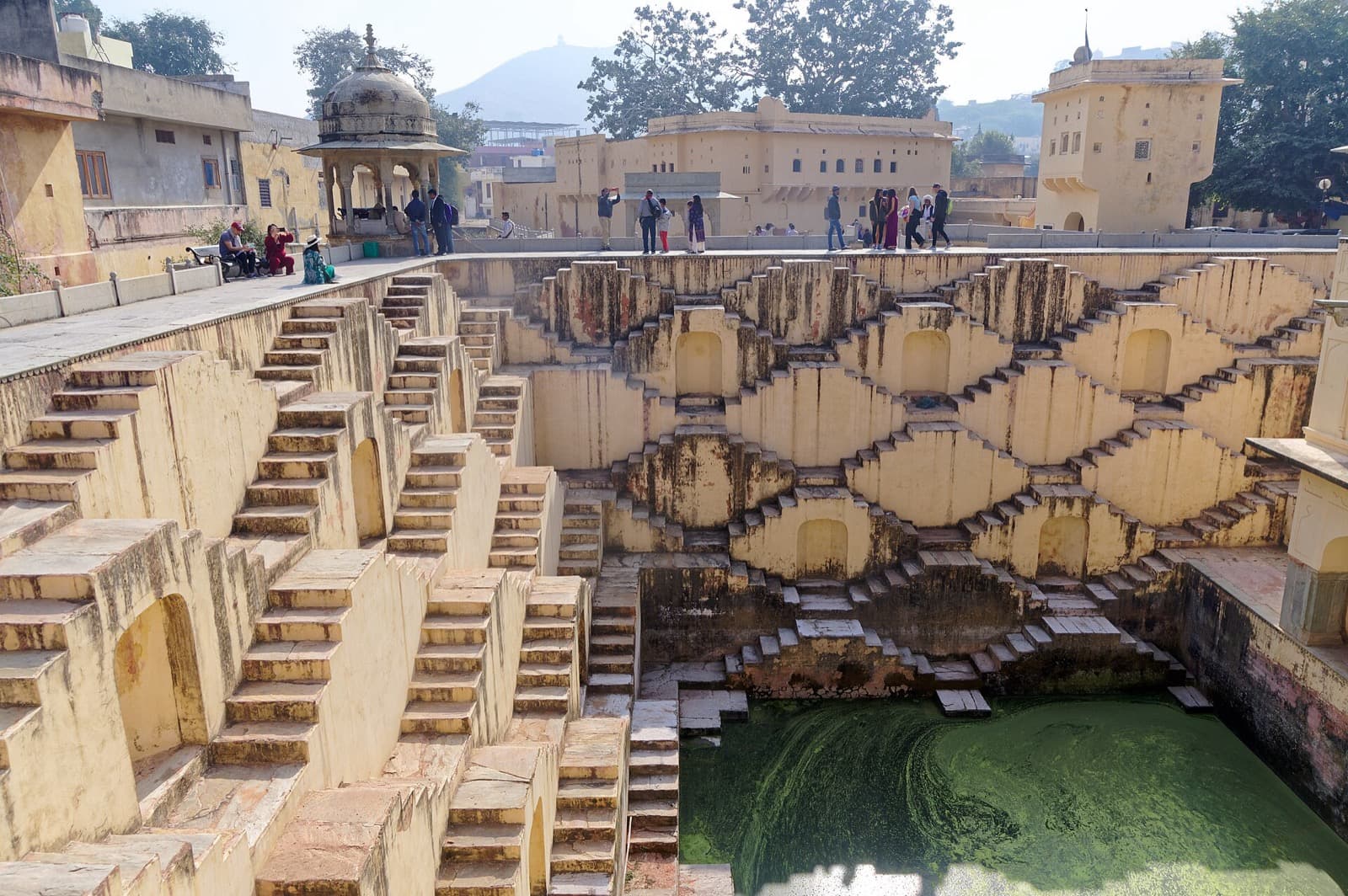
The Amber Fort audio tour climbs the pale sandstone and marble palace the Kachhwaha Rajput kings raised above the lake. It moves from the army courtyard at Jaleb Chowk up through the Diwan-i-Am and the carved Ganesh Pol to the Sheesh Mahal, the mirror hall where a single flame reflects into a sky of stars. Stand in the middle and take your time; self-guided means you can linger there while others hurry through. On the way in, the Shila Devi temple is free and open to devotees, with shoes off, modest dress, and photography restricted inside. In the town below the fort, about a kilometre away and free, the Panna Meena ka Kund stepwell gives a quiet counterpoint to the crowded palace.
One honest note on animal welfare: elephant rides up to the fort are offered and have drawn sustained criticism from welfare groups. You are under no obligation to take one. Walking up, or taking a jeep, is straightforward.
Safety, touts, and pacing
Jaipur is consistently ranked among India's safest cities, and the old walled city is busy, tourist-used, and fine to self-guide by day. The everyday hazards are practical rather than dramatic: dense traffic shared by pedestrians, cycle-rickshaws, and motorbikes in narrow lanes, uneven pavement, and persistent touts and gem-shop scams. At Amber especially, guides and hawkers approach constantly; a calm, firm no is enough, and with your own audio map you never have to be steered toward a shop. Keep valuables zipped in crowds, carry water and a hat, and dress modestly at temples. If a rickshaw driver refuses the meter, wait for the next one.
Why self-guided fits this day
The two halves of Jaipur reward different paces. The Pink City is a slow browse; Amber is a climb you want to take slowly through the Sheesh Mahal. A scheduled group tour rushes both. Self-guided audio lets you set the clock: start when the bazaars open, rest through the heat, and reach the fort when the light turns. Both walks live on the Jaipur city page, and if you want to compare routes first, the Jaipur walking tours hub lays them side by side.
Sources
- Amber Fort Jaipur Timings & Entry Fee (2026), Triveni Cabs
- Jaipur Monuments Timings & Entry Fees 2026, Rajasthan Tour Driver
- Visiting Jaipur's heritage sites to cost more from Jan 1, Pink City Post
- Jaipur City, Rajasthan, UNESCO World Heritage Centre
- Hawa Mahal 2026: Timings, Entry Fee, NativePlanet
Frequently asked questions
- Can you see Jaipur's Pink City and Amber Fort in one day?
- Yes. Walk the walled Pink City on foot in the morning, roughly a 4 km loop through the bazaars and monument quarter, then take a short taxi or auto-rickshaw about 11 km north to Amber Fort for the late afternoon. The grid layout makes the old city genuinely walkable, and both areas have self-guided audio tours so you can set your own pace.
- What are Amber Fort's opening hours and entry fee in 2026?
- Amber Fort is open daily from about 8:00 in the morning to 5:30 in the evening, with last entry roughly 30 minutes before closing. Jaipur monument prices were revised upward effective January 1, 2026, and the foreign-visitor rate for Amber is now several hundred rupees higher than the Indian rate, so treat any single figure you read online as out of date and confirm at the counter on the day.
- Is it worth buying the Jaipur composite ticket?
- If you plan to enter several monuments it usually is. The Jaipur composite ticket bundles Amber Fort, Jantar Mantar, Hawa Mahal, Nahargarh Fort, Isarlat, Albert Hall Museum and more, and it is valid for two consecutive days. Because the single Amber Fort ticket alone now costs about what the whole composite does, it typically works out cheaper than paying each entry separately. You can buy it at monument counters or online through the Rajasthan Archaeology and Museums portal.
- Is Jaipur's old city safe to walk on your own?
- Jaipur is consistently ranked among India's safest cities, and the old walled city is busy, tourist-used, and fine to self-guide by day. The real hazards are traffic in narrow lanes, uneven pavement, and persistent touts and gem-shop scams rather than violent crime. A calm, firm no handles the touts, and app-based cabs or a metered rickshaw avoid fare disputes.
- When is the best time of day and year to walk Jaipur?
- Start soon after the bazaars open, around 8:00, for quieter streets and soft light, and keep the middle of the day for resting out of the sun. October to March is the comfortable season. From April to June the heat is severe and shade is scarce in the open bazaars and on Amber's ramps.
- How do you get from the Pink City to Amber Fort?
- Amber Fort sits about 11 km north of the old city. Take an auto-rickshaw or taxi and either agree the fare before you leave or ask for the meter; app-based cabs are the simplest way to lock a fair price. There is no need to wait for a scheduled tour bus, so you can leave when the light and crowds suit you.
Ready to experience it?
Pink City: The Walled Bazaar Grid
90 min · 4 km · moderate
More from Jaipur
Explore more at your own pace.
Jaipur Travel Guide: Days, Transport, Costs, Timing, and Safety
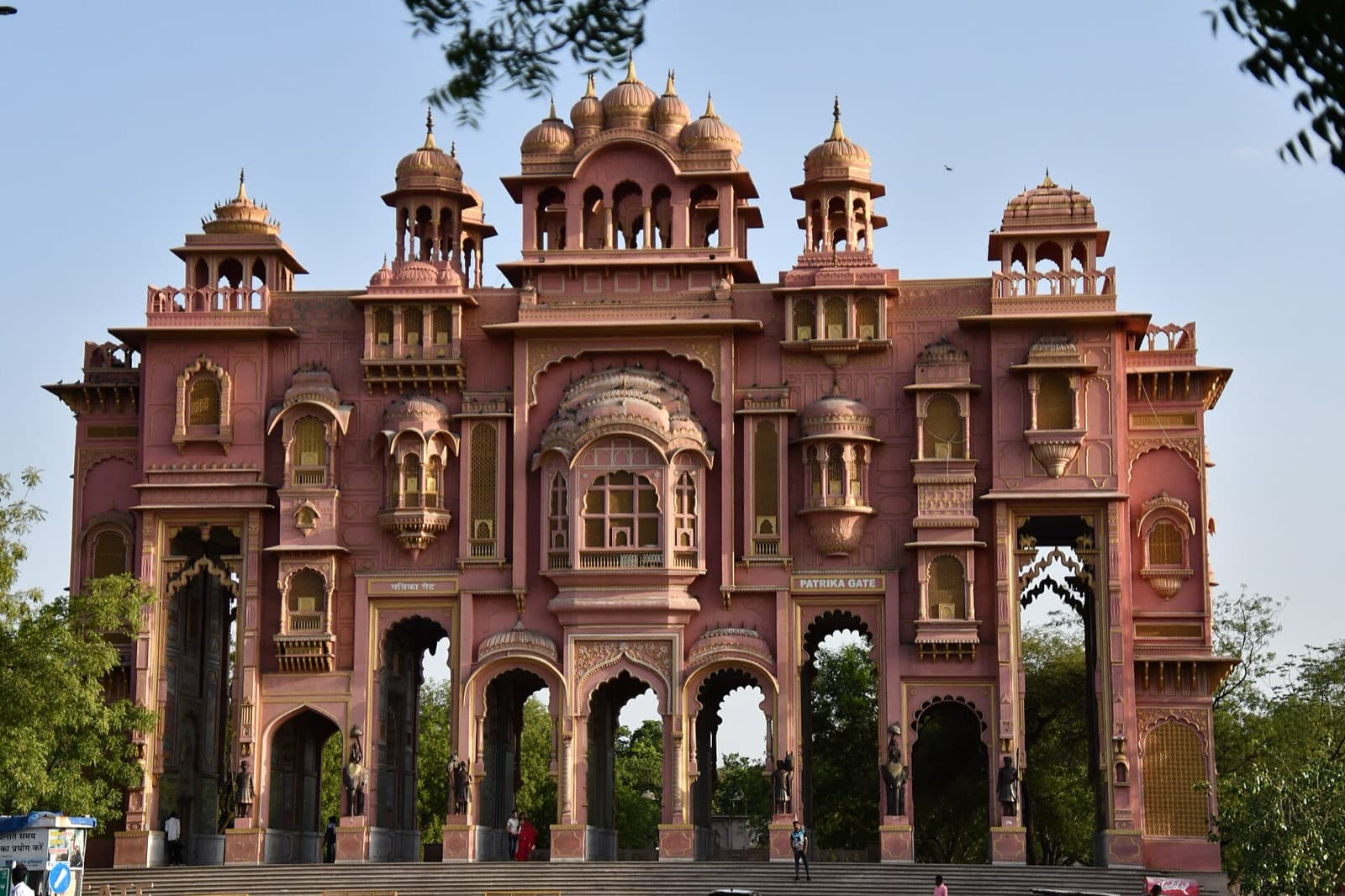
Jaipur: The City That Was Drawn Before It Was Built
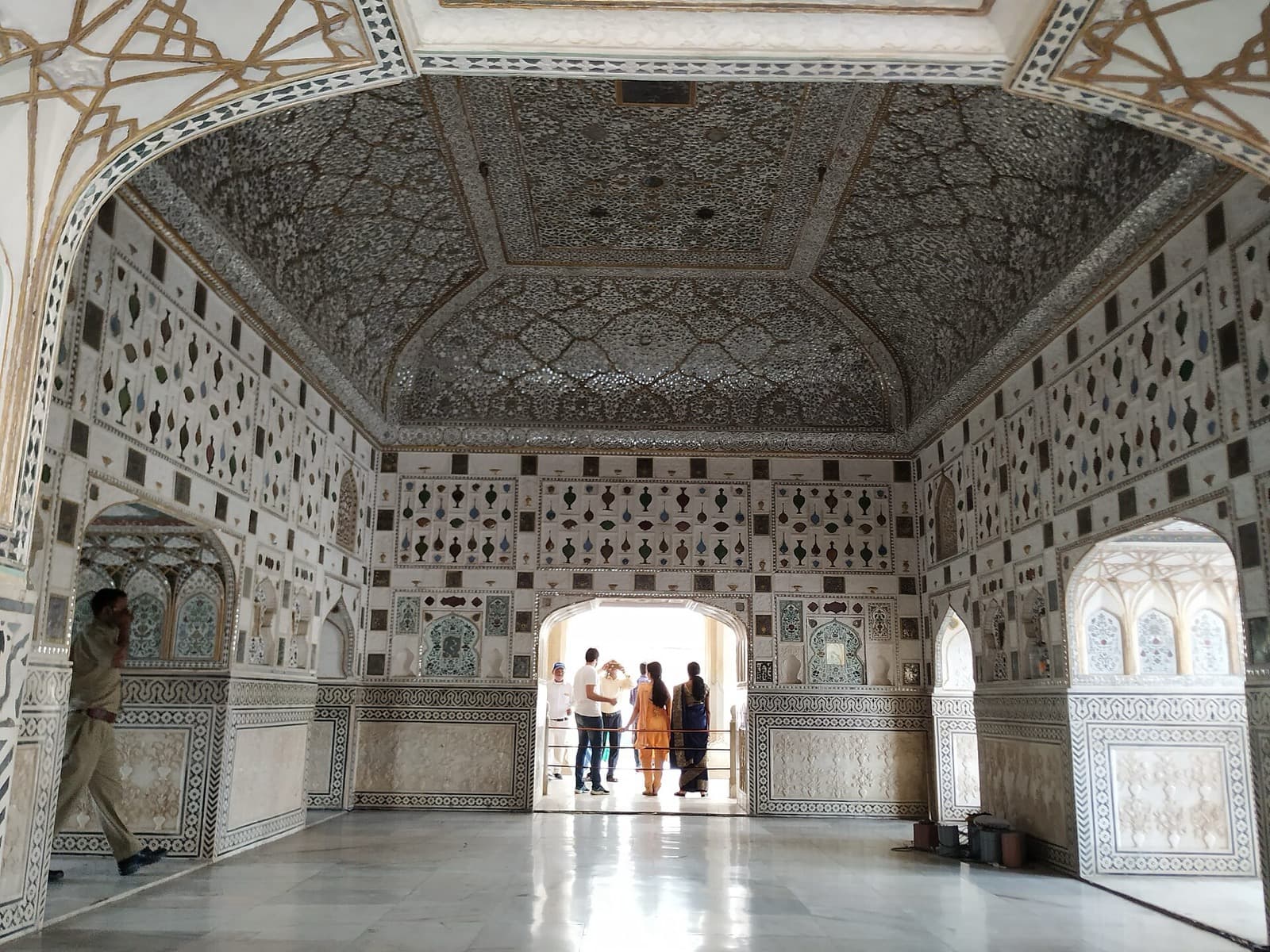
Amber Fort's Sheesh Mahal: Why One Candle Becomes a Galaxy
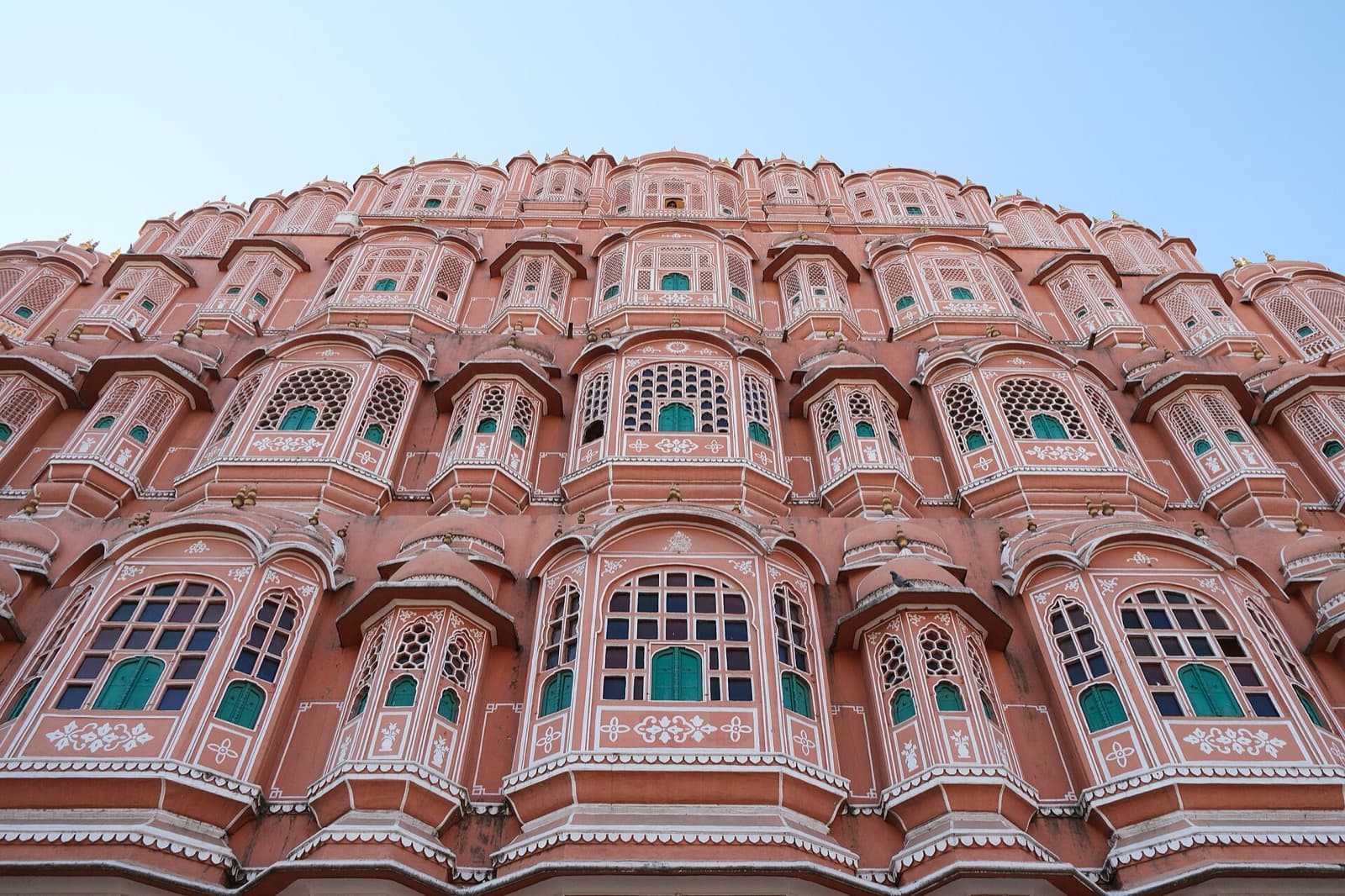
Hawa Mahal: The Honeycomb Window Onto Jaipur's Grid
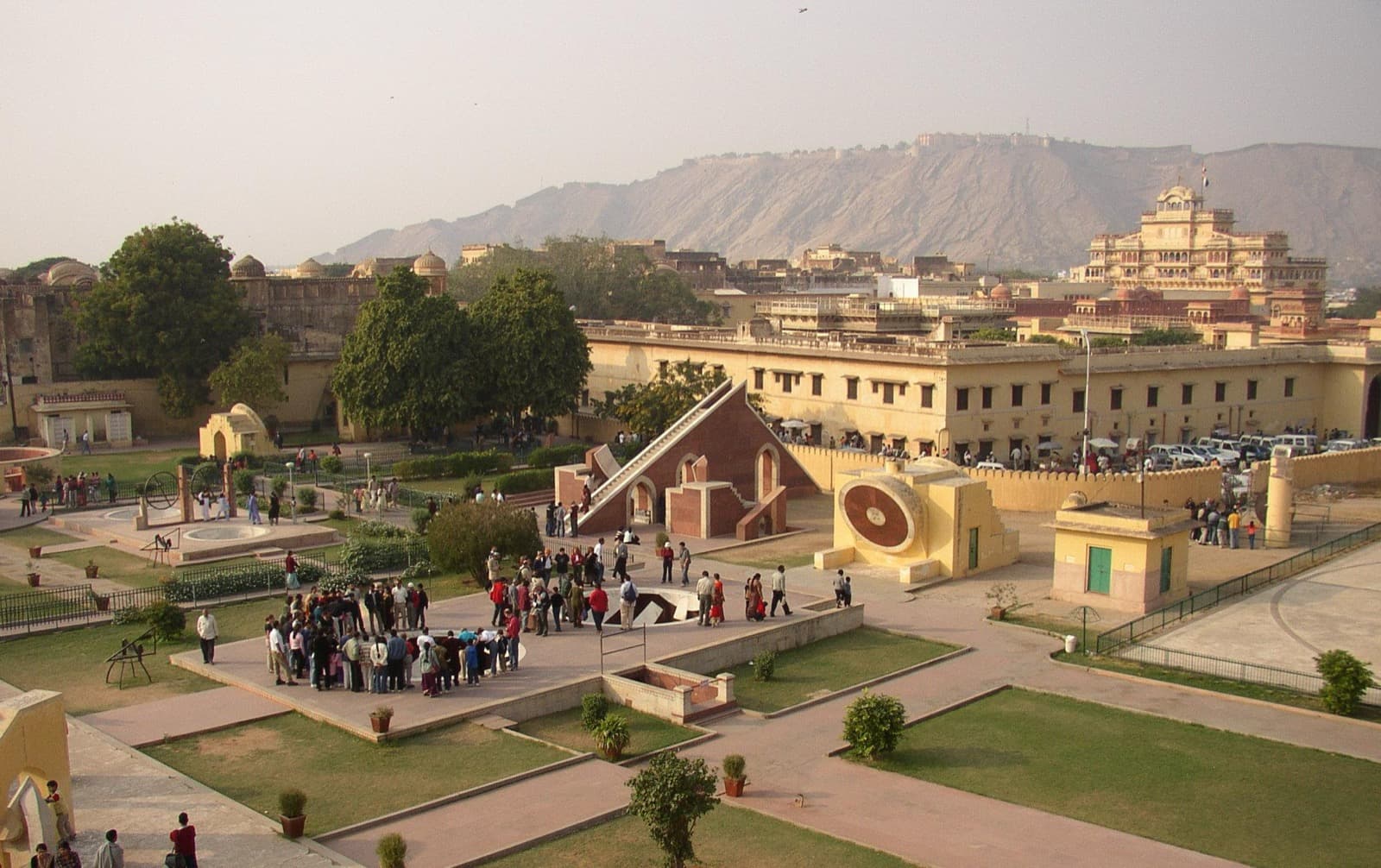
Jantar Mantar, Jaipur: The Astronomer-King's Instruments in Stone