Pink City: The Walled Bazaar Grid
90 min · 4 km · moderate
Give Jaipur two full days if you want to walk the Pink City and Amber Fort without rushing, get around by app-booked auto-rickshaws and cabs, come between October and March when the walking is comfortable, and treat the touts as an annoyance to manage rather than a danger to fear. That is the short version. Jaipur rewards a slower, self-directed pace, and the planning is genuinely simple once you know a few numbers and habits. Here is the practical guide, checked against current sources.
How many days you need
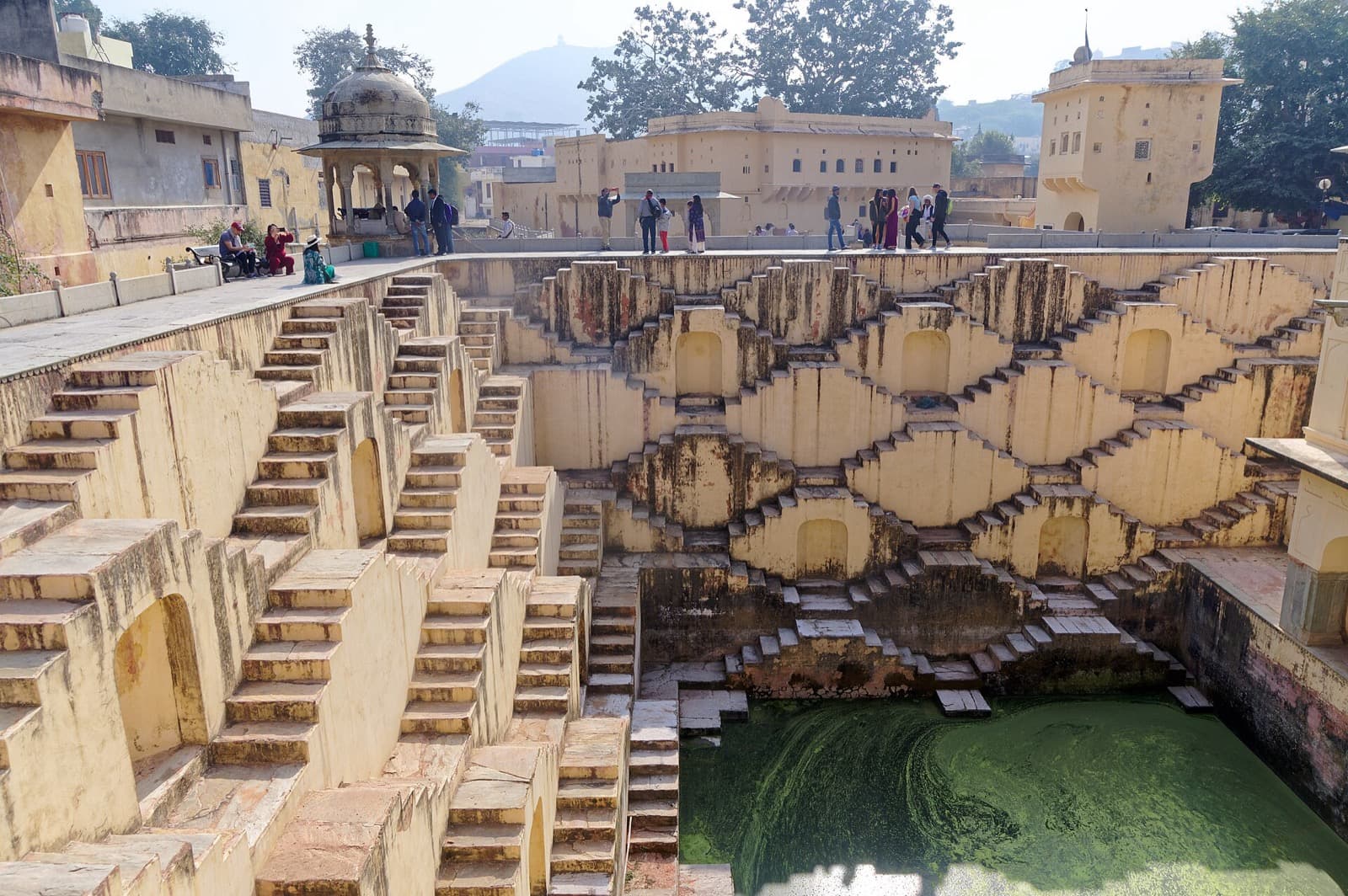
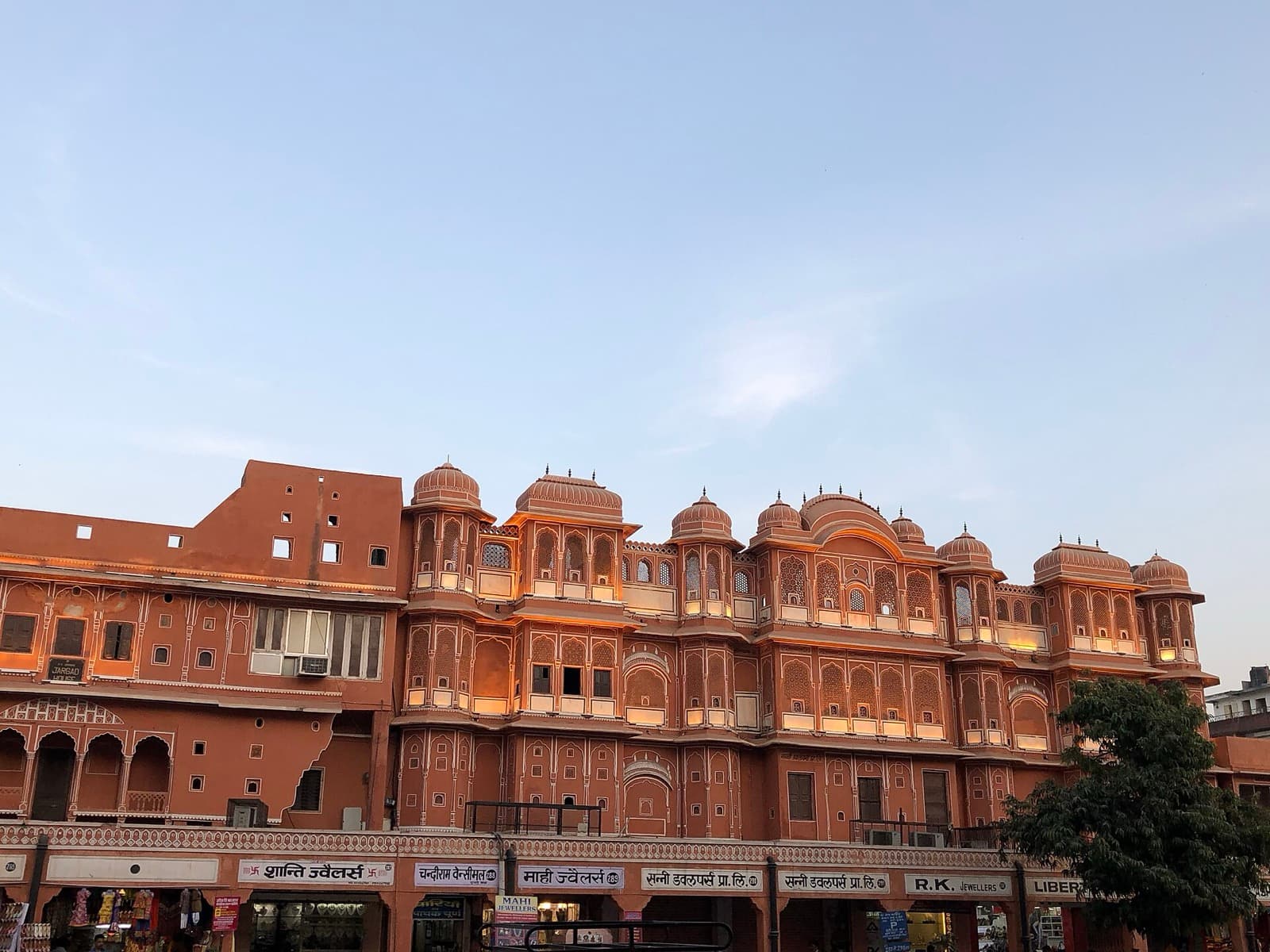
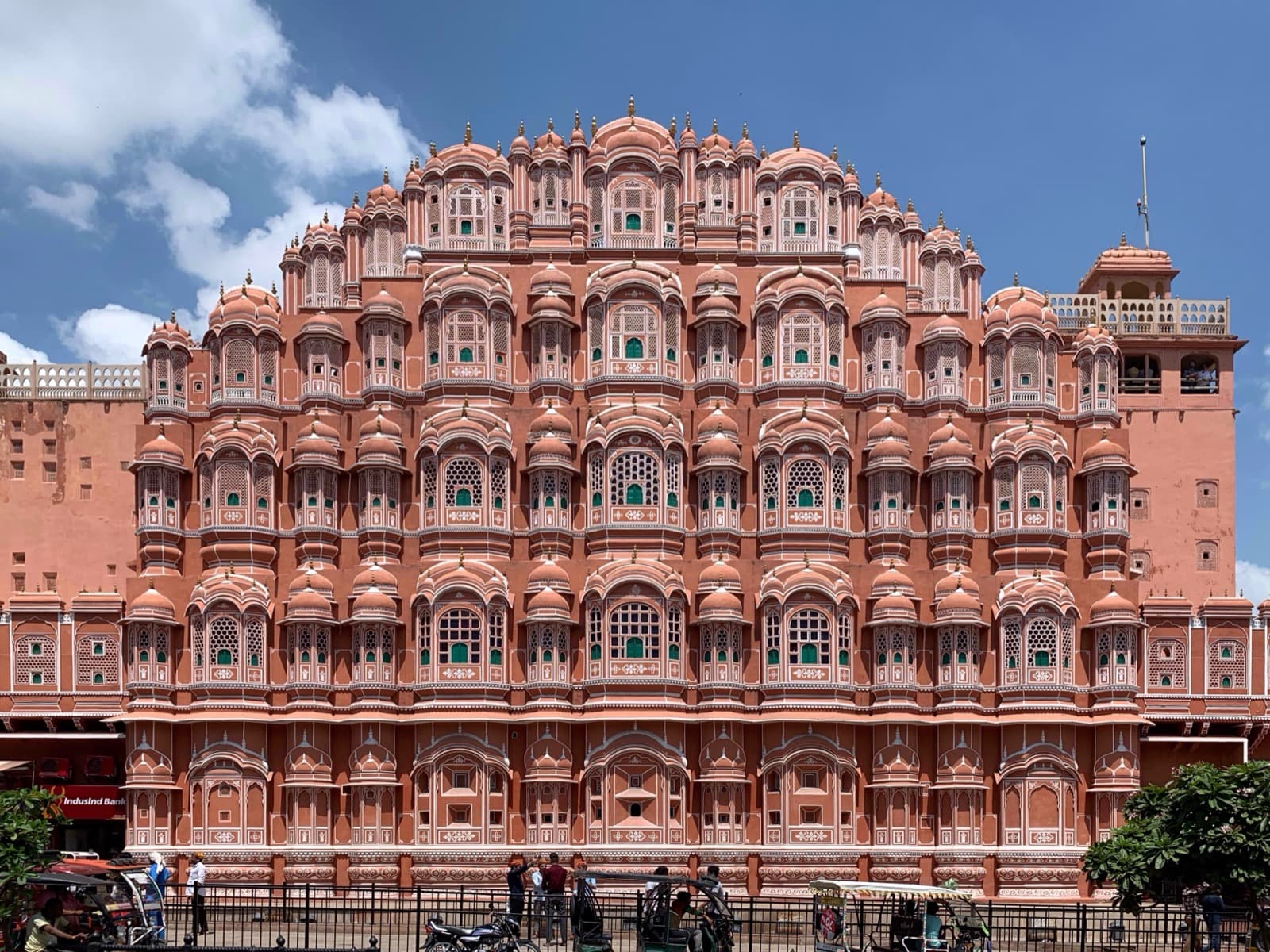
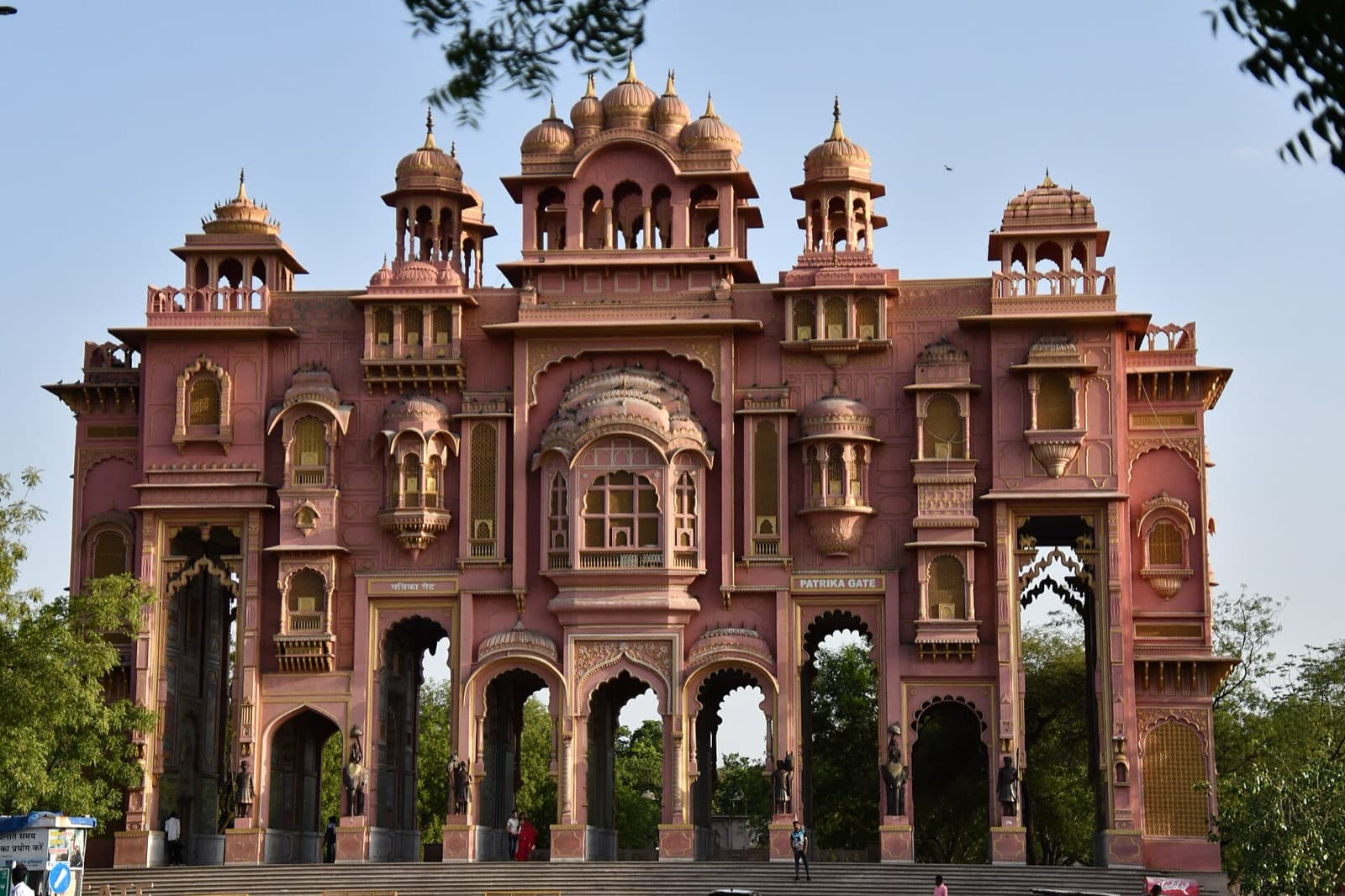
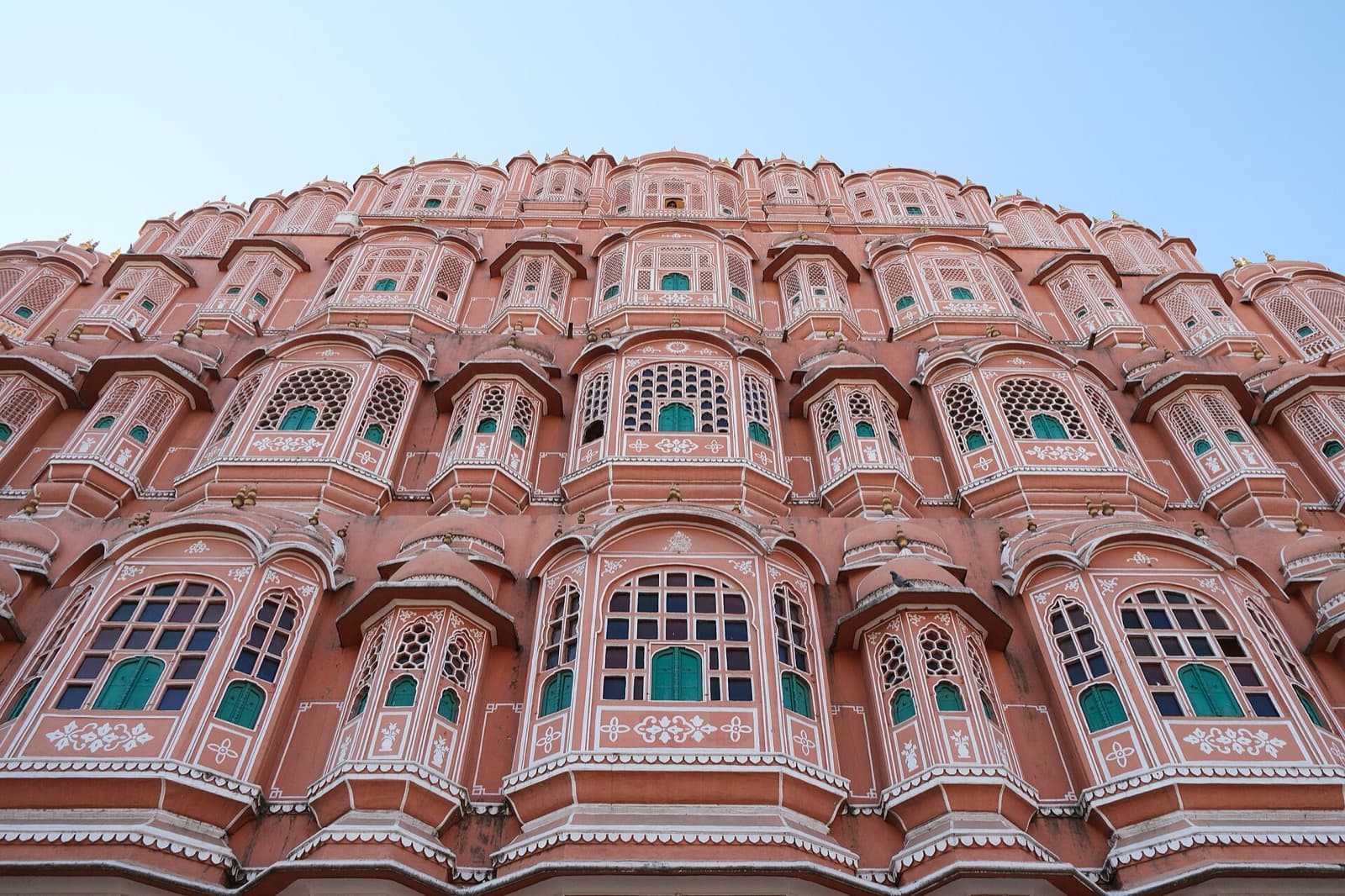
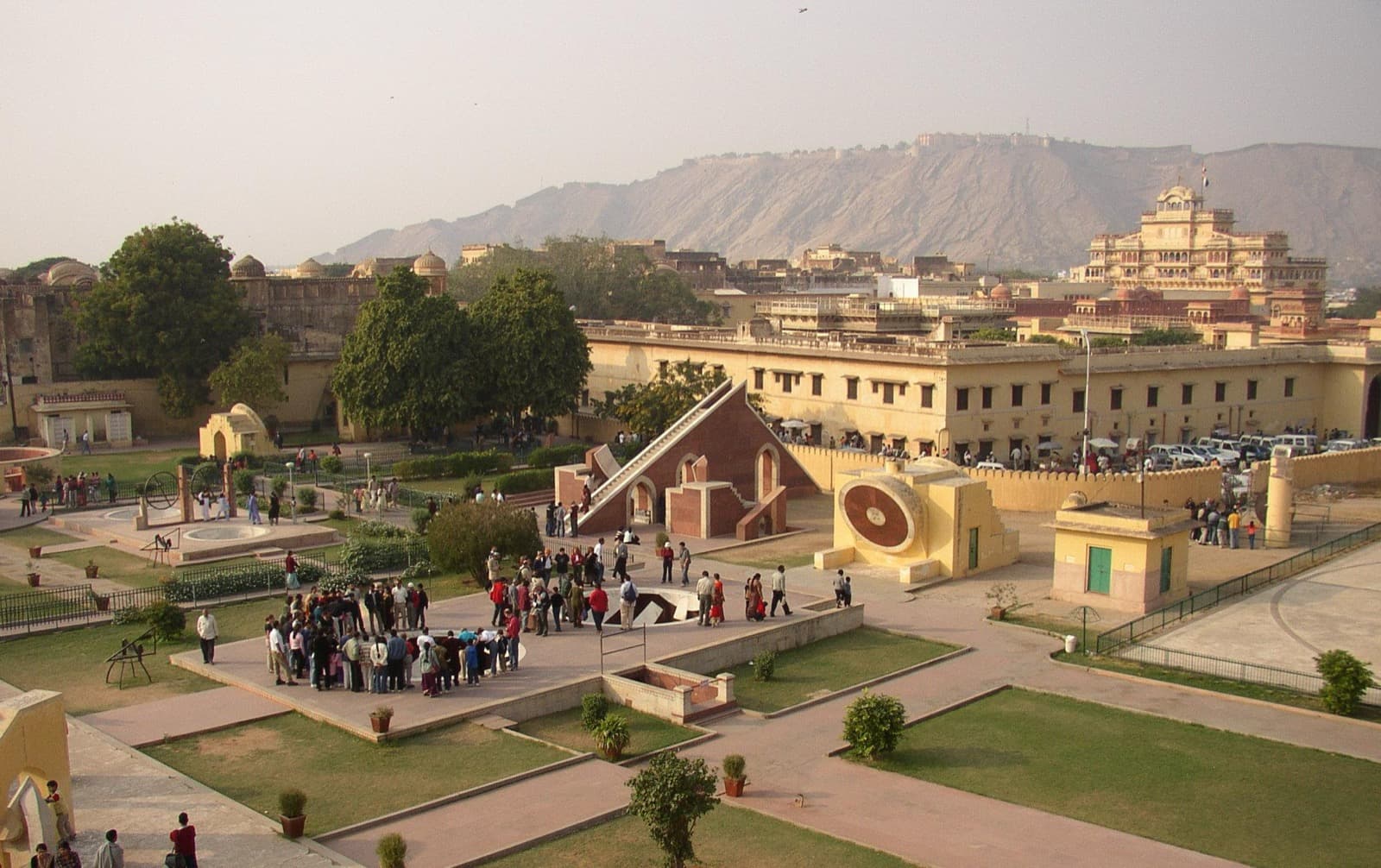
Two days covers the essentials properly. Day one belongs to the walled Pink City: the grid Maharaja Sawai Jai Singh the Second laid out in 1727, painted terracotta pink in 1876 to welcome a visiting prince, and inscribed by UNESCO as a World Heritage Site in 2019. That is where the Hawa Mahal, City Palace, Jantar Mantar observatory, and Johari Bazaar sit within easy walking distance of each other. Day two goes to Amber Fort, the pale sandstone and marble palace the Kachhwaha Rajput kings raised above a lake about eleven kilometres north, plus the nearby stepwell and forts on the ridge.
If you only have one day, do the Pink City on foot and pick Amber Fort or the palace, not both. Three days lets you add Nahargarh and Jaigarh forts, the Albert Hall Museum, and a slower morning in the bazaars. Our two self-guided routes match this rhythm: the Jaipur walking tours hub links both, and you can start either from the /india/jaipur city page.
Getting around
Hear a stop from this walk
Johari Bazaar: The Street of Jewels That Proves the Plan
App-based cabs and autos are the easiest way to move, and they remove the biggest daily friction, which is haggling. Uber and Ola both operate in Jaipur, and both let you book auto-rickshaws through the app at a fixed price shown up front, so you skip the negotiation entirely. A street-hailed auto within the core city typically runs a small fare of roughly 60 to 120 rupees for short hops, but you have to agree the price before you climb in, since drivers rarely use the meter.
For a day of forts spread across the city, hiring a car with a driver is common and costs in the region of 2,000 to 3,000 rupees for the day. It is worth it if you are covering Amber, Nahargarh, and Jaigarh in one go. The Jaipur Metro exists but is limited, useful mainly along its line through Chandpole near the old city, so most visitors lean on autos and cabs instead.
Inside the walled Pink City, walk. The whole point of the grid is that it is legible on foot, and the stops on the Jaipur walking tours sit within a couple of kilometres of each other. Just share the lanes carefully with cycle-rickshaws, autos, and motorbikes, and keep to the sides.
What it costs to get in
Most of the Pink City street-level experience is free. Walking the bazaars, seeing the Hawa Mahal from the street, and visiting the Govind Dev Ji temple cost nothing. You pay to enter the ticketed monuments, and foreign-visitor rates are several times the Indian rate, which is standard across the country.
As a planning guide, foreign-adult entry runs about 1,000 rupees at Amber Fort, about 1,000 rupees at the City Palace museum, about 600 rupees at the Hawa Mahal, and about 600 rupees at Jantar Mantar. Indian-adult rates are a fraction of those. If you plan to see several sites, ask about the composite ticket: it bundles Amber Fort, Jantar Mantar, Hawa Mahal, Albert Hall Museum, and other government monuments, is valid for two consecutive days, and typically costs foreign adults in the region of 1,000 to 1,100 rupees, which beats buying entries separately. Prices and the exact list of covered sites shift, so confirm the current rate at the ticket counter and carry cash in rupees, since not every window takes cards.
When to visit
October to March is the window. Days are pleasant and the light is clear, which matters when you are on your feet in open bazaars with little shade. Winter temperatures sit in a comfortable range, roughly the middle teens to the mid-twenties Celsius on a typical day. Early morning, soon after the sites open, is the sweet spot: softer sun on the pink walls, quieter streets, and fewer touts working the crowds.
Avoid April to June if you can. Summer heat in Jaipur can climb toward 45 degrees Celsius, and there is nowhere to hide from it along the market streets. The monsoon arrives around July to September and brings heavy showers, often late in the day, so you can still sightsee in the mornings, and the surrounding hills turn green.
An honest word on safety
Jaipur is a safe destination for most visitors, including solo travelers, especially in the main tourist areas and in daylight. The real issue is not violence but money: Jaipur is well known for tourist scams, and being overcharged or steered toward a commission shop is far more likely than any threat to your person.
Know the patterns and they lose their power. The most costly one is the gem or jewellery export scam, where a friendly new acquaintance convinces you to buy gemstones to resell abroad for a promised profit that never materializes. More everyday versions: auto and taxi drivers who claim a monument is closed and offer to take you somewhere better (a shop that pays them commission), fake guides at the gates, and inflated fares. In Johari Bazaar, the jewellers are legitimate and browsing is welcome, but there is never any obligation to buy. A calm, firm no is all you need, and you never owe anyone a sale.
The practical habits are simple. Book transport through Uber or Ola so the price is fixed. Keep valuables zipped in crowded stretches near the palace gates and market crossings. Prefer app cabs or hotel-arranged transport late at night. Going self-guided helps here directly: with an audio route in your ear, you are not dependent on a stranger to steer you, and no one is walking you toward a shop.
A sensible budget
Jaipur can be done cheaply or comfortably. The unavoidable costs are monument entries (the composite ticket keeps this in check for foreigners) and transport, which stays modest if you use app autos and cabs. Street food and local restaurants are inexpensive; carry small cash in rupees for tickets, tips, the odd tower climb, and vendors, since many counters and stalls are cash-first. Beyond that, your biggest variable is shopping, and that is entirely in your control.
How to walk it
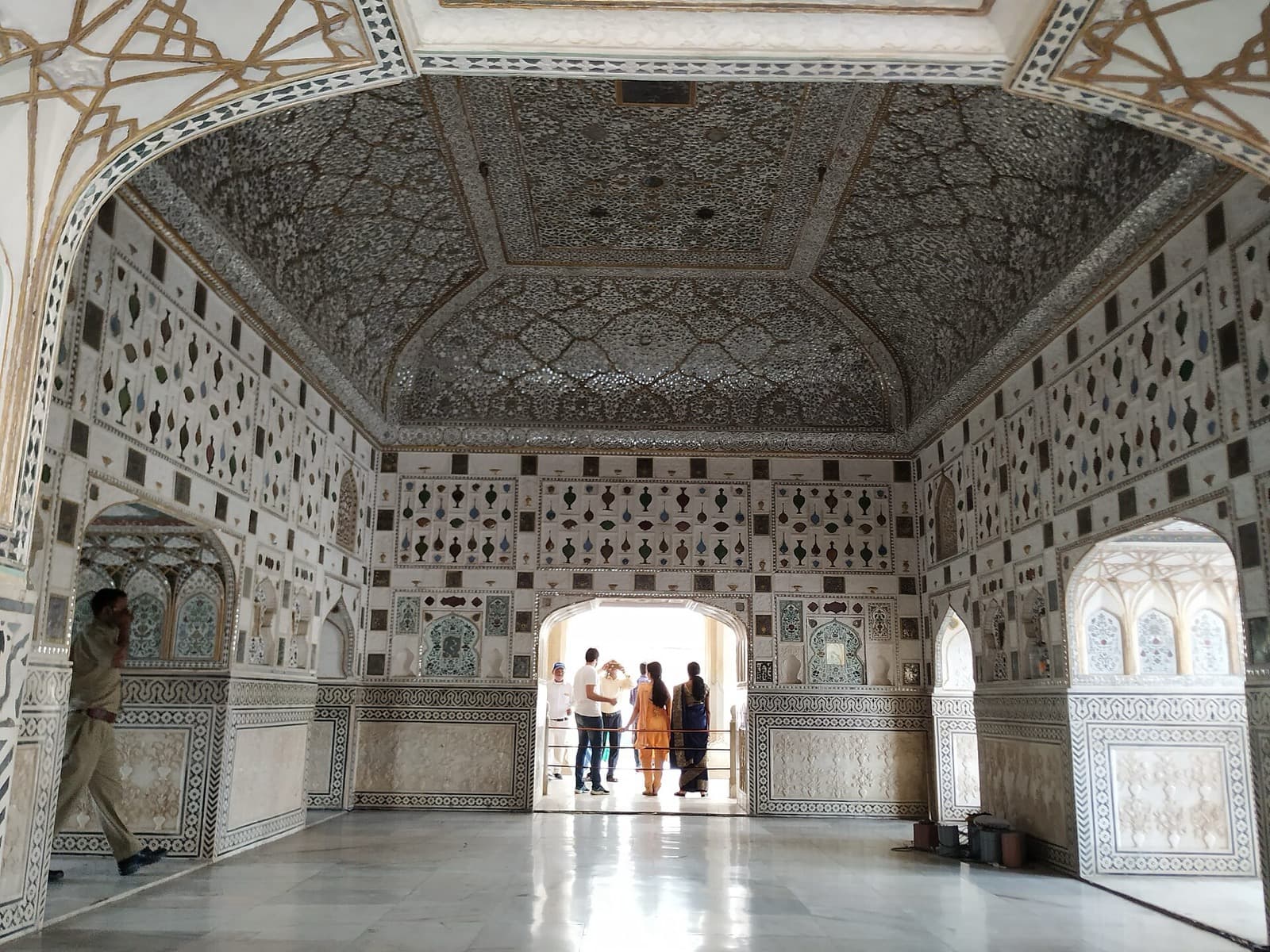
Both Roamer routes are self-guided and GPS-triggered, so the narration plays as you reach each stop and you set your own pace. The Pink City route runs about four kilometres over seven stops, roughly two hours if you linger, from the New Gate in the pink wall past the Hawa Mahal, City Palace, and Jantar Mantar to the Govind Dev Ji temple and Johari Bazaar. The Amber Fort route walks you up through Suraj Pol and Jaleb Chowk, the Diwan-i-Am, the Ganesh Pol, and the mirrored Sheesh Mahal. Start from the /india/jaipur city page, or compare both on the Jaipur walking tours hub, and walk the city on your own schedule with no group van and no one steering you.
Sources
- Jaipur Monuments Timings & Entry Fees 2026 (Amber Fort, City Palace, Hawa Mahal, Jantar Mantar) - Rajasthan Tour Driver
- Tourist Composite Ticket - Hawa Mahal official site
- Local Transport in Jaipur: Metro vs Uber vs Auto vs Bus - Jaipur Unveiled
- Is Rajasthan Safe? A Solo Female Traveller's Perspective (2026) - Laure Wanders
- Jaipur City, Rajasthan - UNESCO World Heritage Centre
Frequently asked questions
- How many days do you need in Jaipur?
- Two full days is enough to see the essentials without rushing. Spend one day walking the walled Pink City (Hawa Mahal, City Palace, Jantar Mantar, and the bazaars) and one day at Amber Fort and the nearby forts and stepwell about eleven kilometres north. Three days lets you add Nahargarh and Jaigarh forts and the Albert Hall Museum. One day forces a choice between the palace and Amber Fort.
- How do you get around Jaipur?
- App-based cabs and autos are easiest. Uber and Ola both operate in Jaipur and let you book auto-rickshaws at a fixed, up-front price, which removes the need to haggle. A street-hailed auto for short hops in the core city runs roughly 60 to 120 rupees, agreed before you get in. Hiring a car with a driver for a full day of spread-out forts costs about 2,000 to 3,000 rupees. Inside the walled city, walk.
- What are the entry fees for Jaipur monuments in 2026?
- Foreign-adult entry runs about 1,000 rupees at Amber Fort, about 1,000 rupees at the City Palace museum, about 600 rupees at the Hawa Mahal, and about 600 rupees at Jantar Mantar, with Indian rates a fraction of these. A composite ticket bundling Amber Fort, Jantar Mantar, Hawa Mahal, the Albert Hall Museum, and other government monuments is valid two consecutive days and costs foreign adults roughly 1,000 to 1,100 rupees. Confirm current prices at the counter and carry cash.
- When is the best time to visit Jaipur?
- October to March, when days are pleasant and the light is clear for walking. Winter temperatures sit roughly in the middle teens to mid-twenties Celsius. Early morning is best for quieter streets and softer light. Avoid April to June, when heat can reach toward 45 degrees Celsius with little shade in the bazaars. Monsoon rains fall around July to September, often late in the day, so mornings still work for sightseeing.
- Is Jaipur safe for tourists?
- Yes, Jaipur is safe for most visitors, including solo travelers, especially in the main tourist areas and by day. The main risk is being overcharged or scammed rather than any threat to your person. Watch for the gem export scam, drivers claiming a site is closed to steer you to commission shops, and fake guides. Book transport through Uber or Ola for fixed fares, keep valuables secure in crowds, and a calm, firm no ends any hard sell.
- Do you need to book Jaipur walking tours in advance?
- No. The Roamer routes are self-guided and GPS-triggered, so you start whenever you like and set your own pace. The Pink City route covers about four kilometres over seven stops in roughly two hours; the Amber Fort route walks you up through the palace courtyards to the mirrored Sheesh Mahal. You pay monument entry fees separately at each site as you go.
Ready to experience it?
Pink City: The Walled Bazaar Grid
90 min · 4 km · moderate
More from Jaipur
Explore more at your own pace.
One Day in Jaipur: A Walkable Pink City and Amber Fort Itinerary
Jaipur: The City That Was Drawn Before It Was Built
Amber Fort's Sheesh Mahal: Why One Candle Becomes a Galaxy
Hawa Mahal: The Honeycomb Window Onto Jaipur's Grid
Jantar Mantar, Jaipur: The Astronomer-King's Instruments in Stone