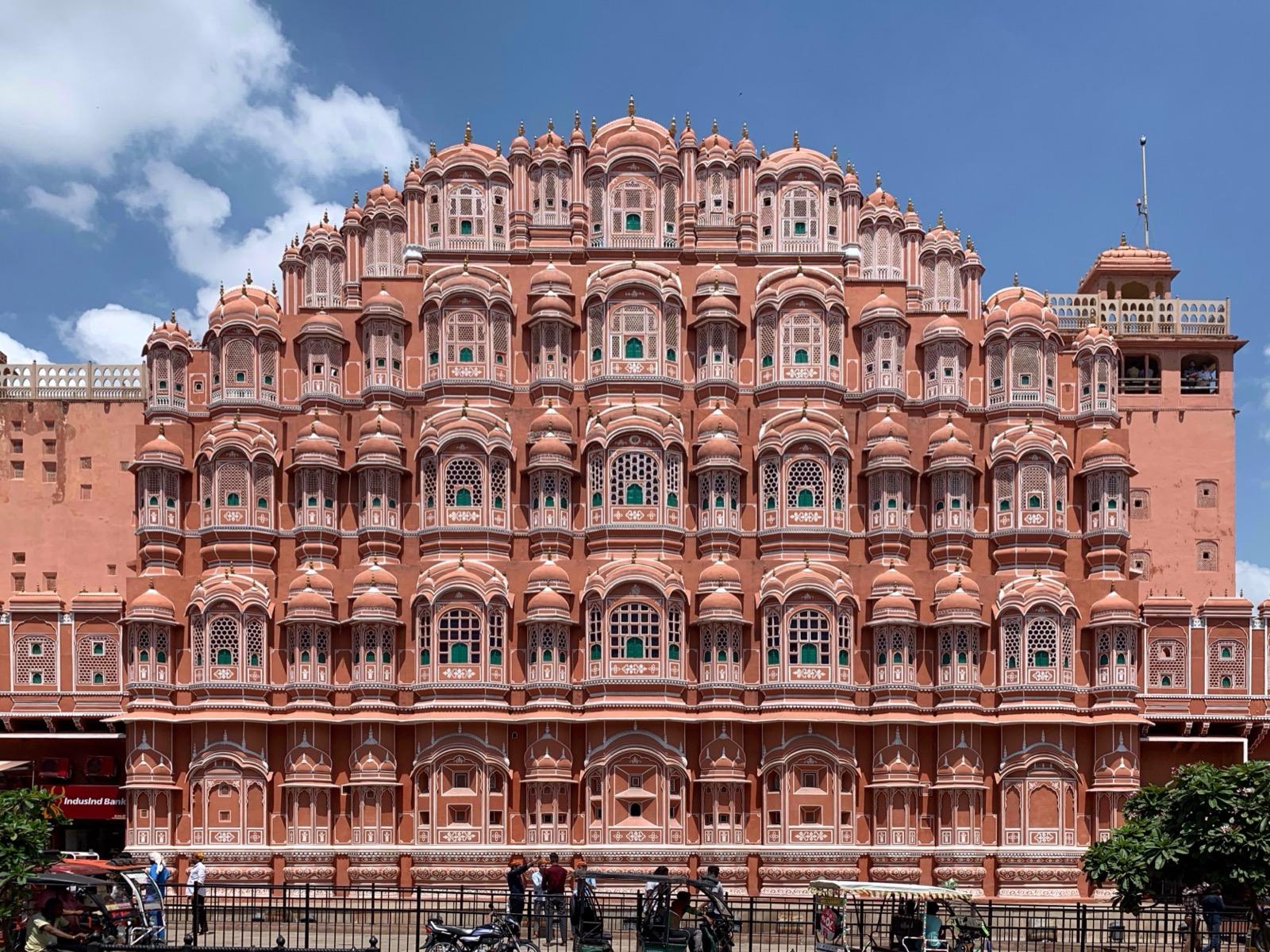
Read the rose-pink capital of Jaipur along the grid it was built on, from a painted gate in the old wall to the jewellers' street that still keeps its ancient trade.
Start · New Gate: The Painted Wall of a Planned City
DirectionsStops
- 1
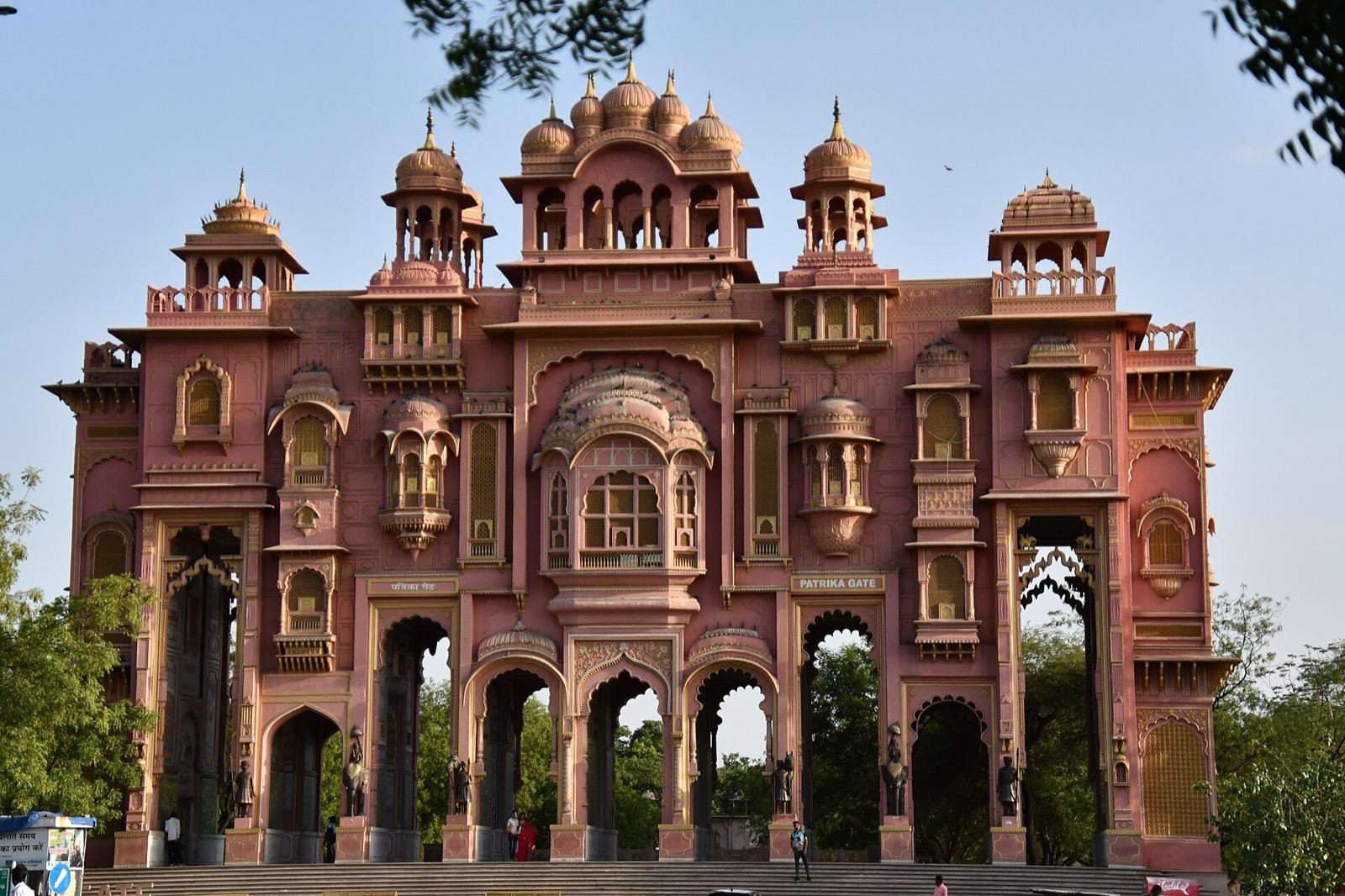
New Gate: The Painted Wall of a Planned City
A gate in the pink perimeter wall, and the doorway into a city that was drawn before it was built.
- 2
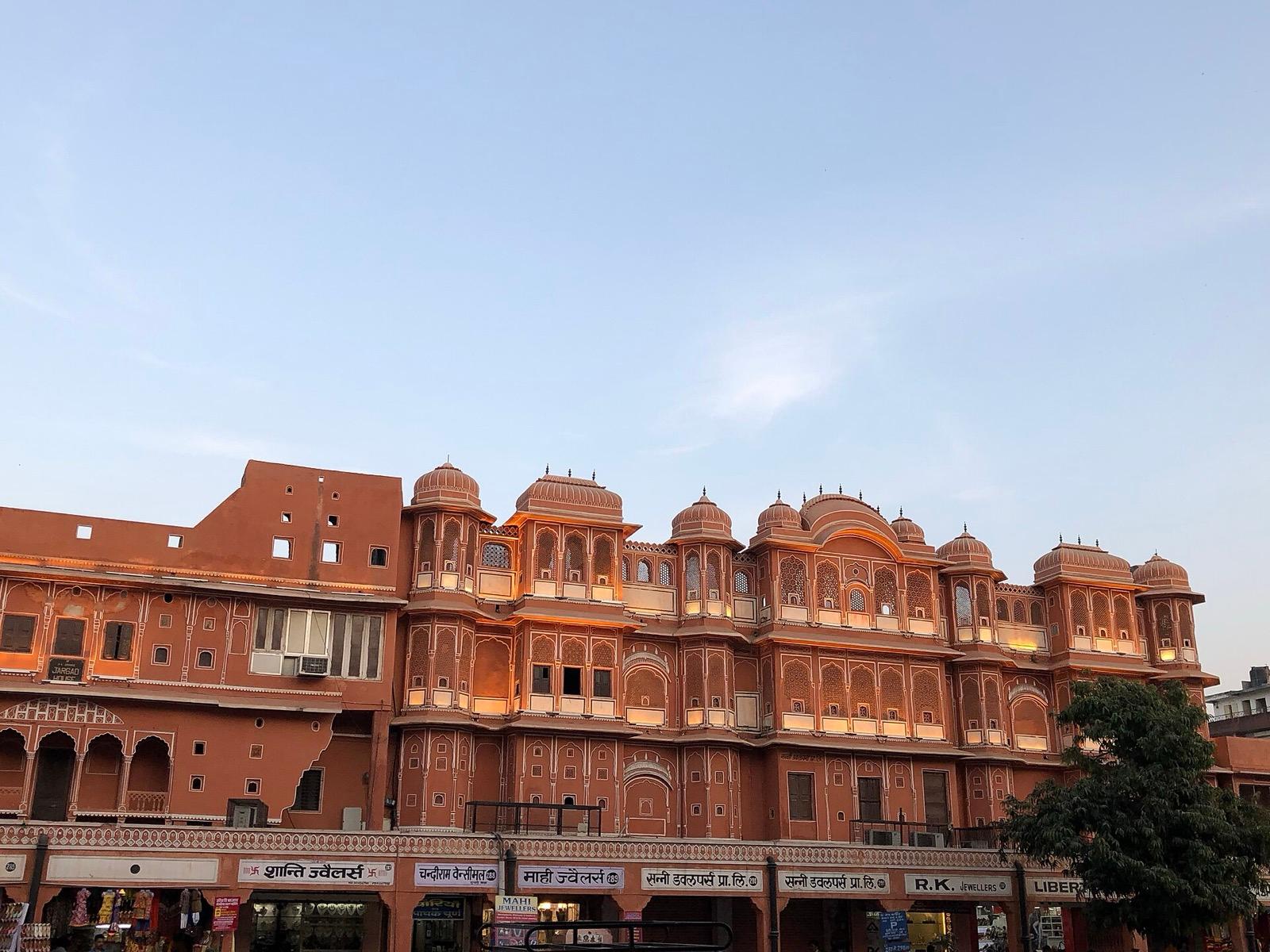
Johari Bazaar: The Street of Jewels That Proves the Plan
The jewellers' market of the Pink City, one of Jaipur's oldest streets, where an ancient trade still keeps to its assigned place in the grid.
- 3
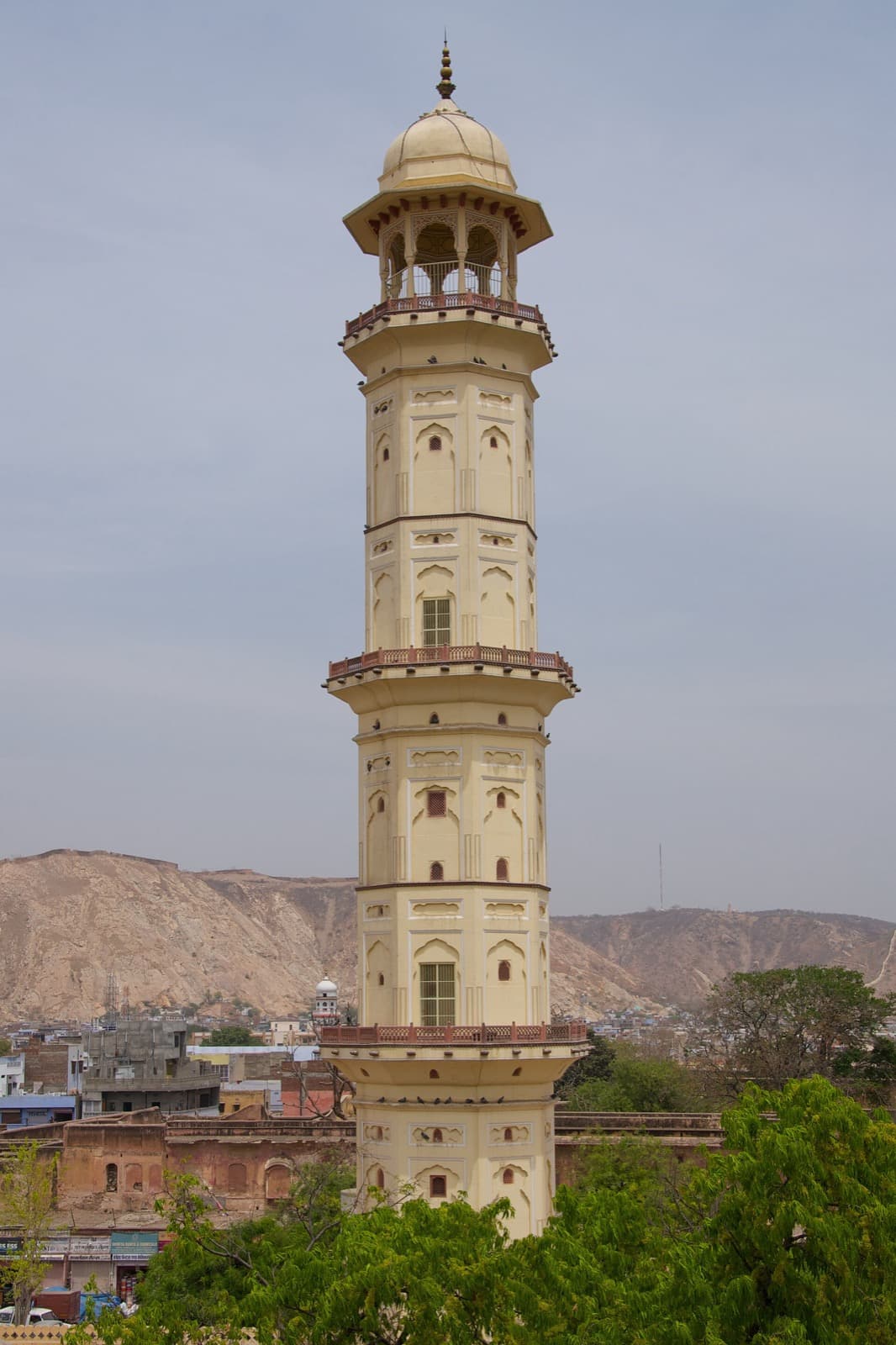
Iswari Minar: The Minaret That Reads the Whole Grid
A tall plastered tower rising above the Tripolia Bazaar, climbable for a rooftop view that lays the entire planned grid out below you.
- 4
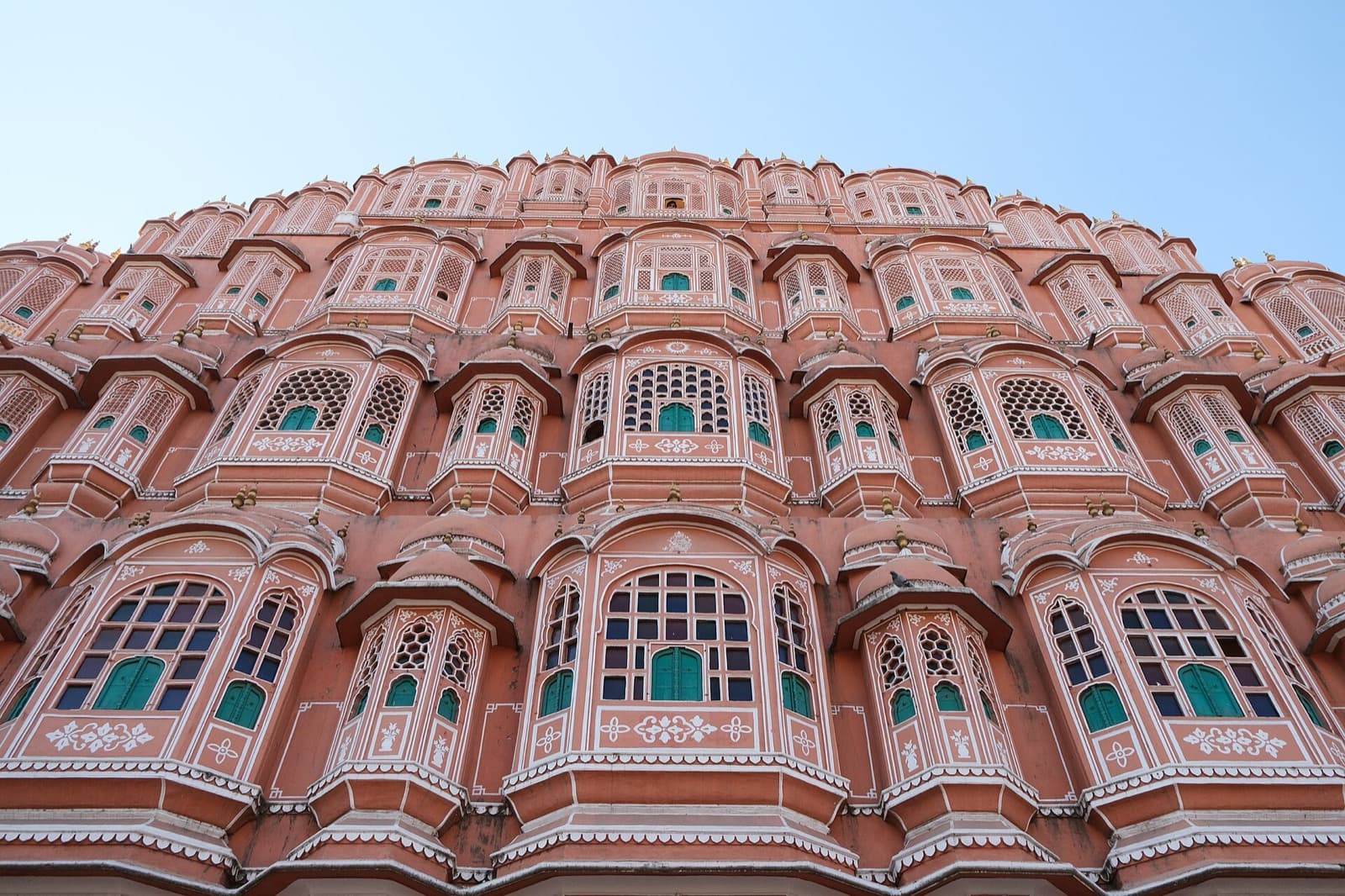
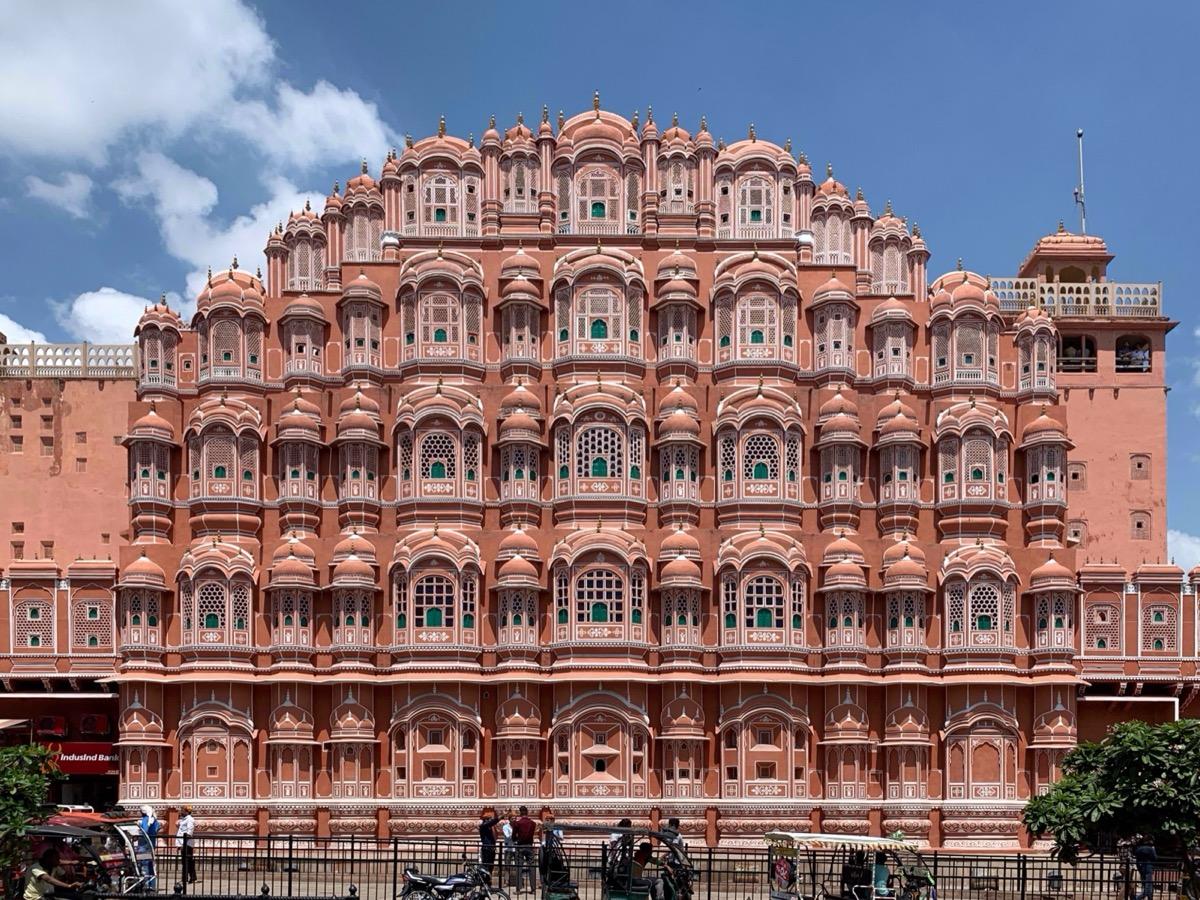
Hawa Mahal: The Honeycomb Where Queens Watched Unseen
A five-storey screen of hundreds of tiny latticed windows, built so royal women could watch the street below without being seen.
- 5
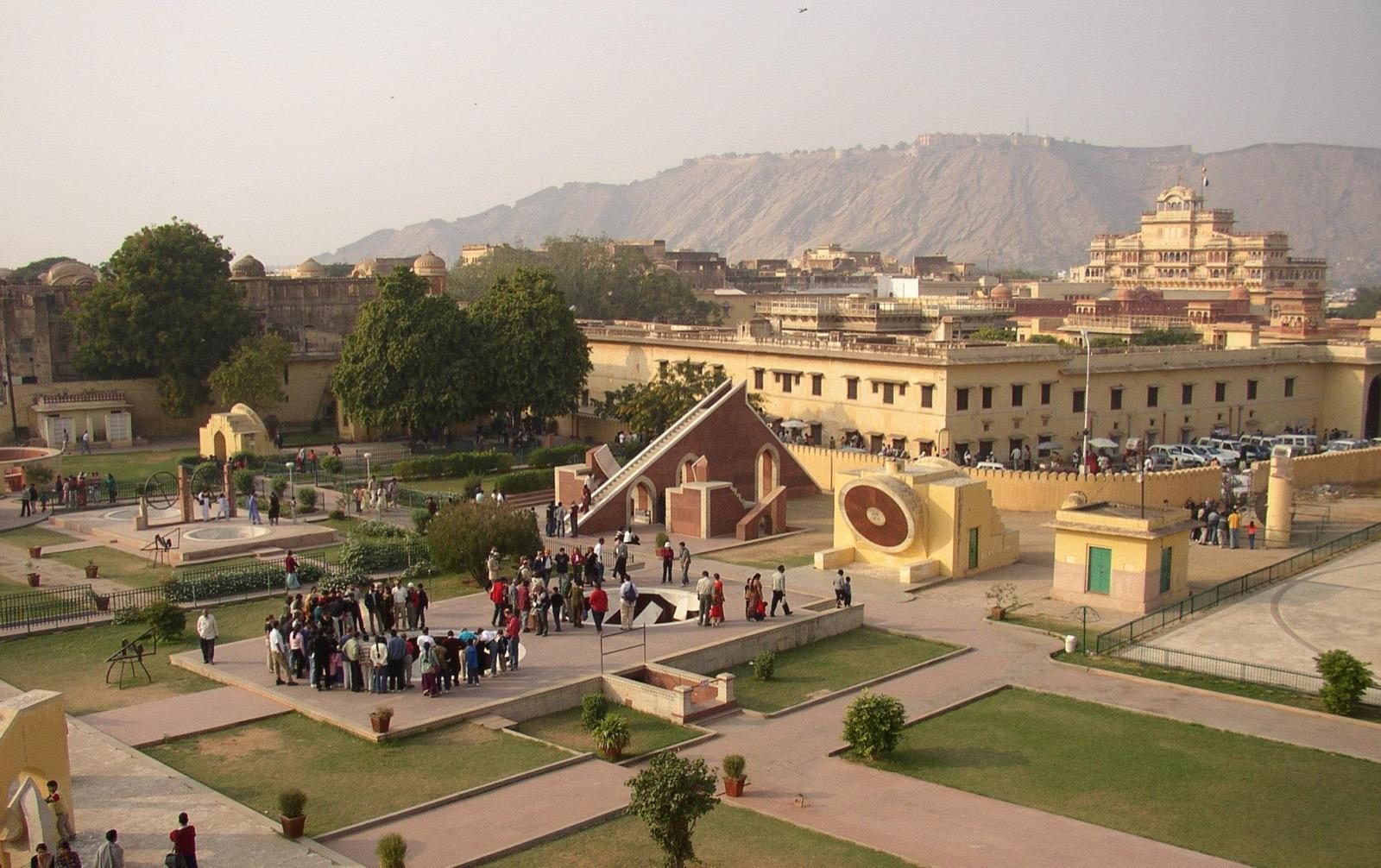
Jantar Mantar: The Astronomer-King's Instruments in Stone
A field of giant masonry instruments built by an astronomer-king to measure time and track the sky, including a sundial the height of a building.
- 6
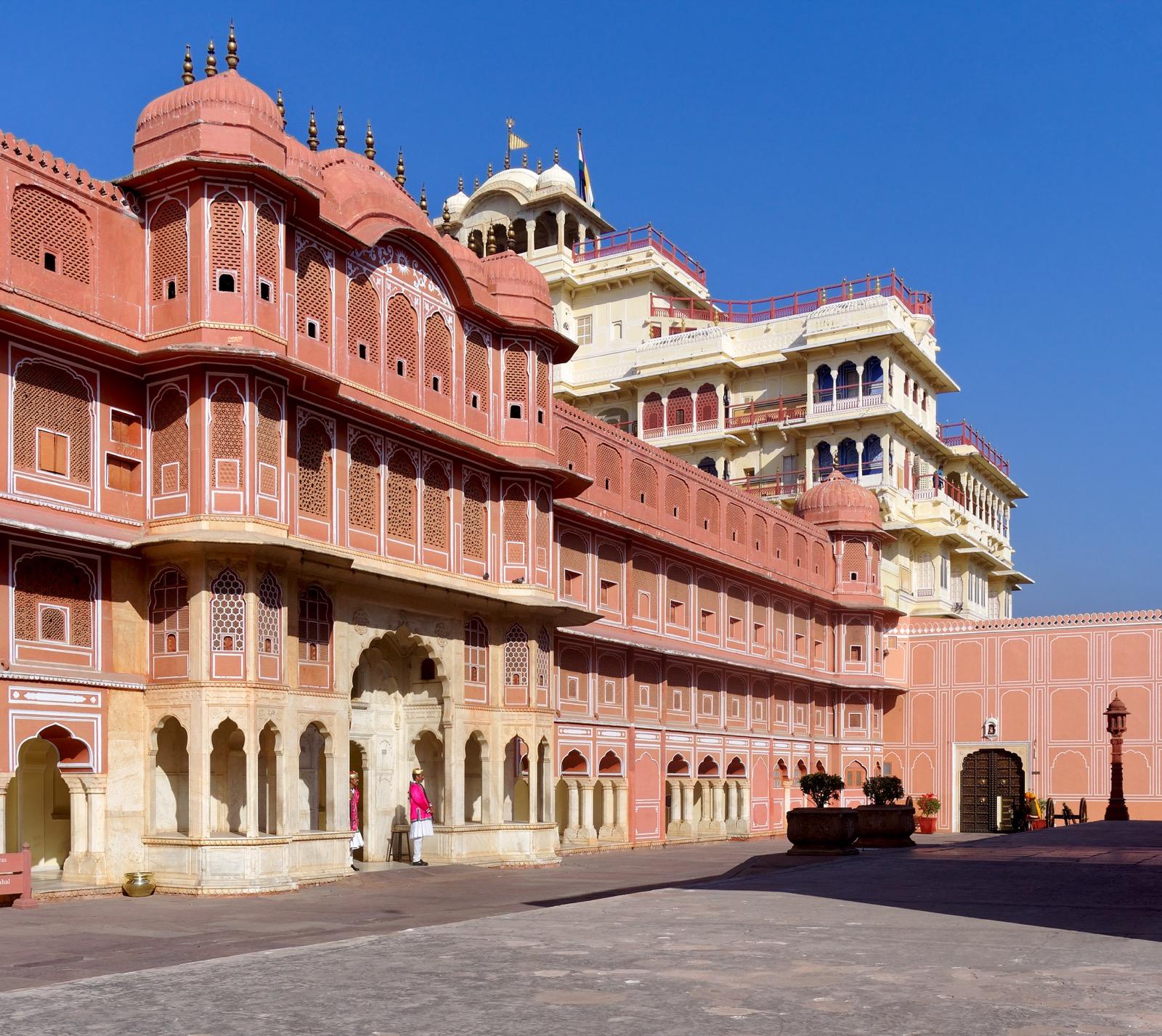
City Palace: The Palace at the Center of the Grid
The maharaja's palace at the heart of the planned city, still half a royal home, with four painted doorways for the four seasons.
- 7
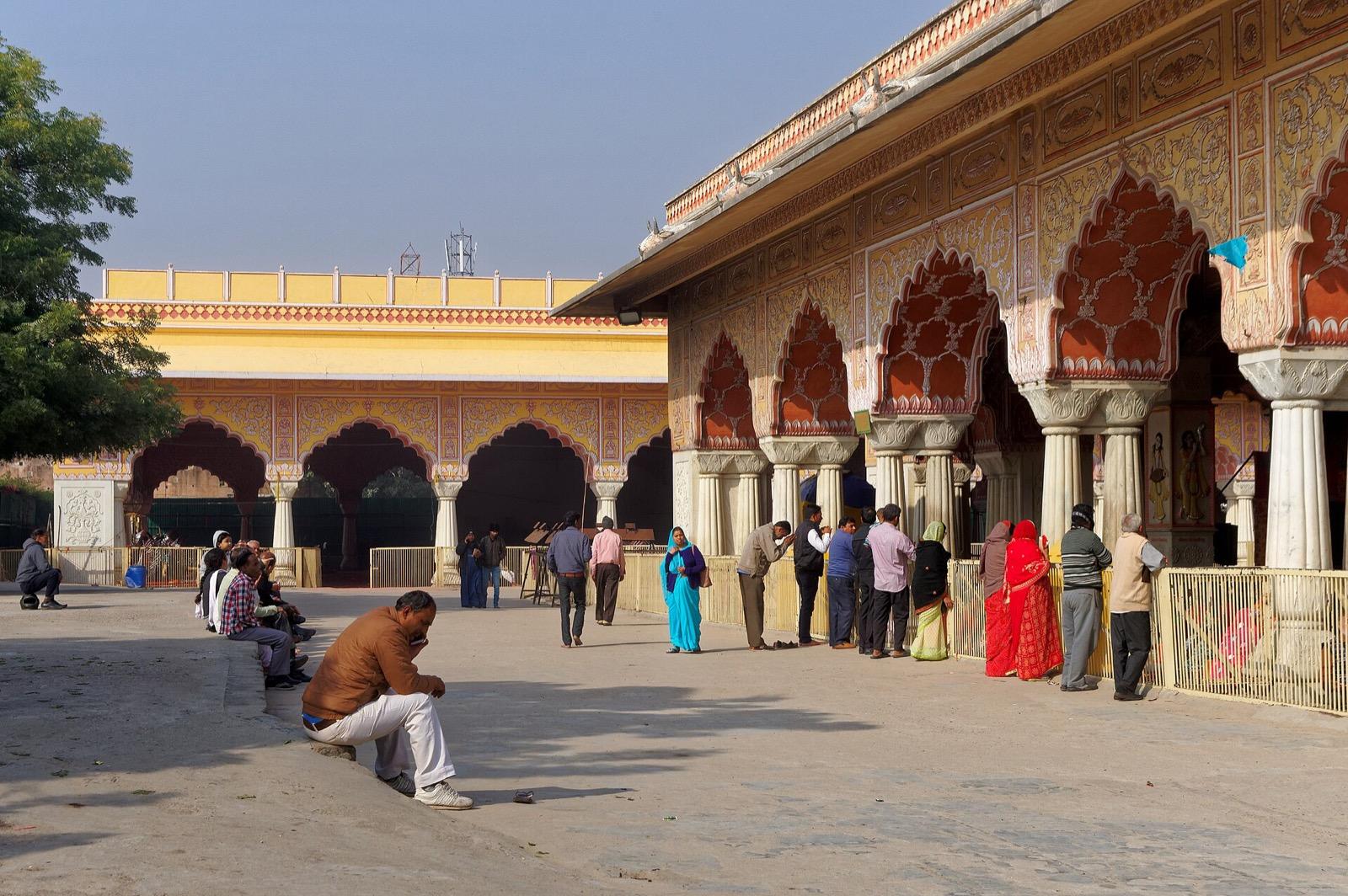
Govind Dev Ji: The God the King Kept in View
A major Krishna temple set in a palace garden, where by tradition the maharaja placed the deity so he could see it from his own window.
Details
Best Time to Visit
The cool, dry months from October to March are the most comfortable for walking the Pink City, with pleasant days and clear light for photographs. Early morning, soon after the bazaars open, is best for quieter streets and softer sun on the pink walls, before the crowds and the midday heat build. Avoid the peak of summer from April to June, when temperatures can be severe with little shade in the open bazaars.
Pro Tips
- •Start early, soon after the sites open, to beat both the harshest sun and the thickest crowds along the bazaars.
- •Buy tickets at each ticketed site as you go, or ask about a combined Jaipur monument ticket, which can cover several sites including the City Palace, Jantar Mantar, and Hawa Mahal.
- •Carry small cash in rupees for entry fees, tips, and the minaret climb, since not every counter takes cards.
- •At the Govind Dev Ji temple, dress modestly, be ready to remove your shoes, and time your visit around the darshan hours if you want to see the deity unveiled.
- •Climb the Iswari Minar if you can for a rooftop overview of the whole grid early in the walk, so the rest of the city reads more clearly at street level.
- •In Johari Bazaar, feel free to browse the jewellers slowly and at your own pace; there is no obligation to buy, and a firm, friendly no is all you need.
Safety & Precautions
- •The Pink City bazaars are dense and busy, shared by pedestrians, cycle-rickshaws, auto-rickshaws, and motorbikes in narrow lanes; watch traffic and keep to the sides where you can.
- •This is one of India's most tout-heavy quarters, with photo-touts, guide-touts, and stall-holders who can be persistent; a calm, firm no works, and you never owe anyone a sale.
- •Keep valuables secure and zipped in crowded stretches, especially around the busy market crossings and near the palace gates.
- •The sun is strong and shade is scarce in the open bazaars, and heat is severe from April to June, so carry water, wear a hat, and pace yourself; dress modestly near the temple and be ready to remove your shoes at active places of worship.
Travel advisory: Exercise Increased Caution (Level 2).
Gallery
Related Reading
Go deeper on what you'll see, hear, and walk through.
Overview
Best Self-Guided Walking Tours in Jaipur (2026)
3 min
Overview
Jaipur Travel Guide: Days, Transport, Costs, Timing, and Safety
7 min
Overview
One Day in Jaipur: A Walkable Pink City and Amber Fort Itinerary
7 min
Thematic
Jaipur: The City That Was Drawn Before It Was Built
7 min
Companion
Hawa Mahal: The Honeycomb Window Onto Jaipur's Grid
7 min
Deep dive
Jantar Mantar, Jaipur: The Astronomer-King's Instruments in Stone
6 min
Read
What to Eat in Jaipur: A Local Food Guide
6 min
Read the walk
The full story of Pink City: The Walled Bazaar Grid, in words. Prefer to listen? Play it narrated, from home or on location.
Introduction
Some cities grow. Jaipur, in northern India, was drawn. In seventeen twenty-seven, Maharaja Sawai Jai Singh the Second, a Kachhwaha Rajput ruler who was both a warrior and an astronomer, moved his capital down from the hills of Amber and laid out a new city on a strict grid. His planner, Vidyadhar Bhattacharya, followed ancient Indian principles of town planning, dividing the walled city into nine rectangular blocks with wide, straight bazaars running through them. A century and a half later, in eighteen seventy-six, the whole old city was painted a warm terracotta pink to welcome a visiting prince, and the color stuck, giving Jaipur its nickname, the Pink City. UNESCO records that the walled city was inscribed as a World Heritage Site in twenty nineteen. This tour has seven stops and covers roughly four kilometres, about two hours if you linger, less if you keep moving. It runs from a gate in the pink wall, past the honeycombed Palace of Winds, the maharaja's City Palace and his giant stone observatory, a royal Krishna temple, a minaret that reads the grid, and a jewellers' bazaar that still sorts itself by trade. This is one of India's most tout-heavy quarters, thick with guides and hawkers, so the pleasure here is simple: your own pace, your own quiet map, no group van, no one steering you toward a shop. Read the city like a sentence you can walk, one clause at a time. When you arrive at the New Gate, begin with stop one.
1. New Gate: The Painted Wall of a Planned City
Before there was a stone here, there was a plan. In seventeen twenty-seven, Maharaja Sawai Jai Singh the Second founded Jaipur, moving his capital about eleven kilometres down from the old hill fortress of Amber as its population outgrew the water. He did not let the city sprawl. His planner, Vidyadhar Bhattacharya, drew it out first, using ancient Indian texts of town planning, laying nine rectangular blocks in a grid, two reserved for state buildings and palaces, seven for the public, with bazaars about thirty-four metres wide cutting straight through. Around all of it ran a wall, thick and high, pierced by gates. A word of honesty about this one. The New Gate you are standing at is not one of the original eighteenth-century gates. It was cut into the old wall in the twentieth century, a later opening for the bazaars beyond. So read the wall and the city as old, and this gate as a convenient modern doorway into that old grid. Now the color. In eighteen seventy-six, the ruler of the day, Sawai Ram Singh the Second, ordered the whole old city painted pink to welcome Albert Edward, the Prince of Wales, who later became King Edward the Seventh. Pink was a color of welcome. Later law kept it that way, and the nickname the Pink City stuck for good. UNESCO records that the walled city was inscribed as a World Heritage Site in twenty nineteen, the second Indian city so honored. Take a moment at the threshold. Beyond it, everything is on a grid, and it is all yours to read at your own pace.
2. Johari Bazaar: The Street of Jewels That Proves the Plan
The walk ends where the plan proves itself. Johari Bazaar is one of Jaipur's oldest markets, commissioned under Maharaja Sawai Jai Singh the Second when he built the city. The name says what it is. Johri means jeweller, and this is the jewellers' street. When Jai Singh founded his capital, he drew skilled craftsmen to it under royal patronage, jewellers, gem-cutters, enamellers, and settled them here. The Gems and Gemology journal describes Jaipur as the great gem-and-jewellery center of the Pink City, and this bazaar is its living heart. Two traditions here have Mughal-era roots. One is kundan, the setting of gemstones and glass into gold using thin gold sheets and a resin called lac. The other is meenakari, a vivid enamel work in reds, greens, and blues, often on the back of a piece so it glows unseen against the skin. Now here is the idea that closes this whole walk. UNESCO records that Jaipur was organized around what were called the chattis karkhanas, the thirty-six industries, gemstones, lac jewellery, stone idols, miniature paintings, and each was historically assigned its own street and market within the grid. Some of those assignments still survive. The jewellers are still here, in the street named for jewellers, exactly where the plan put them nearly three hundred years ago. That is the answer to the question this walk began with. A city built like a diagram, colored by decree, and sorted by trade, did not become dead or mechanical. Order framed the life instead of killing it. This is one of India's most tout-heavy markets, so let the autonomy be your gift: browse at your own pace, no pressure to buy, no guide steering you. Treat the jewellers and shoppers as neighbors, and you will find that a city can, after all, be planned like a poem.
3. Iswari Minar: The Minaret That Reads the Whole Grid
To understand a grid, it helps to rise above it, and this tower is how. The Iswari Minar Swarga Sal, also called the Ishwar Lat or Sargasuli, is often translated as the Heaven-Piercing Minaret. A minar is a minaret or tower. It was built about seventeen forty-nine by Raja Iswari Singh, a son and successor of Jai Singh the Second. Regional accounts say he raised it to mark a victory, though you should hear that as tradition rather than certain fact. It stands beside the Tripolia Gate, above the Tripolia Bazaar, one of the main market streets of the planned city. A bazaar is a market. The tower rises well above the rooftops, a tall plastered column climbable by a spiral ramp inside. And that climb is the point of this stop. From the top, the whole logic of the city becomes visible at once. You can see the honeycomb of the Hawa Mahal, the sprawl of the City Palace, the straight lines of the bazaars running away in their grid, and beyond the wall, on a hilltop, the distant outline of Nahargarh Fort. What looked like a maze of crowded lanes at street level suddenly reads as a diagram, exactly the diagram Jai Singh's planner drew three centuries ago. One note: the Tripolia Gate itself is a ceremonial gate of the palace and is generally not for public use, but the bazaar beneath and the minaret are open. Climb it or skip it, entirely as you please. If you do go up, the whole planned city is laid out below you, legible as a page. It is the best single answer to the question this walk keeps asking: was this city really built like a sentence you can read? From up here, you can see that it was.
4. Hawa Mahal: The Honeycomb Where Queens Watched Unseen
This is the face of the Pink City, and it is one of the strangest buildings in India. The Hawa Mahal, the Palace of Winds, was built in seventeen ninety-nine by Maharaja Sawai Pratap Singh, designed by an architect named Lal Chand Ustad. It rises five storeys in red and pink…
Full narration for this stop unlocks with the tour.
5. Jantar Mantar: The Astronomer-King's Instruments in Stone
Jai Singh the Second was a warrior and a ruler, but at heart he was an astronomer, and this is where his mind is most visible. Between about seventeen twenty-eight and seventeen thirty-four, he built the Jantar Mantar, a field of nineteen astronomical instruments made not of…
Full narration for this stop unlocks with the tour.
6. City Palace: The Palace at the Center of the Grid
Every grid has a center, and this is Jaipur's. The City Palace was begun by Jaipur's founder, Maharaja Sawai Jai Singh the Second, from about seventeen twenty-nine and largely finished by seventeen thirty-two. It was laid out by Vidyadhar Bhattacharya, the same planner who drew…
Full narration for this stop unlocks with the tour.
7. Govind Dev Ji: The God the King Kept in View
Behind the palace, in a garden called the Jai Niwas, stands one of the most important Krishna temples in India. The Govind Dev Ji temple was established in the eighteenth century by Maharaja Jai Singh the Second, the founder of Jaipur. A mandir is a Hindu temple. The deity here,…
Full narration for this stop unlocks with the tour.