Old City: The Moated Square
95 min · 3.5 km · moderate
Eat your way through Chiang Mai and you are eating the old Lanna kingdom's trade routes: a bowl of khao soi carries Yunnanese Muslim caravans, a plate of gaeng hang lay carries Burmese influence, and a coil of sai ua carries the herb gardens of the northern hills. This is a guide to the specific dishes that are northern Thai rather than generically Thai, where each one came from, and how to order it the way locals do. The short version: seek out the curry-noodle soup khao soi, the herb sausage sai ua, the pork curry gaeng hang lay, the chili dips nam prik ong and nam prik num, and the tomato rice-noodle soup khanom jeen nam ngiao. Then follow them to the markets and the neighborhoods where they are made.
Start with khao soi, the dish that defines the city
If you eat one thing in Chiang Mai, eat khao soi: a coconut curry broth over egg noodles, topped with a nest of crisp fried noodles, served with chicken or beef and a small plate of lime, pickled mustard greens, sliced shallot, and chili paste on the side. It is the north's signature bowl.
Its origin is a trade story, not a Thai one. Khao soi is believed to have evolved with the Chin Haw, Thai-Chinese Muslim traders from Yunnan province in China who moved goods by caravan through Shan State in Myanmar, Laos, and northern Thailand between the eighteenth and early twentieth centuries. Because its roots are Muslim, khao soi was originally halal, which is why it is still most commonly served with chicken or beef rather than pork. You can taste the Burmese and Yunnanese layers underneath the Thai coconut.
The living proof of that heritage sits on the Wat Gate cross-river tour: the Ban Ho Mosque, built in the nineteenth century by the Yunnanese Muslim (Chin Haw) community, anchors Chiang Mai's oldest established Yunnanese neighborhood around Charoen Prathet. A few steps from the mosque is Khao Soi Islam, a Muslim-Yunnanese khao soi restaurant that has operated for more than forty years. If you want khao soi with its full backstory, this is the block to eat it on.
How to order: point and say "khao soi gai" for chicken or "khao soi neua" for beef. Squeeze the lime, stir in a spoon of the chili paste rather than dumping it, and add the pickled greens to cut the richness. It is usually eaten as a single-bowl lunch.
Sai ua and the herb sausage tradition
Hear a stop from this walk
Three Kings Monument: the founding legend in bronze
Sai ua (also written sai oua) is the north's grilled pork sausage, and it is the easiest northern dish to love. Minced pork is worked with chilies, garlic, galangal, coriander, kaffir lime leaf, and lemongrass, packed into casing in a long coil, and grilled slowly over charcoal so it turns smoky and slightly crisp outside, juicy inside. The herbs, not heat alone, are the point: it tastes green and aromatic in a way that a central Thai sausage does not.
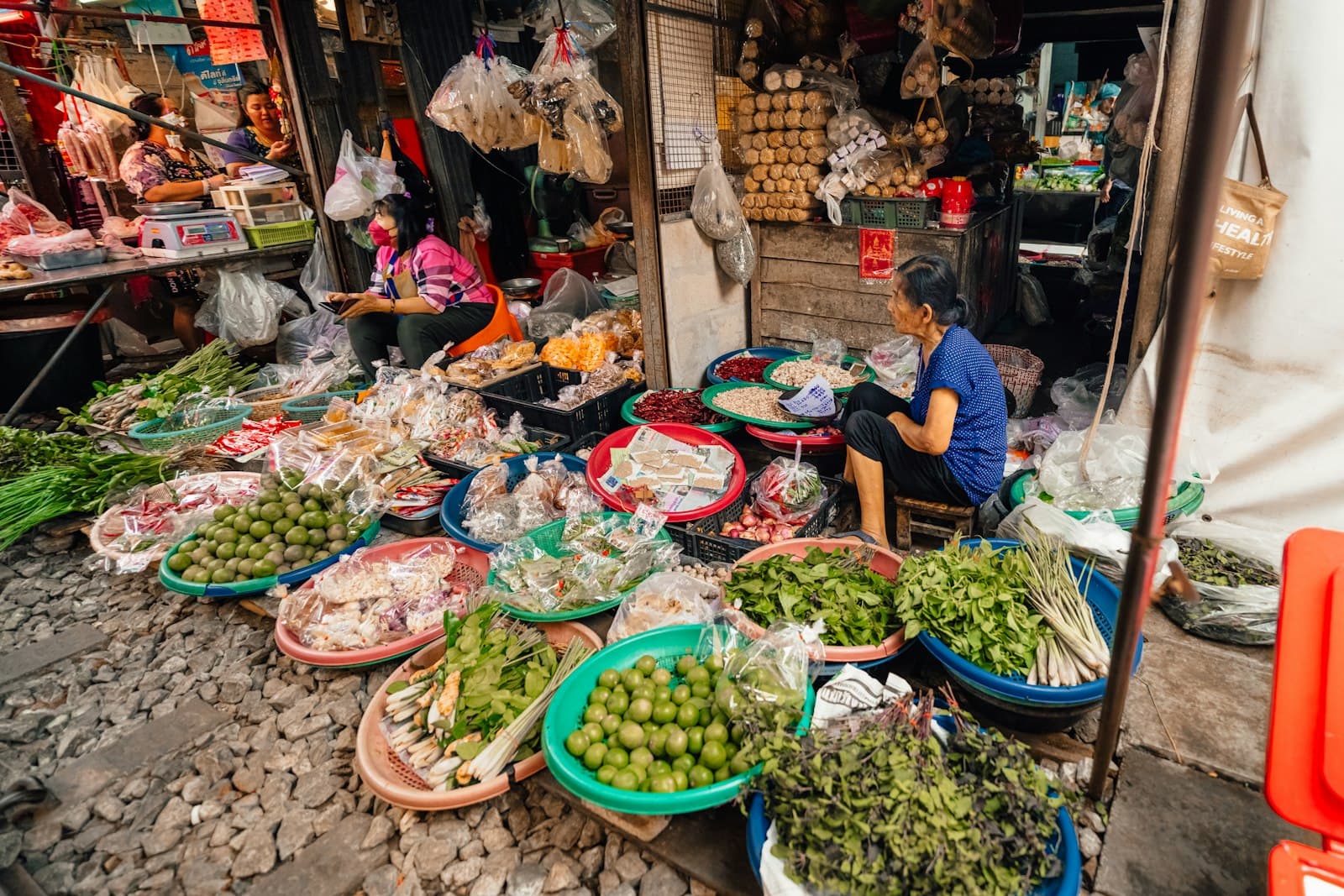
Eat it as a snack with a ball of sticky rice, or as one plate in a larger spread. You can buy it by weight, sold in coils, at market stalls all over the city. At Warorot Market, on the Wat Gate tour route, the Dam Rong stall in the middle of the food hall is a well-known place to buy sai ua and moo tod (fried pork), usually with a crowd around it. Warorot runs roughly from early morning to early evening, with a night market building up outside from late afternoon, so it works for both a daytime provisioning stop and an evening snack.
The chili dips: nam prik ong and nam prik num
Northern Thai eating is built around nam prik, chili dips served with sticky rice and a pile of raw or steamed vegetables. Two are essential in Chiang Mai.
Nam prik ong is a soft, savory dip of minced pork, dried chilies, cherry tomatoes, shrimp paste, and herbs, cooked down until it is almost a loose relish. It is mild by Thai standards and reads a little like a chunky, spiced tomato-pork paste. Nam prik num is its green counterpart: roasted green chilies pounded with garlic and shallot into a smoky, punchy dip. Both come with sticky rice, blanched vegetables, and often pork crackling for scooping.
How to eat them: pinch off a small ball of sticky rice with your fingers, flatten it, and use it or a vegetable spear to scoop the dip. These are sharing dishes, meant to sit in the middle of the table.
Gaeng hang lay, the curry that remembers Burma
Gaeng hang lay (also spelled gaeng hung lay) is a rich, slow-cooked pork belly curry, and it is the clearest edible record of Chiang Mai's Burmese chapter. The name comes from Burmese: "hang lay" derives from a Burmese term for a heavy curry, and the dish uses dried spices, ginger, garlic, and shallots in a way that reflects Burmese and Indian cooking more than typical northern Thai curries. It originated in Myanmar and settled into Lanna kitchens through the region's long period of Burmese contact and rule. Many Chiang Mai menus simply label it "Burmese curry."
Unlike most northern dishes, gaeng hang lay is eaten with long-grain steamed rice rather than sticky rice. It is not fiery, it is deep and slightly sweet-sour, and it is a good choice if you want a northern curry without a wall of chili heat.
Khanom jeen nam ngiao and the rest of the table
Khanom jeen nam ngiao is a northern noodle soup you will not find much of outside the region: rice noodles (khanom jeen) in a tomato-based broth with pork and diced pork blood cake, finished with a distinctive floral note from dried ngiao (red cotton tree) flowers. It comes with a raft of garnishes: fried garlic, fried dried chili, bean sprouts, cilantro, spring onion, pork crackling, lime, and pickled cabbage. Build your bowl from the condiment tray rather than eating it plain.
Two more to know. Khao kha moo is stewed pork leg over rice, tender and glossy with a soy-braised sauce, most famously sold at the Chang Phueak (North Gate) night market by a vendor known as the Cowboy Hat Lady; that market runs daily from about 5:00 pm to midnight. And for a formal introduction to the whole northern repertoire in one sitting, a khantoke dinner serves a spread of Lanna dishes on a round pedestal tray (the khantoke is the tray) while you sit on the floor, often with traditional dance. It is a staged cultural experience rather than everyday eating, but it is an efficient tasting menu of the region.
Where to eat it, and how to eat safely
The most rewarding way to eat in Chiang Mai is to walk the markets and neighborhoods that produce these dishes rather than chasing a single famous restaurant. Three of them line up with self-guided routes:
The old walled city is thick with khao soi shops and daytime rice-and-curry (khao rad gaeng) stalls between the temples. The Wualai neighborhood south of Chiang Mai Gate, the silversmiths' quarter, hosts the Wualai Saturday walking street, where stalls set up in the late afternoon and peak between roughly 6:30 and 9:00 pm with sai ua, moo ping (grilled pork skewers on lemongrass), kanom krok (coconut pancakes), and mango sticky rice. Most walking-street plates run in the 30 to 80 baht range. The cross-river Wat Gate side gives you Warorot Market and the Ban Ho Mosque block for khao soi and Yunnanese food.
On safety: Chiang Mai street food is generally safe, and the usual rule serves you well. Eat where locals are lining up, which signals both turnover and freshness, and favor food cooked hot to order. Prices are small; most single dishes and snacks fall between about 30 and 80 baht, so you can graze widely for very little. Carry small cash, because most stalls do not take cards. The one seasonal caveat is air, not food: the dry-season burning months (roughly February to April) bring haze, and evening markets are more pleasant outside that window.
For the full picture of routes, timing, and how the food maps onto the city's neighborhoods, start with Chiang Mai walking tours and then pick the route whose flavors you want most.
Sources
Frequently asked questions
- What food is Chiang Mai most famous for?
- Chiang Mai is most famous for khao soi, a coconut curry noodle soup topped with crisp fried noodles and served with chicken or beef. Other defining northern dishes include sai ua (herb pork sausage), gaeng hang lay (a Burmese-influenced pork curry), the chili dips nam prik ong and nam prik num, and khanom jeen nam ngiao (a tomato rice-noodle soup). These are northern Lanna dishes, distinct from the central Thai food most travelers know.
- Where did khao soi come from?
- Khao soi most likely arrived in northern Thailand in the nineteenth century with the Chin Haw, Thai-Chinese Muslim traders from Yunnan province in China who moved goods by caravan through Shan State in Myanmar, Laos, and northern Thailand. Because of its Muslim roots the dish was originally halal, which is why it is most commonly served with chicken or beef rather than pork. Its flavor carries Burmese and Yunnanese layers under the Thai coconut curry.
- Is street food in Chiang Mai safe to eat?
- Chiang Mai street food is generally safe when you use common sense. Eat where locals are lining up, which signals high turnover and freshness, and favor food cooked hot to order in front of you. Most single dishes and snacks cost roughly 30 to 80 baht, and most stalls take cash only, so carry small notes.
- How do I order khao soi like a local?
- Ask for khao soi gai for chicken or khao soi neua for beef. Squeeze in the lime, stir a spoon of the accompanying chili paste into the broth rather than adding it all at once, and mix in the pickled mustard greens to cut the coconut richness. It is usually eaten as a single-bowl lunch.
- What is the difference between nam prik ong and nam prik num?
- Both are northern Thai chili dips served with sticky rice and vegetables. Nam prik ong is a savory pork-and-tomato dip with dried chilies and shrimp paste, mild and almost relish-like. Nam prik num is a smoky green dip made from roasted green chilies pounded with garlic and shallot. You scoop them with a pinch of sticky rice or a vegetable spear.
- Where should I go to eat northern Thai food in Chiang Mai?
- The old walled city is dense with khao soi shops and daytime rice-and-curry stalls. Warorot Market and the Ban Ho Mosque block across the Ping River are strong for sai ua and Yunnanese-style khao soi. The Wualai Saturday walking street south of Chiang Mai Gate is best for grilled snacks, sai ua, and sweets, peaking between about 6:30 and 9:00 pm.
Ready to experience it?
Old City: The Moated Square
95 min · 3.5 km · moderate
More from Chiang Mai
Explore more at your own pace.

Chiang Mai Travel Guide: Days, Getting Around, Best Time, Safety, and Budget
Chiang Mai: Reading the Lanna Capital in Three Layers
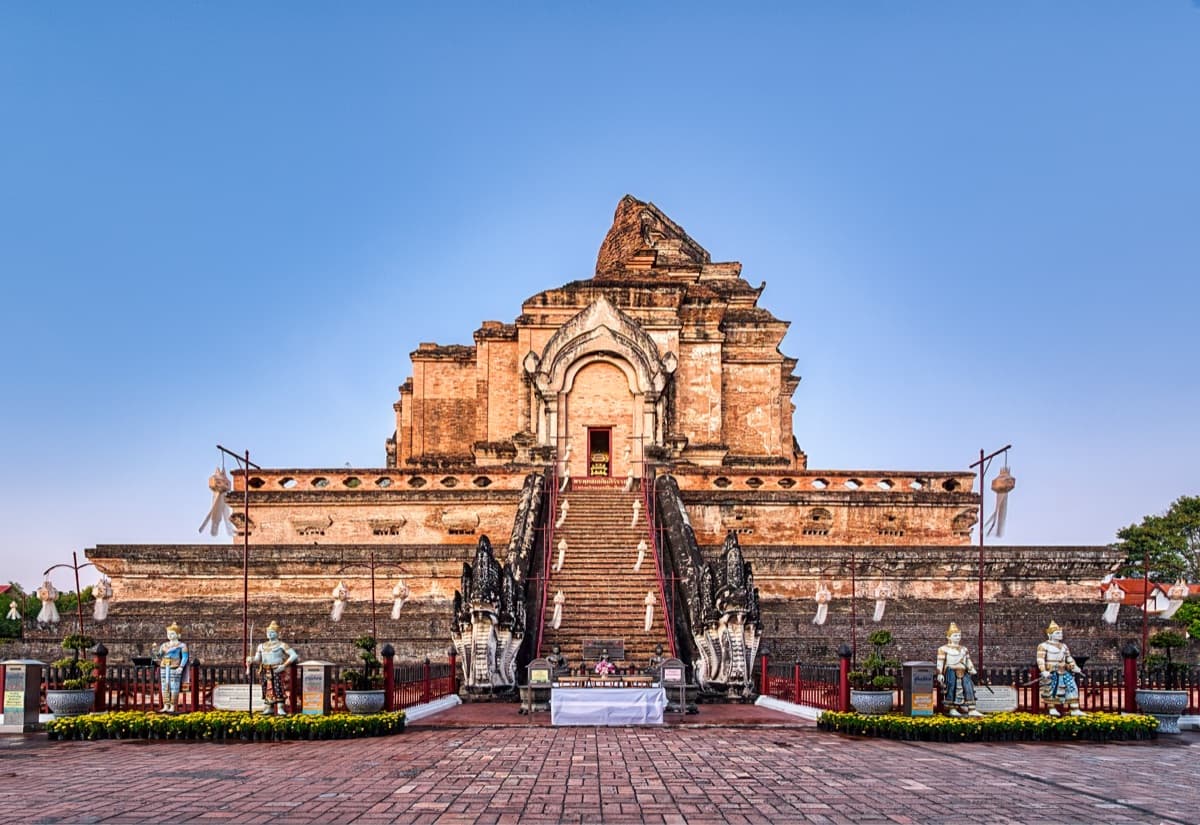
Wat Chedi Luang: The Broken Giant at the Center of Chiang Mai's Moated Square
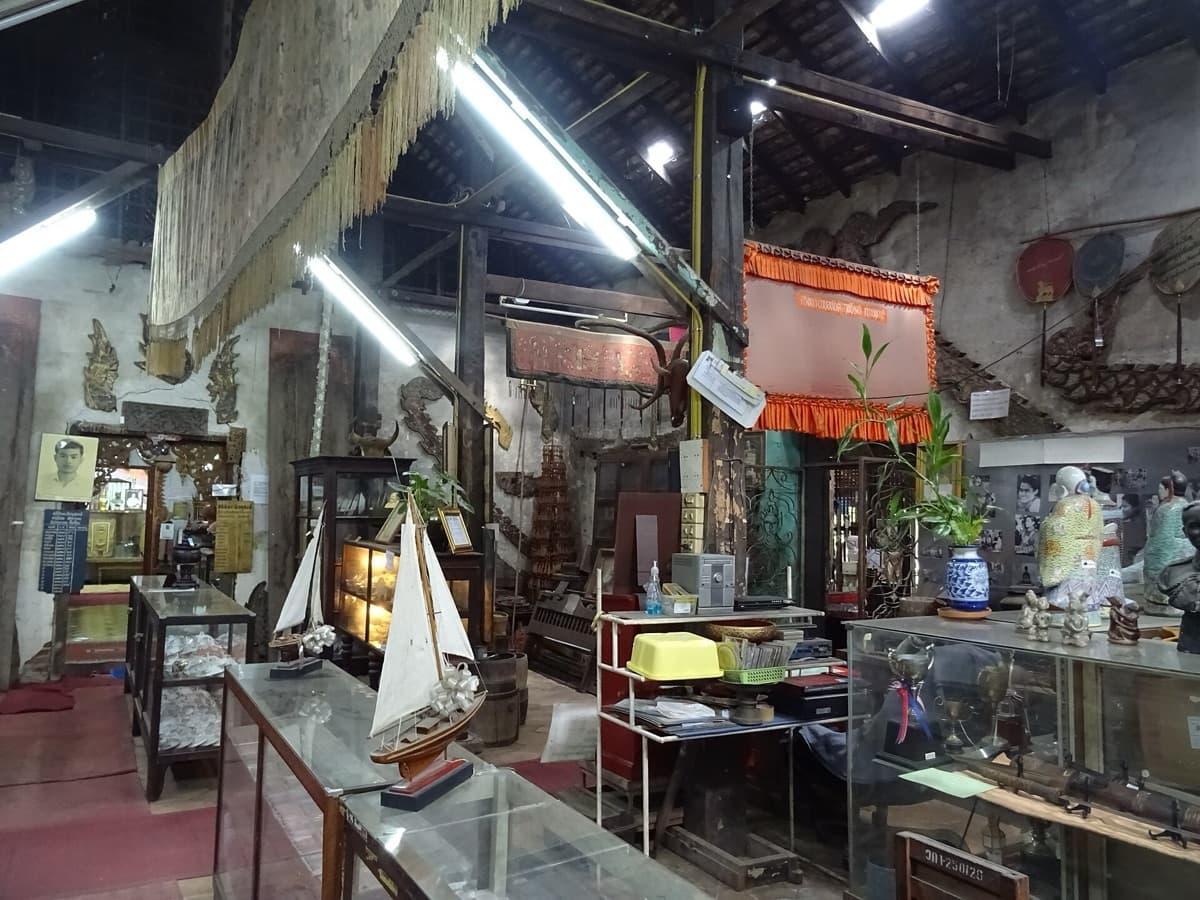
Wat Ket Karam and the Chiang Mai the Teak Boom Built Across the River
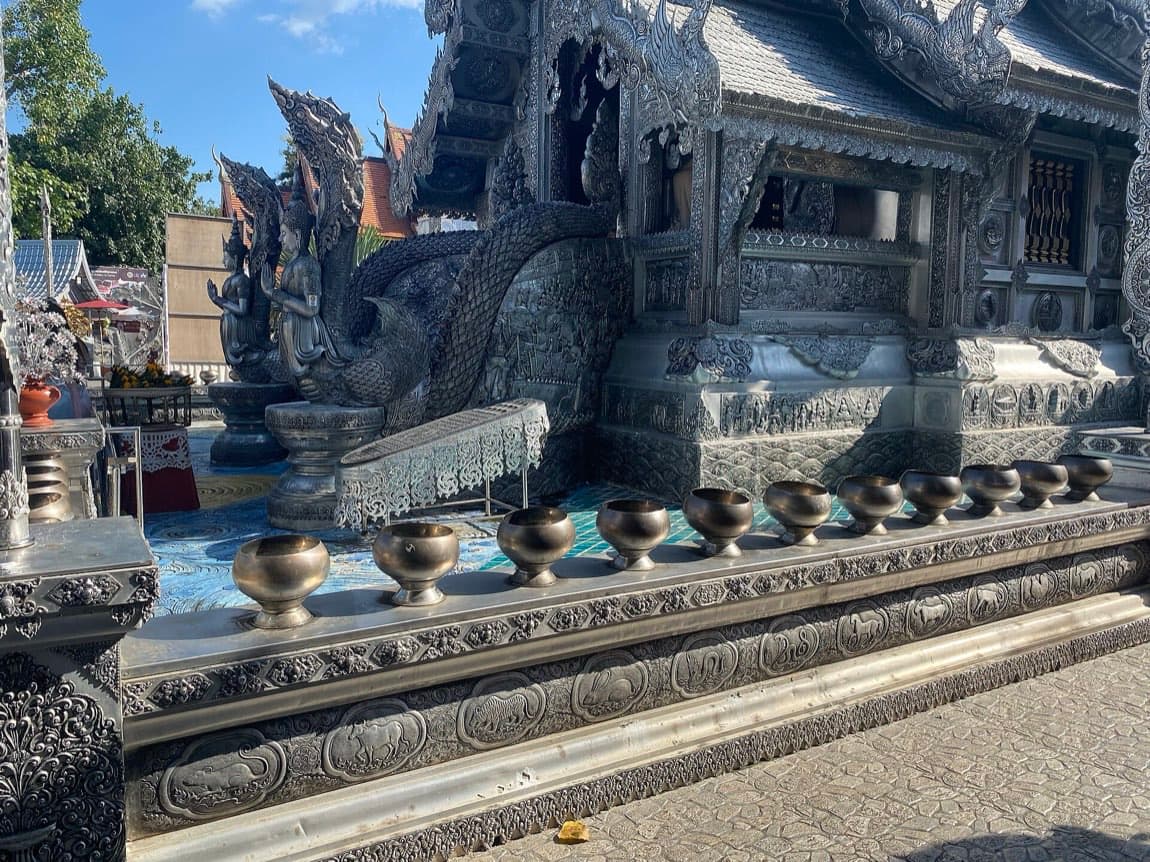
Wat Sri Suphan and the Silver Road of Wualai