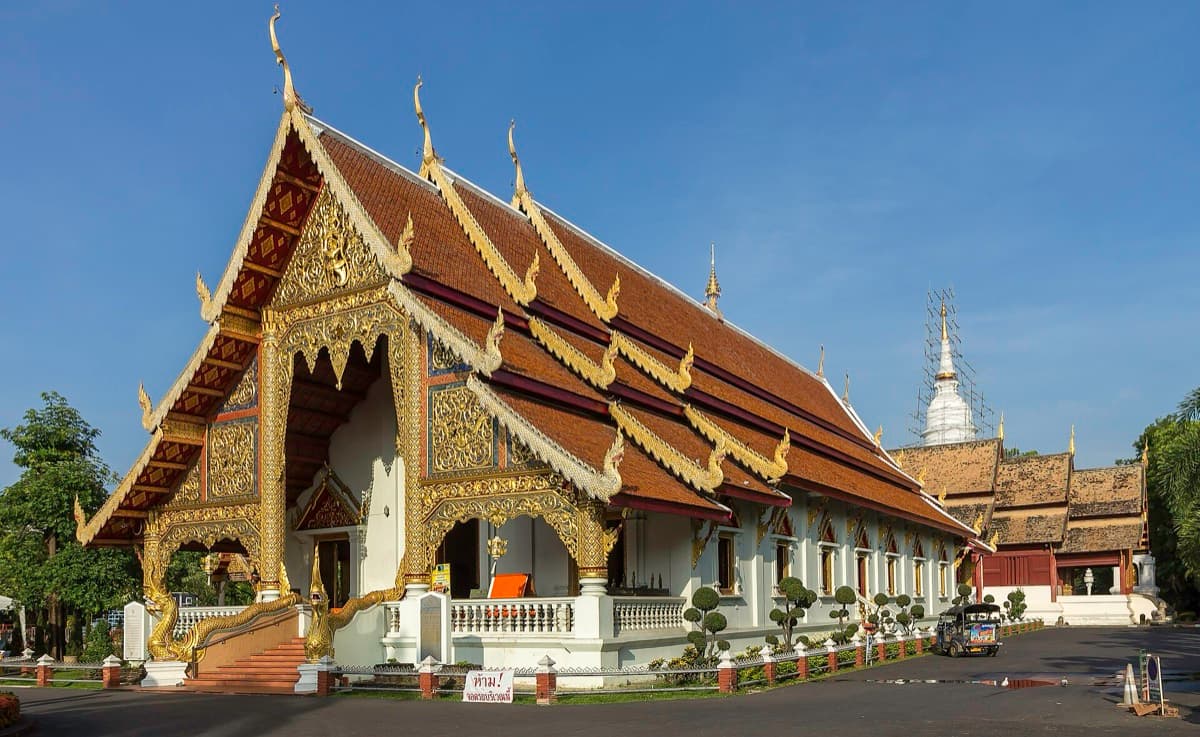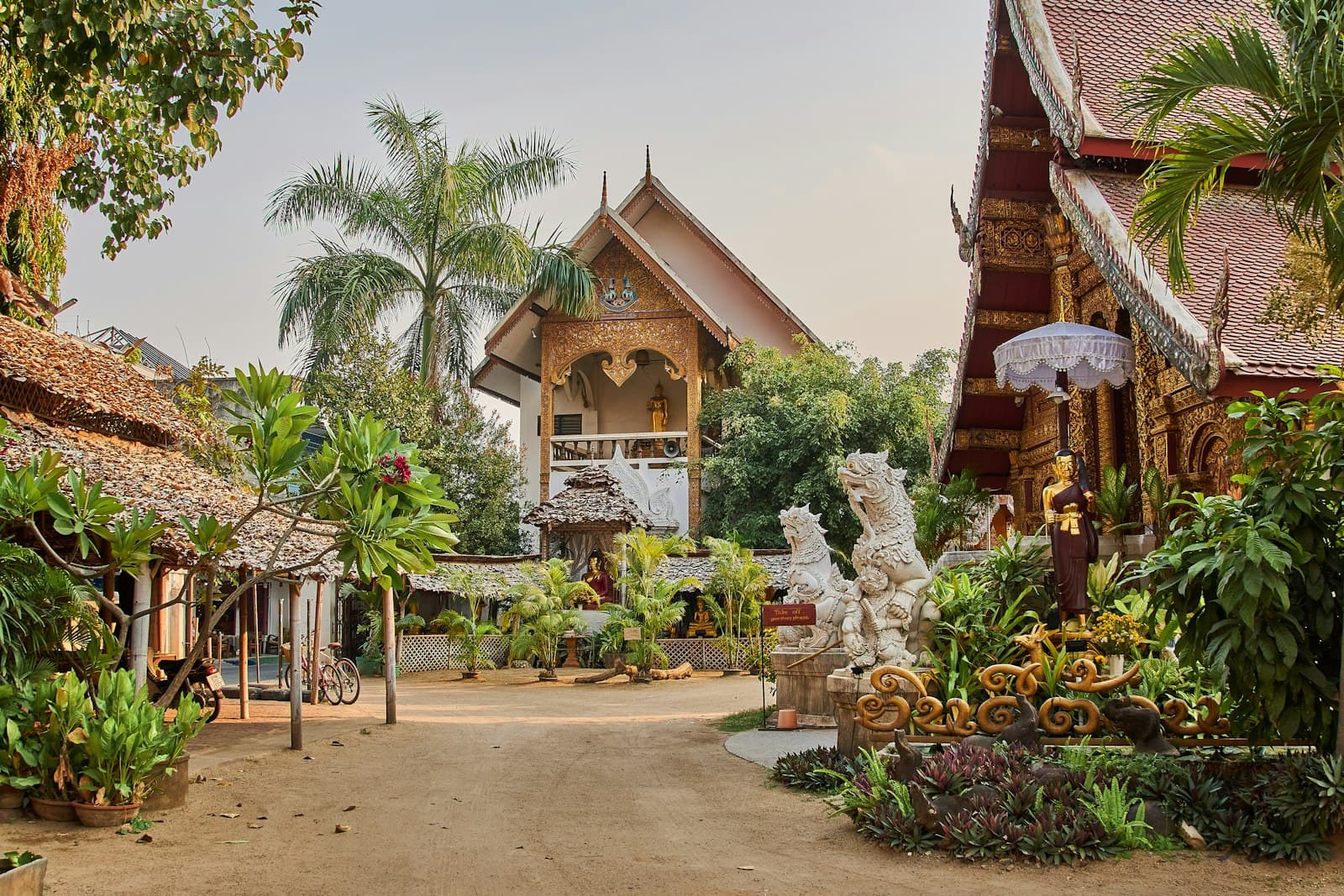
Old City: The Moated Square
95 min · 3.5 km · moderate
Plan Chiang Mai around two decisions: when you come (the air, not just the weather) and whether you walk the Old City or ride to it. Get those right and the rest of the trip falls into place. This northern Thai city sits inside a square moat barely more than a mile on each side, which means the temples, gates, and markets most people fly in for are close enough to see on foot in a couple of unhurried days. What follows is a practical planning guide: how many days, how to get around, the best months, an honest word on safety, and what a day actually costs. When you are ready to walk it, our Chiang Mai walking tours narrate the streets stop by stop, and you can browse everything from the Chiang Mai city page.
How many days do you need?
Three full days is the honest floor for Chiang Mai, and most travelers end up wishing they had booked more. The walled Old City alone rewards a full day on foot: Tha Phae Gate, Wat Chiang Man, the Three Kings Monument, and the enormous ruined chedi at Wat Chedi Luang all sit within a fifteen-minute walk of one another. A second day handles the east bank of the Ping River, the old trading quarter around Warorot Market and Wat Ket, where Chinese, Muslim, and missionary Chiang Mai grew up outside the walls. A third day covers the silver street of Wualai to the south and gives you room for a cooking class, a cafe morning, or a half-day trip up to Doi Suthep.
If your dates line up with a weekend, add time on purpose. The Sunday Walking Street fills Ratchadamnoen Road inside the Old City, and the Saturday Walking Street runs down Wualai Road just south of the moat. Catching at least one of the two is worth planning your arrival around.
How to get around
Hear a stop from this walk
Three Kings Monument: the founding legend in bronze
Chiang Mai has no metro and no meter culture, so you mix three modes. The workhorse is the songthaew, the shared red pickup truck (locals call them rot daeng). You flag one down, tell the driver your destination, and pay in cash when you get off. Short hops around the Old City run about 30 baht per person; longer runs across town cost more. There is no route map because there are no fixed routes, which is part of the charm and part of the friction.
For anything cross-city or after dark, use a ride-hailing app. Grab and Bolt both work well in Chiang Mai and show the fare before you accept, which sidesteps the whole negotiation. Tuk-tuks are fun but quote tourist prices and do not use meters, so treat them as a novelty rather than your default. Many visitors rent a scooter for freedom and low cost, but Chiang Mai traffic and the region's accident rate are real, so only ride if you are already confident and always wear the helmet.
The best news for a walking trip: inside the moat you rarely need a vehicle at all. The Old City is flat, compact, and made for wandering, which is exactly why our audio tours start there.
Best time to visit
Come between November and January if you can. Those months bring Chiang Mai's cool, dry, clear-sky season, with comfortable daytime temperatures and the Yi Peng lantern festival falling in November. This is peak season for a reason, and it is the window that makes long temple walks pleasant rather than punishing.
The season to know about is burning season, roughly February through April, when agricultural fires across northern Thailand and neighboring countries fill the basin with smoke. The city sits in a bowl ringed by mountains, so the haze settles and lingers. Late February through March is usually the worst of it, and in bad years Chiang Mai's air quality ranks among the poorest of any city in the world on the Air Quality Index, with daytime highs also climbing into the high thirties Celsius. If you must travel then, pack an N95 or KN95 mask (pharmacies sell them cheaply on the ground) and book a room with air conditioning and, ideally, a purifier. The green, rainy season runs roughly June through October, with warm afternoon downpours that clear quickly and far fewer crowds.
Is Chiang Mai safe?
Chiang Mai is one of the calmer cities you can choose in the region, and violent crime involving visitors is rare. Solo travelers, including solo women, routinely report feeling comfortable walking the Old City, Nimman, and the cafe districts at night. That is the honest headline, and it holds up across recent traveler reports.
The real risks are ordinary, not dramatic. Scooter and motorbike accidents are the single biggest hazard to tourists, so ride cautiously or not at all. Watch for petty theft in crowded markets, cover the keypad at ATMs (card skimming has crept up across Thailand), and expect the occasional tuk-tuk or taxi driver to overcharge or steer you toward a shop that pays them a commission. Name your destination clearly before you get in, and crossing streets deserves genuine attention, because traffic lights are sparse and drivers do not always yield. None of this should keep you away. It just means the same street sense you would use anywhere.
What a day costs
Chiang Mai is one of the best-value cities in Southeast Asia, which is a large part of why people linger. A budget traveler can move comfortably on roughly 700 to 1,200 baht a day, on the order of 20 to 35 US dollars, covering a clean air-conditioned hostel dorm, three street meals, local transport, and small entry fees. A bowl of khao soi, the northern curry noodle dish the city is known for, costs a fraction of a coffee back home. Temple entries, where they exist, are small: Wat Chedi Luang charges about 40 baht for foreign visitors, and it is open daily from early morning into the evening. Many temples, including Wat Phra Singh's grounds, are free to enter, with a modest fee only for the main assembly hall and a donation always welcome. Mid-range travelers spend more on private rooms and sit-down restaurants, but the floor stays remarkably low.
Where the walking tours fit
Because the Old City is so walkable and so layered, Chiang Mai is close to ideal for self-guided audio. Roamer covers the city in three routes you take at your own pace, with no group, no schedule, and short stops you can skip. The Old City tour reads the moated square as a deliberate royal plan of a vanished Lanna capital, linking Tha Phae Gate, Wat Chiang Man, the Three Kings Monument, Wat Chedi Luang, and Wat Phra Singh. The Wat Gate tour crosses the Ping River to the trading world that outsiders built, from Warorot Market to Ban Ho Mosque to the First Church of Chiang Mai. The Wualai tour follows the silver street south, ending at the Saturday night walking street. Start from the Chiang Mai city page, or read more routes on the Chiang Mai walking tours hub.
Sources
- Chiang Mai Transport Guide 2026: Songthaews, Grab & Travel Tips (Trip.com)
- Chiang Mai Burning Season 2026: Dates, Air Quality & What to Do (cnxlocal)
- Is Chiang Mai Safe? What You Need to Know Before You Go in 2026 (Thailand Starter Kit)
- Wat Chedi Luang Entrance Fee & Opening Hours (Chiang Mai Travel Hub)
- Chiang Mai Budget Travel: 5-Day Plan for $20 to $35/Day (Byklo)
Frequently asked questions
- How many days do you need in Chiang Mai?
- Plan for at least three full days. One day covers the walled Old City on foot, a second handles the east bank of the Ping River around Warorot Market and Wat Ket, and a third covers the Wualai silver quarter plus a half-day trip such as Doi Suthep. Many travelers extend their stay well beyond their first plan because the city is easy to settle into.
- What is the best time of year to visit Chiang Mai?
- November through January is the cool, dry, clear-sky season and the most comfortable time to walk the city, with the Yi Peng lantern festival falling in November. Avoid burning season, roughly February through April, when agricultural fires fill the mountain basin with smoke and air quality can rank among the worst of any city in the world, worst in late February and March.
- How do you get around Chiang Mai?
- The main options are songthaews (shared red pickup trucks, about 30 baht for short Old City hops, paid in cash), ride-hailing apps like Grab and Bolt that show the fare in advance, and tuk-tuks that quote higher tourist prices without meters. Inside the moat the Old City is flat and compact enough to explore on foot, so you often need no vehicle at all.
- Is Chiang Mai safe for tourists and solo travelers?
- Yes. Chiang Mai is one of the calmer cities in the region, violent crime involving visitors is rare, and solo travelers including women commonly report feeling comfortable walking at night. The real risks are ordinary: scooter accidents are the biggest hazard, plus petty theft in crowds, occasional overcharging by drivers, and ATM skimming, so use normal street sense.
- How much does a day in Chiang Mai cost?
- A budget traveler can move comfortably on roughly 700 to 1,200 baht a day, about 20 to 35 US dollars, covering an air-conditioned hostel dorm, three street meals, local transport, and small entry fees. Temple entries are modest where they exist, with Wat Chedi Luang around 40 baht for foreigners and many temple grounds free to enter.
- Do you need to pay to enter Chiang Mai's temples?
- Some charge a small fee and many are free. Wat Chedi Luang costs about 40 baht for foreign visitors and is open daily from early morning into the evening. Wat Phra Singh's grounds are free to enter, with only a modest fee for the main assembly hall, and a donation is always welcome. Dress modestly, covering shoulders and knees, at any temple.
Ready to experience it?
Old City: The Moated Square
95 min · 3.5 km · moderate
More from Chiang Mai
Explore more at your own pace.
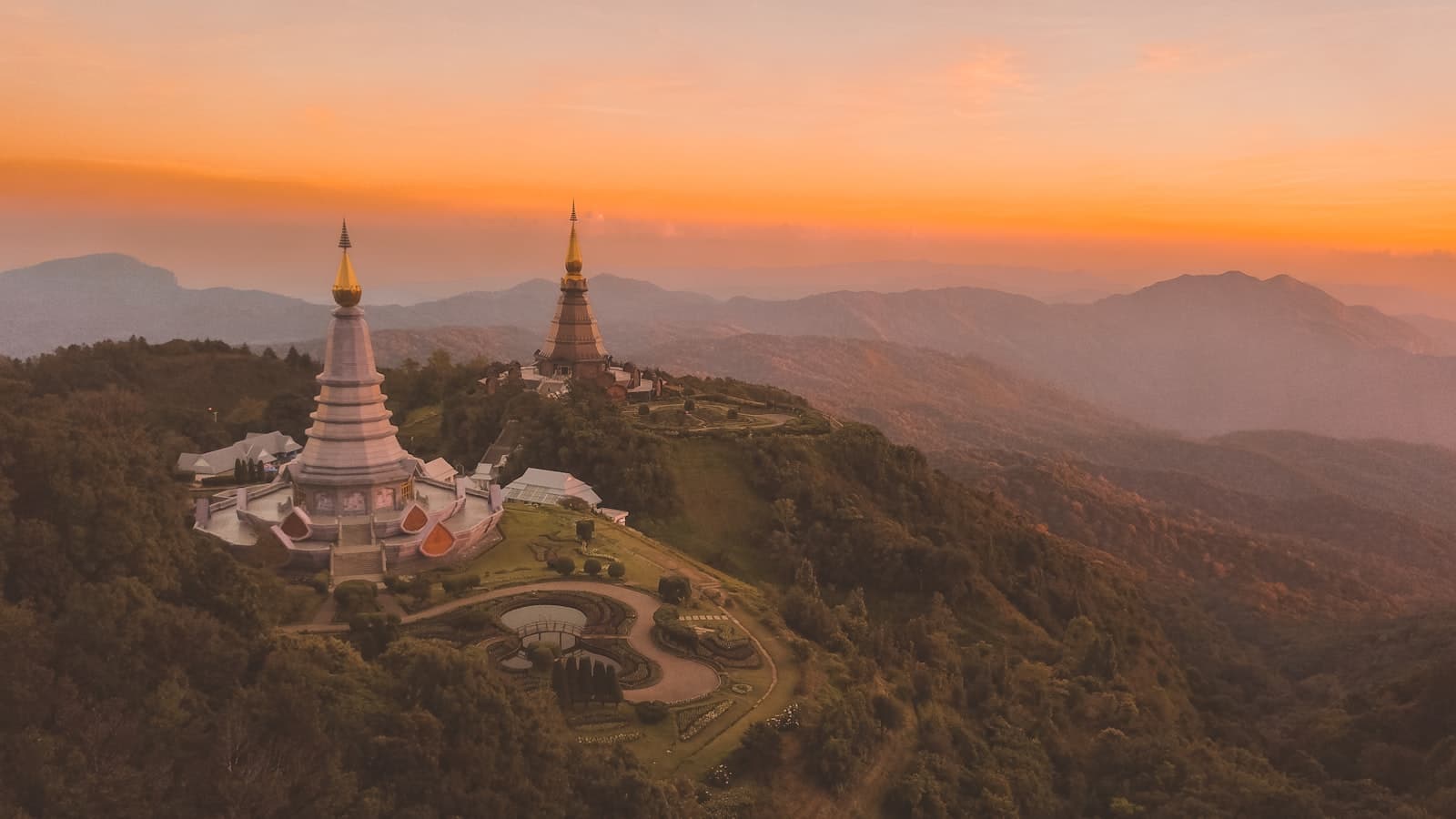
One Day in Chiang Mai: A Walkable Morning-to-Evening Itinerary
Chiang Mai: Reading the Lanna Capital in Three Layers
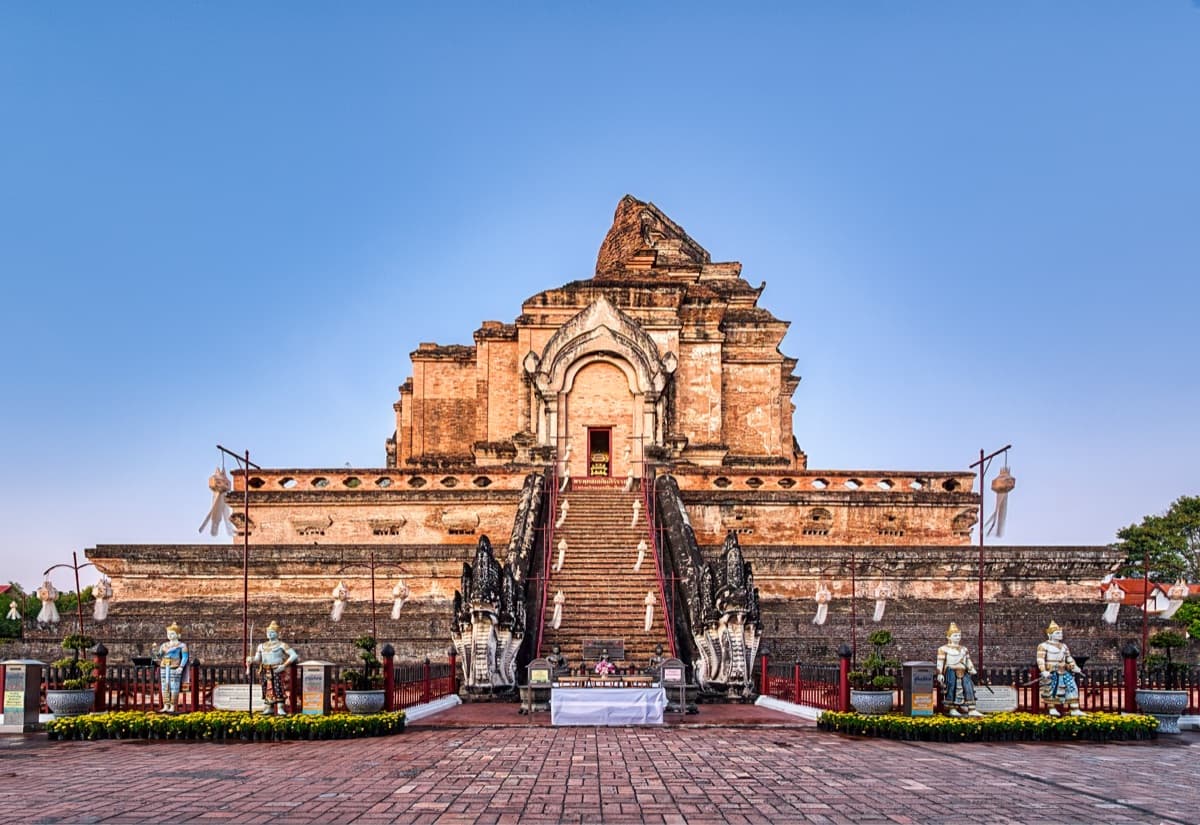
Wat Chedi Luang: The Broken Giant at the Center of Chiang Mai's Moated Square
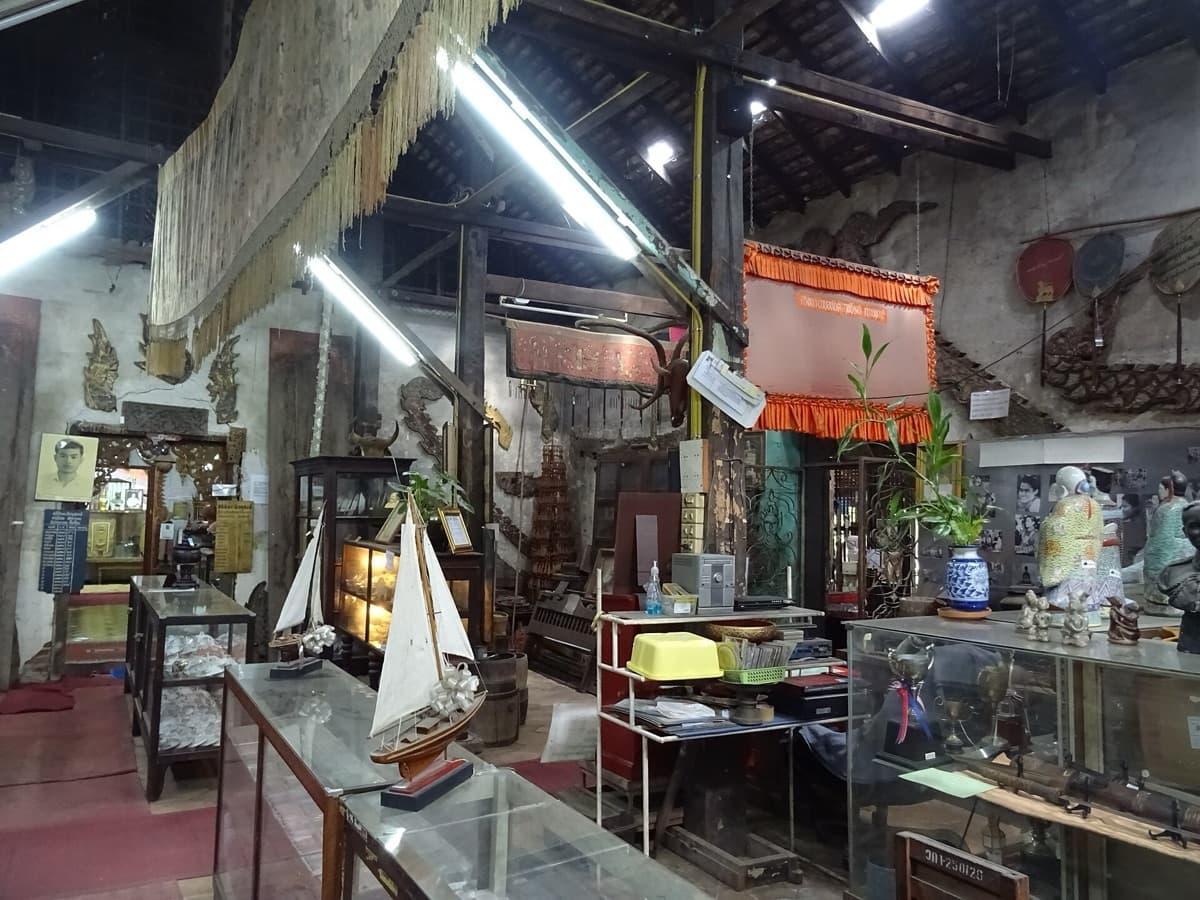
Wat Ket Karam and the Chiang Mai the Teak Boom Built Across the River
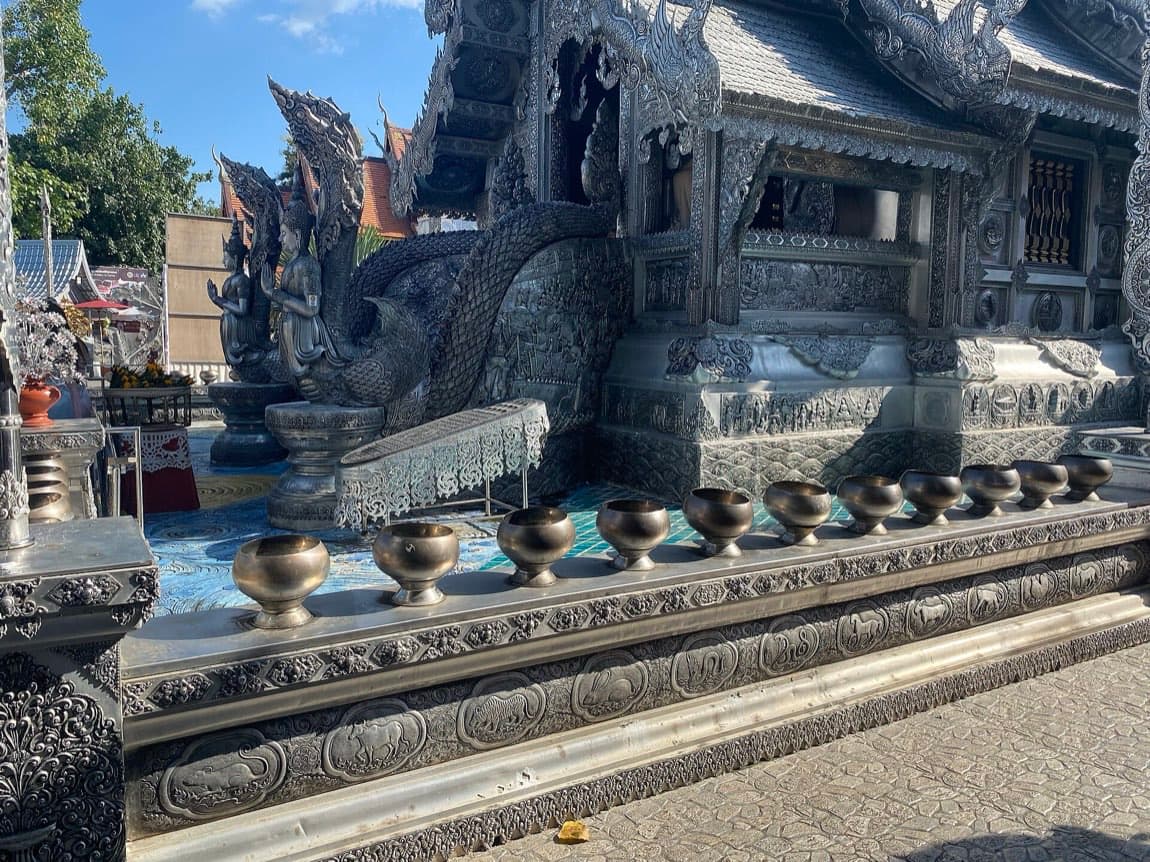
Wat Sri Suphan and the Silver Road of Wualai