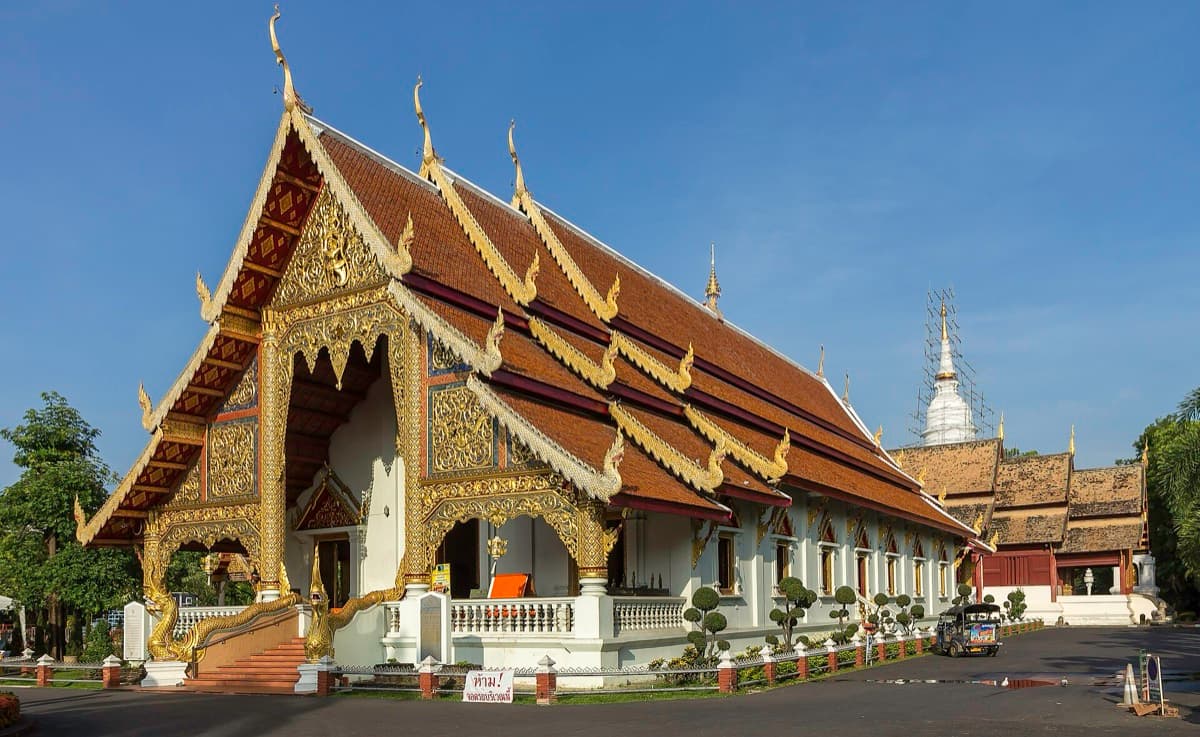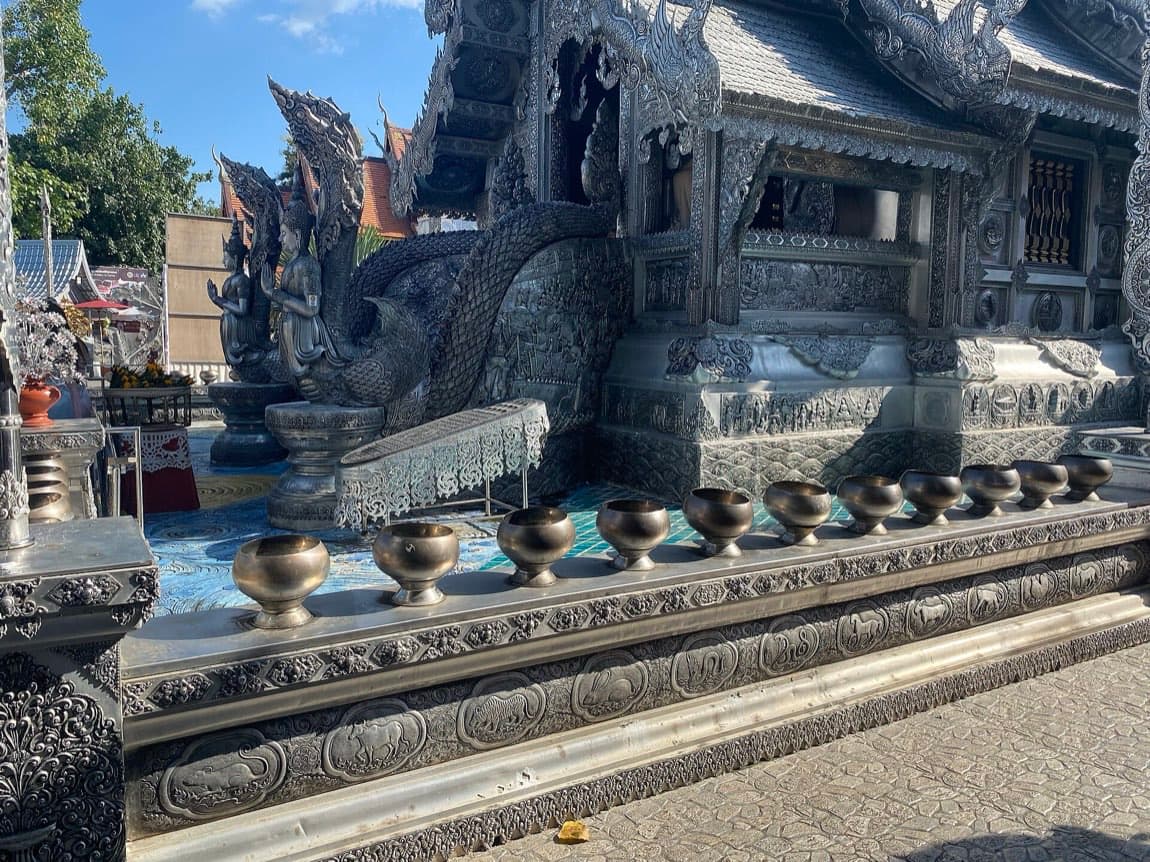
Wat Sri Suphan, the Silver Temple, is the reason many travelers ever turn south off Chiang Mai's moat and onto Wualai Road at all. The pull is a single building: an ordination hall sheathed almost entirely in hammered metal, worked by artisans from the surrounding neighborhood in the same craft their families have practiced for more than two hundred years. But the silver hall is not the beginning of the story. It is the culmination of one. To understand why an entire building gleams here, you have to understand how a resettled trade became a road's whole identity, and the anchor temple is the best place to start reading it.
A building made of the neighborhood's hands
Stand back from the hall, called the ubosot, and let the light travel across it. According to Wikipedia, the panels combine silver, nickel, and aluminium, all covered in repousse relief. Repousse is the technique the whole quarter is built on: an artisan coats a sheet of metal in resin to hold it steady, then hammers and punches it from the reverse, raising a design out of the flat surface. You have likely seen it done on a bowl or a small panel. Here it clads a building. Travel sources credit the modern silver hall to a renovation led by the abbot Phrakru Pitak Sutthikhun, who set the project in motion in the nineteen nineties; work on the silver ordination hall itself ran from around two thousand and four until it was completed roughly a decade later. The temple beneath that skin is far older, founded around fifteen hundred during the reign of King Mueang Kaeo of the Mangrai dynasty.
What makes the hall worth a slow look is not just its shine. It is that every panel is the same craft, by the same community, scaled up. The people who covered this building live and work a few doors away. That is the whole argument of the road, expressed in one structure.
The sharpest rule on the walk
Hear a stop from this walk
Wat Sri Suphan: The Silver Temple
The Silver Temple also carries the tour's most difficult moment, and it is fair to name it before you go. Women are barred from entering the ordination hall. Wikipedia states it plainly, and a sign at the temple explains the reason: a local Lanna belief that protective relics and consecrated spells set into the original foundation would lose their power in a woman's presence. It is worth being clear that this is a regional folk belief, not a rule of Buddhism itself. Women enter ordination halls freely at temples elsewhere in Thailand.
So the hall holds two truths at once. It is the community's proudest collective work, and it is closed to half of that community at its own threshold. Whoever you are, you can take in the exterior in full: the panels, the relief, the sheen. The building tells its own complicated story, and you do not have to go inside to hear it. If you are planning a route through the city's temples, this one asks you to look with your eyes open. You can browse the wider set of Chiang Mai walking tours to see how it sits alongside the old city and the riverside quarters.
Why the silver is here at all
Walk the anchor temple back to its source and you reach an uncomfortable origin. Late in the seventeen hundreds, Chiang Mai had been largely emptied under Burmese pressure, abandoned for roughly twenty years. King Kawila, who formally became King of Chiang Mai in eighteen oh two, rebuilt it not by inviting people back but by resettling whole communities from surrounding regions. This was forced relocation, not a voluntary migration. Local temple histories record that in seventeen ninety-nine he brought people from a place called Ban Nguai Lai, west of the Salween River, in what is now Shan territory. Among them were skilled silversmiths, and the neighborhood took its name, Wua Lai, from their place of origin rather than from anything they made.
Hold both truths together as you walk. The beauty all around Wualai Road grew from people who were brought here against their will, and what they built over two centuries became one of Chiang Mai's proudest living crafts. The silver hall you just studied is the most concentrated expression of that paradox.
Reading the whole road through one temple
The Silver Temple works best as the fourth of six stops, not the first, because the road builds an argument you can only feel by walking it. You begin at Chiang Mai Gate, the opening at the center of the old city's southern wall, where the founded-in-twelve-ninety-six royal city ends and the silversmith road begins. From there the quieter temple, Wat Muen San, gives you the community's roots. First recorded in palm-leaf manuscripts in fourteen thirty-eight, it was restored by the resettled silversmiths after seventeen ninety-nine and became their center. Its own silver pavilion, the Suttajitto Gallery, took Wualai artisans eight years to build and decorate, from two thousand and two to two thousand and ten. The same compound served as a field hospital for the Imperial Japanese army during the Second World War, one more layer sitting quietly on old ground.
Only after those roots does the grand silver hall land the way it should. And the road keeps going past it. Beyond the temples, the working stretch of Wualai is where the craft stays alive: families still coat metal in resin and hammer relief by hand, floral patterns and scenes from the life of the Buddha and the salung, the traditional ceremonial vessel that is the craft's signature form. If you listen, you can catch the steady tap of a punch finding the same line again and again. The heritage here is the whole street, not any one famous shop, because the knowledge lives in dozens of hands at once.
The road closes its argument on Saturday evening, when the entire length of Wualai turns into a walking street. Stalls typically open around five in the afternoon and run until about ten at night, thickest in the early-evening hours, and some of those stalls are silversmiths working repousse out in the open. The silver road has three faces, and the walk lets you see all of them: silver made sacred and permanent in the temples, silver made by hand and out of sight in the workshops, and silver made public on the street once a week.
That is why the anchor temple is only a doorway. Walk the full line down the quarter and the Silver Temple stops being a photo stop and becomes the middle chapter of a two-century story about a craft, a coercion, and a neighborhood that turned both into its name. When you are ready to walk it in order, start at the gate and follow the road south. Everything you need to plan the day sits on the Chiang Mai city page.
Sources
- Wat Sri Suphan, Wikipedia. Confirms the silver, nickel, and aluminium repousse ordination hall and the rule barring women from entering it.
- Bon Voyage Thailand, Wat Sri Suphan travel guide. Background on the modern silver hall renovation and the abbot who led it.
- Chiang Mai a La Carte, Wat Muen San. Detail on the older silver temple, its Suttajitto Gallery, and its wartime use.
- Grabowsky, "Forced Resettlement Campaigns in Northern Thailand," Journal of the Siam Society. Academic grounding for King Kawila's resettlement policy behind the Wualai community.
- Chiang Mai City Life, Wua Lai Walking Street. Hours and character of the Saturday night market that closes the road.
Ready to experience it?
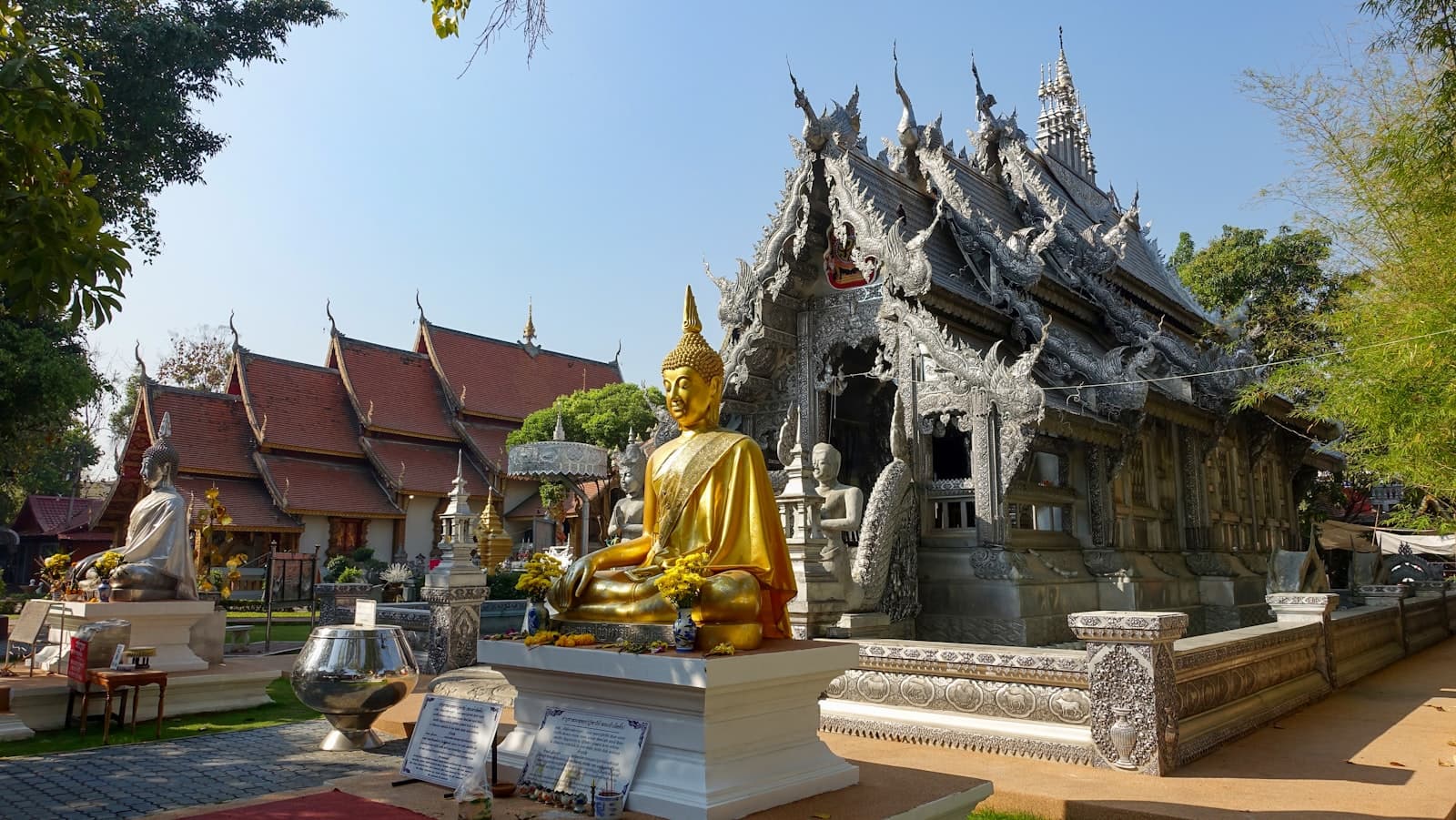
Wualai Road: The Silver Road
75 min · 1.5 km · easy
More from Chiang Mai
Explore more at your own pace.
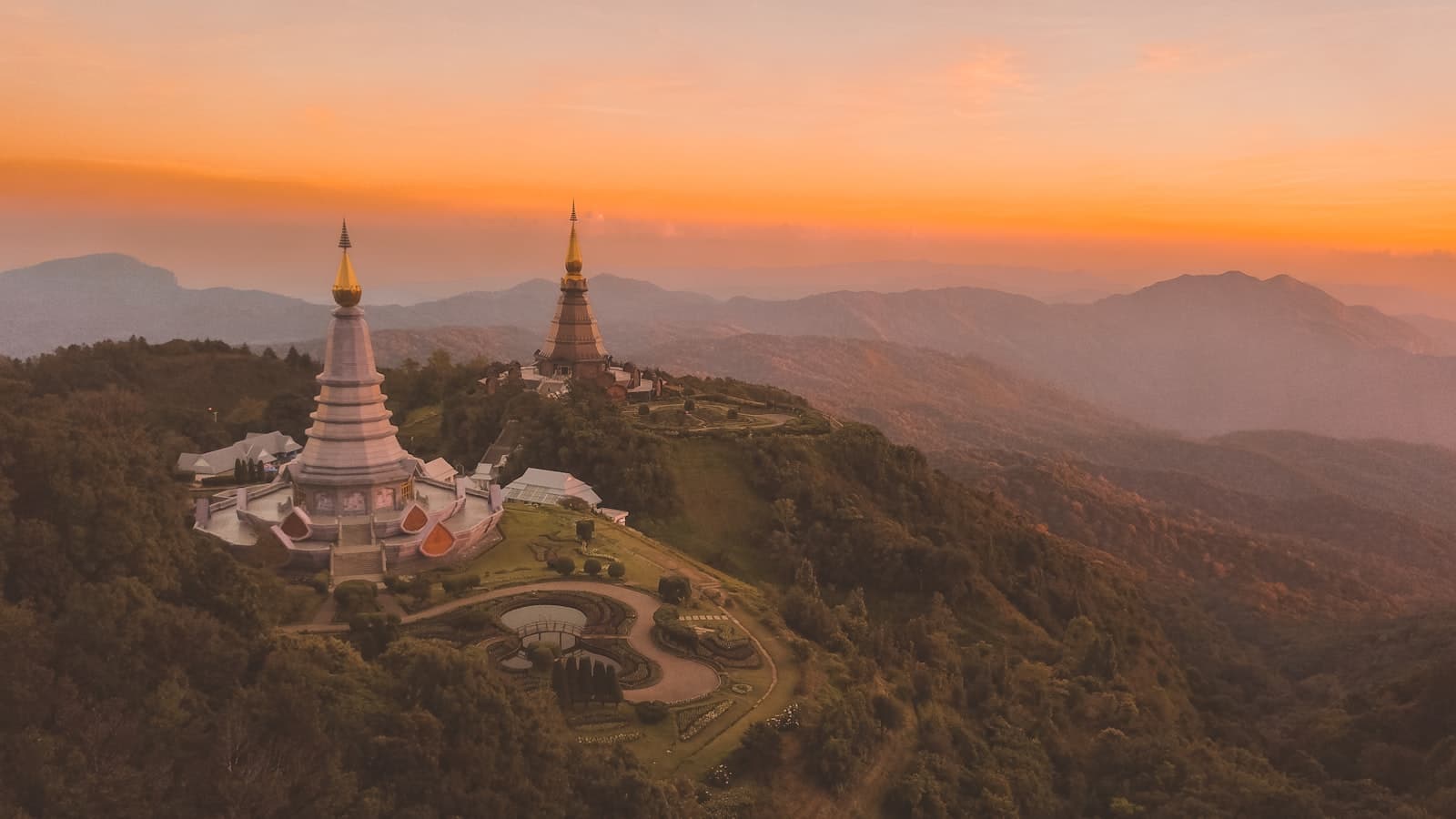
Chiang Mai Travel Guide: Days, Getting Around, Best Time, Safety, and Budget
One Day in Chiang Mai: A Walkable Morning-to-Evening Itinerary
Chiang Mai: Reading the Lanna Capital in Three Layers
Wat Chedi Luang: The Broken Giant at the Center of Chiang Mai's Moated Square
Wat Ket Karam and the Chiang Mai the Teak Boom Built Across the River