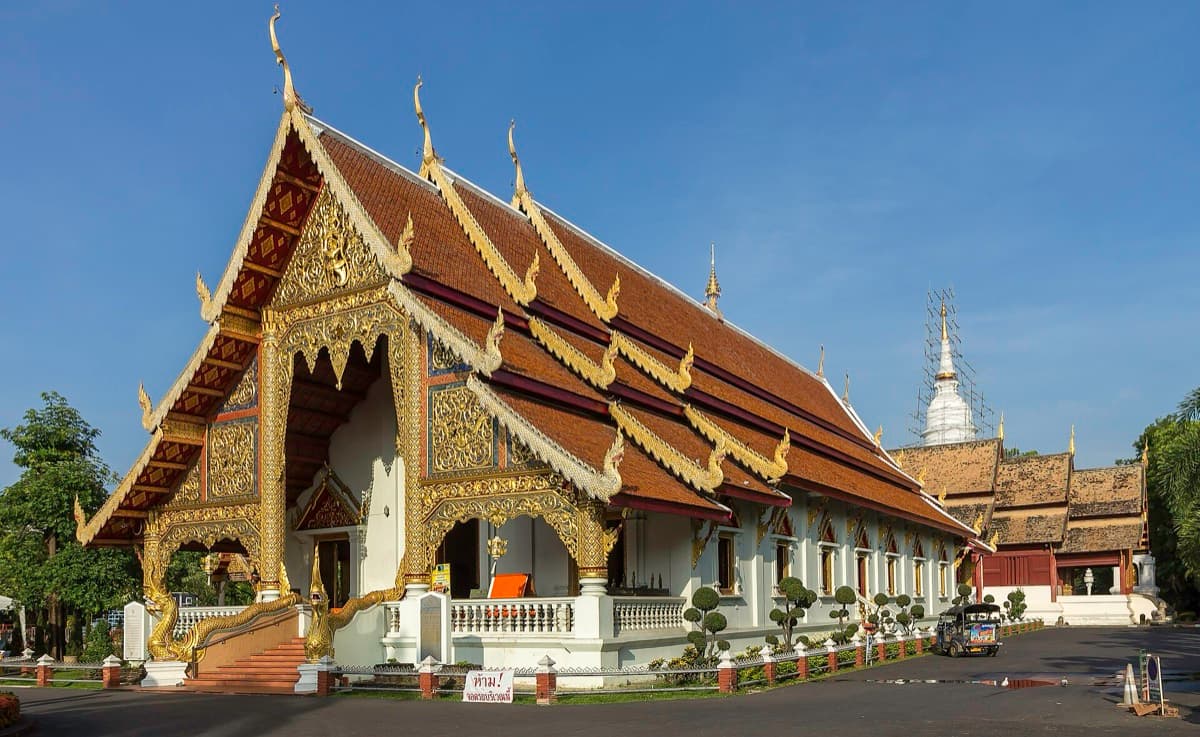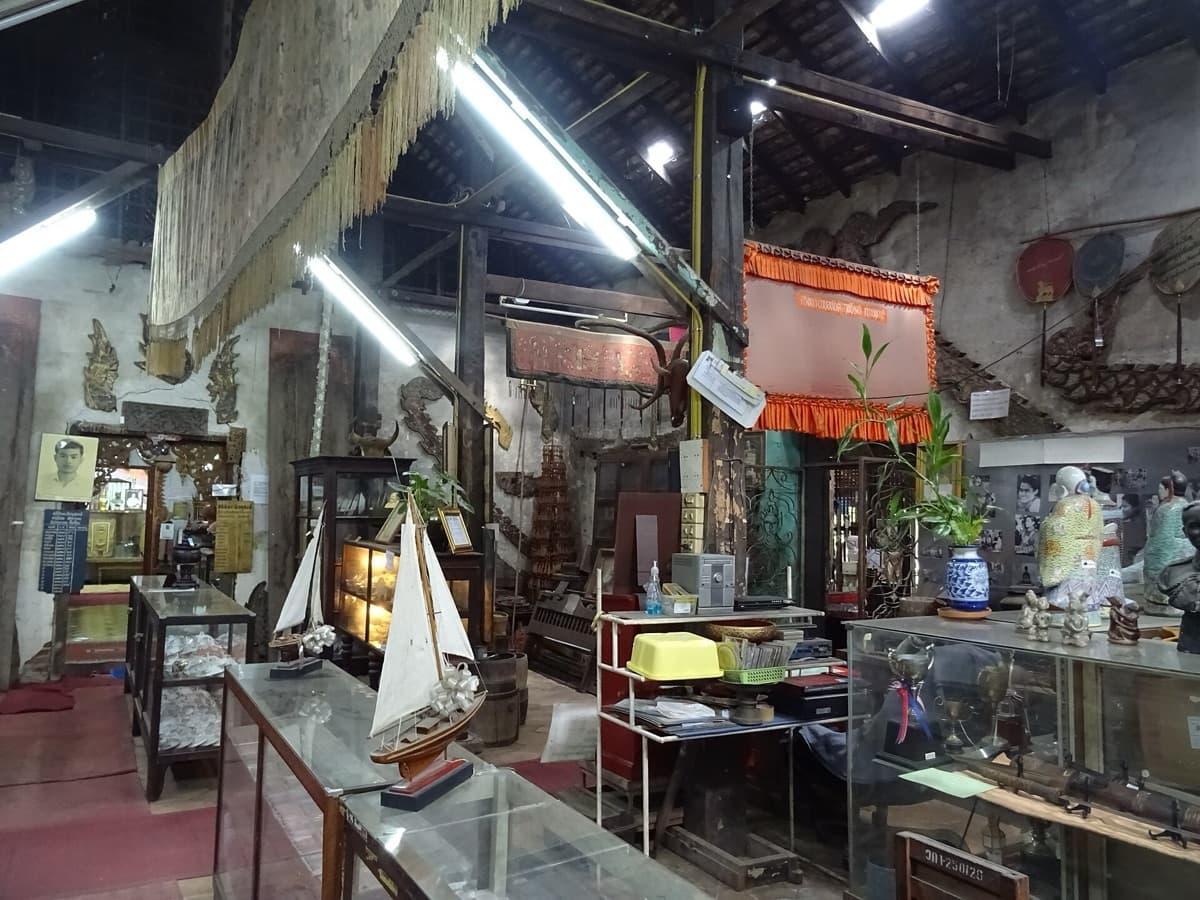
Wat Ket Karam, a riverside temple on the east bank of the Ping River, is the memory-keeper of the polyglot Chiang Mai that outsiders built during the teak boom. Most visitors picture the city as the walled temple-quarter inside the old moat, serene and singular. Cross the river, though, and you reach a temple whose deliberately tilted chedi and volunteer community museum keep alive a different Chiang Mai: the trading world that formed when teak money floated down the water in the nineteenth century. Follow that money along the river and you find British and Burmese logging firms, Chinese and Yunnanese Muslim merchants, and American missionaries who all settled within a few streets of each other. Wat Ket is where that forgotten neighborhood still remembers itself.
Why the far bank matters
The story starts with a log. In the nineteenth century, northern teak was cut, dragged by working elephants, and floated down the Ping toward a hungry British empire. The commerce concentrated on the near bank, at the great market locals call Kad Luang, but the people who profited from the trade often lived across the river. To reach them you cross at Nawarat Bridge, and the crossing itself is old. A British visitor, Captain McLeod, filed a report dated January twenty-third, eighteen thirty-seven, describing a good wooden bridge about two hundred yards long thrown across the river near the north-east angle of the town, sturdy enough for bullocks and carts. The first modern bridge on the spot, a teak bowstring span, was completed in nineteen ten, said to have taken some six hundred teak logs. A steel successor followed in nineteen twenty-three, and then the concrete span you walk today. That bridge is the hinge of the whole walk. Behind you: the market, the mosque, the Chinatown alleys. Ahead: the settlers' neighborhood, where the outsiders raised a temple, a church, and a sports club.
The temple that leans
Hear a stop from this walk
The First Church of Chiang Mai
Wat Ket Karam is traditionally said to have been founded in fourteen twenty-eight, during the reign of Phra Jao Sam Fang Kaen. Its chedi, Ket Kaew Chula Manee, holds a Buddha relic, and you may notice that it leans. This is not subsidence. It was built at a tilt on purpose. Temple lore associates the angle with avoiding the impropriety of pointing rudely toward heaven, and one source says the chedi was rebuilt after the great earthquake of fifteen forty-five, the same quake that toppled the towering chedi at Wat Chedi Luang. For anyone born in the Year of the Dog, this is the designated pilgrimage temple, the personal shrine of that birth year in the northern Thai zodiac tradition.
There is a lovely local legend that the surrounding neighborhood never built higher than the chedi, out of deference. It is a beautiful idea, and it belongs in the category of legend rather than confirmed fact, so hold it lightly. What is solid is the temple's role as a landing. Before the railway reached Chiang Mai, this stretch of the east bank was an important riverboat landing on the long route up from Bangkok. Boats meant traders, and traders meant a mixed community. Chinese merchants, Western missionaries, and local families lived side by side in the streets around the temple, in the district still known as Wat Gate.
A museum run by neighbors, not curators
The reason Wat Ket anchors this walk sits in a former monk's residence on the temple grounds: a small community museum, set up around the year nineteen ninety-nine, where residents gathered donated photographs and artifacts of their multicultural world. It is run by community volunteers, not a professional curator, which is exactly why it feels different from a state museum. The old photographs show faces, shopfronts, and river scenes from the neighborhood that the guidebooks route around. Because it is volunteer-staffed, the hours can be irregular. Treat an open door as a happy bonus, step inside if you can, and leave a small donation. If it happens to be closed, the temple grounds themselves still tell the story.
Wat Ket makes the abstract concrete. The teak trade is easy to narrate as economics. The museum turns it into people who lived on this bank, kept their photos, and eventually decided their own memory was worth preserving before it disappeared.
The neighbors on either side
Stand at Wat Ket and the rest of the far bank falls into place. A short walk north, the First Church of Chiang Mai completes the picture of who settled here. In April of eighteen sixty-seven, the American missionary Daniel McGilvary and his wife Sophia founded the Presbyterian Laos Mission, the first Protestant mission in northern Siam. The next year, in eighteen sixty-eight, the ruler of Chiang Mai, Kawilorot Suriyawong, granted McGilvary land on this same east bank. The teak weatherboard church that still stands was built from timber cut at a local sawmill and dedicated on August ninth, eighteen ninety-one, described as the first church structure in northern Siam. Notice the material: teak, the same wood building British fortunes downriver, here shaped into a mission church. The early years carried real friction, too. Two of the first converts were executed in September of eighteen sixty-nine.
Walk south and the arc closes at the Chiang Mai Gymkhana Club, founded in eighteen ninety-eight. Its own account says fourteen men met beneath an old rain tree on April fifth of that year to start it, and they were employees of the British teak-trade community, men working for the Borneo Company and the Bombay Burmah Trading Corporation. The same firms whose logs filled the market laid out golf, tennis, and cricket grounds across some ninety rai here. The writer Somerset Maugham even mentioned the Gymkhana in his nineteen thirty travel book, The Gentleman in the Parlour. It sits about two kilometres south of the market, so treat it as an optional coda, worth it because it completes the loop from money at the market to migration at the shrines to the lives the outsiders built.
Walking it yourself
This is a river-crossing walk of seven short, skippable stops over roughly four and a half kilometres, told from the water rather than the wall. Start on the near bank in the morning while the markets are busiest, then cross Nawarat Bridge to reach the quieter far-bank temple, church, and club as the day warms. Carry small cash for donations, wear slip-on shoes for the mosque and temple interiors, and pace yourself in the heat. If you want to see how Wat Ket fits the wider city, browse more Chiang Mai walking tours, or plan the day from the Chiang Mai city page. The audio tour lets you stand at the tilted chedi, step into the museum if it is open, and hear the whole other-bank story unfold at your own pace.
Sources
- Wat Ket Karam, Wikipedia. Founding tradition in fourteen twenty-eight, the tilted chedi with its Buddha relic, and the fifteen forty-five earthquake rebuild.
- Wat Ket Karaam and the Wat Ket Museum, Chiang Mai a La Carte. The community museum in a former monk's residence, its founding around nineteen ninety-nine, and the mixed riverside neighborhood.
- First Church of Chiang Mai and Daniel McGilvary, Wikipedia. The Presbyterian Laos Mission, the eighteen sixty-eight land grant, and the teak church dedicated in eighteen ninety-one.
- The First Nawarat Bridge, Travel and History. Captain McLeod's eighteen thirty-seven report and the successive Ping River bridges, wooden in nineteen ten and steel in nineteen twenty-three.
- Chiang Mai Gymkhana Club, official site and Thailand Tidbits. The eighteen ninety-eight founding by British teak-trade employees and Somerset Maugham's mention of the club.
Ready to experience it?
Wat Gate: The Other Bank
105 min · 4.5 km · moderate
More from Chiang Mai
Explore more at your own pace.
Chiang Mai Travel Guide: Days, Getting Around, Best Time, Safety, and Budget
One Day in Chiang Mai: A Walkable Morning-to-Evening Itinerary
Chiang Mai: Reading the Lanna Capital in Three Layers
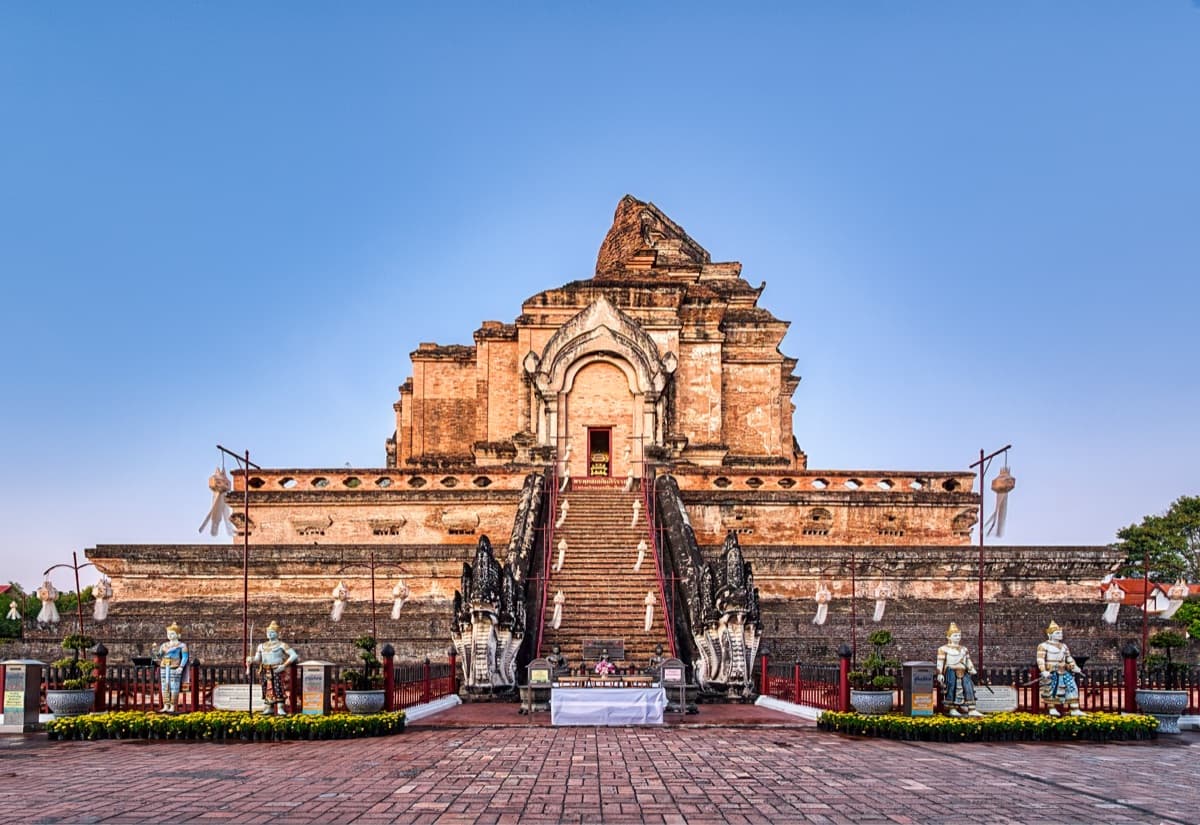
Wat Chedi Luang: The Broken Giant at the Center of Chiang Mai's Moated Square
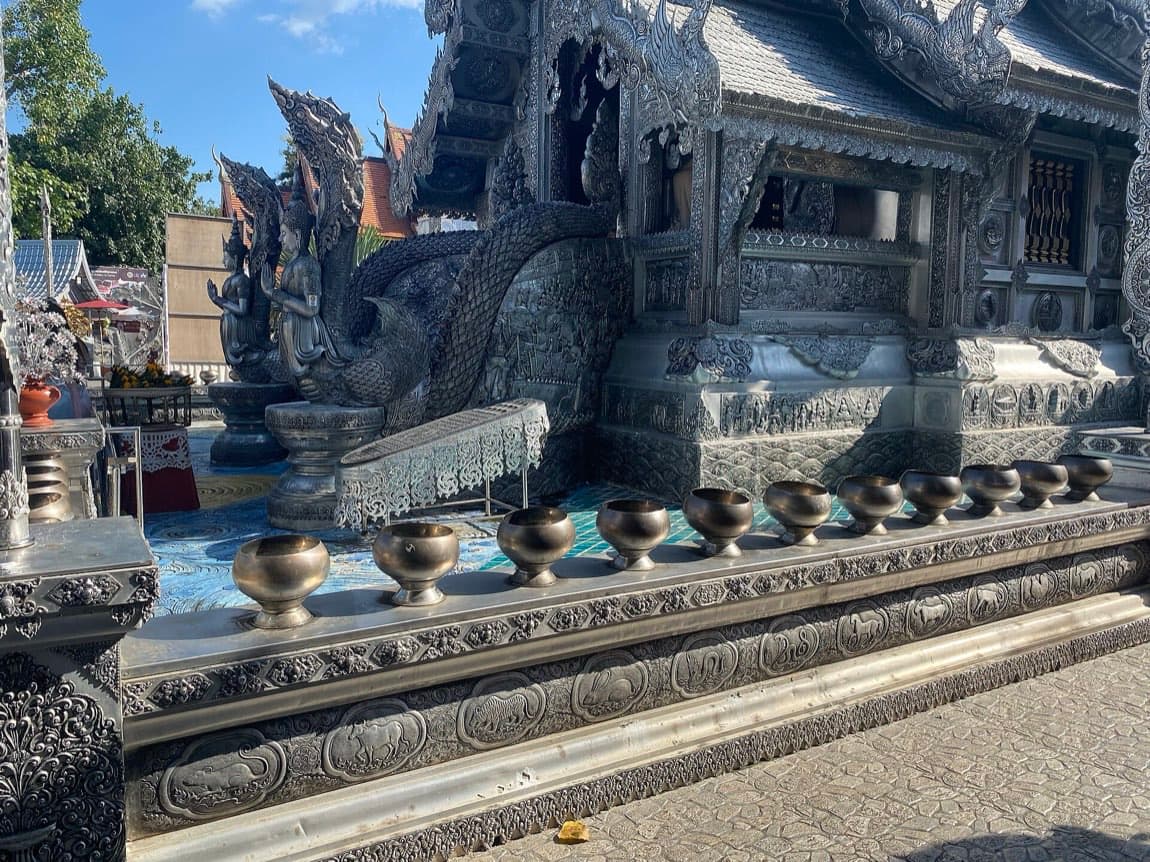
Wat Sri Suphan and the Silver Road of Wualai