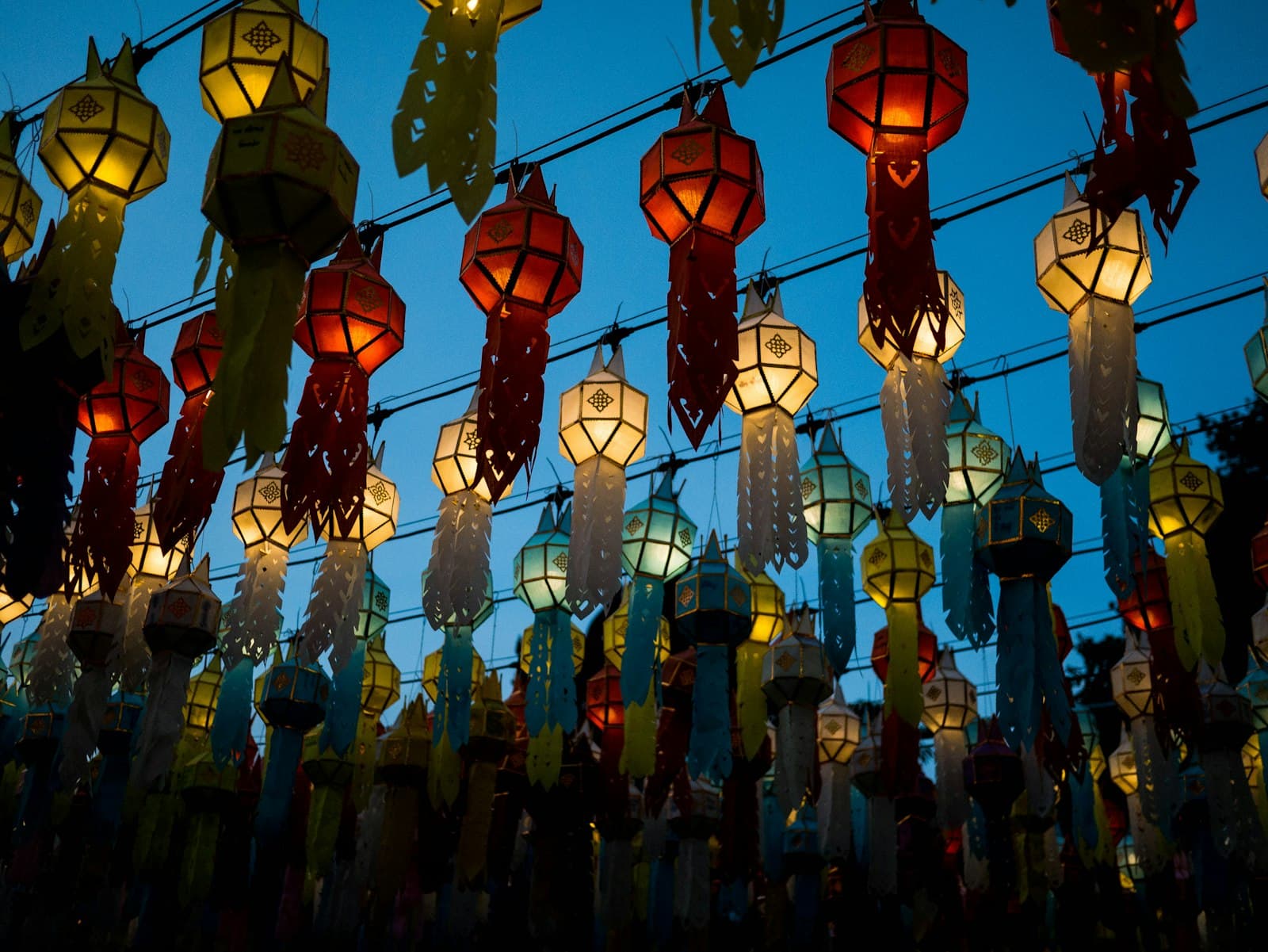
The tourists cluster inside the old moat, but the Chiang Mai that outsiders built lived across the river. Follow the teak money along the Ping to a polyglot trading world the guidebooks route around.
Start · Warorot Market: Kad Luang, the Big Market
DirectionsStops
- 1
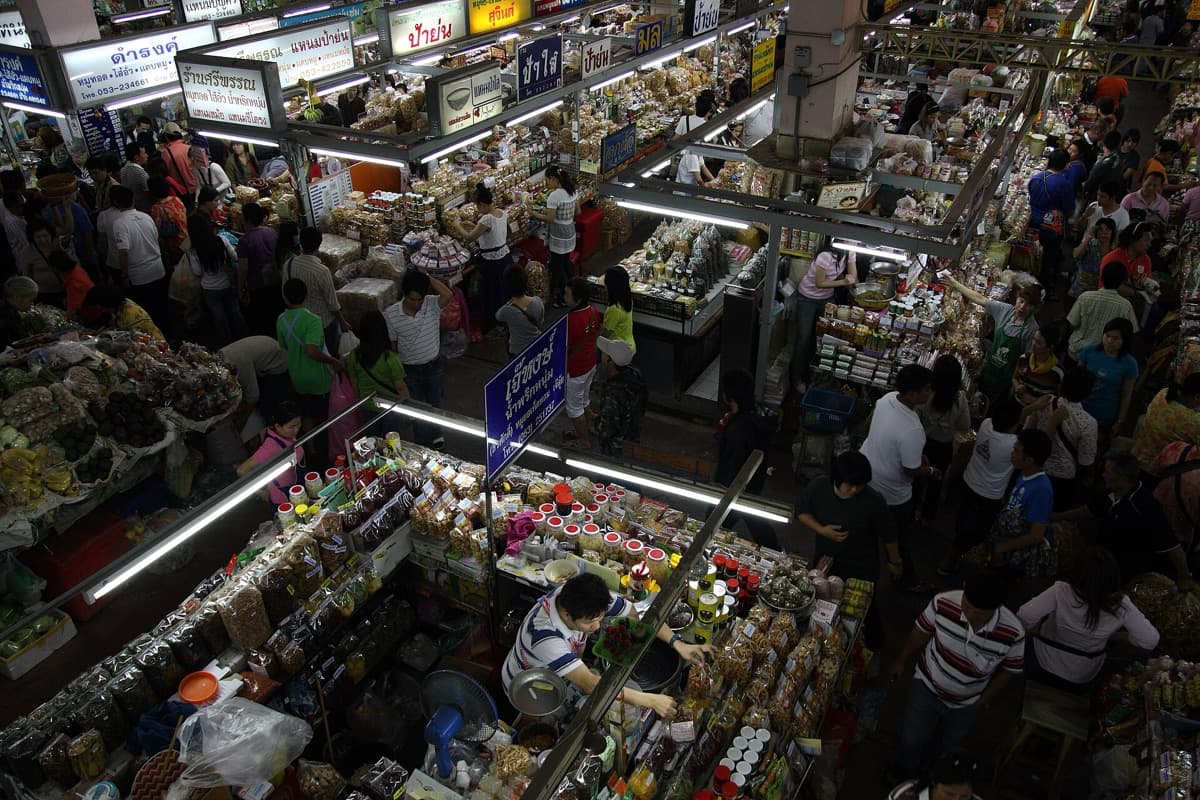
Warorot Market: Kad Luang, the Big Market
The commercial heart of riverside Chiang Mai, a century-old market hall where local, Chinese, and Sikh trade concentrated on the near bank of the Ping.
- 2
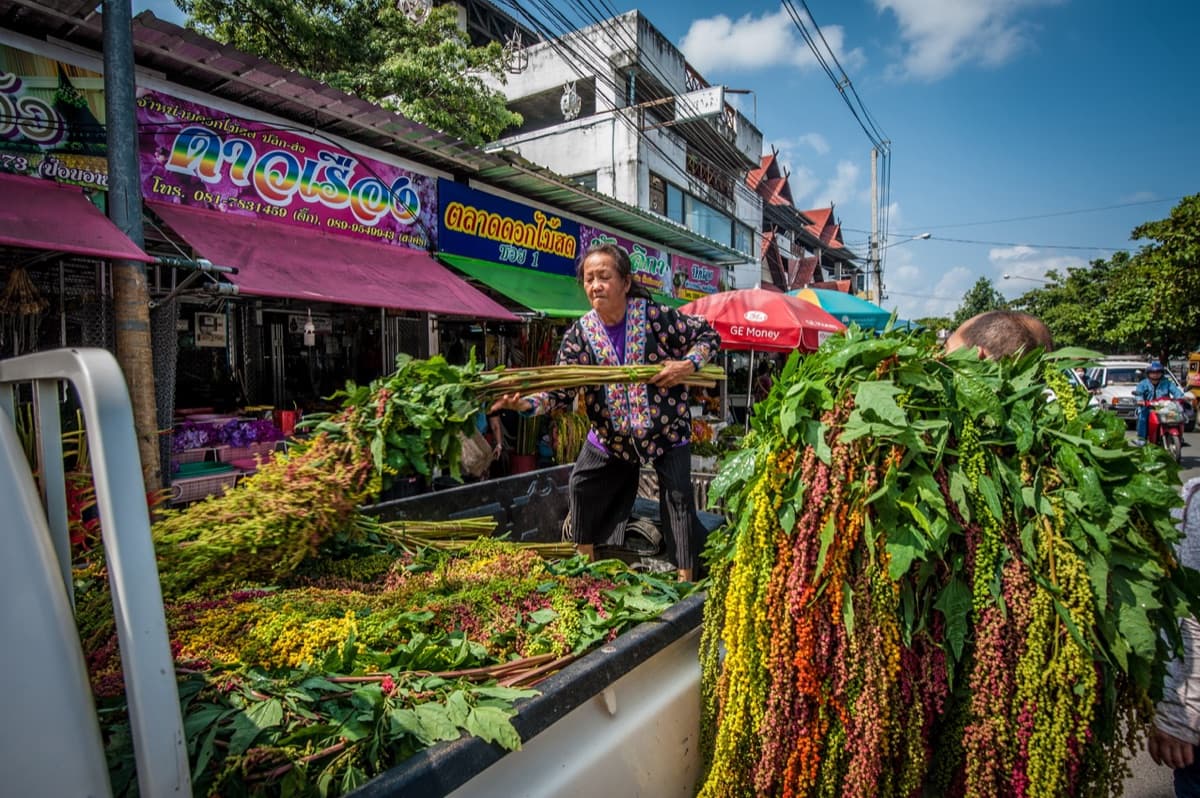
Ton Lamyai Market and the Chinatown Shrines
A riverbank market built on the rulers' old elephant stables, ringed by Chinese shrines that mark where teak, migration, and commerce met.
- 3
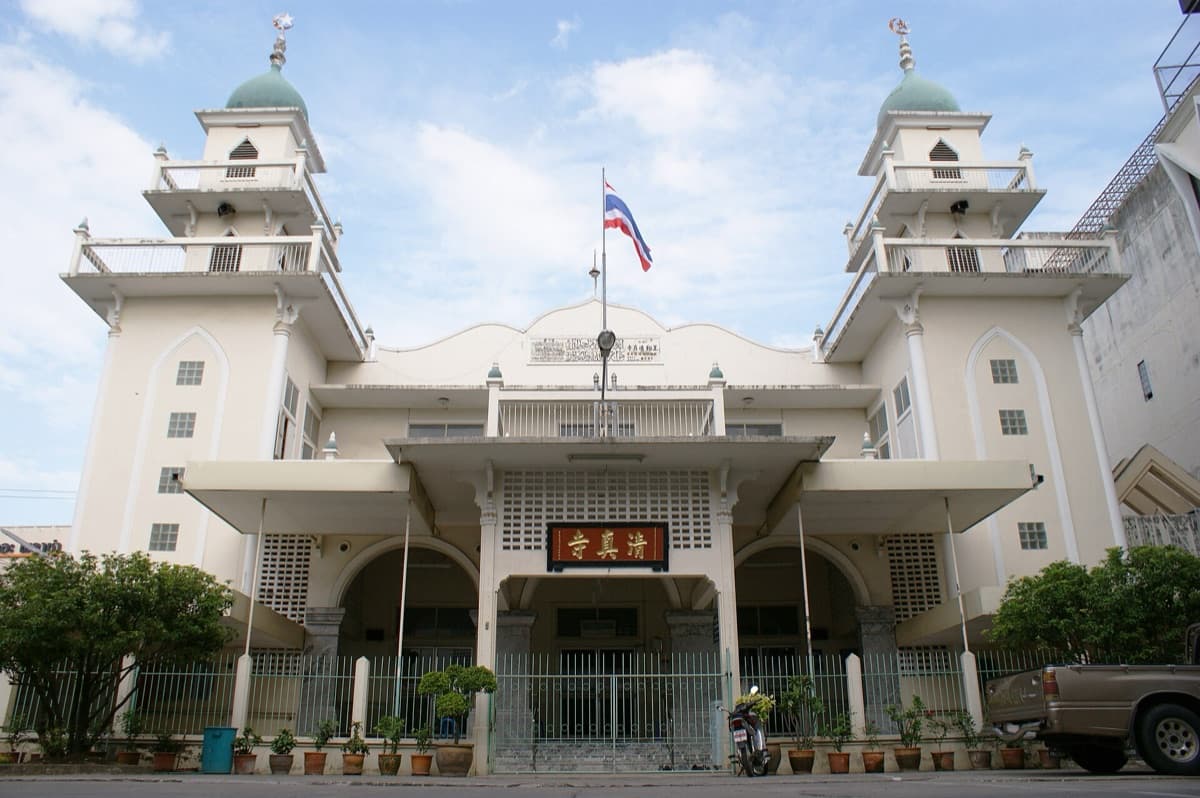
Ban Ho Mosque: the Chin Haw Mosque
A nineteenth-century mosque built by Yunnanese Muslim caravan traders who linked the Lanna kingdom to southern China by mule and horse.
- 4
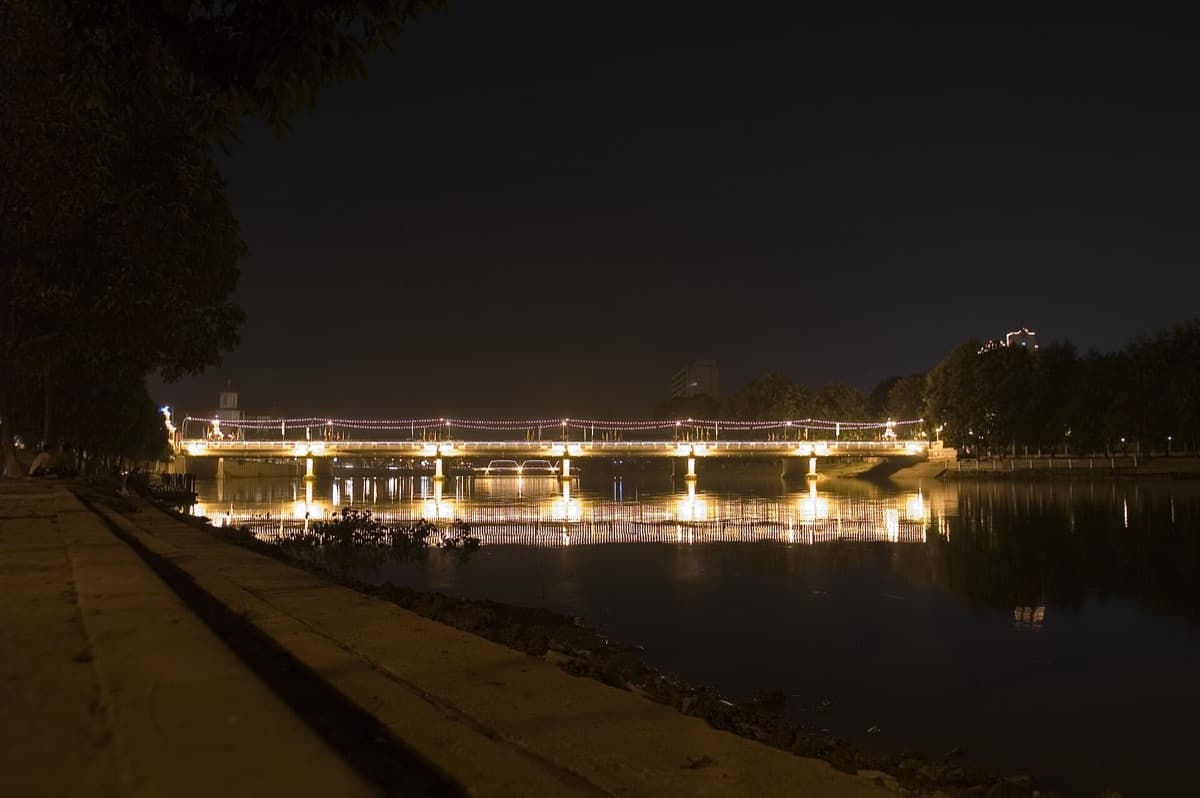
Nawarat Bridge: the Historic Ping Crossing
The historic link between the walled city and the far bank, where a wooden bridge stood as far back as the eighteen thirties.
- 5
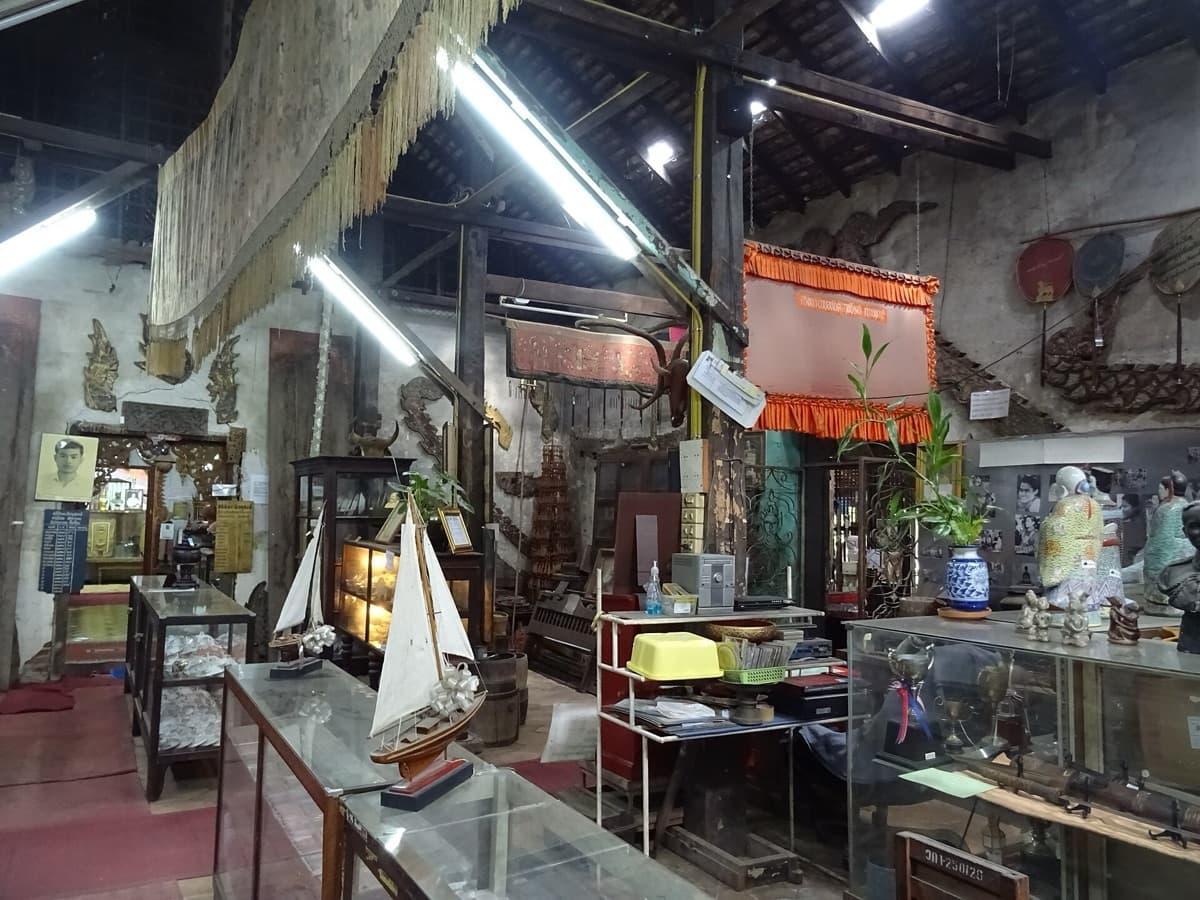
Wat Ket Karam and its Community Museum
An old riverside temple with a deliberately tilted chedi and a volunteer museum that preserves the memory of the mixed Wat Gate community.
- 6
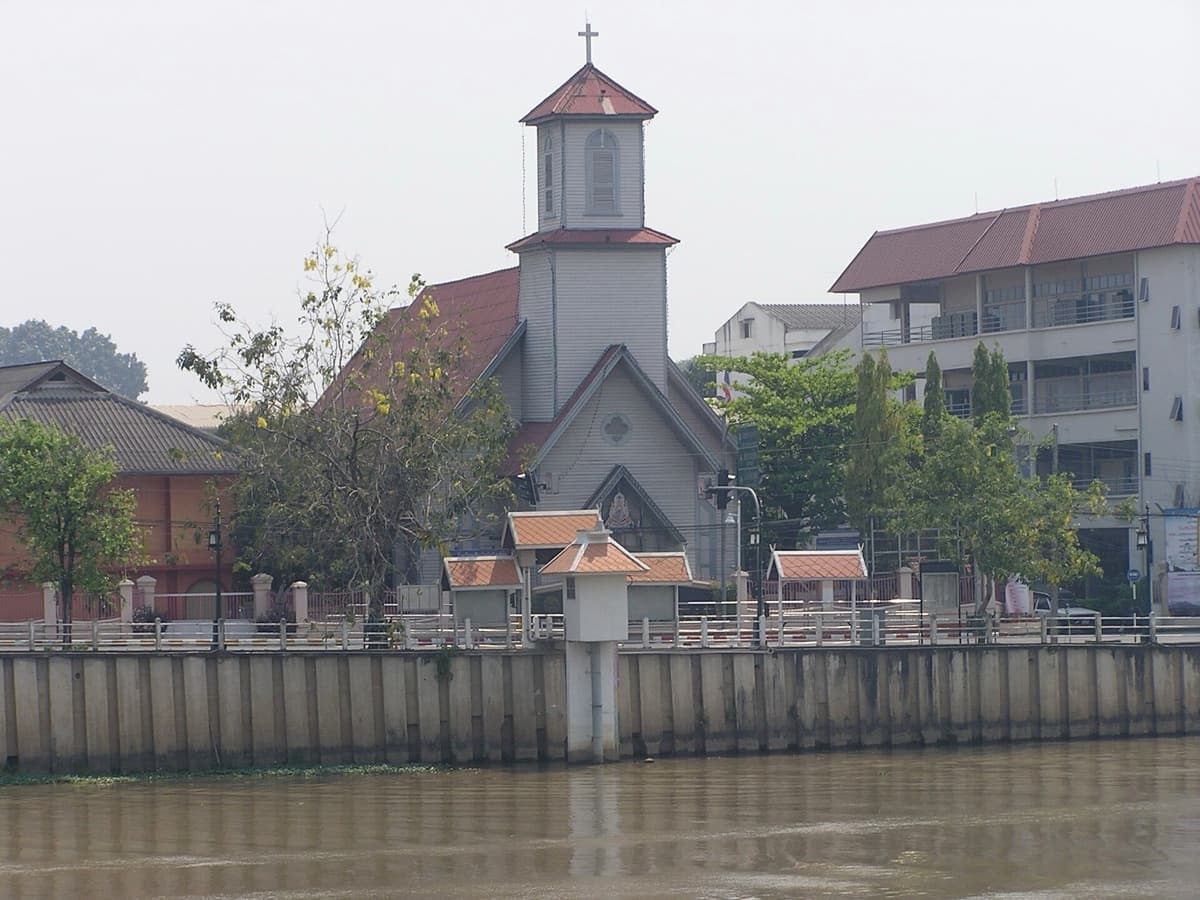
The First Church of Chiang Mai
The first Protestant church structure in northern Siam, built of teak weatherboard on land granted by the ruler of Chiang Mai.
- 7
The Chiang Mai Gymkhana Club
A sports club founded in eighteen ninety-eight by the British teak-trade community, the walk's southern outlier that closes the teak-money arc.
Details
Best Time to Visit
Start in the morning, ideally between eight and ten, when the markets are at their liveliest and the riverside air is still cool before the midday heat builds. The near-bank markets wind down through the afternoon, so doing them first lets you cross the bridge and reach the quieter far-bank temple, church, and club as the day warms. Avoid the heaviest heat of early afternoon, and if you are here during the November festival season, the Nawarat Bridge and riverbanks glow at night with floating lights.
Pro Tips
- •Do the near-bank markets first while they are busy, then cross Nawarat Bridge, since the far-bank stops stay open and calmer later in the day.
- •The Wat Ket community museum is volunteer-run with irregular hours, so treat it as a happy bonus rather than a guaranteed stop, and leave a small donation if it is open.
- •The Gymkhana Club is a two-kilometre walk south and is optional; grab a ride there and back if the heat is high, or skip it and still get the full arc.
- •Carry small cash for the markets and for museum and temple donations, as many riverside vendors and the volunteer museum do not take cards.
- •Cross Nawarat Bridge on the pedestrian side and pause midway to orient yourself, with the market behind you and the settlers' far bank ahead.
- •Wear slip-on shoes, since you will remove them at the mosque and inside temple buildings and the church interior.
Safety & Precautions
- •Chiang Mai is hot and humid for much of the year, so carry water, wear sun protection, and pace yourself in the midday sun, especially on the longer stretch south to the Gymkhana Club.
- •This is a walk past active places of worship: at Ban Ho Mosque and the temples, dress modestly with shoulders and knees covered, remove your shoes where required, and keep your voice low and your camera respectful.
- •During the monsoon months, roughly June through October, sudden heavy rain is common, so bring a compact umbrella or poncho and take care on wet market floors and bridge surfaces.
- •Traffic along the riverside roads and near the bridge can be busy and fast, so cross only at marked points and stay alert for motorbikes weaving through the market lanes.
Travel advisory: Exercise Normal Precautions (Level 1).
Gallery
Related Reading
Go deeper on what you'll see, hear, and walk through.
Overview
Best Self-Guided Walking Tours in Chiang Mai (2026)
3 min
Overview
Chiang Mai Travel Guide: Days, Getting Around, Best Time, Safety, and Budget
7 min
Overview
One Day in Chiang Mai: A Walkable Morning-to-Evening Itinerary
5 min
Thematic
Best Culture Walking Tours in Chiang Mai (2026)
2 min
Thematic
Chiang Mai: Reading the Lanna Capital in Three Layers
7 min
Companion
Wat Ket Karam and the Chiang Mai the Teak Boom Built Across the River
7 min
Read
What to Eat in Chiang Mai: The Dishes, Their Origins, and How to Order Like a Local
8 min
Read the walk
The full story of Wat Gate: The Other Bank, in words. Prefer to listen? Play it narrated, from home or on location.
Introduction
Most people picture Chiang Mai as the walled temple-city inside the old moat, serene and singular. This walk shows you a different layer, the one out here along the Ping River, where the money made from northern teak actually landed. In the nineteenth century, logs floated down this water to a hungry British empire, and around the market and the far bank a mercantile world took shape. British and Burmese logging firms, Chinese and Yunnanese Muslim merchants, and American missionaries all settled within a few streets of each other. This is that hidden layer, and it belongs to you at your own pace. There are seven stops, spread over roughly four and a half kilometres, and if you linger it will take you about two and a half to three hours. You begin on the near bank at the great market, drift into the Chinatown alleys and a caravan-trade mosque, then physically cross the Ping at the historic bridge. On the far bank you will find an old riverside temple with its own community museum, the first Protestant church in the north, and finally a colonial sports club to the south. Every stop is short and skippable, so wander, sit, and photograph freely, and rejoin the thread whenever you like. This is Chiang Mai, in northern Thailand, told from the water rather than the wall. When you arrive at Warorot Market, also called Kad Luang, begin with stop one.
1. Warorot Market: Kad Luang, the Big Market
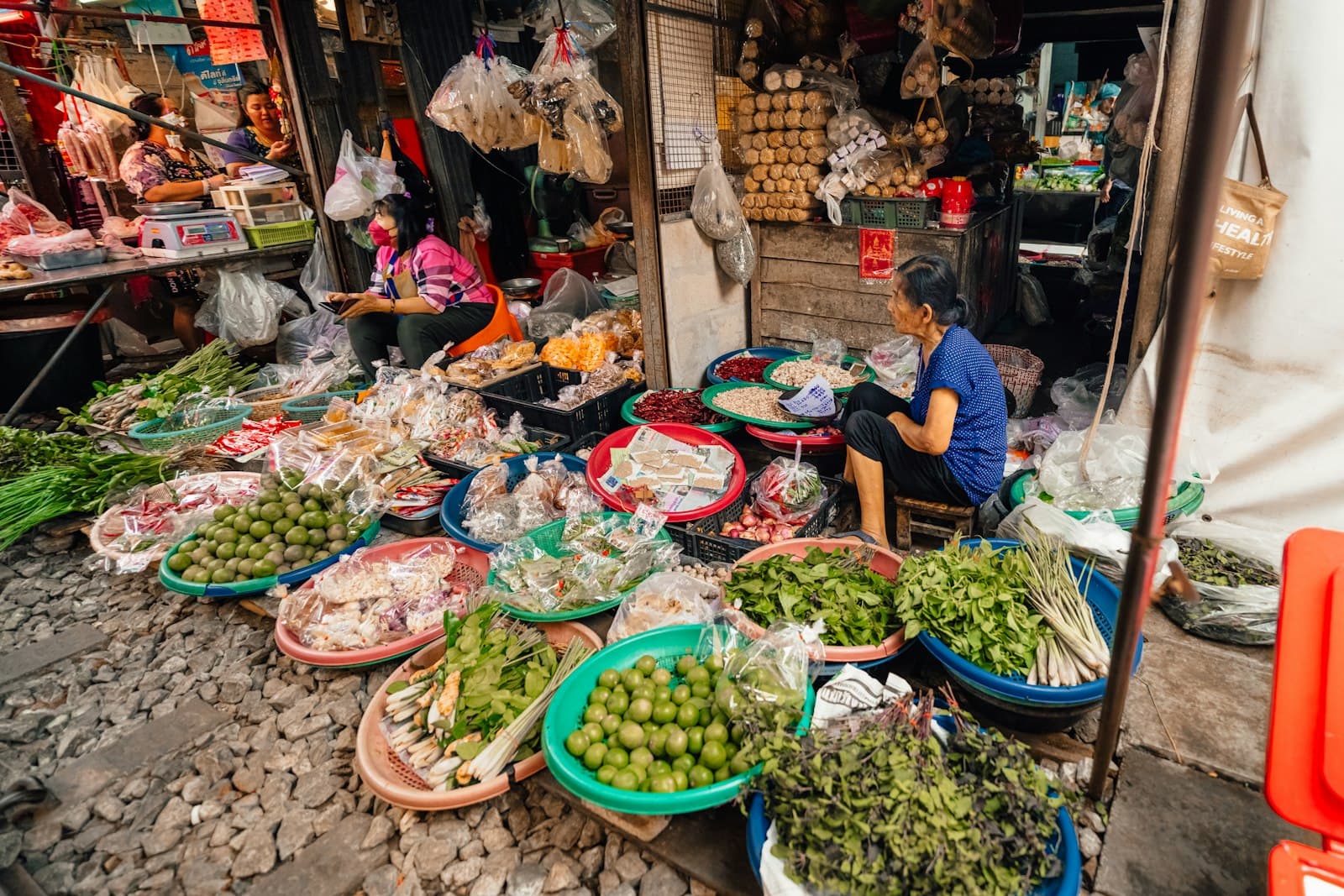
Stand in front of Warorot Market, which locals call Kad Luang, the big market. This is where the commerce of riverside Chiang Mai concentrated, and it still hums with it. According to Wikipedia, this developed into a market in nineteen ten, laid out by Princess Dara Rasmi, a royal consort, and named for Prince Intavaroros Suriyavongse, the eighth ruler of Chiang Mai. The ground beneath you has a quiet twist to it. A cemetery once stood here, and the year before the market opened, in nineteen oh nine, the princess had it moved so this land could serve the living instead. Look up at the three-storey building, now more than a century old. Wikipedia describes Warorot as the largest and most well known market in the north of Thailand, though its neighbor along the river is said to be older, so hold that lightly. What matters for this walk is who traded here. The stalls served locals, Chinese, and Sikh merchants, and a large Yunnanese Chinese community that arrived in growing numbers around the turn of the century. Slip into the interior and you will find an alley called Trok Lao Zhou, designated the Chinatown of Chiang Mai, threading between the vendors. Give yourself a few minutes to drift through the produce, the dried goods, and the fabric. This is not a monument to photograph and leave. It is a working machine, the engine room of the outward-facing city, and the best way to feel it is simply to let the crowd carry you for a while before you step back out to the river.
2. Ton Lamyai Market and the Chinatown Shrines
Step across to Ton Lamyai Market, whose name means longan tree, running right along the Ping beside Warorot. Its main entrance faces Warorot's main entrance, so the two markets breathe into each other. The story of this ground is the story of the whole walk in miniature. This land was once the elephant stables of the rulers of Chiang Mai. Then, around the turn of the twentieth century, a Burmese merchant named Luang Yonakarn Phichit rented it to keep logging elephants, the working animals that hauled teak for the Borneo Company and the Bombay Burmah Trading Corporation, the British firms that floated northern teak down this river. He built a row of riverbank houses for his workers, merchants gathered to sell, and a market simply grew up around them. So the elephants that made the teak money also seeded this market. The streets around you form Chiang Mai's Chinatown, dotted with small Chinese shrines and old herbal shops. Two places of worship anchor it. There is the Kuan U Shrine, founded by immigrant traders during the reign of Chao Inthawichayanon, between eighteen seventy and eighteen ninety-seven. And there is the Pung Tao Gong Ancestral Temple, described as the oldest Chinese temple here, dating to eighteen seventy-six. You do not need to hunt for a particular stall. Just let the shrines and the alleys tell you that migration and money arrived together on this riverbank. Take your time, then walk on toward the mosque.
3. Ban Ho Mosque: the Chin Haw Mosque
A short walk south brings you to Ban Ho Mosque, also known as Masjid Hidayatul Islam. It is easy to route past, which is exactly why it belongs on this walk. This mosque was built in the nineteenth century by a community of Chinese Muslims known as the Chin Haw, sometimes written Chin Ho, and also called Hui, most of them from Yunnan Province in southern China. These were caravan traders. They linked the Lanna kingdom to Yunnan by mule and horse, following routes that threaded through Burma and Laos, carrying cottons, silks, and medicines out, and bringing forest goods back. When you picture the teak floating down the river, picture this too: overland caravans stitching Chiang Mai into a much wider Asian trade, long before any modern road. Wikipedia describes Ban Ho as one of the biggest mosques in the province, and one of seven mosques in the city. You may see a more specific founding date and a founder's name cited elsewhere, but those details do not appear in the core encyclopedic records, so I will leave them as reported rather than confirmed. What is solid, and remarkable enough on its own, is that a Muslim, Yunnanese, Chinese-speaking trading community put down roots here in the same century, and within the same few streets, as the Buddhist temples, the Chinese shrines, and soon the Christian mission. If you step near, dress modestly and remove your shoes. Then carry that image of the caravan world with you toward the river crossing.
4. Nawarat Bridge: the Historic Ping Crossing
Now you come to the water itself, at Nawarat Bridge, the main crossing between the old city and the east bank. The concrete bridge you see is only the latest in a long line of crossings that have stood on this line for a very long time. Here is where the archives get vivid. A…
Full narration for this stop unlocks with the tour.
5. Wat Ket Karam and its Community Museum
You are on the far bank now, at Wat Ket Karam, a temple traditionally said to have been founded in fourteen twenty-eight, during the reign of Phra Jao Sam Fang Kaen. Look at its chedi, Ket Kaew Chula Manee, which holds a Buddha relic. You may notice it leans, deliberately built…
Full narration for this stop unlocks with the tour.
6. The First Church of Chiang Mai
A little further along the east bank stands the First Church of Chiang Mai, and it completes the picture of who settled here. In April of eighteen sixty-seven, an American missionary named Daniel McGilvary and his wife, Sophia McGilvary, founded the Presbyterian Laos Mission,…
Full narration for this stop unlocks with the tour.
7. The Chiang Mai Gymkhana Club
The last stop is a walk south of Wat Gate, at the Chiang Mai Gymkhana Club, on the east bank at Chiang Mai-Lamphun Road in Nong Hoi. It sits about two kilometres below the market, so treat it as an optional coda to the whole walk, worth it because it closes the story. The club…
Full narration for this stop unlocks with the tour.