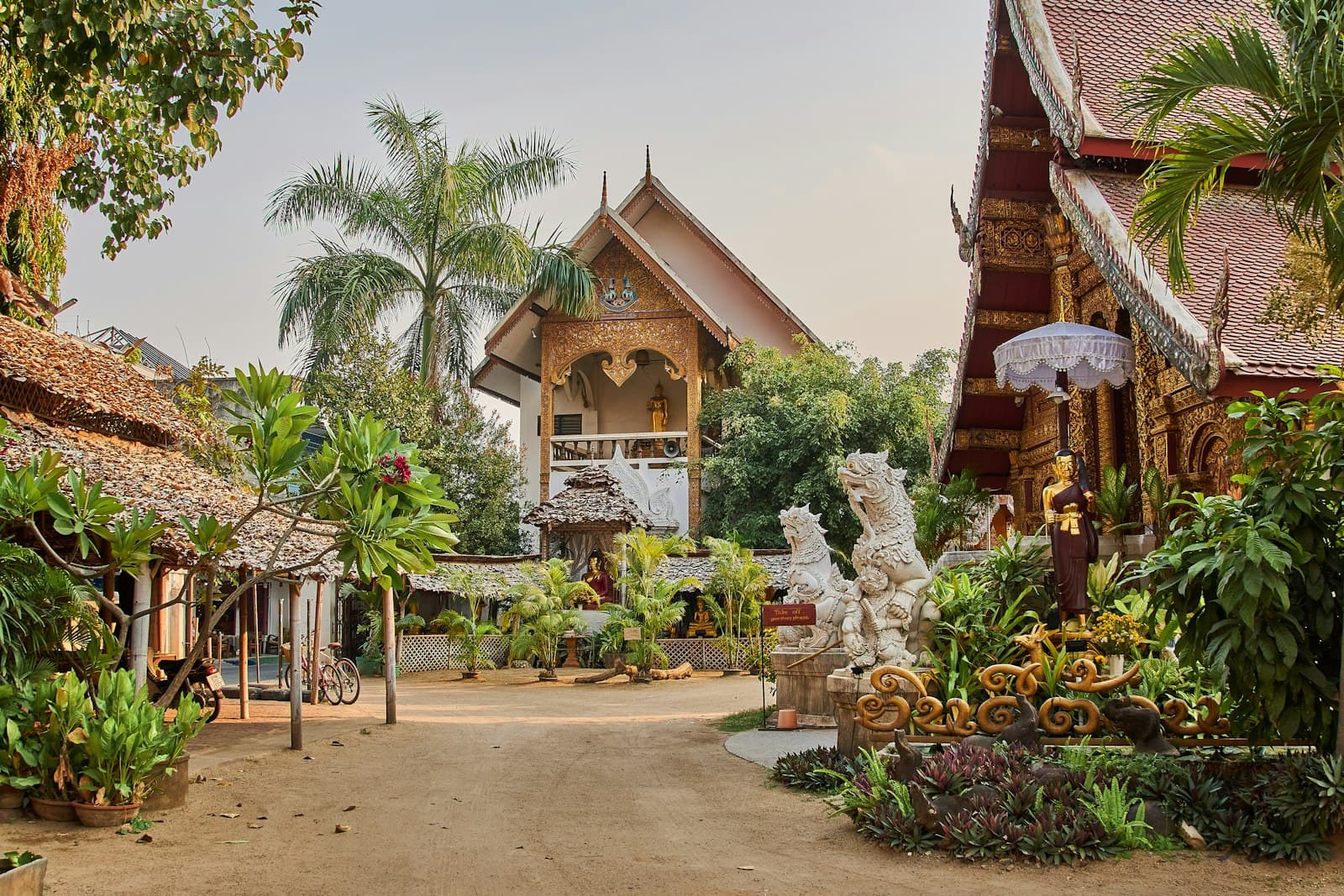
Inside a near-perfect square of moat and wall, read the old capital of Lanna as a deliberate royal diagram, where a vanished kingdom's founder, pillar, and great chedi still sit exactly where they were placed.
Start · Tha Phae Gate and the City Moat: the founding diagram
DirectionsStops
- 1
Tha Phae Gate and the City Moat: the founding diagram
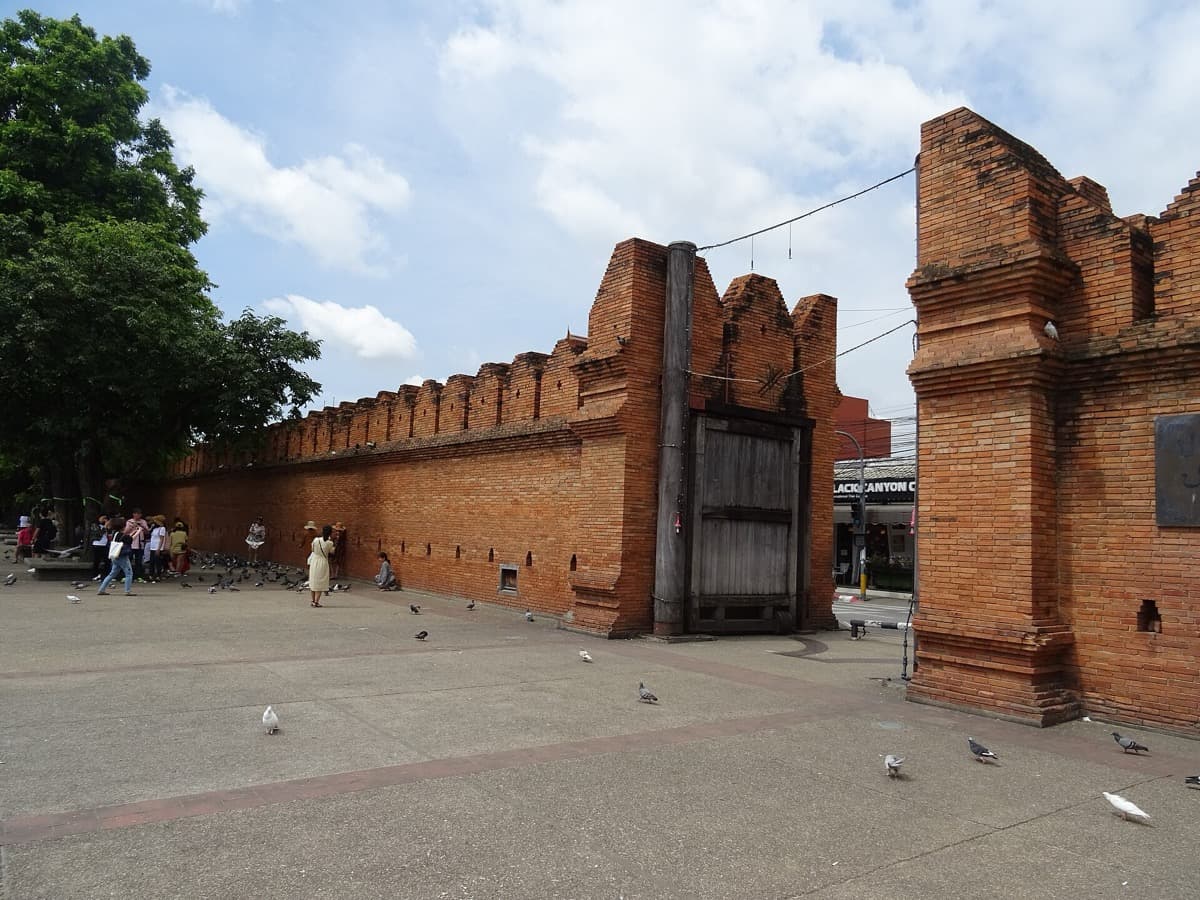
The restored eastern gate of Chiang Mai's old square, where the moat and wall reveal the whole city as one deliberate plan.
- 2
Wat Chiang Man: the founder's camp
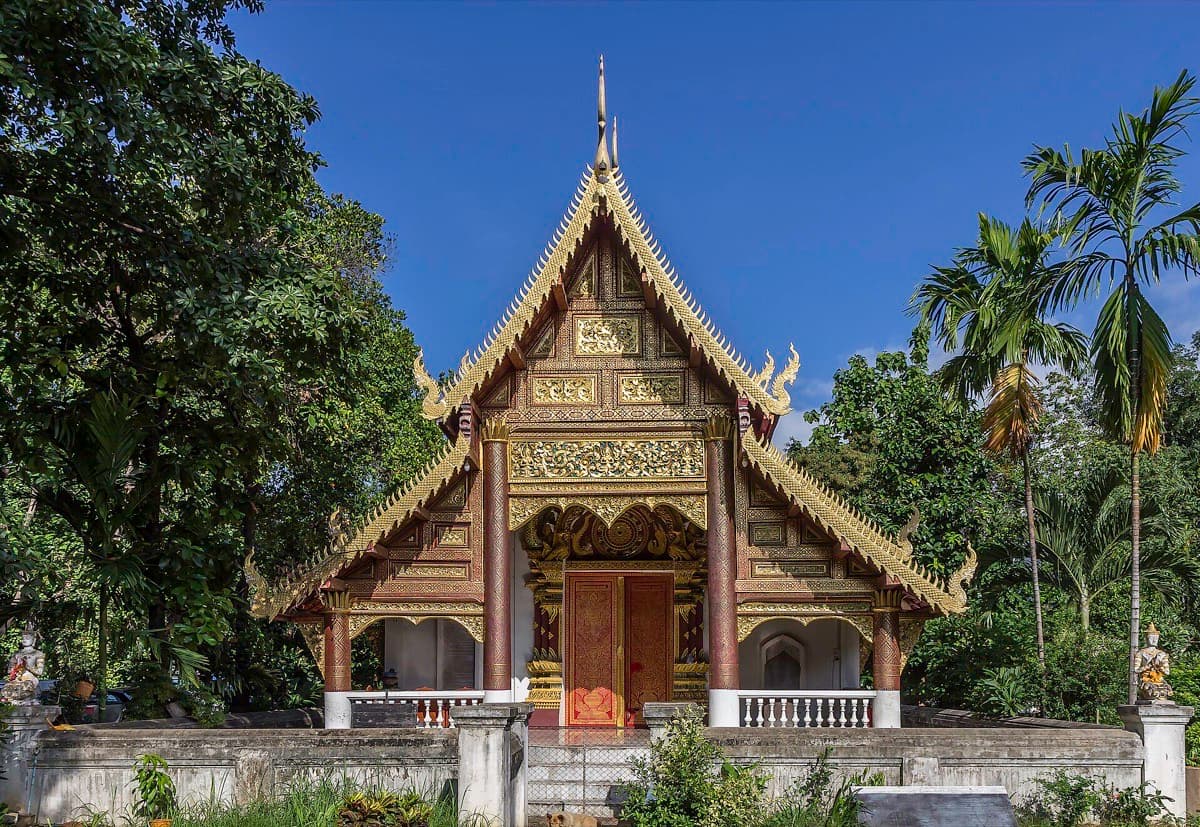
Regarded as the oldest temple in Chiang Mai, built where King Mangrai camped while his new capital was rising around him.
- 3
Three Kings Monument: the founding legend in bronze
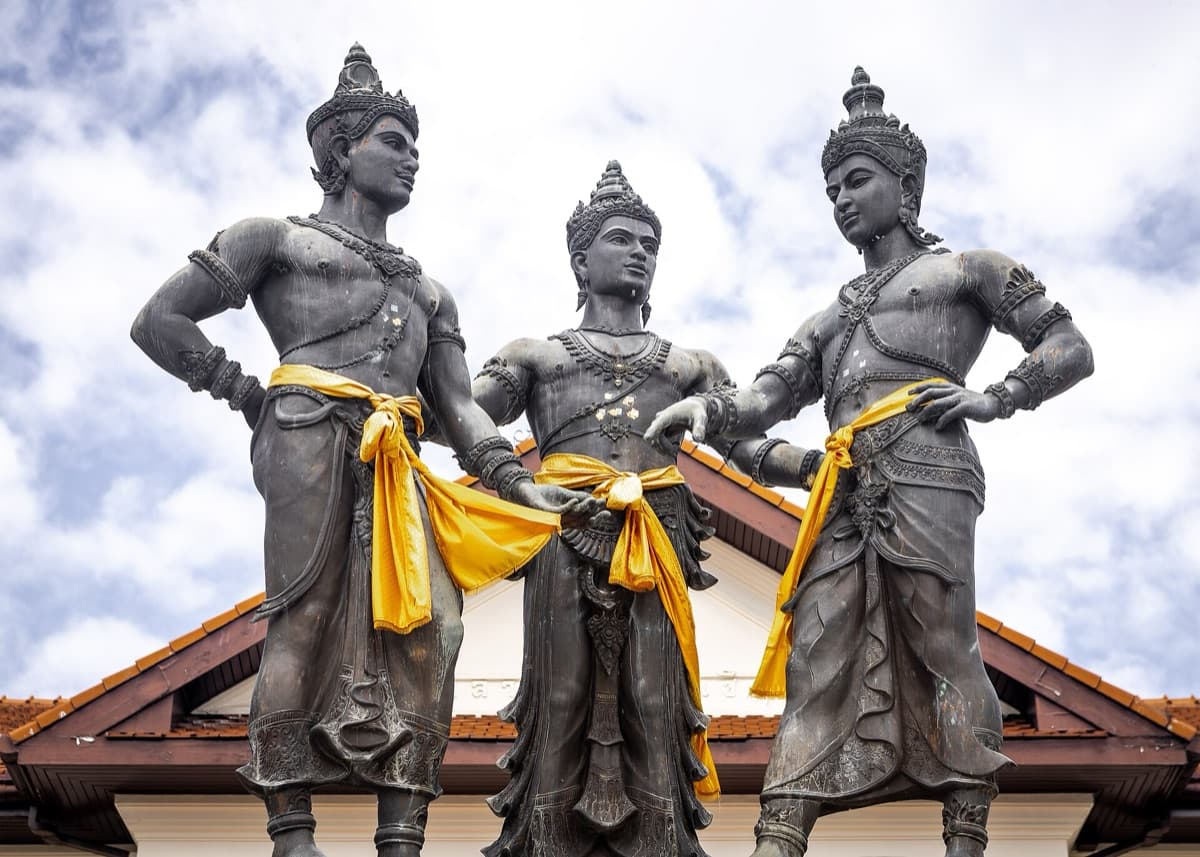
A modern bronze at the civic center of the old square, marking the legend that three kings jointly planned Chiang Mai.
- 4
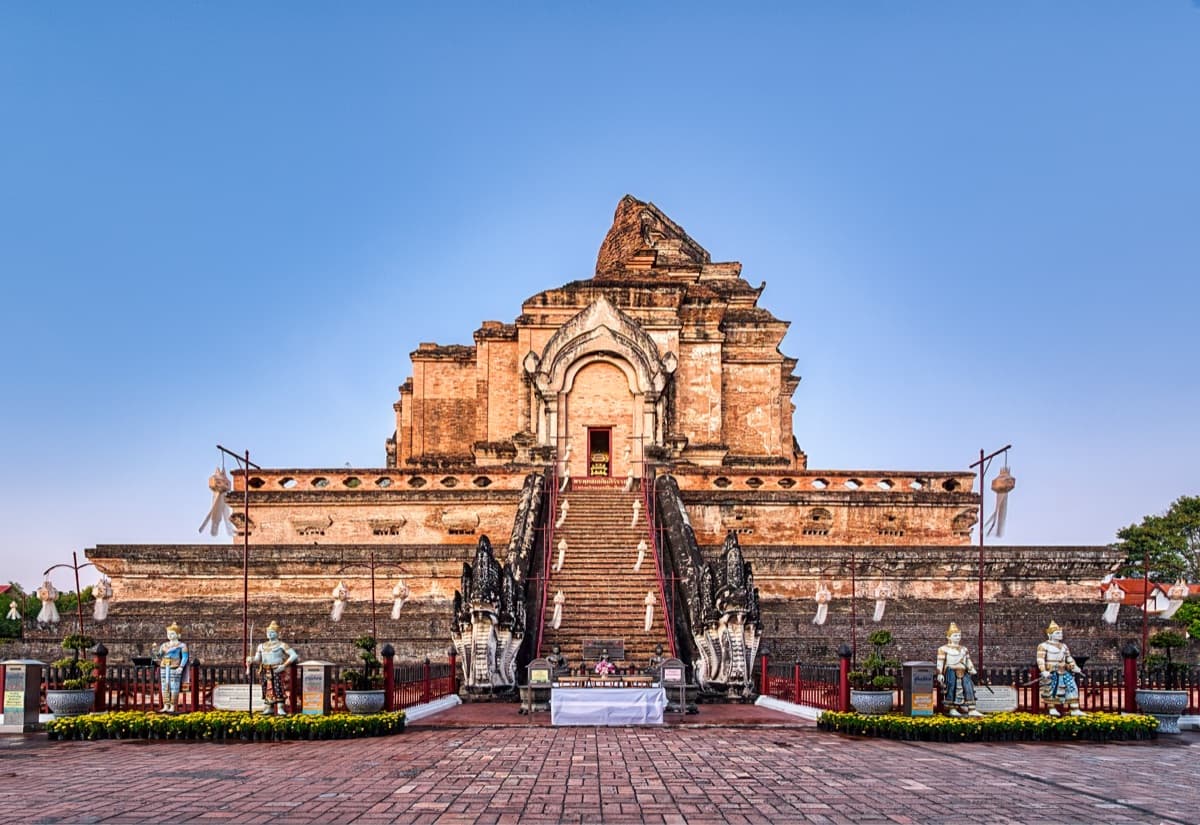
Wat Chedi Luang: the great chedi
The truncated giant at the heart of the square, once the tallest structure in Lanna and briefly home to the Emerald Buddha.
- 5
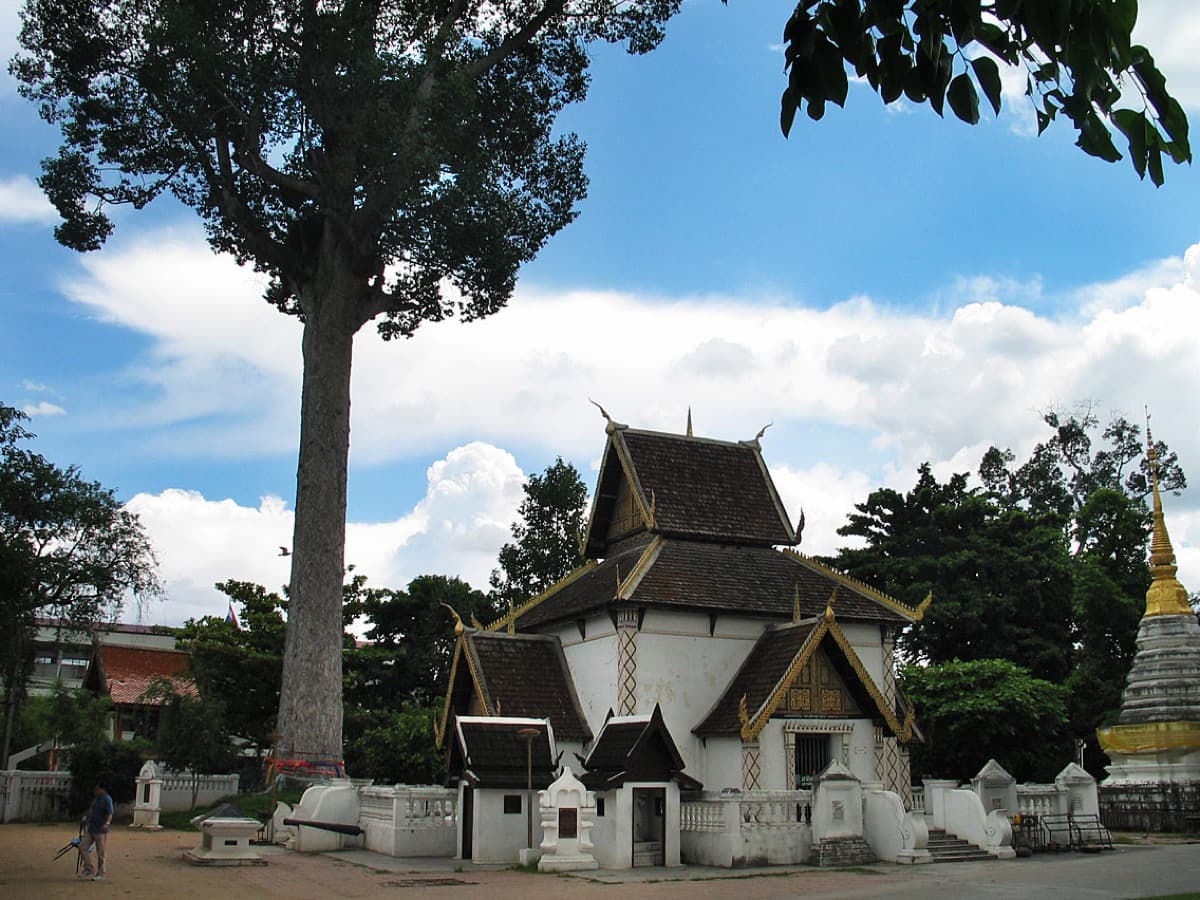
Sao Inthakhin: the city pillar
Chiang Mai's protective city pillar, the spiritual axis of the square, now enshrined within the grounds of the great chedi.
- 6
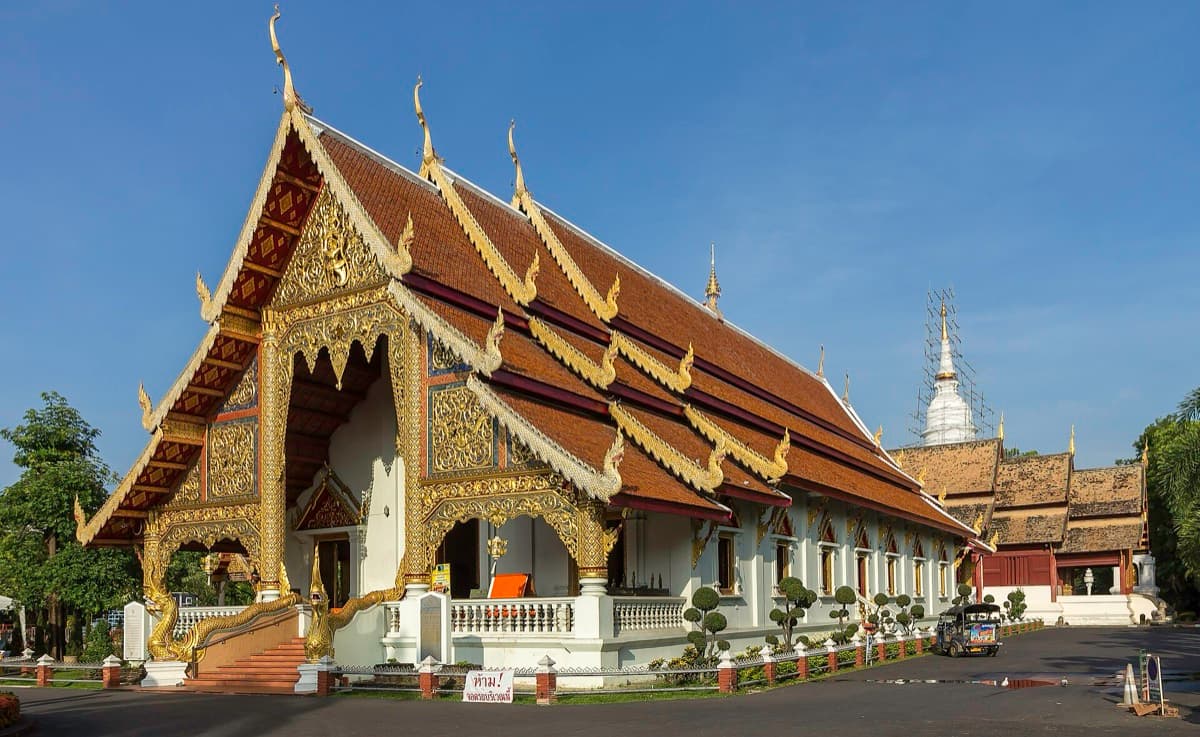
Wat Phra Singh: the finest Lanna hall
The royal temple at the western end of the square, home to the Phra Singh image and the celebrated Viharn Lai Kham.
Details
Best Time to Visit
Early morning, from about seven to ten, is the sweetest window: the temples are open, the light is soft on the chedi, and the heat has not yet built. A late-afternoon start from around four also works well as the sun drops and the gate square comes alive. Avoid the midday hours of roughly eleven to three, when the heat and sun on the open moat and monument square are punishing. If you can time your visit to the annual Inthakhin festival around the pillar, usually falling in May or June, you will see the city pillar surrounded by offerings, though the temple grounds will be far busier.
Pro Tips
- •Carry small baht notes for entry: the great chedi is about forty baht for foreigners, the main hall at Wat Phra Singh about forty baht, while Wat Chiang Man, the gate, the moat, and the monument square are free.
- •Dress for temples before you set out: shoulders and knees covered for everyone, and shoes that slip off easily, since you remove them before entering any assembly hall.
- •Bring a refillable water bottle and refill often. Northern heat and humidity dehydrate you faster than you expect, especially on the open stretches by the moat.
- •Walk the square in the shade of the inner lanes rather than the exposed moat road when you can. The old-city side streets are cooler, quieter, and easier on the feet.
- •Move at your own pace and skip freely. If the monument square feels too hot or too busy, press on to the shaded temple grounds and circle back another time.
- •Keep a light scarf or sarong in your bag. It doubles as sun cover on the open square and as a quick shoulder wrap when you step into a hall.
Safety & Precautions
- •Temple etiquette is taken seriously: remove your shoes before entering any assembly hall, keep shoulders and knees covered, never point your feet at a Buddha image, and women should not touch or hand things directly to monks.
- •Northern Thai heat and humidity are intense from late morning on. Pace yourself, seek shade, drink water steadily, and use sun protection on the exposed moat and monument areas.
- •In the rainy season, roughly June through October, sudden heavy downpours can flood lanes and make stone temple floors slippery. Carry a compact rain layer and watch your footing.
- •Traffic around the moat road moves fast and does not always yield. Cross at corners, stay alert for motorbikes weaving through the old-city lanes, and keep children close near the gate square.
Travel advisory: Exercise Normal Precautions (Level 1).
Gallery
Related Reading
Go deeper on what you'll see, hear, and walk through.
Overview
Best Self-Guided Walking Tours in Chiang Mai (2026)
3 min
Overview
Chiang Mai Travel Guide: Days, Getting Around, Best Time, Safety, and Budget
7 min
Overview
One Day in Chiang Mai: A Walkable Morning-to-Evening Itinerary
5 min
Thematic
Chiang Mai: Reading the Lanna Capital in Three Layers
7 min
Companion
Wat Chedi Luang: The Broken Giant at the Center of Chiang Mai's Moated Square
7 min
Deep dive
Wat Phra Singh: Reading the Finest Lanna Hall in Chiang Mai
7 min
Read
What to Eat in Chiang Mai: The Dishes, Their Origins, and How to Order Like a Local
8 min
Read the walk
The full story of Old City: The Moated Square, in words. Prefer to listen? Play it narrated, from home or on location.
Introduction
This is a walk through the old city of Chiang Mai, in northern Thailand, and it treats the place as a document. Six stops, a little under two hours at an easy pace, and roughly three and a half kilometres, all of it inside a square you can feel more than see. In the year twelve ninety-six a king named Mangrai laid out a near-perfect square, dug a moat around it, raised earthen walls, and called it Chiang Mai, which means the new city. For two and a half centuries this square was the capital of Lanna, a northern Thai-Buddhist kingdom with its own script, its own temples, and its own dynasty, before Burma and later Bangkok absorbed it. The traveler today finds a relaxed town of coffee and slow lanes. The walk insists on something underneath that ease: this square is not a village that grew, it is a capital that was designed, a single object placed on purpose. You will meet the founder at the oldest temple, where he first camped. You will stand at the civic center where legend places the founding. You will look up at a great chedi that once briefly held the Emerald Buddha, touch the pillar that is the square's spiritual axis, and finish at the royal temple in the west. Move at your own speed, skip any stop that does not pull you, and let the moat be your compass: everything inside it was arranged by a plan. When you arrive at Tha Phae Gate, begin with stop one.
1. Tha Phae Gate and the City Moat: the founding diagram
Stand with your back to the gate and look at the water. The moat runs off to your left and your right in long straight lines, and if you could rise above it you would see those lines close into a square, more than a mile and a half on each side. That square is the point of this whole walk. In the year twelve ninety-six, a king named Mangrai chose this ground and had the shape dug and walled all at once, so the city was born as a single object, not a cluster that spread. This is the eastern gate, Tha Phae, the side that faced the river and the road to the wider world. What you are looking at, though, is not thirteenth-century stone. According to the Fine Arts Department, the gate you see was reconstructed between nineteen eighty-five and nineteen eighty-seven, rebuilt from records and archaeology after the original had crumbled. So hold two things at once: the brick is recent, the geometry is seven hundred years old. The moat still traces the exact line Mangrai's diggers cut. As a small proof that the old fabric is still down there, in November of twenty twenty-three workers found a Lanna-script inscription hidden inside the gate since the nineteen eighties renovation. Take a slow look before you move inward. Everything you meet from here, the temples, the pillar, the great chedi, was placed inside this frame on purpose. Reading where they sit is reading the plan.
2. Wat Chiang Man: the founder's camp
This is where the founder actually stood. Wat Chiang Man is regarded as the oldest temple in Chiang Mai, and its story is unusually literal. Before the square existed, this ground held a Lawa settlement called Wiang Nopburi. King Mangrai used it as his construction camp, living here while the new city was surveyed, dug, and walled around him. When the work was done, the camp became a temple. A stone stele here gives the founding date as April twelfth, twelve ninety-six, though you will also see the temple dated to twelve ninety-seven. Look for the chedi at the back with elephants. It is called Chang Lom, and fifteen life-sized elephants of brick and stucco appear to push out of its base and carry the tower on their backs, a gesture of strength holding up something sacred. Inside the assembly hall are two small images the temple has protected for centuries. One is the Crystal Buddha, called Phra Sae Tang Khamani, a piece of carved quartz only about ten centimetres tall. The other is the Phra Sila, a stone relief showing the Buddha taming an elephant, said by tradition to have come from India or Sri Lanka. I want to be honest about those two: their true ages are disputed, with traditions stretching across many centuries, so treat them as revered heirlooms rather than dated artifacts. What is not in doubt is the ground itself. You are standing where a king waited for his city to be born.
3. Three Kings Monument: the founding legend in bronze
You are now near the civic heart of the square, in front of what was once the provincial hall and is now the Arts and Cultural Centre. The three bronze figures before you stand about two point seven metres tall, and they tell the founding story the city likes best. They are…
Full narration for this stop unlocks with the tour.
4. Wat Chedi Luang: the great chedi
Now look up. This is the great chedi, the tallest thing the kingdom of Lanna ever built inside these walls, and even broken it dominates the square. Its construction spanned generations. It was begun in the late fourteenth century by King Saen Muang Ma to hold his father's…
Full narration for this stop unlocks with the tour.
5. Sao Inthakhin: the city pillar
A few steps from the great chedi, inside the same temple grounds, is the quiet spiritual axis of the whole square. This is Sao Inthakhin, the city pillar, what Thai towns call the lak mueang. Every old city is thought to have a heart post that anchors and protects it, and this…
Full narration for this stop unlocks with the tour.
6. Wat Phra Singh: the finest Lanna hall
You have crossed the square from the eastern gate to its western end, and this is the artistic peak of the walk. Wat Phra Singh is a major Lanna royal temple, and its founding continues the dynasty you have been tracing all morning. It was established in the year thirteen…
Full narration for this stop unlocks with the tour.