Checkpoint Charlie and the Topography of Terror: Marked or Hidden
90 min · 2.4 km · easy
If you have one hunger and one afternoon in Berlin, eat currywurst and a Döner kebab: both were born on this city's streets, both are cheap, and both are sold within a short walk of the tours you will already be walking. Currywurst is a sliced pork sausage under a curry-dusted tomato sauce. The Döner is grilled meat carved off a vertical spit and packed into flatbread with salad and sauce. Around those two anchors sit older, sit-down Berlin dishes (pork knuckle, meatballs, sour wheat beer) that tell you where the city ate before fast food. This guide covers what each dish is, where the tradition actually comes from, and the exact words to say at the counter.
Berlin's food story is a migration story, so treat the plate as a map. The city's signature street foods were invented by newcomers and occupiers: British curry powder after the war, Turkish workers in the 1970s, French Protestant refugees centuries before. Eat your way through it and you are tracing the same layered history you hear on the Kreuzberg walk and the wall and memory routes.
Currywurst: the post-war sausage that split into two schools
Currywurst is the dish to try first. It is a grilled or fried pork sausage, sliced into coins, buried under a warm tomato-based sauce seasoned with curry powder, and dusted with more curry on top. It usually comes with a bread roll (Brötchen) or fries.
The origin is well documented. Herta Heuwer, who ran a food kiosk in West Berlin, is credited with creating the dish on 4 September 1949, mixing curry powder and a ketchup-style sauce she got from British soldiers stationed in Germany. In January 1951 she registered a trademark for her sauce, called Chillup. Hamburg makes a competing claim, but Berlin holds the plaque and the anniversary date.
The one thing you need to decide before ordering is casing. "Mit Darm" means with a natural casing, so the sausage snaps when you bite it and carries a smokier, grilled flavor. "Ohne Darm" means skinless, softer, and it is the more distinctly Berlin version. The two most storied stands split cleanly on this: Curry 36 (a West Berlin institution) serves it mit Darm, while Konnopke's Imbiss (an East Berlin tradition under the U-Bahn tracks) serves it ohne Darm. Germany recognized "Berliner Currywurst ohne Darm" as a geographical indication in 2020, and an application to register it as an EU-wide protected geographical indication is still pending. If you cannot choose, order it ohne Darm with "Pommes rot-weiss" (fries with both ketchup and mayonnaise). That is the safe first-timer combination.
The Döner kebab: Turkish tradition, Berlin invention
Hear a stop from this walk
Memorial to the Murdered Jews of Europe: The Field's Edge
The Döner kebab is the other dish you cannot skip, and it is genuinely tied to the neighborhoods on the Kreuzberg route. The meat itself (lamb, beef, veal, or chicken roasted on a vertical rotating spit and shaved off in thin slices) is old Turkish cooking, and the vertical rotisserie was in use in Turkey by at least the mid-nineteenth century. What Berlin invented is the sandwich form: the meat tucked into a wedge of toasted flatbread with salad, onions, tomato, cucumber, cabbage, and sauce, built to eat while walking.
Kadir Nurman is the name most often attached to that innovation. A Turkish restaurateur who moved to Berlin in 1966, he set up a stall at the Zoologischer Garten railway station in 1972, betting that busy commuters wanted a portable meal. The Association of Turkish Döner Manufacturers gave him a lifetime achievement award in 2011. The "who invented it" question is genuinely disputed and several people have been credited, so the honest framing is this: Turkey gave the spit, Berlin gave the sandwich.
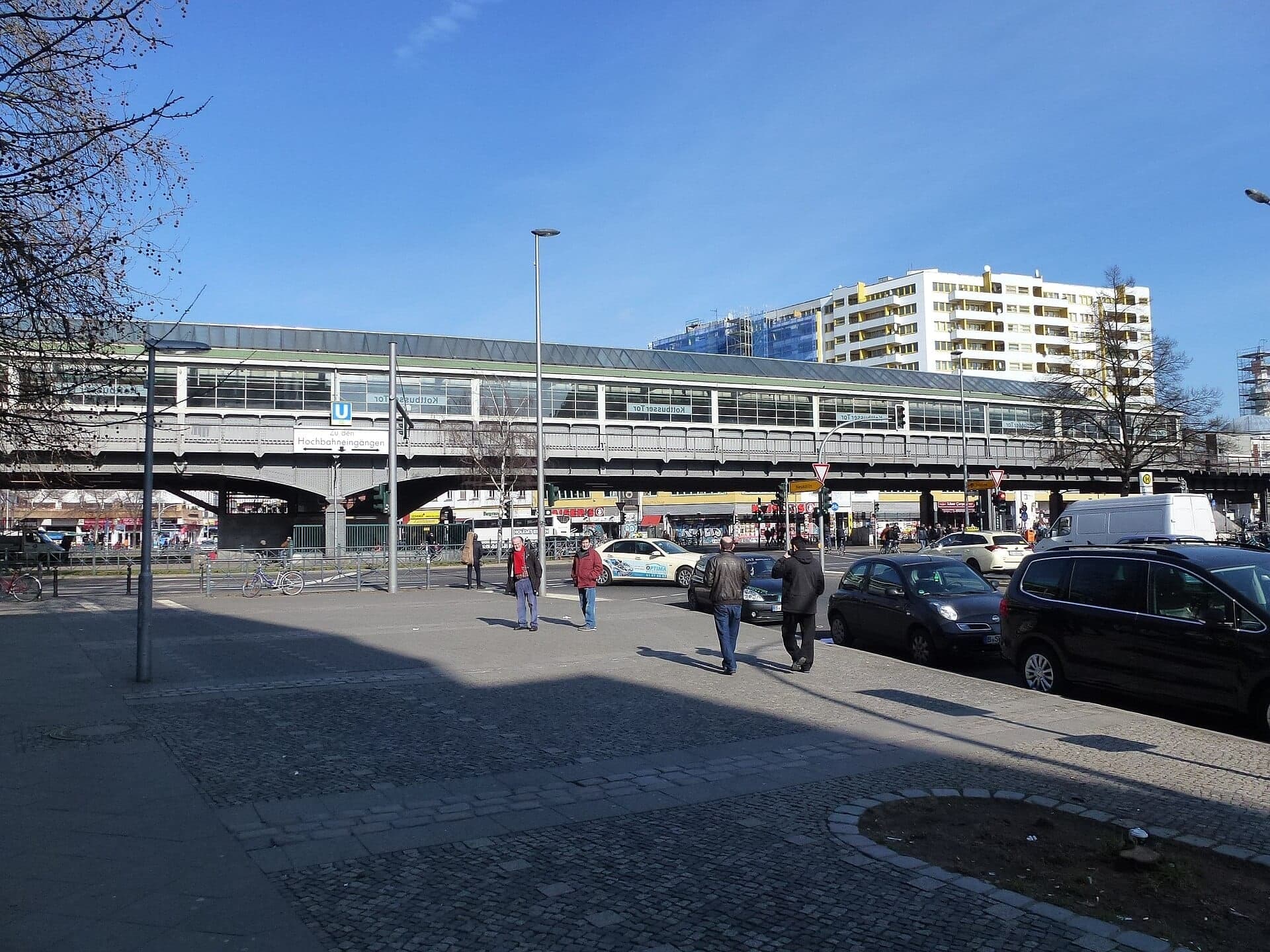
To order, you pick your sauce: "Kräuter" (herb/yogurt), "Knoblauch" (garlic), or "Scharf" (spicy). You can also tell them to hold anything in the salad, for example "ohne Zwiebeln" for no onions. If you want it as a wrap instead of in bread, ask for a "Dürüm." Berlin has well over a thousand Döner shops, so this is a dish you will pass constantly, especially around Kottbusser Tor.
Berliner Weisse: the sour beer that comes with syrup
If you want a drink that is genuinely local, order a Berliner Weisse. It is a pale, top-fermented sour wheat beer, low in alcohol (roughly 3 to 3.5% and served tart from a lactic fermentation). By its nineteenth-century peak it was the most popular alcoholic drink in Berlin, made by dozens of Berlin breweries. By the late twentieth century only a couple of Berlin breweries still made it, though the craft revival has brought it back.
The Berlin way to drink it is "mit Schuss," with a shot of flavored syrup that cuts the sourness: raspberry (Himbeer, red) or woodruff (Waldmeister, bright green). It arrives in a wide bowl-shaped glass. It is refreshing rather than serious, and it pairs well with a walking afternoon.
The older, sit-down Berlin: pork, meatballs, and Huguenot leftovers
Before street food, Berlin ate hearty and cheap, and those dishes are still on traditional (gutbürgerlich) menus. Try these when you want to sit down.
Eisbein is a cured and boiled pork knuckle, simmered for hours until it pulls apart, usually served with sauerkraut, pea puree, and potatoes. It is the classic heavy Berlin plate.
Boulette (also spelled Bulette) is a fried meatball or patty of minced beef or pork with breadcrumbs, egg, and onion. The name is French, carried in by Huguenot refugees who settled in Berlin in the seventeenth century, and it is often eaten with mustard and a roll.
Königsberger Klopse are poached meatballs (traditionally veal, often mixed with beef or pork and a little anchovy) in a pale, tangy white sauce with capers. The dish comes from Königsberg in former East Prussia (today Kaliningrad) and became a Berlin staple through migration.
For something sweet, ask for a "Pfannkuchen," a jam-filled fried dough ball. Note the local trap: what the rest of Germany calls a "Berliner," Berliners themselves call a Pfannkuchen. Order it by the local name and you will get it right.
How to eat this across your walking day
You do not need reservations for any of the street food, and the two anchor dishes are cheap, so build them around the tours instead of around meals. The Kreuzberg route runs through the neighborhood where the Döner grew up, so grab one near Kottbusser Tor along the way. The wall and memory routes cross central Mitte, where currywurst stands are easy to find. The open-air Turkish Market on Maybachufer, where the Kreuzberg walk ends across the canal, runs on Tuesdays and Fridays and is the best single place to browse produce, cheese, olives, and fresh flatbread. Plan your day around the Berlin walking tours, and let the food fall along the line you are already tracing on the Berlin city page.
A few honest logistics. Most stands are cash-friendly and quick, though many now take cards. Berliner Weisse and the sit-down dishes cost more than a five-euro Döner but are still modest. Portions are large, so one currywurst plus one Döner is a full lunch for most people. There is nothing to fear at a street stand: order in short phrases, point if your German runs out, and step aside to eat.
Sources
Frequently asked questions
- What food is Berlin most famous for?
- Berlin is best known for two street foods it helped invent: currywurst, a sliced pork sausage under curry-spiced tomato sauce, and the Döner kebab, grilled spit-roasted meat in toasted flatbread with salad and sauce. Currywurst is credited to Herta Heuwer in West Berlin in 1949, and the Döner-in-bread sandwich form grew up in Berlin in the early 1970s. Both are cheap, quick, and sold citywide.
- Was currywurst really invented in Berlin?
- Berlin holds the most documented claim. Herta Heuwer, who ran a food kiosk in West Berlin, is credited with creating currywurst on 4 September 1949 using curry powder and a ketchup-style sauce obtained from British soldiers. She registered a trademark for her sauce, Chillup, in January 1951. Hamburg makes a competing claim, but Berlin has the commemorative plaque and the anniversary date.
- What does 'mit Darm' or 'ohne Darm' mean when ordering currywurst?
- It refers to the sausage casing. 'Mit Darm' means with a natural casing, so the sausage snaps and tastes smokier and grilled. 'Ohne Darm' means skinless and softer, and it is the more distinctly Berlin style. Germany recognized 'Berliner Currywurst ohne Darm' as a geographical indication in 2020, with an EU-wide protected geographical indication application still pending. Curry 36 serves it mit Darm and Konnopke's serves it ohne Darm.
- Who invented the Döner kebab, and is that true?
- The rotating spit meat is old Turkish cooking, known in Turkey since at least the mid-nineteenth century, so no one invented the meat itself. What Berlin contributed is the portable sandwich in flatbread. Kadir Nurman, a Turkish restaurateur, is widely credited after he set up a stall at Berlin's Zoologischer Garten station in 1972, and the Association of Turkish Döner Manufacturers gave him a lifetime achievement award in 2011. The claim is disputed, so the fair summary is Turkey gave the spit and Berlin gave the sandwich.
- What is Berliner Weisse and how do you drink it?
- Berliner Weisse is a pale, low-alcohol, top-fermented sour wheat beer from Berlin, tart from lactic fermentation and around 3 to 3.5% alcohol. By the late nineteenth century it was the most popular alcoholic drink in Berlin. Locals drink it 'mit Schuss,' with a shot of syrup that softens the sourness: raspberry (Himbeer, red) or woodruff (Waldmeister, green), served in a bowl-shaped glass.
- What is a Berliner called in Berlin?
- In Berlin, the jam-filled fried dough pastry that the rest of Germany calls a 'Berliner' is called a 'Pfannkuchen.' If you order a 'Berliner' at a bakery in Berlin you may get a confused look, so ask for a Pfannkuchen to get the sweet you want.
Ready to experience it?
Checkpoint Charlie and the Topography of Terror: Marked or Hidden
90 min · 2.4 km · easy
More from Berlin
Explore more at your own pace.
Berlin: The City That Reads Its Own Scar
Best Architecture Walking Tours in Berlin (2026)
Best Culture Walking Tours in Berlin (2026)
Little Istanbul at Kottbusser Tor: How Guest Workers Made Kreuzberg
The Memorial to the Murdered Jews of Europe: How Berlin Reads Its Own Reckoning