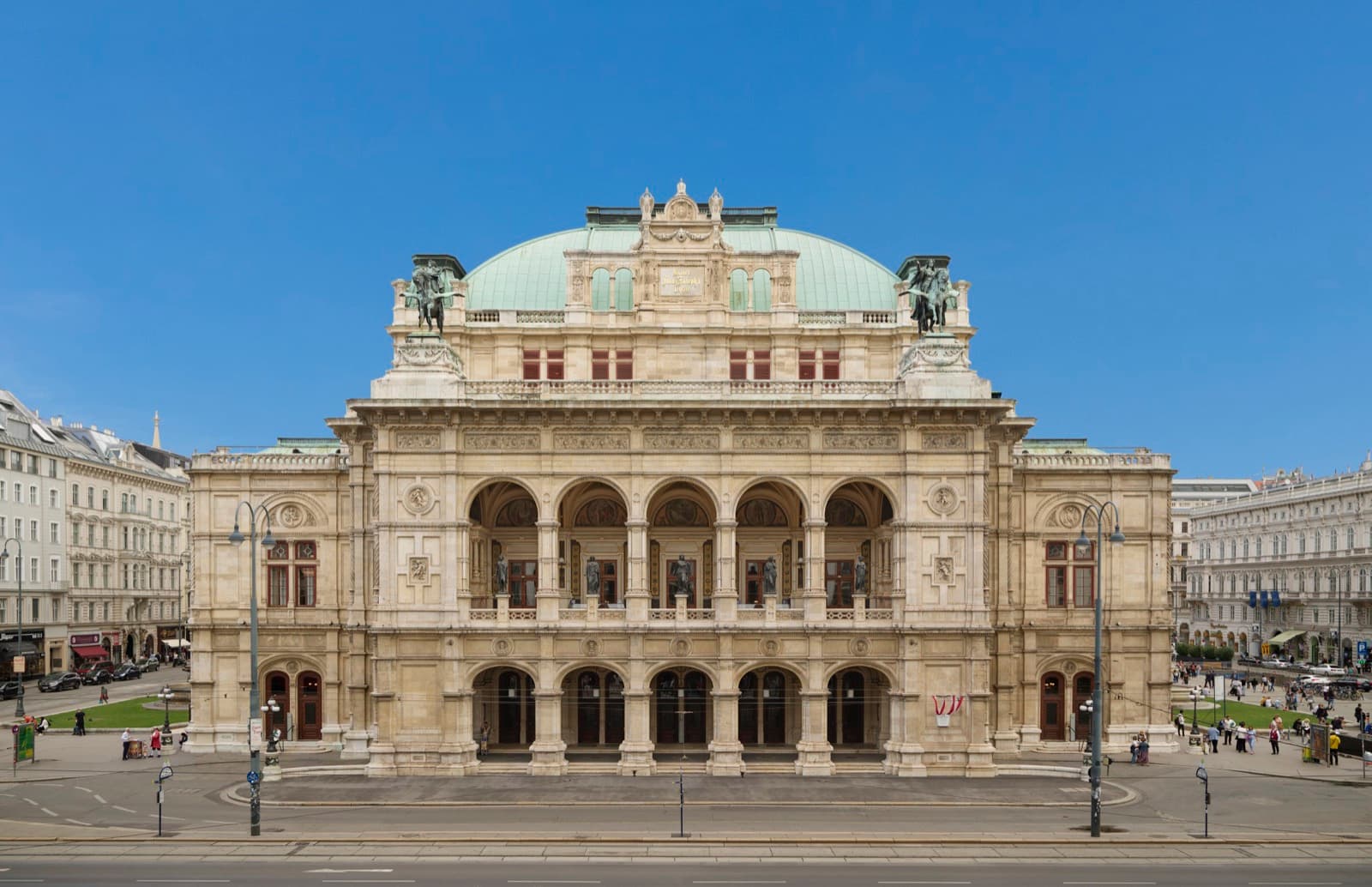
The Vienna State Opera was the first of the great Ringstrasse buildings to be completed, and it opened to public mockery on the twenty-fifth of May 1869 before growing into one of the most beloved faces of the city. Stand in front of it today, on the wide curve of the Ring near the old town, and you are looking at the building that set the whole boulevard in motion. Every argument the Ringstrasse would go on to make in stone, a Greek temple for the Parliament, a Gothic hall for the City Hall, a Renaissance palace for the University, began here, with a lavish opera house placed first along the new avenue as a temple to art.
The first building on the Ring
To understand why the opera matters, you have to understand what the Ring is. For centuries a ring of medieval walls held Vienna in. On the twentieth of December 1857, the Emperor Franz Joseph signed an order that began with four words meaning "It is my will," commanding that the walls come down and a grand boulevard rise in their place. Demolition began in March 1858, and the first section of the Ringstrasse opened on the first of May 1865.
Along that curving avenue, a confident age raised a parade of monumental public buildings, and the opera got there first. That order of completion is not a trivial fact. When a city clears its defensive walls and has to decide what to build in their place, the first choice announces its priorities. Vienna did not begin with a barracks, a bank, or a palace. It began with an opera house. The message was that this new city would define itself through culture, and the buildings that followed took their cue from it.
The house opened on the twenty-fifth of May 1869 with a performance of Mozart's Don Giovanni. Its two architects, van der Null and Sicardsburg, worked in a Neo-Renaissance style, all arches, loggias, and sculpted detail. Read the facade and you can see them reaching for grandeur and refinement at once, a building meant to look expensive and cultivated from the street.
A design that was laughed at
Hear a stop from this walk
Maria-Theresien-Platz: The Twin Imperial Museums
The opera's early history is one of the saddest stories on the Ring, and it is worth carrying with you as you look at the stone. When the building went up, the public and the press mocked it harshly. The loudest complaint was about its proportions. Critics said it sat too low against the raised level of the new street, as though it were sinking, and the phrase "sunken crate" stuck to it. In a city that took its public architecture as seriously as its music, the ridicule was relentless.
The two men who designed it did not survive the reception. Van der Null died by suicide in 1868. Sicardsburg died of tuberculosis about ten weeks later. Neither architect lived to see the opera completed, and neither heard the applause that eventually came. That detail changes how the building reads. The face that now draws crowds and postcards was, to the people who made it, a public humiliation. The vindication came too late for them, and Viennese memory has held onto that irony ever since. The building that was laughed at became one of the most recognizable symbols of the city, and the story of its architects is part of why.
The century written into the walls
If the opening carries the nineteenth century, the building's later history carries the twentieth. On the twelfth of March 1945, American bombardment struck the opera. The auditorium and the stage were destroyed, along with around one hundred and fifty thousand costumes, an entire working archive of the house reduced to ash. Yet the grand foyer survived. Anyone who has walked through that foyer is walking through the part of the building that outlasted the war.
The rebuilding, and the choice of what to perform when the doors reopened, tells you how much the opera had come to mean. It reopened on the fifth of November 1955 with Beethoven's Fidelio. That was not a neutral pick. Fidelio is an opera about liberation, about a prisoner freed and tyranny undone, and staging it at the reopening made the evening a public statement. The same year, Austria regained its full sovereignty. Reopening the opera with a story of freedom tied the building directly to the country's recovery. A house that had been mocked at its birth and gutted by war had become a stand-in for Austria itself.
Today the opera is home to the musicians of the Vienna Philharmonic and hosts hundreds of performances a year. It is a working stage, not a monument frozen behind glass, which is part of why it never settled into being merely old.
What to understand standing in front of it
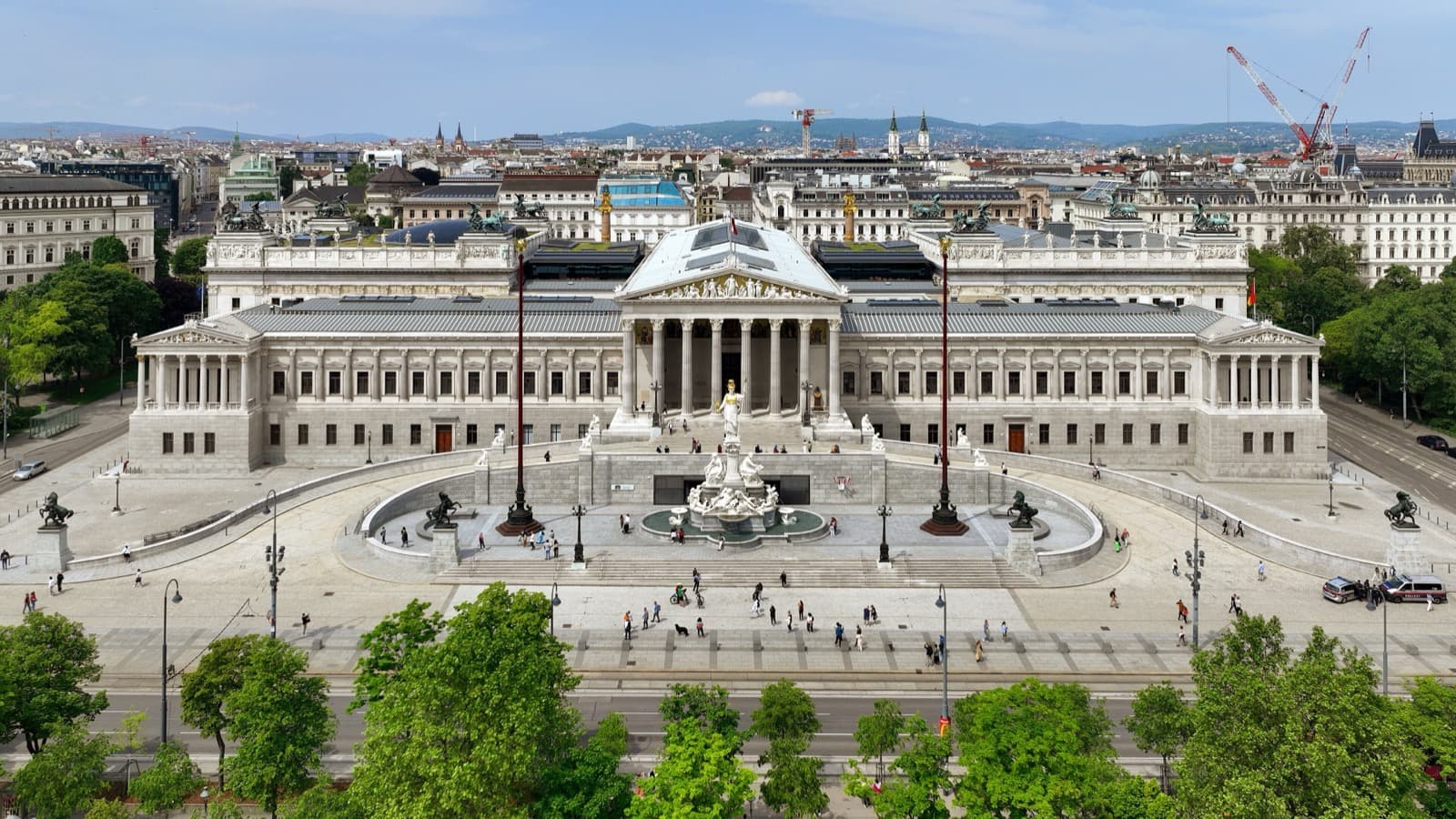
Here is the one thing to hold in mind at this stop. Notice how confidently the building announces the Ring's ambition. This is not a fortress or a church. It is a temple to art, and it was placed first along the new avenue on purpose. The whole logic of the Ringstrasse is that each building wears the costume of an older era to make an argument about what it is for, and the opera opens that conversation.
So before you move on, do what the boulevard invites you to do: read it. Look at how the loggias and arches try to lift the eye, and then remember the complaint that it sat too low. Look at the foyer windows and remember they survived the bombs. The opera is the overture to everything the Ring says next, and once you have it in your ear, the Parliament's Greek columns and the City Hall's Gothic spires stop being random grandeur and start sounding like answers to the same question.
The Vienna State Opera anchors the [vienna-ringstrasse] tour, which follows the Ring for roughly three and a half kilometres past seven of these monumental buildings, each one a different argument in stone. If you are planning your route through the city, browse the full set of Vienna walking tours or start from the Vienna city page. The exterior is free and open at every hour, and the story it tells does not need a ticket. Guided tours and performances inside are ticketed and can sell out, so book ahead only for the interior you truly want to see.
Walk the Ring one building at a time, and start where Vienna started, with the opera.
Sources
- Vienna State Opera, Wikipedia. Overview of the building's 1869 opening with Don Giovanni, its architects van der Null and Sicardsburg, its Neo-Renaissance style, and the wartime destruction and 1955 reopening with Fidelio.
- "Destroyed and rebuilt: 80 years after the bombs," Wiener Staatsoper (official site). Account of the twelfth of March 1945 bombardment, the surviving foyer, and the reconstruction.
- The construction of the Ringstrasse, Die Welt der Habsburger (Habsburg World). Confirms the twentieth of December 1857 imperial decree, the March 1858 start of demolition, and the first of May 1865 opening of the first section.
- Vienna Philharmonic, official orchestra history. Confirms the orchestra's musicians are drawn from the Vienna State Opera.
Ready to experience it?
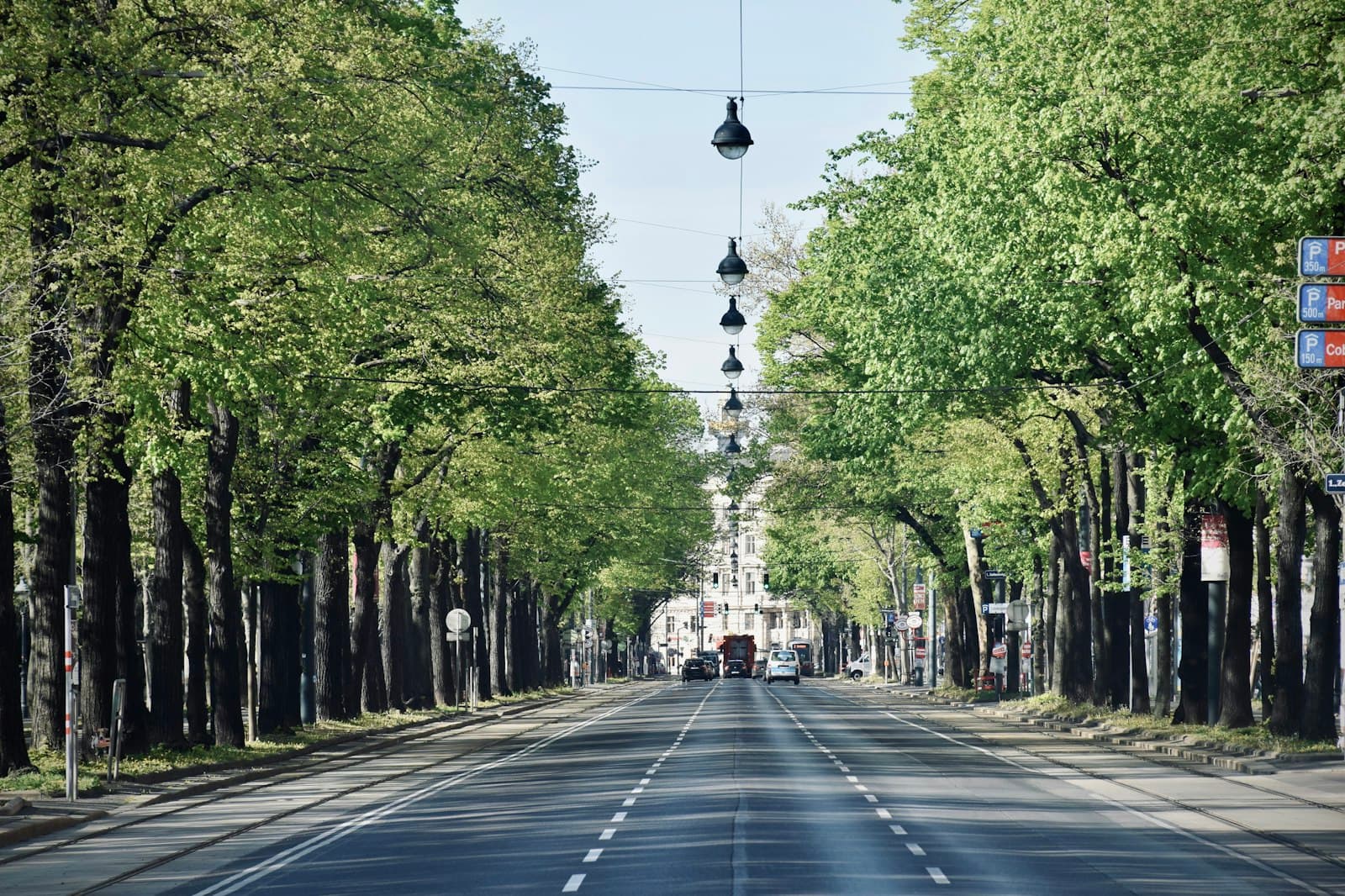
The Ringstrasse: The Grand Boulevard Built on the Walls
130 min · 3.6 km · moderate
More from Vienna
Explore more at your own pace.
One Day in Vienna: A Walkable Morning-to-Evening Itinerary
Vienna, a City Stacked on a City: Reading the Capital in Three Directions
Heldenplatz and the Neue Burg: Why Vienna's Grandest Palace Wing Was Never Finished
Hoher Markt and the Anker Clock: Where Roman Vienna Surfaces
The Austrian Parliament: Why Vienna Built Its Legislature as a Greek Temple