Most great churches are built to house a god. St Mark's Basilica was built to house a theft. The saint inside it was smuggled out of Egypt, the horses over its door were looted from Constantinople, and much of the gold and marble that makes it glow was carried home as spoils of war. Stand at the head of Piazza San Marco and you are not looking at a cathedral so much as at the treasury of a maritime empire, dressed as a church.
A church built for a stolen saint
Venice needed a saint worthy of its ambitions, and it went and took one. Chronicles record that around 828 or 829 two Venetian merchants removed the relics of Saint Mark the Evangelist from Alexandria in Egypt and carried them back by sea. The famous detail is the smuggling method: the relics were said to be hidden under a layer of pork to deter Muslim inspectors from searching too closely. By 836 the saint was installed in Venice, and the city had its patron. The lion of Saint Mark became the emblem of the Republic, and every later grandeur of this building traces back to that single audacious act of holy theft.
The present church
Hear a stop from this walk
St Mark's Basilica: The Church of Gold and Stolen Horses
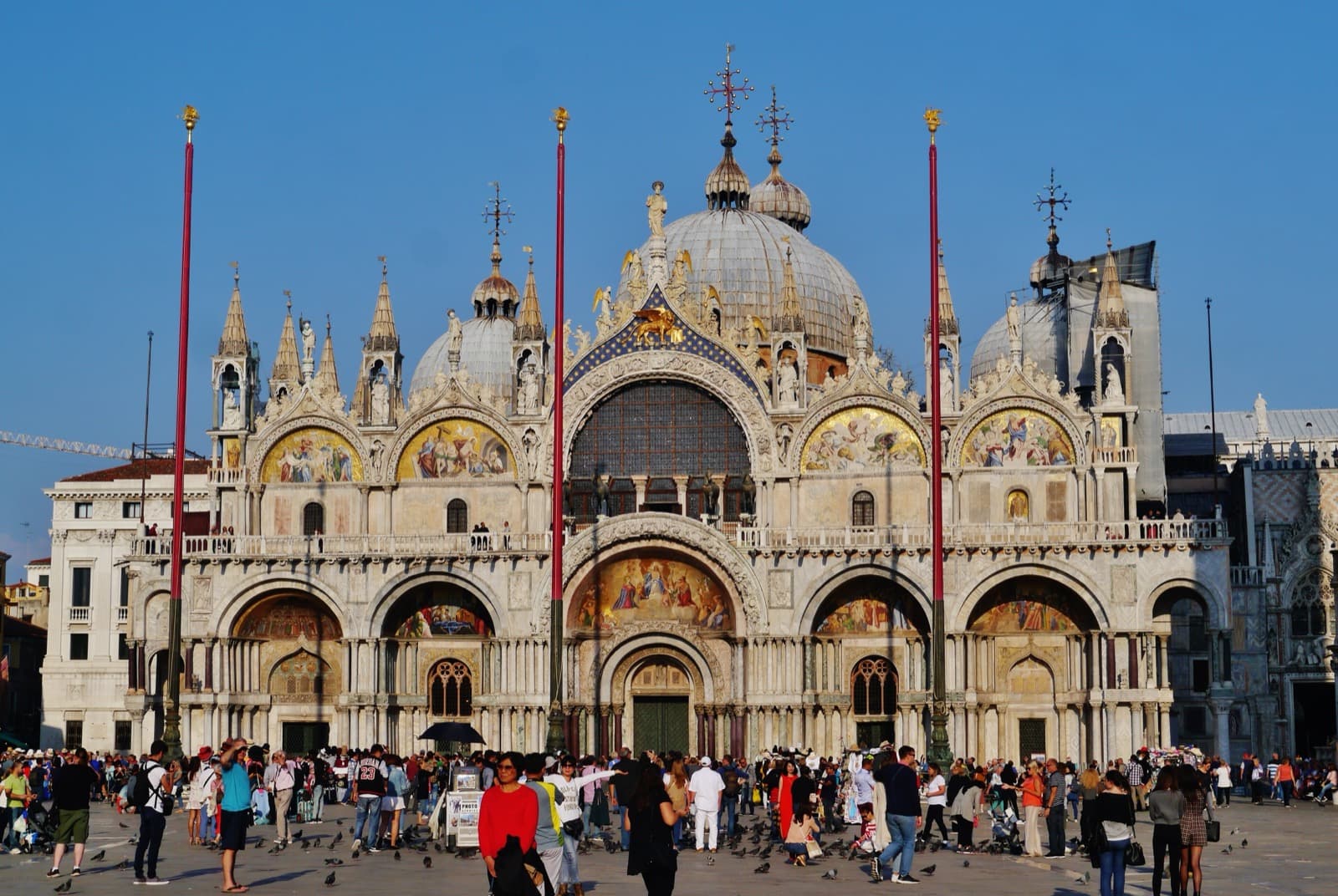
The basilica you see is not the first on the site, but it is very old. The present church was begun probably in 1063, under Doge Domenico Contarini, and was consecrated on 8 October 1094. Its plan is a Greek cross, four arms of equal length, crowned by five domes, one over the center and one over each arm. This is not the shape of a Western cathedral. It is Italo-Byzantine, and its design was derived directly from the Church of the Holy Apostles in Constantinople, the imperial capital of the Eastern Roman world. Venice looked east for trade, and it looked east for its architecture too. To walk into St Mark's is to walk into a piece of Byzantium moored on the Adriatic.
Eight hundred years of gold
The first thing the interior does is overwhelm you with gold. The walls and the undersides of the domes are sheathed in gold-ground mosaics, tiny cubes of glass and gilded glass set into the vaults, depicting saints, prophets and scenes from the Bible against a shimmering gold sky. This is not the work of one generation. The mosaics span roughly eight hundred years of work, added, repaired and extended across the centuries, so that the whole surface is a slow accumulation of light. On a bright day the reflected glow off the ceilings earned the building its nickname, the Church of Gold. Give your eyes a minute to adjust when you step inside, then look up before you look at anything else.
The horses that came from Constantinople
The most direct piece of loot is out on the facade. The four bronze Horses of Saint Mark were among the spoils brought home from Constantinople after the Fourth Crusade of 1204, the campaign in which a Venetian-led army sacked the greatest Christian city in the world. The horses were mounted on the facade of the basilica in the middle of the 13th century, four bronze animals stepping over the main door, a public advertisement that Venice had humbled an empire and taken its treasures. What you see on the loggia today are replicas. Since 1974 the original horses have been kept inside, in the basilica's museum, protected from the weather and the salt air. If you want to stand in front of the actual bronzes that were looted in 1204, that is where they are.
How to visit it well
St Mark's rewards a plan. The basilica now offers low-cost timed entry, around 10 euros in 2026, and the timed ticket is worth booking ahead to skip the queue that curls across the piazza. Two of the greatest things inside are paid add-ons on top of that entry: the Pala d'Oro, the jeweled gold altarpiece behind the high altar, and the Museum, which is where the original four horses live. Dress is enforced, shoulders and knees covered, and large bags are not allowed in. Go early or late in the day for the calmest light, and remember that this is a working church, so quiet is expected.
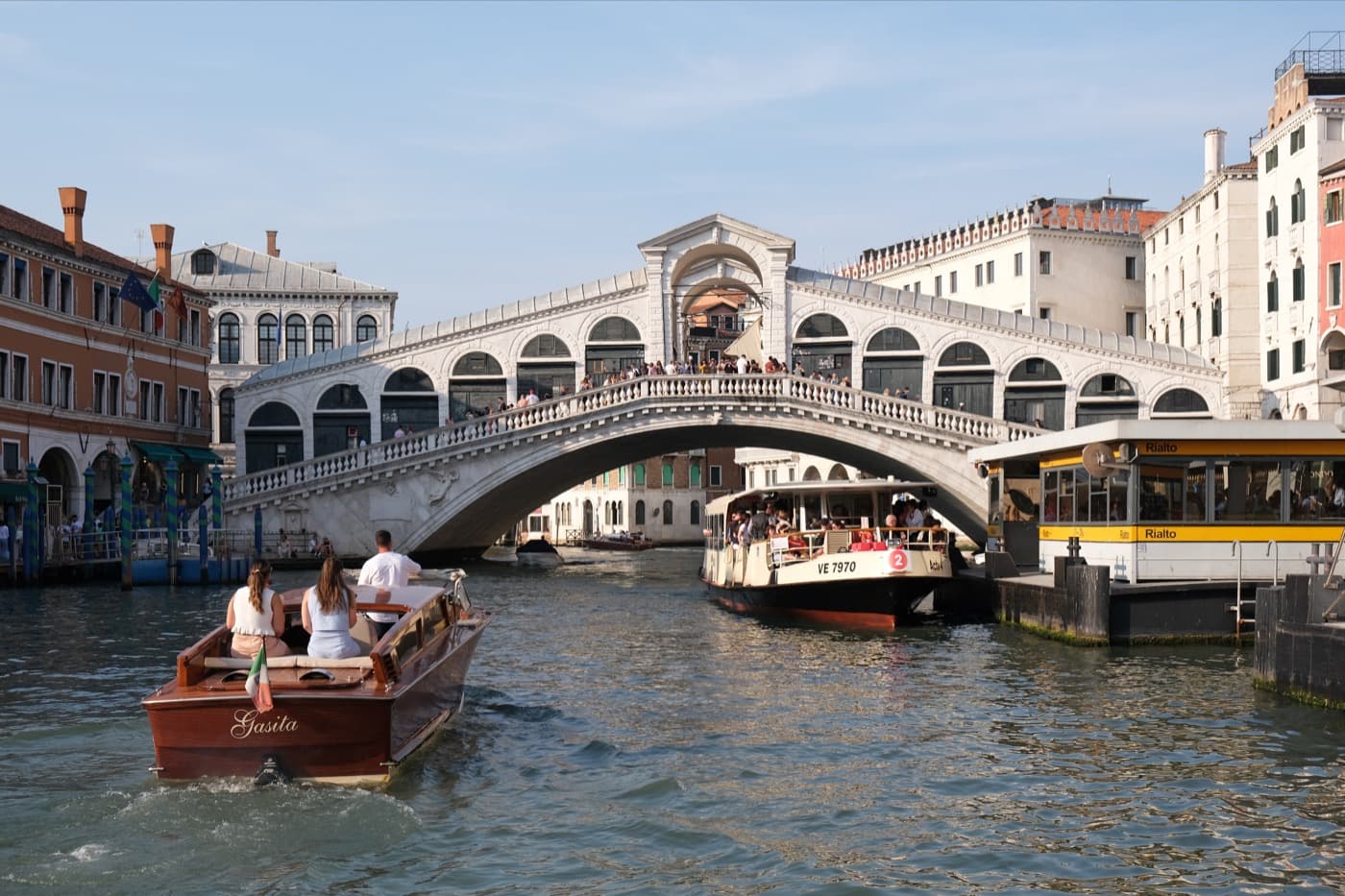
This is the second stop on a walk through the ceremonial heart of Venice. From here it is a few steps to the Doge's Palace, the seat of an elected empire next door, and the same trading city that stole this saint also engineered itself on water for trade and built the Rialto Bridge that paid for itself. To plan the day around it, browse the Venice walking tours or start from Venice. Look up at the gold, then out at the horses, and you are reading the whole Republic at once.
Sources
- St Mark's Basilica, Wikipedia. The present church begun probably in 1063 under Doge Domenico Contarini and consecrated on 8 October 1094; the Greek-cross plan with five domes in Italo-Byzantine style derived from the Church of the Holy Apostles in Constantinople; the gold-ground mosaics spanning roughly eight hundred years; the Horses of Saint Mark brought from Constantinople after the Fourth Crusade of 1204, mounted in the mid-13th century, with originals moved to the museum since 1974; and the relics of Saint Mark removed from Alexandria in 828 or 829, hidden in pork, and installed by 836.
- Roamer tour transcript, "Piazza San Marco" (venice-san-marco), fact-audited basilica stop.
Ready to experience it?
Piazza San Marco: The Drawing Room of Europe
90 min · 0.8 km · easy
More from Venice
Explore more at your own pace.
One Day in Venice: A Walkable Morning-to-Evening Itinerary
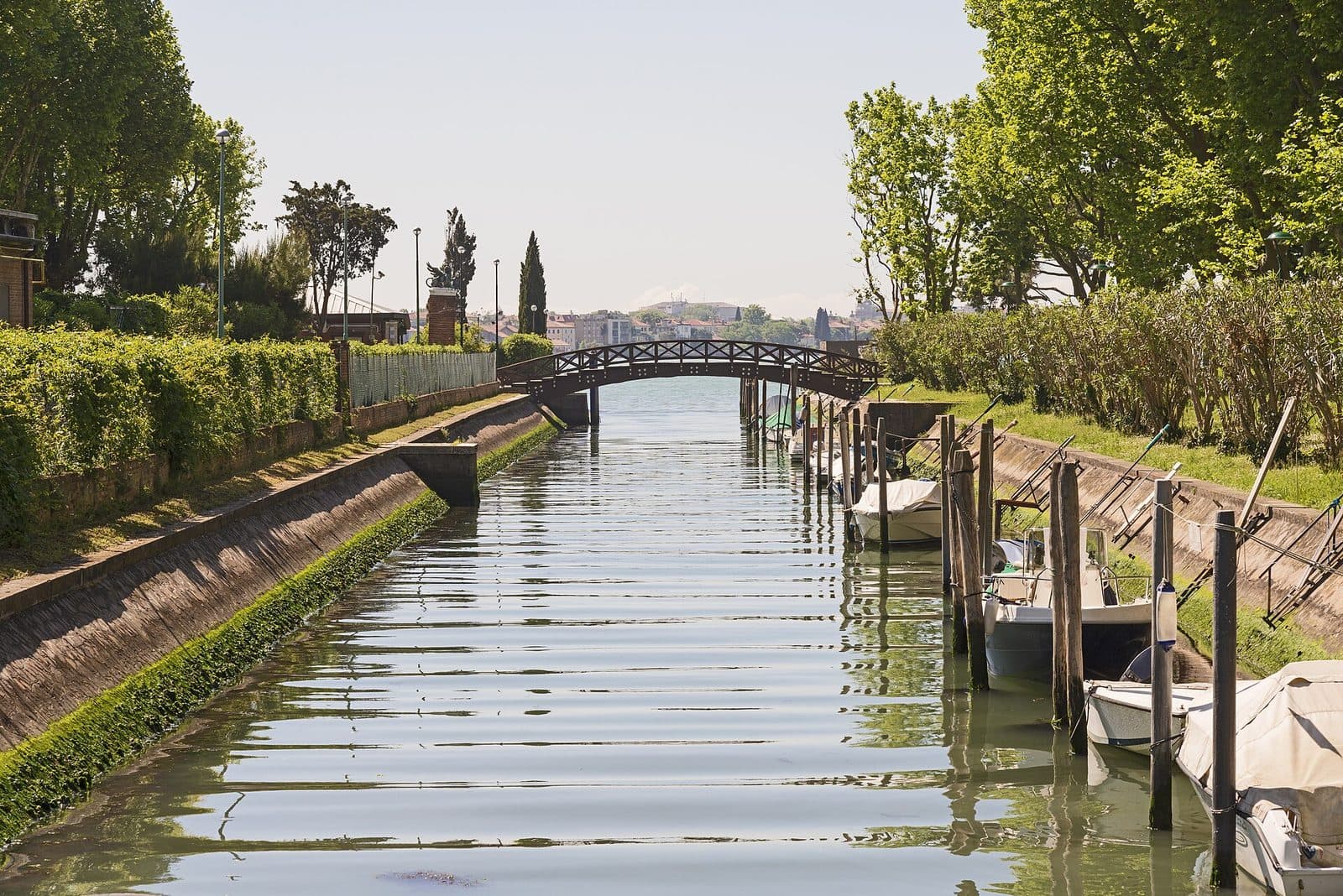
Venice: The City Engineered on Water for Trade
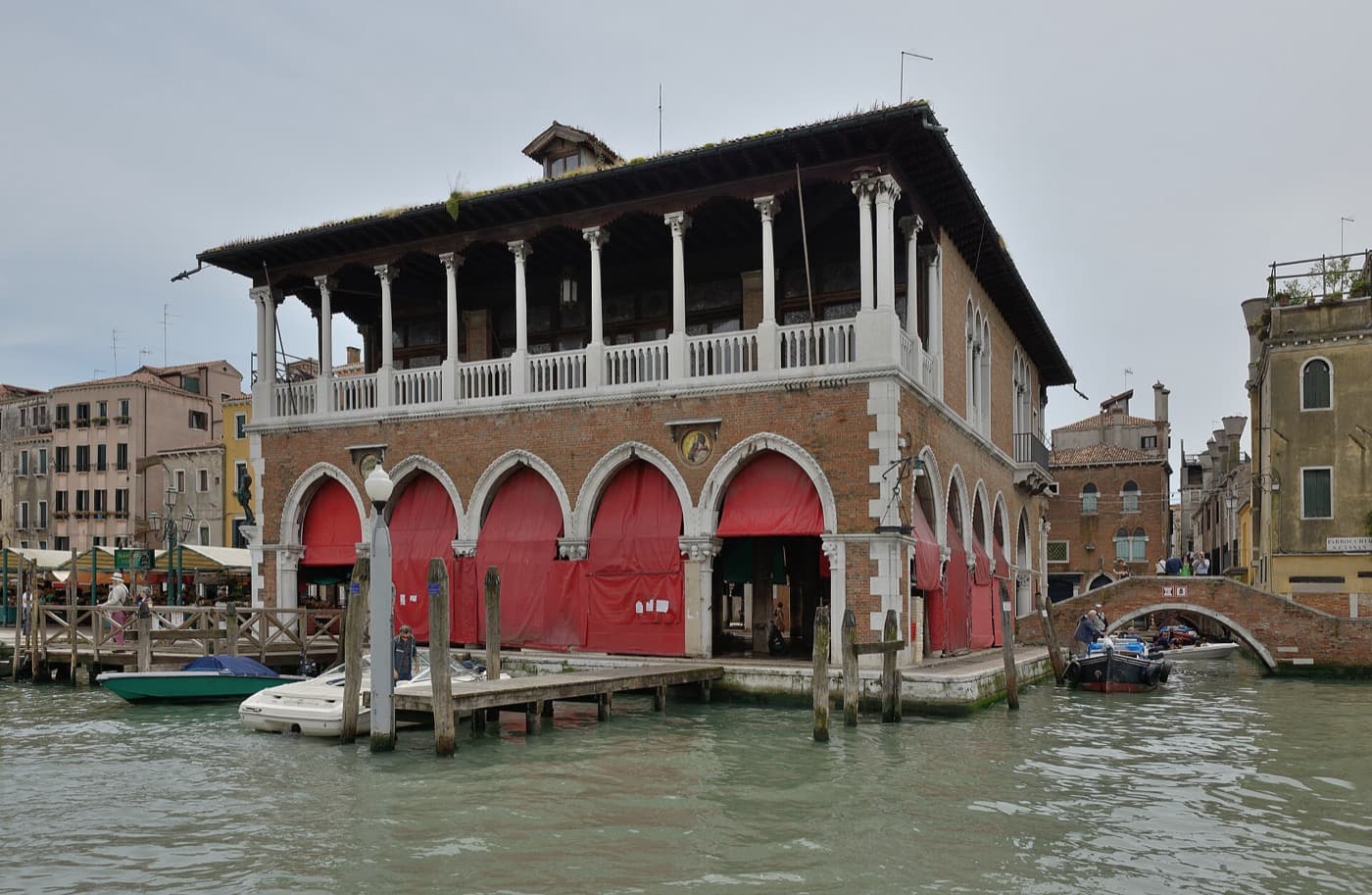
Venice's Rialto Market: The Engine Room That Paid for the Palaces
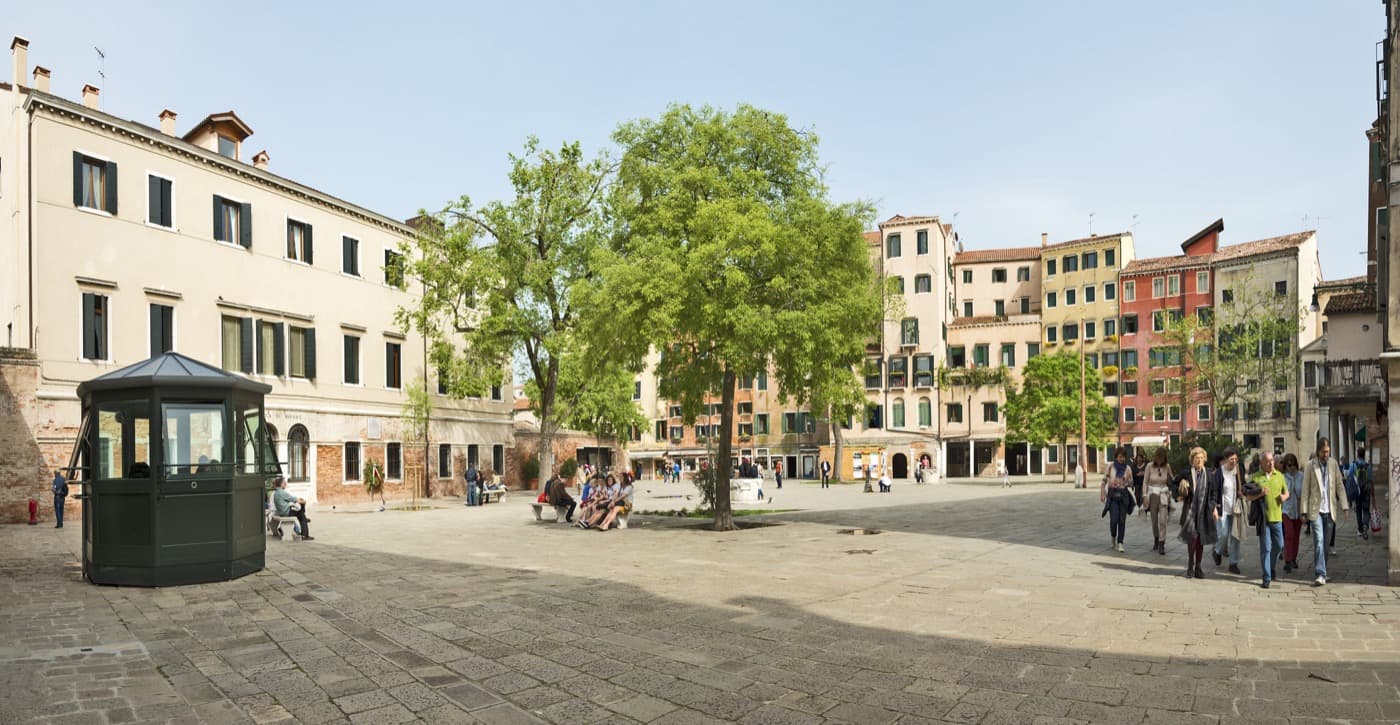
Where the Word Ghetto Was Born: A Walk Through Venice's Cannaregio
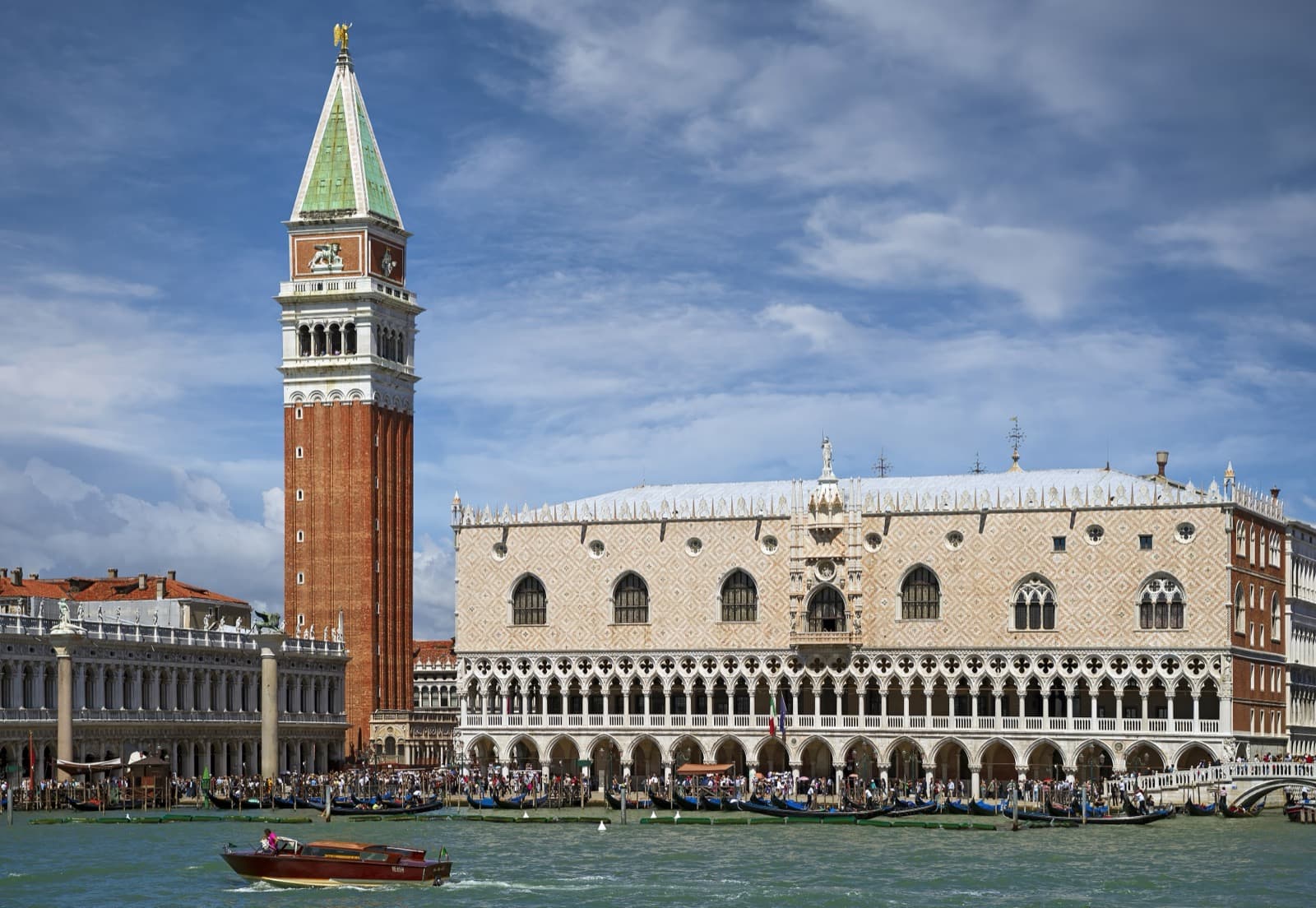
The Doge's Palace: Seat of an Elected Empire