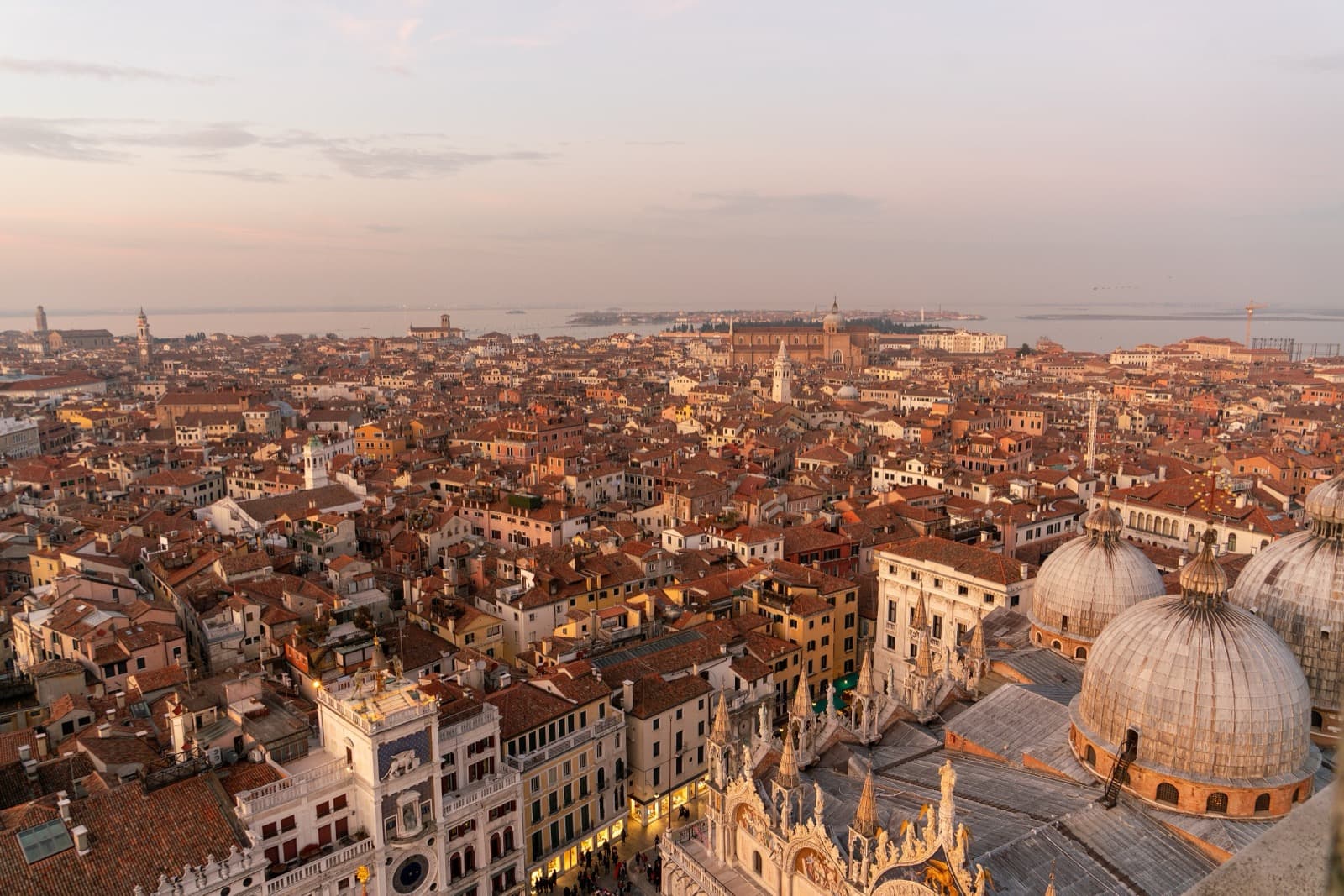
The monumental heart of Venice, walked in a tight loop: the one square grand enough to be called a piazza, the gold-domed basilica raised over relics carried from Egypt, the bell tower that fell in a heap and was rebuilt exactly as it was, the Gothic palace of an elected doge, the enclosed bridge over a narrow canal, and the two columns at the water where the Republic staged its power.
Start · Piazza San Marco: The Only Square Venice Calls a Piazza
DirectionsStops
- 1
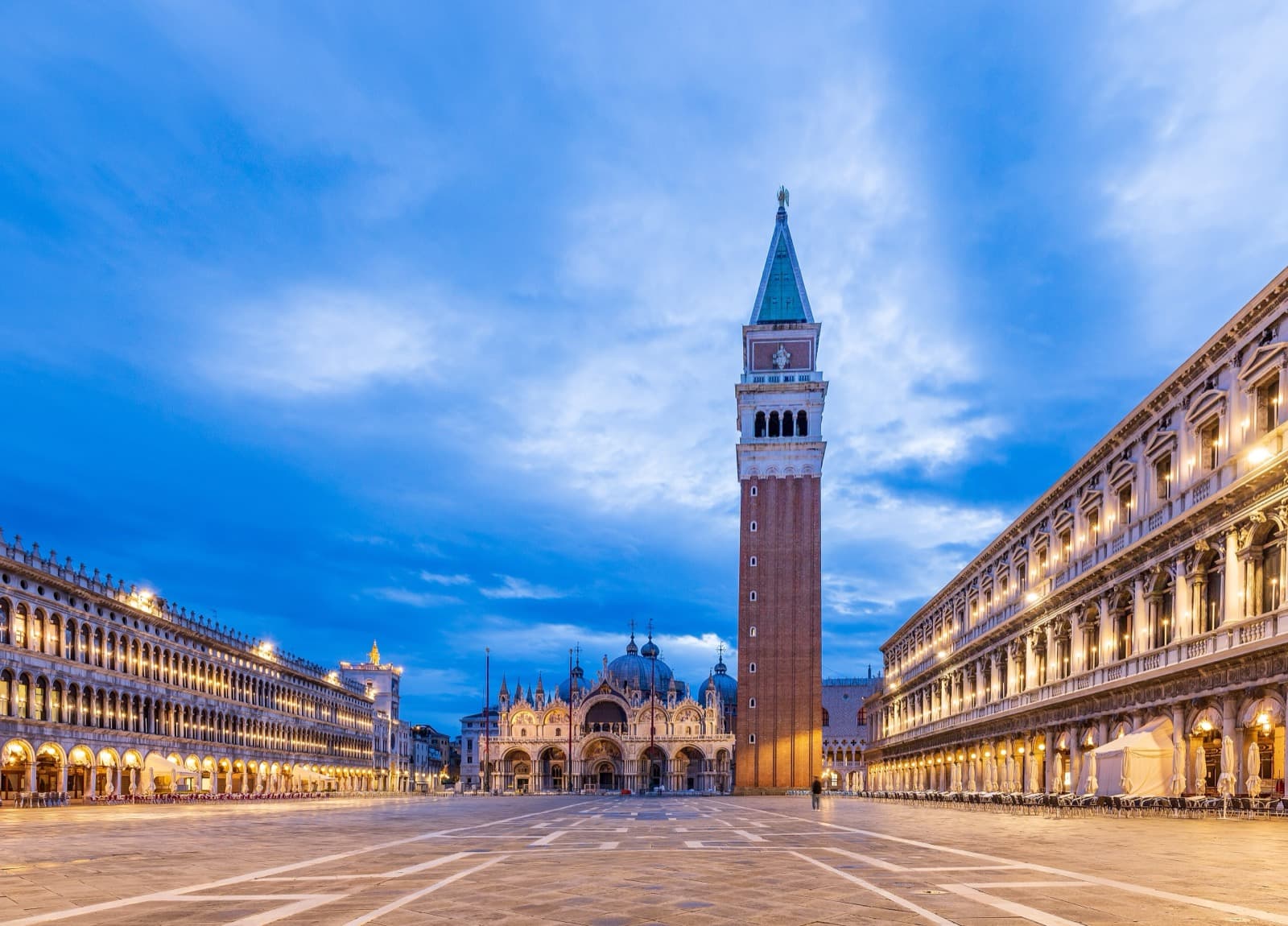
Piazza San Marco: The Only Square Venice Calls a Piazza
The one paved square in the whole city grand enough to be called a piazza, framed by the long arcades of the Procuratie and open to the seasonal high water.
- 2
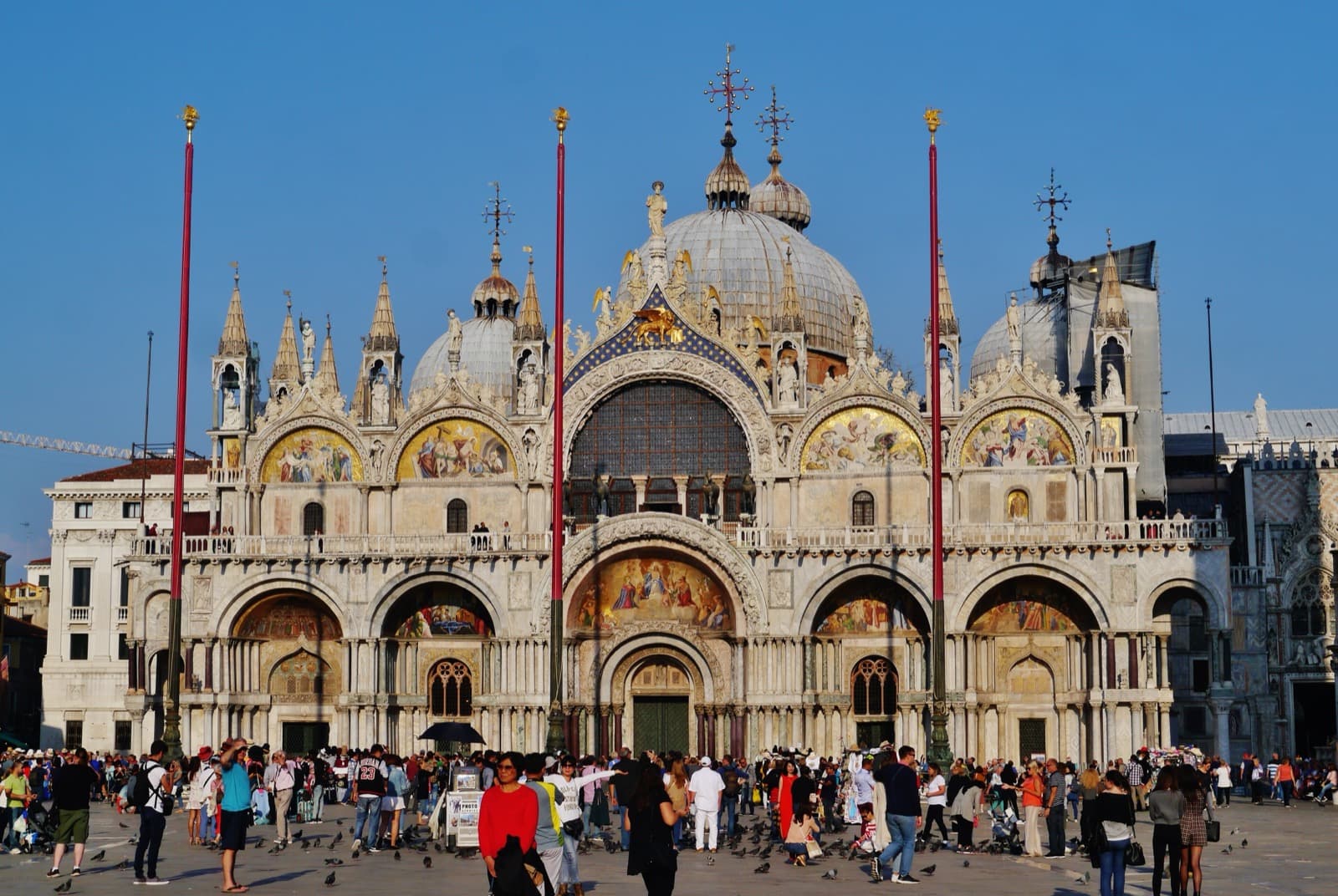
St Mark's Basilica: The Church of Gold and Stolen Horses
A five-domed Byzantine church begun in the eleventh century over relics carried from Egypt, sheathed inside in gold mosaics and crowned outside by horses looted from Constantinople.
- 3
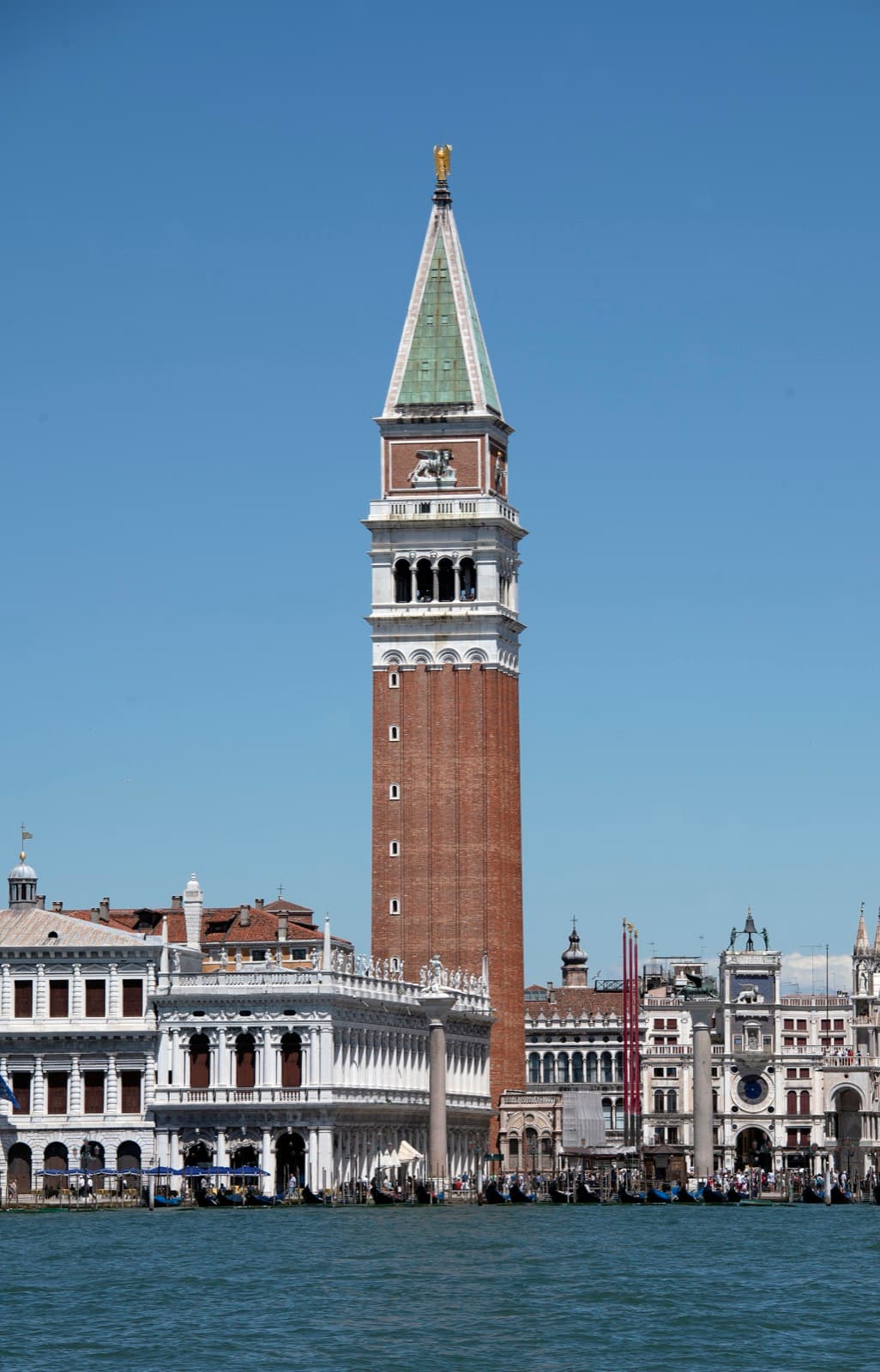
St Mark's Campanile: The Tower That Fell and Rose Again
The tallest structure in Venice, once a watchtower and lighthouse, which collapsed in a heap in nineteen oh two and was rebuilt exactly where it stood and as it was.
- 4
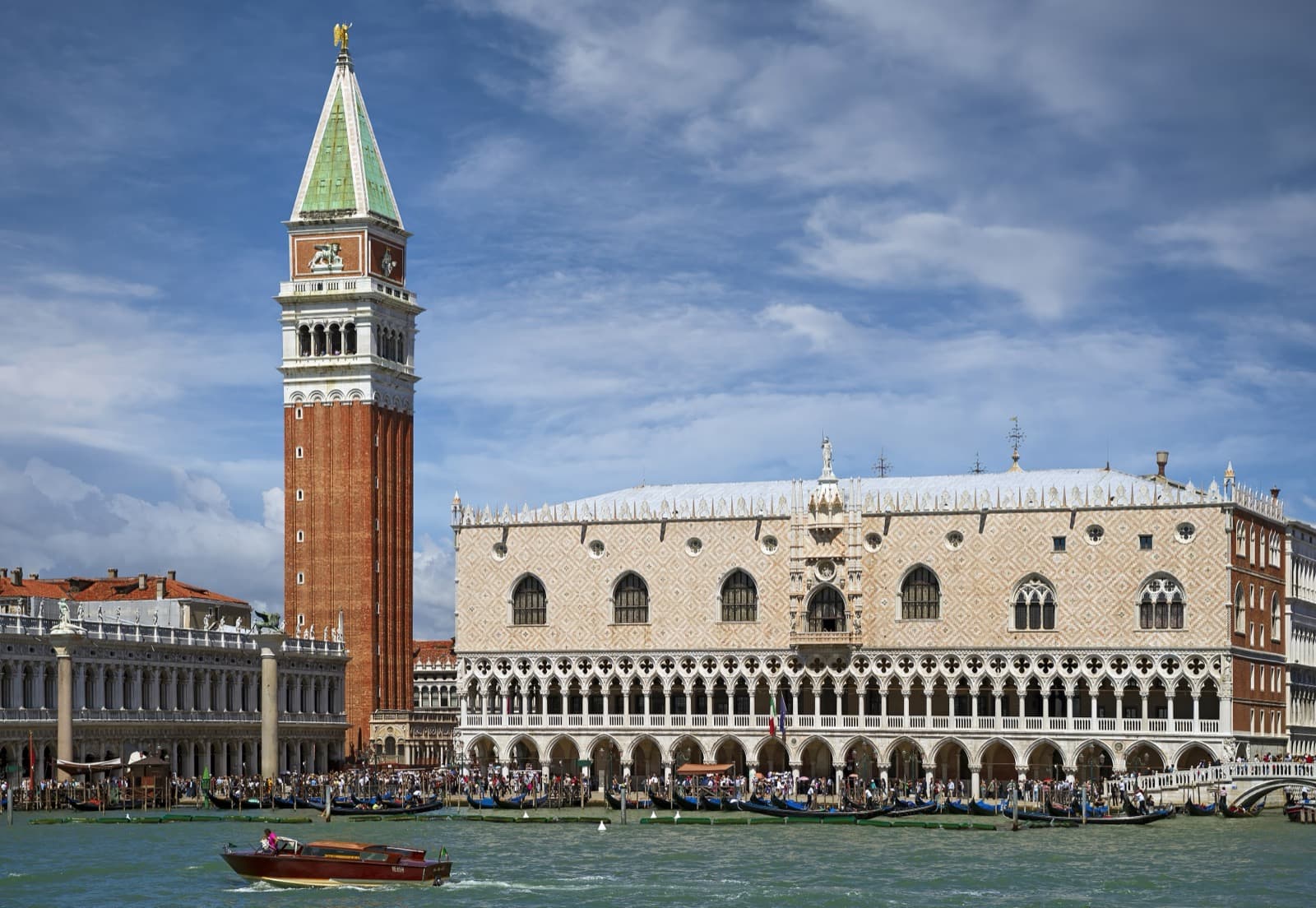
Doge's Palace: The Seat of an Elected Empire
The pink-and-white Gothic palace that held the government, the residence of the elected doge, and a rooftop prison, and now contains the largest oil painting in the world.
- 5
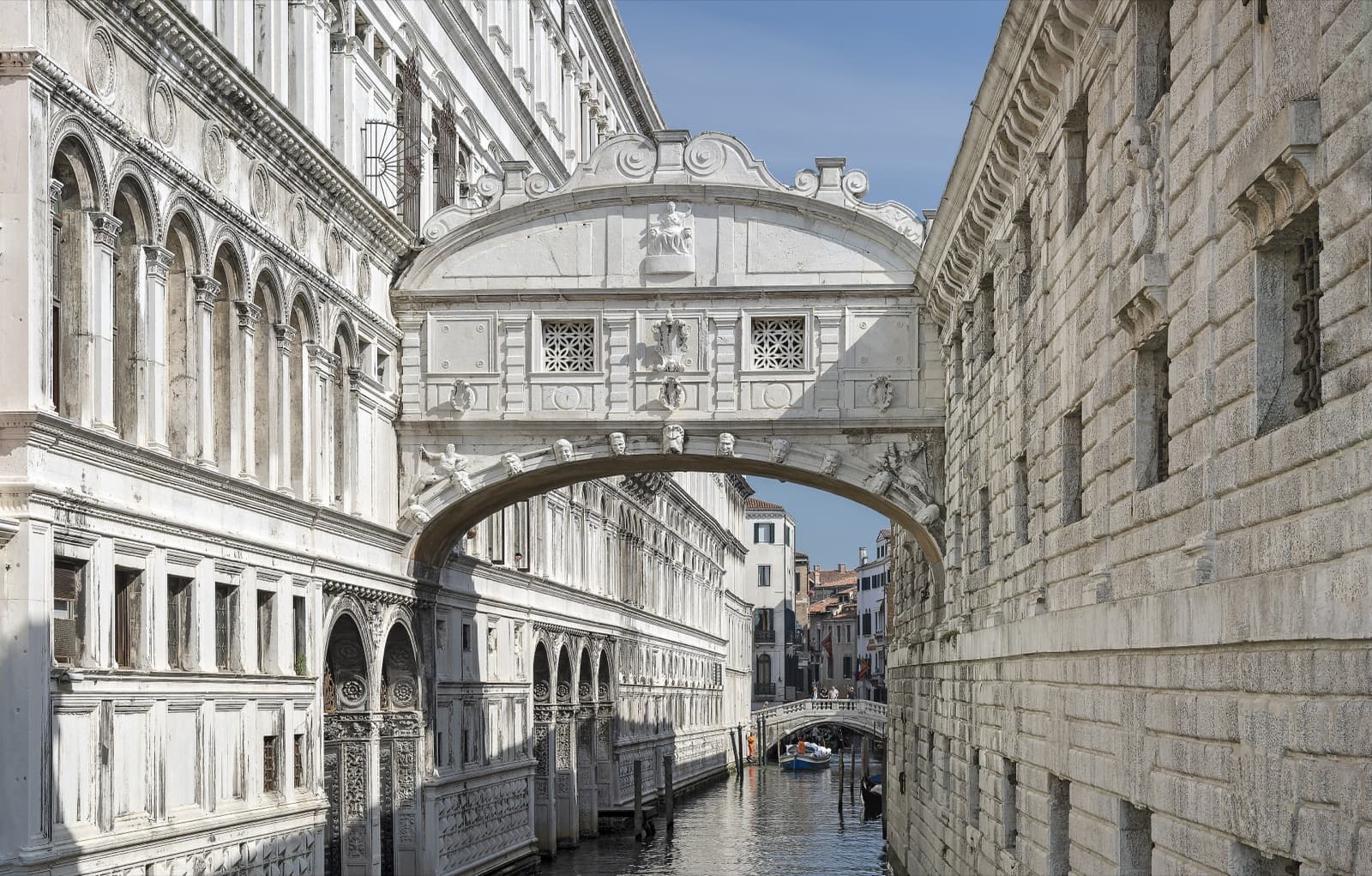
Bridge of Sighs and the New Prisons: The Romantic Legend
A small enclosed limestone bridge of about sixteen hundred that linked the palace court to the New Prison across the canal, later wrapped in a Romantic story of a prisoner's last view.
- 6
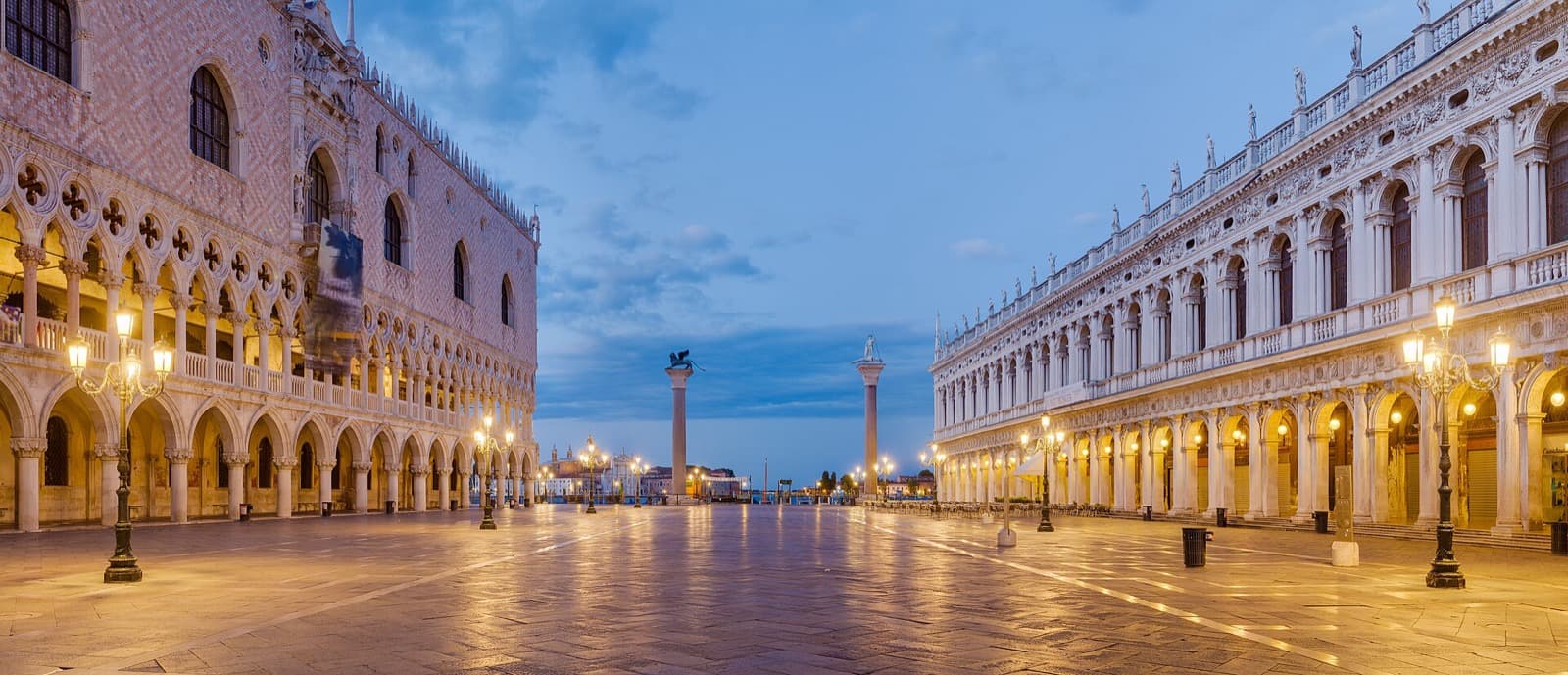
The Piazzetta and the Two Columns: Where the City Meets the Water
The open waterfront extension of the square between the palace and the library, ending at the two granite columns of Saint Mark and San Todaro, once the Republic's place of execution.
Details
Best Time to Visit
Go early, ideally right at 8am, before the cruise-ship day trippers pour in from mid-morning. The square is calmest and most photogenic in the first light, and early is also your best defence against acqua alta, the seasonal high water that floods this low square with little warning, most often in autumn and winter. Check the tide forecast the night before; when high water is predicted, come at low tide or expect raised walkways across the piazza.
Pro Tips
- •St Mark's Basilica now needs a timed-entry ticket even for the nave, about 10 euros as of 2026, though the mosaic facade and the four replica horses are free to admire from the square. Book your slot online to skip the queue.
- •The Campanile lift is about 15 euros online (a little less on-site) and runs on timed entry, so buy ahead on a clear day for the best view over the domes and the lagoon.
- •The Doge's Palace is a separate ticket, about 30 euros, and worth it for the Great Council chamber and the inside crossing of the Bridge of Sighs; the pink Gothic facade is free from the Piazzetta.
- •See the Bridge of Sighs for free from the Ponte della Paglia, the little stone bridge over the Rio di Palazzo, rather than paying just for the view; you only cross it on the palace museum route.
- •Prices and ticket rules here change most years, so confirm current fares on the official sites before you go, and note the two columns and the whole outdoor loop cost nothing.
- •Go at your own pace and treat each stop as skippable; linger where a facade or a mosaic holds you and move on where it does not.
Safety & Precautions
- •The square is one of the lowest points in Venice and floods fast during acqua alta. Watch the tide forecast, wear waterproof shoes in autumn and winter, and use the raised walkways rather than wading.
- •Crowds around the basilica and the two columns are dense and pickpockets work them. Keep your bag closed and in front of you and stay alert in the busiest stretches.
- •St Mark's Basilica enforces respectful dress: cover your shoulders and knees, remove hats inside, and keep voices low, as it is an active place of worship.
- •The paving is stone and can be slick when wet or flooded, and the Campanile and palace involve stairs and timed entry, so watch your footing and mind your entry window.
- •Sellers work the square with roses, friendship bracelets, and offers to take your photo. Do not accept or pick up anything handed to you, as it is followed by a demand for payment and can mask a pickpocket. Wave them off politely and keep walking.
Travel advisory: Exercise Increased Caution (Level 2).
Gallery
Related Reading
Go deeper on what you'll see, hear, and walk through.
Read the walk
The full story of Piazza San Marco: The Drawing Room of Europe, in words. Prefer to listen? Play it narrated, from home or on location.
Introduction
There are cities with a great square, and then there is this one, the single space in all of Venice grand enough to earn the name piazza. Every other open space in the city is only a campo, a field, because for centuries this was the one paved square while the rest began as grass. Around it stand the long arcades of the Procuratie, the gold and stone front of a basilica raised over relics carried from Egypt, a bell tower that once served as a lighthouse, and the pink Gothic palace from which an elected doge ran a maritime empire. It is one of the lowest points in the city, among the first to flood when the seasonal high water rises. This tour has six stops, and it covers about eight hundred metres, here in Venice, in Italy. Give it about ninety minutes, because although the loop is short, every facade and column carries several centuries pressed into it, and the route circles back on itself between the monuments. You will move from the open square to the basilica front, up to the bell tower, along the Gothic palace, across the enclosed bridge above a narrow canal, and out to the two columns at the lagoon's edge, where the Republic once staged its power. When you arrive at the open western end of the square, begin with stop one.
1. Piazza San Marco: The Only Square Venice Calls a Piazza
Welcome. You are at the open western end of the square, with the whole of Piazza San Marco stretching away in front of you toward the east, where the mosaic front of the basilica catches the light. Take a moment with the scale of it, because this is a genuine rarity in Venice. It is the only public square in the entire city that Venetians call a piazza. Every other open space, and there are hundreds, is a campo, which simply means field, because for centuries this was the one square that was actually paved, while the others began as patches of grass. So the name itself tells you this ground was always different, always the centre.
The long arcaded buildings running down both sides are the Procuratie, once the offices and residences of the procurators of Saint Mark, the senior officials who managed the basilica and its estates. Together with the smaller open space in front of the palace, the Piazzetta, this square formed the social, religious, and political centre of the whole Republic. It was also, over the centuries, a work in progress. Back in the ninth century the square reached no more than about sixty metres to the west of where it now ends, and it was pushed outward again and again as Venice grew richer.
You may know the square's most famous nickname, the drawing room of Europe. That line is usually attributed to Napoleon, said to have called it exactly that, though it is worth knowing the attribution comes without proof, and the earliest trace anyone has found points only to an eighteen forty-four French guidebook, not to Napoleon himself. Whoever first said it, the image fits: a grand open room where the whole continent once came to meet.
One last thing to hold in mind as you look across it. This is among the lowest points in all of Venice, and one of the first places to flood during the acqua alta, the seasonal high water. When the tide climbs, the sea returns to the drawing room. With that in mind, let your eye travel east to the gleaming facade at the far end, and we will go to the basilica next.
2. St Mark's Basilica: The Church of Gold and Stolen Horses
You are now standing before the front of Saint Mark's Basilica, and there is no facade quite like it. The present church was begun probably in the year ten sixty-three under Doge Domenico Contarini and consecrated on the eighth of October, ten ninety-four. It was laid out on a Greek-cross plan crowned with five domes, in an Italo-Byzantine style, and its design was derived from the Church of the Holy Apostles in Constantinople. So this is Venice looking east, toward the Byzantine world it traded and fought with, rather than toward Rome.
Why a church here at all? Chronicles say that the relics of Saint Mark were carried out of Alexandria, in Egypt, by two Venetian merchants around the year eight twenty-eight, and installed in the church by the year eight thirty-six. The story goes that the merchants hid the relics under pork to deter Muslim inspectors from searching too closely. Whatever the truth of that detail, Venice built this whole basilica to house its patron saint.
Now look up at the loggia above the central doorway, at the four bronze horses. These are among the spoils brought back from Constantinople after the Fourth Crusade of twelve oh four, and mounted here in the middle of the thirteenth century. What you see outside today are replicas. Since nineteen seventy-four the four originals have been kept inside the basilica's museum, safe from the salt air. And if you step inside, the interior is sheathed in gold-ground mosaics, saints and prophets and biblical scenes, representing roughly eight hundred years of patient work. The nave now needs a timed ticket, though the facade and the horses are free to admire from here. When you are ready, turn to the free-standing bell tower rising just to your right.
3. St Mark's Campanile: The Tower That Fell and Rose Again
You are at the foot of Saint Mark's Campanile, the bell tower, and at ninety-eight point six metres it is the tallest structure in all of Venice. It was first intended not as a bell tower but as a watchtower and a lighthouse, a place from which lookouts could sight approaching…
Full narration for this stop unlocks with the tour.
4. Doge's Palace: The Seat of an Elected Empire
You are now looking at the Doge's Palace, the Palazzo Ducale, with its unmistakable pink and white Gothic front rising above rows of pointed arches. This was the machine room of the Republic. It held the government offices, a jail, and the residence of the Doge, the elected head…
Full narration for this stop unlocks with the tour.
5. Bridge of Sighs and the New Prisons: The Romantic Legend
You have reached the small canal beside the palace, the Rio di Palazzo, and the little enclosed white bridge arching over it is the Bridge of Sighs. The best view of it is free, from the Ponte della Paglia, the stone bridge just over the water, so find a spot along its rail.…
Full narration for this stop unlocks with the tour.
6. The Piazzetta and the Two Columns: Where the City Meets the Water
You have arrived at the Piazzetta, the smaller open space that links the great square to the water, running between the Doge's Palace on one side and the Marciana Library on the other, and opening onto the lagoon, the Bacino di San Marco. Ahead of you stand two tall granite…
Full narration for this stop unlocks with the tour.