Gastown: A Founding Story, Retroactively Curated
80 min · 1.1 km · easy
Vancouver likes to describe itself as young. Incorporated in 1886, glassy, self-invented, forever building the next version of its own skyline. That is true. It is also the tell. A city that is always new is a city that keeps clearing the ground it stands on.
Walk the four districts at Vancouver's core and the pattern is the same every time: something was erased, and something is now being reclaimed. The founding saloon was curated into heritage. A Black neighbourhood was razed for a viaduct. A park was laid on top of three villages and a burial ground. A residential peninsula was demolished and rebuilt dense in fifteen years. Read honestly, Vancouver is not a young city. It is a heavily edited one.
The founding that was written backward
Gastown's origin story is a saloon. In 1867, John "Gassy Jack" Deighton arrived on the south shore of Burrard Inlet and mill workers built him a wooden bar in exchange for whisky. The settlement took his name. That much is documented.
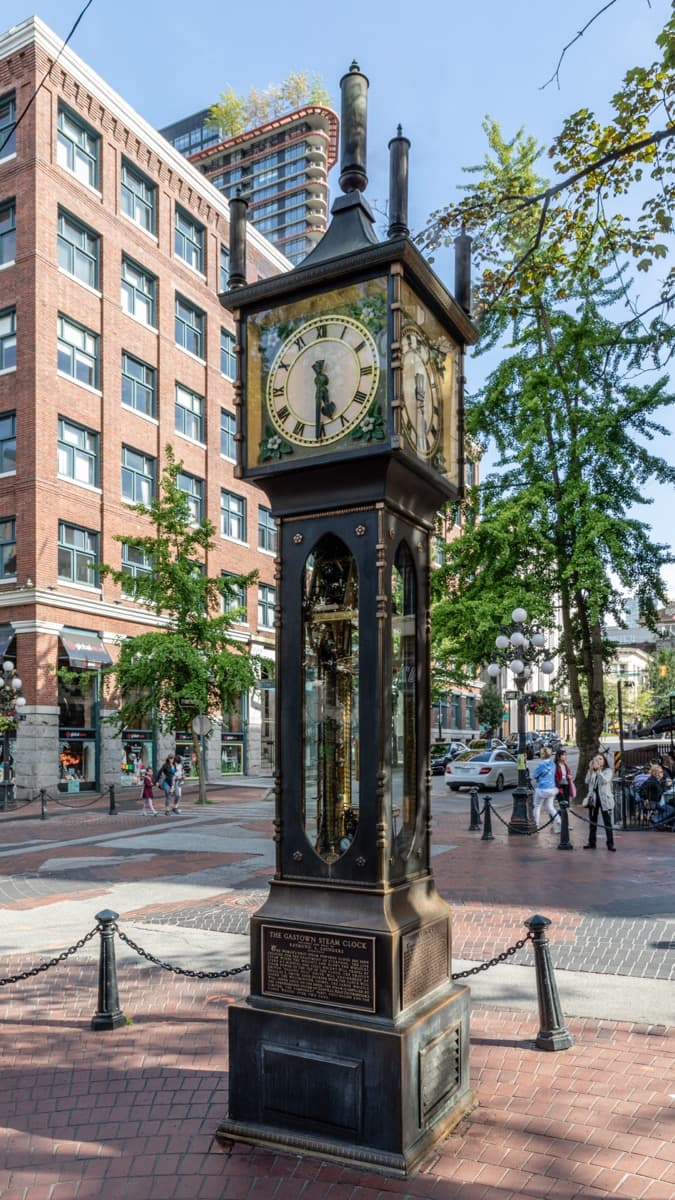
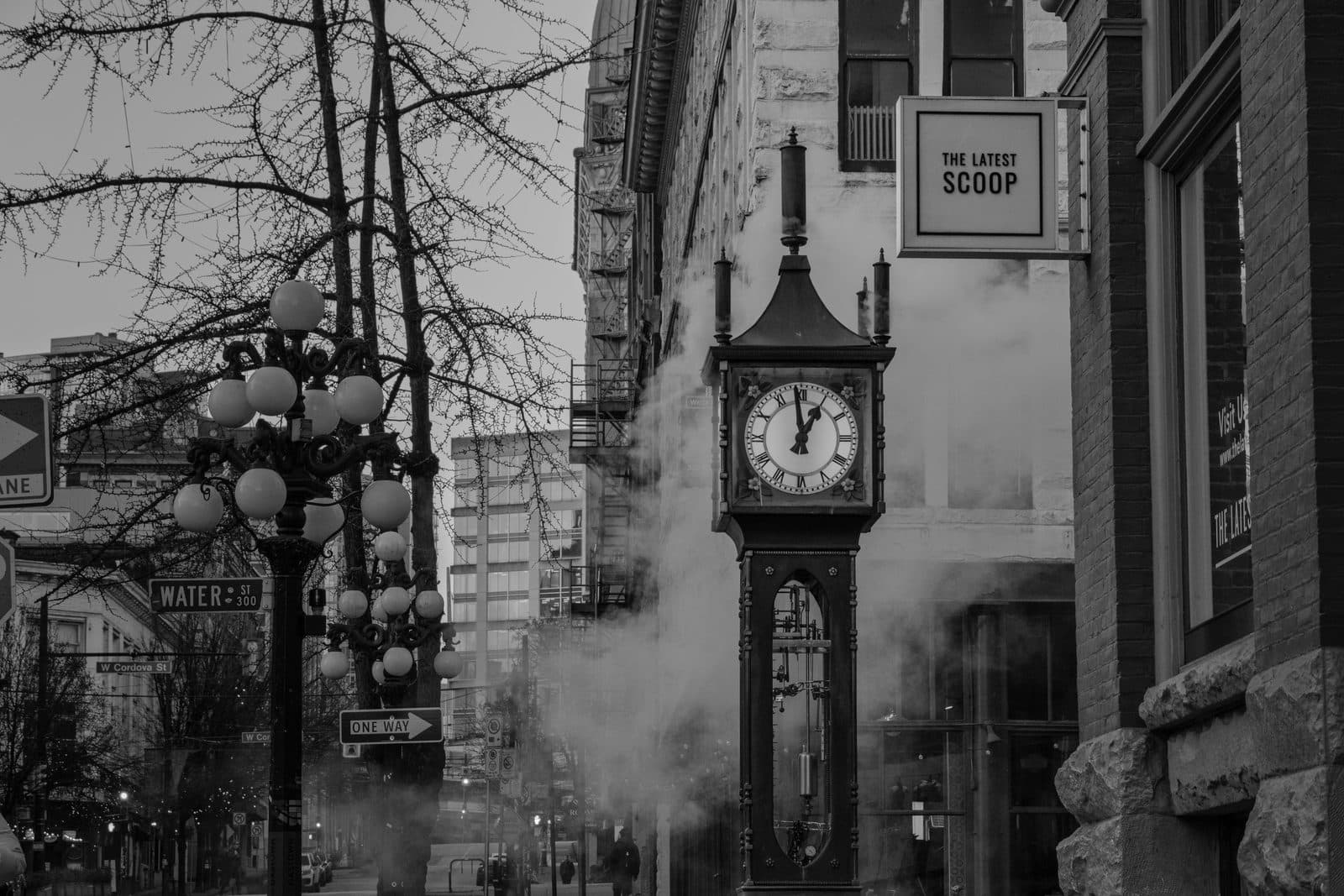
What visitors read as the "old part of town," though, is not 1867. The Great Vancouver Fire of 13 June 1886 destroyed almost every wooden building weeks after the city was incorporated. The cobblestones, gas lamps, and heritage plaques that define Gastown today were largely installed in the early 1970s by a group of developers who bought up derelict rooming houses cheap and sold the district back to the public as a Victorian survival. Even the famous Gastown Steam Clock is a 1977 public-art commission built to hide a steam vent, not a Victorian relic.
Gastown, in other words, is a founding story retroactively curated. The Gastown walking tour walks the seam between the mill town that actually existed and the heritage object that was manufactured a century later.
The neighbourhood that was cleared to start a freeway
Hear a stop from this walk
Maple Tree Square: The Climax
Vancouver tells itself a proud story: it beat the freeway. In the late 1960s a plan called Project 200 would have run an elevated highway through the downtown core, and community organizing killed it in 1972. That is real, and it matters. But it is only half of what happened on the ground.
The freeway fight had a first casualty. Beginning in 1967, the city demolished the western half of Hogan's Alley, the small district in Strathcona that was the centre of Vancouver's Black community, to build the Georgia Viaduct. The viaduct opened in 1971. The community that had anchored around the African Methodist Episcopal Fountain Chapel and Vie's Chicken and Steak House was scattered. Among its residents was Nora Hendrix, grandmother of the musician Jimi Hendrix, who visited her here as a child.
The Strathcona Property Owners and Tenants Association, founded by the Chan family in 1968, then stopped the freeway's second phase before it could cut through Chinatown. So both halves of the story are true, and the order is the point: the freeway was beaten across Chinatown only after Hogan's Alley was sacrificed to start it. The Chinatown and Hogan's Alley tour walks that unequal ledger, and it is picked up again in the food-and-neighbourhood piece on what displacement did to these blocks.
The park that is a village site
Stanley Park is Vancouver's postcard: four hundred hectares of rainforest wrapped in a seawall. It is also a colonial military reserve laid on top of at least two Coast Salish villages, a multi-ethnic squatter community, and a burial ground.
The village of X̱wáýx̱way, on the ground now occupied by the Lumberman's Arch lawn, was inhabited for an estimated three thousand years by Squamish, Musqueam, and Tsleil-Waututh families. In 1888, the year the park opened, the Park Board's road crews excavated its shell midden and ground it down for road surfacing while the village's neighbours watched. At Brockton Point, a community of about a dozen families was evicted over thirty-five years, the last cabin removed in 1958. The Stanley Park tour walks all of it, and the Brockton Point totem poles are their own lesson in what was preserved versus what was suppressed.
The land is unceded. No treaty was ever signed. On 16 May 2023, the flags of the three Nations were permanently raised at Brockton Point. The question of whose four hundred hectares this is has never been settled, and the park is where you can watch the reclamation happening in real time.
The reclamation is the second half of every story
What makes Vancouver worth walking slowly is that the erasures are not only in the past tense. Each of them now has a live counter-movement.
In Chinatown, the Sam Kee Building still stands as a 1913 rebuke to a racist expropriation, and in 2018 the city formally apologized for that discrimination, 106 years late. In Hogan's Alley, a street was renamed for Nora Hendrix in 2021 and the Hogan's Alley Society is organizing a community land trust for the ground the viaduct is scheduled to leave behind. In Stanley Park, the flags fly. In the West End, the West End and Davie tour walks Canada's first permanent rainbow crosswalks and a civic plaza named for Jim Deva, the bookseller who sued the federal government at the border and won.
That is the shape of the city. Vancouver is not old and it is not innocent, but it is honest enough, increasingly, to name what it cleared. Walk its four core districts as one route and you are not touring a young city. You are reading its edits.
Frequently asked questions
- Whose land is Vancouver built on?
- Vancouver sits on the unceded traditional territories of the xʷməθkʷəy̓əm (Musqueam), Sḵwx̱wú7mesh (Squamish), and səlilwətaɬ (Tsleil-Waututh) Nations. No treaty was ever signed. Stanley Park in particular is a central confluence of all three Nations' territories, and their flags were permanently raised at Brockton Point on 16 May 2023.
- What was Hogan's Alley in Vancouver?
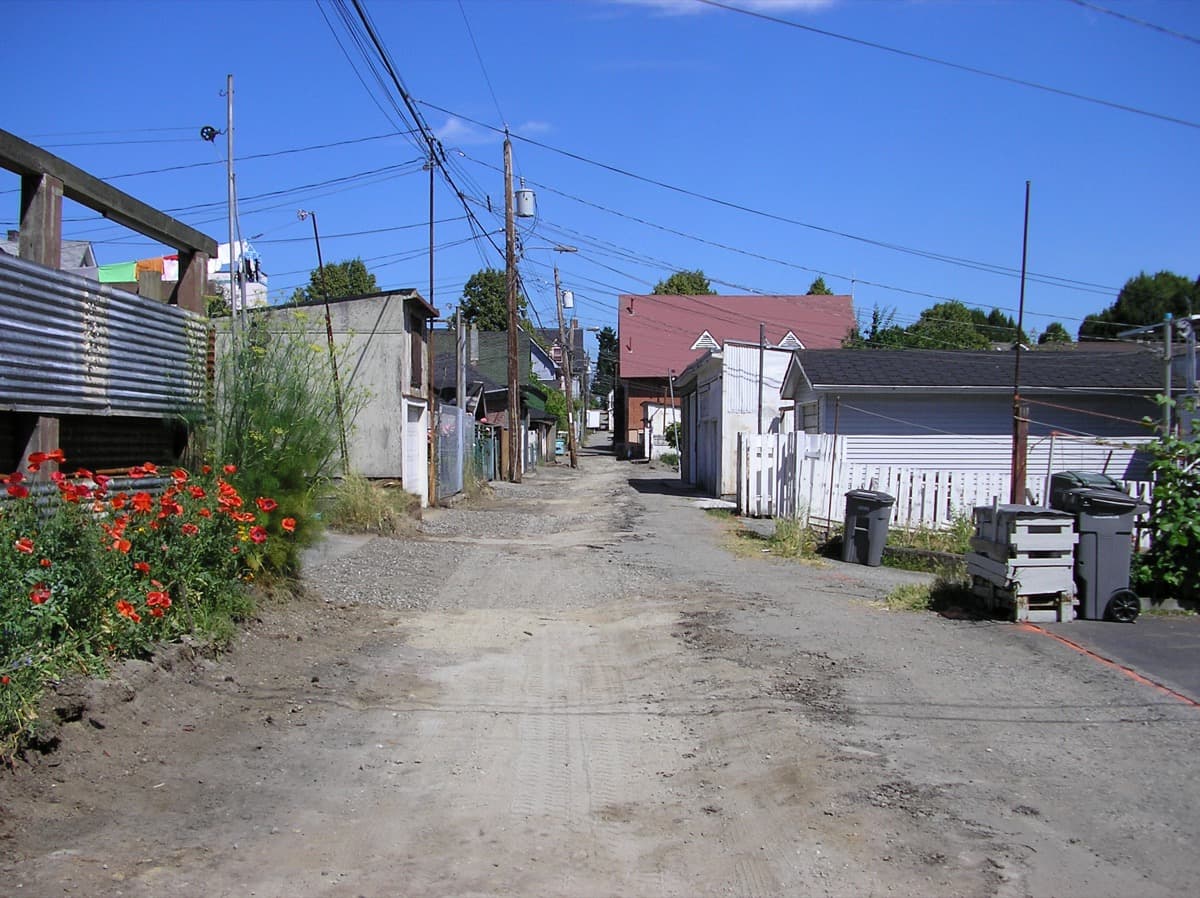
- Hogan's Alley was the unofficial name for a stretch of Park Lane in Strathcona, the first and last neighbourhood in Vancouver with a substantial concentrated Black population. The city began demolishing its western half in 1967 to build the Georgia Viaduct, which opened in 1971, scattering the community.
- Is Gastown the original old part of Vancouver?
- Gastown began in 1867 as a mill-town saloon settlement, but the cobblestoned heritage district visitors walk today was largely built in the early 1970s. The 1886 Great Fire erased almost all the wooden originals, and the streetscape was retroactively curated as heritage a century after the founding.
- What is the best way to understand Vancouver's history on foot?
- Walk its four core districts as a set: Gastown for the founding myth, Chinatown and Hogan's Alley for the freeway fight, Stanley Park for the unceded land beneath the postcard, and the West End for how the city rebuilt itself dense. Each is a Roamer self-guided audio walking tour you can start for free.
Ready to experience it?
Gastown: A Founding Story, Retroactively Curated
80 min · 1.1 km · easy
More from Vancouver
Explore more at your own pace.
One Day in Vancouver: A Walkable Downtown Itinerary (2026)
Chinatown After Hogan's Alley: What Displacement Did to Vancouver's Black and Chinese Blocks
Chinatown and Hogan's Alley: The Freeway Fight Vancouver Only Half-Won
Gastown: A Founding Myth Assembled in the 1970s
Hogan's Alley: The Black Neighbourhood Vancouver Razed for a Viaduct