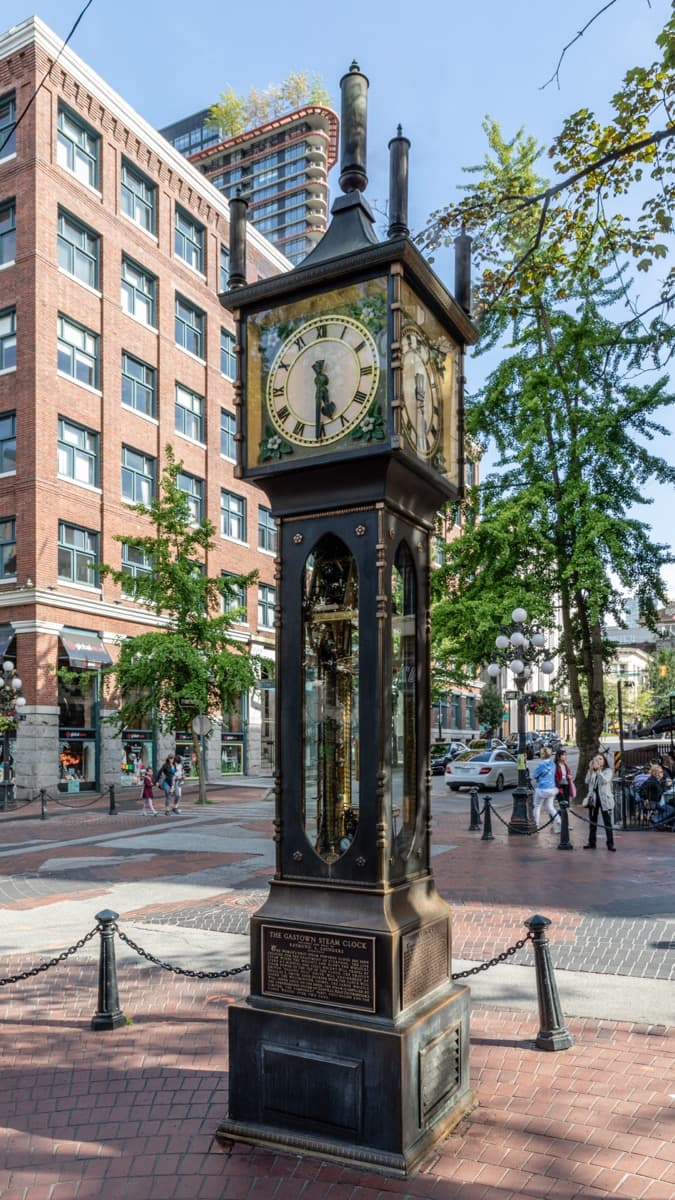
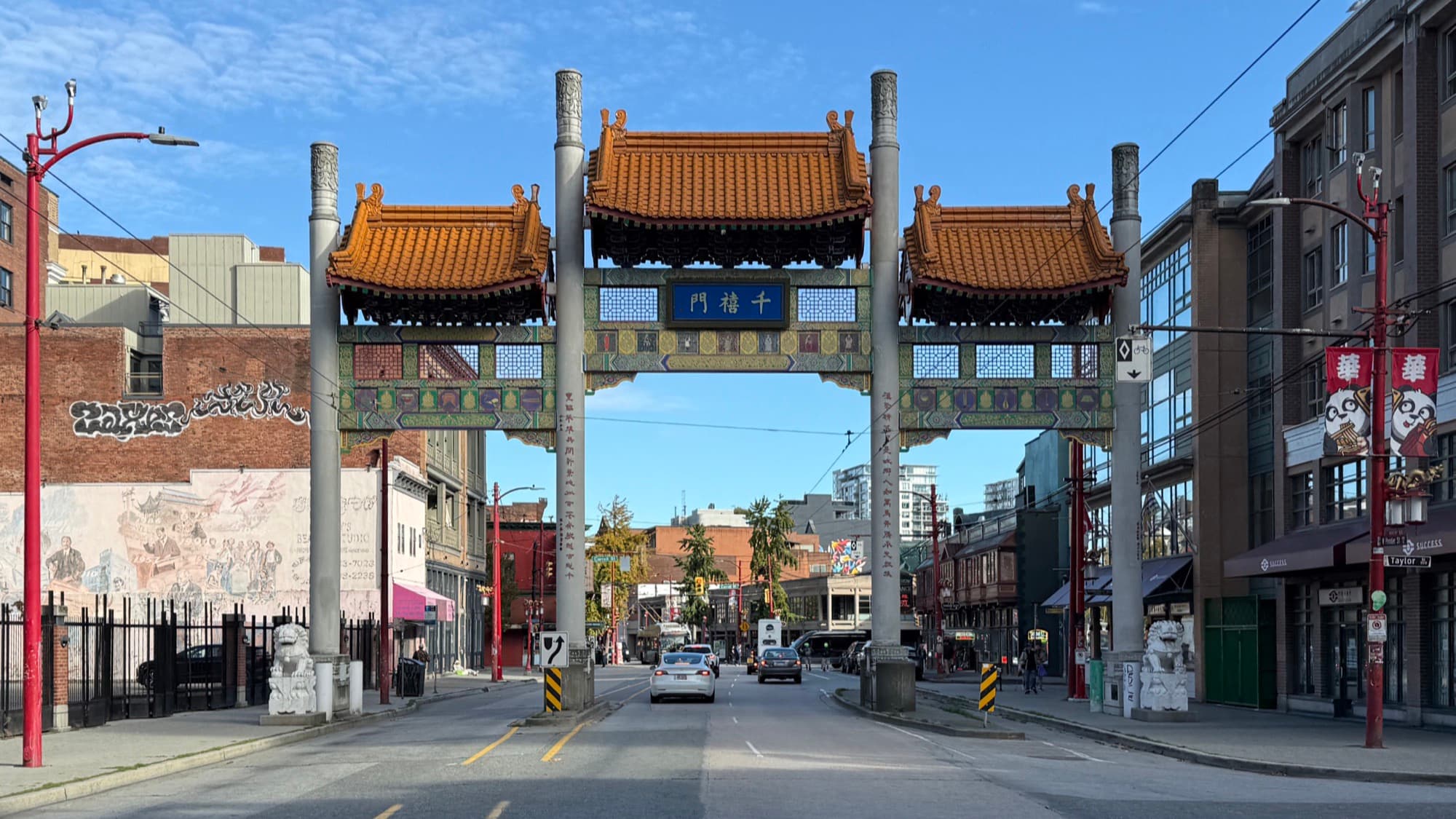
Walk east from the Millennium Gate on Pender Street and within a few blocks you cross an invisible line where one immigrant neighbourhood ends and another used to begin. Vancouver's Chinatown and the district known as Hogan's Alley sat side by side on the city's east edge, shared one freeway plan in the 1960s, and ended up in two different places. Reading the blocks together is the only honest way to understand what displacement did here, and why one community is still standing and the other had to be named back into existence.
Two neighbourhoods, one border
Chinatown grew up around Pender and Carrall from the 1880s, the commercial and cultural core of a Chinese community that the city spent decades trying to contain. Immediately east, in the southwestern corner of Strathcona, Hogan's Alley ran along Park Lane between Union and Prior, the centre of Vancouver's Black community and the only established Black neighbourhood Canada has documented. They were neighbours. They shared the same low-rent, high-surveillance edge of the city, the same reputation in the settler press as a "slum," and eventually the same line on a freeway map.
Chinatown's blocks carry the record of resistance
Hear a stop from this walk
Sam Kee Building: The Six-Foot Answer
The buildings that survive in Chinatown are, read closely, a record of a community defending its own ground. The clearest is the Sam Kee Building at 8 West Pender. In 1912, following the 1907 anti-Asian riot, city council expropriated most of a corner lot owned by the merchant Chang Toy to widen Pender Street, cutting the property to about six feet deep and assuming it was now useless. Chang Toy built on it in 1913 regardless, producing what Guinness recognizes as the narrowest commercial building in the world. The basement even extends under the public sidewalk. It is a spite building, and it is still there. In 2018 the city formally apologized for the expropriation, 106 years later.
Nearby, the Wing Sang Building (the oldest brick building in Chinatown), the Dr. Sun Yat-Sen Classical Chinese Garden, and the Millennium Gate all read as the same community asserting permanence against a city that repeatedly tried to shrink it. Chinatown's food and commerce survived because its buildings survived.
Hogan's Alley's blocks are mostly gone
East of that line, the record is an absence. Beginning in 1967 the city demolished the western half of Hogan's Alley for the Georgia Viaduct, which opened in 1971. The African Methodist Episcopal Fountain Chapel, Vie's Chicken and Steak House, and the homes around them were cleared. There is no equivalent to the Sam Kee Building to point at, because the neighbourhood's fabric was removed rather than defended. What you walk today under the viaduct is empty blocks and traffic ramps.
Why the outcomes diverged
The difference was not virtue. It was capacity. Chinatown had property owners, larger numbers, established institutions, and by 1968 the Strathcona Property Owners and Tenants Association, which forced a federal funding freeze and killed the freeway's second phase by 1972. Hogan's Alley was smaller, poorer, more precariously housed, and it was the first phase, cleared before the organized resistance crested. The freeway fight that Vancouver celebrates was real, but it was won on Chinatown's side of the border after the demolition had already come through the Black side.
The reclamation, unevenly
Both communities are now in the slow work of reclamation, at different speeds. Chinatown received its 2018 apology and continues to fight gentrification and the pressures of the surrounding Downtown Eastside. Hogan's Alley received Nora Hendrix Place in 2019 and Nora Hendrix Way in 2021, and the Hogan's Alley Society is organizing a Black-led community land trust for the ground the viaduct is scheduled to vacate. There is still no apology for Hogan's Alley comparable to Chinatown's.
For the full civic story of the freeway plan, walk the Chinatown and Hogan's Alley tour companion. For the specific life of the Black neighbourhood, read the Hogan's Alley jewel. And for where these blocks fit in the city's larger habit of clearing and rebuilding its own ground, see the thesis on erasure and reclamation. Walk the two neighbourhoods as one route, and the border between them stops being invisible.
Frequently asked questions
- Where was Hogan's Alley in relation to Chinatown?
- Hogan's Alley was a stretch of Park Lane in the southwestern corner of Strathcona, immediately east of Vancouver's Chinatown, between Union and Prior streets from Main to Jackson. The two neighbourhoods were adjacent and were both targeted by the same 1960s freeway plan.
- Why did Chinatown survive the freeway but Hogan's Alley did not?
- The freeway's first phase, the Georgia Viaduct, demolished the western half of Hogan's Alley beginning in 1967. Chinatown organizers, led by the Strathcona Property Owners and Tenants Association from 1968, stopped the second phase in 1972. Chinatown had more property owners, numbers, and organizing capacity; the smaller, more marginalized Black community was cleared first.
- Can you still see Chinatown and Hogan's Alley today?
- Chinatown's built fabric largely survives, including the Sam Kee Building, the Wing Sang Building, and the Dr. Sun Yat-Sen Classical Chinese Garden. Hogan's Alley was demolished for the Georgia Viaduct and is mostly empty blocks and viaduct ramps, now marked by Nora Hendrix Place and Nora Hendrix Way, with a community land trust proposed for the site.
- What is the best way to walk these neighbourhoods?
- Roamer's self-guided Chinatown and Hogan's Alley audio walking tour connects both districts in one route, from the Millennium Gate through the Sam Kee Building and Sun Yat-Sen Garden to the Hogan's Alley site under the viaduct. It is free to start.
Ready to experience it?
Chinatown and Hogan's Alley: The City That Almost Built a Freeway Through Its Memory
55 min · 1.9 km · easy
More from Vancouver
Explore more at your own pace.
One Day in Vancouver: A Walkable Downtown Itinerary (2026)
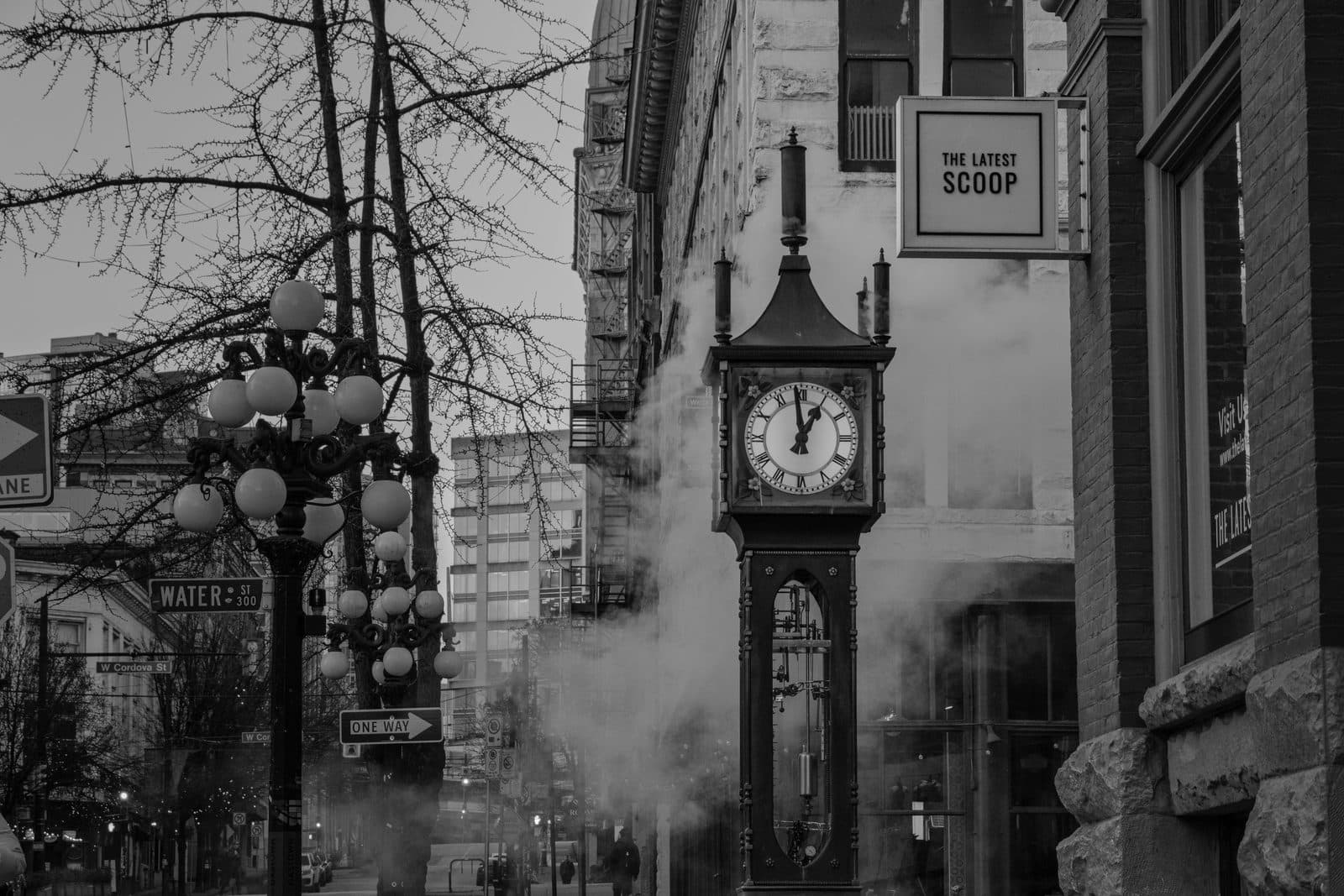
Vancouver: The City Built on Erasure and Reclamation
Chinatown and Hogan's Alley: The Freeway Fight Vancouver Only Half-Won
Gastown: A Founding Myth Assembled in the 1970s
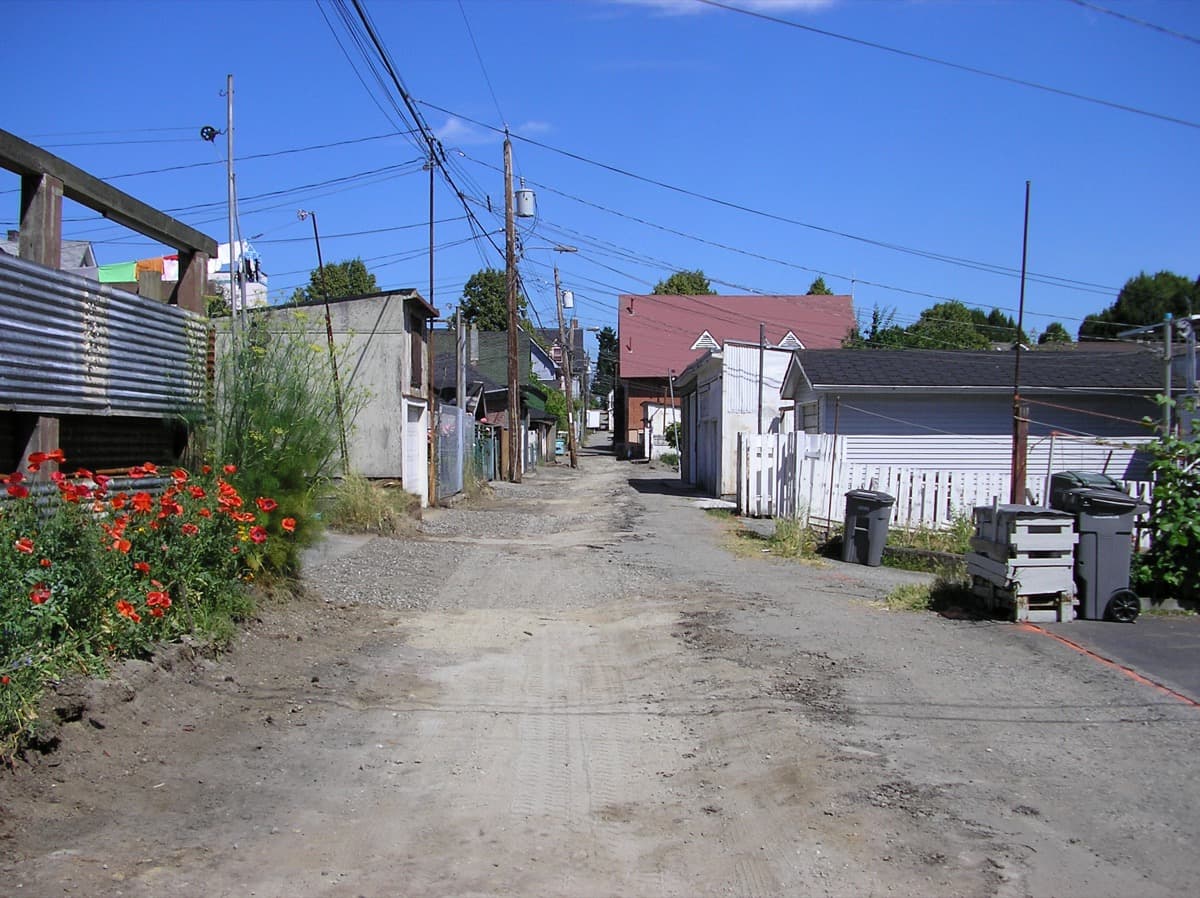
Hogan's Alley: The Black Neighbourhood Vancouver Razed for a Viaduct