Chinatown and Hogan's Alley: The City That Almost Built a Freeway Through Its Memory
4.58·8 Stops·55 minutes·1.9 km
Vancouver tells itself a story about beating the freeway. Walk Chinatown and Strathcona honestly, and the freeway was beaten across Chinatown only after Hogan's Alley was sacrificed to start it.
Start · Millennium Gate: The Gate and the Ground
DirectionsStops
- 1
Millennium Gate: The Gate and the Ground
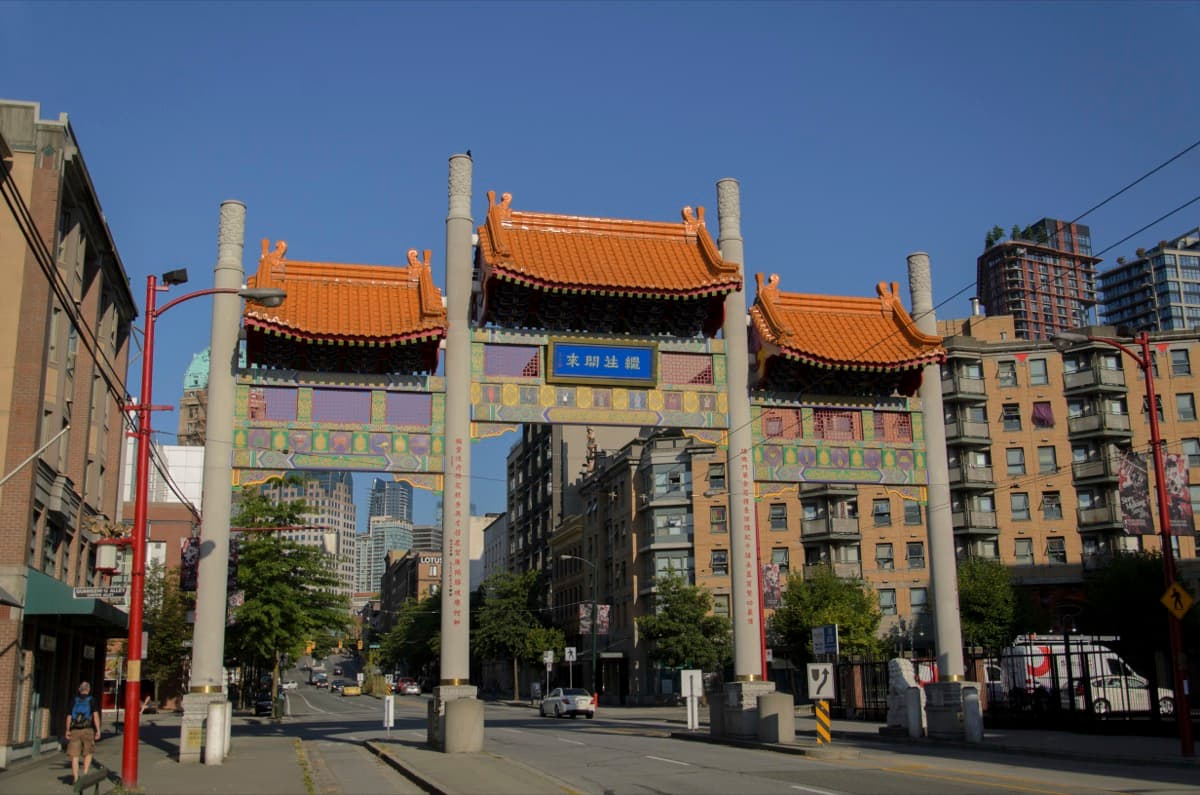
The 2002 three-arch gate over West Pender at Taylor, designed by Joe Wai. The western edge of Vancouver's Chinatown National Historic Site, on Coast Salish unceded territory.
- 2
Sam Kee Building: The Six-Foot Answer
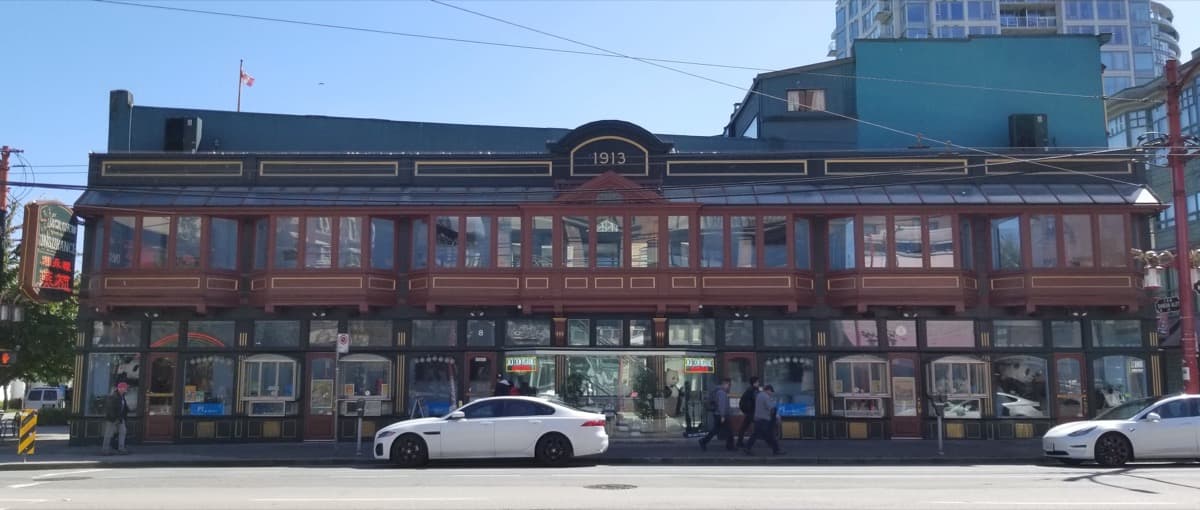
The 1913 Sam Kee Building at 8 West Pender, built by merchant Chang Toy on a lot the city expropriated to six feet wide in 1912. The architectural answer to the political aftermath of the 1907 anti-Asian riots.
- 3
Wing Sang Building: The Merchant Ground
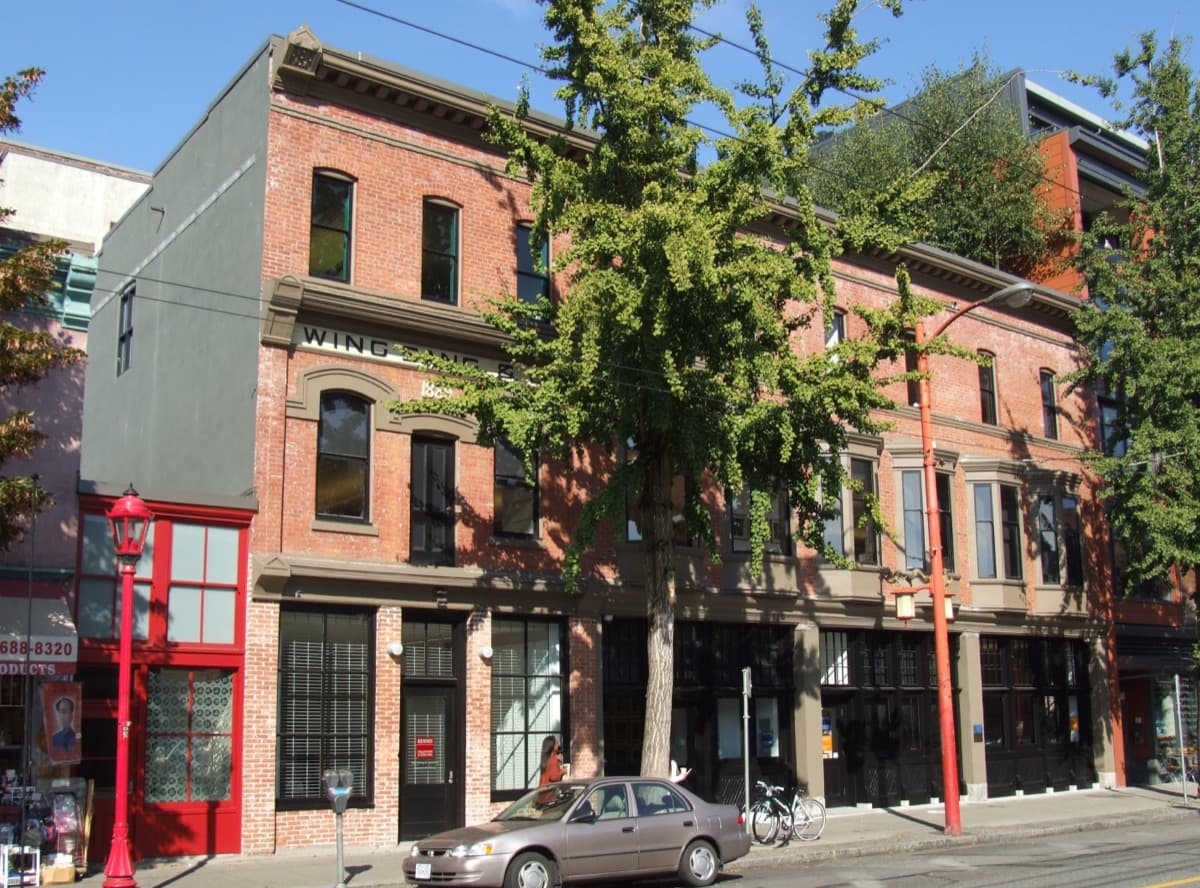
The 1889 Wing Sang Building at 51 East Pender, built by Yip Sang for his import-export company and his household of three wives and twenty-three children. The bachelor-society economy made visible.
- 4
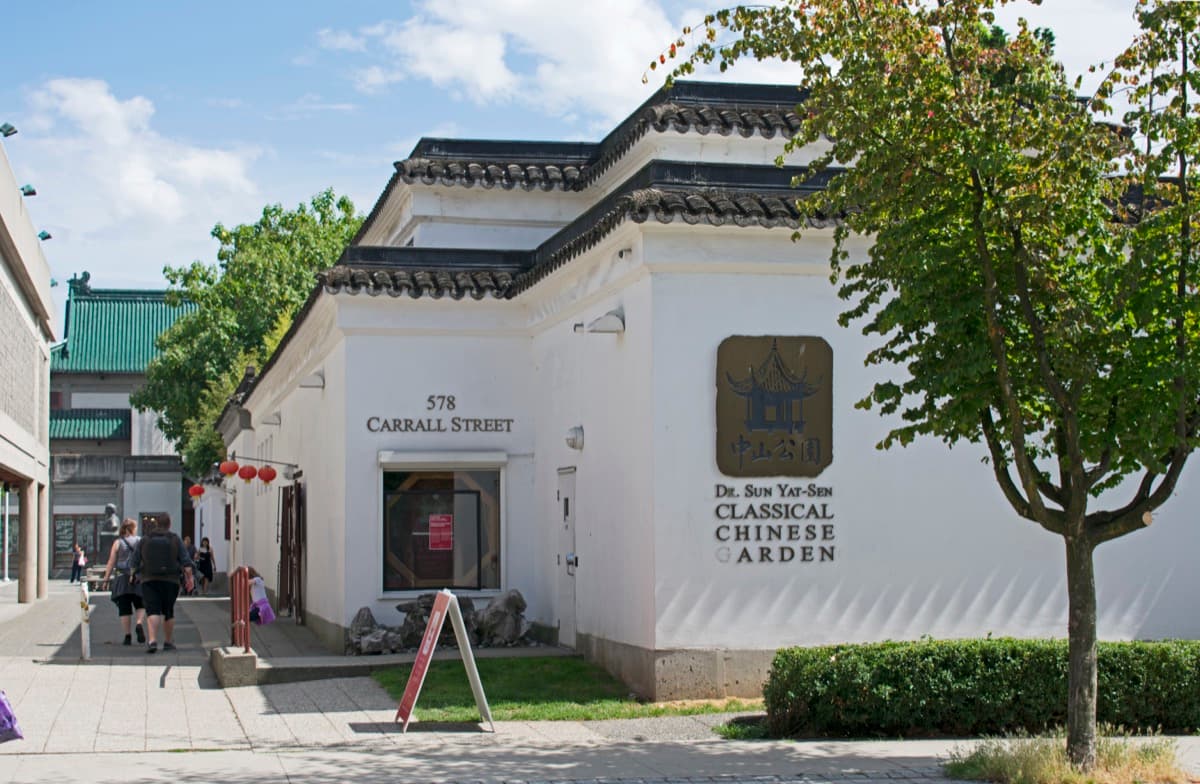
Dr. Sun Yat-Sen Classical Chinese Garden: The Reply
Built 1985 to 1986, opened April 24, 1986. The first full-scale Ming Dynasty classical garden built outside China. Designed by Joe Wai and Donald Vaughan with Wang Zu-Xin, built by 53 master craftsmen from Suzhou.
- 5
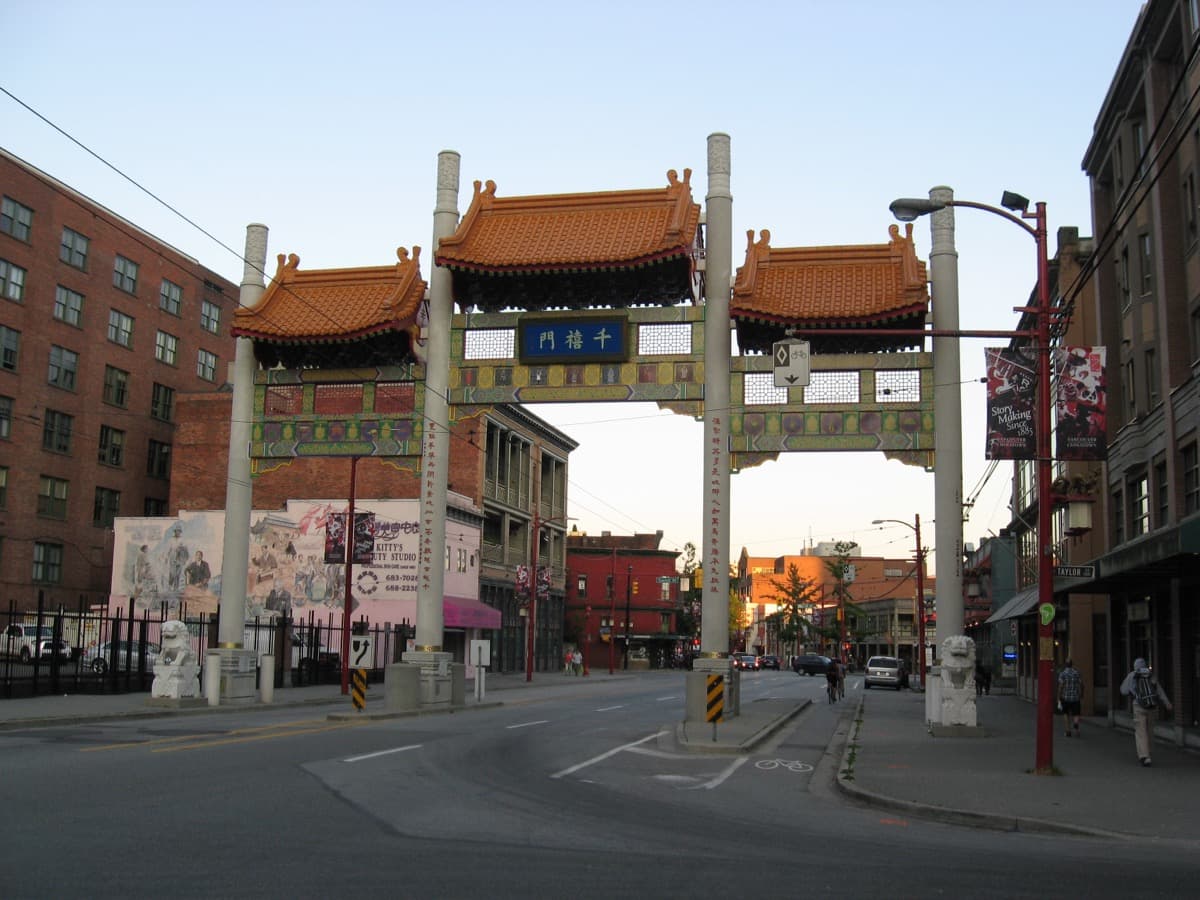
Walter and Mary Lee Chan House: The SPOTA Kitchen
658 Keefer Street. The home of Mary Lee Chan, Walter Chan, and Shirley Chan. The kitchen from which the Strathcona Property Owners and Tenants Association ran its door-to-door campaign in 1968.
- 6
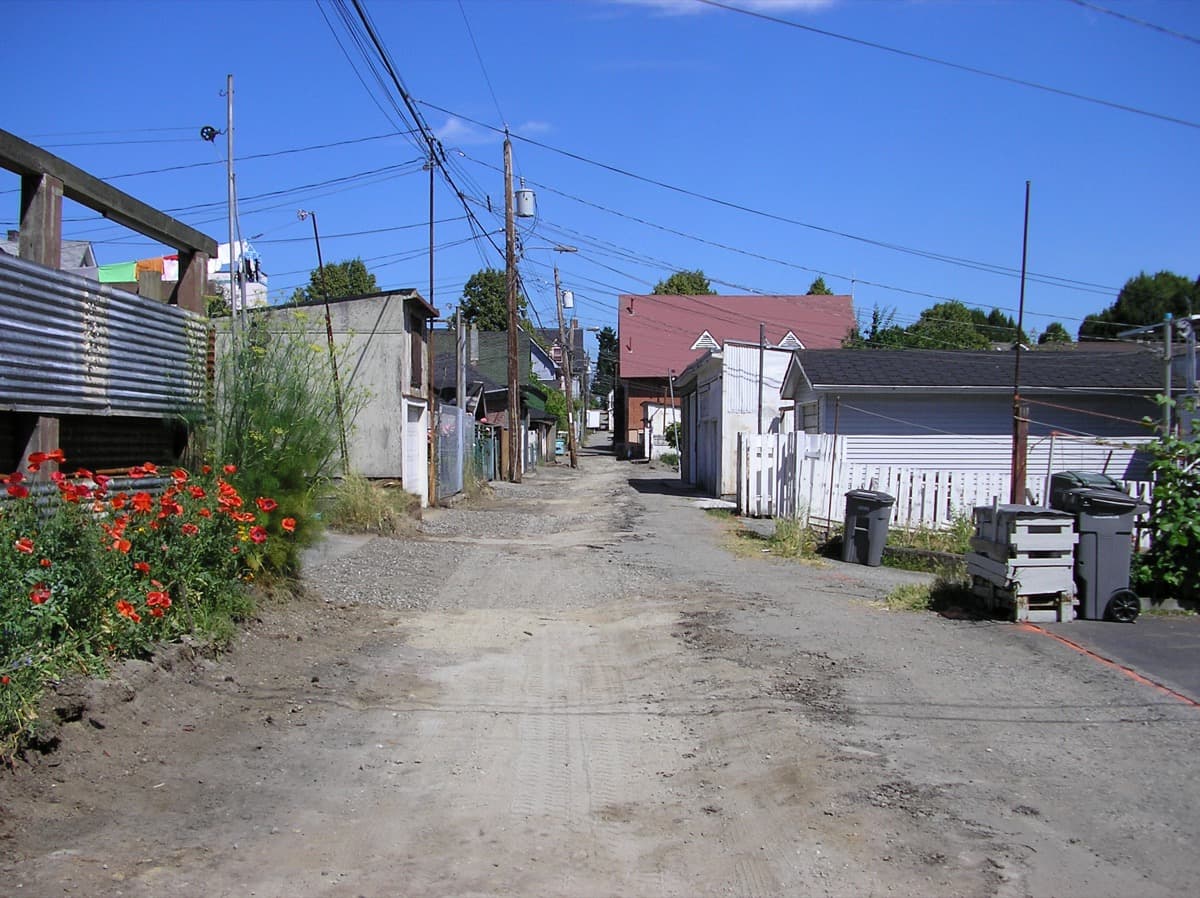
Hogan's Alley: The First Phase
The site of Hogan's Alley, Canada's only established Black neighbourhood, demolished beginning in 1967 for the Georgia Viaduct. The first phase of the freeway. The site stands under the viaduct today.
- 7
Nora Hendrix Place and Nora Hendrix Way: The Restitution
Nora Hendrix Place modular housing, named 2019. Nora Hendrix Way, the first Vancouver street named for a Black woman, approved 2021. The Hogan's Alley Society's land trust proposal sits on this ground.
- 8
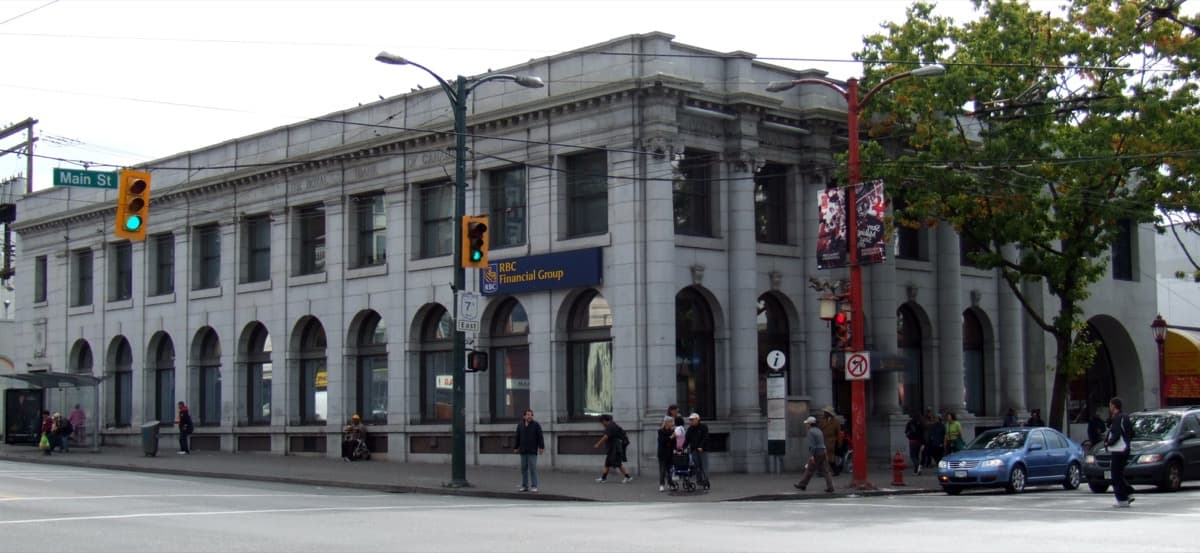
Main and Hastings: The Edge
The southwest corner of Main and Hastings. The corner the 1907 anti-Asian parade reached on its way into Chinatown, and the contemporary edge of the Downtown Eastside.
Details
Best Time to Visit
Weekday late morning. Tuesday through Friday, ten to one. Chinatown is quieter on weekday mornings, the Sam Kee Building sidewalk and the Sun Yat-Sen Garden courtyard are easier to stand in, and the Keefer Street block at the Chan House is residential and best visited respectfully when the street is calm. The Hogan's Alley site is loud at any hour because of the viaduct overhead.
Pro Tips
- •Start at the Stadium-Chinatown SkyTrain station. The Millennium Gate is a two-minute walk east on West Pender
- •The Sam Kee Building is privately owned by Jack Chow Insurance. The tour is a sidewalk-only stop. Look down at the glass-block illuminators in the pavement for the basement that extends under the public sidewalk
- •The Wing Sang Building is transitioning to house the Chinese Canadian Museum after the provincial government's two thousand and twenty-two announcement of a twenty-seven point five million dollar purchase. Operating status varies; verify before planning interior access
- •The Dr. Sun Yat-Sen Classical Chinese Garden is a sightline stop on this walk. Adult admission was around sixteen Canadian dollars and eighty cents in twenty twenty-five. Verify the current figure at the door. The adjacent Dr. Sun Yat-Sen Park is free and gives a partial perimeter view
- •The Chan House at six fifty-eight Keefer Street is privately occupied. Read the Vancouver Heritage Foundation Places That Matter marker from the sidewalk across the street
- •Nora Hendrix Place is supportive housing operated by the Portland Hotel Society. Stop Seven is a sidewalk observation only. Do not enter or engage residents
- •Wayde Compton's After Canaan, Arsenal Pulp Press two thousand and ten, is the published Hogan's Alley scholarship. Seven Routes to Hogan's Alley is the longest essay in the collection and the load-bearing public source for this corridor
- •The Hogan's Alley Society at hogansalleysociety.org is the contemporary community-led organization whose published materials this tour is built on
Safety & Precautions
- •The Hogan's Alley site under the Georgia Viaduct is loud with overhead traffic. Audio playback may need higher volume, and the stop is best heard standing still under the viaduct rather than walking
- •Main and Hastings and the Downtown Eastside one block south are at the centre of an active housing and overdose crisis. Be respectful of unhoused residents and of the Carnegie community. Photograph public street scenes only with consent
- •The Chan House is a private residence. Do not approach the door, ring the bell, or photograph through windows. Read the Heritage marker from the public sidewalk across the street
- •Nora Hendrix Place is supportive housing. The street name plate and the building exterior are public. Residents and their visitors are not. The audio works from the public sidewalk on the opposite side of the street
- •The Sun Yat-Sen Garden and adjacent free park are open Wednesday to Sunday. The free park gives a partial perimeter view if the paid Garden is closed on Monday or Tuesday
Travel advisory: Exercise Normal Precautions (Level 1).
Gallery
Related Reading
Go deeper on what you'll see, hear, and walk through.
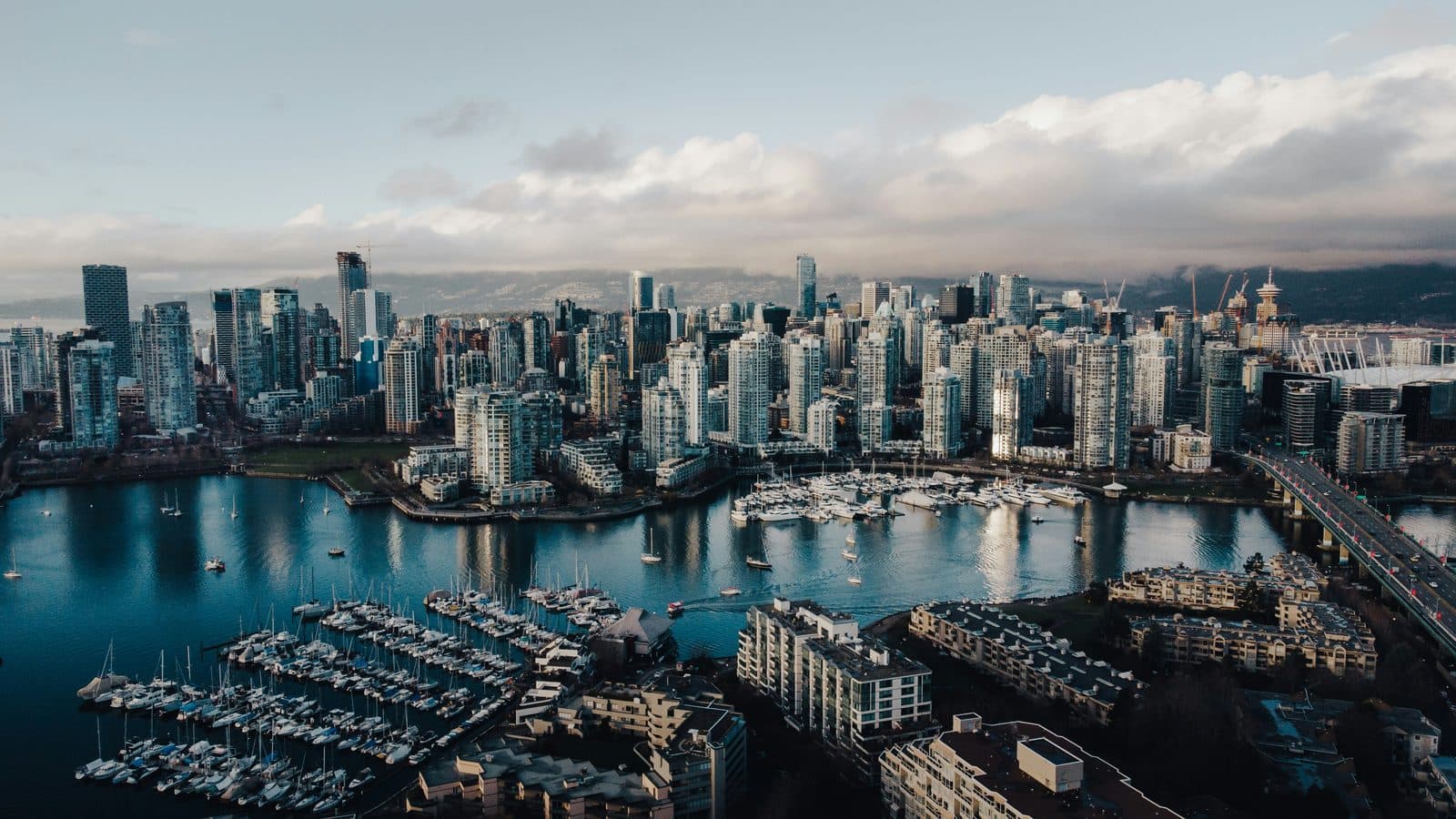
Overview
Best Self-Guided Walking Tours in Vancouver (2026)
4 min
Overview
One Day in Vancouver: A Walkable Downtown Itinerary (2026)
6 min
Overview
Vancouver Travel Guide: How Many Days, Getting Around, When to Go (2026)
5 min
Thematic
Best History Walking Tours in Vancouver (2026)
2 min
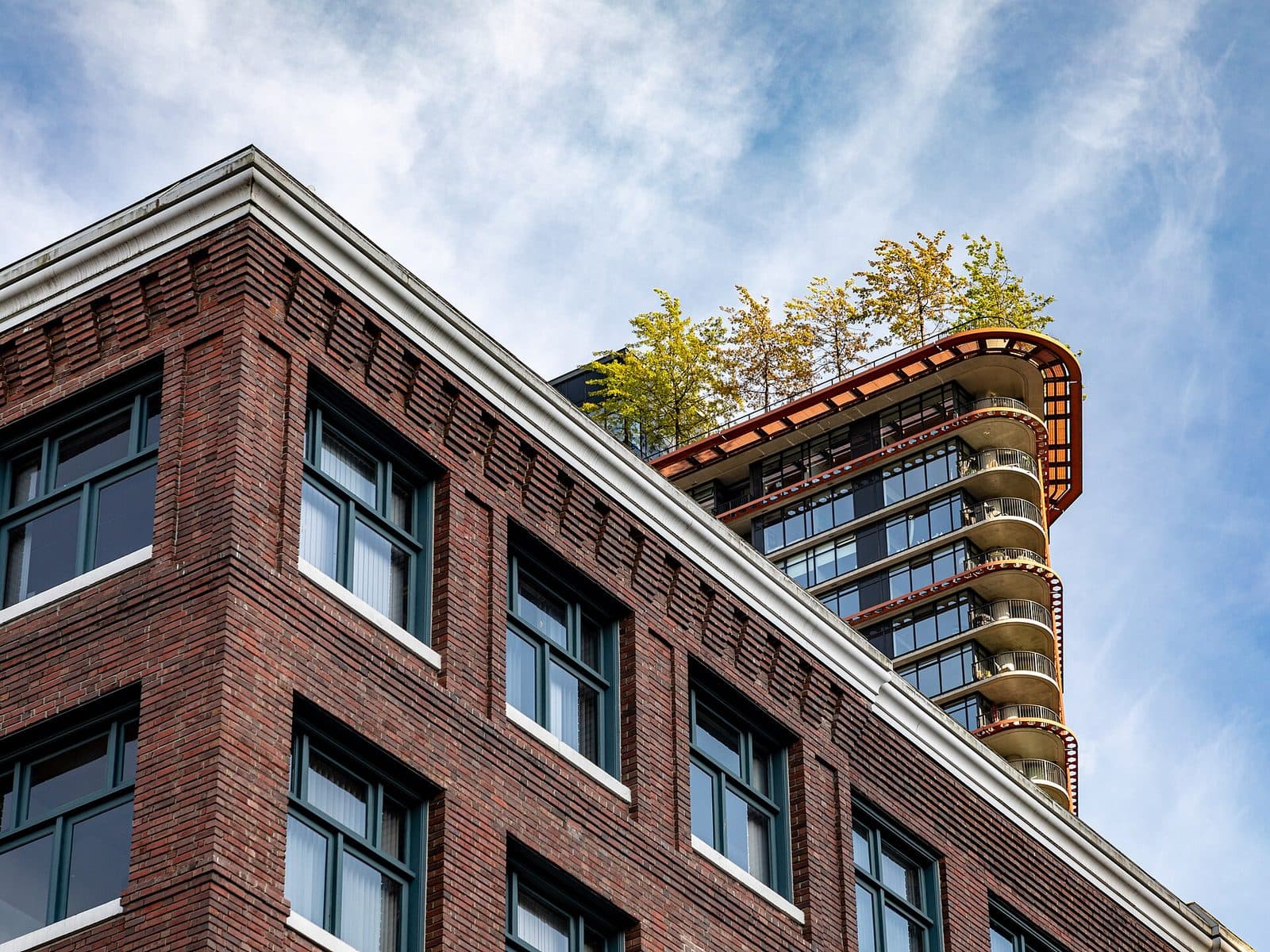
Thematic
Chinatown After Hogan's Alley: What Displacement Did to Vancouver's Black and Chinese Blocks
4 min
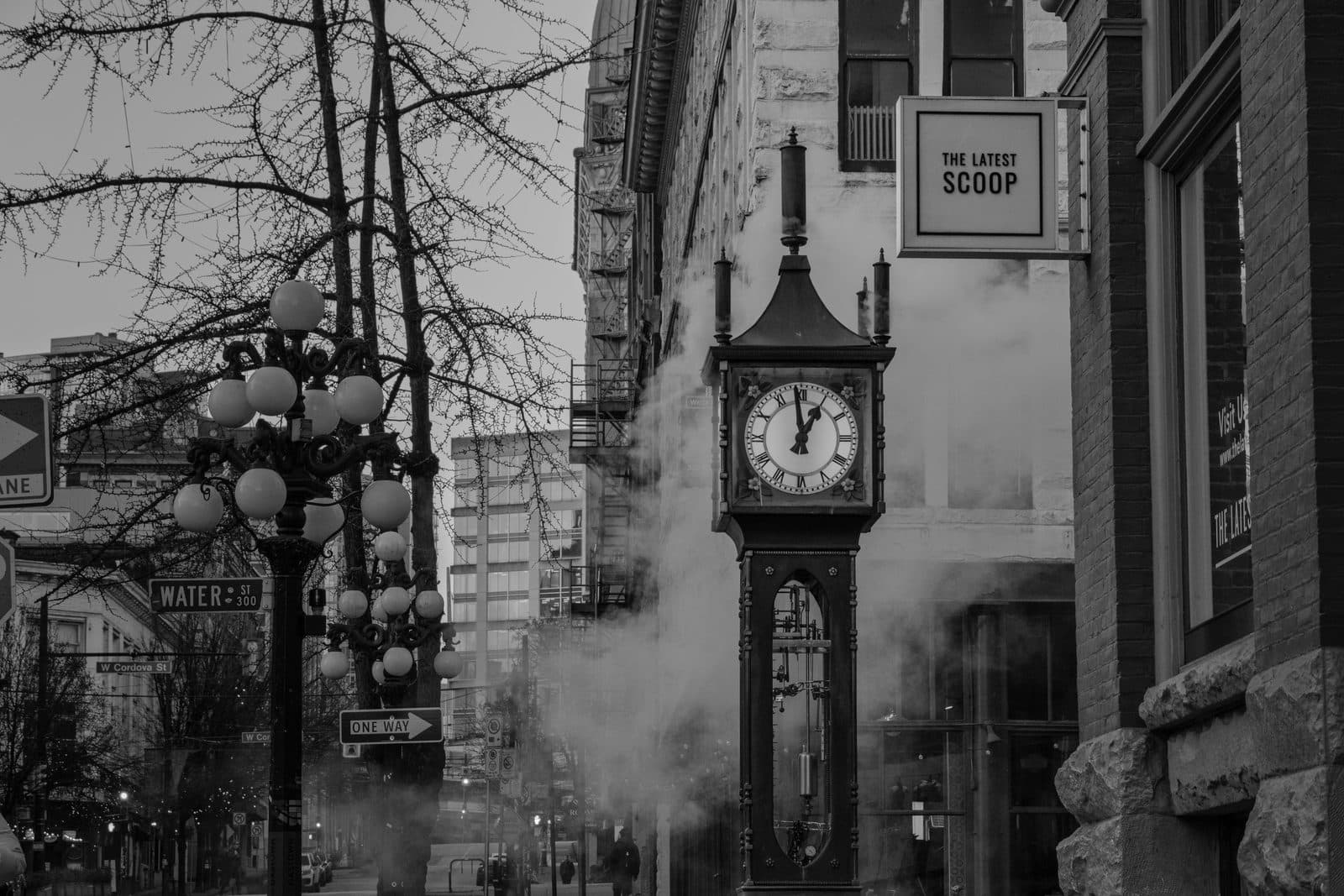
Thematic
Vancouver: The City Built on Erasure and Reclamation
5 min
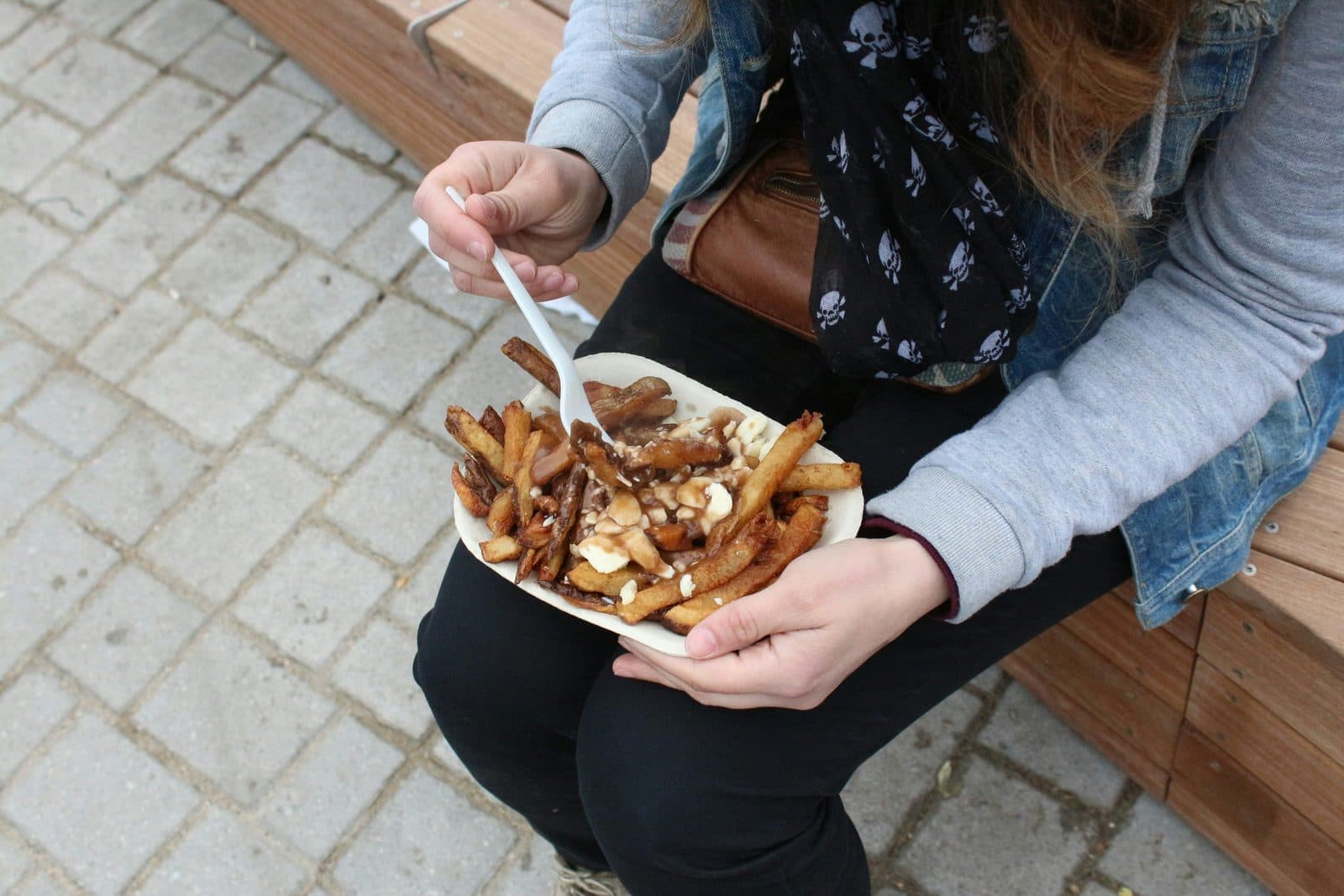
Thematic
What to Eat in Vancouver: A Food Guide (2026)
4 min
Companion
Chinatown and Hogan's Alley: The Freeway Fight Vancouver Only Half-Won
4 min
Deep dive
Hogan's Alley: The Black Neighbourhood Vancouver Razed for a Viaduct
4 min
Read the walk
The full story of Chinatown and Hogan's Alley: The City That Almost Built a Freeway Through Its Memory, in words. Prefer to listen? Play it narrated, from home or on location.
Introduction
Nineteen sixty-eight. A porch in Strathcona, a few blocks east of Chinatown, Vancouver, Canada. A woman in her early twenties stands beside her mother. Her name is Shirley Chan. Her mother is Mary Lee Chan. Mary Lee speaks Cantonese. Shirley translates into English for the neighbour at the door. They have a petition. The federal Vancouver Transportation Study has proposed an eight-lane freeway through Chinatown along Pender Street. A first viaduct is already going up to the west, on top of an alley called Hogan's Alley. They have a list of every door on Keefer, every door on Princess, every door on Heatley. They will be at this for four years.
That is the tour.
The argument is one sentence. Vancouver tells itself it is the city that beat the freeway. Walked closely, Chinatown and Strathcona reveal that the freeway was beaten across Chinatown only after Hogan's Alley, Canada's only established Black neighbourhood, was sacrificed to start it.
The tour is built on the published work of the Hogan's Alley Society, the Black-led non-profit that has produced most of the contemporary history of this corridor. Hold both names. Shirley Chan and Nora Hendrix. The route meets them again.
Eight stops, about one point nine kilometres, about fifty-five minutes including audio. The route starts at the Millennium Gate on Pender, runs east through Chinatown to the Dr. Sun Yat-Sen Garden, then east into Strathcona to the Chan House on Keefer, south under the Georgia Viaduct to the Hogan's Alley site, south to Nora Hendrix Place, and finishes at Main and Hastings.
When you arrive at the Millennium Gate over Pender Street near Taylor, begin with stop one.
1. Millennium Gate: The Gate and the Ground
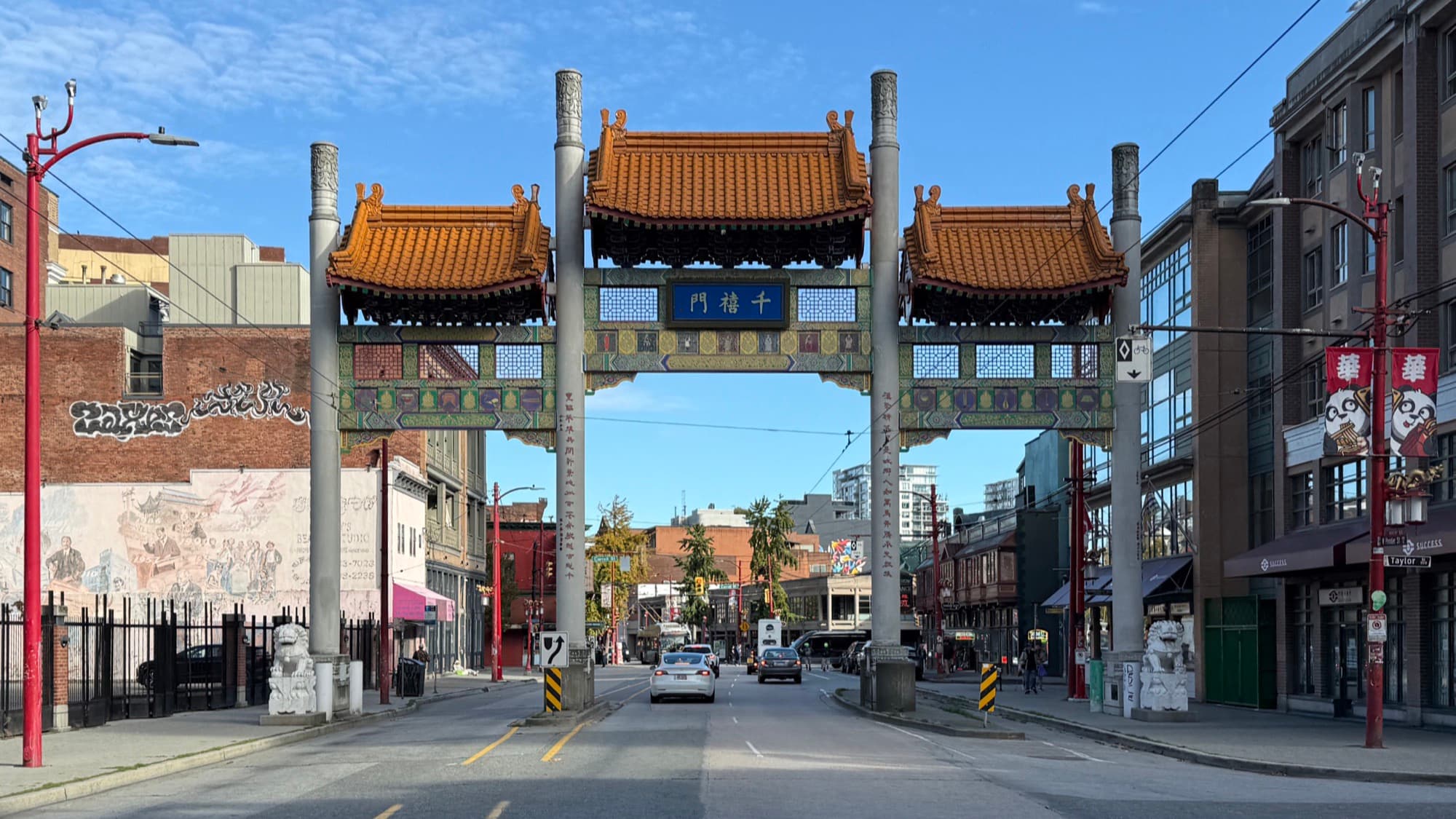
Welcome to the Millennium Gate, your first stop. Stand on the north side of West Pender at Taylor and look at the south face of the gate. Three arches in green terra-cotta tile. Granite lions at the base. The Chinese characters along the top translate to remember the past, build the future. Walk under it and look east. Pender Street runs straight into the heart of Chinatown.
The gate is newer than it looks. It was designed by the local architect Joe Wai, who lived from nineteen forty to two thousand and seventeen, and was erected in two thousand and two. The site is not arbitrary. A temporary wooden arch stood on this same corner in nineteen oh one for the Royal Tour of the Duke and Duchess of Cornwall and York. The Chinese community of Vancouver built that arch to greet a visiting British prince. The community had been here for over forty years already by then, and the arch was a public claim to that presence on a street the city had not yet learned to share.
The ground under your feet is older than the city. The corridor sits on the unceded ancestral lands of the Musqueam, the Squamish, and the Tsleil-Waututh peoples, in the Indigenous-language forms xʷməθkʷəy̓əm, Sḵwx̱wú7mesh, and səlilwətaɬ. The City of Vancouver formally recognized that this land was never ceded by treaty in a council motion on the eighth of July, two thousand and fourteen. Three communities, three histories, all standing on the same Coast Salish ground.
In two thousand and eleven, Parks Canada designated the area along Pender Street between Taylor and Gore Avenue a National Historic Site. The walk from this gate to the Dr. Sun Yat-Sen Garden is inside that designation. Joe Wai designed the gate you are standing under. He also designed the Garden. You will meet his work again at Stop Four.
Walk east on Pender, one block, to Carrall. There is a building on your left that the city tried to make impossible to build.
2. Sam Kee Building: The Six-Foot Answer
You have arrived at the Sam Kee Building, eight West Pender at Carrall. Stand on the south side of Pender, west of Carrall, and look north at the building. Two storeys of brick and glass. Bay windows projecting over the sidewalk. The ground floor measures four feet eleven inches deep. The upper floor measures six feet. Guinness has called it the shallowest commercial building in the world.
The novelty is what tourists notice. The reason it exists is the tour.
In September nineteen oh seven, the Asiatic Exclusion League led a parade of about ten thousand people from Vancouver City Hall, then at Hastings and Westminster, today's Main, into Chinatown and into Little Yokohama around Powell Street. Over two days, the parade smashed windows in Chinese and Japanese homes and stores. William Lyon Mackenzie King, then federal Deputy Minister of Labour, was appointed commissioner to investigate damages. The riots are documented in the Canada's History magazine feature, the Lessons of the Anti-Asiatic Riot.
Five years later, in nineteen twelve, in the post-riot atmosphere of municipal hostility, Vancouver City Council expropriated most of a lot on this corner to widen Pender Street. The lot belonged to a merchant named Chang Toy, whose import-export firm was called Sam Kee. The expropriation reduced his property from roughly thirty feet wide to six feet wide. The remainder was supposed to be unbuildable, which was the point.
Chang Toy built on it anyway. He hired the architects Kennerly Bryan and William C. F. Gillam. Construction finished in nineteen thirteen. The basement extends under the public sidewalk. If you look down at the pavement, the glass-block illuminators that let daylight into the basement are still embedded in the concrete.
The Sam Kee Building is the architectural answer to the expropriation. The city said: no Chinese commerce on this strip. Chang Toy said: watch.
On the twenty-second of April, two thousand and eighteen, the City of Vancouver formally apologized for past discrimination against the Chinese community, including this expropriation. The apology came one hundred and six years after the lot was cut down.
Walk east on Pender, across Carrall. The next stop is the oldest brick building in Chinatown.
3. Wing Sang Building: The Merchant Ground
You have arrived at the Wing Sang Building, fifty-one East Pender. Stand across the street and look at the facade. Yellow and red brick. Italianate cornice. The painted lettering on the upper floor still reads Wing Sang Co. The front building is eighteen eighty-nine. A second front section was added in nineteen oh one. A six-storey rear building, hidden from Pender, was added in nineteen twelve. This is reputedly the oldest brick building in Chinatown.
It was built by a merchant named Yip Sang. He had arrived in British Columbia in eighteen eighty-one, worked as a Canadian Pacific Railway labour contractor during the construction of the transcontinental line, and shifted into import-export when the railway was finished. The Wing Sang Company sold rice and silk and Chinese goods on Pender Street and shipped Canadian goods back to Hong Kong. The front building is the office. The rear building is the house. The house was needed because Yip Sang had three wives concurrently and twenty-three children, and the household lived above the shop.
That sentence is unusual in Vancouver building history. It is not unusual in this building, and the reason is in the law.
In eighteen eighty-five the federal government imposed a fifty-dollar head tax on every Chinese immigrant. The head tax was raised to one hundred dollars in nineteen hundred, and to five hundred dollars in nineteen oh three. Roughly eighty-one thousand people paid it between eighteen eighty-five and nineteen twenty-three. In nineteen twenty-three, Parliament passed the Chinese Immigration Act, known to the community as the Exclusion Act, which effectively banned Chinese immigration outright. The Act stayed in force until the fourteenth of May, nineteen forty-seven. For twenty-four years, men already here could not bring wives or children. The Pender Street rooming houses around you filled with bachelors who would never see their families again.
That is the demographic the architecture records. Yip Sang's three wives and twenty-three children were the exception. The bachelor rooming houses up and down this street were the rule.
Walk south on Carrall one short block. The garden is on the west side.
4. Dr. Sun Yat-Sen Classical Chinese Garden: The Reply
You have arrived at the Dr. Sun Yat-Sen Classical Chinese Garden, five seventy-eight Carrall Street. Stand on the west side of Carrall at the entrance courtyard. Look at the entrance gate. Look at the roof line of the pavilion behind the wall. The free public Dr. Sun Yat-Sen…
Full narration for this stop unlocks with the tour.
5. Walter and Mary Lee Chan House: The SPOTA Kitchen
You have arrived at six fifty-eight Keefer Street, the Walter and Mary Lee Chan House. Stand on the sidewalk across the street so you can see the whole front. Two and a half storeys, wood frame, Edwardian, with a covered front porch and the front door in the centre. The house is…
Full narration for this stop unlocks with the tour.
6. Hogan's Alley: The First Phase
You have arrived at the Hogan's Alley site. Stand under the Georgia Viaduct at the southeast corner of Main and Union, looking east into the empty blocks that run toward Jackson Avenue. The viaduct overhead is loud. That noise is part of the stop. What ran here was an alley…
Full narration for this stop unlocks with the tour.
7. Nora Hendrix Place and Nora Hendrix Way: The Restitution
You have arrived at Nora Hendrix Place and Nora Hendrix Way, on the two hundred block of Union between Atlantic and National. Stand on the public sidewalk. Read the street sign. Look at the building. Do not enter or approach residents. This is supportive housing operated by the…
Full narration for this stop unlocks with the tour.
8. Main and Hastings: The Edge
You have arrived at Main and Hastings. Stand on the southwest corner. Look south along Main toward the corner you walked up from. Look east along Hastings. Look around carefully. This intersection is the edge of three stories. In September nineteen oh seven, the Asiatic…
Full narration for this stop unlocks with the tour.