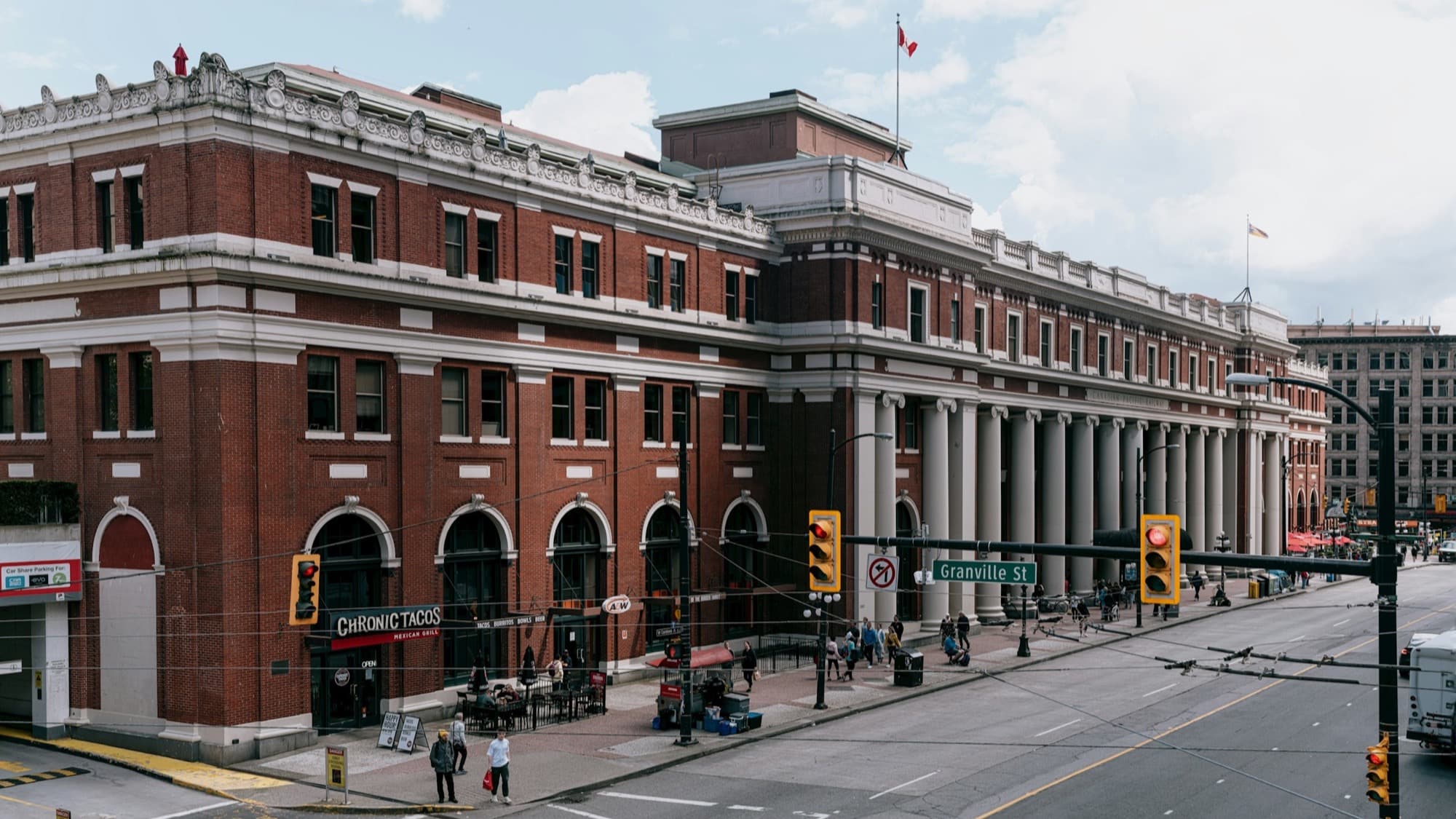
The saloon was eighteen sixty-seven. The cobblestones are nineteen seventy-one. Walk the seam between Vancouver the mill town and Vancouver the heritage object.
Start · Waterfront Station: The Gate
DirectionsStops
- 1
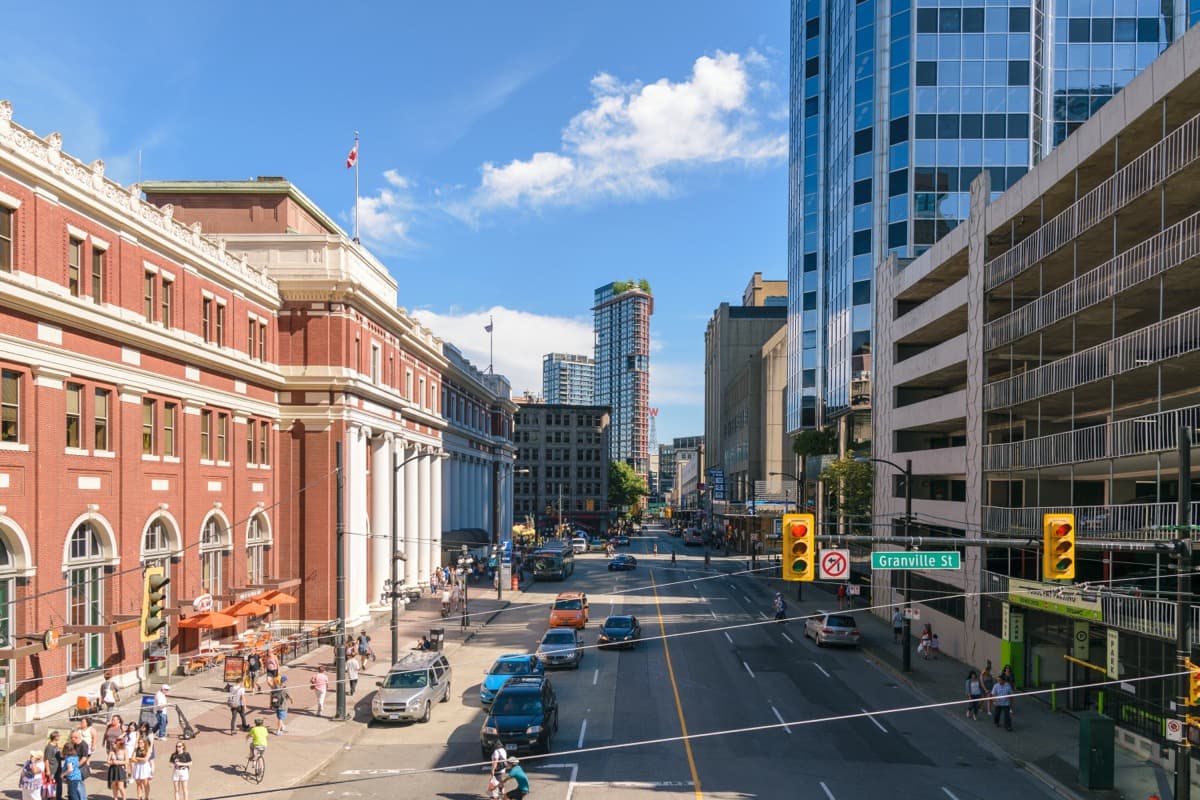
Waterfront Station: The Gate
The 1914 Beaux-Arts CPR terminus by Barott, Blackader & Webster, the post-fire face of the city.
- 2
Water Street: The Surface Reveal
The cobblestoned streetscape that reads as 1890s and is mostly 1971. Brick is one age. The pavement is another.
- 3
Byrnes Block: The First Preservation Project
1886, Elmer Fisher. The first brick building rebuilt after the fire. Rehabilitated 1969 by Larry Killam as the demonstration project for Gastown.
- 4
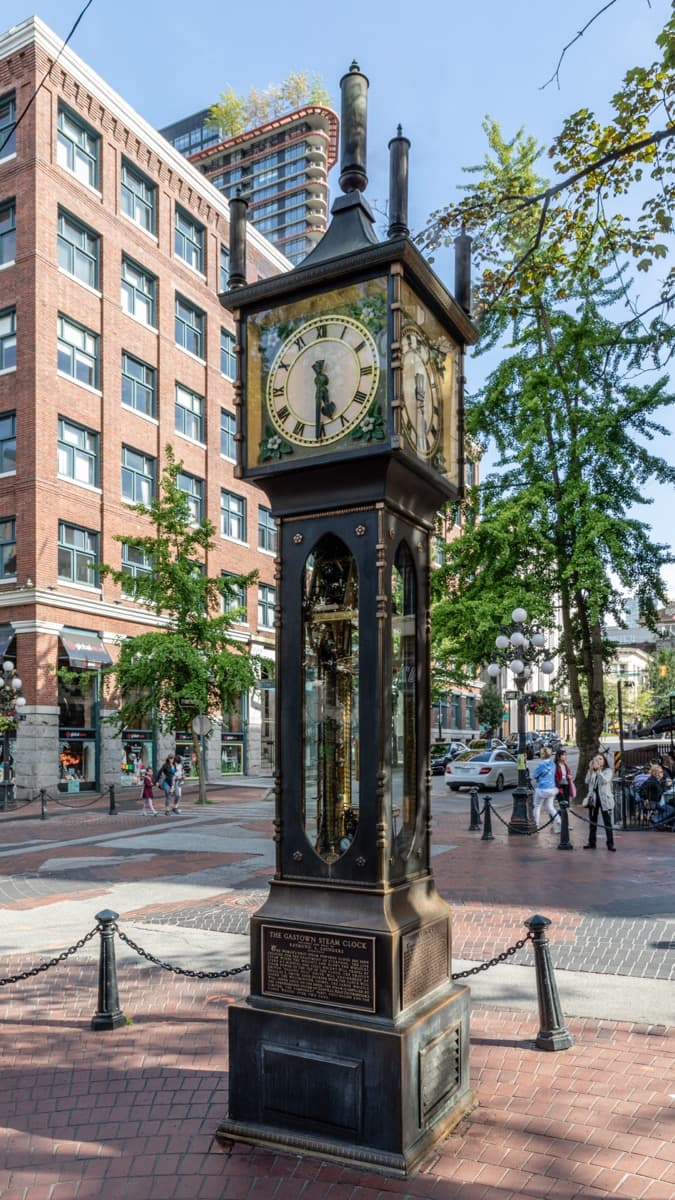
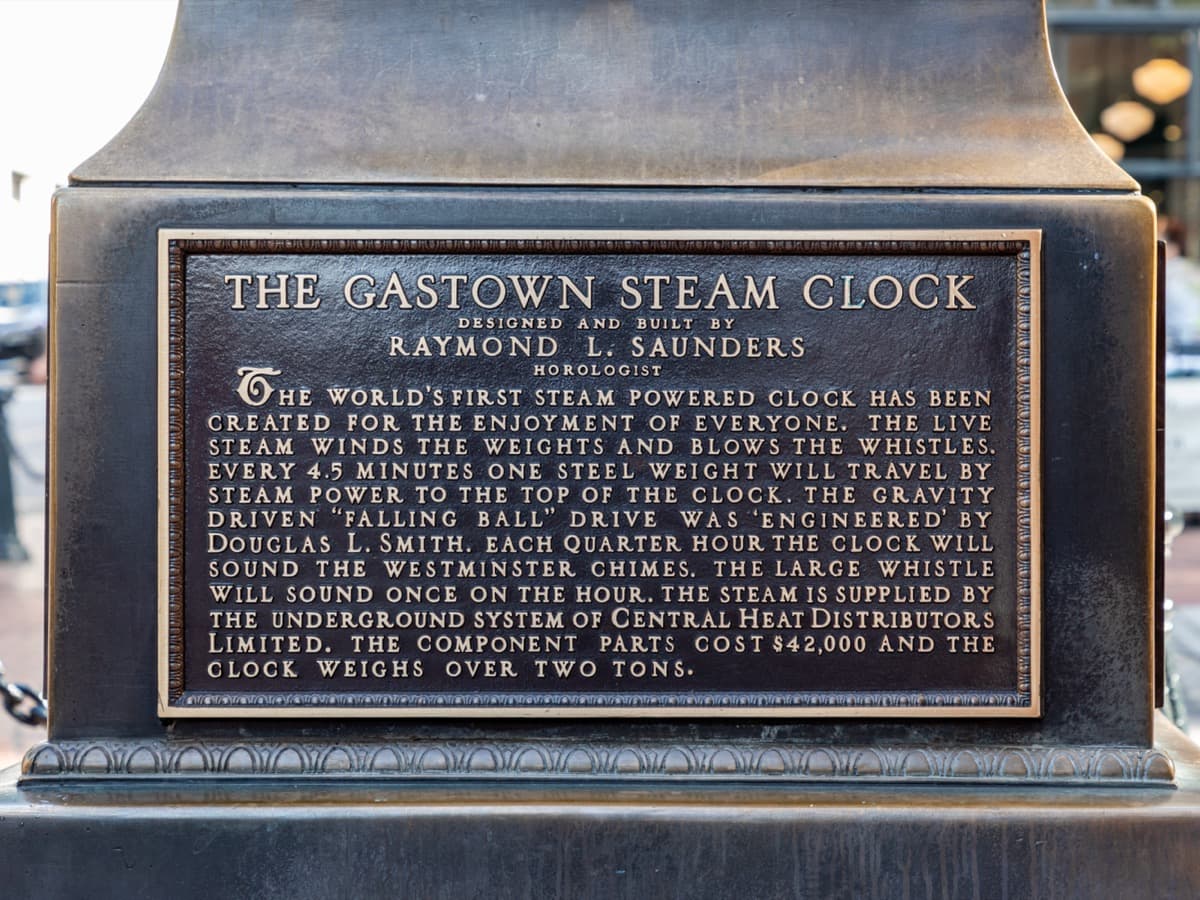
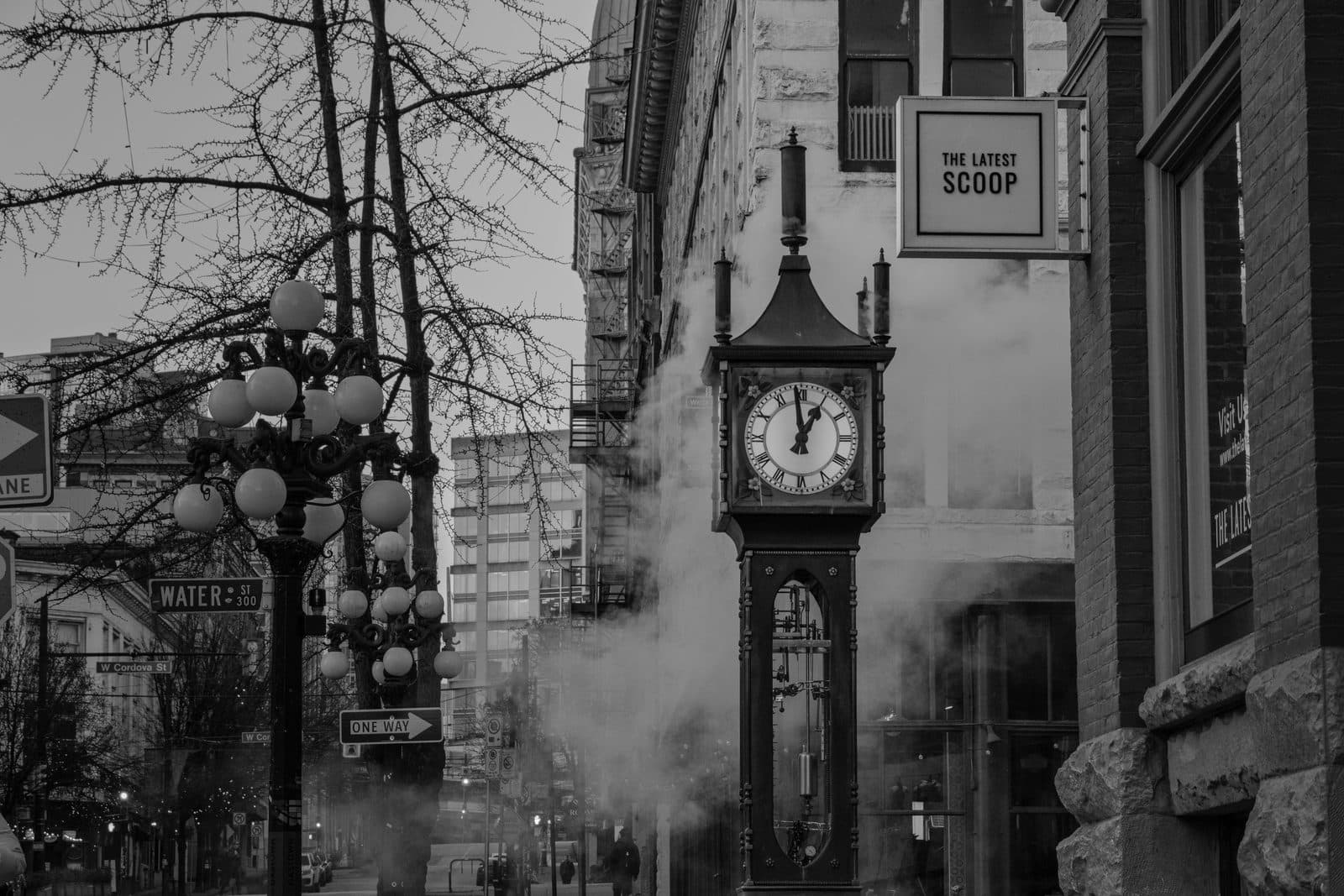
Gastown Steam Clock: The Pattern-Break
Built 1977 by Raymond Saunders to mask a Vancouver Central Heat steam vent. The Victorian-looking object that is younger than Star Wars.
- 5
Blood Alley Square: The Renamed Alley
Once Trounce Alley, after F.W. Hart's 1880s naming. Renamed Blood Alley around 1970 by developers, with a fabricated origin story.
- 6
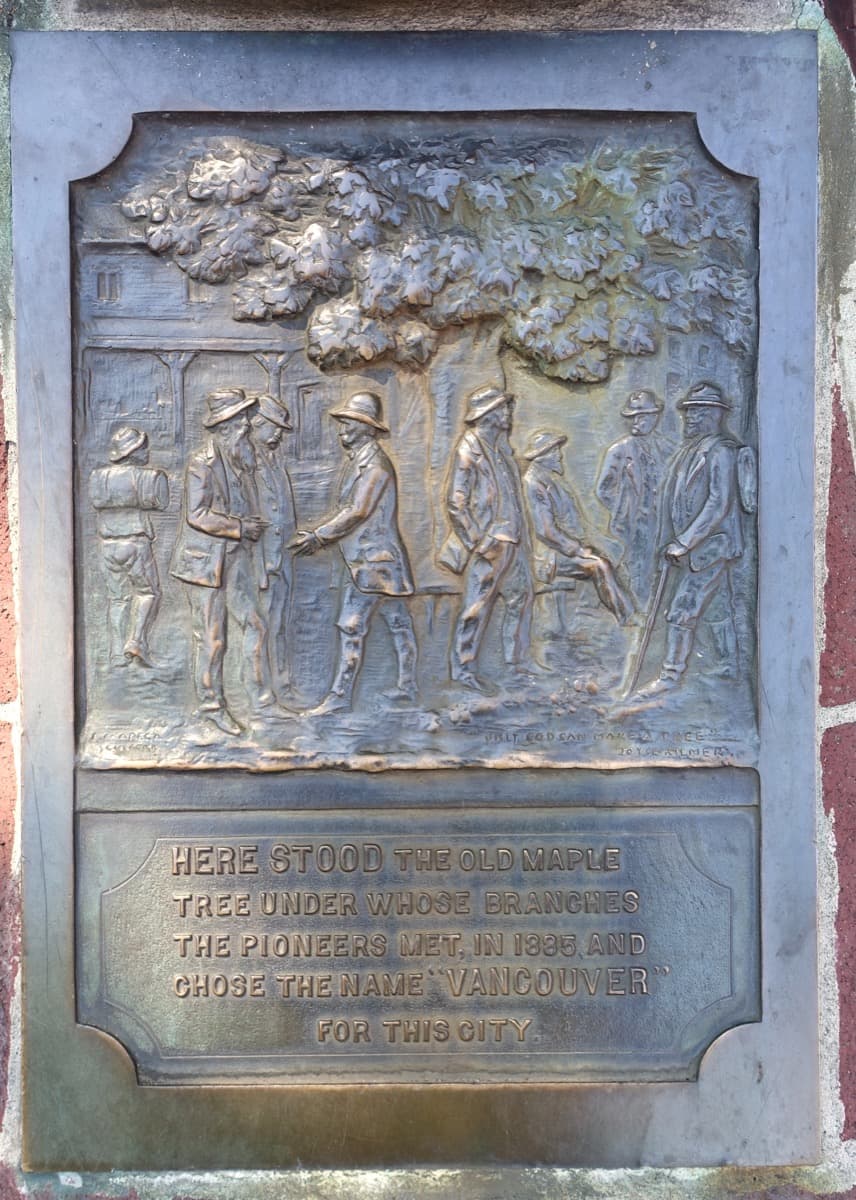
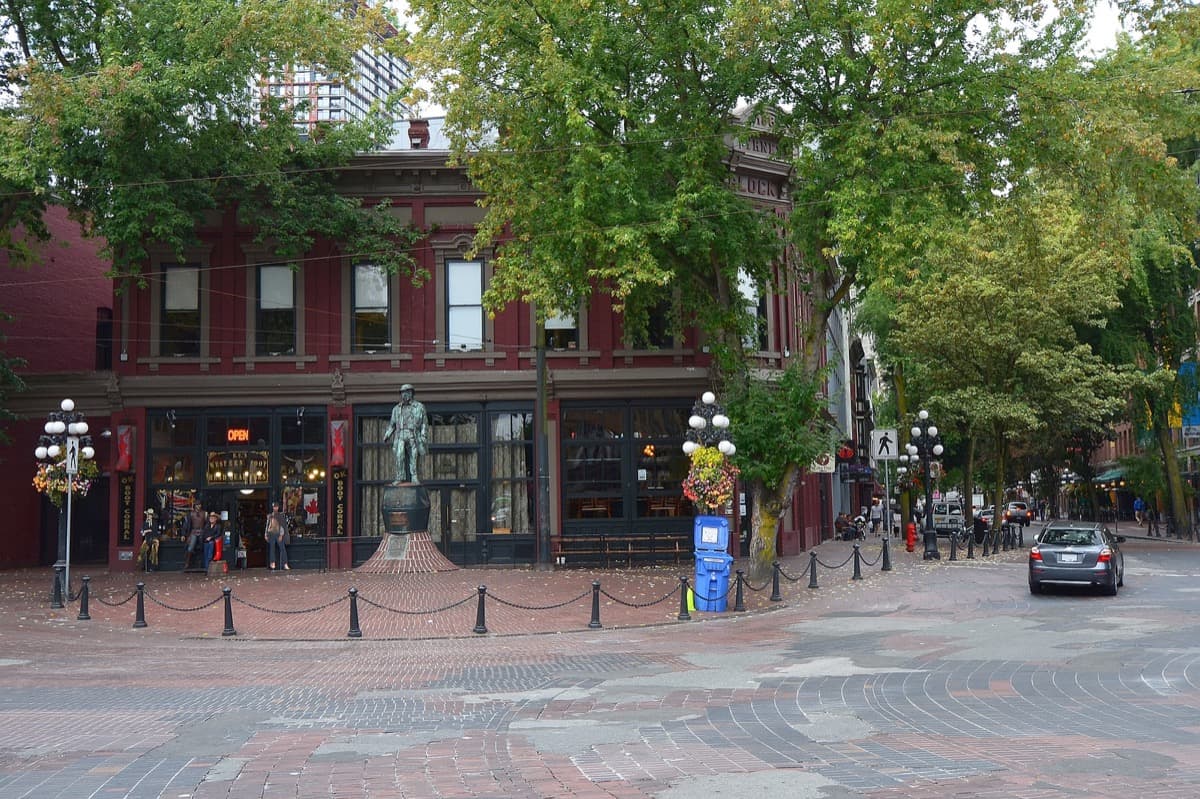
Maple Tree Square: The Climax
The 1867 saloon site, the 1970 statue plinth, the 1971 riot location, and the 2022 toppling site, in one intersection.
- 7
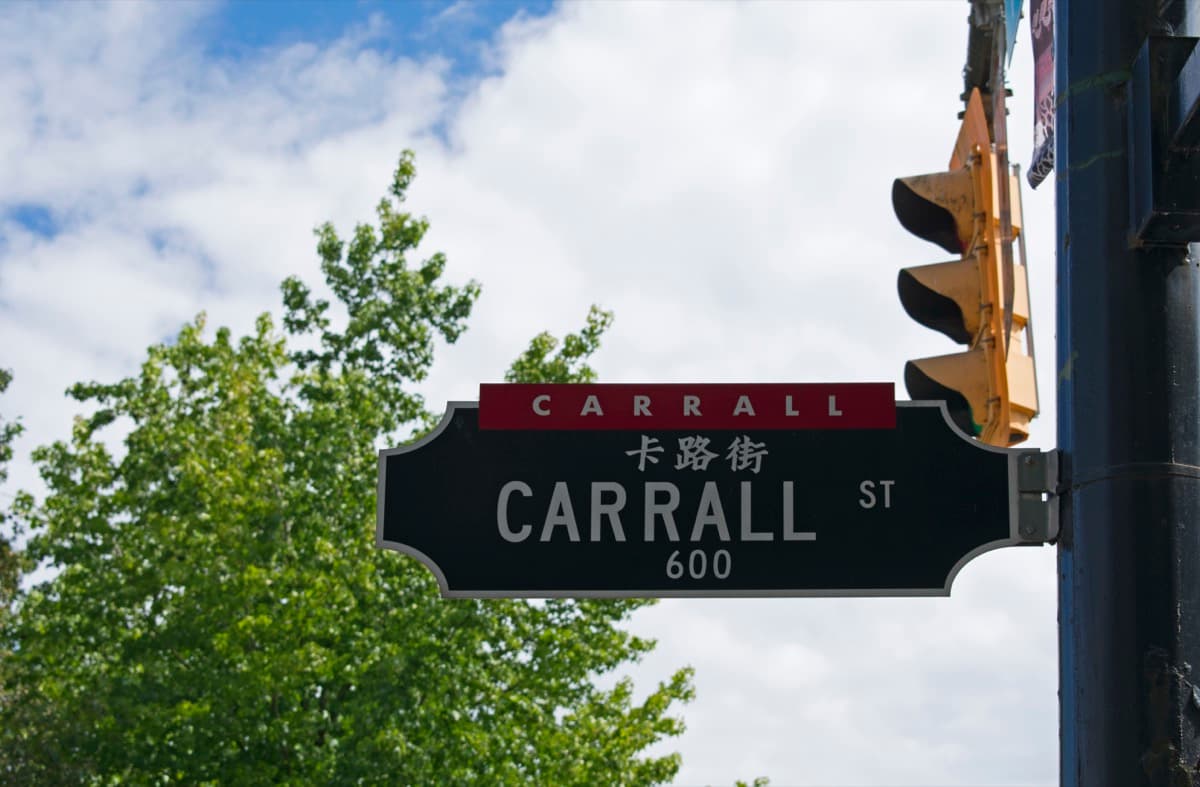
Carrall Street: The Freeway That Did Not Happen
The corridor the elevated Project 200 freeway was approved to run along in 1967. Stopped in 1972 by the Chinatown and Strathcona coalition.
- 8
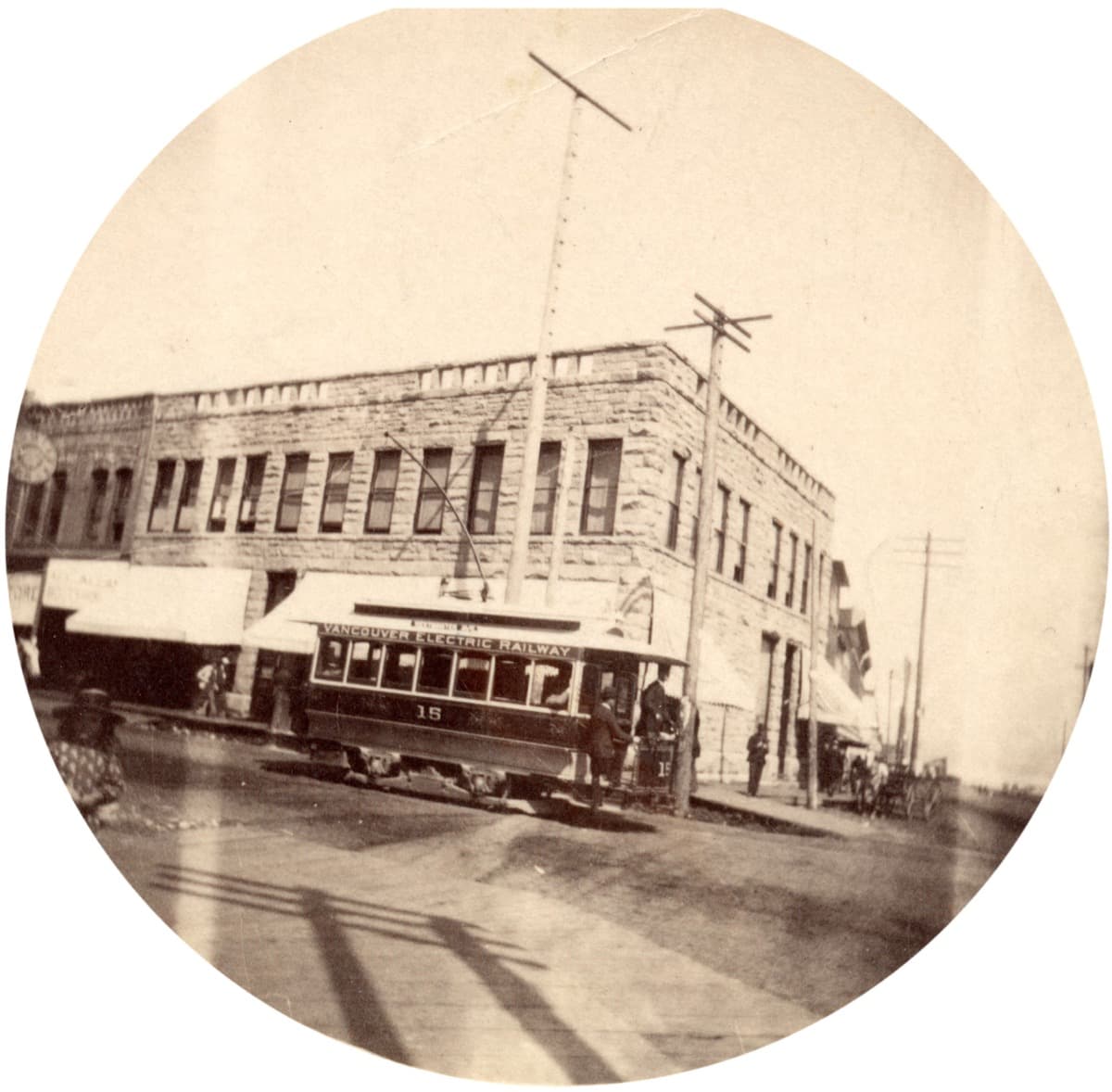
Carrall and Cordova: The Federal Boundary
The northwest corner of the Gastown National Historic Site of Canada, designated 2009, plaque unveiled 2016. The official frame of the corridor.
Details
Best Time to Visit
Weekday mid-morning, Tuesday through Thursday, between ten and noon. Water Street fills with cruise-ship visitors from late morning on weekends in summer; the steam clock corner is shoulder-to-shoulder at the top of every hour. Visit on the half-hour for cleaner audio. The Carrall Street corridor at Stop 7 is the Downtown Eastside threshold and is recommended in daylight only. The Byrnes Block, the steam clock, and the federal heritage plaque are visible year-round.
Pro Tips
- •Start at Waterfront SkyTrain station; the Stop 1 anchor is the south facade across Cordova
- •Approach the steam clock at the half-hour rather than the top of the hour; the crowds thin and the audio is easier to follow
- •Maple Tree Square's centre island is reached at signal-controlled crossings; the empty statue plinth is unmistakable
- •Carrall Street south of Maple Tree Square is the Downtown Eastside threshold; daytime only is the recommendation, and the tour acknowledges what is visible without staging it
- •The Major Matthews fonds at the City of Vancouver Archives, 1150 Chestnut Street, is the primary-source backstop for the Madeline Deighton 1940 interview cited at Stop 6; reading-room appointment required
- •Lance Berelowitz's Dream City: Vancouver and the Global Imagination (Douglas and McIntyre, 2005) is the published Vancouver-urbanism source for the freeway-fight context
Safety & Precautions
- •Water Street cobblestones are uneven; flat soles can catch in the gaps between stones
- •The steam clock corner is heavy with cruise-ship traffic in summer; allow extra time to stand back and listen
- •Maple Tree Square is an irregular intersection with cobblestones; cross at the signalled corners and stand on the centre island only at the pedestrian phase
- •Stop 7 looks south down Carrall toward the Downtown Eastside; the tour names what is visible without staging the area as content, and a daytime walk is recommended
Travel advisory: Exercise Normal Precautions (Level 1).
Gallery
Related Reading
Go deeper on what you'll see, hear, and walk through.
Overview
Best Self-Guided Walking Tours in Vancouver (2026)
4 min
Overview
One Day in Vancouver: A Walkable Downtown Itinerary (2026)
6 min
Overview
Vancouver Travel Guide: How Many Days, Getting Around, When to Go (2026)
5 min
Thematic
Best History Walking Tours in Vancouver (2026)
2 min
Thematic
Vancouver: The City Built on Erasure and Reclamation
5 min
Thematic
What to Eat in Vancouver: A Food Guide (2026)
4 min
Companion
Gastown: A Founding Myth Assembled in the 1970s
5 min
Deep dive
The Gastown Steam Clock: A 1977 Machine in a Victorian Costume
3 min
Read the walk
The full story of Gastown: A Founding Story, Retroactively Curated, in words. Prefer to listen? Play it narrated, from home or on location.
Introduction
Pioneer Square in Seattle. Old Town in Portland, Oregon. Faneuil Hall Marketplace in Boston, a seventeen forty-two town hall and an eighteen twenty-six market hall, continuously in use, restored in nineteen seventy-six. The French Quarter in New Orleans, the seventeen eighteen colonial street grid, protected by a Vieux Carre Commission since nineteen thirty-six.
And then there is Gastown.
The saloon was eighteen sixty-seven. The buildings are eighteen eighty-six to nineteen fourteen, rebuilt after the Great Vancouver Fire. The cobblestones, the gas lamps, the steam clock, and the bronze statue of the founder were installed between nineteen seventy and nineteen seventy-seven, by a developer named Larry Killam and his colleagues, during a citywide fight to stop a freeway from being built down the middle of this street. The ye olde district was substantially produced as a heritage object in the same four years it was designated as a Historic Area. That is the tour.
The argument is one sentence. The founding is real. The founding story was retroactively curated, mostly by developers, to defend the neighbourhood from demolition.
The dates are the spine. The Historic Area was designated by the Province of British Columbia in February of nineteen seventy-one. The federal National Historic Site designation followed in two thousand and nine. Hold them.
Gastown, Vancouver, Canada. Eight stops, about one kilometre, about eighty minutes including pauses. The route starts at Waterfront Station, walks east along Water Street through the cobblestones and the steam clock, crosses Maple Tree Square at the empty statue plinth, and finishes at the federal heritage boundary at Carrall and Cordova. All stops are on public sidewalks and free.
When you arrive at Waterfront Station, the long building with Ionic columns on West Cordova at Granville, begin with stop one.
1. Waterfront Station: The Gate
Welcome to Waterfront Station, six oh one West Cordova, your first stop. Stand on the south side of Cordova and look up at the Ionic colonnade. The building runs the length of the block. Above the columns, in stone, the words Canadian Pacific Railway. This is the gate.
The building opened on the first of August, nineteen fourteen, designed by the Montreal firm Barott, Blackader and Webster. It was the third Canadian Pacific Railway terminus on this site. This is the post-fire face of Vancouver, the city that was incorporated on the sixth of April, eighteen eighty-six, burned to the ground in the Great Vancouver Fire on the thirteenth of June of the same year, and then rebuilt in brick and stone over the next thirty years.
Nothing of the eighteen sixty-seven saloon survives. The reason you are about to walk a heritage corridor in brick is that the wooden corridor burned in eighteen eighty-six.
Look to the right of the main doors. The bronze figure on the wall is the Angel of Victory, sculpted in nineteen twenty-two by Coeur de Lion McCarthy. It memorialises eleven hundred and sixteen Canadian Pacific Railway employees lost in the First World War. A corporate war memorial on a railway station, which tells you something about who built Vancouver in those decades.
The Chronicler holds the dates. Eighteen sixty-five, Hastings Mill founded at the foot of Dunlevy Street. Eighteen sixty-seven, the saloon. Eighteen eighty-six, incorporation and fire. Eighteen eighty-seven, the first transcontinental Canadian Pacific train arrives. Nineteen fourteen, this station opens. Hold those dates. They are the frame.
In nineteen sixty-seven, the City of Vancouver and a private development consortium called Project Two Hundred approved a plan to run a multi-lane elevated freeway along Carrall Street, four blocks east of where you are standing. This building, this colonnade, this scale, was the city the freeway plan would have shadowed. Keep that in mind for the next eight stops.
Now walk east on Cordova toward Water Street. The next stop looks at the surface.
2. Water Street: The Surface Reveal
You have arrived at the top of Water Street, near Richards. Stand on the sidewalk and look east. Cobblestones in the centre lane. Brick commercial buildings on both sides. Gas lamps at intervals. The streetcars are gone but the rails are not. The conventional read of this view is preserved Victorian commercial Vancouver.
Look again, and use the dates.
Under your feet, the cobblestones are nineteen seventy-one to nineteen seventy-four. They were laid as part of the heritage curation. Underneath the cobblestones is asphalt that was laid mid-twentieth century. Underneath the asphalt, in patches, the original eighteen eighties wood-block paving still survives, though it is not what you are walking on. Three layers, one street. The eye reads the top layer as the founding fabric. The dates say otherwise.
The brick commercial buildings on both sides are real. They are mostly eighteen eighty-six to nineteen fourteen, the post-fire reconstruction. Italianate cornices, segmental arched windows, decorated brick. The architecture is what survived. The streetscape is what was added back in the nineteen seventies to make the survival read as ye olde.
The gas lamps are nineteen seventies installations. The cast-iron bollards are nineteen seventies. The painted-out fire escapes on the front facades are nineteen seventies. Every surface element a visitor reads as authentic Victorian fabric was placed during the same four-year window in which the district was being designated as a Historic Area and defended from a freeway.
The Chronicler closes with the date that anchors everything that follows. In February of nineteen seventy-one, the Province of British Columbia designated Gastown and Chinatown simultaneously as Historic Areas under the Archaeological and Historic Sites Protection Act. The designation was a defensive instrument, deployed mid-fight against Project Two Hundred. The cobblestones followed.
Now walk east on Water Street one block to Carrall. The corner building on the southwest is the first preservation project. We are looking at it next.
3. Byrnes Block: The First Preservation Project
You have arrived at the Byrnes Block, also called the Alhambra Hotel, two Water Street at Carrall. Stand on the southwest corner of Maple Tree Square and look up at the facade. Two and a half stories of brick with stone trim. Above the second-floor windows, in cut stone, the word Alhambra. The original arched ground-floor entries are visible at street level.
This building was finished in eighteen eighty-six, weeks after the Great Vancouver Fire. The architect was Elmer Fisher. It is the first brick building rebuilt in Gastown after the fire. By a small margin of months, it is older than the City of Vancouver as a corporate entity. The city was incorporated on the sixth of April. The fire was the thirteenth of June. The Byrnes Block went up immediately after.
That is the founding-era credential.
The second credential is harder to read from the sidewalk. In nineteen sixty-nine, this building was a derelict rooming house at the edge of skid row. A Vancouver developer named Larry Killam acquired it and rehabilitated it as the demonstration project for what Gastown could become. Killam had begun acquiring Gastown rooming houses in nineteen sixty-eight, paying nineteen thousand dollars for the Boulder Rooms on Cordova, treating the district as a real-estate play that depended on the heritage frame holding.
The Maclean's magazine profile of January nineteen seventy-one documents the strategy in real time. The article was titled In Gastown, developer Larry Killam's business savvy brought the swingers into the slum. Killam's pitch was simple. Buy flophouses cheap, expose original brick, rent to a new urban-professional and bohemian market. The Byrnes Block was the first proof of concept. The building is eighteen eighty-six. The rehabilitation is younger than the moon landing.
That is the Gastown move in one facade. A real eighteen eighties building, restored to read as eighteen eighties, by a developer with a nineteen sixty-eight pro forma in front of him.
Now walk west on Water Street to Cambie, about one block. We are going to look at the most photographed object in the corridor.
4. Gastown Steam Clock: The Pattern-Break
You have arrived at the Gastown Steam Clock, at the corner of Water and Cambie. Stand across the street so the whole cabinet is visible. Four faces. Brass and glass. A steam plume on the hour. The Westminster Quarters chime every fifteen minutes. This is the most photographed…
Full narration for this stop unlocks with the tour.
5. Blood Alley Square: The Renamed Alley
You have arrived at Blood Alley Square, between Carrall and Abbott, south of Water Street. The cobblestones underfoot are part of the curation. The plaque is on the south wall. This is the renamed alley. The alley's first documented name was Trounce Alley. It was named in the…
Full narration for this stop unlocks with the tour.
6. Maple Tree Square: The Climax
You have arrived at Maple Tree Square, the irregular intersection where Water, Powell, Alexander, and Carrall meet. Stand at the centre traffic island, at the empty plinth. This is the climax. Four layers on one corner. Layer one. Eighteen sixty-seven. John Gassy Jack…
Full narration for this stop unlocks with the tour.
7. Carrall Street: The Freeway That Did Not Happen
You have arrived at Carrall Street, looking south toward Pender. Stand on the southwest corner. Look down Carrall. The Millennium Gate of Chinatown is visible at Pender, four blocks south. Between you and the gate is the corridor of the freeway that did not happen. In nineteen…
Full narration for this stop unlocks with the tour.
8. Carrall and Cordova: The Federal Boundary
You have arrived at Carrall and Cordova, the northwest corner of the Gastown National Historic Site of Canada. Stand on the sidewalk and look north up Carrall, back into Water Street and the corridor you just walked. This is the federal boundary. In two thousand and nine, the…
Full narration for this stop unlocks with the tour.